3141 Results for "

mSWI/SNF complex

" in MedChemExpress (MCE) Product Catalog:
Products (3141)

3141 Results for "mSWI/SNF complex" in MCE Product Catalog:

Cat. No.: HY-L221
626 compounds

Cosmetics are complex mixtures formulated through the rational blending and processing of various natural, synthetic, or extracted raw materials. The ingredients used in cosmetics are diverse in type and functionality. Based on their properties and applications, cosmetic ingredients can generally be classified into two main categories: base materials and auxiliary ingredients. The former constitutes the primary component of cosmetics, accounting for a significant proportion in formulations and serving as the key functional substances. Auxiliary ingredients, on the other hand, play roles in shaping the product, ensuring stability, or imparting color, fragrance, and other specific characteristics.Establishing a systematic ingredient database is of great significance for cosmetic research and development. By analyzing the physicochemical properties (such as oil-water partition coefficients and molecular weight distribution), biological activity mechanisms (such as antioxidant pathways and cellular signaling regulation), and compatibility of ingredients, the database can provide precise guidance for formulation design. This approach helps shorten the development cycle of cosmetic/skincare products and reduces trial-and-error costs.

MCE offers 626 types of cosmetic ingredient compounds, including antioxidants, humectants, emulsifiers, film-forming agents, and more.

Cat. No.: HY-L190
1,661 compounds

Miao medicine is an important part of Chinese medicine, which carries the profound cultural heritage and rich life wisdom of the Hmongb people. Miao people live in a concentrated community in the mountainous area of the southwest border of China, which has a unique natural environment. Complex and diverse geology, lush natural vegetation, rich animal and plant species, a large number of mineral resources which provide a wide range of species sources for miao ethnicity medicine. On the other hand, due to the characteristics of the living environment of the Hmongb people, Miao medicine has demonstrated its unique therapeutic effect in the treatment of some endemic diseases, infectious diseases, insect, snake and beast bites, rheumatism and other diseases. With the development of modern science and technology, the research and application of seedling medicine are also deepening. Through the systematic study of the chemical composition and pharmacological action of the seedling medicine, it can provide a new idea and method for modern medicine.

MCE included 1,661 natural products from traditional miao ethnicity medicine, including animal, plant and mineral sources.

Cat. No.: HY-L128
187 compounds

Proteolysis-targeting chimera (PROTAC) has been developed to be a useful technology for targeted protein degradation. PROTACs consist of a ligand for E3 ligase (E3 ligase binder), a linker and a ligand (mostly small-molecule inhibitor) for protein of interest(target binder). Upon binding to the target protein, the PROTACs can recruit E3 for target protein ubiquitination, which is subjected to proteasome-mediated degradation.

Although there are more than 600 E3 ubiquitin ligases, only several with small molecule ligands have been used for designing PROTACs, including Skp1-Cullin-F box complex containing Hrt1 (SCF), Von Hippel-Lindau tumor suppressor (VHL), Cereblon (CRBN), inhibitor of apoptosis proteins (IAPs), and mouse double minute 2 homolog (MDM2).

MCE carefully prepared a unique collection of 187 ligands for E3 ligase, which have been reported to be used in PROTAC design. MCE E3 ligase ligand library is a useful tool for PROTAC development.

Cat. No.: HY-L941
4,236 compounds

Orthosteric sites are highly conserved, leading to poor subtype selectivity, off-target toxicity and drug resistance in traditional drugs. By contrast, allosteric sites show low conservation, high hydrophobicity, weak polarity, confined geometry and dynamic cryptic properties, granting modulators high selectivity, functional tunability and safety. Thus, allosteric therapy has become a major focus in drug discovery.

MCE curated nearly 1,000 clinical-stage allosteric modulators, analyzed PDB complex structures to identify key pharmacophores and privileged scaffolds, then designed and filtered compounds using rational “scaffold derivation + physicochemical screening” with strict property criteria. The resulting compounds show high rigidity and shape complementarity to shallow, dynamic, hydrophobic allosteric pockets.

This library comprises 4,315 diverse, lead-like compounds ideal for allosteric drug discovery and target screening, covering kinases, GPCRs and more. All are analogs of clinical-stage molecules with similarity > 0.6, combining high druggability and allosteric binding potential to support efficient early-stage R&D.

Cat. No.: HY-P71661
Purity:  ≥ 90%, as determined by reducing SDS-PAGE.
Synonyms: RUVBL2; RuvB-Like 2; RuvB Like AAA ATPase 2; TAP54-Beta; TIP49b; Reptin52; INO80J; Reptin; TIP48; ECP-51; INO80 complex Subunit J; Erythrocyte Cytosolic Protein, 51-KD; ECP51; RuvB-Like 2 (E. Coli), Isoform CRA_b; RVB2; RuvB-Like 2 (E. Coli), Isoform CRA_
Species:  
Human
Source:  
E. coli
loading...
    loading...
Cat. No.: HY-P85504
Synonyms: mitochondrial; ODPA_HUMAN; PDH; PDHA; PDHA1; PDHCE1A; PDHE1 A type I; PDHE1-A type I; PHE1A; Pyruvate Dehydrogenase; lipoamide; alpha 1; Pyruvate dehydrogenase complex, E1 alpha polypeptide 1; Pyruvate Dehydrogenase E1 alpha; Pyruvate dehydrogenase E1 component subunit alpha; Pyruvate dehydrogenase E1 component subunit alpha, somatic form, mitochondrial; somatic form.

Host:  

Mouse

Application:  

WB, ICC/IF

Reactivity:  

Human, Mouse

loading...
    loading...
Cat. No.: HY-P83734
Synonyms: Leukocyte L1 complex heavy chain antibody; 60B8AG antibody; CAGB antibody; Calgranulin B antibody; Calgranulin-B antibody; Calprotectin L1H subunit antibody; CFAG antibody; CGLB antibody; Cystic fibrosis antigen B antibody; L1AG antibody; Leukocyte L1 complex heavy chain antibody; LIAG antibody; MAC387 antibody; MIF antibody; Migration inhibitory factor related protein 14 antibody; Migration inhibitory factor-related protein 14 antibody; MRP 14 antibody; MRP-14 antibody; MRP14 antibody; Myeloid-related protein 14 antibody; NIF antibody; OTTHUMP00000015331 antibody; p14 antibody; Protein S100-A9 antibody; S100 A9 antibody; S100 calcium binding protein A9 antibody; S100 calcium binding protein A9 calgranulin B antibody; S100 calcium-binding protein A9 antibody; S100A9 antibody; S10A9_HUMAN antibody;

Host:  

Rabbit

Application:  

IHC-P, IF-Tissue, mIHC

Reactivity:  

Human

loading...
    loading...
Cat. No.: HY-P86901
Synonyms: class II antigen HLA-DM beta chain antibody; class II histocompatibility antigen antibody; Class II histocompatibility antigen M beta chain antibody; D6S221E antibody; DMB antibody; HLA class II histocompatibility antigen DM beta chain antibody; HLA-DM histocompatibility type, beta chain antibody; M beta chain antibody; Major histocompatibility complex class II DM beta antibody; MHC class II antigen DMB antibody; class II antigen HLA-DM beta chain antibody; class II histocompatibility antigen antibody; Class II histocompatibility antigen M beta chain antibody; D6S221E antibody; DMB antibody; HLA class II histocompatibility antigen DM beta chain antibody; HLA-DM histocompatibility type, beta chain antibody; M beta chain antibody; Major histocompatibility complex class II DM beta antibody; MHC class II antigen DMB antibody; MHC class II antigen HLA DM beta chain antibody; MHC class II HLA DMB antibody; OTTHUMP00000029257 antibody; Really interesting new gene 7 protein antibody; RING 7 antibody; RING7 antibody;

Host:  

Rabbit

Application:  

WB, ICC/IF, IF-Tissue, FC

Reactivity:  

Human

loading...
    loading...
Cat. No.: HY-P86934
Synonyms: IMB 1 antibody; IMB1 antibody; IMB1_HUMAN antibody; Impnb antibody; Importin 90 antibody; Importin beta 1 antibody; Importin beta 1 subunit antibody; Importin subunit beta-1 antibody; Importin-90 antibody; IPOB antibody; IMB 1 antibody; IMB1 antibody; IMB1_HUMAN antibody; Impnb antibody; Importin 90 antibody; Importin beta 1 antibody; Importin beta 1 subunit antibody; Importin subunit beta-1 antibody; Importin-90 antibody; IPOB antibody; Karyopherin beta 1 antibody; Karyopherin beta 1 subunit antibody; Karyopherin subunit beta-1 antibody; KPNB 1 antibody; Kpnb1 antibody; MGC2155 antibody; MGC2156 antibody; MGC2157 antibody; NTF 97 antibody; NTF97 antibody; NTF97/Importin beta antibody; Nuclear factor P97 antibody; Pore targeting complex 97 kDa subunit antibody; PTAC97 antibody;

Host:  

Rabbit

Application:  

WB, IHC-P, IF-Tissue, IP

Reactivity:  

Human, Mouse, Rat

loading...
    loading...
Cat. No.: HY-P75361
Purity:  ≥ 85%, as determined by reducing SDS-PAGE.
Synonyms: CDK7; Cyclin-Dependent Kinase 7 (Homolog Of Xenopus MO15 Cdk-Activating Kinase); Cyclin Dependent Kinase 7; Homolog Of Xenopus MO15 Cdk-Activating Kinase; CDKN7; Serine/Threonine Protein Kinase MO15; CAK1; Cyclin-Dependent Kinase 7 Isoform 3; MO15; Serine/Threonine Protein Kinase 1; STK1; Serine/Threonine-Protein Kinase 1; CAK; [RNA-Polymerase]-Subunit Kinase; TFIIH Basal Transcription Factor complex Kinase Subunit; Serine/Threonine Kinase Stk1; Cell Division Protein Kinase 7; Kinase Subunit Of CAK; Cyclin-Dependent Kinase 7; P39 Mo15; Cyclin-Dependent Kinase 7 (MO15 Homolog, Xenopus Laevis, Cdk-Activating Kinase); P39MO15; CDK-Activating Kinase 1; HCAK; 39 KDa Protein Kinase; CCNH; CycH; Cyclin H; Cyclin-Dependent Kinase-Activating Kinase complex Subunit; P34; CDK-Activating Kinase complex Subunit; P37; CAK complex Subunit; MO15-Associated Protein; CAK; Cyclin-H; MNAT1; CAP35; MNAT1 Component Of CDK Activating Kinase; P36; RNF66; P35; MAT1; Menage A Trois Homolog 1, Cyclin H Assembly Factor (Xenopus Laevis); CDK-Activating Kinase Assembly Factor MAT1; Menage A Trois-Like Protein 1 Cyclin H Assembly Factor Isoform 2; CDK7/Cyclin-H Assembly Factor; Menage A Trois-Like Protein 1 Cyclin H Assembly Factor; RING Finger Protein MAT1; Menage A Trois Homolog 1, Cyclin H Assembly Factor; MNAT CDK-Activating Kinase Assembly Factor 1; CDK-Activating Kinase Assembly Factor; MNAT1, CDK Activating Kinase Assembly Factor; Cyclin G1 Interacting Protein; Menage A Trois 1 (CAK Assembly Factor); Cyclin-G1-Interacting Protein; RING Finger Protein 66; TFB3; Menage A Trois
Species:  
Human
Source:  
Sf9 insect cells
loading...
    loading...
Cat. No.: HY-100138R
CAS No.: 173308-19-5
2-Aminoethyl-mono-amide-DOTA-tris(tBu ester) (Standard) is the analytical standard of 2-Aminoethyl-mono-amide-DOTA-tris(tBu ester) (HY-100138). This product is intended for research and analytical applications. 2-Aminoethyl-mono-amide-DOTA-tris(tBu ester) is a metal chelator precursor containing a DOTA macrocyclic structure. DOTA can form highly stable complexes with metal ions (such as 68Ga, 177Lu) through four nitrogen atoms and four carboxylic acid groups to mediate targeted delivery of radionuclides. The tert-butyl ester group (tBu ester) of 2-Aminoethyl-mono-amide-DOTA-tris(tBu ester) also protects the carboxylic acid group during synthesis, and forms a free carboxyl group after deprotection reaction for coupling with targeting molecules (such as antibodies, peptides). 2-Aminoethyl-mono-amide-DOTA-tris(tBu ester) may be combined with tumor pre-targeting systems through bioorthogonal reactions (such as reverse electron demand Diels-Alder reaction) to study radioactive imaging or therapy of tumor tissues, and is mainly used in tumor pre-targeting research in the field of nuclear medicine .
loading...
    loading...
Cat. No.: HY-101532
CAS No.: 98169-85-8
Purity:  ≥98.0%
Synonyms: β-CDN3; 6A-deoxy-6A-azido-β-cyclodextrin
Research Areas:  

Others

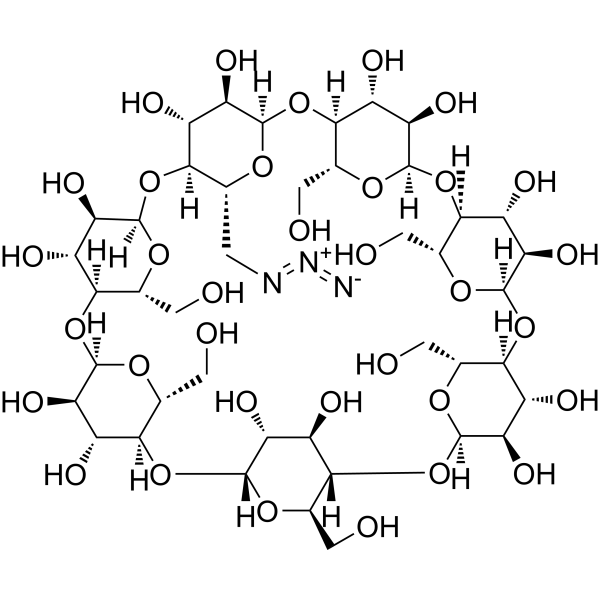
6A-Azido-6A-deoxy-β-cyclodextrin (β-CDN3) is a site-specifically modified β-cyclodextrin with a single azido group replacing the hydroxyl group at the C6 position. 6A-Azido-6A-deoxy-β-cyclodextrin forms a host-guest inclusion complex with Dexamethasone (HY-14648), localizing the drug within its hydrophobic cavity, which restricts the rotational mobility of the drug and places Dexamethasone in a less polar environment. 6A-Azido-6A-deoxy-β-cyclodextrin acts as a coupling agent to graft β-cyclodextrin onto thermosensitive nanogels via strain-promoted alkyne-azide cycloaddition (SPAAC). 6A-Azido-6A-deoxy-β-cyclodextrin also serves as a click chemistry reagent. It contains an azide group and undergoes copper-catalyzed azide-alkyne cycloaddition (CuAAc) with molecules bearing an alkyne group. It also undergoes strain-driven alkyne-azide cycloaddition (SPAAC) with molecules containing DBCO or BCN groups .
loading...
    loading...
Cat. No.: HY-13631J
CAS No.: 2938875-39-7
Purity:  99.94%
Synonyms: (1R,9R)-DX8951f
Research Areas:  

Cancer

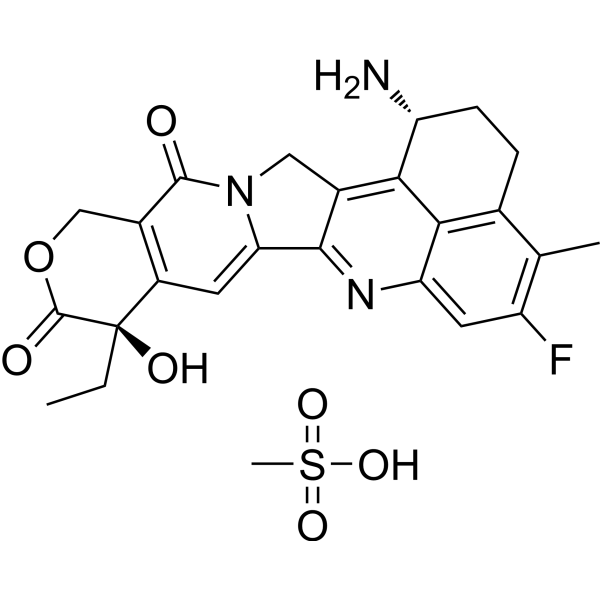
(1R,9R)-Exatecan mesylate ((1R,9R)-DX8951f) is a non-prodrug camptothecin derivative and a potent topoisomerase I inhibitor (IC50=0.975 μg/mL in mice and 0.82 μg/mL in humans). (1R,9R)-Exatecan mesylate blocks enzyme activity and induces apoptosis by stabilizing the enzyme-DNA cleavable complex. (1R,9R)-Exatecan mesylate not only effectively inhibits the proliferation of various malignant tumor cells and tumor growth, but also circumvents P-glycoprotein-mediated multidrug resistance. (1R,9R)-Exatecan mesylate is widely used in preclinical studies of multiple cancers including pancreatic cancer, lung cancer, breast cancer, and leukemia . The low-activity isomer of (1R,9R)-Exatecan mesylate is (1S,9R)-Exatecan mesylate (HY-13631I).
loading...
    loading...
Cat. No.: HY-13631V
CAS No.: 2489613-15-0
Synonyms: (1R,9R)-DX-8951
Research Areas:  

Cancer

(1R,9R)-Exatecan ((1R,9R)-DX8951f) is a non-prodrug Camptothecin (HY-16560) derivative and a potent topoisomerase I (Topo I) inhibitor (IC50=0.975 μg/mL in mice and 0.82 μg/mL in humans). (1R,9R)-Exatecan blocks enzyme activity and induces apoptosis by stabilizing the enzyme-DNA cleavable complex. (1R,9R)-Exatecan not only effectively inhibits the proliferation of various malignant tumor cells and tumor growth, but also circumvents P-glycoprotein-mediated multidrug resistance. (1R,9R)-Exatecan is widely used in preclinical studies of multiple cancers including pancreatic cancer, lung cancer, breast cancer, and leukemia . The low-activity isomer of (1R,9R)-Exatecan is (1S,9R)-Exatecan (HY-13631I).
loading...
    loading...
Cat. No.: HY-138794G
CAS No.: 2417089-74-6
XL177A GMP is XL177A (HY-138794) produced by using GMP guidelines. GMP small molecules works appropriately as an auxiliary reagent for cell therapy manufacture. XL177A is a covalent USP7 inhibitor that blocks the deubiquitinase activity of USP7. XL177A destabilizes non-canonical PRC1 complexes or KDM6A and reduces chromatin deposition of H2AK119Ub, thereby relieving the repression of neuronal differentiation programs. Meanwhile, XL177A also regulates the ELOF1-UVSSA-USP7-nuclear β-catenin axis, decreasing the transcription levels of related proteins and the accumulation of nuclear β-catenin. XL177A exerts antiviral effects by reducing the expression levels of coronavirus receptors, and exhibits inhibitory activity against APC-mutated colorectal cancer cells, neuroblastoma, and coronaviruses including SARS-CoV-2 variants. XL177A is mainly used in studies related to colorectal cancer, neuroblastoma, and coronavirus infections .
loading...
    loading...
Cat. No.: HY-148062
CAS No.: 2769753-48-0
Purity:  99.85%
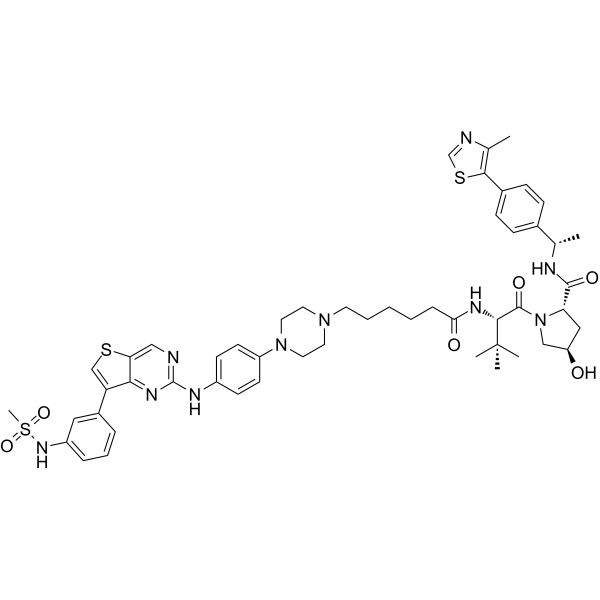
RSS0680 is a small noncoding RNA (sRNA) targeting the mRNA ribosome binding site (RBS) and a PROTAC. RSS0680 competitively binds to RBS through the conserved CCUCCUCCC anti-Shine-Dalgarno (aSD) sequence and inhibits the translation initiation of target genes. RSS0680 can interact with the DUF1127 protein CcaF1, regulate its own stability and participate in bacterial oxidative stress defense, enhancing the host's resistance to heat shock and oxidative damage by affecting pathways such as C1 metabolism and pyruvate dehydrogenase complex. RSS0680 degrades AAK1, CDK1, CDK16, CDK2, CDK4, CDK6, EIF2AK4, GAK, LATSl, LIMK2, MAPK6, MAPKAPK5, MARK2, MARK4, MKNK2, NEK9, RPS6KB1, SIK2, SNRK, STK17A, STK17B, STK35, and WEEl. RSS0680 can be used to study diseases or disorders mediated by aberrant kinase activity and regulatory mechanisms of noncoding RNAs in α-proteobacteria[1][2].
loading...
    loading...
Cat. No.: HY-163962
CAS No.: 2451070-32-7
L18I is a Bruton's tyrosine kinase (BTK) PROTAC degrader that targets wild-type and BTK C481, and recruits the cereblon E3 ligase to mediate proteasomal degradation. L18I regulates the BCR, TLR, FcγR and NLRP3 inflammasome signaling pathways, inhibits the phosphorylation of PLCγ-2, ERK1/2 and p38, and reduces the levels of B cell activation markers CD25, CD69 and CD86. L18I downregulates the NF-κB, TNF and TLR signaling pathways, reduces the production of pro-inflammatory cytokines, and decreases immune cell infiltration and immune complex deposition. L18I inhibits the proliferation of BTK-expressing lymphoma cells, induces tumor regression in xenograft models, and exhibits synergistic activity when combined with inhibitors of SYK, PI3K or Lyn. L18I can be used in research related to lupus, diffuse alveolar hemorrhage and B-cell lymphoma .
loading...
    loading...
Cat. No.: HY-169134
Research Areas:  

Cancer

PROTAC 20S proteasome subunit β5 degrader 1 is a PROTAC degrader targeting the 20S proteasome subunit β5, with a DC50 of 0.11 μM. PROTAC 20S proteasome subunit β5 degrader 1 forms a ternary complex with the CRBN E3 ligase, induces ubiquitination of the 20S proteasome subunit β5, and promotes its degradation via the proteasomal pathway. PROTAC 20S proteasome subunit β5 degrader 1 disrupts cell cycle progression, promotes apoptosis, and inhibits cell proliferation and migration. PROTAC 20S proteasome subunit β5 degrader 1 exhibits significant proliferation-inhibitory activity against various tumor cells, suppresses tumor growth in in vivo xenograft models, and overcomes the resistance of multiple myeloma cells to Bortezomib (HY-10227). PROTAC 20S proteasome subunit β5 degrader 1 can be used in studies related to pharyngeal cancer and drug-resistant multiple myeloma .
loading...
    loading...
Cat. No.: HY-187396
Research Areas:  

Cancer

FD1-C10-CB is a PROTAC degrader targeting the BRD4 protein. FD1-C10-CB binds to FEM1B to form a ternary complex with BRD4, achieving FEM1B-dependent degradation of BRD4 via the ubiquitin-proteasome system. FD1-C10-CB binds to CD36 to mediate endocytic cellular delivery, thereby enhancing its degrading activity. FD1-C10-CB mediates protein degradation through the Cullin-dependent ubiquitin-proteasome pathway, rather than the lysosomal autophagy pathway. FD1-C10-CB induces a decrease in BRD4 protein levels, and its degrading activity is competitively inhibited by FL47 or JQ1. FD1-C10-CB can be used in the research of breast cancer and osteosarcoma .
loading...
    loading...
Cat. No.: HY-N10508S
CAS No.: 1637678-42-2
Calcitroic acid-13C is the 13C-labeled Calcitroic acid (HY-N10508). Calcitroic acid is a water-soluble terminal vitamin D metabolite and also a ligand for vitamin D receptor (VDR). Calcitroic acid binds to the ligand-binding domain of VDR, forms a retinoic X receptor complex, recruits the coactivator peptide MED1, mediates partial VDR-dependent transcription, inhibits Calcitriol (HY-10002)-induced VDR activation, and reduces the transcription level of CYP24A1 in the presence of 1α,25-dihydroxyvitamin D3. Calcitroic acid exerts selective activating effects on VDR, upregulates the expression of CYP24A1 and CYP3A4, decreases the transcription levels of iNOS and IL-1β, reduces the secretion of nitric oxide and IL-1β, and possesses metabolic stability due to its resistance to phase I oxidation and hepatic glucuronidation. Calcitroic acid can be used in research related to colon cancer, inflammatory bowel disease and rickets .
loading...
    loading...

