370 Results for "

Complement

" in MedChemExpress (MCE) Product Catalog:
Products (370)

370 Results for "Complement" in MCE Product Catalog:

Cat. No.: HY-P85085
Synonyms: ITGB2; CD18; MFI7; Integrin beta-2; Cell surface adhesion glycoproteins LFA-1/CR3/p150; 95 subunit beta; Complement receptor C3 subunit beta; CD antigen CD18

Host:  

Mouse

Application:  

ICC/IF, ELISA

Reactivity:  

Human, Mouse

loading...
    loading...
Cat. No.: HY-P80795
Synonyms: ITGB2; CD18; MFI7; Integrin beta-2; Cell surface adhesion glycoproteins LFA-1/CR3/p150; 95 subunit beta; Complement receptor C3 subunit beta; CD antigen CD18

Host:  

Rabbit

Application:  

WB, IP

Reactivity:  

Human, Mouse, Rat

loading...
    loading...
Cat. No.: HY-P83616
Synonyms: AHUS1; AMBP1; ARMD4; ARMS1; beta1H; CFH; CFHL3; Complement factor H; isoform b; Factor H; factor H like 1; FHL1; HF1; HF2; HUS

Host:  

Rabbit

Application:  

WB, ICC/IF

Reactivity:  

Human

loading...
    loading...
Cat. No.: HY-P10868
CAS No.: 2056232-82-5
Synonyms: RLS-0071
Pegtarazimod (RLS-0071) is a dual-target anti-inflammatory peptide that exerts its effects by simultaneously regulating the complement system and neutrophil-associated inflammatory pathways. Pegtarazimod reduces ROS production both in vitro and in vivo, and decreases the level of neutrophil elastase, a marker of neutrophil extracellular traps (NETs), in vivo, thereby alleviating inflammatory responses. Pegtarazimod significantly improves the survival rate of mice in multiple in vivo models of acute graft-versus-host disease (aGVHD). Pegtarazimod inhibits the activation of the C1 complex, reduces the herpes zoster-like spread of herpes simplex virus type 1 skin infection, and improves the survival rate of infected mice . Pegtarazimod can be used in research related to acute graft-versus-host disease, acute pulmonary diseases, and skin herpes simplex virus type 1 infection .
loading...
    loading...
Cat. No.: HY-P1345C
[DArg10, Aib20] TLQP-21 is a functional antagonist of the complement 3a receptor (C3aR), with EC50 values of 854 nM, 1007 nM, and 1715 nM against human C3aR. [DArg10, Aib20] TLQP-21 recruits β-arrestin, activates Gi3, mediates β-arrestin-dependent receptor internalization, and does not induce calcium influx. [DArg10, Aib20] TLQP-21 inhibits the adrenergic‑induced lipolysis enhancement mediated by TLQP-21 (HY-P1345) and also inhibits the β-hexosaminidase secretion induced by C3a63-77. [DArg10, Aib20] TLQP-21 can be used in research related to asthma and inflammatory diseases .
loading...
    loading...
Cat. No.: HY-P991425

Research Areas:  

Cardiovascular Disease Cancer

AT-1413 is a monoclonal antibody targeting CD43s that recognizes a unique sialylated CD43 epitope spanning amino acid residues 133-165. AT1413 induces antibody-dependent cell-mediated cytotoxicity (ADCC) and complement-dependent cytotoxicity (CDC) in AML cells, with EC50 values of 1.1 nM and 12.4 nM, respectively. AT-1413 binds to a variety of cancer cells, shows weak binding to non-malignant myeloid cells and endothelial cells, and does not bind to healthy lymphoid cells or normal non-hematopoietic cells. AT1413 clears CD43s-expressing leukemic blasts in vivo without affecting non-malignant myeloid cells. AT-1413 can be used in research related to acute myeloid leukemia, myelodysplastic syndrome, melanoma, and breast cancer .
loading...
    loading...
Cat. No.: HY-P992482
VIR-2482 is a monoclonal antibody targeting influenza A hemagglutinin (HA). VIR-2482 is generated by introducing LS mutations (M428L/N434S) into the Fc region of MEDI8852 (HY-P991446). VIR-2482 binds to the conserved HA stem epitope across all 18 influenza A HA subtypes, neutralizes a broad spectrum of H1N1 and H3N2 strains, binds to FcγRIIIa, FcγRIIa and C1q, and induces antibody-dependent cellular cytotoxicity and complement-dependent cytotoxicity. VIR-2482 reduces morbidity and mortality caused by seasonal influenza A strains and provides prophylactic protection in mice. VIR-2482 can be used in research related to influenza A disease .
loading...
    loading...
Cat. No.: HY-P99757
CAS No.: 2278244-14-5
Synonyms: Hu3F8-BsAb

Target:  

CD3

Research Areas:  

Cancer

Nivatrotamab (Hu3F8-BsAb) is a bispecific antibody targeting GD2 and CD3, with KD values of 5.8 nM and 194 nM, respectively. Nivatrotamab redirects T cells to tumor sites and activates immune synapses, thereby mediating antibody-dependent T cell-mediated cytotoxicity. Nivatrotamab induces specific tumor cytotoxicity, stimulates the release of Th1 cytokines and promotes immune cell infiltration into tumors. In addition, its Fc segment deglycosylation design effectively prevents complement activation and cytokine storm. Nivatrotamab can be widely used in research related to various solid tumors, including melanoma, neuroblastoma, osteosarcoma, small cell lung cancer, breast cancer, Ewing's sarcoma, colon cancer, ovarian cancer and rhabdomyosarcoma .
loading...
    loading...
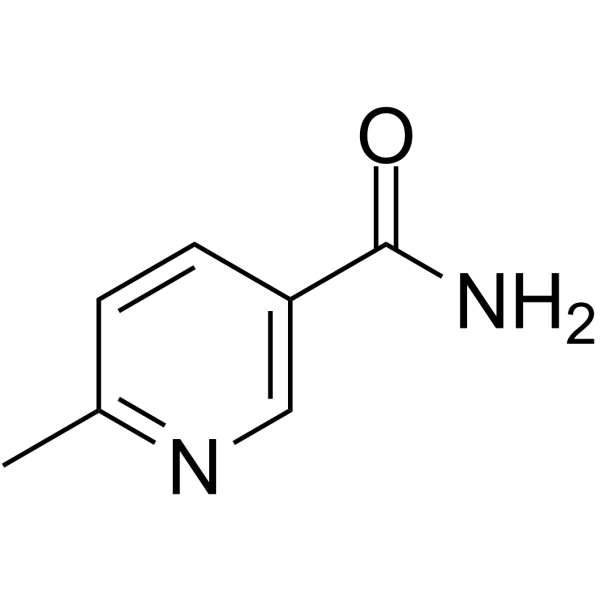
Cat. No.: HY-W015815
CAS No.: 6960-22-1
6-Methylnicotinamide is a derivative of Nicotinamide (HY-B0150). 6-Methylnicotinamide coordinates with undercoordinated Pb 2+ ions through its carbonyl group, passivating Pb-related defects. 6-Methylnicotinamide reduces trap density and non-radiative recombination in the perovskite absorber layer while inducing interfacial dipole formation. 6-Methylnicotinamide enhances the hydrophobicity, grain size, and environmental, thermal, and photostability of perovskite films. 6-Methylnicotinamide induces complementation of VP16-deficient HSV-1 replication and stimulates immediate-early gene expression. 6-Methylnicotinamide is upregulated in the acute phase of intracerebral hemorrhage and may exacerbate neurological injury. 6-Methylnicotinamide can be used for research on intracerebral hemorrhage and herpes simplex virus type 1 infection .
loading...
    loading...
Cat. No.: HY-P80795A
Synonyms: ITGB2; CD18; MFI7; Integrin beta-2; Cell surface adhesion glycoproteins LFA-1/CR3/p150; 95 subunit beta; Complement receptor C3 subunit beta; CD antigen CD18

Host:  

Rabbit

Application:  

WB, IP

Reactivity:  

Human, Mouse, Rat

loading...
    loading...
Cat. No.: HY-P10868A
Synonyms: RLS-0071 TFA
Pegtarazimod TFA (RLS-0071 TFA) is a dual-target anti-inflammatory peptide that exerts its effects by simultaneously regulating the complement system and neutrophil-associated inflammatory pathways. Pegtarazimod TFA reduces ROS production both in vitro and in vivo, and decreases the level of neutrophil elastase, a marker of neutrophil extracellular traps (NETs), in vivo, thereby alleviating inflammatory responses. Pegtarazimod TFA significantly improves the survival rate of mice in multiple in vivo models of acute graft-versus-host disease (aGVHD). Pegtarazimod TFA inhibits the activation of the C1 complex, reduces the herpes zoster-like spread of herpes simplex virus type 1 skin infection, and improves the survival rate of infected mice . Pegtarazimod TFA can be used in research related to acute graft-versus-host disease, acute pulmonary diseases, and skin herpes simplex virus type 1 infection .
loading...
    loading...
Cat. No.: HY-P991547
CAS No.: 922534-56-3

Target:  

CD20 Apoptosis

Research Areas:  

Inflammation/Immunology Cancer

Anti-CD20 Antibody (mAb 1.5.3) is a fully human IgG1 anti-CD20 antibody. Anti-CD20 Antibody (mAb 1.5.3) evokes enhanced pro-apoptotic activity in vitro. Anti-CD20 Antibody (mAb 1.5.3) mediated both complement-dependent cytotoxicity and antibody-dependent cellular cytotoxicity. Anti-CD20 Antibody (mAb 1.5.3) demonstrates enhanced anti-tumor activity in various tumor xenograft models. Anti-CD20 Antibody (mAb 1.5.3) produces a superior B-cell depletion profile in lymph node organs and bone marrow in a primate pharmacodynamic model. Anti-CD20 Antibody (mAb 1.5.3) can be studied in research for B-cell maglignancies .
loading...
    loading...
Cat. No.: HY-L207
661 compounds

Metabolomics is the large-scale study of cellular metabolic complement, with proven utility in both basic and applied studies of plants, microorganisms, and mammals. As an important tool for the study of complex biological systems, metabolomics monitors the complex molecular networks that exist in the natural flow of information from genes to mRNA and proteins to organisms. The metabolome is composed of biomolecules that most closely resemble the phenotype of an organism, and changes in its composition can easily lead to the production of diseases. Therefore, metabolomics has received much attention in drug target discovery, drug response and translational research of disease mechanisms. Mass spectrometry-based metabolomics methods can simultaneously detect and quantify thousands of metabolite signatures, thereby characterizing the pathophysiological mechanisms of various biomedical symptoms.

MCE can provide 661 mass spectrometry human endogenous metabolites that can be used for metabolite identification and quantification, functional cell detection and phenotypic screening of mass spectrometry.

Cat. No.: HY-L026P
3,298 compounds

New drug development is a time-consuming and high-cost process. Drug repurposing (also called drug repositioning, reprofiling or re‑tasking) offers various advantages over developing an entirely new drug for a given indication, such as lower risk and less investment. Clinical drugs have confirmed bioactivities, clear mechanisms and high safety that are suitable for drug repurposing.

MCE owns a unique collection of 3,298 clinical compounds that refer to various research areas including anti-cancer, anti-infection, anti-inflammation, nervous disease. Those compounds are of detailed information on clinical development status, research area, targets, etc. Clinical Compound Library Plus, with powerful screening capability, further complements Clinical Compound Library (HY-L026) by adding some compounds with low solubility or solution stability (Part B) to this library. All those supplementary are supplied in powder form.

Cat. No.: HY-P71006
Purity:  ≥ 95%, as determined by reducing SDS-PAGE.
Synonyms: VSIG4; V-Set And Immunoglobulin Domain Containing 4; Z39IG; CRIg; Complement Receptor Of The Immunoglobulin Superfamily; V-Set And Immunoglobulin Domain-Containing Protein 4; Protein Z39Ig; Ig Superfamily Protein
Species:  
Mouse
Source:  
HEK293
loading...
    loading...
Cat. No.: HY-P71423
Purity:  ≥ 95%, as determined by reducing SDS-PAGE.
Synonyms: VSIG4; V-Set And Immunoglobulin Domain Containing 4; Z39IG; CRIg; Complement Receptor Of The Immunoglobulin Superfamily; V-Set And Immunoglobulin Domain-Containing Protein 4; Protein Z39Ig; Ig Superfamily Protein
Species:  
Human
Source:  
HEK293
loading...
    loading...
Cat. No.: HY-P71424
Purity:  ≥ 95%, as determined by reducing SDS-PAGE.
Synonyms: VSIG4; V-Set And Immunoglobulin Domain Containing 4; Z39IG; CRIg; Complement Receptor Of The Immunoglobulin Superfamily; V-Set And Immunoglobulin Domain-Containing Protein 4; Protein Z39Ig; Ig Superfamily Protein
Species:  
Human
Source:  
HEK293
loading...
    loading...
Cat. No.: HY-P76699
Purity:  ≥ 95%, as determined by reducing SDS-PAGE.
Synonyms: VSIG4; V-Set And Immunoglobulin Domain Containing 4; Z39IG; CRIg; Complement Receptor Of The Immunoglobulin Superfamily; V-Set And Immunoglobulin Domain-Containing Protein 4; Protein Z39Ig; Ig Superfamily Protein
Species:  
Mouse
Source:  
HEK293
loading...
    loading...
Cat. No.: HY-P705243
Purity:  ≥ 90%, as determined by reducing SDS-PAGE.
Synonyms: VSIG4; V-Set And Immunoglobulin Domain Containing 4; Z39IG; CRIg; Complement Receptor Of The Immunoglobulin Superfamily; V-Set And Immunoglobulin Domain-Containing Protein 4; Protein Z39Ig; Ig Superfamily Protein
Species:  
Human
Source:  
HEK293
loading...
    loading...
Cat. No.: HY-P990954
CAS No.: 2850355-94-9
Synonyms: IMM-0306
Target:  

CD47 CD20

Research Areas:  

Cancer

Amulirafusp alfa (IMM-0306) is a fusion protein of CD20 monoclonal antibody (mAb) with the CD47 binding domain of SIRPα, with human CD20 Kd 2.45 nM and human CD47 Kd 4.91 nM. Amulirafusp alfa binds to CD20 and CD47 on B cells, engages FcɣR, blocks CD47-SIRPα interaction, activates macrophages, NK cells, and complement cascade, mediates phagocytosis and cytotoxicity, inhibits apoptosis of Jurkat-CSR cells, reverses IL-16 tumor-promoting effects, and binds human/cynomolgus CD47 but not mouse/rat CD47. Amulirafusp alfa can be used for the research of hematological malignancies, relapsed or refractory CD20-positive B-cell non-Hodgkin’s lymphoma, relapsed or refractory B-cell non-Hodgkin lymphoma, and activated B-cell-like diffuse large B-cell lymphoma .
loading...
    loading...