

394 Results for "

monkey FAP

" in MedChemExpress (MCE) Product Catalog:
Products (394)

394 Results for "monkey FAP" in MCE Product Catalog:

  • Categories Recommended:
    More
Cat. No.: HY-171472
CAS No.: 171961-95-8
Target:  

Dopamine Receptor

Research Areas:  

Neurological Disease

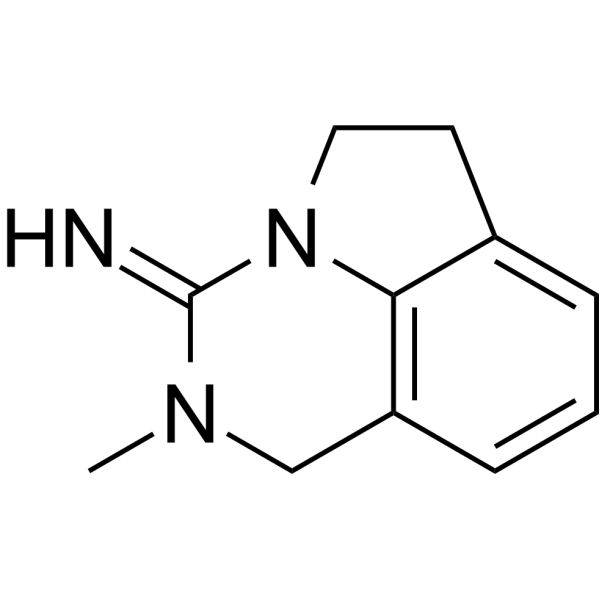
A-86929 is a highly potent and selective dopamine D1 receptor agonist with a pKi value of 7.3. In the 6-OHDA (HY-B1081)-induced unilateral nigrostriatal lesion rat model, A-86929 significantly induces rotational behavior. It also improves motor function in the MPTP (HY-15608)-induced Parkinson's disease marmoset model. Additionally, A-86929 demonstrates potential therapeutic value in reducing cocaine-seeking behavior in rats and reversing Haloperidol (HY-14538)-induced cognitive deficits in rhesus monkeys. A-86929 can be used for research in neurological disorders .
loading...
    loading...
Cat. No.: HY-P990940
CAS No.: 2883118-92-9
Synonyms: MBE-748; M-9140 Antibody; MBE-2882 Antibody

Research Areas:  

Cancer

Precemtabart is a humanized IgG1 antibody targeting CEACAM5, with selectivity for CEACAM5-positive cells. Precemtabart binds to CEACAM5 on tumor cells to deliver the topoisomerase 1 inhibitor Exatecan (HY-13631), and induces cell death by inhibiting the function of TOP1. Precemtabart inhibits the growth of CEACAM5-positive cancer cells. Precemtabart causes dose-dependent hematolymphoid and intestinal-related effects in cynomolgus monkeys. Precemtabart can be used in research related to metastatic colorectal cancer, metastatic pancreatic ductal carcinoma, advanced gastric cancer, advanced non-small cell lung cancer, and advanced pancreatic adenocarcinoma .
loading...
    loading...
Cat. No.: HY-P991461
Synonyms: XmAb968

Target:  

CD38

Research Areas:  

Cancer

AMG-424 (XmAb968) is a human bispecific antibody (bsAb) targeting CD38 & CD3E. AMG-424 kills CD38-expressing cancer cells, triggers T-cell proliferation and attenuates cytokine release. AMG 424 has antitumor activity in a bone marrow-invasive mouse cancer model and induces peripheral B-cell depletion in cynomolgus monkeys. AMG-424 can be used in multiple myeloma research. Recommended isotype control: half-IG G1-kappa/(scFv-heavy-lambda)-h-CH2-CH3 .
loading...
    loading...
Cat. No.: HY-U00237B
CAS No.: 200051-19-0
Target:  

Adrenergic Receptor

Research Areas:  

Others

L-771688 hydrochloride is a potent and highly selective α1A-adrenoceptor antagonist (Kd=43-90 pM). L-771688 hydrochloride is effective against cloned human, rat and dog α1A-adrenergic receptors. L-771688 exhibits high affinity (Ki ≤ 1 nM) and over 500-fold selectivity over the α1B and α1D isoforms. L-771688 potently antagonizes norepinephrine-induced responses at these receptors. Inhibits contractions induced by phenylephrine or A-61603 in rat, dog, human and monkey models .
loading...
    loading...
Cat. No.: HY-119854
CAS No.: 89303-63-9
Synonyms: AY-28228
Atiprosine (AY-28228) is an orally effective selective α1-adrenergic receptor antagonist with a pA2 value of 8.11. Atiprosine exhibits antagonistic activity against α2-adrenergic receptors (α1-adrenergic receptor), 5-HT₂ receptors (5-HT₂ receptor), and H₁ receptors (H₁ receptor). The pA2 values for these receptors are 6.04, 6.87, and 7.32 respectively. Atiprosine has antihypertensive and hypotensive effects in rats, dogs, and monkeys. It can be used for research on cardiovascular and mental disorders.
loading...
    loading...
Cat. No.: HY-137357
CAS No.: 66147-31-7
Synonyms: NSC 305986; γ-MBMTX
Research Areas:  

Cancer

5-Monobutyl methotrexate (NSC 305986; γ-MBMTX) is a dihydrofolate reductase (DHFR) inhibitor and esterase substrate. 5-Monobutyl methotrexate is hydrolyzed by esterases to produce methotrexate. In rhesus monkeys, 5-Monobutyl methotrexate clears more slowly from cerebrospinal fluid than from serum, and its serum protein binding rate exceeds 99%. At the same dose rate, 5-Monobutyl methotrexate achieves cerebrospinal fluid concentrations comparable to those of Methotrexate (HY-14519), and exhibits activity against Methotrexate-resistant cells (with transport defects) that is comparable to that against sensitive parental cells. 5-Monobutyl methotrexate can be used in studies related to Methotrexate-resistant tumors .
loading...
    loading...
Cat. No.: HY-151500
CAS No.: 3026599-90-3
Purity:  99.20%
Research Areas:  

Metabolic Disease

JBSNF-00002 free base is an orally active small molecule inhibitor of the tricyclic nicotinamide N-methyltransferase (NNMT) with IC50 values for human, mouse and monkey sources of NNMT of 33, 210 and 190 nM respectively. JBSNF-00002 free base can reduce endogenous MNA levels in U2OS osteosarcoma cells, with its EC50 being 2.5 μM. JBSNF-00002 free base exhibits significant anti-obesity and anti-diabetic activities in the diet-induced obesity (DIO) model. JBSNF-00002 free base can be used for the study of metabolic diseases such as obesity, type 2 diabetes and non-alcoholic fatty liver disease .
loading...
    loading...
Cat. No.: HY-15195
CAS No.: 290815-26-8
Purity:  98.15%
Synonyms: Ro 67-0565; SPP-301
Target:  

Endothelin Receptor

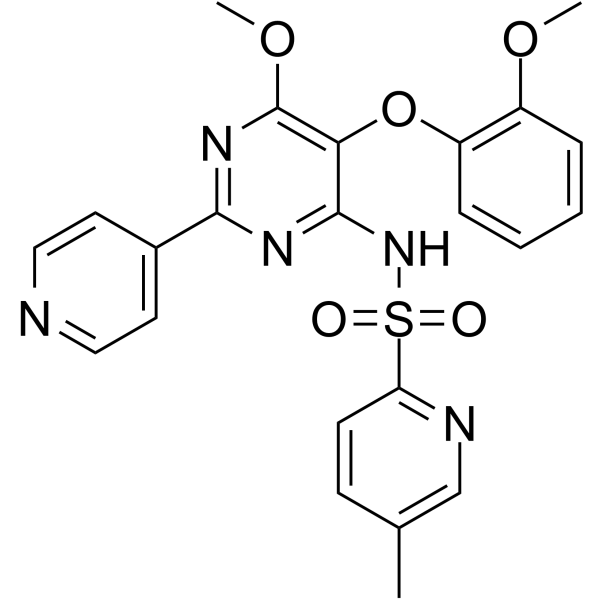
Avosentan (Ro 67-0565; SPP-301) is an orally active endothelin (ETA) receptor antagonist. Avosentan can block the ETA receptor, thereby reducing vascular contraction and exerting a renal protective effect. Avosentan inhibits vascular contraction caused by ET-1 and alleviates the reduction in retinal and optic nerve head blood flow induced by it, lowering intraocular pressure in the glaucoma monkey model. Avosentan non-specifically blocks ETB receptors at high doses, inhibiting ETB-mediated diuresis and natriuresis, and may cause fluid retention. Avosentan can be used to reduce proteinuria with diabetic nephropathy, but induces significant fluid overload and congestive heart failure .
loading...
    loading...
Cat. No.: HY-15195R
CAS No.: 290815-26-8
Synonyms: Ro 67-0565 (Standard); SPP-301 (Standard)
Avosentan (Standard) is the analytical standard of Avosentan (HY-15195). This product is intended for research and analytical applications. Avosentan is an orally active endothelin (ETA) receptor antagonist. Avosentan can block the ETA receptor, thereby reducing vascular contraction, and exerting a renal protective effect. Avosentan inhibits vascular contraction caused by ET-1 and alleviates the reduction in retinal and optic nerve head blood flow induced by it, lowering intraocular pressure in the glaucoma monkey model. Avosentan non-specifically blocks ETB receptors at high doses, inhibiting ETB-mediated diuresis and natriuresis, and may cause fluid retention. Avosentan can be used to reduce proteinuria with diabetic nephropathy, but induces significant fluid overload and congestive heart failure.
loading...
    loading...
Cat. No.: HY-P990093
CAS No.: 2734715-10-5
Synonyms: CM310

Research Areas:  

Inflammation/Immunology

Stapokibart (CM310) is a humanized monoclonal antibody targeting IL-4Rα (KD values of 0.25 nM, 1.50 nM, and 2.75 nM for human, cynomolgus monkey, and rat IL-4Rα, respectively). Stapokibart effectively blocks the interaction of cytokines IL-4 and IL-13 with their co-receptor subunit IL-4Rα. Stapokibart reduces IL-4 and IL-13 mRNA, inhibits CD23 upregulation, and inhibits IL-4 and IL-13-induced STAT6 activation. Stapokibart improves inflammation (airway inflammation, rhinitis, dermatitis) .
loading...
    loading...
Cat. No.: HY-P992437

Target:  

CD44 Apoptosis

Research Areas:  

Inflammation/Immunology Cancer

PF-03475952 is a fully human IgG2 monoclonal antibody targeting CD44. PF-03475952 binds an epitope in CD44’s constant exons, blocks CD44-hyaluronic acid interaction, reduces cell surface CD44, and does not cross-react with rodent CD44 or LYVE-1. PF-03475952 induces cancer cell apoptosis, inhibits LPS (HY-D1056)-induced leukocyte cytokine release and cancer metastasis, and reduces CD44 expression on circulating CD3+ lymphocytes in cynomolgus monkeys. PF-03475952 can be used for the research of rheumatoid arthritis and hepatocellular carcinoma .
loading...
    loading...
Cat. No.: HY-113778
CAS No.: 949564-89-0
Synonyms: 15-keto-17-phenyl trinor PGF2α
Research Areas:  

Endocrinology

15-keto-17-phenyl trinor Prostaglandin F2α (15-keto-17-phenyl trinor PGF2α) is an F-series prostaglandin (PG) analog. The potential metabolite of 15-keto-17-phenyl trinor Prostaglandin F2α in animals is 15-keto PG. 15-keto PG can slightly reduce the intraocular pressure (1 mm Hg) in normal cynomolgus monkeys when administered at a dose of 1 μg/eye. 15-keto-17-phenyl trinor Prostaglandin F2α is a miotic agent in cats, reducing the pupil diameter by 8 mm at a dose of 5 μg/eye.
loading...
    loading...
Cat. No.: HY-139124
CAS No.: 35864-81-4
Synonyms: 15(R)-Carboprost; 15(R)-15-methyl PGF2α
Research Areas:  

Metabolic Disease

15(R)-15-Methyl Prostaglandin F2α (15(R)-Carboprost; 15(R)-15-methyl PGF2α) is a metabolically stable analog of PGF2α. 15(R)-15-Methyl Prostaglandin F2α is an inactive, prodrug PGF agonist designed for activation by gastric acid after oral administration. Acid-catalyzed epimerization of 15(R)-15-Methyl Prostaglandin F2α converts it into the active 15(S)-isomer. The 15(S)-isomer induces luteolysis when injected in rhesus monkeys at a dose of about 12 mg/animal, while the 15(R)-isomer does not.
loading...
    loading...
Cat. No.: HY-153360
CAS No.: 2873460-70-7
Purity:  98.99%
Research Areas:  

Cancer

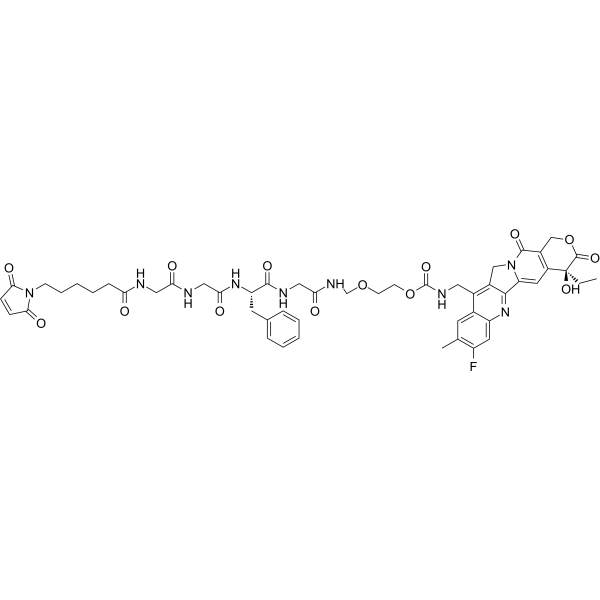
MC-GGFG-AM-(10Me-11F-Camptothecin) is a linker-payload conjugate used to synthesize ZW251. ZW251 an antibody-drug conjugate (ADC) targeting human GPC3. ZW251 consists of a humanized IgG1 antibody conjugated to a novel camptothecin-based topoisomerase 1 inhibitor, ZD06519, via a linker. The linker is the maleimide anchor and a glycyl glycyl phenylalanyl glycine (GGFG)-aminomethyl (AM) cleavable linker. ZW251 has high affinity with human and cynomolgus monkey GPC3. ZW251 displays rapid internalization in GPC3-expressing HCC cell lines, and bystander-mediated killing of GPC3 negative cancer cells .
loading...
    loading...
Cat. No.: HY-16622A
CAS No.: 1005407-76-0
Target:  

LPL Receptor

Research Areas:  

Others

GSK1842799, an alkyl-substituted biaryl amino alcohol, is a selective S1P1 modulator developed for multiple sclerosis (MS). Upon phosphorylation, GSK1842799-P exhibited subnanomolar S1P1 agonist activity with over 1000-fold selectivity over S1P3. The compound showed good oral bioavailability, rapid in vivo conversion to GSK1842799-P, and significant lymphocyte count reduction at 0.1 mg/kg. It matched FTY720 efficacy at 3 mg/kg in the mouse EAE model and achieved comparable plasma levels to FTY-720 phosphate in cynomolgus monkeys. With favorable ADME, PK/PD properties, and toxicology, GSK1842799 advanced to further clinical development .
loading...
    loading...
Cat. No.: HY-181482
Target:  

DAGL

Research Areas:  

Neurological Disease

A1480LS is a peripherally restricted, orally active covalent and irreversible inhibitor of DAGLα and DAGLβ, with IC50 values of 6 nM and 4 nM against human targets, respectively, and IC50 values ≤15 nM across mouse, rat, dog, monkey and human systems. A1480LS reduces the levels of 2-arachidonoylglycerol, arachidonic acid, and cyclooxygenase- and lipoxygenase-derived eicosanoids. A1480LS inhibits injury-induced production of 2-arachidonoylglycerol and arachidonic acid in the peripheral sciatic nerve, and suppresses the responses of high-threshold and wide-dynamic-range-like dorsal horn neurons to mechanical stimulation. A1480LS alleviates pain behaviors in rat models of inflammatory pain, neuropathic pain and chemotherapy-induced peripheral neuropathy .
loading...
    loading...
Cat. No.: HY-189393
CAS No.: 3089177-97-6
Target:  

P-glycoprotein

Research Areas:  

Inflammation/Immunology

RTY-406 is an orally active ABCB4/MDR3 and ABCB11/BSEP positive modulator. RTY-406 increases ABCB4/MDR3 and ABCB11/BSEP protein levels and functional output, elevates biliary phospholipid levels, enhances bile acid efflux, increases bile flow and micelle formation, reduces hepatic bile acids, and promotes cholesterol-to-bile-acid conversion. RTY-406 does not induce hepatocellular injury, maintains normal serum alanine transaminase and aspartate aminotransferase levels, and shows a favorable safety profile in cynomolgus monkeys. RTY-406 can be used for the research of primary sclerosing cholangitis and cholestasis .
loading...
    loading...
Cat. No.: HY-P992448

Target:  

PD-1/PD-L1

Research Areas:  

Cancer

RC98 is a monoclonal antibody targeting programmed cell death ligand 1 (PD-L1) and acts as a selective PD-L1 inhibitor. RC98 binds specifically to human and cynomolgus monkey PD-L1. RC98 blocks the interaction between PD-L1 and its receptor PD-1 to reverse T-cell inactivation mediated by PD-1/PD-L1 signaling. RC98 enhances the cytotoxic T-lymphocyte-mediated anti-tumor immune response against PD-L1-expressing tumor cells. RC98 can be used for the research of tumor immunity and solid tumors .
loading...
    loading...
Cat. No.: HY-W127357
CAS No.: 126-53-4
Glyceryl trinonanoate is a triacylglycerol containing nonanoic acid at the sn-1, sn-2 and sn-3 positions. It has been found in Schizochytrium biomass. 1 1,2,3-Trinonanoyl-rac-glycerol increases blood levels of the ketone body D-(-)-3-hydroxybutyrate in neonatal rhesus monkeys. 2|1. Mioso, R., Toledo Marante, FJ, González, JE, et al. Schizochytrium sp. metabolite analysis. Oleaginous microbial sources of biodiesel by GC-MS. braz. J. Microbiology. 45(2), 403-409 (2014).|2. Tetrick, MA, Greer, FR and Benevenga, NJ Blood D- ( )-3-Hydroxybutyric acid concentration. Compare. medicine. 60(6), 486-490 (2010).
loading...
    loading...
Cat. No.: HY-116889
CAS No.: 369585-22-8
Target:  

Drug Metabolite

Research Areas:  

Others

15-keto Latanoprost is a potential metabolite of latanoprost (HY-B0577) when administered to animals. 15-keto Latanoprost is also one of the common minor impurities found in commercial preparations of the bulk drug compound. Although much less potent that the parent compound latanoprost, 15-keto latanoprost still retains the ability to produce a small but measurable decrease (1 mm Hg) in the intraocular pressure of normal cynomolgus monkeys when administered at a dose of 1 μg/eye.1 15-keto Latanoprost is also a miotic in the normal cat eye, causing an 8 mm Hg reduction in pupillary diameter at 5 μg/eye. Again, this is not as potent as many other F-type prostaglandins; for example, prostaglandin F2α will produce this degree of miosis at a dose of less than 1 μg/eye.
loading...
    loading...

