218 Results for "

CD8 T-cells

" in MedChemExpress (MCE) Product Catalog:
Products (218)

218 Results for "CD8 T-cells" in MCE Product Catalog:

1
1 Cited Publications
Art. -Nr.: HY-150741C
Reinheit:  97.92%
Forschungsgebiete:  

Cancer

ODN 2216 sodium is a type A CpG oligodeoxynucleotide vaccine adjuvant and a TLR9 agonist. ODN 2216 sodium interacts with TLR9 in the lysosomes of CD4 + T cells and activates feedback-dependent signaling pathways. ODN 2216 sodium induces the production of type I interferons, IL-6 and TGF-β via the IRAK4/IRF7 axis, while increasing intracellular ATP levels. ODN 2216 sodium not only induces the differentiation of CD4 + T cells into anti-inflammatory Th3-like regulatory phenotypes to inhibit autologous proliferation, but also enhances the specific CD8 + T cell-mediated cytotoxicity against Mammaglobin-A in breast cancer cells. ODN 2216 sodium is widely used in studies related to breast cancer and systemic lupus erythematosus .
loading...
    loading...
1
1 Cited Publications
Art. -Nr.: HY-119024
CAS. Nr.: 112170-24-8
Reinheit:  98.88%
Target:  

SHP1 STAT

Forschungsgebiete:  

Cancer

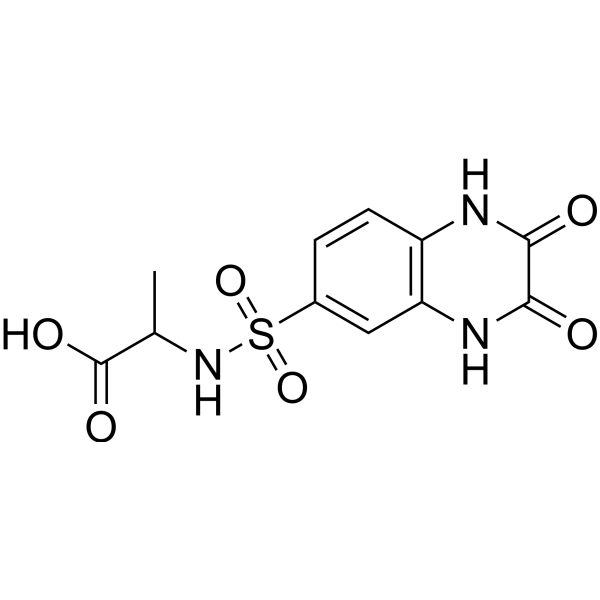
BCI-137 is a Argonaute 2 (AGO2) inhibitor. By inhibiting AGO2 function, reducing PTPN6/SHP-1 protein levels and enhancing STAT1 phosphorylation, BCI-137 restores the sensitivity of tumor cells to IFN-γ. BCI-137 effectively enhances the recruitment, activation and cytotoxicity of CD8 + T cells. BCI-137 exerts a synergistic effect with anti-PD-1 antibodies and significantly reduces tumor volume in preclinical mouse models. BCI-137 exhibits favorable safety profiles and does not cause significant weight loss or death in mice. BCI-137 can be used in research related to bladder cancer, colorectal cancer, melanoma and other related fields .
loading...
    loading...
1
1 Cited Publications
Art. -Nr.: HY-P990255

Target:  

CXCR

Forschungsgebiete:  

Inflammation/Immunology Cancer

Anti-Mouse CXCL9/MIG Antibody (MIG-2F5.5) is an anti-mouse CXCL9/MIG IgG monoclonal antibody. Anti-Mouse CXCL9/MIG Antibody (MIG-2F5.5) can reduce tumor infiltration of CD8 + cytotoxic T cells (CTLs). Anti-Mouse CXCL9/MIG Antibody (MIG-2F5.5) can prolong the survival of transplanted hearts. Anti-Mouse CXCL9/MIG Antibody (MIG-2F5.5) can be used for researches on immunology and cancer such as prostate cancer .
loading...
    loading...
1
1 Cited Publications
Art. -Nr.: HY-124700
CAS. Nr.: 1966129-74-7
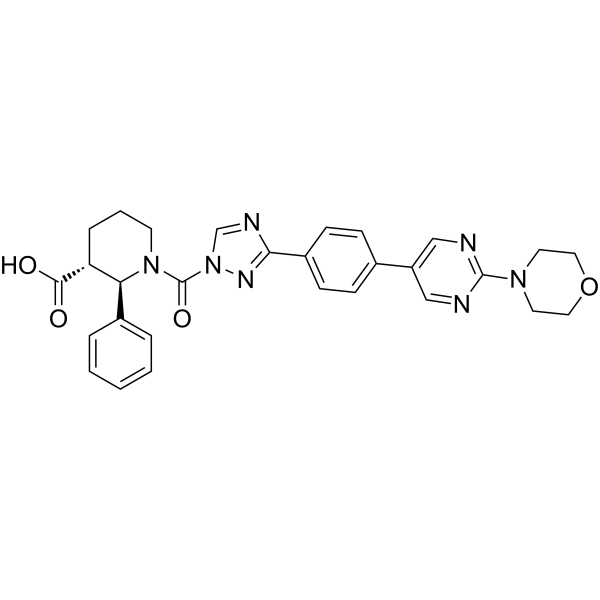
LYPLAL1-IN-1 (compound 11) is a selective, covalent, and irreversible inhibitor of the lysophospholipase-like enzyme LYPLAL1 (IC50 = 6 nM). LYPLAL1-IN-1 shows selectivity against other serine hydrolases such as carboxylesterase CES1 (IC50 > 50 μM for CES1). LYPLAL1-IN-1 inhibits the depalmitoylation function of LYPLAL1, blocking its depalmitoylation modification of cyclic GMP-AMP synthase (cGAS), thereby promoting cGAS dimerization and activation, and initiating the cGAS-STING pathway-mediated innate immune response. LYPLAL1-IN-1 can enhance DNA-induced type I interferon production, upregulate PD-L1 expression in tumor cells, and promote the accumulation of tumor-infiltrating CD8 + T cells, with the core function of strengthening the anti-tumor immune response. LYPLAL1-IN-1 is primarily used in tumor immunology research, especially in combination with PD-1/PD-L1 inhibitors .
loading...
    loading...
1
1 Cited Publications
Art. -Nr.: HY-N0910
CAS. Nr.: 155683-00-4
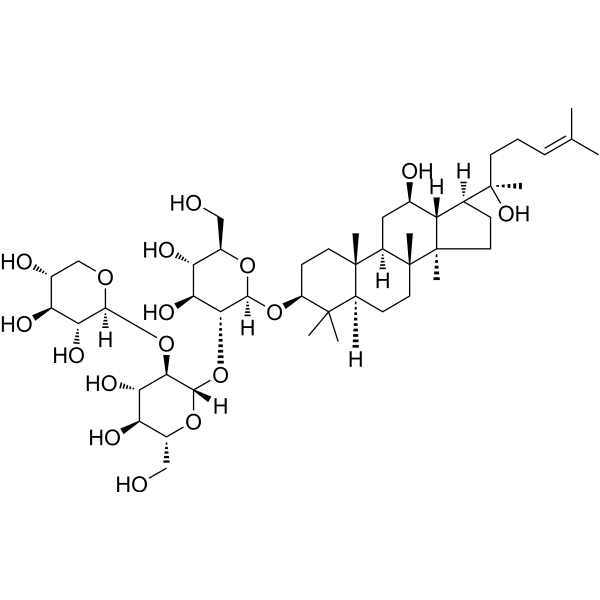
Notoginsenoside Ft1 is an orally active bioactive saponin. Notoginsenoside Ft1 inhibits the PI3K/AKT/mTOR signaling pathway, activates the p38 MAPK and ERK1/2 signaling pathways, and increases the proportion of CD8 + T cells, thereby inducing apoptosis and lysosomal cell death in various cancer cells, and promoting angiogenesis. Notoginsenoside Ft1 causes vasodilation by activating glucocorticoid receptors (GR) and estrogen receptor beta (ERβ) in endothelial cells. Notoginsenoside Ft1 increases intracellular Ca 2+ accumulation, reduces cAMP levels by activating a signaling network mediated through P2Y12 receptors, and promotes platelet aggregation, thereby exerting a procoagulant effect. Notoginsenoside Ft1 inhibits ferroptosis (ferroptosis) in renal tubular epithelial cells by activating the TGR5 receptor, thereby demonstrating a renal protective effect. Notoginsenoside Ft1 acts as a TGR5 agonist and an FXR antagonist to combat obesity and insulin resistance .
loading...
    loading...
1
1 Cited Publications
Art. -Nr.: HY-P990203

Target:  

Integrin

Forschungsgebiete:  

Inflammation/Immunology

Anti-Mouse LPAM-1/Integrin α4β7 Antibody (DATK32) is a rat-derived anti-LPAM-1/Integrin α4β7 IgG2a, κ type antibody inhibitor. Anti-Mouse LPAM-1/Integrin α4β7 Antibody (DATK32) specifically reacts with both chains of the α4β7 heterodimer and blocks the adhesion to immobilized mucosal addressin cell adhesion molecule-1 (MAdCAM-1). Anti-Mouse LPAM-1/Integrin α4β7 Antibody (DATK32) suppresses the proliferation and cytokine secretion of CD8+ T cells. Anti-Mouse LPAM-1/Integrin α4β7 Antibody (DATK32) decreases Peyer’s patches and follicular B cells in mice. Anti-Mouse LPAM-1/Integrin α4β7 Antibody (DATK32) can be used for the researches of inflammation, such as ulcerative colitis .
loading...
    loading...
1
1 Cited Publications
Art. -Nr.: HY-N5084
CAS. Nr.: 205370-59-8
Pinocembrin 7-O-[3''-O-galloyl-4'',6''-hexahydroxydiphenoyl]-β-D-glucoside is a TRPV1 antagonist and HDAC7 inhibitor. Pinocembrin 7-O-[3''-O-galloyl-4'',6''-hexahydroxydiphenoyl]-β-D-glucoside blocks TRPV1-mediated calcium influx, suppresses phosphorylation of p65, IκBα, p38, JNK, and ERK1/2, inhibiting NF-κB and MAPK signaling cascades. Pinocembrin 7-O-[3''-O-galloyl-4'',6''-hexahydroxydiphenoyl]-β-D-glucoside reduces production and gene expression of pro-inflammatory cytokines IL-1β, IL-6, and TNF-α. Pinocembrin 7-O-[3''-O-galloyl-4'',6''-hexahydroxydiphenoyl]-β-D-glucoside exhibits potent analgesic activity, elevates thermal pain threshold and mechanical pain threshold in murine models. Pinocembrin 7-O-[3''-O-galloyl-4'',6''-hexahydroxydiphenoyl]-β-D-glucoside restores CD8 + T cell infiltration into bladder cancer tumors and improves bladder cancer immunotherapy efficacy. Pinocembrin 7-O-[3''-O-galloyl-4'',6''-hexahydroxydiphenoyl]-β-D-glucoside can be used for the researches of painand bladder cancer .
loading...
    loading...
Art. -Nr.: HY-P9997
CAS. Nr.: 2412764-40-8
Synonyms: ANB030

Target:  

PD-1/PD-L1

Forschungsgebiete:  

Inflammation/Immunology

Rosnilimab (ANB030) is a PD-1 agonist IgG1 monoclonal antibody. Rosnilimab can inhibit T cell proliferation, the secretion of inflammatory cytokines, and reduce CD4 and CD8 T cells with high PD-1 expression. Rosnilimab can be used in the research of inflammatory diseases such as colitis and rheumatoid arthritis .
loading...
    loading...
Art. -Nr.: HY-148808
CAS. Nr.: 2365193-22-0
Reinheit:  99.33%
Synonyms: RXC007
Target:  

ROCK

Forschungsgebiete:  

Cancer

Zelasudil (RXC007) is an orally active, highly selective small molecule Rho-associated coiled-coil containing protein kinase 2 (ROCK2) inhibitor with anti-fibrotic efficacy. Zelasudil elicits positive immunomodulatory effects in metastatic pancreatic tumors with increase of CD8+ and CD4+ T cell infiltrate into the tumor cortex and reduction in immunosuppressive FOXP3+ regulatory T cells at the tumor border. Zelasudil is promising for research of pancreatic ductal adenocarcinoma .
loading...
    loading...
Art. -Nr.: HY-150725
CAS. Nr.: 386832-46-8
Target:  

IFNAR TNF Receptor

Forschungsgebiete:  

Infection Cancer

ODN 1585 is a potent inducer of IFN and TNFα production. ODN 1585 is a potent stimulator of NK (natural killer) function. ODN 1585 increases CD8+ T-cell function, including the CD8+ T cell-mediated production of IFN-γ. ODN 1585 induces regression of established melanomas in mice. ODN 1585 can confer complete protection against malaria in mice. ODN 1585 can be used for acute myelogenous leukemia (AML) and malaria research. ODN 1585 can be used as a vaccine adjuvant .
loading...
    loading...
Art. -Nr.: HY-114440
CAS. Nr.: 1980787-47-0
Reinheit:  98.94%
Synonyms: GR-MD-02
Target:  

Galectin Apoptosis

Forschungsgebiete:  

Cancer

Belapectin (GR-MD-02) is a Galectin-3 (Gal-3) inhibitor. Belapectin drives tumor-induced immunosuppression by inducing T cell Apoptosis. Belapectin promotes tumor regression and improves survival of tumor-bearing mice through a CD8+ T cell-dependent mechanism. Belapectin binds to Gal-3 with affinity Ki of 2.8 μM .
loading...
    loading...
Art. -Nr.: HY-176244
CAS. Nr.: 1351116-34-1
Forschungsgebiete:  

Cancer

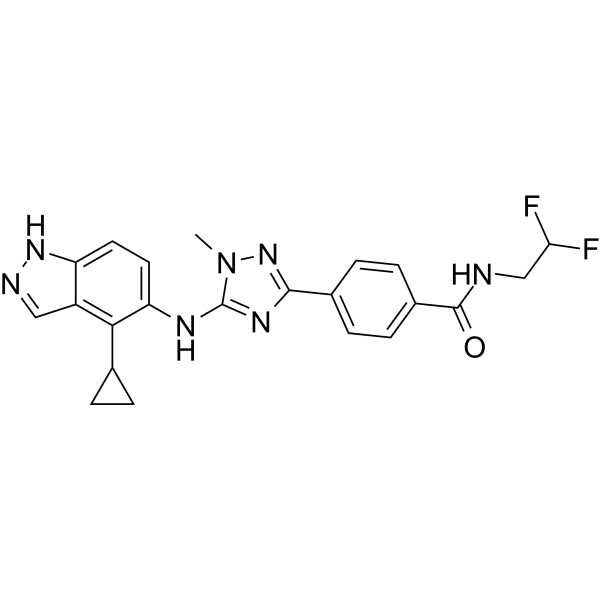
KI-TOX-A3 is a TOX protein-protein interaction inhibitor that blocks the TOX-KAT7 protein-protein interaction with an IC50 of 0.51 μM. KI-TOX-A3 induces proteasomal degradation of TOX, restores KAT7-mediated H3K14 acetylation, reverses exhaustion of CD8 + T cells, and inhibits the proliferation of T cell acute lymphoblastic leukemia (T-ALL) cells. KI-TOX-A3 shows promise for use in studies of hematological malignancies such as T-ALL .
loading...
    loading...
Art. -Nr.: HY-P2511
CAS. Nr.: 247044-67-3
Forschungsgebiete:  

Metabolic Disease

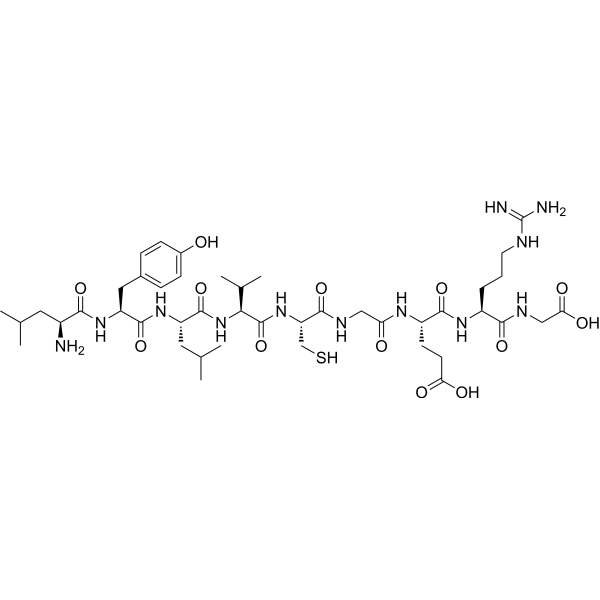
Insulin β Chain Peptide (15-23) is one of the earliest antigenic epitopes to which CD8 T-cells respond .
loading...
    loading...
Art. -Nr.: HY-159730
ERG245 is a selective amino acid aminotransferase (BCAT1) inhibitor with a human IC50 of 0.5 nM. ERG245 enhances oxidative phosphorylation (OXPHOS) in CD8 + T cells by specifically inhibiting BCAT1 activity, thereby increasing the cytotoxicity of CD8 + T cells. ERG245 shows anti-inflammatory and anti-tumor activities. ERG245 can be used for the researches of cancer anf inflammation, such as colitis and colon cancer .
loading...
    loading...
Art. -Nr.: HY-P99159
CAS. Nr.: 2128729-41-7

Target:  

Interleukin Related

Forschungsgebiete:  

Cancer

Ivuxolimab is a fully human IgG2 agonist targeting OX40 (CD134), which selectively binds to the OX40 receptor on the surface of activated CD4 + and CD8 + T cells without inducing antibody-dependent cytotoxicity. Ivuxolimab can promote T cell proliferation, survival and cytokine (such as IFN-γ, IL-2) secretion, inhibit regulatory T cell function, and enhance anti-tumor immune response. Ivuxolimab can be used in the study of melanoma, hepatocellular carcinoma, head and neck squamous cell carcinoma, etc .
loading...
    loading...
Art. -Nr.: HY-N0600
CAS. Nr.: 62025-50-7
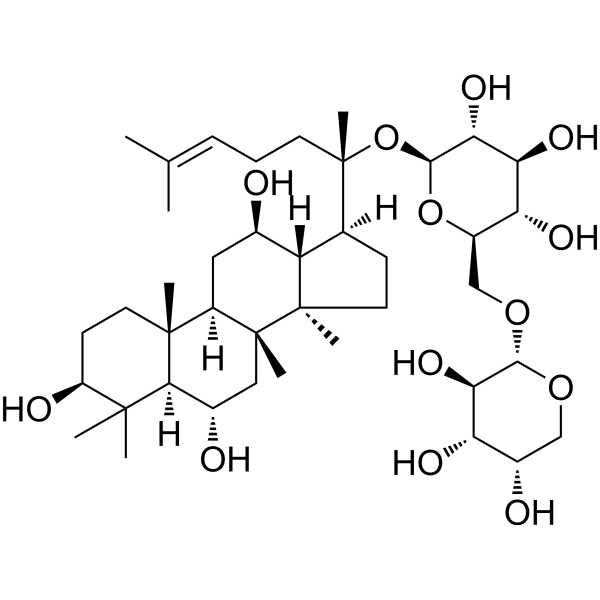
Ginsenoside F3 is a saponin extracted from the leaves of Panax ginseng with immunoenhancing and antitumor immunostimulatory activities. Ginsenoside F3 upregulates RIPOR2 with a Kd value of 3.77 μM. Ginsenoside F3 enhances NF‑κB activation, upregulates T‑bet and downregulates GATA‑3, increases the production of IL‑2 and IFN‑γ, decreases the production of IL‑4 and IL‑10, reverses CD8T‑cell exhaustion, restores cytokine secretion, and enhances antitumor immunity in a mouse non‑small cell lung cancer model. Ginsenoside F3 can be used for the research of non-small cell lung cancer .
loading...
    loading...
Art. -Nr.: HY-P99128

Forschungsgebiete:  

Inflammation/Immunology

Anti-Mouse CD8 beta Antibody (53-5.8) is an anti-mouse CD8 beta IgG2a monoclonal antibody. Anti-Mouse CD8 beta Antibody (53-5.8) can deplete CD8 + T cells and enhance cytotoxicity. Anti-Mouse CD8 beta Antibody (53-5.8) can be used for research on immunology .
loading...
    loading...
Art. -Nr.: HY-P991336
CAS. Nr.: 2708115-83-5
Synonyms: INBRX-106; ES-102

Forschungsgebiete:  

Inflammation/Immunology Cancer

Ordastobart (INBRX-106; ES-102) is a hexavalent OX40 agonist antibody. Ordastobart enhances OX40 receptor clustering, signaling, and downstream activation, thereby increasing the proliferation and activation of CD4 + and CD8 + T cells in vitro and in vivo. Ordastobart exhibits anti-tumor effects and improves survival in mouse models of cancer. Ordastobart is indicated for research in cancers such as fibrosarcoma and colorectal cancer .
loading...
    loading...
Art. -Nr.: HY-P991061
CAS. Nr.: 3024486-14-1
Synonyms: CHS-114; SRF-114
Target:  

CCR

Forschungsgebiete:  

Cancer

Tagmokitug (CHS-114; SRF-114) is a fully human IgG1 antibody targeting CCR8. Tagmokitug selectively binds to human CCR8 (Kd = 502 pM) and mediates the death of CCR8-expressing cells via antibody-dependent cellular cytotoxicity and antibody-dependent cellular phagocytosis. Tagmokitug selectively eliminates intratumoral regulatory T cells, induces tumor growth inhibition, remodels the tumor immune microenvironment, and promotes the differentiation of cytotoxic CD8 + T cell subsets. Tagmokitug can be used for the research of solid tumors .
loading...
    loading...
Art. -Nr.: HY-150725C
Reinheit:  92.48%
Target:  

TNF Receptor IFNAR

Forschungsgebiete:  

Infection Inflammation/Immunology Cancer

ODN 1585 sodium is a potent inducer of IFN and TNFα production. ODN 1585 sodium is a potent stimulator of NK (natural killer) function. ODN 1585 sodium increases CD8+ T-cell function, including the CD8+ T cell-mediated production of IFN-γ. ODN 1585 sodium induces regression of established melanomas in mice. ODN 1585 sodium can confer complete protection against malaria in mice. ODN 1585 sodium can be used for acute myelogenous leukemia (AML) and malaria research. ODN 1585 sodium can be used as a vaccine adjuvant .
loading...
    loading...