37 Results for "

Gasdermin

" in MedChemExpress (MCE) Product Catalog:
Products (37)

37 Results for "Gasdermin" in MCE Product Catalog:

Cat. No.: HY-173234
CAS No.: 1008710-58-4
Research Areas:  

Cardiovascular Disease

GI-Y2 is an orally active, selective Gasdermin D (GSDMD) inhibitor (Kd = 36.0 μM) with anti-pyroptosis activity. GI-Y2 targets GSDMD, impairs membrane anchoring of GSDMD-NT, and blocks GSDMD‑dependent lipid binding and pore formation. GI-Y2 suppresses GSDMD‑dependent pyroptosis and inflammation, mitigates atherosclerosis and cardiac injury, boosts cell survival, and reduces IL‑1β/IL‑18 secretion. GI-Y2 can be used for the research of atherosclerosis and septic myocardial injury .
loading...
    loading...
Cat. No.: HY-100573S
CAS No.: 1795144-22-7
Purity:  99.26%
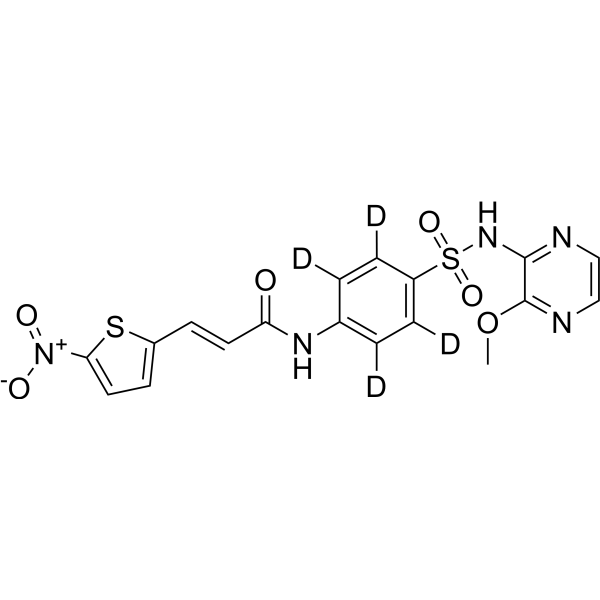
Necrosulfonamide-d4 is the deuterium labeled Necrosulfonamide (HY-100573). Necrosulfonamide is a MLKL and Gasdermin D (GSDMD) inhibitor, capable of separately inhibiting necroptosis and pyroptosis of cells. Necrosulfonamide does not affect the activation of upstream signals, but specifically inhibits the downstream executor oligomerization step. Necrosulfonamide reduces the expression of the key kinases NLRP3 and caspase-1 involved in necroptosis and pyroptosis, activate the Nrf2 pathway and the downstream antioxidant enzymes, and also downregulates a variety of inflammatory factors. Necrosulfonamide plays significant roles in various diseases such as neurodegenerative diseases (such as Parkinson’s disease), tissue damage and ischemia-reperfusion injury, inflammatory bowel disease, osteoarthritis and fracture repair, and hair loss by regulating two important programmed necrosis pathways.
loading...
    loading...
Cat. No.: HY-18711
CAS No.: 1174161-69-3
Synonyms: Metatinib free base; c-Met inhibitor 2 free base
Research Areas:  

Cancer

SCR-1481B1 (Metatinib anhydrous; c-Met inhibitor 2) is an inhibitor of the N-terminal fragment of Gasdermin D (GSDMD), with an IC50 of 1.04 μM and a Ka of 0.42 μM in mice. SCR-1481B1 effectively blocks GSDMD-NT oligomerization and pore formation, inhibits GSDMD-mediated pyroptosis (Pyroptosis), preserves mitochondrial integrity, and reduces proinflammatory cytokine secretion. SCR-1481B1 also inhibits angiogenesis, exerts GSDMD-independent antitumor effects, and enhances the infiltration of antitumor immune cells. SCR-1481B1 is also an inhibitor targeting to c-MET and VEGFR2, can be used in studies related to melanoma and sepsis .
loading...
    loading...
Cat. No.: HY-153939S
Purity:  99.57%
Synonyms: RG7388-d3-1
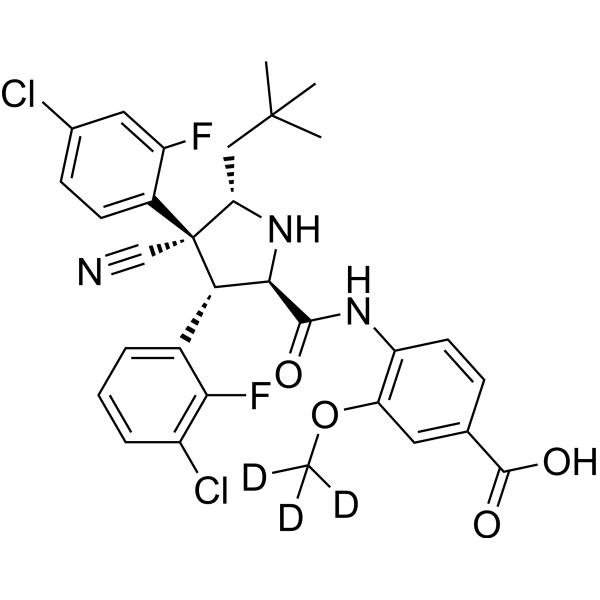
Idasanutlin-d3-1 (RG7388-d3-1) is the deuterated-labeled Idasanutlin (HY-15676). Idasanutlin (RG7388) is an orally bioavailable MDM2 inhibitor with an IC50 of 6 nM. Idasanutlin disrupts MDM2-p53 binding, stabilizes and activates p53, triggering cell cycle arrest, apoptosis, and reduced cancer cell viability. Idasanutlin reduces EGFR protein expression and phosphorylation, suppresses downstream SHP2, MEK1/2, ERK1/2, AKT, mTOR, p70(S6K1), and S6 signaling. Idasanutlin induces mitochondrial ROS production, drives p38 MAPK phosphorylation, upregulates NOXA, and mediates caspase-3-dependent apoptosis and gasdermin E-mediated pyroptosis. Idasanutlin can be used for the research of TP53-mutant non-small cell lung cancer, T-cell acute lymphoblastic leukemia, colorectal carcinoma, melanoma, diffuse large B-cell lymphoma, mantle cell lymphoma, non-Hodgkin lymphoma, severe fever with thrombocytopenia syndrome, neuroblastoma, acute lymphoblastic leukemia, relapsed or refractory acute myeloid leukemia, osteosarcoma, solid tumors, and hematological tumors .
loading...
    loading...
Cat. No.: HY-B0621S
CAS No.: 1353867-93-2
Synonyms: CGA89317-d3
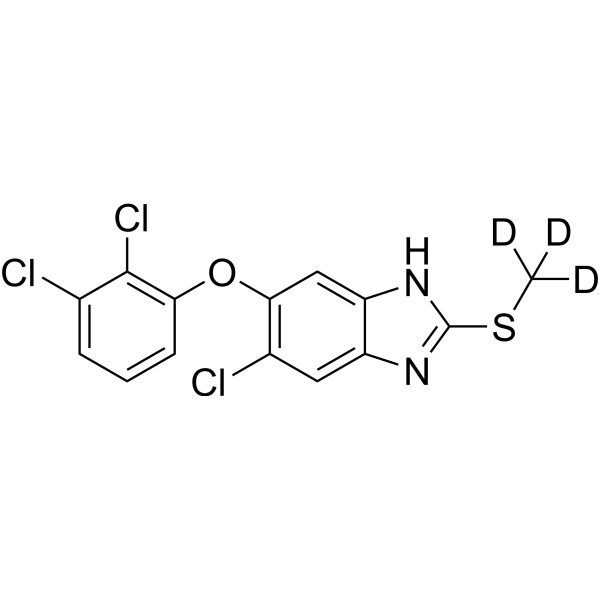
Triclabendazole-d3 is the deuterium labeled Triclabendazole (HY-B0621). Triclabendazole is an orally active parasite inhibitor. Triclabendazole has anti-Leishmania activity and induces gasdermin E (GSDME)-dependent pyroptosis by caspase-3 activation. Triclabendazole can be used for the research of fasciola hepatica .
loading...
    loading...
Cat. No.: HY-15676R
CAS No.: 1229705-06-9
Synonyms: RG7388 (Standard)
Idasanutlin (Standard) (RG7388 (Standard)) is the analytical standard of Idasanutlin (HY-15676). This product is intended for research and analytical applications. Idasanutlin (RG7388) is an orally bioavailable MDM2 inhibitor with an IC50 of 6 nM. Idasanutlin disrupts MDM2-p53 binding, stabilizes and activates p53, triggering cell cycle arrest, apoptosis, and reduced cancer cell viability. Idasanutlin reduces EGFR protein expression and phosphorylation, suppresses downstream SHP2, MEK1/2, ERK1/2, AKT, mTOR, p70(S6K1), and S6 signaling. Idasanutlin induces mitochondrial ROS production, drives p38 MAPK phosphorylation, upregulates NOXA, and mediates caspase-3-dependent apoptosis and gasdermin E-mediated pyroptosis. Idasanutlin can be used for the research of TP53-mutant non-small cell lung cancer, T-cell acute lymphoblastic leukemia, colorectal carcinoma, melanoma, diffuse large B-cell lymphoma, mantle cell lymphoma, non-Hodgkin lymphoma, severe fever with thrombocytopenia syndrome, neuroblastoma, acute lymphoblastic leukemia, relapsed or refractory acute myeloid leukemia, osteosarcoma, solid tumors, and hematological tumors .
loading...
    loading...
Cat. No.: HY-P704049
Purity:  ≥ 90%, as determined by reducing SDS-PAGE.
Synonyms: GSDMD; Gasdermin Domain Containing 1; Prev. GSDMDC1; FLJ12150; DF5L; DFNA5L; Gasdermin Domain-Containing Protein 1; FKSG10; Gasdermin D; Gasdermin-D
Species:  
Human
Source:  
E. coli
loading...
    loading...
Cat. No.: HY-P704049A
Purity:  ≥ 90%, as determined by reducing SDS-PAGE.
Synonyms: GSDMD; Gasdermin Domain Containing 1; Prev. GSDMDC1; FLJ12150; DF5L; DFNA5L; Gasdermin Domain-Containing Protein 1; FKSG10; Gasdermin D; Gasdermin-D
Species:  
Human
Source:  
E. coli
loading...
    loading...
Cat. No.: HY-P83706A
Synonyms: DF 5L; DF5L; DFNA 5L; DFNA5L; FKSG 10; FKSG10; FLJ12150; Gasdermin D; Gasdermin domain containing 1; Gasdermin domain containing protein 1; Gasdermin domain-containing protein 1; Gasdermin-D; GasderminD; GSDMD_HUMAN; GSDMDC 1; GSDMDC1; Gasdermin-D, N-terminal; GSDMD-NT; hGSDMD-NTD; Gasdermin-D, C-terminal; GSDMD-CT; hGSDMD-CTD.

Host:  

Rabbit

Application:  

WB

Reactivity:  

Human

loading...
    loading...
Cat. No.: HY-P71649
Purity:  ≥ 90%, as determined by reducing SDS-PAGE.
Synonyms: GSDMC; Melanoma-Derived Leucine Zipper-Containing Extranuclear Factor; Prev. MLZE; Gasdermin-C; Gasdermin C; Melanoma-Derived Leucine Zipper, Extra-Nuclear Factor
Species:  
Human
Source:  
E. coli
loading...
    loading...
Cat. No.: HY-111674R
CAS No.: 2407782-01-6
Research Areas:  

Inflammation/Immunology

LDC7559 (Standard) is the analytical standard of LDC7559 (HY-111674). This product is intended for research and analytical applications. LDC7559 is a gasdermin D (GSDMD) inhibitor via blocKing neutrophil extracellular trap (NET) in the late stages .
loading...
    loading...
Cat. No.: HY-P811373
Synonyms: MLZE; GSDMC_HUMAN; GSDMC; Melanoma-derived leucine zipper-containing extranuclear factor; Gasdermin C; melanoma-derived leucine zipper, extra-nuclear factor

Host:  

Rabbit

Application:  

WB, IHC-P, IHC-F, IF-Tissue

Reactivity:  

Human

loading...
    loading...
Cat. No.: HY-181168
Target:  

Caspase Pyroptosis

Research Areas:  

Inflammation/Immunology

Lb54 is a caspase-3 and caspase-7 activator with an EC50 of 660.9 nM for human procaspase-3. Lb54 activates caspase-3/7, which cleaves Gasdermin D (GSDMD) at aspartic acid residue 87 to generate a p10 fragment, preventing formation of the pore-forming p30 fragment of GSDMD. Lb54 suppresses GSDMD-mediated pyroptosis through caspase-3/7 activation, thereby attenuating inflammatory responses and conferring protection against sepsis. Lb54 alleviates acute lung injury, and inhibited systemic inflammation by restraining the maturation of monocyte-derived dendritic cells. Lb54 can be used for the research of sepsis .
loading...
    loading...
Cat. No.: HY-13453R
CAS No.: 19542-67-7
Synonyms: BAY 11-7821 (Standard)
BAY 11-7082 (Standard) is the analytical standard of BAY 11-7082 (HY-13453). This product is intended for research and analytical applications. BAY 11-7082 is an IκBα phosphorylation and NF-κB inhibitor. BAY 11-7082 selectively and irreversibly inhibits the TNF-α-induced phosphorylation of IκB-α, and decreases NF-κB and expression of adhesion molecules. BAY 11-7082 inhibits ubiquitin-specific protease USP7 and USP21 (IC50=0.19, 0.96 μM, respectively). BAY 11-7082 inhibits gasdermin D (GSDMD) pore formation in liposomes and inflammasome-mediated pyroptosis and IL-1β secretion in human and mouse cells .
loading...
    loading...
Cat. No.: HY-180830
CAS No.: 2361570-54-7
NLRP3-IN-86 (Compound 8a), a derivative of Songorine (HY-N2080), is a potent and selective NLRP3 inflammasome inhibitor. NLRP3-IN-86 can reduce LPS (HY-D1056)- and Nigericin (HY-127019)-stimulated lactate dehydrogenase (LDH) release (IC50 = 2.69 μM in THP-1 cells and 1.75 μ M in J774A.1 cells). NLRP3-IN-86 can inhibit gasdermin D (GSDMD) cleavage and IL-1β secretion. NLRP3-IN-86 can inhibit cell pyroptosis. NLRP3-IN-86 can be used for research of inflammation .
loading...
    loading...
Cat. No.: HY-100573R
CAS No.: 1360614-48-7
Necrosulfonamide (Standard) is the analytical standard of Necrosulfonamide (HY-100573). This product is intended for research and analytical applications. Necrosulfonamide is a MLKL and Gasdermin D (GSDMD) inhibitor, capable of separately inhibiting necroptosis and pyroptosis of cells. Necrosulfonamide does not affect the activation of upstream signals, but specifically inhibits the downstream executor oligomerization step. Necrosulfonamide reduces the expression of the key kinases NLRP3 and caspase-1 involved in necroptosis and pyroptosis, activate the Nrf2 pathway and the downstream antioxidant enzymes, and also downregulates a variety of inflammatory factors. Necrosulfonamide plays significant roles in various diseases such as neurodegenerative diseases (such as Parkinson’s disease), tissue damage and ischemia-reperfusion injury, inflammatory bowel disease, osteoarthritis and fracture repair, and hair loss by regulating two important programmed necrosis pathways .
loading...
    loading...
Cat. No.: HY-L059
2,034 compounds

Programmed cell death pathways, including apoptosis, pyroptosis and necroptosis, are regulated by unique sets of host proteins that coordinate a variety of biological outcomes. Pyroptosis is a highly inflammatory form of programmed cell death that occurs most frequently upon infection with intracellular pathogens and is likely to form part of the antimicrobial response. This process promotes the rapid clearance of various bacterial, viral, fungal and protozoan infections by removing intracellular replication niches and enhancing the host's defensive responses. Pyroptosis has been widely studied in inflammatory and infection disease models. Recently, there are growing evidences that pyroptosis also plays an important role in the development of cancer, cardiovascular diseases and Metabolic disorder, etc.

MCE designs a unique collection of 2,034 pyroptosis-related compounds mainly focusing on the key targets in the pyroptosis signaling pathway and can be used in the research of pyroptosis signal pathway and related diseases.

