

392 Results for "

P1

" in MedChemExpress (MCE) Product Catalog:
Products (392)

392 Results for "P1" in MCE Product Catalog:

1
1 Cited Publications
Cat. No.: HY-112098
CAS No.: 2417369-94-7
Purity:  96.68%
Research Areas:  

Cancer

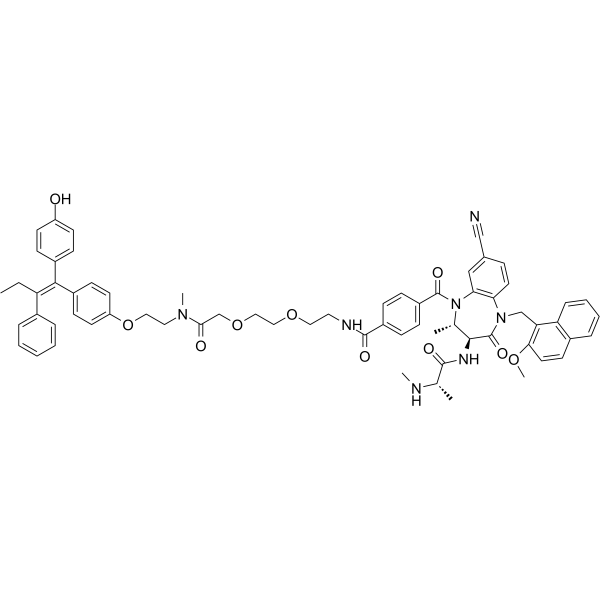
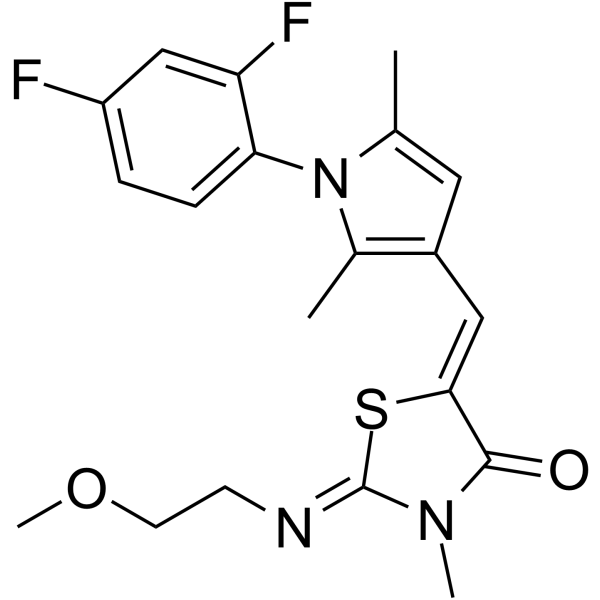
PROTAC ERα Degrader-1 comprises an ubiquitin E3 ligase binding group, a linker and a protein binding group. PROTAC ERα Degrader-1 extracts from patent WO2017201449A1, compound P1. PROTAC ERα Degrader-1 is an estrogen receptor-alpha (ERα) degrader.
loading...
    loading...
1
1 Cited Publications
Cat. No.: HY-132830
CAS No.: 1933514-13-6
Purity:  99.58%
Synonyms: KVD900
Target:  

Kallikrein

Research Areas:  

Cardiovascular Disease

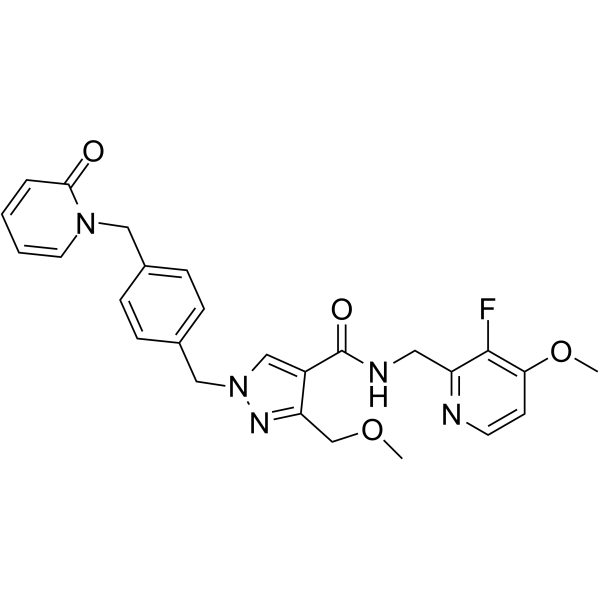
Sebetralstat (KVD900) is an orally active and selective plasma kallikrein inhibitor, with an IC50 of 6.0 nM and a Ki of 3.0 nM against the human target. Sebetralstat binds to the active site of plasma kallikrein, inducing a conformational flip of Trp215 to form a U-shaped conformation; its P1 group interacts with the S1 pocket through hydrophobic interactions and displacement of high-energy water molecules, independent of the Asp189 ionic bond. Sebetralstat inhibits plasma kallikrein-kinin system activation in whole plasma, rapidly relieves laryngeal and abdominal attack symptoms of hereditary angioedema (HAE-C1INH), and reduces attack severity. Sebetralstat can be used in research related to hereditary angioedema (HAE) [1] .
loading...
    loading...
1
1 Cited Publications
Cat. No.: HY-P1485A
CAS No.: 2828433-22-1
Target:  

Neurokinin Receptor

Research Areas:  

Neurological Disease Endocrinology

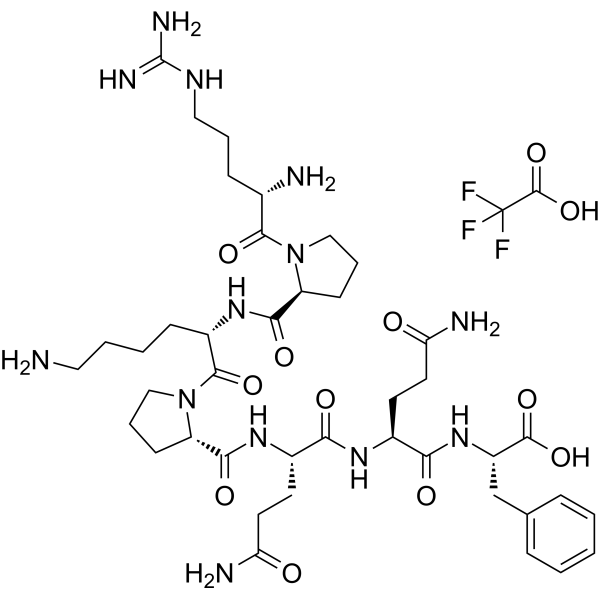
Substance P(1-7) TFA is a fragment of the neuropeptide, substance P (SP). Substance P(1-7) TFA gives depressor and bradycardic effects when applied to the nucleus tractus solitarius [1].
loading...
    loading...
1
1 Cited Publications
Cat. No.: HY-P1494
CAS No.: 57468-17-4
Target:  

Neurokinin Receptor

Research Areas:  

Neurological Disease

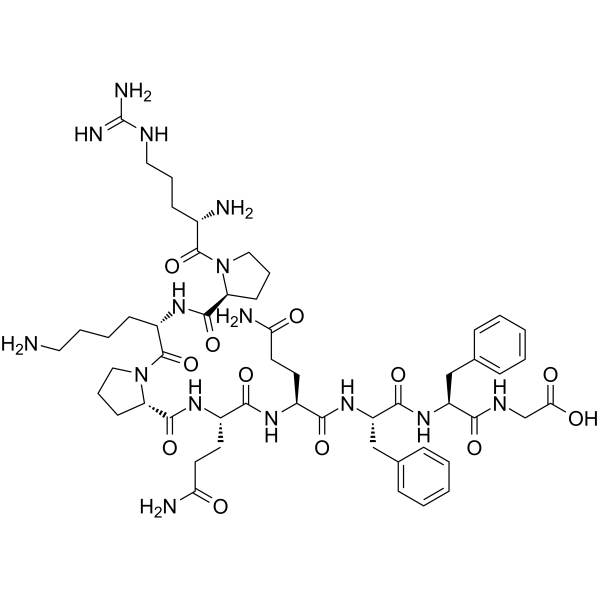
Substance P (1-9) is nonapeptide, which decreases the inactivation of substance P by the guinea-pig ileum and urinary bladder.
loading...
    loading...
1
1 Cited Publications
Cat. No.: HY-117213
CAS No.: 1233332-37-0
Synonyms: S1P1-IN-Ex26
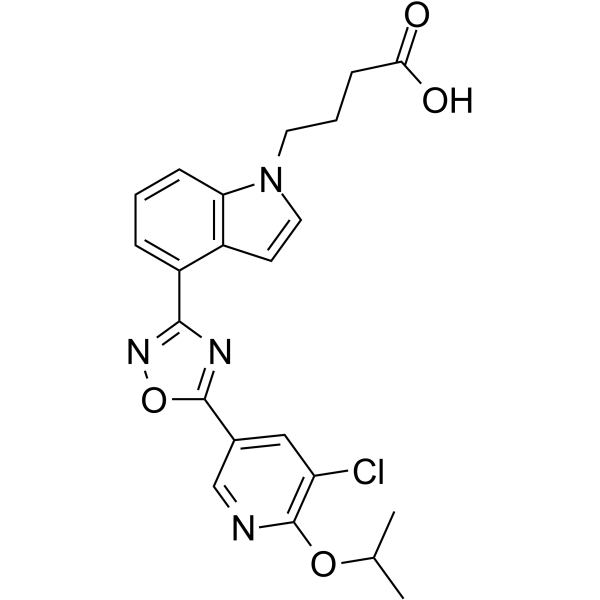
Ex26 (S1P1-IN-Ex26) is a potent and selective sphingosine 1-phosphate receptor 1 (S1P1) antagonist (IC50=0.93 nM). Ex26 shows >3,000-fold selectivity for S1P1 over other Sphingosine 1-phosphate receptors. Ex26 can be used in experimental autoimmune encephalomyelitis reseach [1].
loading...
    loading...
1
1 Cited Publications
Cat. No.: HY-P73916
Purity:  ≥ 85%, as determined by reducing SDS-PAGE.
Synonyms: HSPD1; HuCHA60; Prev. SPG13; CPN60; HSP60; Spastic Paraplegia 13 (Autosomal Dominant); 60 KDa Heat Shock Protein, Mitochondrial; Epididymis Secretory Sperm Binding Protein; Mitochondrial Matrix Protein P1; Heat Shock 60kD Protein 1 (Chaperonin); 60 KDa Chaperonin; Heat Shock 60kDa Protein 1 Isoform 2; Chaperonin 60; Heat Shock 60kDa Protein 1 Isoform 4; GroEL; Short Heat Shock Protein 60 Hsp60s1; Heat Shock 60kDa Protein 1 (Chaperonin); Heat Shock Protein 65; Heat Shock Protein Family D Member 1; HSP65; P60 Lymphocyte Protein; Hsp60; Heat Shock Protein 60; HLD4; Heat Shock Protein Family D (Hsp60) Member 1; HSP-60
Species:  
Mouse
Source:  
E. coli
loading...
    loading...
1
1 Cited Publications
Cat. No.: HY-12789
CAS No.: 1206123-37-6
Purity:  99.91%
Synonyms: APD334
Target:  

LPL Receptor

Research Areas:  

Inflammation/Immunology

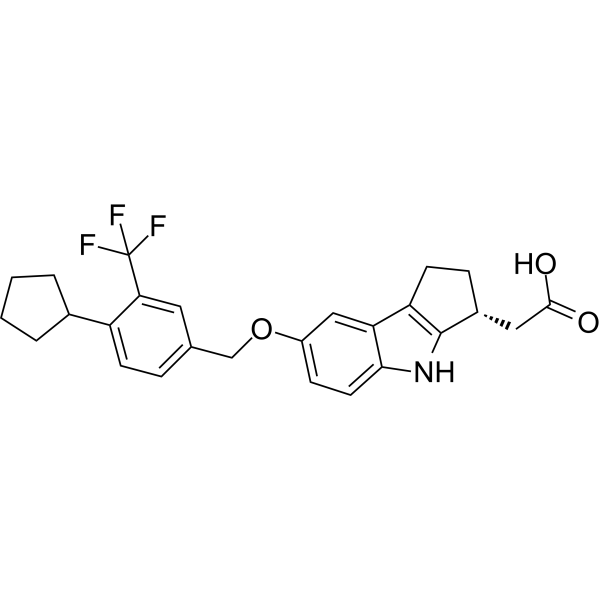
Etrasimod (APD334) is a potent, selective and orally available antagonist of the sphingosine-1-phosphate-1 (S1P1) receptor with an IC50 value of 1.88 nM in CHO cells.
loading...
    loading...
1
1 Cited Publications
Cat. No.: HY-111021
CAS No.: 952565-91-2
Purity:  99.54%
Target:  

LPL Receptor

Research Areas:  

Inflammation/Immunology

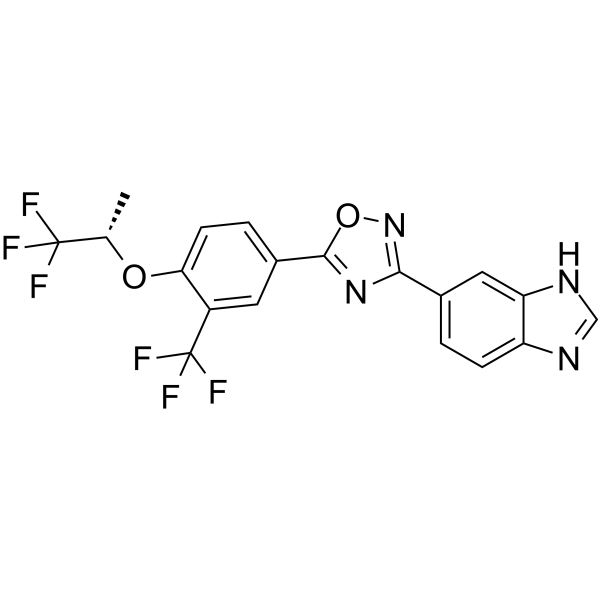
ASP-4058 is a next-generation, selective and oral bioactive agonist for Sphingosine 1-Phosphate receptors 1 and 5 (S1P1 and S1P5), ameliorates rodent experimental autoimmune encephalomyelitis with a favorable safety profile [1].
loading...
    loading...
1
1 Cited Publications
Cat. No.: HY-111021A
CAS No.: 952510-14-4
Purity:  99.71%
Target:  

LPL Receptor

Research Areas:  

Inflammation/Immunology

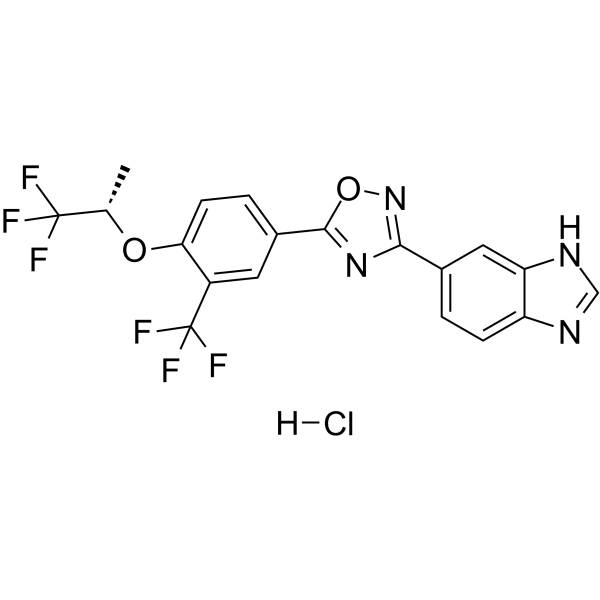
ASP-4058 hydrochloride is a next-generation, selective and orally active agonist for Sphingosine 1-Phosphate receptors 1 and 5 (S1P1 and S1P5), ameliorates rodent experimental autoimmune encephalomyelitis with a favorable safety profile [1].
loading...
    loading...
1
1 Cited Publications
Cat. No.: HY-108495
CAS No.: 1345858-76-5
Purity:  ≥98.0%
Synonyms: ML248
Target:  

LPL Receptor

Research Areas:  

Cardiovascular Disease

CYM50308 (ML248) is a potent, selective and high affinity sphingosine-1-phosphate receptor 4 (S1P4-R) agonist with an EC50 of 56 nM. CYM50308 displays 37-fold more selective for S1P4-R than S1P5-R. CYM50308 has no activity at S1P1-R, S1P2-R and S1P3-R subtypes at concentrations up to 25 μM [1].
loading...
    loading...
1
1 Cited Publications
Cat. No.: HY-135432
CAS No.: 1206123-97-8
Synonyms: APD334 arginine
Target:  

LPL Receptor

Research Areas:  

Inflammation/Immunology

Etrasimod arginine is an orally available S1P receptor modulator that is a potent full agonist of the S1P1 receptor and has partial agonist activity at S1P4. Etrasimod arginine reduces inflammation in a CD4 +CD45RB high T cell-transferred mouse colitis model [1].
loading...
    loading...
1
1 Cited Publications
Cat. No.: HY-19511
CAS No.: 1034688-30-6
Target:  

LPL Receptor

Research Areas:  

Inflammation/Immunology

GSK2018682 is an agonist for S1P1 and S1P5 receptor with pEC50s of 7.7 and 7.2, respectively, and has no agonist activity towards human S1P2, S1P3, or S1P4. GSK2018682 is used in the research of multiple sclerosis.
loading...
    loading...
1
1 Cited Publications
Cat. No.: HY-P702583
Purity:  ≥ 90%, as determined by reducing SDS-PAGE.
Synonyms: DDX5; DEAD (Asp-Glu-Ala-Asp) Box Helicase 5; Prev. G17P1; Putative ATP-Dependent RNA Helicase DDX5; Prev. HLR1; ATP-Dependent RNA Helicase DDX5; Probable ATP-Dependent RNA Helicase DDX5; RNA Helicase; DEAD Box Protein 5; DEAD Box-5; P68; HUMP68; DEAD/H (A
Species:  
Human
Source:  
E. coli
loading...
    loading...
1
1 Cited Publications
Cat. No.: HY-W021448
CAS No.: 352-97-6
Synonyms: Guanidinoacetic acid
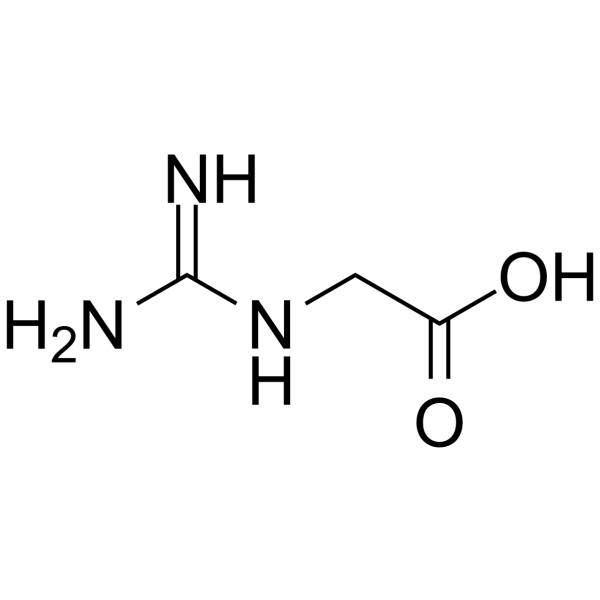
Glycocyamine (Guanidinoacetic acid) is a direct precursor of creatine and an orally active energy metabolism regulator and myogenic differentiation inducer. Glycocyamine can activate the Akt/mTOR/S6K signaling pathway via miR-133a-3p and miR-1a-3p, and stimulate the mRNA expression of myogenic differentiation factor 1 (MyoD) and myopoietin (MyoG). Glycocyamine can increase muscle creatine concentration and maintain ATP homeostasis through the creatine phosphate/creatine kinase system. Glycocyamine can be used in research on feed additives for poultry farming [1] .
loading...
    loading...
Cat. No.: HY-E70076
CAS No.: 9014-01-1
Synonyms: Bacillopeptidaseb
Target:  

Ser/Thr Protease

Research Areas:  

Metabolic Disease

Subtilisin, bacillus licheniformis (Bacillopeptidaseb) is a serine endopeptidase that cleaves peptide bonds with broad substrate specificity. Subtilisin, bacillus licheniformis exhibits P1 site preference (the first residue at the N-terminus of the cleavage site). Subtilisin, bacillus licheniformis can be used in protein hydrolysis, detergents, proteomics, and other fields [1] .
loading...
    loading...
Cat. No.: HY-113337A
CAS No.: 102783-36-8
Synonyms: P1,P4-Di-(adenosine-5')-tetraphosphate tetraammonium
Target:  

Apoptosis

Research Areas:  

Cancer

Ap4A tetraammonium (P1,P4-Di-(adenosine-5')-tetraphosphate tetraammonium) is a conserved second messenger in organisms ranging from bacteria to humans. Ap4A tetraammonium binds to the histidine triad nucleotide-binding protein 1 (HINT1) activates the transcription of genes downstream of MITF. Ap4A tetraammonium induces apoptosis [1] .
loading...
    loading...
Cat. No.: HY-125728
CAS No.: 67401-56-3
Purity:  ≥99.0%
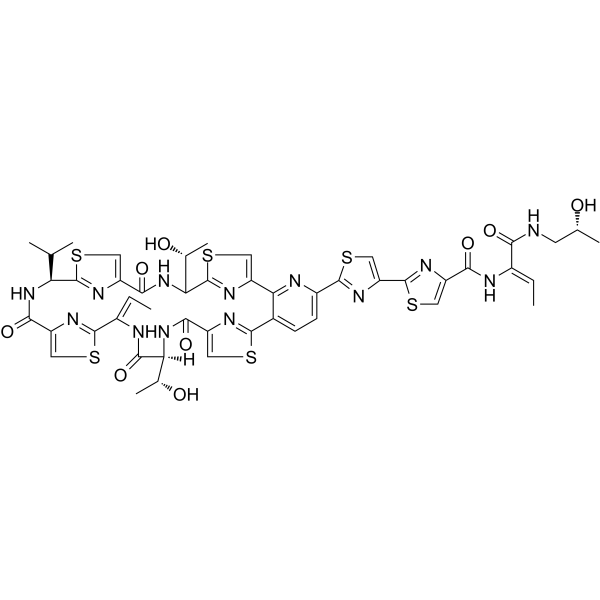
Micrococcin P1 is a macrocyclic peptide antibiotic and is a potent hepatitis C virus (HCV) inhibitor with an EC50 range of 0.1-0.5 μM [1]. Micrococcin P1 has in vitro antibacterial activity against Gram-positive bacterial strains. The MIC values of Micrococcin P1 against S. aureus 1974149, E. faecalis 1674621 and S. pyogenes 1744264 are 2 μg/mL, 1 μg/mL and 1 μg/mL, respectively . Micrococcin P1 is also a potent inhibitor of the malaria parasite Plasmodium falciparum .
loading...
    loading...
Cat. No.: HY-113273A
CAS No.: 4097-04-5
Purity:  97%
Synonyms: Ap5A pentasodium; P1,P5-Di(adenosine-5'-)pentaphosphate pentasodium
Target:  

P2X Receptor

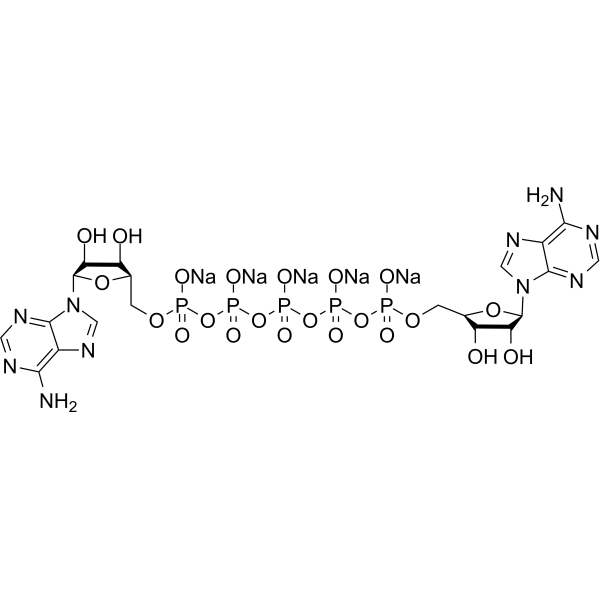
Diadenosine pentaphosphate (Ap5A; P1,P5-Di(adenosine-5'-)pentaphosphate) pentasodium is an endogenous generated diadenosine polyphosphate, possessing the dual identities of intracellular alarm signal and extracellular signaling molecule. Diadenosine pentaphosphate regulates calcium signaling in the nervous, cardiac and peripheral sensory systems by activating P2X1/P2X3/P2Y receptor and RyR2 channels (EC50 = 140 μM). Diadenosine pentaphosphate can be used in studies related to intracellular calcium release channels, cardiovascular diseases and nociception (pain) [1] .
loading...
    loading...
Cat. No.: HY-W014018
CAS No.: 92-71-7
Synonyms: PPO; DPO; POP
2,5-Diphenyloxazole (PPO; DPO; POP) is a fluorescent dye, as well as a substrate and metabolite precursor of cytochrome P-450 (cytochrome P-448/P1-450). 2,5-Diphenyloxazole serves as a scintillator [1] .
loading...
    loading...
Cat. No.: HY-P2317
CAS No.: 125667-96-1
Research Areas:  

Infection

Cecropin P1, porcine is an antibacterial peptide that can be isolated from the upper part of the small intestine of the pig. Cecropin P1, porcine shows antibacterial activity against Gram-negative bacteria. Cecropin P1, porcine shows antiviral activity and inhibits PRRSV infection [1] .
loading...
    loading...

