261 Results for "

aggregates

" in MedChemExpress (MCE) Product Catalog:
Products (261)

261 Results for "aggregates" in MCE Product Catalog:

Cat. No.: HY-W143216
CAS No.: 531-57-7
Synonyms: Monomethylthionine
Target:  

Amyloid-β Tau Protein HSP

Research Areas:  

Neurological Disease

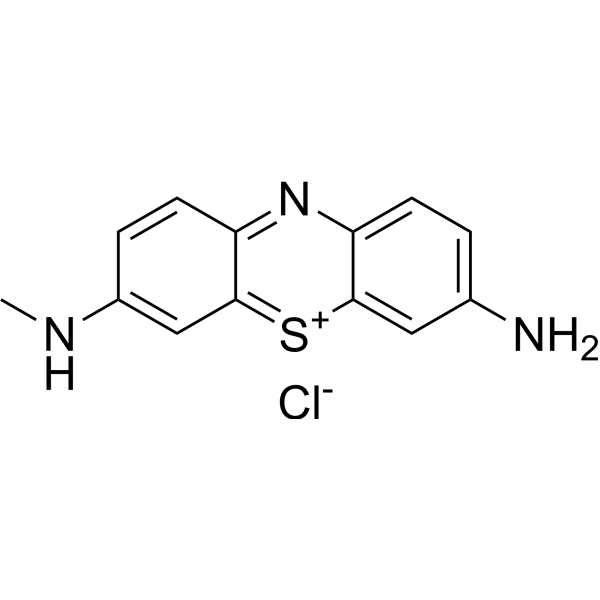
Azure C (Monomethylthionine) acts as a tau oligomer inhibitor and Aβ42 oligomerization inhibitor. Azure C regulates hsp70 ATPase activity, thereby mediating the clearance of tau protein. Azure C reduces the levels of toxic tau oligomers by promoting the formation of non-toxic tau aggregates, rescues neuroblastoma cells from tau oligomer-induced toxicity, and binds to and inhibits Aβ42 oligomerization. Azure C is generated via continuous oxidation of methylene blue or azure B through a horseradish peroxidase-mediated reaction. Azure C can be used in research related to tauopathies, including Alzheimer's disease .
loading...
    loading...
Cat. No.: HY-122958
CAS No.: 130464-57-2
Purity:  95.07%
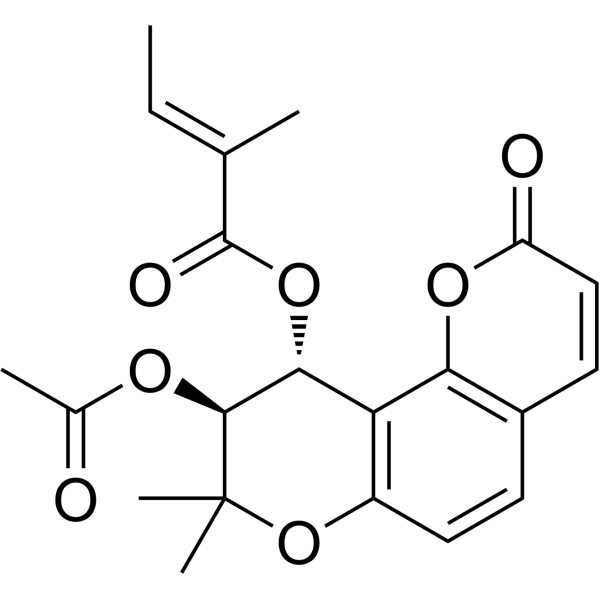
Peucedanocoumarin III is an α-synuclein fiber depolymerizer with blood-brain barrier permeability. Peucedanocoumarin III depolymerizes β-sheet aggregate structures, promotes aggregate clearance, inhibits β23-induced cytotoxicity, blocks the formation of Lewy body-like inclusions, and prevents dopaminergic neuron loss. Peucedanocoumarin III can be used in studies related to Parkinson's disease .
loading...
    loading...
Cat. No.: HY-P991480
ONC-841 is a blood-brain barrier-permeable, humanized monoclonal antibody targeting SIGLEC10. As an immune checkpoint inhibitor, ONC-841 restores the functions of immune effector cells such as T cells and enhances anti-tumor immune responses by blocking inhibitory signals mediated by SIGLEC10. ONC-841 restores the phagocytic and migratory activities of microglia, and promotes the phagocytosis of Amyloid-β and Tau protein aggregates by microglia. ONC-841 is applicable to research related to solid tumors and Alzheimer's disease .
loading...
    loading...
Cat. No.: HY-P10954
CAS No.: 197295-74-2
Target:  

p38 MAPK

Research Areas:  

Others

Link N peptide is a proteoglycan aggregates activator in the extracellular matrix. Link N peptide can selectively activate the p38 mitogen-activated protein kinase (MAPK) pathway to promote the expression of type I and II collagens in human intervertebral disc cells. Link N peptide is promising for research of intervertebral disc degeneration-related diseases .
loading...
    loading...
Cat. No.: HY-155021
CAS No.: 2781922-42-5
Purity:  99.95%
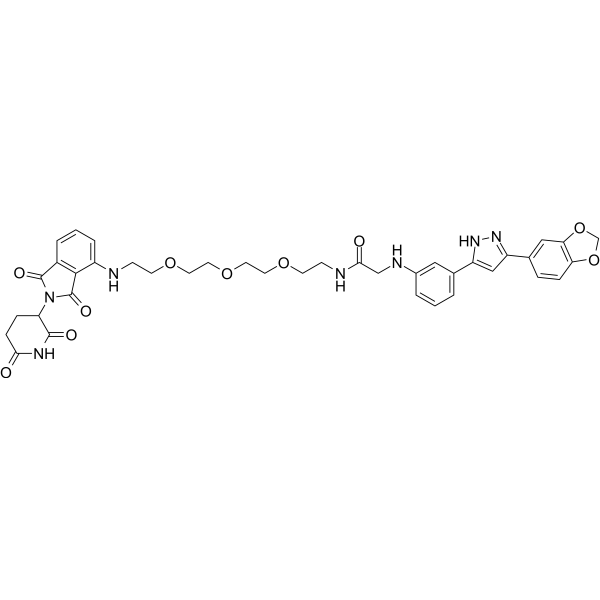
PROTAC α-synuclein degrader 5 is a selective PROTAC degrader targeting α‑synuclein aggregates, with a DC50 of 7.51 μM. PROTAC α-synuclein degrader 5 binds to αSyn aggregates, recruits the CRBN E3 ubiquitin ligase, and mediates the ubiquitination and subsequent degradation of α‑synuclein aggregates. PROTAC α-synuclein degrader 5 activates the autophagy-lysosome pathway. PROTAC α-synuclein degrader 5 reduces ROS levels in neuroblastoma cells, restores mitochondrial membrane potential, rescues cell viability, and decreases LDH release. PROTAC α-synuclein degrader 5 degrades αSyn aggregates in Caenorhabditis elegans and ameliorates oxidative stress. PROTAC α-synuclein degrader 5 is used for the research of synucleinopathies, such as Parkinson's disease .
loading...
    loading...
Cat. No.: HY-161746
CAS No.: 2941386-44-1
Target:  

AUTOTACs Autophagy

Research Areas:  

Neurological Disease

Anle138b-F105 is an autophagy-targeting chimera (AUTOTAC) that targets p62/Sequestosome-1/SQSTM1. Anle138b-F105 binds to the ZZ domain of p62, induces conformational activation, self-oligomerization, interaction with LC3, and formation of autophagosomes. Anle138b-F105 induces autophagic flux of ubiquitin-conjugated aggregated proteins, leading to their lysosomal degradation. Anle138b-F105 is applicable for the research of neurodegenerative proteinopathies .
loading...
    loading...
Cat. No.: HY-149127
CAS No.: 1039760-91-2
Purity:  ≥98.0%
Synonyms: ASC-JM17; ALZ-003
Rosolutamide (ASC-JM17) is an orally active Nrf1/Nrf2 activator. Rosolutamide activates Hsf1 pathways, upregulates proteasome subunits and antioxidant enzymes, induces proteasome complex structural rearrangement, and enhances ubiquitin-proteasome system-mediated degradation. Rosolutamide reduces mutant androgen receptor and ataxin-3 aggregates, restores mitochondrial function, attenuates reactive oxygen species (ROS) levels, induces apoptosis and ferroptosis, and inhibits cancer cell growth. Rosolutamide can be used for the research of spinal and bulbar muscular atrophy, Huntington’s disease, and temozolomide-resistant glioblastoma .
loading...
    loading...
Cat. No.: HY-W750960
CAS No.: 1377605-22-5
Target:  

Antibiotic

Research Areas:  

Others

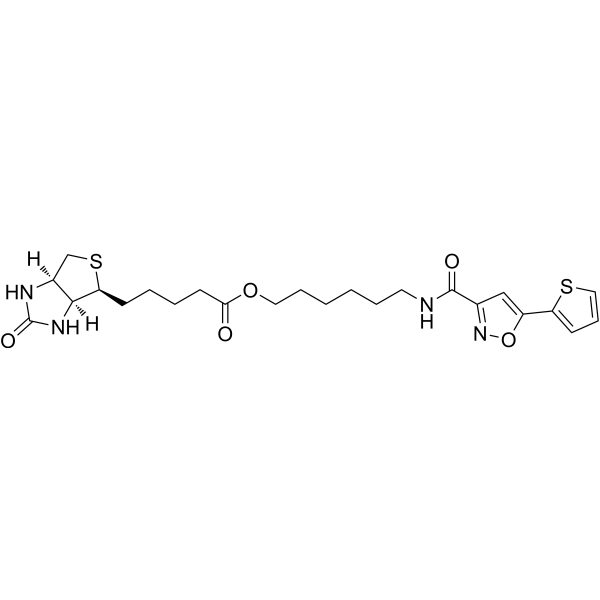
Biotinylated isoxazole is a biotinylated derivative of Isoxazole (HY-W010649). Biotinylated isoxazole is capable of triggering the formation of aggregates related to RNA granules .
loading...
    loading...
Cat. No.: HY-P99720A
CAS No.: 1373715-00-4
Synonyms: RAP-536

Target:  

TGF-beta/Smad

Research Areas:  

Metabolic Disease

Luspatercept (mIgG2a) (RAP-536) is a fusion protein, consisting of a modified extracellular domain of human ActRIIB linked to the murine IgG2a Fc domain. Luspatercept (mIgG2a) inhibits Smad2/3 signaling, promotes differentiation of late-stage erythroid precursors and mitigates ineffective erythropoiesis (IE) in murine β-thalassemia. Luspatercept (mIgG2a) reduces anemia, α-globin aggregates, hemolysis, and disease complications of IE such as iron overload, splenomegaly, and bone defects .
loading...
    loading...
Cat. No.: HY-113434B
CAS No.: 71030-39-2
Synonyms: (±)-5-HETE
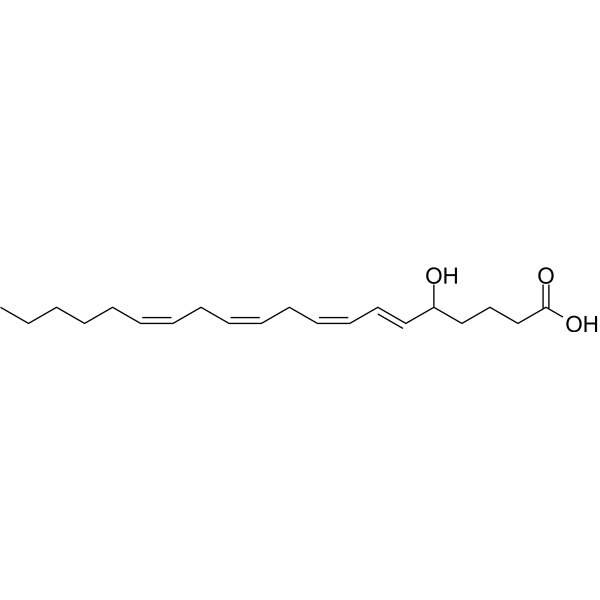
5-HETE ((±)-5-HETE), a fatty acid, is a oxidative derivative of Arachidonic acid. 5-HETE is a mixture of 5(S)-HETE and 5(R)-HETE. 5-HETE is a potent aggregating agent that induces the aggregation of neutrophils with an IC50 value of 200 nM .
loading...
    loading...
Cat. No.: HY-N7927
CAS No.: 20126-76-5
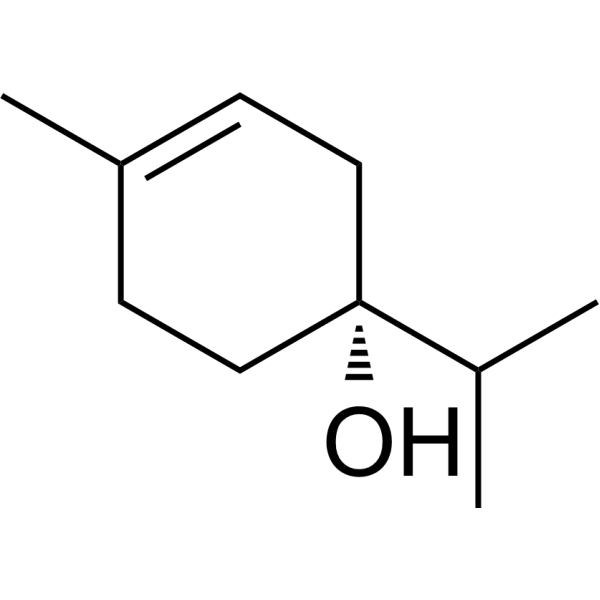
(-)-Terpinen-4-ol is a terpene alcohol and male-specific aggregating pheromone found in the scolytid bark beetle Polygraphus poligraphus. (-)-Terpinen-4-ol functions as an attractant for Polygraphus poligraphus beetles .
loading...
    loading...
Cat. No.: HY-138643
CAS No.: 185351-23-9
Purity:  99.97%
Target:  

Amyloid-β

Research Areas:  

Neurological Disease

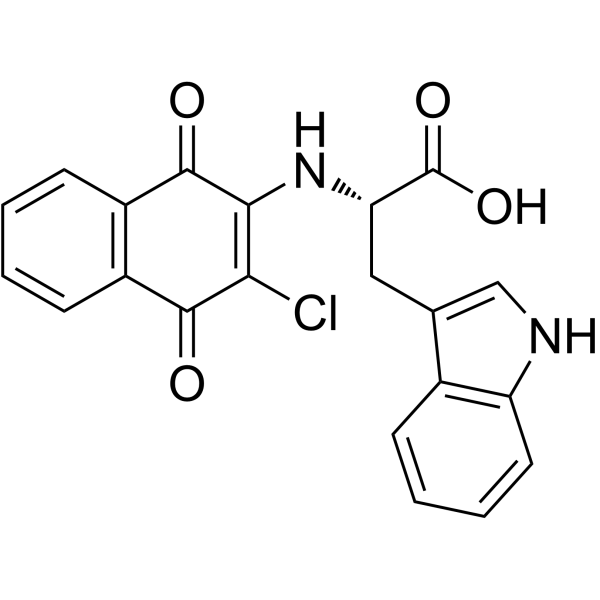
Cl-NQTrp signifcantly disrupts the preformed fbrillar aggregates of Tau-derived PHF6 (VQIVYK) peptide and full-length tau protein .
loading...
    loading...
Cat. No.: HY-150049
CAS No.: 1353570-40-7
Target:  

Amyloid-β

Research Areas:  

Neurological Disease

γ-Secretase modulator 13 (compound 4) is a gamma-secretase modulator (GSMs) that inhibits the production of the aggregated amyloid β-peptide Aβ42 with an IC50 value of 163 nM. γ-Secretase modulator 13 can be used in the study of Alzheimer's disease .
loading...
    loading...
Cat. No.: HY-D1005A4
CAS No.: 9003-11-6
Synonyms: PEG-PPG-PEG, 1630 (Average)
Poloxamer 122 L42 (PEG-PPG-PEG, 1630 (Average)) is a synthetic nonionic triblock copolymer composed of polyoxyethylene-polyoxypropylene, with emulsifying and wetting properties. Poloxamer 122 L42 forms large spherical aggregates in aqueous solutions near its cloud point,. Poloxamer 122 L42 can form thermoreversible hydrogels, and is also used in research related to serving as a drug delivery carrier in the fields of food additives, cosmetics, pharmaceutical preparations and tissue engineering .
loading...
    loading...
Cat. No.: HY-176130
CAS No.: 3115333-82-6
Research Areas:  

Neurological Disease

MRL828 is a heterobifunctional molecule that targets aggregated tau protein. As an autophagy-targeting chimera (ATTEC), MRL828 selectively labels aggregated tau protein for clearance via the autophagy (autophagy)-lysosome pathway. The activity of MRL828 depends on autophagosomes rather than lysosomes, and it induces autophagosome-dependent secretion. MRL828 acts as an intracellular aggregate inhibitor and a secretory autophagy inducer, reducing intracellular levels of aggregated tau protein through autophagosome-dependent secretory autophagy instead of lysosomal degradation. MRL828 can be used in the research of neurodegenerative diseases such as Alzheimer's disease .
loading...
    loading...
Cat. No.: HY-148495
Purity:  ≥90.0%
Target:  

Amyloid-β

Research Areas:  

Neurological Disease

Carnosine conjugated hyalyronate is a hyaluronic acid derivative functionalized with the dipeptide carnosine (Carnosine, Car) and has the ability to resist amyloid aggregation. Carnosine conjugated hyalyronate dissolves amyloid fibrils and reduces Aβ-induced toxicity in vitro. The effectiveness of Carnosine conjugated hyalyronate against amyloid aggregation is directly proportional to the Carnosine loading .
loading...
    loading...
Cat. No.: HY-167006
Synonyms: PLGA10000-PEG3000-Vinylsulfone
PLGA10000-PEG3000-VS (PLGA10000-PEG3000-Vinylsulfone) is an amphiphilic polymer. Amphiphilic polymers can be used in drug delivery studies due to their ability to self-assemble into discrete aggregates .
loading...
    loading...
Cat. No.: HY-112636
CAS No.: 14696-39-0
Purity:  98.34%
Target:  

Amyloid-β

Research Areas:  

Others

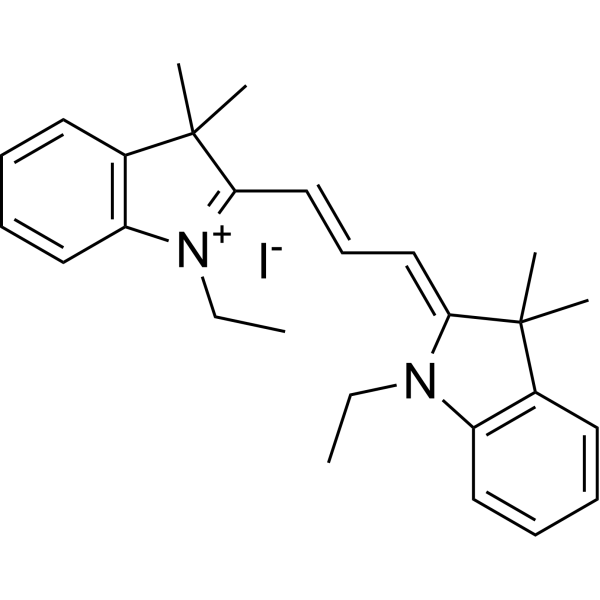
Astrophloxine is a fluorescent imaging probe capable of targeting antiparallel dimers. Astrophloxine can be used to detect aggregated Aβ in brain tissue and cerebrospinal fluid samples of Alzheimer's disease (AD) mice .
loading...
    loading...
Cat. No.: HY-175354
Target:  

PROTACs E1/E2/E3 Enzyme

Research Areas:  

Others

PROTAC BET Degrader-13 is a BET PROTAC degrader that recruits TRIM21. PROTAC BET Degrader-13 utilizes wild-type TRIM21 to mediate the degradation of PML-eGFP-BRD4 (BD2) fusion protein aggregates, with an EC50 of 1.4 μM in A549 cells expressing TRIM21-FLAG. PROTAC BET Degrader-13 can be used for research on targeted protein degradation and protein aggregate clearance .
loading...
    loading...
Cat. No.: HY-176925
CAS No.: 3056154-68-5
Target:  

α-synuclein Amyloid-β

Research Areas:  

Neurological Disease

α-Synuclein aggregate binder 2 (Compound 1) is a specific alpha-synuclein binder with a Ki of 1.6 nM. α-Synuclein aggregate binder 2 has a weak binding affinity for β-amyloid aggregates with a Ki of 295 nM. α-Synuclein aggregate binder 2 can be used as a tracer in Parkinson's disease .
loading...
    loading...

