36 Results for "

biologically active agents

" in MedChemExpress (MCE) Product Catalog:
Products (36)

36 Results for "biologically active agents" in MCE Product Catalog:

Cat. No.: HY-N0035R
CAS No.: 7770-78-7
Synonyms: (-)-Arctigenin (Standard)
Arctigenin (Standard) is the analytical standard of Arctigenin. This product is intended for research and analytical applications. Arctigenin ((-)-Arctigenin), a biologically active lignan, can be used as an antitumor agent. Arctigenin exhibits potent antioxidant, anti-inflammatory and antiviral (influenza A virus) activities. Arctigenin can be used for the research of metabolic disorders, and central nervous system dysfunctions .
loading...
    loading...
Cat. No.: HY-B0497S2
CAS No.: 2665663-60-3
Synonyms: BAY2353-d3
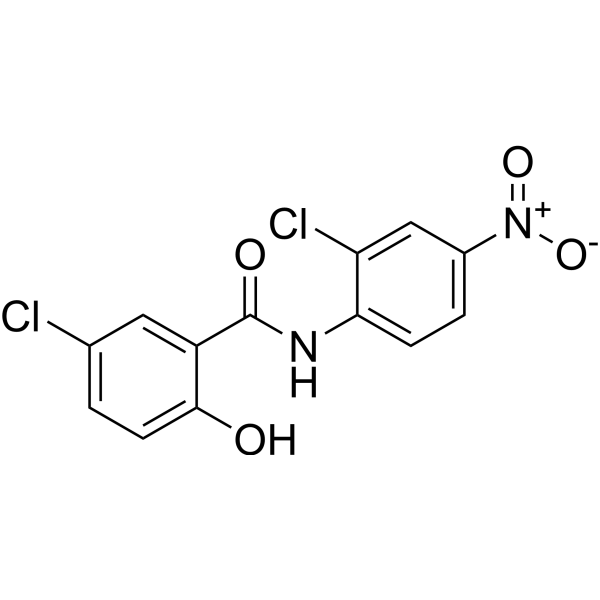
Niclosamide-d3 (BAY2353-d3) is deuterium labeled Niclosamide. Niclosamide (BAY2353) is an orally active antihelminthic agent used in parasitic infection research . Niclosamide is a STAT3 inhibitor with an IC50 of 0.25 μM in HeLa cells . Niclosamide has biological activities against cancer, inhibits DNA replication in Vero E6 cells .
loading...
    loading...
Cat. No.: HY-P2006
CAS No.: 907596-50-3
Target:  

Inhibitory Antibodies

Research Areas:  

Others

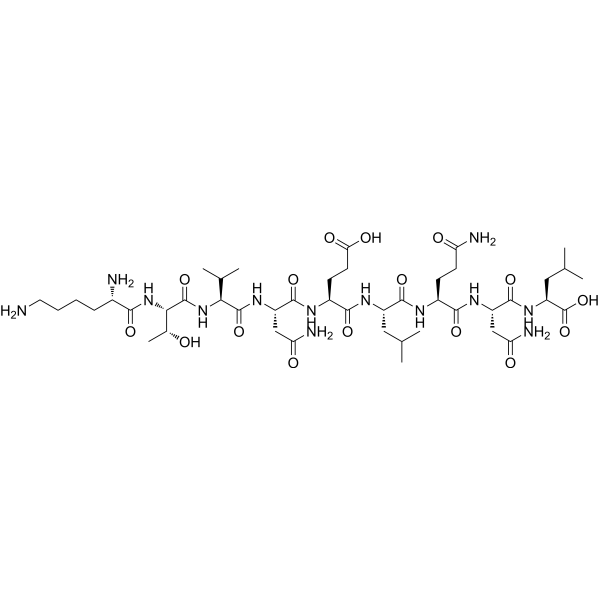
Abecomotide is a biological active peptide. (an immunological agent for active immunization)
loading...
    loading...
Cat. No.: HY-119696S
CAS No.: 1185242-69-6
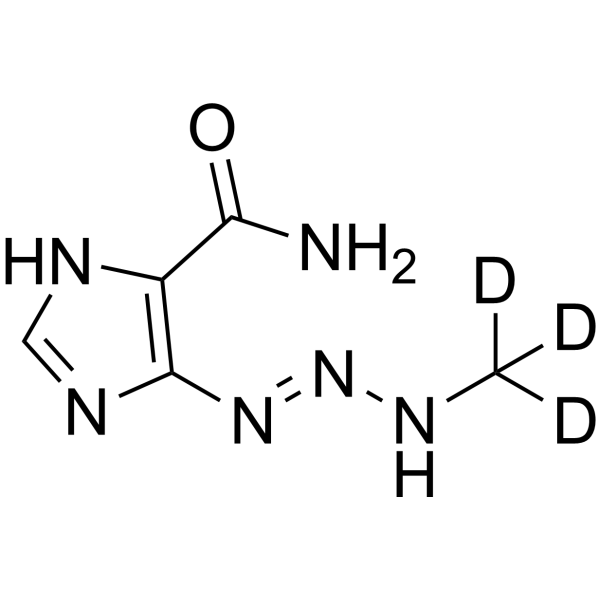
MTIC-d3 is deuterium labeled MTIC. MTIC is the active metabolite of Temozolomide (TMZ). MITC has lower bioavailability in the brain compared with TMZ, because the agent’s permeability through biological barriers and tumor cell membranes affects bioavailability. MITC exhibits low affinity to biological membrane .
loading...
    loading...
Cat. No.: HY-118561
CAS No.: 78499-27-1
Synonyms: AD-1590
Target:  

COX

Research Areas:  

Inflammation/Immunology

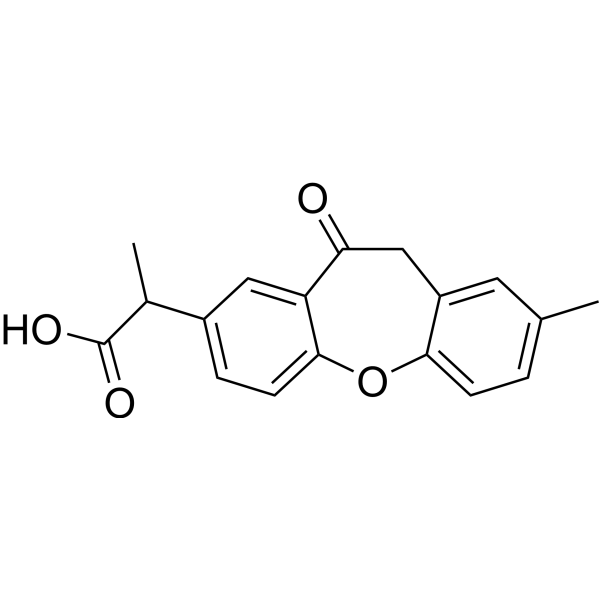
Bermoprofen (AD-1590) is an orally active non-steroidal anti-inflammatory agent. Bermoprofen has potent antipyretic activities with a short biological half-life. Bermoprofen is a potent antagonist of LPS-induced fever in rabbits .
loading...
    loading...
Cat. No.: HY-12396R
CAS No.: 96-50-4
Research Areas:  

Infection

Aminothiazole (Standard) is the analytical standard of Aminothiazole. This product is intended for research and analytical applications. Aminothiazole (2-Aminothiazole), a typical heterocyclic amine, is a precursor for the synthesis of biologically active molecules including sulfur agents, biocides, fungicides, antibiotics, dyes and chemical reaction accelerators .
loading...
    loading...
Cat. No.: HY-N7122R
CAS No.: 69558-55-0
Thymopentin is a biologically active peptide secreted mainly by the epithelial cells of thymic cortex and medulla. Thymopentin is an effective immunomodulatory agent with a short plasma half-life of 30 seconds. Thymopentin enhances the generation of T-cell lineage derived from human embryonic stem cells (hESCs) .
loading...
    loading...
Cat. No.: HY-B0497BS
CAS No.: 1325559-12-3
Synonyms: BAY2353-13C6 monohydrate
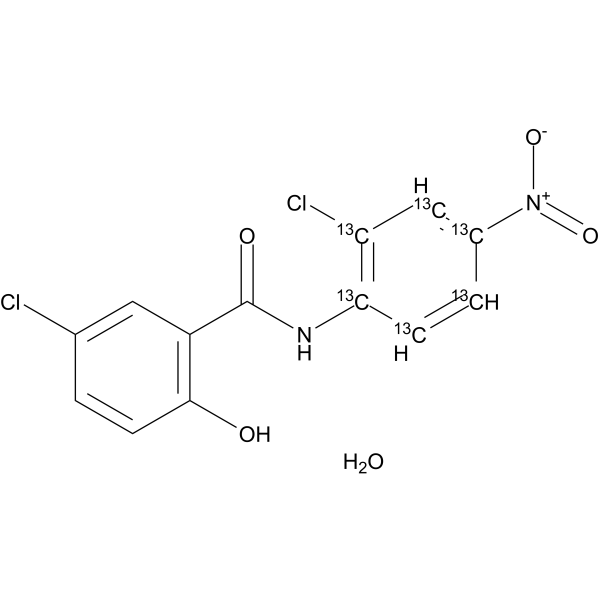
Niclosamide- 13C6 (monohydrate) is the 13C labeled Niclosamide monohydrate . Niclosamide (BAY2353) monohydrate is an orally active antihelminthic agent used in parasitic infection research . Niclosamide monohydrate is a STAT3 inhibitor with an IC50 of 0.25 μM in HeLa cells . Niclosamide monohydrate has biological activities against cancer, and inhibits DNA replication in Vero E6 cells .
loading...
    loading...
Cat. No.: HY-128554AR
CAS No.: 79049-30-2
Research Areas:  

Infection

N-Desethyl amodiaquine dihydrochloride (Standard) is the analytical standard of N-Desethyl amodiaquine dihydrochloride. This product is intended for research and analytical applications. N-Desethyl amodiaquine dihydrochloride is the biologically active metabolite of Amodiaquine (HY-B1322A). N-Desethyl amodiaquine dihydrochloride is an antiparasitic agent, has inhibitory for strains V1/S and 3D7 with IC50 values of 97 nM and 25 nM, respectively. N-Desethyl amodiaquine dihydrochloride can be used for the research of malaria .
loading...
    loading...
Cat. No.: HY-B0497G
CAS No.: 50-65-7
Synonyms: BAY2353 (GMP)
Niclosamide (GMP) is Niclosamide (HY-B0497) produced by using GMP guidelines. GMP small molecules work appropriately as an auxiliary reagent for cell therapy manufacture. Niclosamide (BAY2353) is an orally active antihelminthic agent used in parasitic infection research . Niclosamide is a STAT3 inhibitor with an IC50 of 0.25 μM in HeLa cells . Niclosamide has biological activities against cancer, inhibits DNA replication in Vero E6 cells .
loading...
    loading...
Cat. No.: HY-123801A
CAS No.: 2593569-36-7
Synonyms: GL-II-93 sodium
Target:  

GABA Receptor

Research Areas:  

Inflammation/Immunology

MIDD0301 (GL-II-93) is an orally available, active γ-aminobutyric acid type A receptor (GABAAR) inhibitor and anti-asthmatic agent. MIDD0301 exhibits biological and immunotoxicological safety in mice and does not affect the number of circulating lymphocytes, monocytes, and granulocytes. MIDD0301 has no significant adverse immune response at repeated doses, which is better than Prednisone (HY-B0214). MIDD0301 relaxes histamine-contracted guinea pig and human airway smooth muscle and is used in the study of bronchoconstrictive diseases .
loading...
    loading...
Cat. No.: HY-W012346
CAS No.: 2345-26-8
Geranyl isobutyrate is a synthetic α,β‑unsaturated branched‑chain aliphatic ester and a geraniol derivative. Geranyl isobutyrate acts as a food and feed flavouring agent and a biologically active antimicrobial compound. Geranyl isobutyrate shows antimicrobial activity against Gram‑positive and most Gram‑negative bacteria .
loading...
    loading...
Cat. No.: HY-L049
1,994 compounds

Antibacterial agents are a group of materials that fight against pathogenic bacteria. Thus, by killing or reducing the metabolic activity of bacteria, their pathogenic effect in the biological environments will be minimized. The most widely used antibacterial agents exert their effects on bacterial cell wall synthesis, protein synthesis, DNA replication and metabolic pathways. However, resistance to antimicrobial agents has become a major source of morbidity and mortality worldwide. The main mechanisms of resistance are limiting uptake of a drug, modification of a drug target, inactivation of a drug, and active efflux of a drug. Therefore, it is an urgent need to develop new drugs targeted at resistant organisms.

MCE offers a unique collection of 1,994 compounds with validated antibacterial activities. MCE antibacterial compound library is an effective tool for drug repurposing screening, combination screening and biological investigation.

Cat. No.: HY-N7122AR
CAS No.: 89318-88-7
Thymopentin (acetate) (Standard) is the analytical standard of Thymopentin (acetate) (HY-N7122A). This product is intended for research and analytical applications. Thymopentin acetate is a biologically active peptide secreted mainly by the epithelial cells of thymic cortex and medulla. Thymopentin acetate is an effective immunomodulatory agent with a short plasma half-life of 30 seconds. Thymopentin acetate enhances the generation of T-cell lineage derived from human embryonic stem cells (hESCs) .
loading...
    loading...
Cat. No.: HY-N19651
CAS No.: 109175-37-3
Oxophoebine is a biologically active oxoaporphine alkaloid and also a DNA topoisomerase inhibitor. Oxophoebine acts as a cytotoxic agent against certain cancer cells. Oxophoebine binds to Measles Virus fusion protein, hemagglutinin and phosphoprotein, and interferes with viral entry, replication and particle assembly processes. Oxophoebine exhibits selective toxicity towards yeast mutants with defects in DNA repair and recombination. Oxophoebine can be used in studies related to measles and coronavirus disease 2019 (COVID-19) .
loading...
    loading...
Cat. No.: HY-L143
60 compounds

Oceans cover more than 70% of the Earth’s surface and host a huge species diversity. Marine organisms are considered the most recent source of bioactive natural products after terrestrial plants and nonmarine microorganisms. Marine biological sources are taxonomically diverse and include sponges, tunicates, corals, mollusks, fungi, and sediment-derived bacteria.

Marine organisms can produce a plethora of small molecules with novel chemical structures and potent biological properties, being a rich source for the discovery of pharmacologically active compounds, already with several marine-derived agents approved as drugs. Ziconotide, a peptide originally discovered in a tropical cone snail, was the first marine-derived compound to be approved in the United States in December 2004 for the treatment of pain. Then, in October 2007, Trabectedin became the first marine anticancer drug to be approved in the European Union.

MCE offers a unique collection of 60 marine-sourced natural products which can be used for drug discovery for high throughput screening (HTS) and high content screening (HCS). MCE marine-sourced natural product library is an important source for drug discovery and development.

