40 Results for "

capsules

" in MedChemExpress (MCE) Product Catalog:
Products (40)

40 Results for "capsules" in MCE Product Catalog:

Cat. No.: HY-172351
CAS No.: 24991-53-5
PEG400-bis-amine is a diamine-terminated polyethylene glycol and conjugate linker. PEG400-bis-amine endows the surface of carbon capsules with stealth properties, biocompatibility, and free amino groups for antibody conjugation. PEG400-bis-amine acts as a reducing agent and passivating agent to promote the formation and assembly of silver nanoparticles on silica nanospheres, and increases the number of silver nanoparticles on the silica surface.
loading...
    loading...
Cat. No.: HY-W127851
CAS No.: 19953-58-3
Synonyms: Cypridina luciferin analog
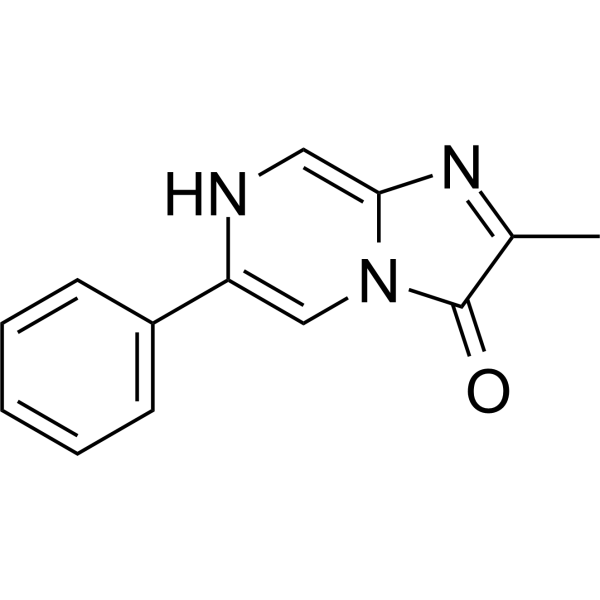
CLA, or conjugated linoleic acid, is a polyunsaturated fatty acid that occurs naturally in a variety of animal products, such as meat and dairy. It has several potential benefits for human health, including the ability to reduce body fat mass, improve insulin sensitivity, and reduce inflammation. CLA has been extensively studied for its effects on weight loss and muscle growth, as well as its potential role in preventing chronic diseases such as heart disease and cancer. Additionally, it can be taken as a dietary supplement in capsule form.
loading...
    loading...
Cat. No.: HY-154703
CAS No.: 12511-31-8
Research Areas:  

Others

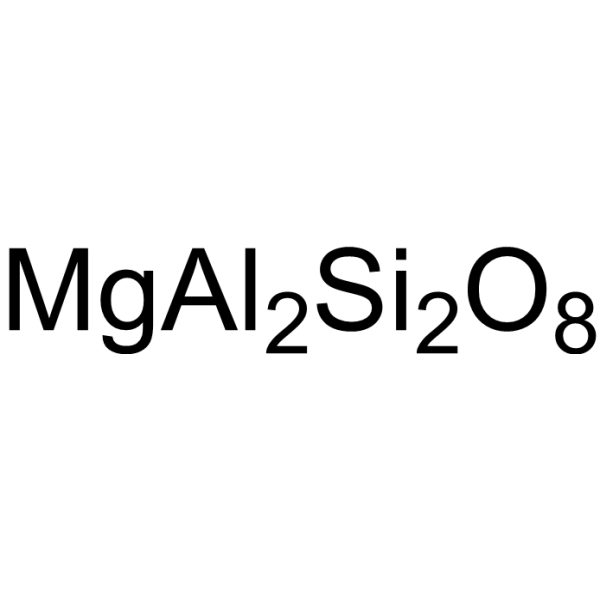
Aluminum magnesium silicate can be used as an excipient, such as adsorbent, stabilizer, suspending agent, disintegrant for tablet and capsule, binder for tablet, thickener. Pharmaceutical excipients, or pharmaceutical auxiliaries, refer to other chemical substances used in the pharmaceutical process other than pharmaceutical ingredients. Pharmaceutical excipients generally refer to inactive ingredients in pharmaceutical preparations, which can improve the stability, solubility and processability of pharmaceutical preparations. Pharmaceutical excipients also affect the absorption, distribution, metabolism, and elimination (ADME) processes of co-administered drugs .
loading...
    loading...
Cat. No.: HY-153771
CAS No.: 890818-51-6
Target:  

Bacterial

Research Areas:  

Infection

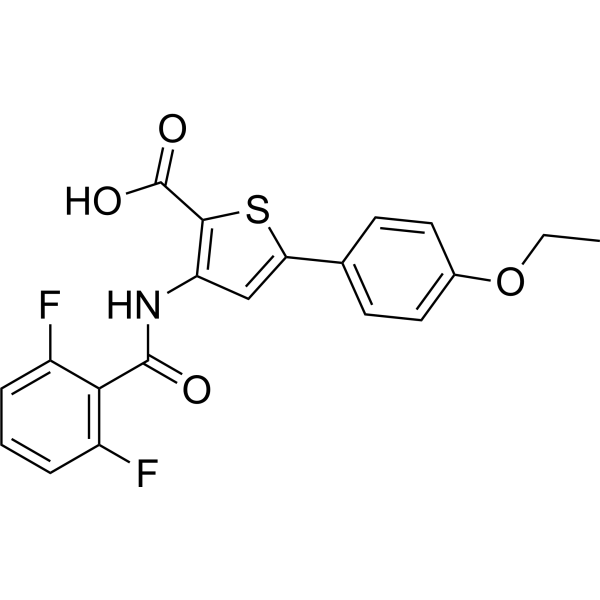
Du011 is an E. coli polysaccharide capsule biogenesis inhibitor that targets MprA. Du011 can be used in research against E. coli infection .
loading...
    loading...
Cat. No.: HY-113002
CAS No.: 10139-18-1
α-D-Glucose 1,6-bisphosphate is an activator of PMM2 and phosphoglucomutase. α-D-Glucose 1,6-bisphosphate regulates glycogen metabolism, glycolysis, amino sugar synthesis, as well as the formation of bacterial cell walls and capsules. α-D-Glucose 1,6-bisphosphate can be used in studies related to pmm2-cdg (cdg-1a or Jaeken syndrome) .
loading...
    loading...
Cat. No.: HY-169919
CAS No.: 3020690-76-7
Research Areas:  

Infection

HDM-IN-1 (Compound A4) is an inhibitor for fungal histone demethylase (HDM), that inhibits the H3K27me3 in Cryptococcus neoformans and in Candida auris with IC50s of 134 and 12 nM. HDM-IN-1 exhibits inhibitory efficacy against C. neoformans and C. auris with MIC80 of 0.5-2 μg/mL, through inhibition of the biofilm and capsule formation. HDM-IN-1 exhibits antifungal activity in ICR mouse model .
loading...
    loading...
Cat. No.: HY-113002A
CAS No.: 71662-13-0
α-D-Glucose 1,6-bisphosphate cyclohexanamine is an activator of PMM2 and phosphoglucomutase. α-D-Glucose 1,6-bisphosphate cyclohexanamine regulates glycogen metabolism, glycolysis, amino sugar synthesis, as well as the formation of bacterial cell walls and capsules. α-D-Glucose 1,6-bisphosphate cyclohexanamine can be used in studies related to pmm2-cdg (cdg-1a or Jaeken syndrome) .
loading...
    loading...
Cat. No.: HY-N4173R
CAS No.: 19716-60-0
8-Oxoepiberberine (Standard) is the analytical standard of 8-Oxoepiberberine (HY-N4173). This product is intended for research and analytical applications. 8-Oxoepiberberine is an alkaloid metabolite in serum after oral administration of Zuojin formula. Zuojin formula is a traditional Chinese medicine used for the study of gastrointestinal diseases and consists of Coptis chinensis and Evodia rutaecarpa. 8-Oxoepiberberine is predicted to be a potential active alkaloid of Heiguteng Zhuifeng Huoluo Capsule. 8-Oxoepiberberine can be used in studies related to rheumatoid arthritis .
loading...
    loading...
Cat. No.: HY-167680
CAS No.: 483369-58-0
Synonyms: GSK823093
Target:  

Endogenous Metabolite

Research Areas:  

Metabolic Disease

Denagliptin (GSK823093) is a small molecule dipeptidyl peptidase IV (DPP-4) inhibitor with activity for the suppression of endocrine and metabolic diseases. Denagliptin can be used to study type 2 diabetes. Denagliptin is stable in the solid state but degrades in solution and in mixtures with various excipients. Denagliptin also exhibits degradation in capsules, mainly through cyclization reactions to form (3S,7S,8aS) aminoamines to provide further synthetic materials. The degradation pathway of Denagliptin was elucidated, providing data to support its formulation development and regulatory filings .
loading...
    loading...
Cat. No.: HY-173428
Target:  

Fungal

Research Areas:  

Infection

Antifungal agent 130 (Compound A7) is an orally active antifungal agent. Antifungal agent 130 has good antifungal activity against Candida albicans (MIC = 0.12 ng/mL) and Cryptococcus neoformans (MIC = 0.12 ng/mL) and has excellent antivirulence effect. Antifungal agent 130 exerts its antifungal effect by disrupting the iron homeostasis of fungal cells and inducing oxidative stress damage. Antifungal agent 130 can inhibit the formation of fungal virulence factors (such as biofilm, capsule, urease and melanin). Antifungal agent 130 has good antifungal effect and can be used in the study of drug-resistant fungal infections .
loading...
    loading...
Cat. No.: HY-DY2048
Target:  

Fluorescent Dye

Research Areas:  

Infection

India Ink is a negative staining agent. India Ink creates contrast against the polysaccharide capsule of Cryptococcus neoformans to enable visualization. India Ink enables automated measurement of Cryptococcus neoformans capsule diameter using computational image analysis. India Ink can be used for the research of cryptococcosis .
loading...
    loading...
Cat. No.: HY-184755
CAS No.: 25087-26-7
Synonyms: PMAA
Research Areas:  

Others

Poly(methacrylic acid) (PMAA) is a pH/ionic strength-responsive swelling agent and polycation complexing agent. Poly(methacrylic acid) undergoes reversible swelling and size changes through carboxylic acid ionization and sodium ion charge shielding. As a weak polyacid, Poly(methacrylic acid) forms cross-linked hydrogels and hollow capsules for the entrapment and storage of macromolecules. Poly(methacrylic acid) forms electrostatic complexes with polycations to reduce capsule permeability, and high-salt conditions disrupt such complexes to enable macromolecule release .
loading...
    loading...
Cat. No.: HY-184820
CAS No.: 54193-36-1
Synonyms: PMAA sodium
Research Areas:  

Others

Poly(methacrylic acid) sodium is a pH/ionic strength-responsive swelling agent and polycation complexing agent. Poly(methacrylic acid) sodium undergoes reversible swelling and size changes through carboxylic acid ionization and sodium ion charge shielding. As a weak polyacid, Poly(methacrylic acid) sodium forms cross-linked hydrogels and hollow capsules for the entrapment and storage of macromolecules. Poly(methacrylic acid) sodium forms electrostatic complexes with polycations to reduce capsule permeability, and high-salt conditions disrupt such complexes to enable macromolecule release .
loading...
    loading...
Cat. No.: HY-184981
CAS No.: 2243516-99-4
Target:  

Urease Fungal

Research Areas:  

Infection

Urease-IN-24 is a cryptococcal urease inhibitor with a IC50 of 89.96 nM and a Ki of 64.3 nM. Urease-IN-24 acts as a competitive nickel-coordinating inhibitor that coordinates with the nickel center at the catalytic site of the enzyme via its carbonyl group. Urease-IN-24 reduces the capsule thickness of Cryptococcus neoformans and Cryptococcus gattii, increases cell membrane permeability, and inhibits melanin production. Urease-IN-24 exhibits fungicidal activity against Cryptococcus species. Urease-IN-24 can be used in the research of cryptococcosis .
loading...
    loading...
Cat. No.: HY-185260
Target:  

Liposome

Research Areas:  

Cancer

AA76-lipid (Compound aa76) is a compound with a C-terminal arginine and histidine. AA76-lipid can be used to prepare pancreas-targeted lipid nanoparticles AH-LNP. After assembling with proteins, the increased size of AH-LNP promotes Capsule-filter-mediated selective accumulation in the pancreas and receptor-mediated endocytosis, thereby enhancing pancreas-targeting ability. AA76-lipid enables highly pancreas-selective delivery of mRNA. AA76-lipid can be used in the research of pancreatic cancer .
loading...
    loading...
Cat. No.: HY-L095
391 compounds

Mechanoreceptors convert different stimuli from the outside into electrical signals, enabling us to quickly respond to our environment. Mechanoreceptors are distributed throughout the body, including in the skin, tendons, muscles, joint capsules and viscera. In addition to the channels of TRP and Piezo mentioned in the Nobel Prize, there are also targets such as KCNK, ENaC and ASIC2, which play an important role in the environment perception and homeostasis of living organisms.

MCE offers a unique collection of 391 compounds related to mechanoreceptors, which targeting different mechanoreceptors, such as TRP, Piezo, KCNK, ENaC, etc. MCE mechanoreceptors compound library is a powerful tool for studying mechanoreceptors and life perception.

Cat. No.: HY-L096
178 compounds

An inactive ingredient is any component of a drug product other than the active ingredient. Inactive ingredients are added during the manufacturing process of pharmaceutical products such as tablets, capsules, suppositories, and injections. In new drug development, once an inactive ingredient has appeared in an approved drug product for a particular route of administration, the inactive ingredient is not considered new and may require a less extensive review the next time it is included in a new drug product.

MCE offers a unique collection of 178 inactive ingredients, which only contain inactive ingredients of the final dosage forms of the drug. MCE Inactive Ingredient library is a powerful tool for aiding in the development of the drug and saving unnecessary time.

Cat. No.: HY-182743
CAS No.: 2803349-61-1
Target:  

AMPK MARK YAP

Research Areas:  

Cancer

OICR19451 is an orally active dual NUAK1/NUAK2 and MARK2/MARK3 kinase inhibitor, with IC50 values of 12 nM and 10 nM against NUAK1 and NUAK2, and 101 nM and 124 nM against MARK2 and MARK3, respectively. OICR19451 modulates the Hippo signaling pathway, increases the phosphorylation level of YAP, enhances the cytoplasmic localization of YAP/TAZ, and inhibits the expression of oncogenes. OICR19451 inhibits cancer cell growth, reduces metastasis, promotes tumor capsule formation, and improves mouse survival in an orthotopic breast cancer model. OICR19451 can be used for research related to triple-negative breast cancer .
loading...
    loading...
Cat. No.: HY-184980
CAS No.: 2180967-88-6
Target:  

Urease Fungal

Research Areas:  

Infection

Urease-IN-23 is a cryptococcal urease inhibitor with antifungal activity. AF55 exhibits mixed-type inhibition against cryptococcal urease, binds to both the nickel ion site at the enzyme's catalytic center and the allosteric site, impairs urease catalytic efficiency, simultaneously disrupts fungal virulence structures and damages cell membrane integrity. The IC50 and Ki values of Urease-IN-23 against cryptococcal urease are 54.92 nM and 149.1 nM, respectively. Urease-IN-23 significantly reduces the capsule thickness of Cryptococcus neoformans and Cryptococcus gattii, increases fungal cell membrane permeability, and completely blocks melanin synthesis. Urease-IN-23 shows no toxicity in the Galleria mellonella larval model. Urease-IN-23 can be used in studies related to fungal infections .
loading...
    loading...
Cat. No.: HY-P992076
Anti-Candida auris β-1,3-glucans Antibody (2G8) is an antibody targeting Candida auris β-1,3-glucans, and also acts as an inhibitor of AChE and TGF-β receptor 2. Anti-Candida auris β-1,3-glucans Antibody (2G8) also targets fungal cell wall components, effectively inhibits fungal growth and interferes with capsule formation, thereby significantly reducing the fungal load in mouse tissues. Anti-Candida auris β-1,3-glucans Antibody (2G8) not only blocks TGF-β receptor binding to inhibit the Smad signaling pathway, reduces fibroblast activation and collagen deposition, but also induces epithelial differentiation of tumor cells and reduces pancreatic tumor metastasis. Anti-Candida auris β-1,3-glucans Antibody (2G8) specifically binds to the conserved N-linked glycoepitope on AChE to inhibit its activity without interfering with BChE, and can be used in studies of cryptococcosis and related tumor mechanisms .The isotype control is Human IgG1 kappa, Isotype Control (HY-P99001).
loading...
    loading...

