
9470 Results for "

mimics

" in MedChemExpress (MCE) Product Catalog:
Products (9470)

9470 Results for "mimics" in MCE Product Catalog:

2
2 Cited Publications
Cat. No.: HY-133968
CAS No.: 474-63-5
Purity:  99.48%
Synonyms: Ostreasterol
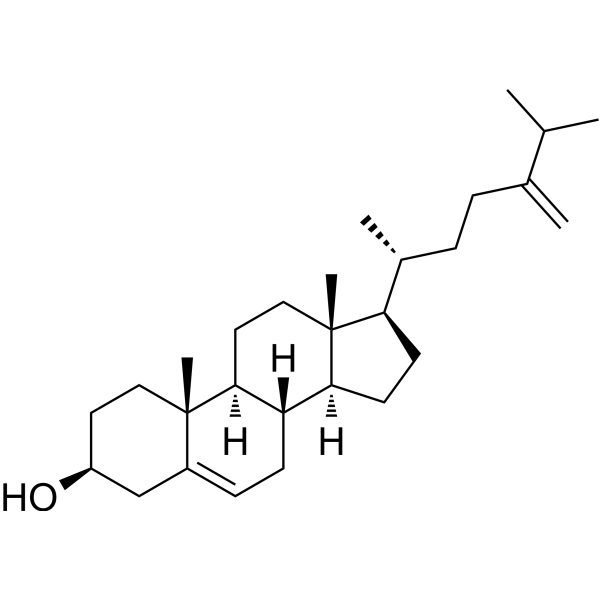
24-Methylenecholesterol (Ostreasterol) is a regulator targeting acyl-CoA cholesterol acyltransferase (ACAT) with anti-aging and neuroprotective effects. 24-Methylenecholesterol mimics the effects of nerve growth factor (NGF), can extend yeast lifespan through an anti-oxidative stress mechanism, and exhibits neuroprotective activity in PC12 cells. 24-Methylenecholesterol can reduce intracellular reactive oxygen species (ROS) and malondialdehyde (MDA) levels, activate anti-oxidative stress pathways (such as UTH1, SOD-related genes), and promote synaptic growth .
loading...
    loading...
1
1 Cited Publications
Cat. No.: HY-R04602F
FAM-MicroRNA Mimic Negative Control is a FAM labeled FAM-MicroRNA Mimic Negative Control (HY-R04602). MicroRNA Mimic Negative Control is a miRNA mimic of 21-nucleotides, and can be used as a negative control. The sequence of MicroRNA Mimic Negative Control is derived from cel-mir-239b. It has minimal sequence identity with miRNAs in human, mouse, and rat.
loading...
    loading...
1
1 Cited Publications
Cat. No.: HY-R00172
Target:  

MicroRNA

Research Areas:  

Cancer

hsa-miR-126-3p mimics are small, chemically synthesized double-stranded RNAs that mimic endogenous miRNAs and enable miRNA functional analysis by up-regulation of miRNA activity.
loading...
    loading...
1
1 Cited Publications
Cat. No.: HY-R00316
Target:  

MicroRNA

Research Areas:  

Cancer

hsa-miR-155-5p mimics are small, chemically synthesized double-stranded RNAs that mimic endogenous miRNAs and enable miRNA functional analysis by up-regulation of miRNA activity.
loading...
    loading...
1
1 Cited Publications
Cat. No.: HY-R00399
Target:  

MicroRNA

Research Areas:  

Cancer

hsa-miR-199a-5p mimics are small, chemically synthesized double-stranded RNAs that mimic endogenous miRNAs and enable miRNA functional analysis by up-regulation of miRNA activity.
loading...
    loading...
1
1 Cited Publications
Cat. No.: HY-R00500
Target:  

MicroRNA

Research Areas:  

Cancer

hsa-miR-27b-3p mimics are small, chemically synthesized double-stranded RNAs that mimic endogenous miRNAs and enable miRNA functional analysis by up-regulation of miRNA activity.
loading...
    loading...
1
1 Cited Publications
Cat. No.: HY-111969
CAS No.: 924811-53-0
Purity:  99.77%
Target:  

GDNF Receptor

Research Areas:  

Neurological Disease

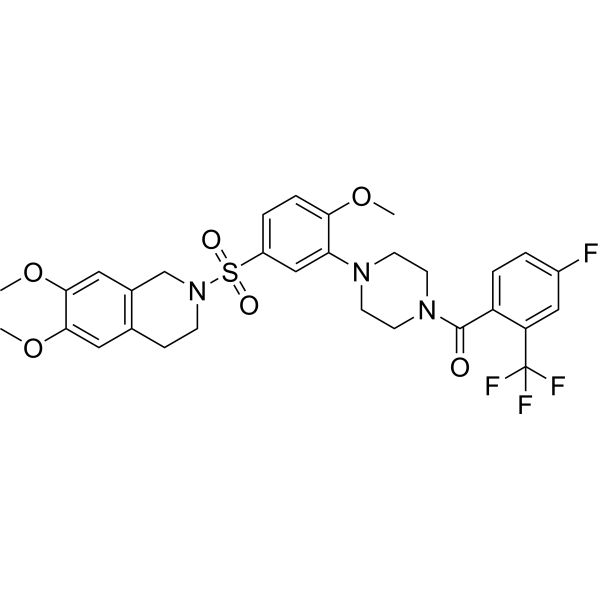
BT18 is a molecule mimic with function similar to glial cell line-derived neurotrophic factor (GDNF) . BT18 shows an effect on GDNF family receptor GFRα1 and RET receptor tyrosine kinase RetA function .
loading...
    loading...
1
1 Cited Publications
Cat. No.: HY-153992
CAS No.: 371919-80-1
Purity:  99.97%
Target:  

STAT

Research Areas:  

Inflammation/Immunology

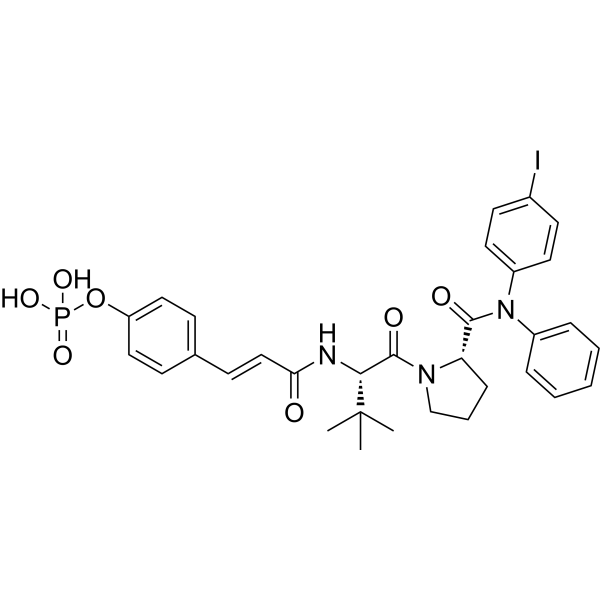
STAT6-IN-3 is a phosphopeptide mimic targeting the SH2 domain of STAT6 and has a high affinity for STAT6 (IC50: 0.04 μM). STAT6-IN-3 can be used in the research of inflammation such as asthma .
loading...
    loading...
1
1 Cited Publications
Cat. No.: HY-R04602A
Target:  

MicroRNA

Research Areas:  

Others

MicroRNA Agomir Negative Control is a chemically-modified double-strand miRNA mimic, and can be used as a negative control. The sequence of MicroRNA Agomir Negative Control is derived from cel-mir-239b. It has minimal sequence identity with miRNAs in human, mouse, and rat.
loading...
    loading...
1
1 Cited Publications
Cat. No.: HY-129038
CAS No.: 76974-79-3
Purity:  99.94%
Synonyms: Strigolactone GR24
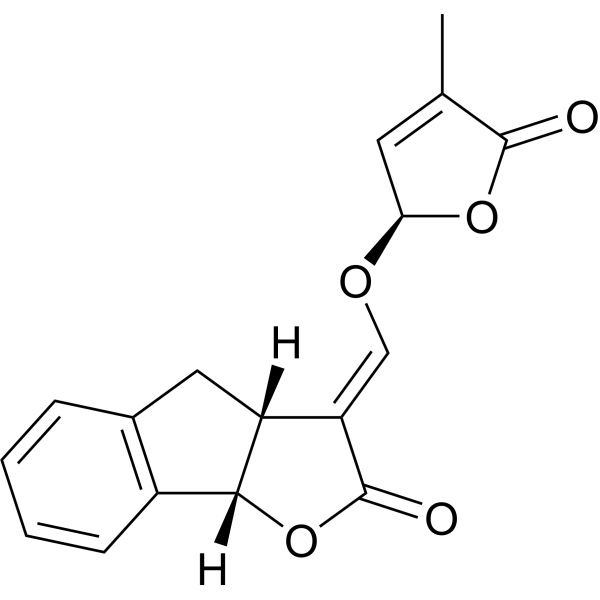
(Rac)-GR24 (Strigolactone GR24) is a plant hormone analog. (Rac)-GR24 can mimic the natural germination stimulus of parasitic plant seeds, promoting seed germination in the absence of host plants, thereby reducing the number of parasitic seeds in the soil. (Rac)-GR24 can be used in agricultural research .
loading...
    loading...
1
1 Cited Publications
Cat. No.: HY-P99276
CAS No.: 792921-10-9
Synonyms: Anti-Human CA-125 Recombinant Antibody

Research Areas:  

Cancer

Abagovomab (Anti-Human CA-125 Recombinant Antibody) is a mouse monoclonal anti-idiotypic antibody that targets the tumor-associated antigen CA-125 (binding affinity: 0.5 nM). Produced by mouse hybridoma cells, Abagovomab mimics human TAA, CA-125. Abagovomab also induces humoral and cellular immune responses against ovarian cancer (oc) .
loading...
    loading...
1
1 Cited Publications
Cat. No.: HY-113149A
CAS No.: 918149-29-8
Purity:  96.93%
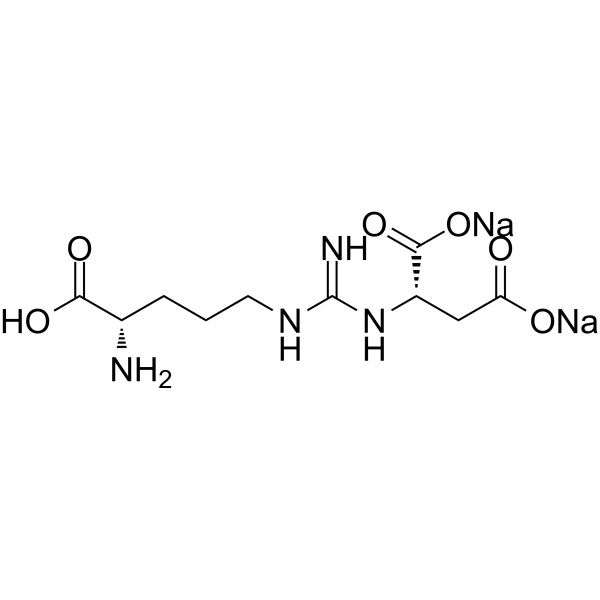
Argininosuccinic acid disodium is an intermediate metabolite in the urea cycle, and its level is associated with argininosuccinic aciduria. Argininosuccinic acid disodium can induce oxidative stress, leading to lipid and protein oxidation, reduction of glutathione, and decrease in antioxidant enzyme activity. Argininosuccinic acid disodium can be converted into guanidinosuccinic acid, a nitric oxide mimic, under the action of nitric oxide-derived free radicals. Argininosuccinic acid disodium can be used in the research of metabolic diseases, renal failure, nervous system diseases, etc .
loading...
    loading...
1
1 Cited Publications
Cat. No.: HY-P2294A
Target:  

TGF-β Receptor

Research Areas:  

Inflammation/Immunology

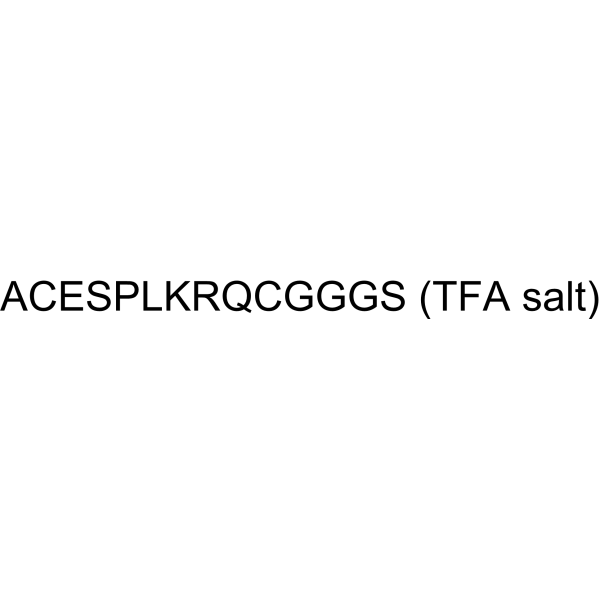
pm26TGF-β1 TFA peptide is a peptide that mimics a portion of the human TGF-β1 molecule. pm26TGF-β1 peptide TFA shows high affinity for the TGF-β1 receptor. pm26TGF-β1 peptide TFA displays potent anti-inflammatory properties and does not exhibit neutrophils’ chemoattraction .
loading...
    loading...
1
1 Cited Publications
Cat. No.: HY-118667
CAS No.: 516-85-8
Purity:  ≥99.0%
Target:  

Fluorescent Dye

Research Areas:  

Others

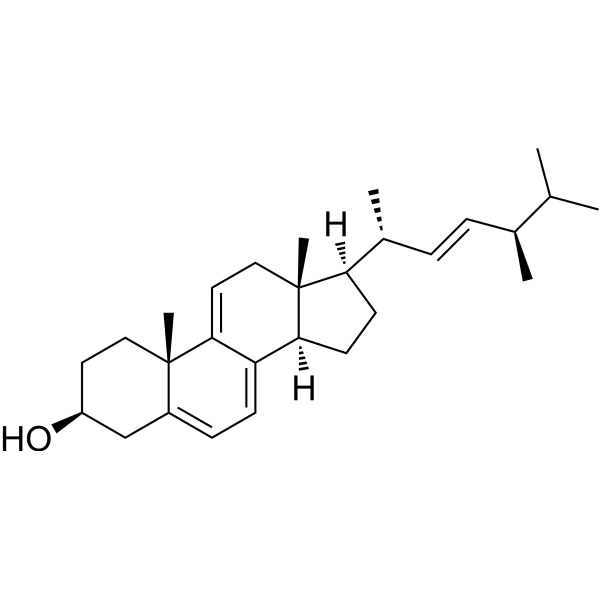
Dehydroergosterol is a fluorescent cholesterol analog (Ex/Em = 325/375 nm) used in cholesterol transport, membrane structure research, and live-cell imaging. Unlike cholesterol, Dehydroergosterol contains three additional double bonds, an extra methyl group, and an ergosterol side chain, forming a conjugated system that produces intrinsic fluorescence. In its monomeric form, Dehydroergosterol exhibits excitation peaks at 310-311, 324, and 338-340 nm, as well as emission peaks at 354, 371-375, 390-394, and 414 nm; in its microcrystalline form, Dehydroergosterol shows enhanced excimer emission around 404 and 426 nm. Dehydroergosterol mimics the properties of cholesterol, integrates into membranes and lipoproteins, and localizes to organelles .
loading...
    loading...
1
1 Cited Publications
Cat. No.: HY-D0852A
CAS No.: 13718-26-8
Synonyms: Sodium vanadate(V), 99%
Sodium metavanadate, 99% (Sodium vanadate (V), 99%) is an orally active phosphate structural analog and protein tyrosine phosphatase (PTPases) inhibitor. Sodium metavanadate, 99% mimics phosphate to interfere with phosphoprotein reactions, inhibits GAPDH, Na +/K +-ATPase and microbial membrane ATPase, and acts as a terminal electron acceptor for anaerobic respiration. Sodium metavanadate, 99% induces ROS production, G2/M phase arrest, mitochondrial membrane potential loss and apoptosis in breast cancer cells, and reduces tumor volume in tumor-bearing mice. Sodium metavanadate, 99% also exhibits oral insulin-sensitizing and metabolic regulatory activities, and reduces plasmodium parasitemia levels. Sodium metavanadate, 99% can be used in studies related to cadmium exposure-induced metabolic syndrome, plasmodium infection, breast cancer and type 1 diabetes .
loading...
    loading...
1
1 Cited Publications
Cat. No.: HY-P10495A
Target:  

Inhibitory Antibodies

Research Areas:  

Cancer

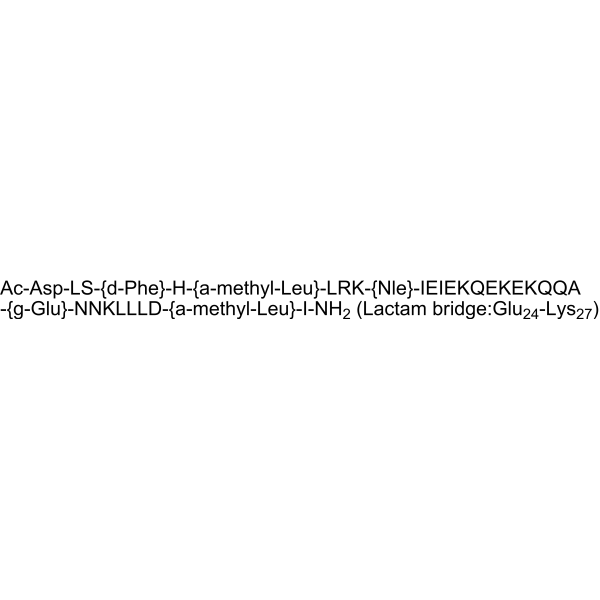
GPR110 peptide agonist P12 acetate is the acetate salt form of GPR110 peptide agonist P12 (HY-P10495). GPR110 peptide agonist P12 acetateis a peptide that acts as a GPR110 agonist. GPR110 peptide agonist P12 acetate can significantly enhance the initial rate of GPR110 stimulated G protein GTPγS binding. GPR110 peptide agonist P12 acetate mimics the action of natural ligands, causing the extracellular domain (ECD) of the GPR110 to dissociate from the seven transmembrane domains (7TM), exposing the β-strand-13/stalk region at the N-terminus of the 7TM domain, which acts as an agonist to activate G protein signaling. GPR110 peptide agonist P12 acetate can be used in the study of developmental disorders and cancers related to GPR110 .
loading...
    loading...
1
1 Cited Publications
Cat. No.: HY-P1108
CAS No.: 681260-70-8
Target:  

CRFR

Astressin 2B is a blood-brain barrier-impermeable, highly selective CRFR2 antagonist (rCRFR2, IC50=0.57 nM). Astressin 2B blocks the protective effects mediated by CRFR2, thereby exacerbating indomethacin (HY-14397)-induced hemorrhagic intestinal injury in rats. Astressin 2B reverses the protective effects of Urocortin 1 against intestinal hypermotility, bacterial invasion and upregulation of inflammatory mediators. Astressin 2B also blocks the anxiogenic effect of Urocortin 2 and attenuates stress-induced anxiety-related behaviors. In the Clostridioides difficile toxin A (C. difficile toxin A)-mediated enteritis model, Astressin 2B mimics the phenotype of CRFR2-deficient mice, significantly exacerbating intestinal epithelial damage, edema, neutrophil migration and the expression of multiple proinflammatory cytokines. Astressin 2B is an important tool molecule for investigating the intestinal protective mechanisms of CRFR2 .
loading...
    loading...
1
1 Cited Publications
Cat. No.: HY-P1108A
Target:  

CRFR

Astressin 2B TFA is a blood-brain barrier-impermeable, highly selective CRFR2 antagonist (rCRFR2, IC50=0.57 nM). Astressin 2B TFA blocks the protective effects mediated by CRFR2, thereby exacerbating indomethacin (HY-14397)-induced hemorrhagic intestinal injury in rats. Astressin 2B TFA reverses the protective effects of Urocortin 1 against intestinal hypermotility, bacterial invasion and upregulation of inflammatory mediators. Astressin 2B TFA also blocks the anxiogenic effect of Urocortin 2 and attenuates stress-induced anxiety-related behaviors. In the Clostridioides difficile toxin A (C. difficile toxin A)-mediated enteritis model, Astressin 2B TFA mimics the phenotype of CRFR2-deficient mice, significantly exacerbating intestinal epithelial damage, edema, neutrophil migration and the expression of multiple proinflammatory cytokines. Astressin 2B TFA is an important tool molecule for investigating the intestinal protective mechanisms of CRFR2 .
loading...
    loading...
1
1 Cited Publications
Cat. No.: HY-W795960
CAS No.: 108340-81-4
D-myo-inositol 1,4,5-trisphosphate sodium salt is a widely distributed intracellular second messenger. D-myo-inositol 1,4,5-trisphosphate sodium salt acts as a potent agonist of the Ins (1,4,5) P3 receptor with an EC50 of 0.12 μM and inhibits bovine PLC-δ1, with an IC50 of 5.4 μM for binding and an IC50 of 12.4 μM for hydrolysis. D-myo-inositol 1,4,5-trisphosphate sodium saltis metabolized into Ins (1,4) P2 and Ins (1,3,4,5) P4. D-myo-inositol 1,4,5-trisphosphate sodium salt mediates various cellular processes, including growth, development, fertilization, secretion, contraction and neuromodulation. D-myo-inositol 1,4,5-trisphosphate sodium salt inhibits PIP2 hydrolysis and Ca 2+-ATPase activity. D-myo-inositol 1,4,5-trisphosphate sodium salt is used for cardiac preconditioning, exerts cardioprotective effects and mimics ischemic preconditioning. D-myo-inositol 1,4,5-trisphosphate sodium salt is applied in studies related to intracellular calcium and phosphoinositol signaling pathways .
loading...
    loading...
Cat. No.: HY-R00212
Target:  

MicroRNA

Research Areas:  

Cancer

hsa-miR-1290 mimics are small, chemically synthesized double-stranded RNAs that mimic endogenous miRNAs and enable miRNA functional analysis by up-regulation of miRNA activity.
loading...
    loading...

