42 Results for "

spiro-

" in MedChemExpress (MCE) Product Catalog:
Products (42)

42 Results for "spiro-" in MCE Product Catalog:

Cat. No.: HY-N1262
CAS No.: 1312716-25-8
Synonyms: Scutehenanine B
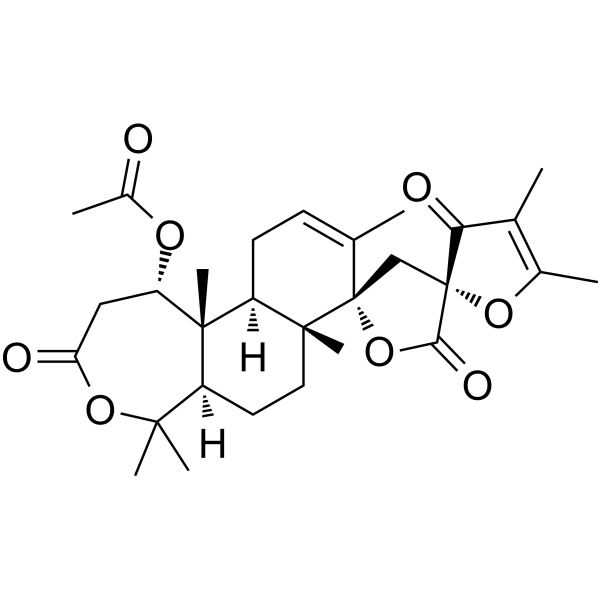
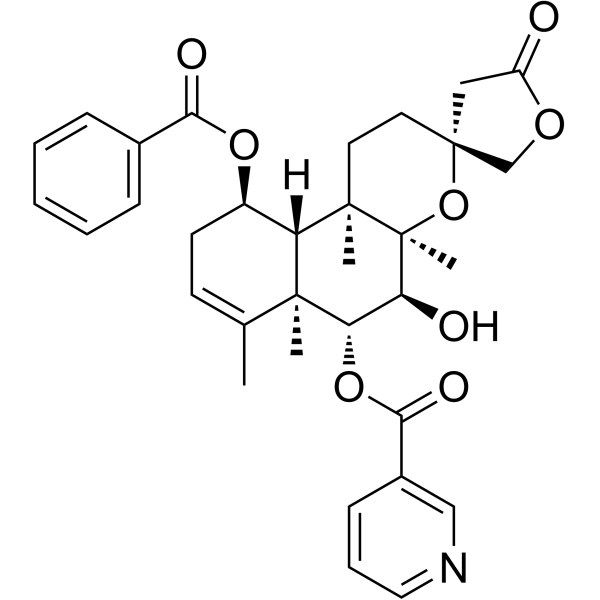
Scutebarbatine W is a 13-spiro subtype neo-clerodane diterpenoid. Scutebarbatine W inhibits NO production with an IC50 value of 34.7 μM .
loading...
    loading...
Cat. No.: HY-159539
CAS No.: 2226571-47-5
Target:  

PROTAC Linkers

Research Areas:  

Cancer

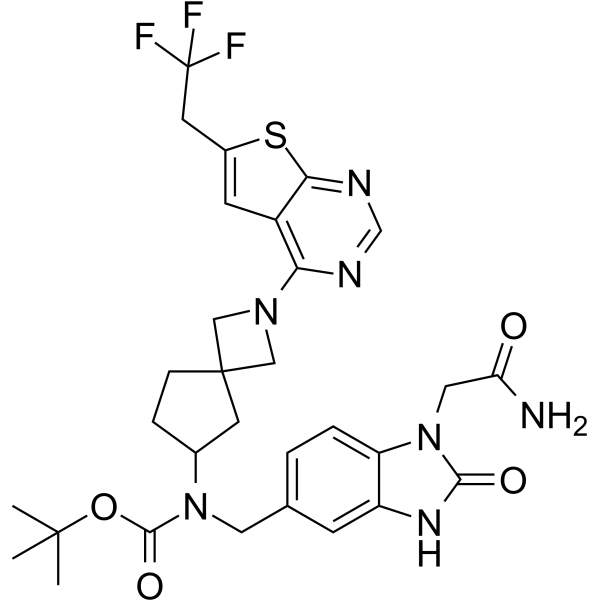
PROTAC SMARCA2 degrader-6-Linker is a PROTAC linker.
loading...
    loading...
Cat. No.: HY-N3534
CAS No.: 64052-90-0
Synonyms: Cannabispirol
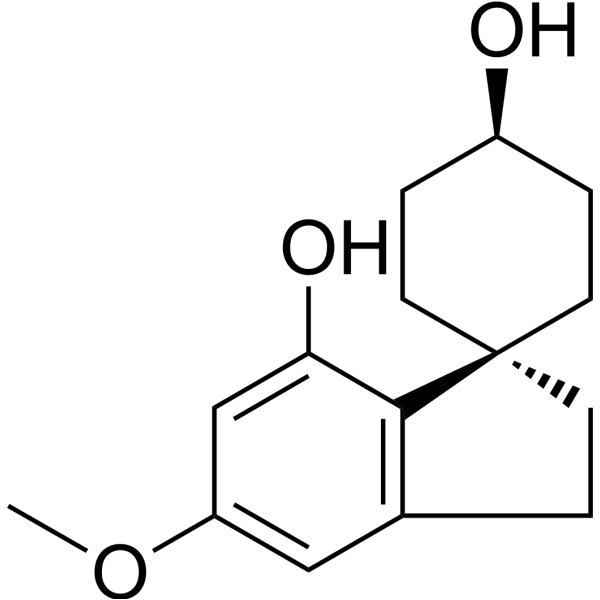
β-Cannabispiranol (Cannabispirol) is a spiro-compound that can be isoalted from Thailand Cannabis .
loading...
    loading...
Cat. No.: HY-119697
CAS No.: 182926-45-0
Synonyms: (+)-Setosusin
Setosusin ((+)-Setosusin) is a fungal meroditerpenoid featuring a unique spiro-fused 3(2H)-furanone moiety .
loading...
    loading...
Cat. No.: HY-N11663
CAS No.: 1403505-97-4
Dugesin C is a diterpenoid isolated from the plant Salvia dugesii with a spiro carbocyclic ring system derived from the normal neocrotane skeleton .
loading...
    loading...
Cat. No.: HY-45169R
CAS No.: 127452-30-6
Target:  

Reference Standards

Ethyl 2-(6-(acetamidomethyl)-5-oxo-2,3-dihydro-5H-spiro[indolizine-1,2'-[1,3]dioxolan]-7-yl)butanoate (Standard) is the analytical standard of Ethyl 2-(6-(acetamidomethyl)-5-oxo-2,3-dihydro-5H-spiro[indolizine-1,2'-[1,3]dioxolan]-7-yl)butanoate. This product is intended for research and analytical applications.
loading...
    loading...
Cat. No.: HY-172588
Target:  

GABA Receptor

Research Areas:  

Neurological Disease

GABAA receptor modulator-7 (compound 1m), a spiro-Barbiturate, is a GABAA receptor modulator. GABAA receptor modulator-7 reverses the action of anesthetics without affecting GABA-induced desensitization and can be used for study of antiepileptics and anxiolytics .
loading...
    loading...
Cat. No.: HY-135208
CAS No.: 916048-02-7
Target:  

Drug Intermediate

Research Areas:  

Neurological Disease

tert-Butyl 2-(5-chloro-2,2'-dioxospiro[indole-3,3'-pyrrolidine]-1-yl)acetate is an intermediate used in the synthesis of potent DP2 receptor antagonists based on a novel spiro-indolinone compound .
loading...
    loading...
Cat. No.: HY-139076
CAS No.: 2360487-93-8
Purity:  98.07%
Research Areas:  

Metabolic Disease Cancer

Menin-MLL inhibitor 19, a potent exo-aza spiro inhibitor of menin-mll interaction, example A17, extracted from patent WO2019120209A1. Menin-MLL inhibitor 19 can be used for the reseaech of various diseases, such as cancer, myelodysplastic syndrome (MDS) and diabetes .
loading...
    loading...
Cat. No.: HY-170490
Research Areas:  

Cancer

TTQ-SA is a near-infrared (NIR) spiro-AIEgen (aggregation-induced emission luminogen), that converts near-infrared light (NIR) into thermal energy, causing thermal damage and death of tumor cells. TTQ-SA exhibits cellular uptake and targeting ability in cancer cell MF-7. TTQ-SA silences the expression of survivin gene with combination of DNAzyme, enhances the sensitivity of tumor cells to photothermal therapy .
loading...
    loading...
Cat. No.: HY-160969
CAS No.: 1642147-15-6
Research Areas:  

Cancer

Spiro-duocarmycin is a DNA minor groove N3-adenine alkylating agent. Spiro-duocarmycin exerts cytotoxic effects via DNA alkylation. Spiro-duocarmycin is the active spirocyclized form of seco-DUBA, which is incorporated as an inactive prodrug into the linker-drug construct of antibody-drug conjugates (ADCs). DUBA serves as an ADC payload that can be conjugated with monoclonal antibodies to synthesize antibody-drug conjugates (ADCs) .
loading...
    loading...
Cat. No.: HY-D2379A
CAS No.: 7449-51-6
Target:  

Fluorescent Dye

Research Areas:  

Others

closed-HMRG is an HMRG (HY-D2379) with a closed spiro-ring structure. HMRG is a fluorescent dye, which serves as the fluorescent active product generated by enzyme-activated fluorescent probes targeting proteases and glycosidases. Its detection mechanism relies on the intramolecular spirocyclization equilibrium: HMRG itself exists in an open non-spirocyclic structure under physiological pH, which maintains a conjugated π system and produces strong fluorescence; whereas its probe precursors (such as Leu-HMRG, Ac-GlyPro-HMRG and βGal-HMRG) exist in a closed spirocyclic form and show no fluorescence due to the disruption of the π-conjugated system; when the target enzyme cleaves the substrate fragment linked to the probe precursor, the closed spirocyclic structure converts to the open structure of HMRG, restoring the conjugated system and generating a strong fluorescent signal. Its detection wavelength is Ex/Em = 501/524 nm .
loading...
    loading...
Cat. No.: HY-W105644R
CAS No.: 95716-70-4
Synonyms: Δ9,11-Eplerenone (Standard)
Target:  

Reference Standards

(2'R,7R,8R,10S,13S,14S)-Methyl 10,13-dimethyl-3,5'-dioxo-1,2,3,4',5',6,7,8,10,12,13,14,15,16-tetradecahydro-3'H-spiro[cyclopenta[a]phenanthrene-17,2'-furan]-7-carboxylate (Standard) is the analytical standard of (2'R,7R,8R,10S,13S,14S)-Methyl 10,13-dimethyl-3,5'-dioxo-1,2,3,4',5',6,7,8,10,12,13,14,15,16-tetradecahydro-3'H-spiro[cyclopenta[a]phenanthrene-17,2'-furan]-7-carboxylate. This product is intended for research and analytical applications.
loading...
    loading...
Cat. No.: HY-N7292A
CAS No.: 21807-96-5
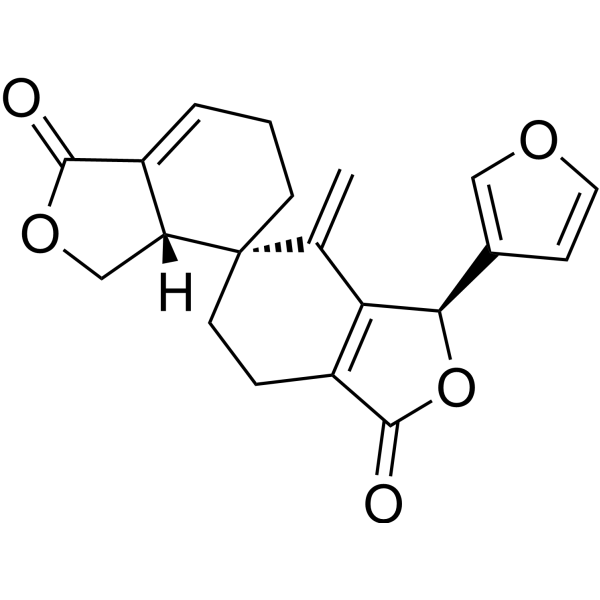
Bakkenolide E is a sesquiterpene lactone bearing a spiro-γ-lactone moiety. Bakkenolide E is isolated from the buds of Petasites japonicus subsp. giganteus .
loading...
    loading...
Cat. No.: HY-N21706
CAS No.: 1809058-37-4
Hypercohin K is a polycyclic polyprenylated acylphloroglucinol isolated from Hypericum henryi, containing a rare spiro-fused cyclopropane ring in its structure. Hypercohin K exhibits anti-inflammatory, antitumor, and AChE-enhancing activities. Hypercohin K reduces intracellular lipid accumulation by regulating lipid metabolism genes, and can inhibit NO production to exert anti-inflammatory effects. Hypercohin K can be used in research on non-alcoholic steatohepatitis and tumors .
loading...
    loading...
Cat. No.: HY-L943
37030 compounds

MCE-18 stands for Medicinal Chemistry Evolution 2018, which was first published in Journal of Medicinal Chemistry in 2019 for assessing molecular novelty and three-dimensional complexity. Developed based on Clarivate global pharmaceutical patent database, this descriptor was constructed via big-data analysis covering 28,161 patented lead compounds, 1,370 approved drugs and nearly 30,000 preclinical-to-phase III drug candidates from 23 top pharmaceutical companies worldwide between 1950 and 2018, followed by structural clustering and removal of redundant outdated scaffolds for data denoising. Its scoring system integrates five core structural features including aromatic ring (AR), aliphatic heterocycle (NAR), chiral center (CHIRAL), spiro atom (SPIRO), cyclic and acyclic sp³ carbon ratio together with a quadratic topological correction factor. Breaking the limitations of the single Fsp³ parameter, MCE-18 effectively distinguishes conventional flat aromatic scaffolds from modern 3D-enriched novel chemotypes, overcoming typical drawbacks of traditional compound libraries such as scaffold redundancy, low screening hit rates and poor compatibility with allosteric and PPI-related difficult targets.

This library contains over 37,000 structurally diverse compounds with favorable overall drug-likeness, suitable for high-throughput screening against canonical targets including kinases, GPCRs and proteases as well as challenging allosteric and PPI targets. Compounds comply with the developmental trend of modern novel drug discovery, supporting routine primary screening as well as early hit identification of allosteric modulators and PPI inhibitors, serving as an efficient screening resource for early-stage innovative drug discovery.

Cat. No.: HY-126929
CAS No.: 81534-36-3
Synonyms: TXN-B
Trioxacarcin B (TXN-B) is a potent cytotoxic agent and DNA-targeted inhibitor. Trioxacarcin B disrupts DNA function and induces apoptosis in cancer cells. Trioxacarcin B not only effectively inhibits the growth of various Gram-positive and Gram-negative bacteria as well as Plasmodium falciparum, but also blocks the colony formation of cancer stem cells, significantly reduces tumor volume and prolongs survival in preclinical in vivo models. The activity of Trioxacarcin B is highly dependent on its intact spiro-epoxide structure; it loses efficacy once this moiety undergoes hydrolysis, and Trioxacarcin B shows no activity against fungi, microalgae and small RNA viruses. Trioxacarcin B can be used for research on bacterial infections, malaria, and various cancers including colon cancer and melanoma .
loading...
    loading...
Cat. No.: HY-L0120V
170,269 compounds

“BioDesign” approach incorporates key structural features of known pharmacologically relevant natural products (e.g. alkaloids and other secondary metabolites) into synthetically feasible medicinal chemistry scaffolds. In order to identify the privileged pharmacophores, ring systems and linkers, we have carried out statistical analysis of structural features of natural products, marketed drugs, and drug candidates.

Saturated, fused ring, spiro, and bridged systems with a tendency towards multiple chiral centers are highly privileged among natural products and marketed drugs yet these structures are very poorly represented in commercial libraries. This library addressed this market need by incorporating these privileged elements into the design of novel synthetic molecules with high molecular framework diversity, multiple stereogenic centers (≥2), and degree of saturation (Fsp3 > 0.5).

Cat. No.: HY-181769
CAS No.: 3043892-01-6
Anticancer agent 306 is a spiro tetramic acid derivative and a inhibitor of MMP1, MMP7 and PLK1. Anticancer agent 306 exerts antiproliferative activity against H1299, RKO and MCF-7 cells with IC50 values of 19.25 μM, 3.29 μM and 102.36 μM, respectively. Anticancer agent 306 can up-regulate p21 protein and down-regulate CCND1 and CCNB1 proteins to induce cell cycle arrest, regulate the expression of Bcl-2 and Bax to induce cell apoptosis. Anticancer agent 306 can down-regulate MMP1 and MMP7 proteins to inhibit tumor invasion and metastasis. Anticancer agent 306 can be used for the research of lung cancer, colorectal cancer, breast cancer .
loading...
    loading...
Cat. No.: HY-L903
5,281 compounds

Fragment-based drug discovery (FBDD) is well suited for discovering both drug leads and chemical probes of protein function. 3-dimensionality (3D) diversity is pivotal because the molecular shape is one of the most important factors in molecular recognition by a biomolecule. There is a developing appreciation that 3D fragments could offer opportunities that are not provided by 2D fragments.

MCE 3D Diverse Fragment Library consists of 5,400 non-flat fragment-like molecules (average Fsp3 value 0.58). More than 4,700 fragment compounds contain at least one chiral center in the structure. The key concepts that underlie the library design were 3D shape, structural diversity, reactive functionality and fragment-like. This 3D Diverse Fragment Library brings higher fragment hit optimization and increases the likelihood to find innovative hits in FBDD.