106 Results for "

template

" in MedChemExpress (MCE) Product Catalog:
Products (106)

106 Results for "template" in MCE Product Catalog:

Cat. No.: HY-P5255
CAS No.: 466691-40-7
Target:  

Bacterial

Research Areas:  

Infection Inflammation/Immunology

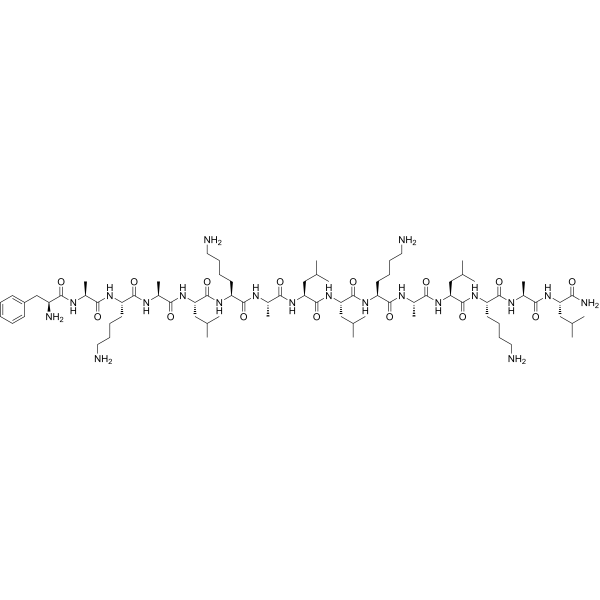
Oligopeptide-10 is a bioactive peptide with antimicrobial activity. Oligopeptide-10 exhibits broad-spectrum bactericidal effects against Gram-positive bacteria including Propionibacterium acnes and Staphylococcus aureus. Oligopeptide-10 targets lipoteichoic acid (LTA) on the surface of bacterial cell membranes, induces bacterial osmotic imbalance by disrupting the integrity of bacterial membranes, and reduces the release of pro-inflammatory cytokines induced by bacteria. Oligopeptide-10 possesses skin-protective activity. Oligopeptide-10 can be applied in research related to acne vulgaris, dandruff, seborrheic dermatitis, and tinea pedis .
loading...
    loading...
Cat. No.: HY-W012282
CAS No.: 7057-27-4
Target:  

HCV

Research Areas:  

Infection

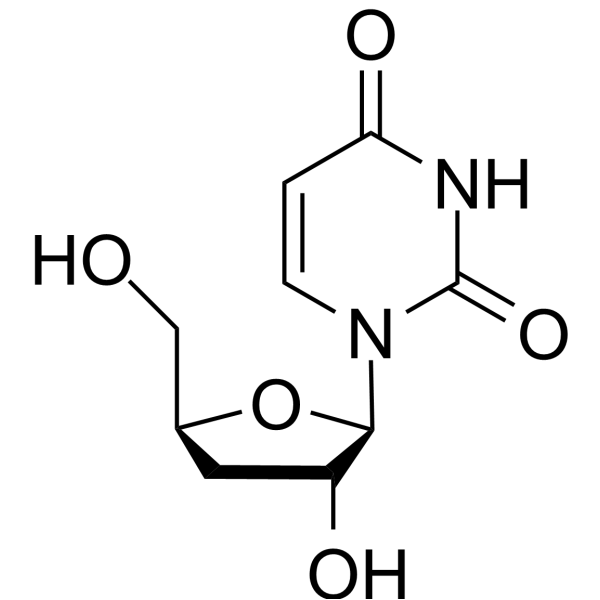
3′-Deoxyuridine is a 3'-deoxynucleoside analog and a 2',3'-dideoxynucleoside. 3′-Deoxyuridine does not inhibit the replication of HCV-like RNA templates or luciferase levels in human cells at the tested concentrations. 3′-Deoxyuridine serves as a substrate for microbial dideoxyribosylation reactions to generate various 2',3'-dideoxynucleosides, but cannot be converted into 2',3'-dideoxycytidine by resting E. coli AJ 2595 cells. 3′-Deoxyuridine can be formed by the deamination of 3'-deoxycytidine by E. coli BM-11 cytidine deaminase, and can also undergo phosphorolytic cleavage to produce uracil and the corresponding pentose phosphate. 3′-Deoxyuridine has been used in research related to HCV and other relevant fields .
loading...
    loading...
Cat. No.: HY-131920A
CAS No.: 28086-43-3
Synonyms: Polyuridylic acid potassium
Polyuridylic acid potassium is a polynucleotide. In protein synthesis systems based on active mammalian ribosomes, Polyuridylic acid potassium acts as a specific messenger to induce the biosynthesis of polyphenylalanine, with no effect on the incorporation of non-phenylalanine amino acids. Polyuridylic acid potassium serves as a template to promote the non-enzymatic synthesis of oligoadenylates .
loading...
    loading...
Cat. No.: HY-12928
CAS No.: 1613465-33-0
Purity:  99.09%
Research Areas:  

Infection

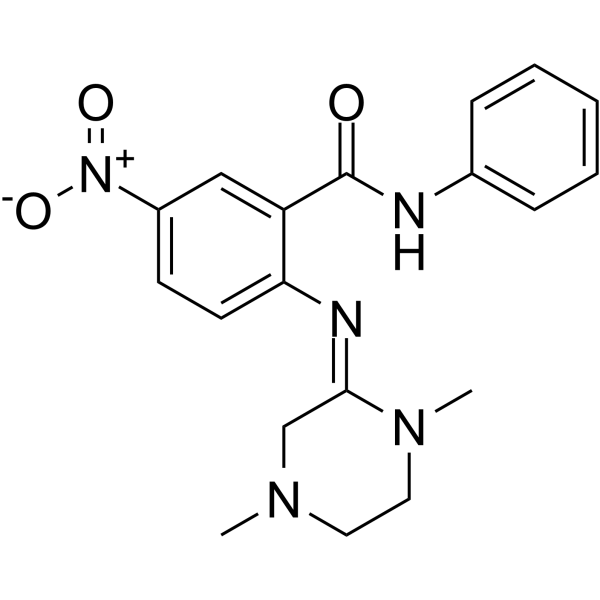
ML336 is a Venezuelan equine encephalitis virus (VEEV) inhibitor with moderate passive blood-brain barrier permeability. ML336 inhibits viral RNA synthesis, virus-induced cytopathic effects and viral replication, reduces viral titers, and blocks the synthesis of VEEV genomic, subgenomic and template RNAs. ML336 can be used in studies related to VEEV infection .
loading...
    loading...
Cat. No.: HY-156827
CAS No.: 3079093-16-3
Purity:  98.08%
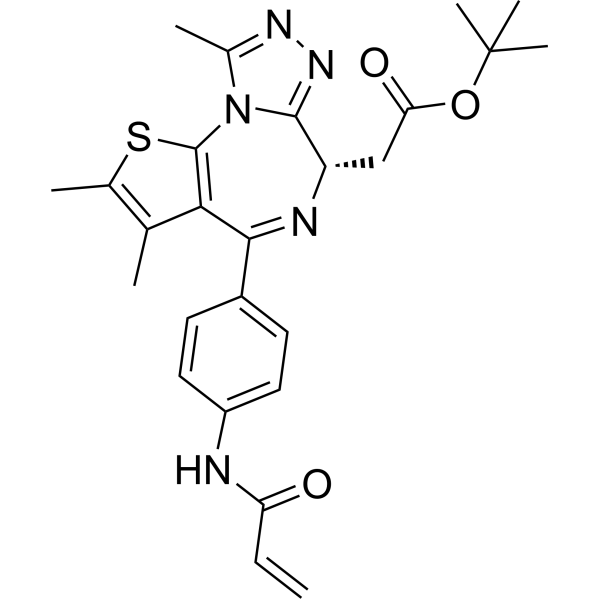
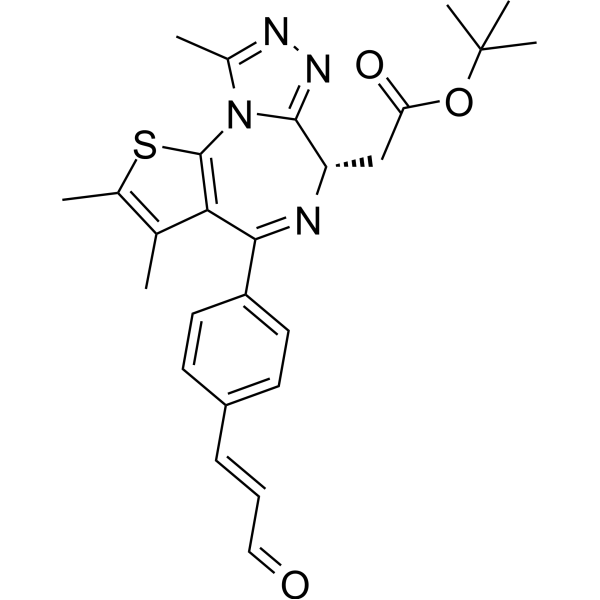
MMH1 is a novel BRD4 molecular glue degrader. MMH1 functions by recruiting the CUL4 DCAF16 ligase to the second bromodomain of BRD4 (BRD4 BD2). MMH1 binds to the JQ1-binding site of BRD4 BD2, acts as a template to covalently modify Cys58 of DCAF16, stabilizes the BRD4-DCAF16 ternary complex, and thereby promotes BRD4 degradation via the CRL4DCAF16 ubiquitin ligase pathway. Using BRD4 BD2 as a structural template, MMH1 covalently modifies Cys87 of GAK and induces the GAK-BRD4 BD2 interaction. Through its covalent mechanism, MMH1 exhibits sustained BRD4 degradation activity, and shows selective degradation activity for BRD4 BD2 over BRD4 BD1 .
loading...
    loading...
Cat. No.: HY-103694
CAS No.: 550-33-4
Purity:  98.44%
Synonyms: 9-β-D-Ribofuranosylpurine
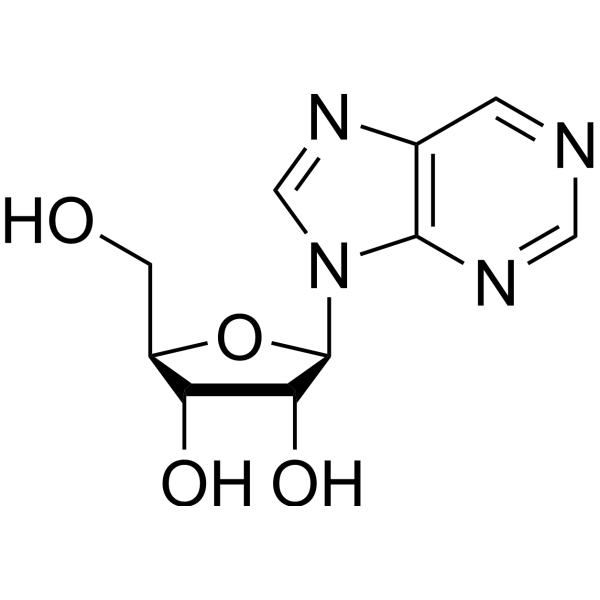
Nebularine (9-β-D-Ribofuranosylpurine) is a naturally occurring cytotoxic purine riboside antibiotic. Nebularine competitively inhibits adenine deaminase and xanthine oxidase, and acts as a template for thymine insertion during DNA elongation and replication. Nebularine serves as a cytokinin antagonist and induces mitotic aberrations in plant cells. Nebularine exhibits cytotoxicity against plants, mammals, fungal organisms and cancer cells. Nebularine can be used in research related to fungal infections, plant growth, as well as chronic myeloid leukemia, acute lymphoblastic leukemia and breast cancer .
loading...
    loading...
Cat. No.: HY-W719041
CAS No.: 23363-08-8
1,6-Di-O-galloyl-β-D-glucose is a compound found in the fruit of Phyllanthus emblica. 1,6-Di-O-galloyl-β-D-glucose has HIV-1 reverse transcriptase (RT) inhibitory activity with an IC50 value of 270 μM. 1,6-Di-O-galloyl-β-D-glucose shows competitive inhibition for the template primer and non-competitive inhibition for the substrate (dTTP). 1,6-Di-O-galloyl-β-D-glucose can be used in anti-HIV research .
loading...
    loading...
Cat. No.: HY-D1090
CAS No.: 82855-40-1
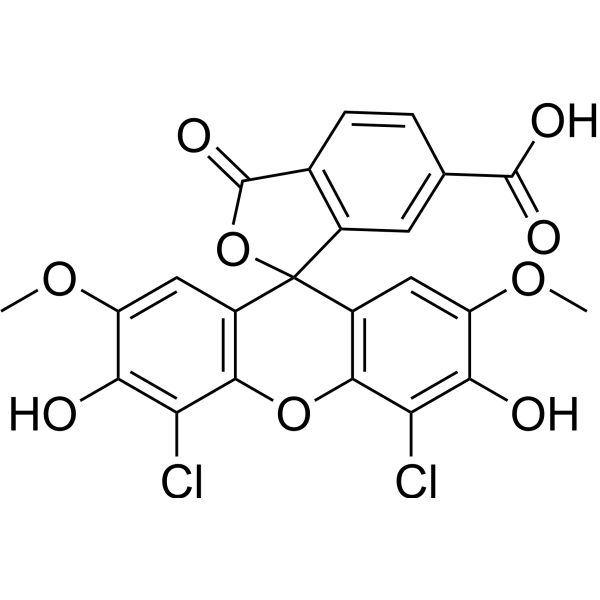
JOE is a xanthene fluorophore (i.e., 4′,5′-dichloro-2′,7′-dimethoxy-5 (6)-carboxyfluorescein; 2',7'-dimethoxy-4',5'-dichloro-6-carboxyfluorescein) with an absorption wavelength of approximately 525 nm and an emission wavelength of approximately 550 nm. The fluorescence quantum yield of JOE correlates with the rigidity of the linker arm and the distance to dG nucleoside. JOE is commonly used as a fluorescent label for oligonucleotides and molecular beacon probes, and also serves as the acceptor fluorophore in fluorescence energy transfer primers for DNA sequencing .
loading...
    loading...
Cat. No.: HY-153385
CAS No.: 3079093-92-5
Purity:  99.57%
Research Areas:  

Cancer

TMX1 is a covalent, selective BRD4 molecular glue degrader. TMX1 binds to the JQ1-binding site of BRD4BD2, forms covalent bonds with Cys58 of DCAF16 and Cys87 of GAK in a BRD4BD2-dependent template-assisted manner, stabilizes the BRD4-TMX1-DCAF16 ternary complex, and promotes the ubiquitination of BRD4 via the CRL4DCAF16 ubiquitin ligase complex. TMX1 induces selective degradation of BRD4, mild degradation of BRD2 and BRD3, as well as DCAF16-dependent cytotoxicity .
loading...
    loading...
Cat. No.: HY-119309
CAS No.: 126-14-7
Purity:  ≥98.0%
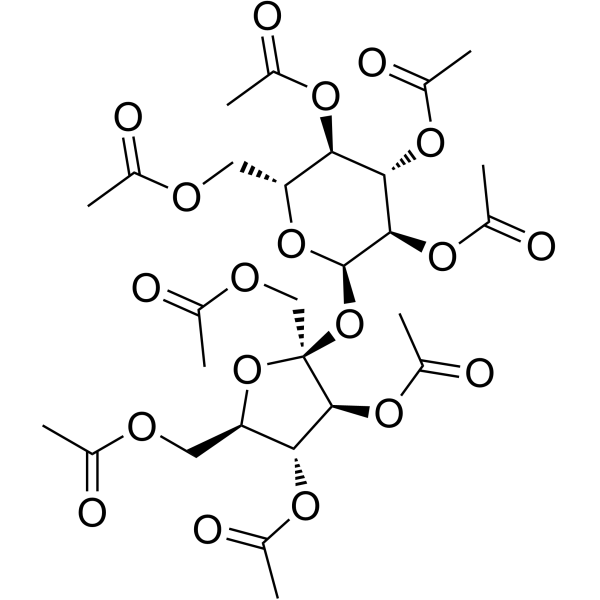
Sucrose octaacetate is an acetylated derivative of sucrose with an intensely bitter tasting and can be used as bitter tasting surrogate. Sucrose octaacetate can be used as food additive and also used as an adhesive and plasticizer. Sucrose octaacetate also used in many pesticides, insecticides, and other toxic products as a deterrent to accidental poisoning. Sucrose octaacetate can also be used as an in situ seed and a soft template to synthesize polyaniline (PANI) nanofibers .
loading...
    loading...
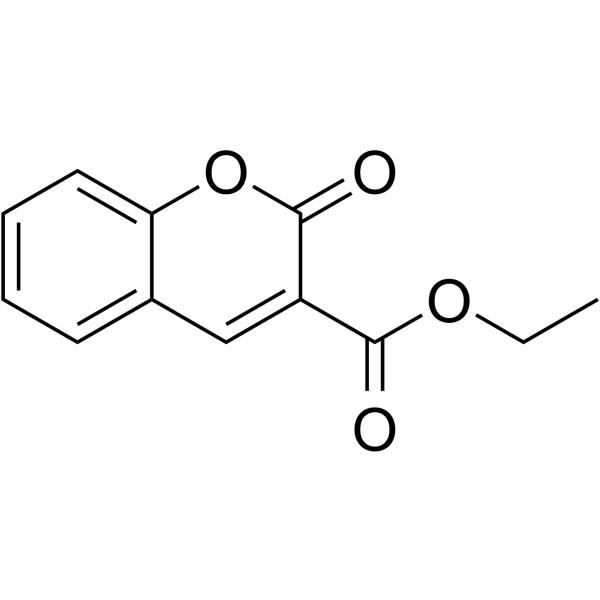
Cat. No.: HY-W014081
CAS No.: 1846-76-0
Synonyms: Ethyl 2-oxo-2H-chromene-3-carboxylate
Target:  

Drug Derivative

Research Areas:  

Others

Ethyl 3-coumarincarboxylate is a coumarin derivative. Ethyl 3-coumarincarboxylate can be used as a pseudo-template to give a molecularly imprinted polymer (MIP) that has a fairly specific recognition capability for aflatoxins .
loading...
    loading...
Cat. No.: HY-E70090
CAS No.: 9014-24-8
Target:  

DNA/RNA Synthesis

Research Areas:  

Infection

T7 RNA polymerase is a polymerase expressed by Escherichia coli from the RNA polymerase gene of T7 bacteriophage. T7 RNA polymerase is highly specific and involved in in vitro transcription (IVT) of mRNA. In the presence of Mg 2+, T7 RNA polymerase only uses the single-stranded or double-stranded DNA containing the T7 promoter sequence as a template, and uses NTP as a substrate to synthesize RNA complementary to the single-stranded DNA downstream of the promoter .
loading...
    loading...
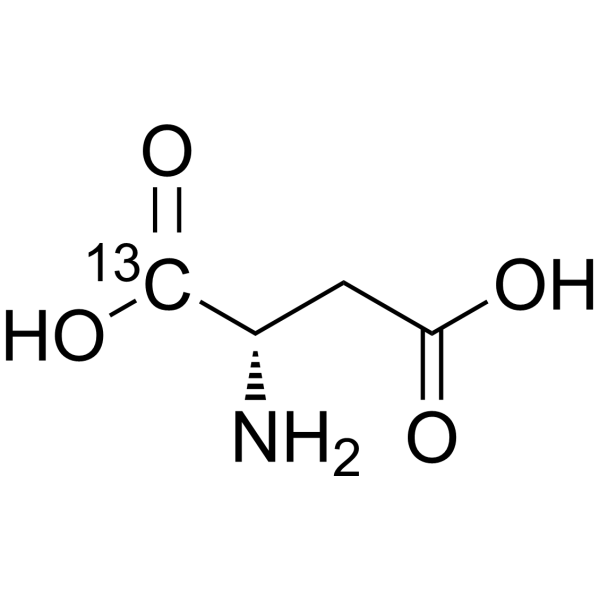
Cat. No.: HY-N0666S
CAS No.: 81201-97-0
L-Aspartic acid- 13C is the 13C-labeled L-Aspartic acid (HY-N0666). L-Aspartic acid is a NMDA receptor agonist and acidic amino acid. L-Aspartic acid has no independent analgesic activity. L-Aspartic acid can antagonize the analgesic effects of D-Aspartic acid and Morphine. L-Aspartic acid regulates polymorph transformation, crystal growth/aggregation and nucleation processes of calcium carbonate, and can serve as a biomineralization template. L-Aspartic acid promotes burst firing of central neurons. L-Aspartic acid can be used in studies related to cerebral ischemia and epilepsy .
loading...
    loading...
Cat. No.: HY-117813
CAS No.: 20235-78-3
Purity:  99.73%
2-Thiouridine is an orally active modified nucleobase. 2-Thiouridine stabilizes U:A base pairs and destabilizes U:G wobble base pairs. 2-Thiouridine significantly improves the efficiency and accuracy of nonenzymatic replication of mixed-sequence A/U-containing RNA templates. 2-Thiouridine exhibits antiviral activity against multiple positive-sense single-stranded RNA viruses (DENV2, ZIKV, YFV, JEV, WNV, CHIKV, human coronaviruses ( [HCoV]-229E, HCoV-OC43, SARS-CoV), and MERS-CoV) .
loading...
    loading...
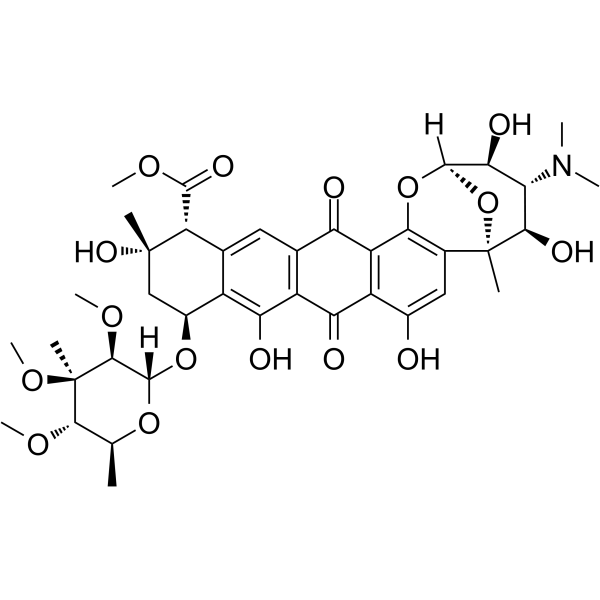
Cat. No.: HY-105846
CAS No.: 1404-15-5
Purity:  97.2%
Research Areas:  

Cancer

Nogalamycin is an anthracyclinone antibiotic. Nogalamycin is a potent antibiotic against Gram-positive bacteria, also has cytotoxicity against certain tumor cells. Nogalamycin is produced by Streptomyces nogalater var. Nogalater. Nogalamycin selectively inhibits RNA synthesis after binding to DNA template. Nogalamycin can be used for researching anticancer .
loading...
    loading...
Cat. No.: HY-W004078
CAS No.: 696-60-6
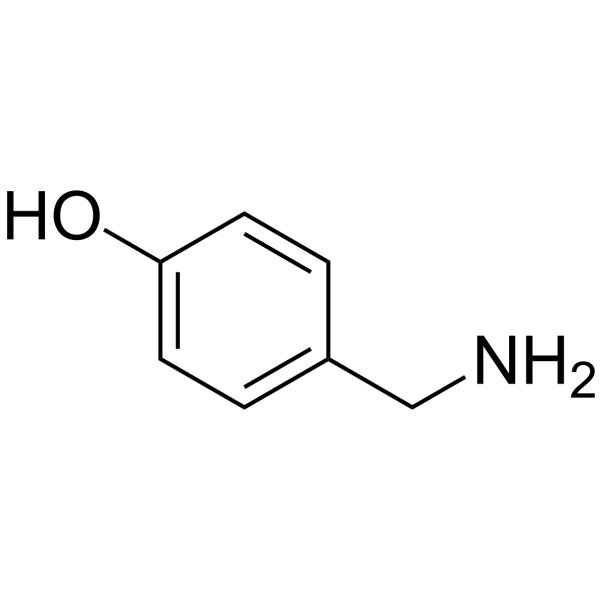
4-Hydroxybenzylamine is a dimerizer and precursor. 4-Hydroxybenzylamine forms cyclic dimers stabilized by O-H/N hydrogen bonds and π-stacking interactions in solution. 4-Hydroxybenzylamine undergoes condensation with formaldehyde to form a 12-atom azacyclophane, facilitated by pre-organization into cyclic dimeric templates .
loading...
    loading...
Cat. No.: HY-N0666S3
CAS No.: 3715-16-0
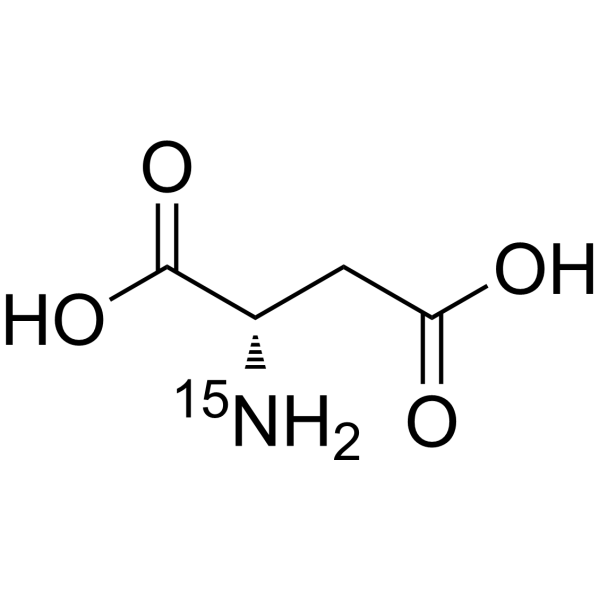
L-Aspartic acid- 15N is the 15N-labeled L-Aspartic acid (HY-N0666). L-Aspartic acid is a NMDA receptor agonist and acidic amino acid. L-Aspartic acid has no independent analgesic activity. L-Aspartic acid can antagonize the analgesic effects of D-Aspartic acid and Morphine. L-Aspartic acid regulates polymorph transformation, crystal growth/aggregation and nucleation processes of calcium carbonate, and can serve as a biomineralization template. L-Aspartic acid promotes burst firing of central neurons. L-Aspartic acid can be used in studies related to cerebral ischemia and epilepsy .
loading...
    loading...
Cat. No.: HY-N0666S1
CAS No.: 202468-27-7
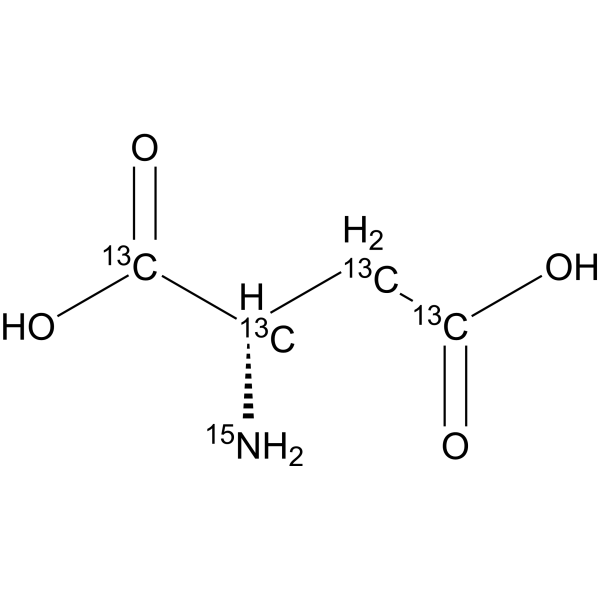
L-Aspartic acid- 13C4, 15N is the 15N, 13C-labeled L-Aspartic acid (HY-N0666). L-Aspartic acid is a NMDA receptor agonist and acidic amino acid. L-Aspartic acid has no independent analgesic activity. L-Aspartic acid can antagonize the analgesic effects of D-Aspartic acid and Morphine. L-Aspartic acid regulates polymorph transformation, crystal growth/aggregation and nucleation processes of calcium carbonate, and can serve as a biomineralization template. L-Aspartic acid promotes burst firing of central neurons. L-Aspartic acid can be used in studies related to cerebral ischemia and epilepsy .
loading...
    loading...
Cat. No.: HY-139098
CAS No.: 62828-64-2
Synonyms: m7Gp3G
Target:  

DNA/RNA Synthesis

Research Areas:  

Others

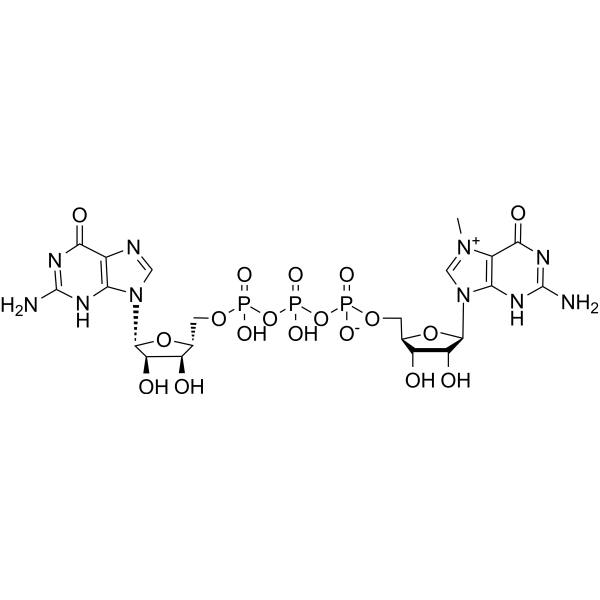
7-Methyl-diguanosine triphosphate (m7Gp3G) is an mRNA cap structure analog that inhibits in vitro protein synthesis by binding to the translation initiation complex. 7-Methyl-diguanosine triphosphate binds to eIF4E, promotes cap-dependent translation initiation, stabilizes mRNA, and acts as a translation enhancer. 7-Methyl-diguanosine triphosphate can be used to prepare synthetic capped RNA transcripts for studies related to mRNA translation, splicing, turnover, and intracellular transport .
loading...
    loading...
Cat. No.: HY-W007978A
CAS No.: 18531-95-8
Synonyms: S-(-)-2,2-Diamino-1,1-binaphthyl
Research Areas:  

Others

(S)-[1,1'-Binaphthalene]-2,2'-diamine (S-(-)-2,2-Diamino-1,1-binaphthyl) is a chiral diamine compound and chiral template for molecularly imprinted polymers applied as chiral stationary phases for HPLC separation of DABN racemates .
loading...
    loading...

