405 Results for "

Translation

" in MedChemExpress (MCE) Product Catalog:
Products (405)

405 Results for "Translation" in MCE Product Catalog:

Cat. No.: HY-158772
Purity:  99.6%
Target:  

DNA/RNA Synthesis

Research Areas:  

Others

m7G(5')ppp(5')(2'OMeA)pU (ammonium) solution (100 mM) is a trinucleotide cap analog with a Cap1 structure. m7G(5')ppp(5')(2'OMeA)pU (ammonium) solution (100 mM) can be co-transcriptionally incorporated into the 5' end of mRNA during T7 RNA polymerase-mediated in vitro transcription to form a natural Cap1 cap structure. m7G(5')ppp(5')(2'OMeA)pU (ammonium) solution (100 mM) enhances mRNA translation efficiency and reduces innate immune recognition, and it has been used in the preparation of self-amplifying mRNA rabies vaccines. m7G(5')ppp(5')(2'OMeA)pU (ammonium) solution (100 mM) can be applied to research related to in vitro mRNA transcription and mRNA vaccines .
loading...
    loading...
Cat. No.: HY-177569
NVS1.1 is an orally active, blood-brain barrier-penetrant eRF1 degrader. NVS1.1 induces ubiquitination of eRF1 at Lys279, mediates proteasomal degradation via the E3 ubiquitin ligases RNF14 and RNF25 as well as the translational stress sensor GCN1, traps eRF1 at the ribosomal A-site, inhibits translation termination and triggers ribosome collision. As a readthrough enhancer, NVS1.1 enables near-cognate tRNA incorporation at premature termination codons by reducing intracellular eRF1 levels. NVS1.1 activates ribosome-associated quality control pathways via ribosome collision, including ubiquitination of small subunit ribosomal proteins. NVS1.1 restores functional full-length CFTR and IDUA proteins and reduces glycosaminoglycan accumulation in relevant models. NVS1.1 can be used in the research of cystic fibrosis and Hurler syndrome (mucopolysaccharidosis type I, MPS I) .
loading...
    loading...
Cat. No.: HY-N0565AR
CAS No.: 10592-13-9
Doxycycline hydrochloride (Standard) is the analytical standard of Doxycycline hydrochloride (HY-N0565A). This product is intended for research and analytical applications. Doxycycline hydrochloride is an orally active highly lipophilic, tissue-permeable MMP inhibitor with broad-spectrum antibacterial activity. Doxycycline hydrochloride is also a semi-synthetic antibiotic with chelating properties, which blocks bacterial protein synthesis and inhibits extracellular matrix degradation through interactions with zinc and calcium atoms. Doxycycline hydrochloride also inhibits mitochondrial biogenesis, translation, and the expression of respiratory chain proteins. Doxycycline hydrochloride induces apoptosis, inhibits autophagy and EMT, downregulates stem cell markers, and activates the PI3K-AKT pathway, thereby effectively inhibiting the viability and proliferation of cancer cells such as breast cancer cells. Doxycycline hydrochloride also promotes the survival and self-renewal of embryonic stem cells and neural stem cells, and reduces the frequency of medium changes in culture. Doxycycline hydrochloride has been applied in studies related to breast cancer, prostate cancer, bladder cancer, and other cancers .
loading...
    loading...
Cat. No.: HY-N0565AS
Doxycycline-d3 hydrochloride is deuterium labeled Doxycycline hydrochloride (HY-N0565A). Doxycycline hydrochloride is an orally active highly lipophilic, tissue-permeable MMP inhibitor with broad-spectrum antibacterial activity. Doxycycline hydrochloride is also a semi-synthetic antibiotic with chelating properties, which blocks bacterial protein synthesis and inhibits extracellular matrix degradation through interactions with zinc and calcium atoms. Doxycycline hydrochloride also inhibits mitochondrial biogenesis, translation, and the expression of respiratory chain proteins. Doxycycline hydrochloride induces apoptosis, inhibits autophagy and EMT, downregulates stem cell markers, and activates the PI3K-AKT pathway, thereby effectively inhibiting the viability and proliferation of cancer cells such as breast cancer cells. Doxycycline hydrochloride also promotes the survival and self-renewal of embryonic stem cells and neural stem cells, and reduces the frequency of medium changes in culture. Doxycycline hydrochloride has been applied in studies related to breast cancer, prostate cancer, bladder cancer, and other cancers .
loading...
    loading...
Cat. No.: HY-N0565R
CAS No.: 564-25-0
Doxycycline (Standard) is the analytical standard of Doxycycline (HY-N0565). This product is intended for research and analytical applications. Doxycycline is an orally active highly lipophilic, tissue-permeable MMP inhibitor with broad-spectrum antibacterial activity. Doxycycline is also a semi-synthetic antibiotic with chelating properties, which blocks bacterial protein synthesis and inhibits extracellular matrix degradation through interactions with zinc and calcium atoms. Doxycycline also inhibits mitochondrial biogenesis, translation, and the expression of respiratory chain proteins. Doxycycline induces apoptosis, inhibits autophagy and EMT, downregulates stem cell markers, and activates the PI3K-AKT pathway, thereby effectively inhibiting the viability and proliferation of cancer cells such as breast cancer cells. Doxycycline also promotes the survival and self-renewal of embryonic stem cells and neural stem cells, and reduces the frequency of medium changes in culture. Doxycycline has been applied in studies related to breast cancer, prostate cancer, bladder cancer, and other cancers .
loading...
    loading...
Cat. No.: HY-N0565S3
CAS No.: 1902958-13-7
Doxycycline- 13C,d3 is 13C and deuterium labeled Doxycycline (HY-N0565). Doxycycline is an orally active highly lipophilic, tissue-permeable MMP inhibitor with broad-spectrum antibacterial activity. Doxycycline is also a semi-synthetic antibiotic with chelating properties, which blocks bacterial protein synthesis and inhibits extracellular matrix degradation through interactions with zinc and calcium atoms. Doxycycline also inhibits mitochondrial biogenesis, translation, and the expression of respiratory chain proteins. Doxycycline induces apoptosis, inhibits autophagy and EMT, downregulates stem cell markers, and activates the PI3K-AKT pathway, thereby effectively inhibiting the viability and proliferation of cancer cells such as breast cancer cells. Doxycycline also promotes the survival and self-renewal of embryonic stem cells and neural stem cells, and reduces the frequency of medium changes in culture. Doxycycline has been applied in studies related to breast cancer, prostate cancer, bladder cancer, and other cancers .
loading...
    loading...
Cat. No.: HY-Y0148
CAS No.: 1679-53-4
Synonyms: NSC 15139; 10-HDAA
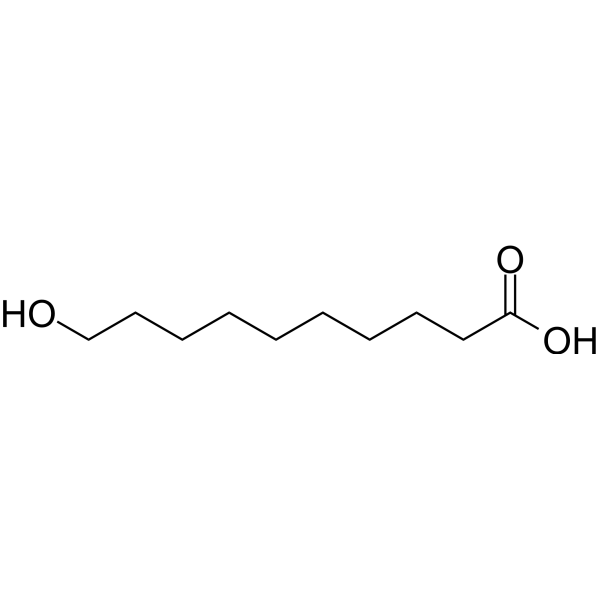
10-Hydroxydecanoic acid (10-HDAA) is a saturated fatty acid derived from 10-hydroxy-trans-2-decenoic acid, which can be isolated from royal jelly. 10-Hydroxydecanoic acid exhibits various biological activities, including anti-inflammatory, insecticidal, anti-malarial, and anti-Leishmania properties, as well as enhancing antigen-specific immune responses. The anti-inflammatory effects of 10-Hydroxydecanoic acid are primarily mediated by inhibiting the activation of NF-κB and the translation of interferon regulatory factor 1 (IRF-1), which reduces the production of interleukin 6 (IL-6) and nitric oxide (NO) in inflammatory cells. Additionally, 10-Hydroxydecanoic acid alleviates neuroinflammatory responses through the p53-autophagy pathway and the p53-NLRP3 pathway. Finally, 10-Hydroxydecanoic acid enhances antigen-specific immune responses by promoting the effective uptake of antigens by microfold cells .
loading...
    loading...
Cat. No.: HY-141878
CAS No.: 2767983-76-4
Research Areas:  

Neurological Disease

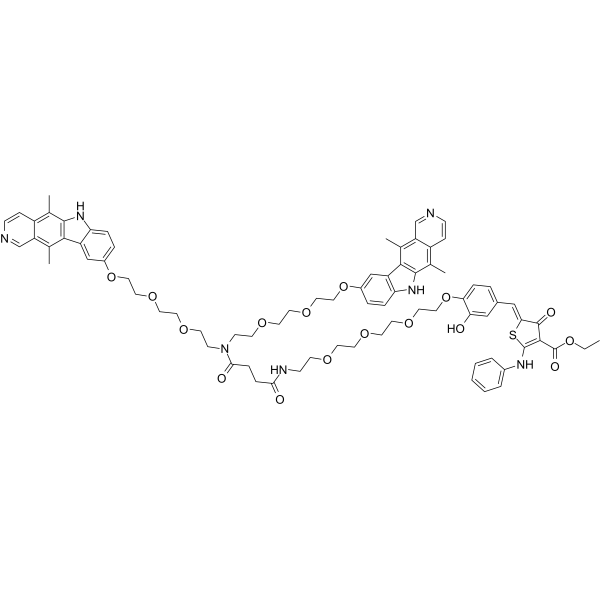
di-Ellipticine-RIBOTAC is a RNase recruiting chimera (RIBOTAC) degrader, capable of specifically binding and degrading expanded G4C2 RNA repeat (r(G4C2) exp). di-Ellipticine-RIBOTAC selectively binds the three-dimensional (3D) structure formed by r(G4C2) exp and that recruits an endogenous ribonuclease (RNase) to cleave r(G4C2) exp. di-Ellipticine-RIBOTAC selectively degrades the mutant chromosome 9 open reading frame 72 (C9orf72) allele and reduces quantities of toxic dipeptide repeat proteins (DPRs) translated from r(G4C2) exp. di-Ellipticine-RIBOTAC significantly improves the pathological phenotype of amyotrophic lateral sclerosis/ frontotemporal dementia (c9ALS/FTD) in cells and mouse models. di-Ellipticine-RIBOTAC can be used for the study of amyotrophic lateral sclerosis (ALS) and frontotemporal dementia (FTD) .
loading...
    loading...
Cat. No.: HY-148062
CAS No.: 2769753-48-0
Purity:  99.85%
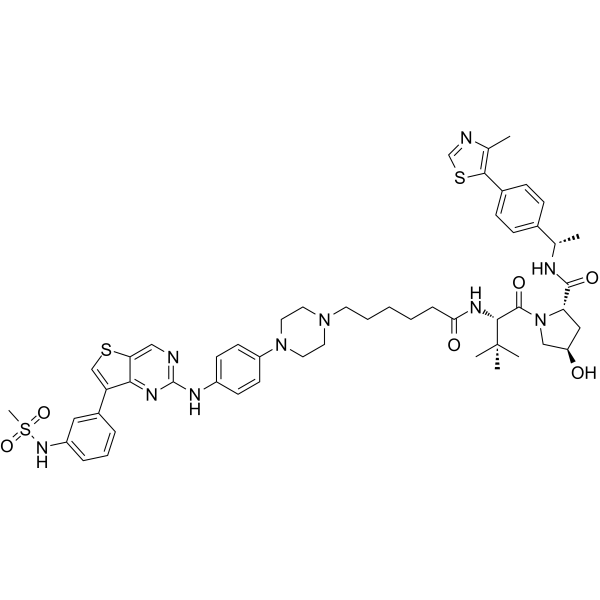
RSS0680 is a small noncoding RNA (sRNA) targeting the mRNA ribosome binding site (RBS) and a PROTAC. RSS0680 competitively binds to RBS through the conserved CCUCCUCCC anti-Shine-Dalgarno (aSD) sequence and inhibits the translation initiation of target genes. RSS0680 can interact with the DUF1127 protein CcaF1, regulate its own stability and participate in bacterial oxidative stress defense, enhancing the host's resistance to heat shock and oxidative damage by affecting pathways such as C1 metabolism and pyruvate dehydrogenase complex. RSS0680 degrades AAK1, CDK1, CDK16, CDK2, CDK4, CDK6, EIF2AK4, GAK, LATSl, LIMK2, MAPK6, MAPKAPK5, MARK2, MARK4, MKNK2, NEK9, RPS6KB1, SIK2, SNRK, STK17A, STK17B, STK35, and WEEl. RSS0680 can be used to study diseases or disorders mediated by aberrant kinase activity and regulatory mechanisms of noncoding RNAs in α-proteobacteria[1][2].
loading...
    loading...
Cat. No.: HY-N0565AG
CAS No.: 10592-13-9
Doxycycline hydrochloride GMP is Doxycycline (hydrochloride) (HY-N0565A) produced by using GMP guidelines. GMP small molecules works appropriately as an auxiliary reagent for cell therapy manufacture. Doxycycline hydrochloride is an orally active highly lipophilic, tissue-permeable MMP inhibitor with broad-spectrum antibacterial activity. Doxycycline hydrochloride is also a semi-synthetic antibiotic with chelating properties, which blocks bacterial protein synthesis and inhibits extracellular matrix degradation through interactions with zinc and calcium atoms. Doxycycline hydrochloride also inhibits mitochondrial biogenesis, translation, and the expression of respiratory chain proteins. Doxycycline hydrochloride induces apoptosis, inhibits autophagy and EMT, downregulates stem cell markers, and activates the PI3K-AKT pathway, thereby effectively inhibiting the viability and proliferation of cancer cells such as breast cancer cells. Doxycycline hydrochloride also promotes the survival and self-renewal of embryonic stem cells and neural stem cells, and reduces the frequency of medium changes in culture. Doxycycline hydrochloride has been applied in studies related to breast cancer, prostate cancer, bladder cancer, and other cancers .
loading...
    loading...
Cat. No.: HY-N0565BR
CAS No.: 24390-14-5
Synonyms: Doxycycline hydrochloride hemiethanolate hemihydrate (Standard); WC2031 (Standard)
Doxycycline hyclate (Standard) is the analytical standard of Doxycycline hyclate (HY-N0565B). This product is intended for research and analytical applications. Doxycycline hyclate is an orally active highly lipophilic, tissue-permeable MMP inhibitor with broad-spectrum antibacterial activity. Doxycycline hyclate is also a semi-synthetic antibiotic with chelating properties, which blocks bacterial protein synthesis and inhibits extracellular matrix degradation through interactions with zinc and calcium atoms. Doxycycline hyclate also inhibits mitochondrial biogenesis, translation, and the expression of respiratory chain proteins. Doxycycline hyclate induces apoptosis, inhibits autophagy and EMT, downregulates stem cell markers, and activates the PI3K-AKT pathway, thereby effectively inhibiting the viability and proliferation of cancer cells such as breast cancer cells. Doxycycline hyclate also promotes the survival and self-renewal of embryonic stem cells and neural stem cells, and reduces the frequency of medium changes in culture. Doxycycline hyclate has been applied in studies related to breast cancer, prostate cancer, bladder cancer, and other cancers .
loading...
    loading...
Cat. No.: HY-N0565S1
Doxycycline-d3 hyclate (major) is the deuterium labeled Doxycycline hyclate (HY-N0565B). Doxycycline hyclate is an orally active highly lipophilic, tissue-permeable MMP inhibitor with broad-spectrum antibacterial activity. Doxycycline hyclate is also a semi-synthetic antibiotic with chelating properties, which blocks bacterial protein synthesis and inhibits extracellular matrix degradation through interactions with zinc and calcium atoms. Doxycycline hyclate also inhibits mitochondrial biogenesis, translation, and the expression of respiratory chain proteins. Doxycycline hyclate induces apoptosis, inhibits autophagy and EMT, downregulates stem cell markers, and activates the PI3K-AKT pathway, thereby effectively inhibiting the viability and proliferation of cancer cells such as breast cancer cells. Doxycycline hyclate also promotes the survival and self-renewal of embryonic stem cells and neural stem cells, and reduces the frequency of medium changes in culture. Doxycycline hyclate has been applied in studies related to breast cancer, prostate cancer, bladder cancer, and other cancers .
loading...
    loading...
Cat. No.: HY-Y0148R
CAS No.: 1679-53-4
Synonyms: NSC 15139 (Standard); 10-HDAA (Standard)
10-Hydroxydecanoic acid (Standard) is the analytical standard of 10-Hydroxydecanoic acid. This product is intended for research and analytical applications. 10-Hydroxydecanoic acid (10-HDAA) is a saturated fatty acid derived from 10-hydroxy-trans-2-decenoic acid, which can be isolated from royal jelly. 10-Hydroxydecanoic acid exhibits various biological activities, including anti-inflammatory, insecticidal, anti-malarial, and anti-Leishmania properties, as well as enhancing antigen-specific immune responses. The anti-inflammatory effects of 10-Hydroxydecanoic acid are primarily mediated by inhibiting the activation of NF-κB and the translation of interferon regulatory factor 1 (IRF-1), which reduces the production of interleukin 6 (IL-6) and nitric oxide (NO) in inflammatory cells. Additionally, 10-Hydroxydecanoic acid alleviates neuroinflammatory responses through the p53-autophagy pathway and the p53-NLRP3 pathway. Finally, 10-Hydroxydecanoic acid enhances antigen-specific immune responses by promoting the effective uptake of antigens by microfold cells[1][2][3][4][5].
loading...
    loading...
Cat. No.: HY-P83763
Synonyms: EIF 2 alpha antibody; EIF 2 antibody; EIF 2A antibody; EIF 2alpha antibody; eIF-2-alpha antibody; eIF-2A antibody; EIF-2alpha antibody; EIF2 alpha antibody; EIF2 antibody; EIF2A antibody; EIF2S1 antibody; Eukaryotic Translation initiation factor 2 subunit 1 alpha 35kDa antibody; IF2A_HUMAN antibody

Host:  

Rabbit

Application:  

WB, ICC/IF, IHC-P, FC, IP

Reactivity:  

Human, Mouse, Rat, Monkey

loading...
    loading...
Cat. No.: HY-141878A
CAS No.: 2767983-77-5
Research Areas:  

Neurological Disease

di-Ellipticine-RIBOTAC TFA is a RNase recruiting chimera (RIBOTAC) degrader, capable of specifically binding and degrading expanded G4C2 RNA repeat (r(G4C2) exp). di-Ellipticine-RIBOTAC TFA selectively binds the three-dimensional (3D) structure formed by r(G4C2) exp and that recruits an endogenous ribonuclease (RNase) to cleave r(G4C2) exp. di-Ellipticine-RIBOTAC TFA selectively degrades the mutant chromosome 9 open reading frame 72 (C9orf72) allele and reduces quantities of toxic dipeptide repeat proteins (DPRs) translated from r(G4C2) exp. di-Ellipticine-RIBOTAC TFA significantly improves the pathological phenotype of amyotrophic lateral sclerosis/ frontotemporal dementia (c9ALS/FTD) in cells and mouse models. di-Ellipticine-RIBOTAC TFA can be used for the study of amyotrophic lateral sclerosis (ALS) and frontotemporal dementia (FTD) .
loading...
    loading...
Cat. No.: HY-W014937S
CAS No.: 93496-64-1
Synonyms: 4HBP-d4
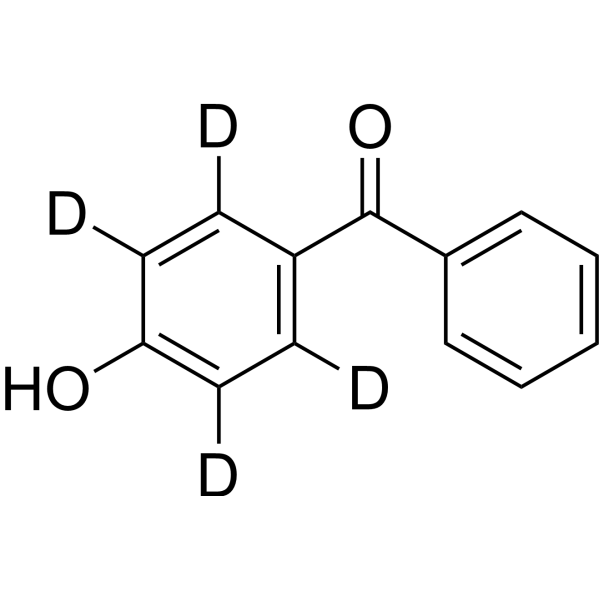
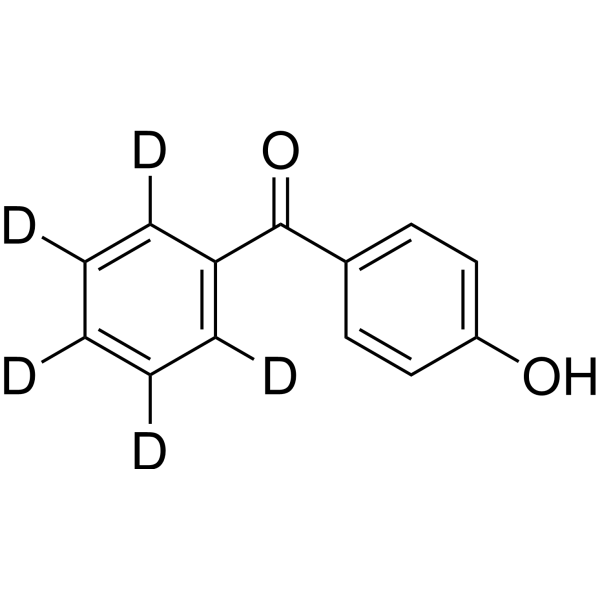
4-Hydroxybenzophenone-d4 (4HBP-d4) is the deuterated-labeled 4-Hydroxybenzophenone (HY-W014937). 4‑Hydroxybenzophenone (4HBP) is a major metabolite of Benzophenone (HY-Y0546) and is orally active. 4-Hydroxybenzophenone triggers endoplasmic reticulum stress and activates the PERK-eIF2α-ATF4-CHOP and IRE1α-XBP1s pathways, and inhibits IκB translation. 4-Hydroxybenzophenone induces endoplasmic reticulum stress, unfolded protein response activation, protein homeostasis imbalance, protein aggregation, oxidative stress, ROS accumulation, mitochondrial membrane potential decrease, ATP depletion, and cytotoxicity. 4-Hydroxybenzophenone induces neural stem cell apoptosis (apoptosis) and affects neuronal differentiation. 4-Hydroxybenzophenone promotes malignant proliferation of hepatocellular carcinoma cells and xenograft tumor growth in nude mice. 4-Hydroxybenzophenone can be used in research related to neurodevelopmental toxicity and hepatocellular carcinoma .
loading...
    loading...
Cat. No.: HY-W014937S1
CAS No.: 76478-47-2
Synonyms: 4HBP-d5
4-Hydroxybenzophenone-d5 (4HBP-d5) is the deuterated-labeled 4-Hydroxybenzophenone (HY-W014937). 4‑Hydroxybenzophenone (4HBP) is a major metabolite of Benzophenone (HY-Y0546) and is orally active. 4-Hydroxybenzophenone triggers endoplasmic reticulum stress and activates the PERK-eIF2α-ATF4-CHOP and IRE1α-XBP1s pathways, and inhibits IκB translation. 4-Hydroxybenzophenone induces endoplasmic reticulum stress, unfolded protein response activation, protein homeostasis imbalance, protein aggregation, oxidative stress, ROS accumulation, mitochondrial membrane potential decrease, ATP depletion, and cytotoxicity. 4-Hydroxybenzophenone induces neural stem cell apoptosis (apoptosis) and affects neuronal differentiation. 4-Hydroxybenzophenone promotes malignant proliferation of hepatocellular carcinoma cells and xenograft tumor growth in nude mice. 4-Hydroxybenzophenone can be used in research related to neurodevelopmental toxicity and hepatocellular carcinoma .
loading...
    loading...
Cat. No.: HY-170524
CAS No.: 3052313-73-9
Research Areas:  

Infection

TDI-015051 is a highly selective, orally active antiviral agent that targets the coronavirus NSP14 guanine-N7 methyltransferase. TDI-015051 binds to substrates in a non-competitive manner and forms a stable ternary complex, precisely blocking the capping and methylation processes of viral mRNA. TDI-015051 potently inhibits a variety of coronaviruses (including SARS-CoV-2 and MERS). By impairing viral replication and translation and inducing a moderate type I interferon-mediated immune response, it significantly reduces pulmonary viral load and exhibits a synergistic effect with Nirmatrelvir (HY-138687). In addition, TDI-015051 does not inhibit non-coronavirus methyltransferases, and the drug-resistant mutations it induces impair viral fitness, demonstrating excellent antiviral properties and safety. TDI-015051 can be used for research on COVID-19 and the replication mechanism of coronaviruses .The IC50 values of TDI-015051 against SARS-CoV-2, α-hCoV-NL63, α-hCoV-229E, β-hCoV-MERS are 0.15 nM, 1.7 nM, 2.6 nM and 3.6 nM, respectively, and the Ka value against SARS-CoV-2 is 0.061 nM .
loading...
    loading...
Cat. No.: HY-W587733
CAS No.: 1662-06-2
Synonyms: 17,20β-P; 17,20β-DHP
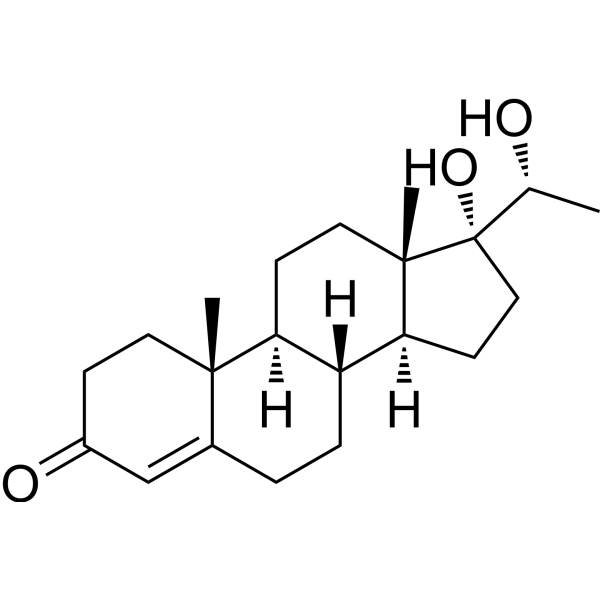
17α,20β-Dihydroxy-4-pregnen-3-one (17,20β-P; 17,20β-DHP) acts as the maturation-inducing hormone (MIH) in salmonid fish and rainbow trout. 17α,20β-Dihydroxy-4-pregnen-3-one binds to oocyte-specific plasma membrane receptors and pertussis toxin-sensitive inhibitory G proteins in fish, inhibits Adenylate Cyclase and reduces intracellular cAMP via the membrane receptor-G protein coupling pathway, thereby initiating downstream signal transduction. 17α,20β-Dihydroxy-4-pregnen-3-one induces de novo synthesis of cyclin B, mediates the translation of cyclin B mRNA and the phosphorylation of cdc2, and promotes the production of maturation-promoting factor (MPF). 17α,20β-Dihydroxy-4-pregnen-3-one drives meiotic maturation of fish oocytes. 17α,20β-Dihydroxy-4-pregnen-3-one is applicable for development-related research .
loading...
    loading...
Cat. No.: HY-L932V0
2,000,000 compounds

Macrocyclic compounds (≥12-atom cyclic small molecules/peptides) have unique physicochemical properties. They form preorganized conformations with high binding affinity/selectivity, target traditional small-molecule-inaccessible proteins, and bridge small-molecule drugs and biological agents. As key protein phosphorylation enzymes, kinases are linked to tumors, COPD, etc., and are critical therapeutic targets. Traditional small-molecule kinase inhibitors lack selectivity, causing off-target toxicity, low bioavailability, and acquired resistance. Macrocycles’ semi-rigid structure restricts conformations, boosts binding selectivity, optimizes pharmacokinetics, and makes macrocyclization a core kinase inhibitor optimization strategy.

Thousands of bioactive macrocycles were curated from ChEMBL. Via Transformer, macrocyclization was converted into a chemical language translation task, enabling end-to-end macrocycle generation from linear precursors with simplified inputs. Macformer achieves efficient, automated linear molecule macrocyclization via deep learning; generated macrocycles have diversity, novelty, biocompatibility, and cover broader chemical space.

MCE collected thousands of marketed/clinical kinase inhibitors, using their fragments for macrocyclization to generate derivatives. After evaluating synthetic accessibility and physicochemical properties, a million-scale virtual macrocyclic library was built for kinase-related virtual and AI-driven screening.

