454 Results for "

ALK

" in MedChemExpress (MCE) Product Catalog:
Products (454)

454 Results for "ALK" in MCE Product Catalog:

Cat. No.: HY-P811819A
Synonyms: NIPA, HSPC216, ZC3HC1, Zinc finger C3HC-type protein 1, Nuclear-interacting partner of ALK, Nuclear-interacting partner of anaplastic lymphoma kinase, hNIPA

Host:  

Mouse

Application:  

WB, FC, ICC/IF

Reactivity:  

Human, M

loading...
    loading...
Cat. No.: HY-P76902
Purity:  ≥ 95%, as determined by reducing SDS-PAGE.
Synonyms: ENPP7; ALKaline Sphingomyelin Phosphodiesterase; Ectonucleotide Pyrophosphatase/Phosphodiesterase 7; Intestinal ALKaline Sphingomyelinase; ALK-SMase; ALKaline Sphingomyelinase; NPP7; E-NPP 7; Ectonucleotide Pyrophosphatase/Phosphodiesterase Family Member
Species:  
Mouse
Source:  
HEK293
loading...
    loading...
Cat. No.: HY-P77358
Purity:  ≥ 95%, as determined by reducing SDS-PAGE.
Synonyms: ENPP7; ALKaline Sphingomyelin Phosphodiesterase; Ectonucleotide Pyrophosphatase/Phosphodiesterase 7; Intestinal ALKaline Sphingomyelinase; ALK-SMase; ALKaline Sphingomyelinase; NPP7; E-NPP 7; Ectonucleotide Pyrophosphatase/Phosphodiesterase Family Member
Species:  
Human
Source:  
HEK293
loading...
    loading...
Cat. No.: HY-12678S1
CAS No.: 2251773-94-9
Purity:  99.82%
Synonyms: NMS-E628-d8; RXDX-101-d8
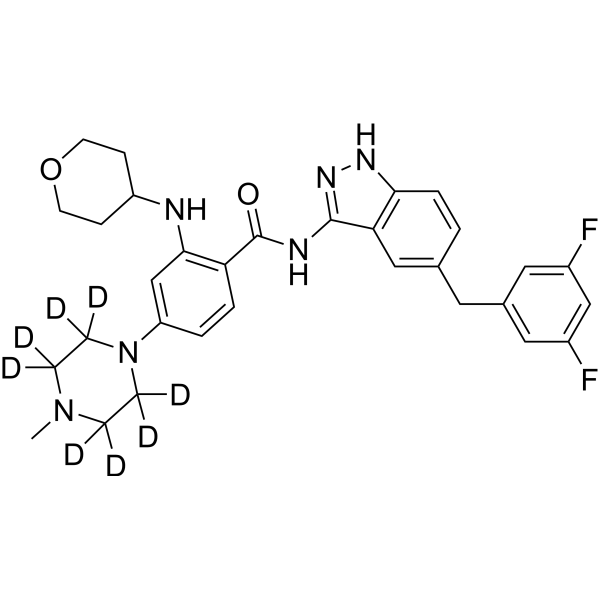
Entrectinib-d8 (NMS-E628-d8; RXDX-101-d8) is a deuterated version of Entrectinib (HY-12678). Entrectinib (NMS-E628) is an orally available, blood-brain barrier permeable, central nervous system active TrkA/B/C, ROS1 and ALK inhibitor with IC50 values of 1, 3, 5, 12 and 12, respectively. 7 nM. Entrectinib induces apoptosis and cycle arrest in cancer cells, has anti-tumor activity, and also alleviates bleomycin-induced pulmonary fibrosis in mice .
loading...
    loading...
Cat. No.: HY-175271
Target:  

PROTACs Trk Receptor

Research Areas:  

Cancer

JWJ-01-378 is a TPM3-TRKA fusion protein inhibitor and a wild-type TRK PROTAC degrader. JWJ-01-378 induces degradation via the ubiquitin-proteasome system, and does not degrade TRK inhibitor-resistant mutants or ALK fusion proteins. JWJ-01-378 inhibits downstream signaling pathways activated by TPM3-TRKA fusion, and reduces the viability of cancer cells harboring TPM3-TRKA fusion. JWJ-01-378 can be used to evaluate targeted degradation of TRK fusion proteins in cancer .
loading...
    loading...
Cat. No.: HY-156470
CAS No.: 3009081-73-3
Multi-kinase-IN-6 (compound 10e) is a multikinase inhibitor that shows good enzyme inhibitory activity against TrkA, ALK2, c-KIT, EGFR, PIM1, CK2α, CHK1, and CDK2. Multi-kinase-IN-6 reveals antiproliferative activity against MCF7, HCT116 and EKVX with IC50 values of 3.36 μM, 1.40 μM and 3.49 μM, respectively. Multi-kinase-IN-6 shows cell cycle arrest at the G1/S phase and G1 phase in MCF7 and HCT116 cells with good apoptotic effect .
loading...
    loading...
Cat. No.: HY-170405
CAS No.: 2940242-88-4
YB-3-17 is a blood-brain barrier permeable mTOR inhibitor (IC50 = 0.22 nM) and GSPT1 PROTAC degrader. YB-3-17 inhibits mTORC1/2, CK1δ/ε, mutant ALK and HER2 kinases, induces CRBN-dependent selective GSPT1 degradation, ablates mTOR downstream phosphorylation, downregulates c-Myc/Cyclin D1 to impair tumor translation, triggers p53-mediated apoptosis, suppresses tumor proliferation and xenograft tumor growth, and can be used for the study of glioma, neuroblastoma, breast cancer, lymphoma, colorectal cancer and lung cancer .
loading...
    loading...
Cat. No.: HY-178391
Research Areas:  

Cancer

SMU-037 is an orally active and selective ROS1 inhibitor that demonstrates potent activity (IC₅₀ = 6.8 nM) and possesses the ability to penetrate the blood-brain barrier. SMU-037 shows ~25-fold selectivity over ALK, and superior sensitivity against the G2032R mutation. SMU-037 attenuates phosphorylation of ROS1 and downstream MAPK-ERK signaling pathway, leading to cell cycle arrest and apoptosis. SMU-037 effectively suppresses tumor progression in both xenograft and intracranial mouse models. SMU-037 can be used for non-small cell lung cancer (NSCLC) research .
loading...
    loading...
Cat. No.: HY-L080
106 compounds

Targeted cancer therapies are drugs or other substances that block the growth and spread of cancer by interfering with specific molecular targets that are involved in the growth, progression, and spread of cancer.

There are several different types of targeted therapy. The most common types are small-molecule drugs and monoclonal antibodies. Small-molecule drugs are small enough to enter cells easily, so they are used for targets that are inside cells, while monoclonal antibodies are usually used for targets that are located outside the cells. Because of high specificity, low side effect and potent anticancer activity, targeted therapy has become the mainstream of new anti-tumor drugs. Various targeted therapies have been approved by FDA and used in the treatment of diseases.

MCE carefully collects a unique of 106 targeted therapy drugs used in cancer treatment. MCE Targeted therapy drug library is a useful tool for the research of targeted therapy.

Cat. No.: HY-P810041
Synonyms: ALO17, C17orf27, KIAA1554, KIAA1618, MYSTR, RNF213, E3 ubiquitin-protein ligase RNF213, ALK lymphoma oligomerization partner on chromosome 17, E3 ubiquitin-lipopolysaccharide ligase RNF213, Mysterin, RING finger protein 213

Host:  

Mouse

Application:  

WB, IP, ELISA

Reactivity:  

human

loading...
    loading...
Cat. No.: HY-L016
1,695 compounds

Protein tyrosine kinases (PTKs) are key signaling molecules and important drug targets. Two classes of PTKs are present in cells: the transmembrane receptor PTKs (RTKs) and the nonreceptor PTKs. The RTK family includes the receptors for insulin and for many growth factors, such as EGFR, FGFR, PDGFR, VEGFR, and NGFR. RTKs are transmembrane glycoproteins that are activated by the binding of their ligands, and they transduce the extracellular signal to the cytoplasm by phosphorylating tyrosine residues on the receptors themselves (autophosphorylation) and on downstream signaling proteins. Their principal functions of PTKs involve the regulation of multicellular aspects of the organism. Cell to cell signals concerning growth, differentiation, adhesion, motility, and death are frequently transmitted through tyrosine kinases. In humans, tyrosine kinases have been demonstrated to play significant roles in the development of many disease states, including diabetes and cancers.

MCE designs a unique collection of 1,695 compounds that act as a useful tool for PTKs-related drug screening and disease research.

Cat. No.: HY-178057
CAS No.: 2754394-10-8
Research Areas:  

Cancer

EGFR-IN-176 is an orally active and ATP-competitive EGFR mutant inhibitor (particularly C797S-mediated EGFR triple mutant). EGFR-IN-176 effectively inhibits subsequent AKT signaling and induces apoptosis in Ba/F3 and PC-9 cells expressing EGFR 19del/T790M/C797S and EGFR L858R/T790M/C797S. EGFR-IN-176 selectively inhibits EGFR signaling in cell lines harboring EGFR triple mutation and shows no inhibitory effect against A431 cells that express wild-type EGFR. EGFR-IN-176 can effectively inhibit the enzymatic activity of ALK (IC50 < 0.5 nM). EGFR-IN-176 can be used for the study of non-small cell lung cancer (NSCLC) .
loading...
    loading...
Cat. No.: HY-159147
CAS No.: 2570251-69-1
Research Areas:  

Cancer

SIAIS039 is an orally active c-ros oncogene 1 (ROS1)-specific PROTAC with DC50s of 154.46 nM, 126.47 nM, 143.69 nM for HCC78 cells, Ba/F3 expressing the CD74-ROS1 fusion and Ba/F3 expressing the SDC4-ROS1 fusion, respectively. SIAIS039 suppresses cell proliferation, induces cell cycle arrest and apoptosis, and inhibits clonogenicity against ROS1-positive cells. SIAIS039 demonstrates anti-tumour effects against ROS1-driven tumor growth vivo. SIAIS039 is composed of the ALK inhibitor Brigatinib (HY-12857), a linker EM-12 (HY-138793), and a VHL ligand E3 ubiquitin ligase 1-Butyne (Red: Brigatinib; Blue: VHL ligand; Black: linker) .
loading...
    loading...
Cat. No.: HY-N1510
CAS No.: 22149-35-5
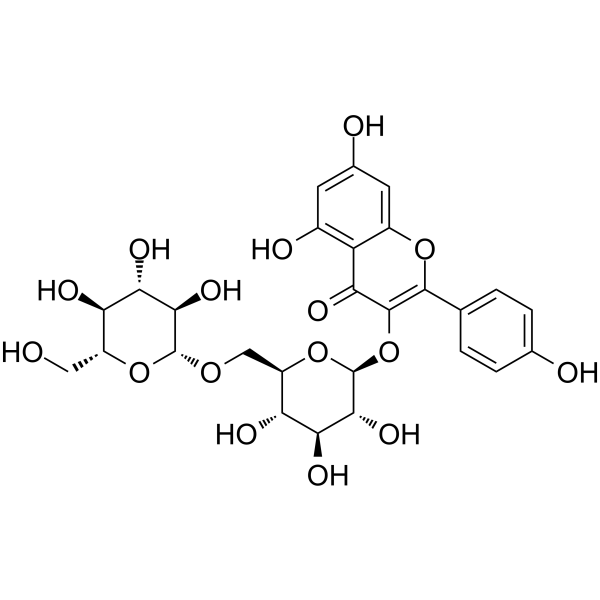
Kaempferol 3-O-gentiobioside is an orally active flavonoid, with a Ka value of 57 µM against human NOTCH1 and an IC50 value of 50 μM against α-glucosidase. Kaempferol 3-O-gentiobioside inhibits the NOTCH signaling pathway. It downregulates the expression of TLR4 and NLRP3, and suppresses the activation and nuclear translocation of NF-κB. Kaempferol 3-O-gentiobioside inhibits the expression of MUC5AC, reduces nitrite and ROS levels, and attenuates excessive mucus secretion. It exhibits antibacterial activity, reducing the formation and growth of MRSA biofilms. Kaempferol 3-O-gentiobioside blocks the TGF-β/ALK5/Smad signaling pathway and inhibits epithelial-mesenchymal transition. It suppresses the proliferation, migration, invasion and metastatic growth of tumor cells. Kaempferol 3-O-gentiobioside alleviates airway inflammation and mucus hypersecretion in mice with allergic asthma . It reduces the volume of ovarian cancer xenografts in mice. Kaempferol 3-O-gentiobioside can be used in research related to allergic asthma, diabetes, MRSA infection, breast cancer, gastric cancer and ovarian cancer .
loading...
    loading...

