

5471 Results for "

BALB-Rag/γC mice

" in MedChemExpress (MCE) Product Catalog:
Products (5471)

5471 Results for "BALB-Rag/γC mice" in MCE Product Catalog:

Cat. No.: HY-185561
Synonyms: RC88
Target:  

Mesothelin

Research Areas:  

Cancer

Misitatug blivedotin (RC88) is an antibody-drug conjugate (ADC) targeting mesothelin (MSLN). Misitatug blivedotin binds to mesothelin and exhibits dose‐dependent antitumor activity. Misitatug blivedotin can be used for the research of ovarian cancer, non-squamous non-small-cell lung carcinoma, cervical cancer .
loading...
    loading...
Cat. No.: HY-186112
CAS No.: 88134-39-8
Target:  

P2X Receptor

Research Areas:  

Inflammation/Immunology

PSFL2915 is a selective, orally active P2X receptor inhibitor with oral effectiveness, with an IC50 of 0.319 μM for human P2X3, 0.261 μM for rat P2X2/3, and 13.3 μM for human P2X2. PSFL2915 exhibits ~42-fold selectivity over human P2X2. PSFL2915 can be used for the research of chronic cough .
loading...
    loading...
Cat. No.: HY-187678
CAS No.: 3024011-79-5
NCGC-023 is a LATS1/2 inhibitor. NCGC-023 selectively inhibits LATS1/2, an upstream regulator of Yap in the Hippo signaling pathway, increases the expression of active Yap protein, activates Yap-dependent signaling pathways, triggers non-Yap-dependent metallothionein-mediated heavy metal responses, and upregulates IL-33-related regenerative responses. NCGC-023 can be used in studies related to gastrointestinal acute radiation syndrome (GI-ARS) .
loading...
    loading...
Cat. No.: HY-187719
CAS No.: 318262-42-9
Target:  

Proton Pump Apoptosis

Research Areas:  

Cancer

NIK-12192 is an orally active inhibitor of vacuolar H +-ATPase. NIK-12192 reduces intracellular pH, decreases lysosomal volume and acidity, and alters the intracellular localization of V-ATPase by inhibiting proton pumps . NIK-12192 induces αvβ5 integrin polarization, cytoskeletal disruption, cell detachment, anoikis-mediated delayed apoptosis and necrosis, a delayed reduction in mitochondrial membrane potential, and lysosomal/phagosomal accumulation. NIK-12192 inhibits tumor cell migration, invasion, and three-dimensional spheroid growth, and enhances the activity of Topotecan (HY-13768). NIK-12192 suppresses spontaneous lung metastasis in vivo. NIK-12192 is used in research related to colon cancer, ovarian cancer, lung cancer, breast cancer, renal cancer, prostate cancer, acute myeloid leukemia, and melanoma .
loading...
    loading...
Cat. No.: HY-187914
CAS No.: 2245791-50-6
Target:  

Bacterial

Research Areas:  

Infection

OTB-658 is a conformationally restricted oxazolidinone antibacterial candidate that exhibits bacteriostatic activity against Mycobacterium tuberculosis. OTB-658 enters macrophages and inhibits intracellular M. tuberculosis growth. OTB-658 exhibits dose-dependent antibacterial activity. OTB-658 is used in research related to tuberculosis and drug-resistant tuberculosis .
loading...
    loading...
Cat. No.: HY-D3235
CAS No.: 2540586-21-6
FDOCl-22 is a HOCl-responsive probe. FDOCl-22 reacts with hypochlorous acid to significantly enhance near-infrared emission and absorption signals, enabling the detection of HOCl levels associated with reagent-induced acute kidney injury. FDOCl-22 can be used in studies related to reagent-induced acute kidney injury .
loading...
    loading...
Cat. No.: HY-DY2024
Target:  

Fluorescent Dye

Research Areas:  

Neurological Disease

0.5% Evans Blue Staining Solution is an azo dye solution that strongly binds to serum albumin to form a high-molecular-weight tracer complex. 0.5% Evans Blue Staining Solution can passively leak with albumin and produce color when the blood-brain barrier or vascular barrier is damaged in vivo, and it is used for permeability assessment. 0.5% Evans Blue Staining Solution is excluded by living cells but enters dead cells to stain them in vitro due to the loss of membrane integrity in dead cells. 0.5% Evans Blue Staining Solution can be used for studies related to the identification of dead/necrotic cells and blood-brain barrier (BBB) permeability .
loading...
    loading...
Cat. No.: HY-N16792
CAS No.: 202526-51-0
Sanggenol F is a natural phenolic compound.
loading...
    loading...
Cat. No.: HY-N17685
CAS No.: 98474-77-2
Pseudoginsenoside RT4 is an orally active anti-inflammatory agent. Pseudoginsenoside RT4 can be isolated from Panax pseudoginseng subsp. Himalaicus, Panax vietnamensis Ha et Grushv, and Panax quinquefolius L. Pseudoginsenoside RT4 reduces the levels of TNF-α, IL-6, and IL-1β, elevates the level of IL-10, improves the histopathological features of colon tissue, maintains the ultrastructure of colonic epithelium, protects the integrity of cell monolayers, increases the expression of tight junction proteins, raises the total content of short-chain fatty acids, corrects intestinal flora disorder, reduces the disease activity index score, restores colon length, and decreases the spleen index. Pseudoginsenoside RT4 exhibits hepatoprotective effects. Pseudoginsenoside RT4 can be used in studies related to ulcerative colitis .
loading...
    loading...
Cat. No.: HY-N21846
CAS No.: 82516-67-4
U-62162 is an Antibiotic. U-62162 is found in Streptomyces verdensis. U-62162 inhibits the growth of Gram-positive bacteria. U-62162 exhibits no in vivo protective effect in animals with experimental S. aureus infection .
loading...
    loading...
Cat. No.: HY-N6043
CAS No.: 69039-02-7
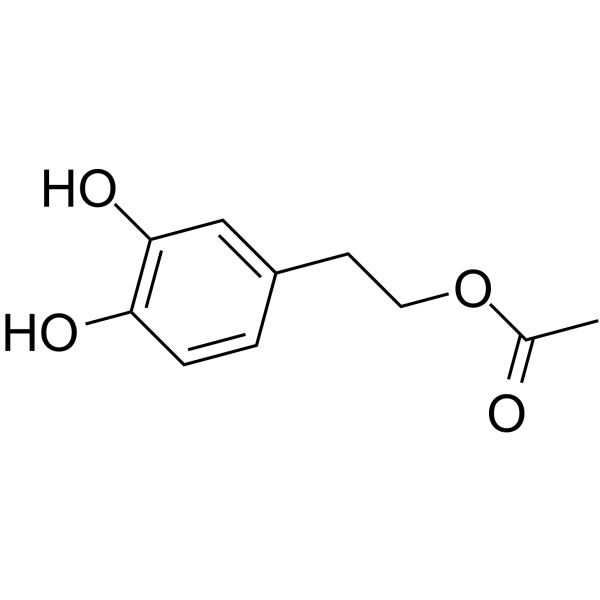
Hydroxytyrosol acetate is an orally active, blood-brain barrier-permeable multi-active compound with multiple effects including antibacterial, antioxidant, anti-platelet aggregation, and neuroprotective activities. Hydroxytyrosol acetate not only inhibits the growth of Vibrio by increasing bacterial membrane permeability, but also interacts with DNA and mediates supercoiled DNA relaxation. Meanwhile, Hydroxytyrosol acetate effectively reduces thrombosis and inhibits lipid oxidation by inhibiting COX activity and promoting vascular nitric oxide production. In terms of neuroprotection, Hydroxytyrosol acetate significantly alleviates neuronal apoptosis and inflammatory responses by up-regulating the expression level of ERβ, thereby improving cognitive function in Alzheimer's disease models. Hydroxytyrosol acetate has been widely used in scientific research related to Vibrio infection, arterial thrombosis, Alzheimer's disease and other related fields .
loading...
    loading...
Cat. No.: HY-P11931
Target:  

Others

Research Areas:  

Cancer

NODA-FGLP21 is a tumor-targeting agent and a fibrinogen-like protein 1 (FGL1) binder. NODA-FGLP21 specifically binds to FGL1, and this binding is competitively inhibited by unlabeled FGLP21. NODA-FGLP21 can be used in the research of liver cancer .
loading...
    loading...
Cat. No.: HY-P2989
CAS No.: 9014-19-1
Target:  

Endogenous Metabolite

Research Areas:  

Metabolic Disease Cancer

Pyruvate carboxylase is a key mitochondrial anaplerotic enzyme that catalyzes the conversion of pyruvate to oxaloacetate. Pyruvate carboxylase not only maintains tricarboxylic acid cycle activity and redox homeostasis, but also drives hepatic gluconeogenesis and fatty acid synthesis. The activity of Pyruvate carboxylase is upregulated in insulin-resistant states, exacerbating hepatic glucose production. Pyruvate carboxylase also shows significantly enhanced expression in early-stage non-small cell lung cancer (NSCLC). Pyruvate carboxylase promotes tumor proliferation by supporting nucleotide and lipid synthesis, and its functional deficiency cannot be compensated by glutaminolysis. Pyruvate carboxylase can be used in the research of prediabetes type 2 and NSCLC .
loading...
    loading...
Cat. No.: HY-P4610
CAS No.: 19653-76-0
Target:  

GLP Receptor

Research Areas:  

Metabolic Disease

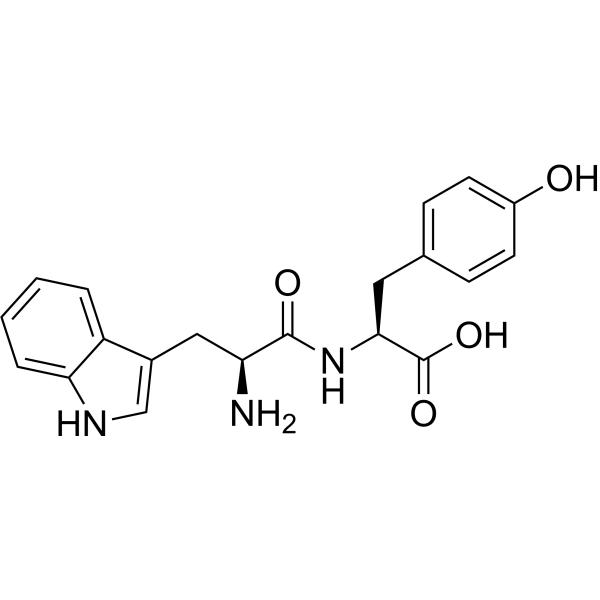
H-Trp-Tyr-OH is an orally active tryptophan-tyrosine dipeptide with blood-brain barrier permeability. H-Trp-Tyr-OH exerts physiological regulatory effects by stimulating enteroendocrine cells to secrete glucagon-like peptide GLP-1. In mouse models of tauopathies, H-Trp-Tyr-OH inhibits tau phosphorylation, reduces the level of neurofibrillary tangles, increases dopamine turnover, upregulates synapsin expression, and elevates cecal short-chain fatty acid levels, thereby improving behavioral deficits and extending lifespan. H-Trp-Tyr-OH can be used in research related to impaired glucose tolerance and tauopathies .
loading...
    loading...
Cat. No.: HY-P990060
CAS No.: 2488745-86-2
Synonyms: Mim8

Target:  

Factor Xa

Research Areas:  

Cardiovascular Disease

Denecimig (Mim8) is a factor VIII-mimetic bispecific antibody with micromolar human binding affinity for Factor X and Factor IXa. Denecimig binds Factor X and Factor IXa, localizes both to the phospholipid surface, enhances the Factor IXa-mediated activation of Factor X to Factor Xa, and stimulates the proteolytic activity of Factor IXa via its monovalent anti-Factor IXa arm. Denecimig is applicable to research related to hemophilia A .
loading...
    loading...
Cat. No.: HY-P990980
CAS No.: 2919209-65-5
Synonyms: CND-106; EMB-06
Target:  

CD3

Research Areas:  

Inflammation/Immunology Cancer

Cizutamig (CND-106) is a bispecific T-cell engager targeting BCMA and CD3. Cizutamig exhibits immunostimulatory and anti-tumor activities. Cizutamig can be used in research related to relapsed or refractory multiple myeloma and systemic lupus erythematosus .
loading...
    loading...
Cat. No.: HY-P991900

Target:  

CD19

Research Areas:  

Inflammation/Immunology

LY3541860 is a selective anti-CD19 antibody that both binds human CD19 with high affinity and selectively binds human B cells (Kd values: 76.8 pM and 94.5 nM for humans and cynomolgus monkeys, respectively). LY3541860 inhibits CpG-induced CD69 expression (IC50 = 0.006 nM). LY3541860 exhibits potent B cell inhibitory activities. LY3541860 can inhibit both BCR- and TLR-induced human B cell activation. LY3541860 can be used for the research of autoimmune diseases .
loading...
    loading...
Cat. No.: HY-W008385
CAS No.: 156-86-5
Synonyms: L-Homoarginine
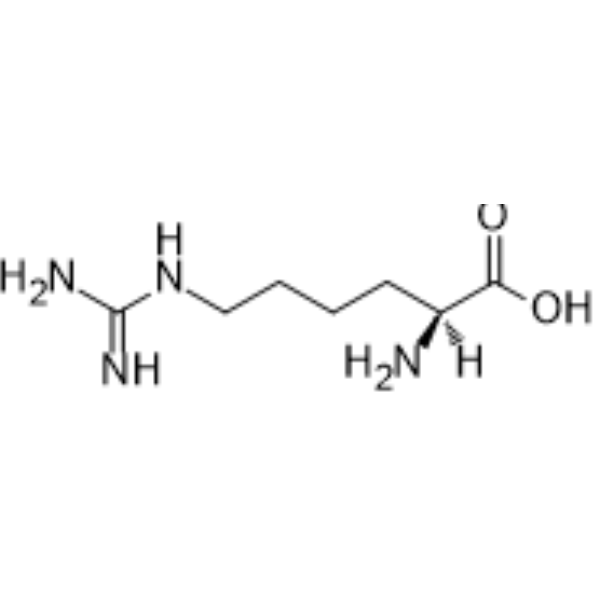
H-HomoArg-OH (L-Homoarginine) is an orally active endogenous non-protein amino acid. H-HomoArg-OH acts as a weak alternative substrate for NOS and interferes with NO production, selectively inhibits tissue-nonspecific alkaline phosphatase (TNAP), and suppresses the uptake of arginine by y +-type transporters (system y +). H-HomoArg-OH increases tissue hArg concentrations in vivo, regulates amino acid homeostasis, and improves renal function and pathological features of diabetic nephropathy. H-HomoArg-OH can be used in studies related to diabetes and cardiomyopathy .
loading...
    loading...
Cat. No.: HY-W008385AS
Synonyms: L-Homoarginine-d4 dihydrochloride
H-HoArg-OH-d4 dihydrochloride (L-Homoarginine-d4 dihydrochloride) is the d4-labeled H-HoArg-OH dihydrochloride. H-HoArg-OH dihydrochloride (L-Homoarginine dihydrochloride) is an orally active endogenous non-protein amino acid. H-HoArg-OH dihydrochloride acts as a weak alternative substrate for NOS and interferes with NO production, selectively inhibits tissue-nonspecific alkaline phosphatase (TNAP), and suppresses the uptake of arginine by y +-type transporters (system y +). H-HoArg-OH dihydrochloride increases tissue hArg concentrations in vivo, regulates amino acid homeostasis, and improves renal function and pathological features of diabetic nephropathy. H-HoArg-OH dihydrochloride can be used in studies related to diabetes and cardiomyopathy .
loading...
    loading...
Cat. No.: HY-W008385R
CAS No.: 156-86-5
Synonyms: L-Homoarginine (Standard)
H-HoArg-OH (Standard) (L-Homoarginine (Standard)) is the analytical standard of H-HoArg-OH (HY-W008385). This product is intended for research and analytical applications. H-HomoArg-OH (L-Homoarginine) is an orally active endogenous non-protein amino acid. H-HomoArg-OH acts as a weak alternative substrate for NOS and interferes with NO production, selectively inhibits tissue-nonspecific alkaline phosphatase (TNAP), and suppresses the uptake of arginine by y +-type transporters (system y +). H-HomoArg-OH increases tissue hArg concentrations in vivo, regulates amino acid homeostasis, and improves renal function and pathological features of diabetic nephropathy. H-HomoArg-OH can be used in studies related to diabetes and cardiomyopathy .
loading...
    loading...

