

5169 Results for "

Chrastil model

" in MedChemExpress (MCE) Product Catalog:
Products (5169)

5169 Results for "Chrastil model" in MCE Product Catalog:

Cat. No.: HY-189210A
Research Areas:  

Cancer

TopBP1-IN-4 is a TopBP1 inhibitor, with an IC50 value of 2.47 to 3.8 nM against the TopBP1 BRCT7/8 domain. TopBP1-IN-4 selectively disrupts BRCT7/8-dependent oncogenic protein-protein interactions, does not interfere with other BRCT domain-mediated functions of TopBP1, and has no effect on DNA replication. TopBP1-IN-4 restores E2F1-mediated Apoptosis in cells. TopBP1-IN-4 induces mitotic catastrophe in cells. TopBP1-IN-4 overcomes Osimertinib (HY-15772) resistance in EGFR-mutant non-small cell lung cancer models. TopBP1-IN-4 can be used in studies related to triple-negative breast cancer, ovarian cancer, non-small cell lung cancer, and acute myeloid leukemia .
loading...
    loading...
Cat. No.: HY-189218
AhR/PDE4 modulator-1 is a AhR/PDE4D dual-target modulator, with an AhR agonistic EC50 of 0.11 μM and a PDE4D inhibitory IC50 of 2.12 μM. AhR/PDE4 modulator-1 activates the AhR-CYP1A1 signaling pathway, promotes AhR nuclear translocation, and upregulates downstream CYP1A1; it inhibits PDE4D activity, elevates intracellular cAMP levels, and activates the downstream cAMP-PKA-CREB signaling pathway. Topical administration of AhR/PDE4 modulator-1 exerts anti-inflammatory effects in the Imiquimod (HY-B0180)-induced psoriasis-like mouse model, alleviates epidermal hyperplasia and inflammatory infiltration, and suppresses the expression of IL-17A/F. AhR/PDE4 modulator-1 can be used in research related to psoriasis .
loading...
    loading...
Cat. No.: HY-189668
Research Areas:  

Cancer

PI3K/AKT-IN-7 is a PI3K/Akt signaling pathway inhibitor with selective antiproliferative activity against hepatocellular carcinoma cells. PI3K/AKT-IN-7 downregulates the phosphorylation of PI3K and Akt and binds to NCF2 (Kd = 1.40 μM). PI3K/AKT-IN-7 induces apoptosis, S-phase cell cycle arrest, loss of mitochondrial membrane potential, and ROS accumulation, while inhibiting proliferation, migration, invasion, and DNA synthesis. PI3K/AKT-IN-7 inhibits tumor growth in a Hep3B xenograft BALB/c mouse model and reduces the expression of Ki67, PCNA, and MMP9. PI3K/AKT-IN-7 can be used for research on hepatocellular carcinoma .
loading...
    loading...
Cat. No.: HY-B1346S
CAS No.: 1217443-24-7
Synonyms: (±)-Glutamine-13C5,15N2,d10; DL-Gl-13C5,15N2,d10
DL-Glutamine- 13C5, 15N2,d10 ((±)-Glutamine- 13C5, 15N2,d10; DL-Gl- 13C5, 15N2,d10) is the 13C, 15N, d10-labeled DL-Glutamine (HY-B1346). DL-Glutamine ((±)-Glutamine; DL-Gl) is an amino acid metabolite. DL-Glutamine is a plasma metabolic biomarker associated with Treg/Th17 balance in an OVA-induced eosinophilic asthma mouse model. DL-glutamine positively correlates with muscle quality parameters such as muscle water-holding capacity and shear force, and negatively correlates with oxidative stress markers and apoptotic gene expression. DL-Glutamine is associated with periodontal pathogens and oral microbial communities in saliva/serum. DL-Glutamine can be used in research related to asthma, muscle quality, and periodontal disease .
loading...
    loading...
Cat. No.: HY-B1580A
CAS No.: 4075-81-4
Synonyms: Bioban-C, meets analytical specification of E282
Calcium propionate, meets analytical specification of E282 (Bioban-C, meets analytical specification of E282) is a calcium salt of Propionic acid with oral activity, which can be hydrolyzed into propionate and calcium ions. Calcium propionate, meets analytical specification of E282 elevates intracellular ROS levels in tumor cells, depletes GSH, reduces mitochondrial membrane potential, and thereby induces tumor cell apoptosis. In mouse colitis models, Calcium propionate, meets analytical specification of E282 modulates inflammatory factors such as IFN-γ, calprotectin, and Pglyrp3, ameliorating intestinal inflammation and metabolic disorders. In ruminants, Calcium propionate, meets analytical specification of E282 serves as a gluconeogenic precursor, regulating rumen fermentation and microbial diversity; in high-fat diet rats, it alters gut microbiota composition and affects blood biochemical parameters. Calcium propionate, meets analytical specification of E282 is commonly used as a food and feed additive, and is also used in research related to hypocalcemia, dyslipidemia, colitis, and lung cancer .
loading...
    loading...
Cat. No.: HY-N0168AR
CAS No.: 69097-99-0
(Rac)-Hesperetin (Standard) is the analytical standard of (Rac)-Hesperetin. This product is intended for research and analytical applications. (Rac)-Hesperetin is the racemate of Hesperetin (HY-N0168), an orally active multi-target inhibitor. (Rac)-Hesperetin exhibits significant anti-tumor and anti-inflammatory activities by blocking the TGF-β1-mediated Fyn/RhoA signaling axis and the TLR4-MyD88-NF-κB inflammatory pathway. (Rac)-Hesperetin inhibits the formation of actin stress fibers and the migration and invasion of cancer cells, and is suitable for triple-negative breast cancer research. In inflammation models, (Rac)-Hesperetin effectively alleviates lung injury by reducing the release of pro-inflammatory mediators and regulating the activity of oxidative stress enzymes, and is suitable for acute lung injury research. (Rac)-Hesperetin also interferes with the entry and early replication processes of channel catfish virus, inhibits viral gene expression and progeny virus production, thereby protecting cells from virus-induced cytopathic effects .
loading...
    loading...
Cat. No.: HY-N0168AS
CAS No.: 1346605-26-2
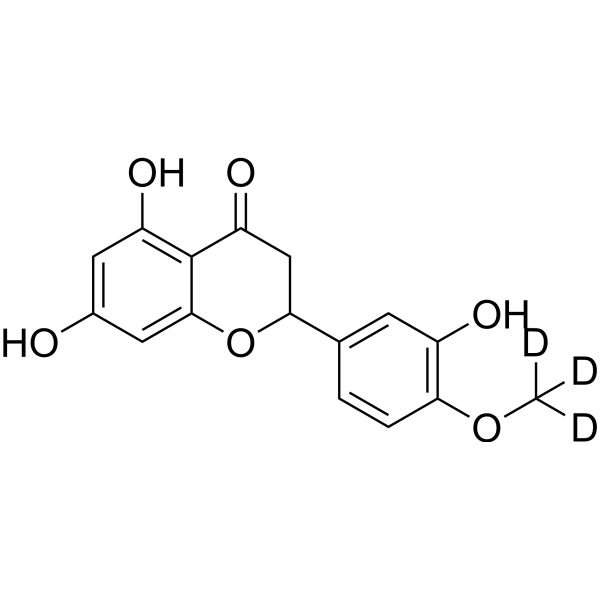
(Rac)-Hesperetin-d3 is the deuterium labeled (Rac)-Hesperetin. (Rac)-Hesperetin is the racemate of Hesperetin (HY-N0168), an orally active multi-target inhibitor. (Rac)-Hesperetin exhibits significant anti-tumor and anti-inflammatory activities by blocking the TGF-β1-mediated Fyn/RhoA signaling axis and the TLR4-MyD88-NF-κB inflammatory pathway. (Rac)-Hesperetin inhibits the formation of actin stress fibers and the migration and invasion of cancer cells, and is suitable for triple-negative breast cancer research. In inflammation models, (Rac)-Hesperetin effectively alleviates lung injury by reducing the release of pro-inflammatory mediators and regulating the activity of oxidative stress enzymes, and is suitable for acute lung injury research. (Rac)-Hesperetin also interferes with the entry and early replication processes of channel catfish virus, inhibits viral gene expression and progeny virus production, thereby protecting cells from virus-induced cytopathic effects .
loading...
    loading...
Cat. No.: HY-N0259R
CAS No.: 110623-73-9
Synonyms: Epmedin B (Standard)
Epimedin B (Standard) (Epmedin B (Standard)) is the analytical standard of Epimedin B (HY-N0259). This product is intended for research and analytical applications. Epimedin B (Epmedin B) is a flavonoid active component found in Epimedium, with oral activity, and exhibits anti-osteoporotic and neuroprotective effects. Epimedin B inhibits RANKL-induced osteoclast differentiation, F-actin ring formation, and mature osteoclast bone resorption, inhibits the phosphorylation of JNK, p38 MAPK, PI3K, and AKT, activates the AMPK-Nrf2 antioxidant pathway, and reduces cellular and mitochondrial ROS. Epimedin B acts on ESR1 and exerts its effects via GPER. Epimedin B alleviates bone loss and improves bone microstructure in vivo, and in Parkinson's models protects dopaminergic neurons and maintains striatal dopamine levels through anti-apoptotic and anti-endoplasmic reticulum stress effects. Epimedin B can be used for research related to osteoporosis, diabetic osteoporosis, and Parkinson's disease .
loading...
    loading...
Cat. No.: HY-N12060
CAS No.: 90045-36-6
Ginkgo biloba extract is a natural product that can be isolated from Ginkgo biloba leaves . Ginkgo biloba extract alleviates oxidative stress-induced neuronal apoptosis (Apoptosis) by stabilizing mitochondrial function, regulating Bcl-2 family proteins and inhibiting caspase activation. Ginkgo biloba extract alleviates testicular injury by upregulating SKP2 and inhibiting Beclin1-independent autophagy (Autophagy) . Ginkgo biloba extract alleviates various types of neuronal damage in animal models. Ginkgo biloba extract reduces behavioral sensitization in rats. Ginkgo biloba extract counteracts Aβ-induced neurotoxicity by blocking a series of Aβ-triggered events, including glucose uptake, ROS accumulation, AKT activation, mitochondrial dysfunction, JNK and ERK 1/2 pathways, and apoptosis, and also interferes with the formation of Aβ oligomers. Ginkgo biloba extract is applicable to research related to cerebral hypoperfusion, testicular injury, Alzheimer's disease, Parkinson's disease, multi-infarct dementia, stroke, traumatic brain injury and amyotrophic lateral sclerosis .
loading...
    loading...
Cat. No.: HY-N15378
CAS No.: 132541-62-9
β-carotene-15,15ʹ-epoxide is a XIAP antagonist with apoptosis-inducing and antitumor activity, found in the leaves of Spondias mombin. In a DMBA (HY-W011845)-induced rat model of breast cancer, β-carotene-15,15ʹ-epoxide binds to the BIR3 domain of the anti-apoptotic protein XIAP, blocking its interaction with caspase-9 and thereby promoting tumor cell apoptosis. In addition, β-carotene-15,15ʹ-epoxide significantly downregulates the expression of BCL-2, COX-2, and TNF-α in tumor tissues, reduces MDA levels, increases catalase activity, and modulates serum levels of LDH, ALP, and ALT, demonstrating strong antioxidant, anti-inflammatory, and metabolic protective effects. β-carotene-15,15ʹ-epoxide may be used in research on inflammation-related conditions and cancers such as breast cancer .
loading...
    loading...
Cat. No.: HY-P3335
CAS No.: 250612-06-7
Synonyms: DOTA-RGDfK dimer
SU015 (DOTA-RGDfK dimer) is a Integrin αvβ5 and αvβ3 antagonist. SU015 exhibits comparable affinity for αvβ5 and αvβ3, with relatively higher potency and specificity compared to other integrins. SU015 inhibits αvβ3-mediated cell adhesion to fibrinogen, αvβ3-mediated adhesion of activated platelets to osteopontin, and αvβ5-mediated cell adhesion to vitronectin. SU015 shows potent inhibitory effects on FGF2-induced angiogenesis in the CAM model. SU015 carries a linker arm available for radioisotope conjugation, and acts as a target-specific radioreagent when labeled with 90Y (i.e., RP697) or 177Lu (i.e., RP688). SU015 can be used in studies related to tumor metastasis and tumors .
loading...
    loading...
Cat. No.: HY-P992062

Target:  

PD-1/PD-L1

Research Areas:  

Inflammation/Immunology

Anti-Mouse CD80 Antibody (TKMG48) is an antibody that targets mouse CD80. By specifically binding to and disrupting the CD80:PD-L1 complex to release PD-L1, Anti-Mouse CD80 Antibody (TKMG48) functions as an indirect PD-1 agonist without blocking CD28 co-stimulation or CD80-CTLA4 binding. Anti-Mouse CD80 Antibody (TKMG48) inhibits T cell activation, reduces T cell effector functions and antigen-specific CD8 + T cell populations, and does not interfere with the differentiation, migration, antigen presentation or surface marker expression of dendritic cells. Anti-Mouse CD80 Antibody (TKMG48) significantly attenuates disease severity in mouse models of arthritis, spondyloarthritis, multiple sclerosis and Sjögren's syndrome, and its activity depends on the expression of PD-1 and PD-L1 .
loading...
    loading...
Cat. No.: HY-W012846R
CAS No.: 2418-52-2
D-Threitol (Standard) is the analytical standard of D-Threitol (HY-W012846). This product is intended for research and analytical applications. D-Threitol is a naturally occurring four-carbon sugar alcohol and an α-glucosidase (α‑glucosidase) inhibitor with an IC50 of 49 mM against yeast α-glucosidase, and it is orally active. D-Threitol modulates gut microbiota composition, increases microbial diversity, enriches beneficial bacterial genera, and restores fecal short-chain fatty acid levels. D-Threitol reduces body weight gain and fat accumulation, improves glucose tolerance and insulin sensitivity, and alleviates liver, kidney, and pancreatic tissue damage. D-Threitol inhibits hepatic accumulation of ceramides and diacylglycerols. D-Threitol preserves glomerular morphology and islet structure in diabetes models. D-Threitol is also a low-calorie sweetener. D-Threitol serves as a cryoprotective polyol that stabilizes protein structure at low temperatures. D-Threitol is used in research on type 2 diabetes and as an antifreeze agent for the Alaskan beetle .
loading...
    loading...
Cat. No.: HY-W320366
CAS No.: 896074-75-2
Research Areas:  

Cancer

TopBP1-IN-5 is a TopBP1-BRCT7/8 inhibitor (IC50=2.47-3.8 nM). TopBP1-IN-5 selectively disrupts the interaction of TopBP1-BRCT7/8 with E2F1, mutp53, MIZ1, PLK1, CIP2A, and Top2A, without affecting BRCT1/2- and BRCT5-mediated interactions. TopBP1-IN-5 activates caspase-3/7 and caspase-8 to induce prometaphase arrest, mitotic catastrophe, and apoptosis, while inhibiting the MYC transcriptional program and enhancing the binding of MIZ1 to the p21Cip1 promoter. TopBP1-IN-5 exhibits broad-spectrum anticancer activity in triple-negative breast cancer, ovarian cancer, lung cancer, and acute myeloid leukemia models, and can be used for research on related cancers .
loading...
    loading...
Cat. No.: HY-W783351
CAS No.: 1416808-87-1
Synonyms: Coppersensor 790 acetoxymethyl ester
Target:  

Fluorescent Dye

Research Areas:  

Metabolic Disease

CS790AM (Coppersensor 790 acetoxymethyl ester) is a cell-permeable, Cu +-targeted near-infrared fluorescent probe (λabs=760 nm, λem=790 nm) applicable to live cells. CS790AM can cross lipophilic cell membranes, and is converted into negatively charged CS790 under the action of intracellular esterases to be retained, thus enabling highly sensitive, reversible "turn-on" detection of labile Cu + pools in live cells and mice. CS790AM possesses excellent biocompatibility and selectivity, avoids interference from other metal ions, shows no obvious toxicity, and can be rapidly cleared. CS790AM allows long-term longitudinal monitoring of individual mice, visualizes copper levels in internal organs and isolated livers, and effectively evaluates abnormal copper accumulation in Wilson's disease models (Atp7b -/-) as well as dynamic changes after chelator treatment. CS790AM can be used for research on Wilson's disease and related copper metabolic disorders .
loading...
    loading...
Cat. No.: HY-112624H
CAS No.: 9004-54-0
Synonyms: Dextran 2; Dextran D2; Dextran T2(MW 1600-2400)
Dextran T2 (Dextran 2; Dextran T2(MW 1600-2400)) is a natural high molecular weight polysaccharide, the glycosidic bonds in its structure can be recognized by endo-dextranase and exo-dextranase. Dextran T2 (MW 2,000) breaks the glycosidic bonds in the enzymatic hydrolysis mechanism, releasing products such as D-glucose, Isomaltose (IM2), and Isomaltotriose (IM3). Dextran T2 (MW 2,000) can be used as a model substrate to characterize the catalytic properties of dextranase (such as optimal pH, temperature and product specificity), and to study enzymatic mechanism research and polysaccharide degradation pathways in glycobiology. The Dextran series of compounds are also a natural polysaccharide drug carrier, which can be connected to drugs through covalent bonding methods such as ester bonds, amide bonds or click chemistry, or self-assembled to form carriers such as nanoparticles and hydrogels. Dextran is biodegradable and biocompatible, and can achieve targeted delivery and controlled release of drugs. Dextran derivatives can prolong drug half-life, increase local concentration and reduce immune clearance activity .
loading...
    loading...
Cat. No.: HY-113720
CAS No.: 1041469-97-9
RKS262 is an orally active cyclin/CDK inhibitor. RKS262 is also an apoptosis inducer and cell cycle regulator, exhibiting cytotoxic activity against cancer cells. RKS262 induces caspase-3 cleavage, ROS generation, SAPK/JNK activation, and upregulates the expression of p53, Bid, Bad, Bok, and p27. RKS262 inhibits the expression of Bcl-2, Mcl-1, Bcl-xL, p21, cyclin D1, cyclin B1, cdc-2, cyclin D4, and DNA-pk KU-80 subunit. RKS262 suppresses the phosphorylation of the IGF-1R/PI3K/PKC pathway, ras oncogene activity, and Cdk-6, while increasing total Akt expression. RKS262 induces G2/M or S phase cell cycle arrest, disrupts mitochondrial transmembrane potential, and reduces tumor burden in xenograft models. RKS262 is used in research on neuroblastoma and ovarian cancer .
loading...
    loading...
Cat. No.: HY-130413
CAS No.: 660430-03-5
Synonyms: Neuroprotectin D1; NPD1
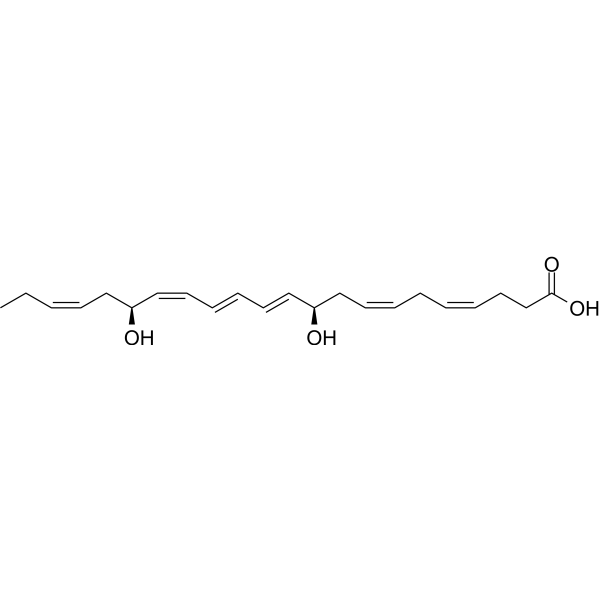
Protectin D1, a neuroprotectin D1 produced by neuronal cells, is a member of a newly discovered family of bioactive products derived from docosahexaenoic acid. Protectin D1 also serves as a specialized pro-resolving mediator, exhibiting effective in vivo pro-resolving activity in various human disease models. Additionally, Protectin D1 is an inhibitor of NALP3 inflammasomes and regulates the PI3K/AKT and HIF-1α signaling pathways. Protectin D1 exerts anti-inflammatory effects by reducing ROS levels, inhibiting the expression of NALP3, ASC, and Caspase-1, and consequently decreasing the release of pro-inflammatory cytokines IL-1β and IL-18. Furthermore, Protectin D1 enhances miRNA-210 expression, activates the PI3K/AKT signaling pathway, and exerts cardioprotective effects. Protectin D1 holds promise for research in cardiovascular diseases and inflammatory disorders .
loading...
    loading...
Cat. No.: HY-141878
CAS No.: 2767983-76-4
Research Areas:  

Neurological Disease

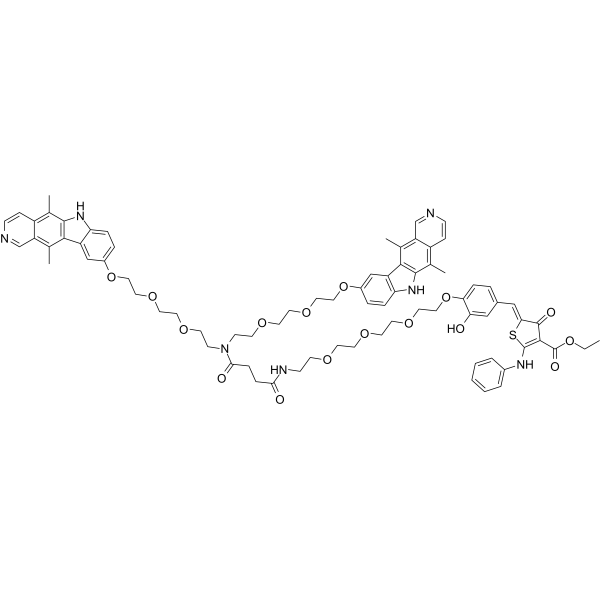
di-Ellipticine-RIBOTAC is a RNase recruiting chimera (RIBOTAC) degrader, capable of specifically binding and degrading expanded G4C2 RNA repeat (r(G4C2) exp). di-Ellipticine-RIBOTAC selectively binds the three-dimensional (3D) structure formed by r(G4C2) exp and that recruits an endogenous ribonuclease (RNase) to cleave r(G4C2) exp. di-Ellipticine-RIBOTAC selectively degrades the mutant chromosome 9 open reading frame 72 (C9orf72) allele and reduces quantities of toxic dipeptide repeat proteins (DPRs) translated from r(G4C2) exp. di-Ellipticine-RIBOTAC significantly improves the pathological phenotype of amyotrophic lateral sclerosis/ frontotemporal dementia (c9ALS/FTD) in cells and mouse models. di-Ellipticine-RIBOTAC can be used for the study of amyotrophic lateral sclerosis (ALS) and frontotemporal dementia (FTD) .
loading...
    loading...
Cat. No.: HY-15136R
CAS No.: 193275-84-2
Synonyms: Sch66336 (Standard)
Lonafarnib (Standard) (Sch66336 (Standard)) is the analytical standard of Lonafarnib (HY-15136). This product is intended for research and analytical applications. Lonafarnib (Sch66336) is an orally active, blood-brain barrier penetrant farnesyltransferase (FPTase) inhibitor. Lonafarnib increases the phosphorylation levels of Akt, CaMKII and CREB, upregulates BDNF expression in the hippocampus, elevates the content of α7nAChR on cell membranes, and blocks the isoprenylation of H-Ras. Lonafarnib repairs synapses and reverses spatial memory deficits in Aβ1-42 model mice. Lonafarnib inhibits RSV fusion and replication, and alleviates virus-induced lung injury. Lonafarnib activates the lysosomal and autophagic pathways, and reduces the phosphorylation and aggregation of tau. Lonafarnib acts synergistically with Sorafenib (HY-10201) to promote apoptosis, and inhibits the proliferation and invasion of melanoma cells. Lonafarnib inhibits the farnesylation of progerin, repairs nuclear membrane defects, and activates the cGAS-STING-STAT1 signaling pathway. Lonafarnib can be used in research related to diseases including Alzheimer's disease, viral infections, melanoma, and progeria .
loading...
    loading...

