538 Results for "

urinary 2

" in MedChemExpress (MCE) Product Catalog:
Products (538)

538 Results for "urinary 2" in MCE Product Catalog:

Cat. No.: HY-W014993S
CAS No.: 1173019-16-3
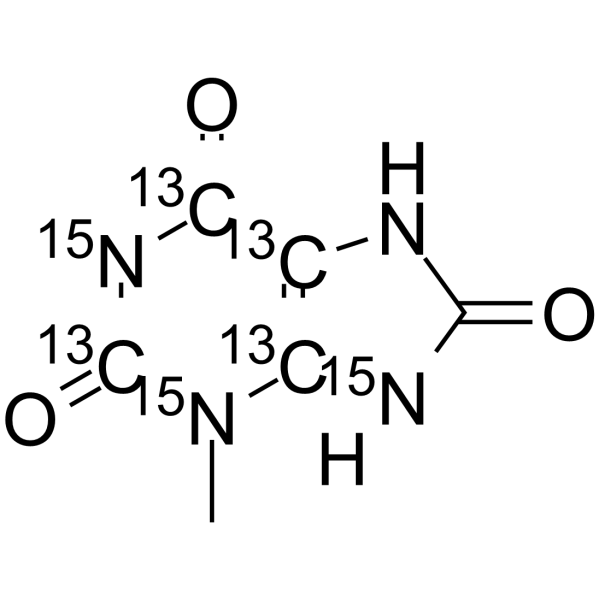
1,3-Dimethyluric acid- 13C4, 15N3 is the 15N and 13C-labeled 1,3-Dimethyluric acid (HY-W014993). 1,3-Dimethyluric acid is a major metabolite of Theophylline (HY-B0809) in vivo. 1,3-Dimethyluric acid is an inhibitor of human organic anion transporter 1 (hOAT1) with an IC50 of 9.2 μM. 1,3-Dimethyluric acid inhibits hOAT1-mediated substrate uptake and transport through competitive binding. 1,3-Dimethyluric acid is also a component of urinary calculi. 1,3-Dimethyluric acid can be used in research on urolithiasis [2] .
loading...
    loading...
Cat. No.: HY-W133953
CAS No.: 108-65-6
Synonyms: Propylene glycol monomethyl ether acetate
1-Methoxy-2-propyl acetate is a volatile ester compound found in chocolate made from fermented cocoa beans. 1-Methoxy-2-propyl acetate serves as a hydrolysis substrate for esterases in blood, liver, lung, and nasal mucosa, and is rapidly hydrolyzed to propylene glycol monomethyl ether and acetic acid. 1-Methoxy-2-propyl acetate is proposed as a candidate urinary biomarker for dairy product intake. 1-Methoxy-2-propyl acetate can serve as a solvent and is applied in the electronic-grade semiconductor industry. 1-Methoxy-2-propyl acetate can be used in research related to nephropathy, hepatomegaly, and nasal irritation [2] .
loading...
    loading...
Cat. No.: HY-W416250
CAS No.: 17680-99-8
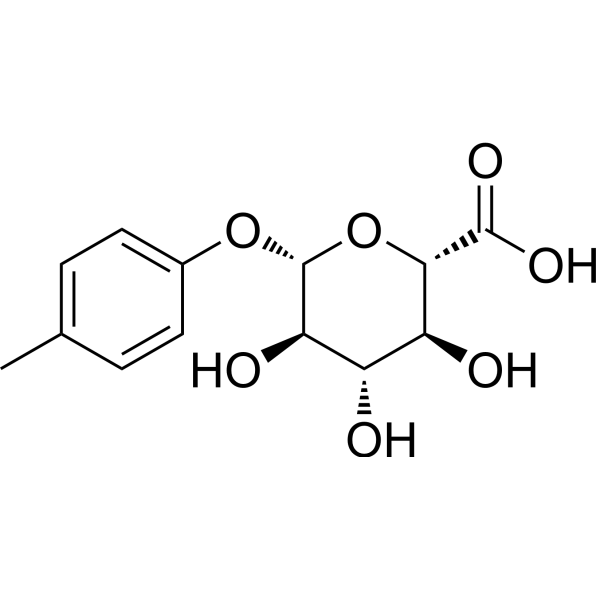
p-Cresol glucuronide is a metabolite of p-Cresol (HY-Y0506). p-Cresol glucuronide acts as a TLR4-antagonizing blood-brain barrier protective agent in brain microvascular endothelial cells, and serves as a non-invasive urinary biomarker metabolite in renal cell carcinoma. p-Cresol glucuronide inhibits LPS (HY-D1056)-induced increase in blood-brain barrier permeability and signal response, impairs mitochondrial function, induces oxidative stress and enhances inflammatory responses, depletes intracellular glutathione, and increases cell necrosis. p-Cresol glucuronide can be used in studies related to renal cell carcinoma, chronic kidney disease and heart disease [2] .
loading...
    loading...
Cat. No.: HY-W743473
Synonyms: Ro 15-8074-d3; Deacetoxycefotaxime-d3
Cefetamet-d3 (Ro 15-8074-d3; Deacetoxycefotaxime-d3) is the deuterium labeled Cefetamet (HY-A0111). Cefetamet (Ro 15-8074) is a cephalosporin antibiotic and the active metabolite of Cefetamet pivoxil (HY-B1894A). Cefetamet binds to bacterial penicillin-binding protein (PBP) (IC50 for PBP3 in Escherichia coli W3110 is 2.5 μg/mL). Cefetamet has significant activity against Gram-negative bacteria such as Enterobacteriaceae, Neisseria species, and Haemophilus influenzae, as well as Gram-positive bacteria such as Streptococcus. Cefetamet kills and lyses Treponema pallidum. Cefetamet can be used in the research of respiratory tract, urinary tract, ear, nose and throat infections, and syphilis [2] .
loading...
    loading...
Cat. No.: HY-W923278
CAS No.: 73547-70-3
Synonyms: GR20263 dihydrochloride
Target:  

Antibiotic Bacterial

Research Areas:  

Infection

Ceftazidime (GR20263) dihydrochloride is a cephalosporin β-lactam antibiotic. Ceftazidime dihydrochloride exhibits activity against susceptible Enterobacteriaceae, multidrug-resistant Gram-negative bacteria, Pseudomonas aeruginosa, and bacteria producing Ambler class A, C, and some class D β-lactamases, but shows no activity against microorganisms producing metallo-β-lactamases. Ceftazidime dihydrochloride reduces bacterial loads in mouse models of splenic, hepatic, and thigh infections, but has low efficacy against ESBL- and KPC-producing Enterobacteriaceae. Ceftazidime dihydrochloride can be used in research related to complicated urinary tract infections, complicated intra-abdominal infections, hospital-acquired pneumonia, carbapenemase-producing Klebsiella pneumoniae infections, carbapenem-resistant Enterobacterales infections, and severe Gram-negative bacterial infections [2] .
loading...
    loading...
Cat. No.: HY-P705438
Purity:  ≥ 85%, as determined by reducing SDS-PAGE.
Synonyms: S100A8; MRP-8; Prev. CAGA; urinary Stone Protein Band A; Prev. CFAG; Protein S100-A8; MRP8; Calgranulin A; P8; S100 Calcium-Binding Protein A8; Migration Inhibitory Factor-Related Protein 8; Calgranulin-A; Leukocyte L1 Complex Light Chain; CP-10; Calprote
Species:  
Mouse
Source:  
E. coli
loading...
    loading...
Cat. No.: HY-113420
CAS No.: 67910-12-7
Purity:  ≥98.0%
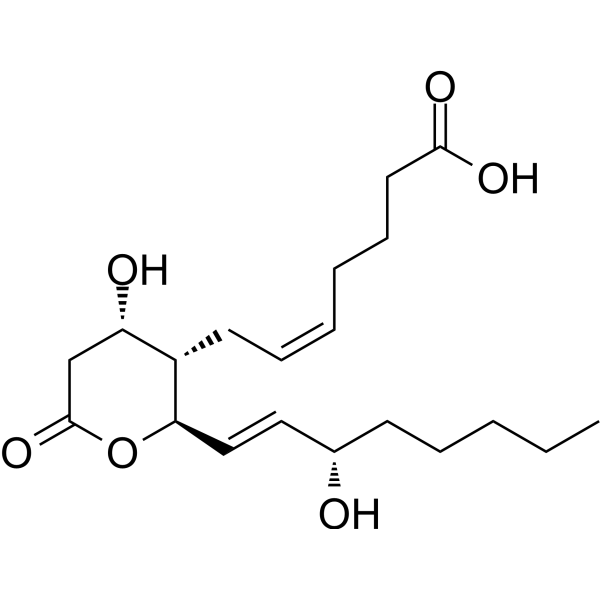
11-Dehydro-thromboxane B2 is a stable terminal metabolite of thromboxane A2 and an agonist of the CRTH2 receptor. 11-Dehydro-TXB2 activates human eosinophils, basophils, and CRTH2-transfected BaF/3 cells through a pertussis toxin-insensitive G protein-PLC pathway, inducing intracellular calcium mobilization, morphological changes, and chemotaxis, but does not affect platelet aggregation. 11-Dehydro-thromboxane B2 is involved in thrombosis and promotes eosinophil recruitment to the lungs in allergic inflammation, and its urinary levels are used to assess the inhibitory effect of Aspirin (HY-14654) on thromboxane production. 11-Dehydro-TXB2 serves as a biomarker for research related to asthma, atopic rhinitis, nephropathy, and coronary artery disease [2] .
loading...
    loading...
Cat. No.: HY-179581
CAS No.: 2962069-39-0
Research Areas:  

Metabolic Disease

SLC6A19-IN-4 is an allosteric-competitive and orally active B 0AT1 inhibitor. SLC6A19-IN-4 inhibits both human and mouse B 0AT1 with IC50 values of 513 nM and 295 nM, respectively. SLC6A19-IN-4 exhibits excellent metabolic stability. SLC6A19-IN-4 significantly increases urinary phenylalanine (Phe) excretion and reduces plasma Phe levels through dual inhibition of B 0AT1 in both the intestine (reducing absorption) and kidney (promoting excretion) in vivo. SLC6A19-IN-4 can be used for phenylketonuria (PKU) and other disorders involving SLC6-family transporters research .
loading...
    loading...
Cat. No.: HY-B1451
CAS No.: 89396-94-1
Synonyms: TA-6366
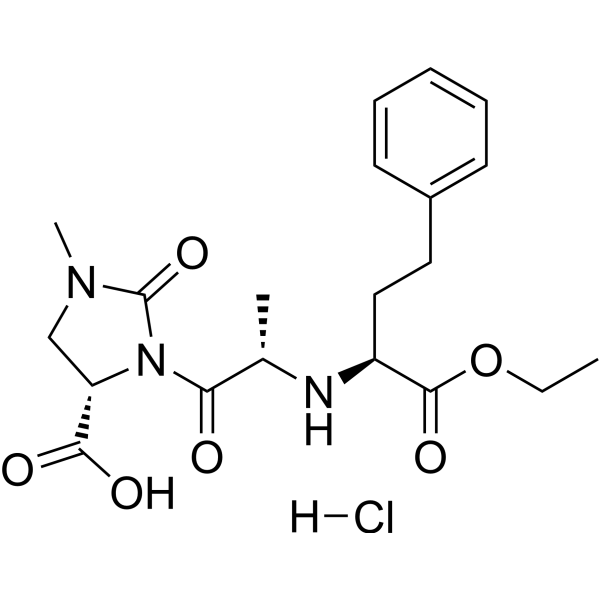
Imidapril hydrochloride (TA-6366) is an orally active dual inhibitor of angiotensin-converting enzyme (ACE) and MMP-9. Imidapril hydrochloride inhibits lipopolysaccharide-induced phosphorylation of c-Jun, MKK4 and JNK in monocytes, and downregulates the production of specific inflammatory factors such as TNF-α and IP-10, thereby exerting anti-inflammatory activity. Imidapril hydrochloride also effectively ameliorates mesangial expansion and reduces urinary albumin excretion by inhibiting angiotensin AngII production, lowering glomerular pressure and oxidative stress, thus delaying disease progression. Imidapril hydrochloride can also directly bind to the active site of MMP-9 to inhibit gelatinase activity, and suppress the enlargement of cerebral aneurysms without altering systemic blood pressure. Imidapril hydrochloride is widely applicable to related studies on autoimmune glomerulonephritis, diabetic nephropathy, cerebral aneurysms and other conditions [2] .
loading...
    loading...
Cat. No.: HY-B1735
CAS No.: 32828-81-2
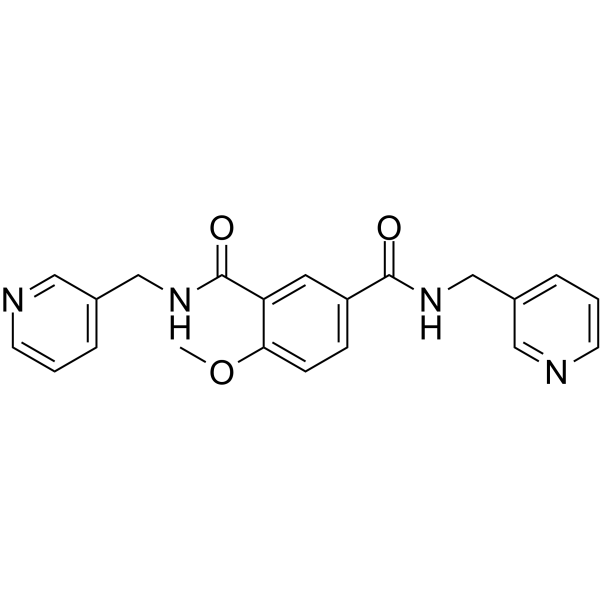
Picotamide is an orally active TXA2 receptor and TXA2 synthase inhibitor. Picotamide inhibits ADP (HY-W010918)-, Arachidonic acid (HY-109590)-, and Collagen (HY-NP003)-induced platelet aggregation, reduces TXA2 production during coagulation, and does not inhibit PGI2 synthesis in endothelial cells. Picotamide inhibits contractions induced by α1-adrenergic receptor agonism, TXA2 mediation, and neurogenic (electrical field stimulation-induced) factors in human prostatic smooth muscle, and broadly inhibits agonist-induced contractions of porcine interlobar renal and coronary arteries. Picotamide can be used in research related to thromboembolic diseases, atherosclerosis, and lower urinary tract symptoms [2] .
loading...
    loading...
Cat. No.: HY-B1735A
CAS No.: 80530-63-8
Picotamide monohydrate is an orally active TXA2 receptor and TXA2 synthase inhibitor. Picotamide monohydrate inhibits ADP (HY-W010918)-, Arachidonic acid (HY-109590)-, and Collagen (HY-NP003)-induced platelet aggregation, reduces TXA2 production during coagulation, and does not inhibit PGI2 synthesis in endothelial cells. Picotamide monohydrate inhibits contractions induced by α1-adrenergic receptor agonism, TXA2 mediation, and neurogenic (electrical field stimulation-induced) factors in human prostatic smooth muscle, and broadly inhibits agonist-induced contractions of porcine interlobar renal and coronary arteries. Picotamide monohydrate can be used in research related to thromboembolic diseases, atherosclerosis, and lower urinary tract symptoms [2] .
loading...
    loading...
Cat. No.: HY-B1751R
CAS No.: 56-54-2
Quinidine (15% dihydroquinidine) (Standard) is the analytical standard of Quinidine (15% dihydroquinidine) (HY-B1751). This product is intended for research and analytical applications. Quinidine (15% dihydroquinidine) is an orally active antiarrhythmic agent. Quinidine (15% dihydroquinidine) reduces the expression level of P-gp, inhibits P-gp-mediated efflux, increases the intracellular accumulation of P-gp substrates, induces PARP cleavage and Caspase-3 activation, and elevates the proportion of Apoptotic cells at the sub-G1 phase. Quinidine (15% dihydroquinidine) exerts sustained block and open-channel block effects on IK(f). Quinidine (15% dihydroquinidine) alters the urinary metabolic ratio of Amphetamine, modulates the Pentylenetetrazol-induced seizure threshold, and regulates the anticonvulsant effect of Dextromethorphan. Quinidine (15% dihydroquinidine) can be used in studies related to uterine sarcoma and seizures [2] .
loading...
    loading...
Cat. No.: HY-B1751S
CAS No.: 1267657-68-0
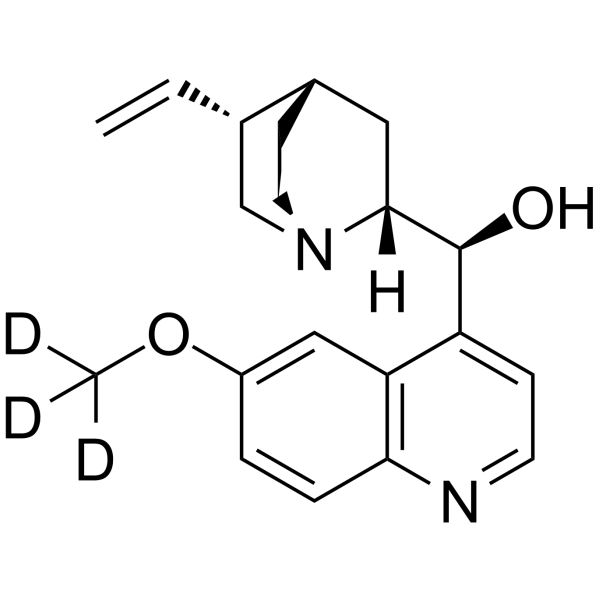
Quinidine-d3 is the d3-labeled Quinidine (15% dihydroquinidine) (HY-B1751). Quinidine (15% dihydroquinidine) is an orally active antiarrhythmic agent. Quinidine (15% dihydroquinidine) reduces the expression level of P-gp, inhibits P-gp-mediated efflux, increases the intracellular accumulation of P-gp substrates, induces PARP cleavage and Caspase-3 activation, and elevates the proportion of Apoptotic cells at the sub-G1 phase. Quinidine (15% dihydroquinidine) exerts sustained block and open-channel block effects on IK(f). Quinidine (15% dihydroquinidine) alters the urinary metabolic ratio of Amphetamine, modulates the Pentylenetetrazol-induced seizure threshold, and regulates the anticonvulsant effect of Dextromethorphan. Quinidine (15% dihydroquinidine) can be used in studies related to uterine sarcoma and seizures [2] .
loading...
    loading...
Cat. No.: HY-W700491
CAS No.: 1189920-50-0
Synonyms: 2-Amino-α-carboline-15N3; AαC-15N3
AalphaC- 15N3 (2-Amino-α-carboline- 15N3) is 15N labeled AalphaC. AalphaC (AαC) is a potential carcinogen with carcinogenic activity. AalphaC is an important biomarker in tobacco smoke and is associated with tobacco smoke exposure. Urinary concentrations of AalphaC are significantly higher in dedicated smokers than in non-smokers, indicating its importance in monitoring tobacco exposure. AalphaC levels increase significantly with increasing serum nicotine levels, indicating its close relationship with tobacco use. In addition, consuming high-temperature cooked beef significantly increases the amount of AalphaC in urine, while consuming vegetables is associated with a decrease in AalphaC concentrations. Smoking half a pack of cigarettes is associated with a significant increase in the amount of AalphaC, which further confirms the biological activity of AalphaC and its association with dietary habits [2].
loading...
    loading...
Cat. No.: HY-B0396R
CAS No.: 161715-24-8
Synonyms: L084 (Standard)
Research Areas:  

Infection

Tebipenem pivoxil (Standard) (L084 (Standard)) is the analytical standard of Tebipenem pivoxil (HY-B0396). This product is intended for research and analytical applications. Tebipenem pivoxil (L084 hydrobromide) is an orally active carbapenem Antibiotic. Tebipenem pivoxil acts as a substrate of OATP1A2 with high affinity for this transporter (Km = 41.1 μM) . Tebipenem pivoxil achieves intestinal absorption via carrier-mediated uptake and simple diffusion. Tebipenem pivoxil inhibits the growth of Gram-positive bacteria, Gram-negative bacteria, multidrug-resistant bacteria, and pathogens producing extended-spectrum β-lactamases. Tebipenem pivoxil eliminates intestinal infection pathogens and reduces mortality in septic mice. Tebipenem pivoxil can be used in research related to bacterial pneumonia, severe gastrointestinal infections, bacterial sepsis, complicated urinary tract infections, and acute pyelonephritis [2] .
loading...
    loading...
Cat. No.: HY-B1451A
CAS No.: 89371-37-9
Synonyms: TA-6366 free base
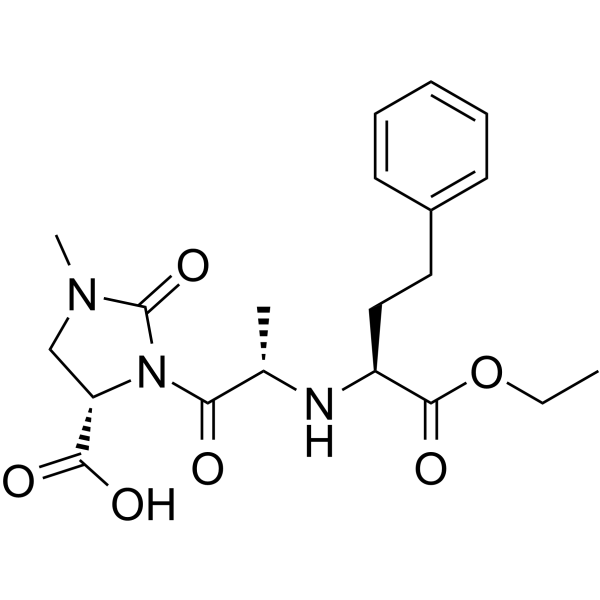
Imidapril (TA-6366 free base) is an orally active dual inhibitor of angiotensin-converting enzyme (ACE) and MMP-9. Imidapril inhibits lipopolysaccharide-induced phosphorylation of c-Jun, MKK4 and JNK in monocytes, and downregulates the production of specific inflammatory factors such as TNF-α and IP-10, thereby exerting anti-inflammatory activity. Imidapril also effectively ameliorates mesangial expansion and reduces urinary albumin excretion by inhibiting angiotensin AngII production, lowering glomerular pressure and oxidative stress, thus delaying disease progression. Imidapril can also directly bind to the active site of MMP-9 to inhibit gelatinase activity, and suppress the enlargement of cerebral aneurysms without altering systemic blood pressure. Imidapril is widely applicable to related studies on autoimmune glomerulonephritis, diabetic nephropathy, cerebral aneurysms and other conditions [2] .
loading...
    loading...
Cat. No.: HY-D1056B2
Synonyms: LPS, from bacterial (Proteus mirabilis)
Lipopolysaccharides, from Proteus mirabilis are lipopolysaccharide endotoxins and TLR-4 activators derived from Proteus mirabilis, classified as S-type LPS, which can activate pathogen-associated molecular patterns (PAMP) of the immune system and induce cellular secretion of migrasomes. Lipopolysaccharides, from Proteus mirabilis exhibit a typical three-part structure: O-antigen, core oligosaccharide, and lipid A. Proteus mirabilis is a major pathogen causing urinary tract infections and may also contribute to rheumatoid arthritis. Lipopolysaccharides, from Proteus mirabilis also exhibit potential anti-tumor effects, demonstrating in vivo inhibitory activity against solid tumors such as meningosarcoma and Walker carcinosarcoma [2].
It is recommended to prepare a solution with concentration ≥2 mg/mL. Vortex thoroughly for more than 10 minutes. Due to the adsorption characteristics of LPS, silanized container or low adsorption centrifuge tubes should be used for aliquoting and storage, and mix thoroughly before use.
loading...
    loading...
Cat. No.: HY-B1451R
CAS No.: 89396-94-1
Synonyms: TA-6366 (Standard)
Imidapril (hydrochloride) (Standard) is the analytical standard of Imidapril (hydrochloride). This product is intended for research and analytical applications. Imidapril hydrochloride (TA-6366) is an orally active dual inhibitor of angiotensin-converting enzyme (ACE) and MMP-9. Imidapril hydrochloride inhibits lipopolysaccharide-induced phosphorylation of c-Jun, MKK4 and JNK in monocytes, and downregulates the production of specific inflammatory factors such as TNF-α and IP-10, thereby exerting anti-inflammatory activity. Imidapril hydrochloride also effectively ameliorates mesangial expansion and reduces urinary albumin excretion by inhibiting angiotensin AngII production, lowering glomerular pressure and oxidative stress, thus delaying disease progression. Imidapril hydrochloride can also directly bind to the active site of MMP-9 to inhibit gelatinase activity, and suppress the enlargement of cerebral aneurysms without altering systemic blood pressure. Imidapril hydrochloride is widely applicable to related studies on autoimmune glomerulonephritis, diabetic nephropathy, cerebral aneurysms and other conditions [2] .
loading...
    loading...
Cat. No.: HY-B1451S
CAS No.: 1356017-30-5
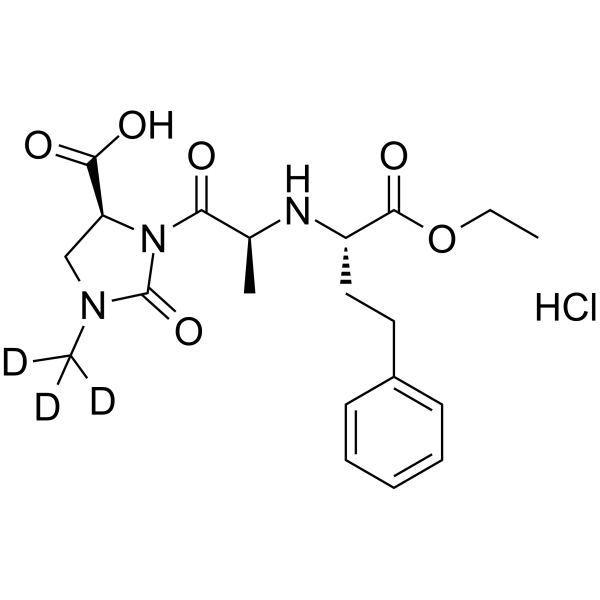
Imidapril-d3 hydrochloride (TA-6366-d3) is the deuterium labeled Imidapril hydrochloride. Imidapril hydrochloride (TA-6366) is an orally active dual inhibitor of angiotensin-converting enzyme (ACE) and MMP-9. Imidapril hydrochloride inhibits lipopolysaccharide-induced phosphorylation of c-Jun, MKK4 and JNK in monocytes, and downregulates the production of specific inflammatory factors such as TNF-α and IP-10, thereby exerting anti-inflammatory activity. Imidapril hydrochloride also effectively ameliorates mesangial expansion and reduces urinary albumin excretion by inhibiting angiotensin AngII production, lowering glomerular pressure and oxidative stress, thus delaying disease progression. Imidapril hydrochloride can also directly bind to the active site of MMP-9 to inhibit gelatinase activity, and suppress the enlargement of cerebral aneurysms without altering systemic blood pressure. Imidapril hydrochloride is widely applicable to related studies on autoimmune glomerulonephritis, diabetic nephropathy, cerebral aneurysms and other conditions [2] .
loading...
    loading...
Cat. No.: HY-N7101S
Synonyms: U-76-d7,252-d7; CS-807-d7
Cefpodoxime proxetil-d7 (U-76-d7,252-d7; CS-807-d7) is the deuterium labeled Cefpodoxime Proxetil (HY-N7101). Cefpodoxime Proxetil is an orally active broad spectrum third-generation cephalosporin with potent antibacterial activity against both Gram-positive and Gram-negative bacteria including staphylococci, streptococci, Haemophilus influenzae, Neisseria gonorrhoeae, Escherichia coli, Klebsiella pnuemoniae, Citrobacter spp, and Proteus spp. Cefpodoxime Proxetil binds to penicillin binding proteins (PBPs), which inhibits peptidoglycan synthesis, finally results in interfering bacterial cell wall biosynthesis. Cefpodoxime Proxetil can be used against skin structure infections, acute otitis media, pharyngitis, tonsillitis, upper respiratory tract infection, urinary tract infections and sexually transmitted diseases [2] .
loading...
    loading...

