538 Results for "

urinary 2

" in MedChemExpress (MCE) Product Catalog:
Products (538)

538 Results for "urinary 2" in MCE Product Catalog:

Cat. No.: HY-P81425
Synonyms: Calgranulin-A antibody; Calprotectin L1L subunit antibody; CFAG antibody; Cystic fibrosis antigen antibody; Leukocyte L1 complex light chain antibody; Migration inhibitory factor-related protein 8 antibody; MRP-8 antibody; N-terminally processed antibody; p8 antibody; Protein S100-A8 antibody; S100 calcium-binding protein A8 antibody; S100A8 antibody; S10A8_HUMAN antibody; urinary stone protein band A antibody

Host:  

Rabbit

Application:  

WB, IHC-P, ICC/IF, IP, FC, IF-Tissue

Reactivity:  

Human

loading...
    loading...
Cat. No.: HY-P86024
Synonyms: Mucin-1; MUC-1; Breast carcinoma-associated antigen DF3; Carcinoma-associated mucin; Episialin; H23AG; Krebs von den Lungen-6; KL-6; PEMT; Peanut-reactive urinary mucin; PUM; Polymorphic epithelial mucin; PEM; Tumor-associated epithelial membrane antigen; EMA; Tumor-associated mucin; CD antigen CD227; [Cleaved into: Mucin-1 subunit alpha; MUC1-NT; MUC1-alpha; Mucin-1 subunit beta; MUC1-beta; MUC1-CT; ]

Host:  

Mouse

Application:  

IHC-P, ELISA

Reactivity:  

Human

loading...
    loading...
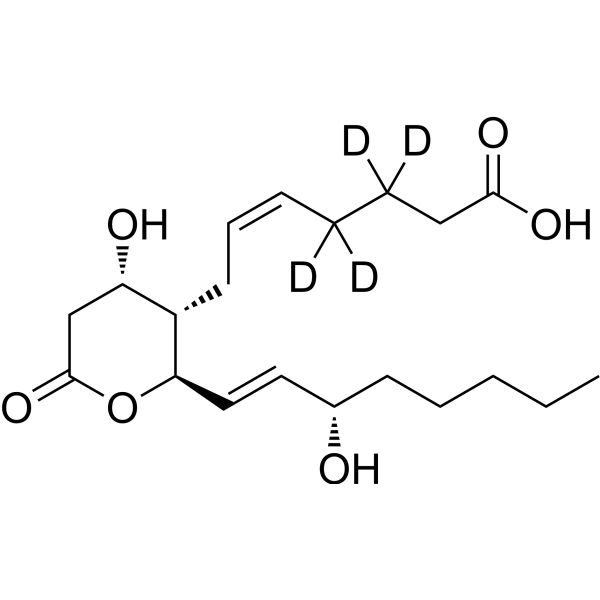
Cat. No.: HY-113420S
CAS No.: 1240398-15-5
11-Dehydro-thromboxane B2-d4 is the d4-labeled 11-Dehydro-thromboxane B2 (HY-113420). 11-Dehydro-thromboxane B2 is a stable terminal metabolite of thromboxane A2 and an agonist of the CRTH2 receptor. 11-Dehydro-TXB2 activates human eosinophils, basophils, and CRTH2-transfected BaF/3 cells through a pertussis toxin-insensitive G protein-PLC pathway, inducing intracellular calcium mobilization, morphological changes, and chemotaxis, but does not affect platelet aggregation. 11-Dehydro-thromboxane B2 is involved in thrombosis and promotes eosinophil recruitment to the lungs in allergic inflammation, and its urinary levels are used to assess the inhibitory effect of Aspirin (HY-14654) on thromboxane production. 11-Dehydro-TXB2 serves as a biomarker for research related to asthma, atopic rhinitis, nephropathy, and coronary artery disease [2] .
loading...
    loading...
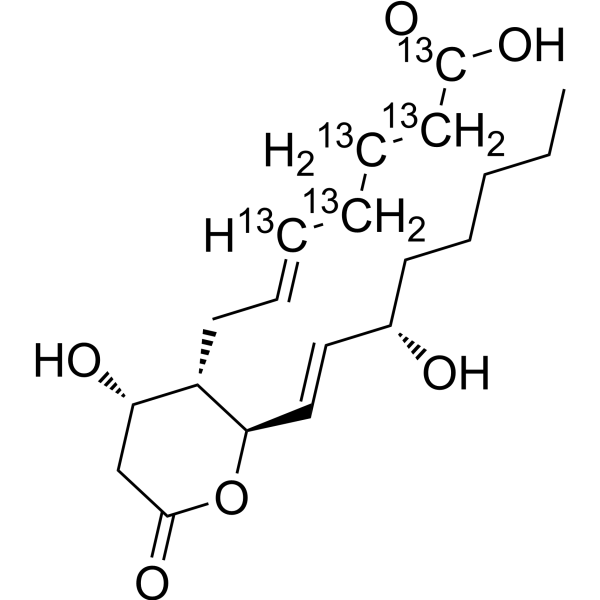
Cat. No.: HY-113420S2
11-Dehydro-thromboxane B2- 13C5 is the 13C-labeled 11-Dehydro-thromboxane B2 (HY-113420). 11-Dehydro-thromboxane B2 is a stable terminal metabolite of thromboxane A2 and an agonist of the CRTH2 receptor. 11-Dehydro-TXB2 activates human eosinophils, basophils, and CRTH2-transfected BaF/3 cells through a pertussis toxin-insensitive G protein-PLC pathway, inducing intracellular calcium mobilization, morphological changes, and chemotaxis, but does not affect platelet aggregation. 11-Dehydro-thromboxane B2 is involved in thrombosis and promotes eosinophil recruitment to the lungs in allergic inflammation, and its urinary levels are used to assess the inhibitory effect of Aspirin (HY-14654) on thromboxane production. 11-Dehydro-TXB2 serves as a biomarker for research related to asthma, atopic rhinitis, nephropathy, and coronary artery disease [2] .
loading...
    loading...
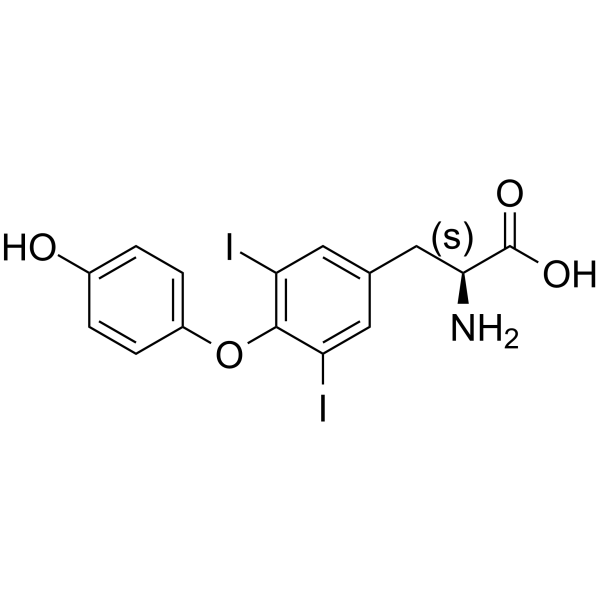
Cat. No.: HY-114557
CAS No.: 1041-01-6
Purity:  99.38%
Synonyms: 3,5-Diiodo-L-thyronine
NSC 90469 (3,5-Diiodo-L-thyronine) is an orally active thyroid hormone derivative. NSC 90469 inhibits JNK phosphorylation and NF-κB acetylation, blocks SIRT1 protein expression, induces elevated PGC-1α levels, and stimulates COX activity. NSC 90469 enhances UCP1-mediated thermogenesis, increases hepatic Dio1 activity, inhibits TSH levels and hypothalamic-pituitary-thyroid axis function, enhances lipid metabolism, and regulates energy metabolism via the mitochondrial pathway. NSC 90469 prevents blood glucose reduction, reduces urinary albumin excretion, inhibits renal matrix expansion, decreases TGF-β1 expression, and reduces renal fibronectin and type Ⅳ collagen deposition. NSC 90469 also increases energy expenditure and prevents diet-induced overweight. NSC 90469 can be used in studies related to diabetic nephropathy, hypothyroidism, non-alcoholic fatty liver disease, and diet-induced obesity [2] .
loading...
    loading...
Cat. No.: HY-184044
CAS No.: 13112-05-5
Target:  

P2X Receptor

Research Areas:  

Neurological Disease

P2X2R antagonist-1 (compound 66) is a P2X2 receptor antagonist derived from Reactive Blue 4 (HY-125815). P2X2R antagonist-1 shows high selectivity for P2X4, P2X7, P2Y2, P2Y4, P2Y6 and P2Y12 receptors, moderate selectivity for P2X1 and P2X3 receptors, and exhibits higher potency toward homomeric P2X2 receptors than heteromeric P2X2/3 receptors. P2X2R antagonist-1 competitively inhibits ATP-mediated currents. P2X2R antagonist-1 can be used in research related to pain and urinary incontinence .
loading...
    loading...
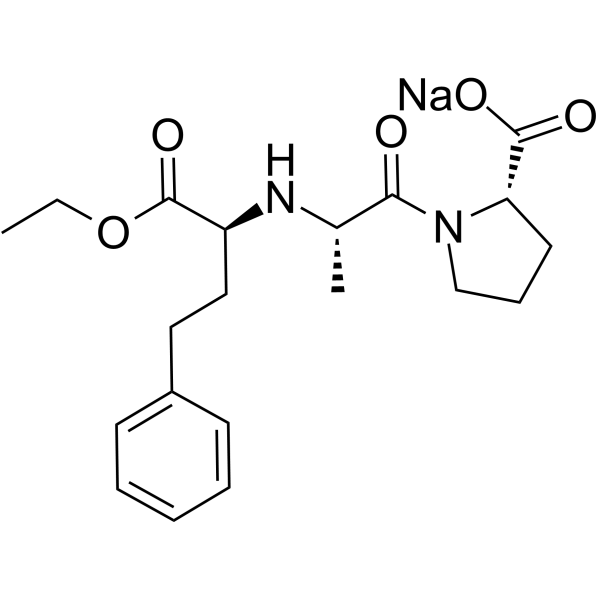
Cat. No.: HY-B0331B
CAS No.: 149404-21-7
Synonyms: MK-421 sodium
Enalapril sodium (MK-421 sodium) is an orally active angiotensin-converting enzyme inhibitor. Enalapril sodium blocks the conversion of angiotensin I to angiotensin II, regulates the renin-angiotensin system, reduces preload and afterload, and decreases plasma angiotensin II levels. Enalapril sodium inhibits apoptosis, reduces nitric oxide metabolite levels, stabilizes endothelial cells, enhances endothelial antioxidant defense, scavenges reactive oxygen species (ROS), and alleviates neuronal damage. Enalapril sodium attenuates glutathione depletion, protein/lipid oxidation, tissue damage, and type III collagen immunolabeling in organs of diabetic rats. Enalapril sodium reduces systolic blood pressure and urinary albumin excretion, and delays the progression of diabetic cardiac/renal injury. Enalapril sodium is used in research related to asymptomatic left ventricular dysfunction, congestive heart failure, Alzheimer's disease, diabetes mellitus, acute myocardial infarction, atrial fibrillation, hypertension, cerebral ischemia, chronic heart failure, and single-ventricle physiology [2] .
loading...
    loading...
Cat. No.: HY-W011168
CAS No.: 13389-03-2
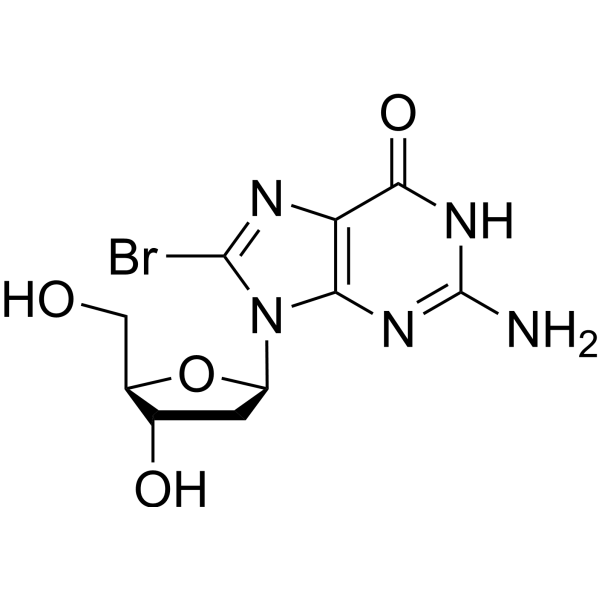
8-Bromo-2'-deoxyguanosine is an inflammation-related DNA halogenated adduct and an early biomarker of inflammation-induced oxidative tissue damage. The formation of 8-Bromo-2'-deoxyguanosine precedes that of oxidative and nitrative products, and it can be generated via the MPO-H2O2-Cl --Br - system. 8-Bromo-2'-deoxyguanosine serves as the immunogen for preparing the monoclonal antibody mAb8B3, which can be used to detect early DNA modifications in preclinical models; its urinary level also increases significantly in inflammatory disease models. 8-Bromo-2'-deoxyguanosine can also be produced in the dermis of UV-B irradiated mice, and the extract of Coprinus comatus significantly reduces its level. 8-Bromo-2'-deoxyguanosine finds applications in studies related to inflammatory diseases, diabetes, hepatocellular carcinoma, and UV-B induced skin inflammation [2] .
loading...
    loading...
Cat. No.: HY-P86670
Synonyms: BNSP; Bone sialoprotein 1; BSP I; BSPI; Early T lymphocyte activation 1; ETA 1; ETA1; MGC110940; Nephropontin; OPN; osteopontin/immunoglobulin alpha 1 heavy chain constant region fusion protein; OSTP_HUMAN; secreted phosphoprotein 1(osteopontin, bone sialoprotein I, early T-lymphocyte activation 1); Secreted phosphoprotein 1; SPP 1; SPP-1; SPP1; SPP1/CALPHA1 fusion; urinary stone protein; Uropontin.

Host:  

Rabbit

Application:  

IHC-P, WB, IHC-F, IF-Tissue

Reactivity:  

Human

loading...
    loading...
Cat. No.: HY-P86670A
Synonyms: BNSP; Bone sialoprotein 1; BSP I; BSPI; Early T lymphocyte activation 1; ETA 1; ETA1; MGC110940; Nephropontin; OPN; osteopontin/immunoglobulin alpha 1 heavy chain constant region fusion protein; OSTP_HUMAN; secreted phosphoprotein 1(osteopontin, bone sialoprotein I, early T-lymphocyte activation 1); Secreted phosphoprotein 1; SPP 1; SPP-1; SPP1; SPP1/CALPHA1 fusion; urinary stone protein; Uropontin.

Host:  

Rabbit

Application:  

IHC-P, WB, IHC-F, IF-Tissue

Reactivity:  

Human

loading...
    loading...
Cat. No.: HY-B0331AS
CAS No.: 349554-02-5
Synonyms: MK-421-d5maleate
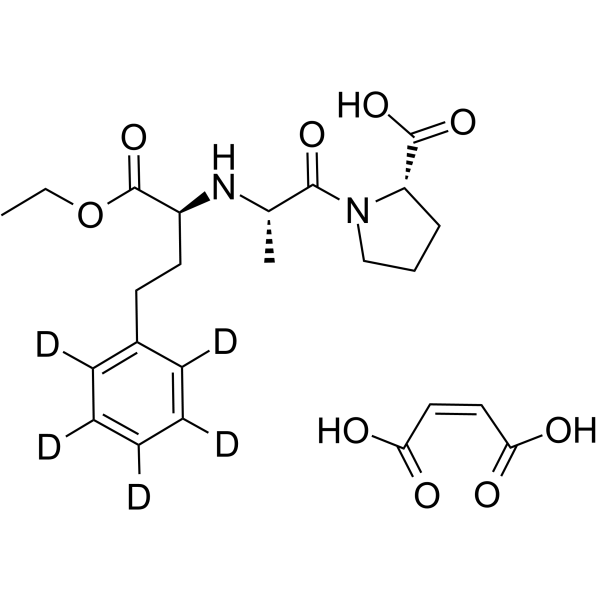
Enalapril-d5 maleate (MK-421 D5 maleate) is the deuterated-labeled Enalapril maleate (HY-B0331A). Enalapril maleate is an orally active angiotensin-converting enzyme inhibitor. Enalapril maleate blocks the conversion of angiotensin I to angiotensin II, regulates the renin-angiotensin system, reduces preload and afterload, and decreases plasma angiotensin II levels. Enalapril maleate inhibits apoptosis, reduces nitric oxide metabolite levels, stabilizes endothelial cells, enhances endothelial antioxidant defense, scavenges reactive oxygen species (ROS), and alleviates neuronal damage. Enalapril maleate attenuates glutathione depletion, protein/lipid oxidation, tissue damage, and type III collagen immunolabeling in organs of diabetic rats. Enalapril maleate reduces systolic blood pressure and urinary albumin excretion, and delays the progression of diabetic cardiac/renal injury. Enalapril maleate is used in research related to asymptomatic left ventricular dysfunction, congestive heart failure, Alzheimer's disease, diabetes mellitus, acute myocardial infarction, atrial fibrillation, hypertension, cerebral ischemia, chronic heart failure, and single-ventricle physiology [2] .
loading...
    loading...
Cat. No.: HY-114557R
CAS No.: 1041-01-6
Synonyms: 3,5-Diiodo-L-thyronine (Standard)
NSC 90469 (Standard) is the analytical standard of NSC 90469. This product is intended for research and analytical applications. NSC 90469 (3,5-Diiodo-L-thyronine) is an orally active thyroid hormone derivative. NSC 90469 inhibits JNK phosphorylation and NF-κB acetylation, blocks SIRT1 protein expression, induces elevated PGC-1α levels, and stimulates COX activity. NSC 90469 enhances UCP1-mediated thermogenesis, increases hepatic Dio1 activity, inhibits TSH levels and hypothalamic-pituitary-thyroid axis function, enhances lipid metabolism, and regulates energy metabolism via the mitochondrial pathway. NSC 90469 prevents blood glucose reduction, reduces urinary albumin excretion, inhibits renal matrix expansion, decreases TGF-β1 expression, and reduces renal fibronectin and type Ⅳ collagen deposition. NSC 90469 also increases energy expenditure and prevents diet-induced overweight. NSC 90469 can be used in studies related to diabetic nephropathy, hypothyroidism, non-alcoholic fatty liver disease, and diet-induced obesity [2] .
loading...
    loading...
Cat. No.: HY-137055
CAS No.: 1171824-96-6
Target:  

Others

Research Areas:  

Others

PF-3774076 is a highly central nervous system (CNS) penetrant, potent, and selective human α1A-adrenoceptor partial agonist. It exhibits good potency and selectivity in multiple binding and functional assays. PF-3774076 increases peak urethral pressure in anesthetized female dogs in a dose-dependent manner via a central mechanism. PF-3774076 affects both the proximal and distal portions of the urethra in vivo. These properties suggest that PF-3774076 may have significant benefit in the treatment of stress urinary incontinence (SUI) as a CNS-penetrant α1A receptor partial agonist. However, despite its partial agonism and selectivity for α1A receptors, PF-3774076 failed to provide adequate safety differences in in vivo models of cardiovascular function. This may be due to the simultaneous activation of both peripheral and central α1A receptors. These data suggest that while central α1A partial agonists may have significant benefit in the treatment of SUI, this class of agents may have difficulty achieving the desired urethral selectivity without affecting cardiovascular function.
loading...
    loading...
Cat. No.: HY-B0331AR
CAS No.: 76095-16-4
Synonyms: MK-421 maleate (Standard)
Enalapril maleate (Standard) (MK-421 maleate (Standard)) is the analytical standard of Enalapril maleate (HY-B0331A). This product is intended for research and analytical applications. Enalapril maleate is an orally active angiotensin-converting enzyme inhibitor. Enalapril maleate blocks the conversion of angiotensin I to angiotensin II, regulates the renin-angiotensin system, reduces preload and afterload, and decreases plasma angiotensin II levels. Enalapril maleate inhibits apoptosis, reduces nitric oxide metabolite levels, stabilizes endothelial cells, enhances endothelial antioxidant defense, scavenges reactive oxygen species (ROS), and alleviates neuronal damage. Enalapril maleate attenuates glutathione depletion, protein/lipid oxidation, tissue damage, and type III collagen immunolabeling in organs of diabetic rats. Enalapril maleate reduces systolic blood pressure and urinary albumin excretion, and delays the progression of diabetic cardiac/renal injury. Enalapril maleate is used in research related to asymptomatic left ventricular dysfunction, congestive heart failure, Alzheimer's disease, diabetes mellitus, acute myocardial infarction, atrial fibrillation, hypertension, cerebral ischemia, chronic heart failure, and single-ventricle physiology [2] .
loading...
    loading...
Cat. No.: HY-B0331S1
CAS No.: 1356847-94-3
Synonyms: MK-421-d3
Enalapril-d3 (MK-421-d3) is the deuterated-labeled Enalapril (HY-B0331). Enalapril is an orally active angiotensin-converting enzyme inhibitor. Enalapril blocks the conversion of angiotensin I to angiotensin II, regulates the renin-angiotensin system, reduces preload and afterload, and decreases plasma angiotensin II levels. Enalapril inhibits apoptosis, reduces nitric oxide metabolite levels, stabilizes endothelial cells, enhances endothelial antioxidant defense, scavenges reactive oxygen species (ROS), and alleviates neuronal damage. Enalapril attenuates glutathione depletion, protein/lipid oxidation, tissue damage, and type III collagen immunolabeling in organs of diabetic rats. Enalapril reduces systolic blood pressure and urinary albumin excretion, and delays the progression of diabetic cardiac/renal injury. Enalapril is used in research related to asymptomatic left ventricular dysfunction, congestive heart failure, Alzheimer's disease, diabetes mellitus, acute myocardial infarction, atrial fibrillation, hypertension, cerebral ischemia, chronic heart failure, and single-ventricle physiology [2] .
loading...
    loading...
Cat. No.: HY-W509797
CAS No.: 21618-92-8
5-(3',4'-Dihydroxyphenyl)-γ-valerolactone is an intestinal microbiota metabolite of (-)-Epicatechin (HY-N0001). 5-(3',4'-Dihydroxyphenyl)-γ-valerolactone downregulates TNF-α-stimulated phosphorylation of IKK and IκBα, inhibits the transcriptional activation of NF-κB, and suppresses the expression of adhesion molecules and chemokines. 5-(3',4'-Dihydroxyphenyl)-γ-valerolactone promotes autophagy, alleviates oxidative stress, maintains osteoblast differentiation, induces G1 phase arrest, inhibits adipogenesis, and scavenges ABTS free radicals. 5-(3',4'-Dihydroxyphenyl)-γ-valerolactone inhibits the adhesion of uropathogenic Escherichia coli to bladder epithelial cells; when used in combination with Curcumin (HY-N0005), it downregulates the NLRP3 and NOX2/Nrf2 signaling pathways, thereby reducing microglial activation. 5-(3',4'-Dihydroxyphenyl)-γ-valerolactone can be used in research related to diabetes, atherosclerosis, osteoporosis, obesity, neurodegenerative diseases involving microglial activation, and urinary tract infections [2] .
loading...
    loading...
Cat. No.: HY-P85834
Synonyms: ADMCKD; ADMCKD1; Breast carcinoma associated antigen DF3; Breast carcinoma-associated antigen DF3; CA 15-3; CA15 3; CA15 3 antigen; CA15-3; CA15.3; Cancer antigen 15-3; Carcinoma associated mucin; Carcinoma-associated mucin; CD 227; CD227; DF3 antigen; EMA; Episialin; Epithelial Membrane Antigen; H23 antigen; H23AG; KL 6; KL-6; KL6; Krebs von den Lungen-6; MAM 6; MAM6; MCD; MCKD; MCKD1; Medullary cystic kidney disease 1; autosomal dominant; Medullary cystic kidney disease, autosomal dominant; MUC 1; MUC-1; MUC-1/SEC; MUC-1/X; MUC1; MUC1-alpha; MUC1-beta; MUC1-CT; MUC1-NT; MUC1/ZD; MUC1_HUMAN; Mucin 1; Mucin 1 cell surface associated; Mucin 1 transmembrane; Mucin 1, cell surface associated; Mucin-1 subunit beta; Peanut reactive urinary mucin; Peanut-reactive urinary mucin; PEM; PEMT; Polymorphic epithelial mucin; PUM; Tumor associated epithelial membrane antigen; Tumor associated epithelial mucin; Tumor associated mucin; Tumor-associated epithelial membrane antigen; Tumor-associated mucin

Host:  

Mouse

Application:  

IHC-P, WB, ICC/IF, ELISA

Reactivity:  

Human

loading...
    loading...
Cat. No.: HY-W767399
8-Bromo-2'-deoxyguanosine- 13C, 15N2 is the 13C- and 15N-labeled 8-Bromo-2'-deoxyguanosine (HY-W011168). 8-Bromo-2'-deoxyguanosine is an inflammation-related DNA halogenated adduct and an early biomarker of inflammation-induced oxidative tissue damage. The formation of 8-Bromo-2'-deoxyguanosine precedes that of oxidative and nitrative products, and it can be generated via the MPO-H2O2-Cl --Br - system. 8-Bromo-2'-deoxyguanosine serves as the immunogen for preparing the monoclonal antibody mAb8B3, which can be used to detect early DNA modifications in preclinical models; its urinary level also increases significantly in inflammatory disease models. 8-Bromo-2'-deoxyguanosine can also be produced in the dermis of UV-B irradiated mice, and the extract of Coprinus comatus significantly reduces its level. 8-Bromo-2'-deoxyguanosine finds applications in studies related to inflammatory diseases, diabetes, hepatocellular carcinoma, and UV-B induced skin inflammation [2] .
loading...
    loading...

