534 Results for "

Colitis

" in MedChemExpress (MCE) Product Catalog:
Products (534)

534 Results for "Colitis" in MCE Product Catalog:

Cat. No.: HY-183889
CAS No.: 94-10-0
p-Ethoxychrysoidin is a benzotriazole-based NLRP3 inhibitor. p-Ethoxychrysoidin can be used in research on inflammatory diseases and neurodegenerative diseases .
loading...
    loading...
Cat. No.: HY-N0448A
CAS No.: 107257-18-1
(±)-10-Gingerol is the racemic form of 10-Gingerol (HY-N0448). 10-Gingerol is an AMPK agonist, which is found in the ginger oleoresin from fresh rhizome with anti-inflammatory, antioxidant and anti-proliferative activities. 10-Gingerol suppresses neointimal hyperplasia and inhibits vascular smooth muscle cell proliferation. 10-Gingerol exhibits substantial scavenging activities with an IC50 value of 10.47 μM against DPPH radical, an IC50 value of 1.68 μM against superoxide radical and an IC50 value of 1.35 μM against hydroxyl radical. 10-Gingerol inhibits the proliferation of MDA-MB-231 tumor cell line with an IC50 of 12.1 μM. 10-Gingerol suppresses the proliferation, migration, invasion, and induced apoptosis through targeting the PI3K/Akt signaling pathway in MDA-MB-231/IR cells. 10-Gingerol can be used in research on various common cancers such as ovarian cancer and colon cancer, as well as colitis and neurodegenerative diseases .
loading...
    loading...
Cat. No.: HY-N2896
CAS No.: 465-00-9
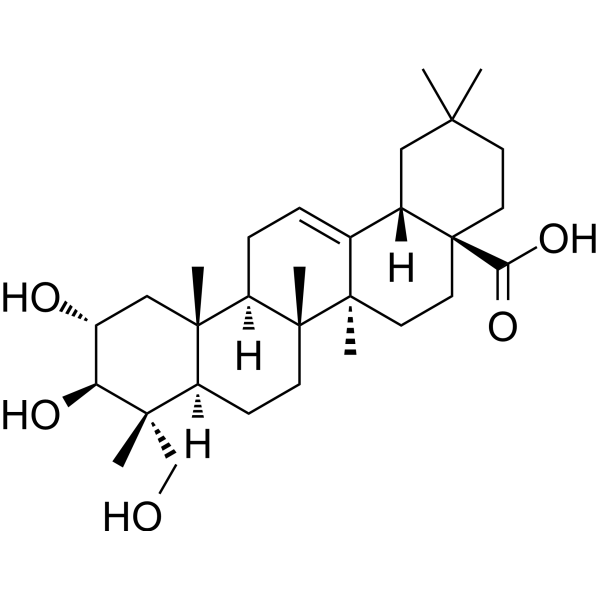
Arjunolic acid is an orally active, multifunctional bioactive compound. Arjunolic acid exhibits free radical scavenging activity, as well as fungal and bacterial activities. Arjunolic acid induces apoptosis (Apoptosis) in various cancer cells. Arjunolic acid protects hepatocytes against induced oxidative stress and apoptosis by reducing reactive oxygen species and inhibiting NF-κB activation. Arjunolic acid regulates pancreatic dysfunction in type 2 diabetic rats by blocking the activation of the TLR-4/MyD88 and canonical Wnt pathways. Arjunolic acid inhibits neuroinflammation and ameliorates depressive behaviors via the SIRT1/AMPK/Notch1 signaling pathway in microglia. Arjunolic acid improves Crohn's disease-like colitis by restoring gut microbiota composition and inhibiting TLR4 signaling. Arjunolic acid suppresses osteosarcoma progression by inhibiting Wnt3a-mediated M2 polarization of macrophages. Arjunolic acid ameliorates diabetic retinopathy via the autophagy pathway regulated by AMPK/mTOR/HO-1. Arjunolic acid is applicable to research related to type 2 diabetes, organ toxicity, depression, Crohn's disease, osteosarcoma, diabetic retinopathy, and testicular dysfunction .
loading...
    loading...
Cat. No.: HY-N7695
CAS No.: 23133-56-4
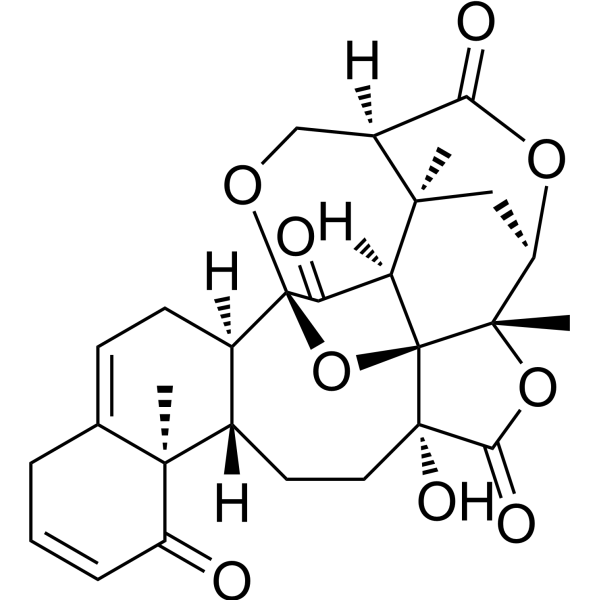
Physalin B is an orally active anti-inflammatory and anticancer agent. Physalin B can be isolated from Physalis alkekengi L. var. Franchetii. Physalin B inhibits the activation of the NF-κB, NLRP3 inflammasome, STAT3, PI3K/Akt and Hedgehog signaling pathways, regulates the phosphorylation levels of GSK-3β, p38 MAPK, ERK1/2 and JNK, and promotes the nuclear translocation of NRF2. Physalin B reduces the levels of pro-inflammatory cytokines and factors, induces mitochondrial reactive oxygen species (mito-ROS) production, Apoptosis, G2/M cell cycle arrest and incomplete Autophagy, alters cytoskeleton structure and alleviates oxidative stress. Physalin B reduces cancer cell viability, ameliorates liver and lung tissue damage and alleviates liver fibrosis. Physalin B can be used in research related to ulcerative colitis, breast cancer, acute lung injury, colon cancer, non-alcoholic steatohepatitis, liver fibrosis, lung cancer, pancreatic cancer, lymphoma, ovarian cancer, sarcoma and leukemia .
loading...
    loading...
Cat. No.: HY-165557
CAS No.: 1001389-31-6
GSK1370319A is a human P2X7 receptor inhibitor with an IC50 of 474 nM and a Ki of 176 nM. GSK1370319A inhibits the production of IL-1β, reduces the generation of reactive oxygen species (ROS), and increases the survival rate of macrophages. GSK1370319A can be used for the research of inflammatory bowel disease .
loading...
    loading...
Cat. No.: HY-W028393R
CAS No.: 392-12-1
Indole-3-pyruvic acid (Standard) is the analytical standard of Indole-3-pyruvic acid (HY-W028393). This product is intended for research and analytical applications. Indole-3-pyruvic acid is an orally active ketone analog of tryptophan, and is an aryl hydrocarbon receptor (AHR) agonist. Indole-3-pyruvic acid inhibits p38/MAPK phosphorylation, regulates the tryptophan metabolic pathway, and also possesses protective activities against skin photodamage, as well as anti-inflammatory and anti-anxiety bioactivities in the gut. Indole-3-pyruvic acid can downregulate the expression of IL-1β, IL-6, Cox-2, and Bax to alleviate UVB-induced keratinocyte toxicity. Indole-3-pyruvic acid can activate AHR to promote Tr1 cell differentiation, increase IL-10, and inhibit Th1 cytokine production. Indole-3-pyruvic acid can alter the levels of kynurenine metabolites in the brain, mediating central nervous system-related effects. Indole-3-pyruvic acid can be used in research on skin lesions, colitis, and anxiety .
loading...
    loading...
Cat. No.: HY-12292G
CAS No.: 1129669-05-1
IM-12 GMP is IM-12 (HY-12292) produced by using GMP guidelines. GMP small molecules works appropriately as an auxiliary reagent for cell therapy manufacture. IM-12 is an orally active anti-inflammatory agent that targets and inhibits the NF-κB and STAT3 signaling pathways. IM-12 activates the Wnt signaling pathway and promotes the nuclear translocation of β-catenin by inhibiting GSK3β, while also blocking the tyrosine kinase activity of p210BCR/ABL. IM-12 reduces the levels of IL-6, IL-17, NO, prostaglandin E2, iNOS and COX-2, and induces ER stress, Ca 2+ release, autophagy and apoptosis. IM-12 is heat-sensitive and does not induce autophagy in IM-resistant p210BCR/ABL T315I mutant cells. IM-12 is also a component of the 5iLA medium used for naive pluripotent stem cell research. IM-12 has been applied in studies related to carrageenan (HY-125474)-induced hind paw edema, TNBS-induced colitis, and acute and chronic myeloid leukemia .
loading...
    loading...
Cat. No.: HY-Y0823
CAS No.: 532-55-8
Research Areas:  

Infection

Benzoyl isothiocyanate is an aromatic isothiocyanate derivative with antibacterial and acaricidal activities. Benzoyl isothiocyanate inhibits the growth of specific oral bacteria, and also serves as an intermediate for the synthesis of heterocyclic compounds such as thiazolidine and quinazoline derivatives. Benzoyl isothiocyanate exhibits acaricidal activity against Dermatophagoides farina (dust mite) and D. pteronyssinus (house dust mite). Benzoyl isothiocyanate can be used in research related to bacterial infection, pest control and organic synthesis .
loading...
    loading...
Cat. No.: HY-184882
CAS No.: 2771021-30-6
Research Areas:  

Inflammation/Immunology Cancer

NLRP3-IN-95 is an NLRP3 inflammasome inhibitor with an IC50 of 27 nM. NLRP3-IN-95 inhibits IL-1β secretion in PMA-differentiated THP-1 cells. NLRP3-IN-95 can be used in studies related to acute monocytic leukemia and inflammatory diseases .
loading...
    loading...
Cat. No.: HY-141578
CAS No.: 5966-28-9
Purity:  99.93%
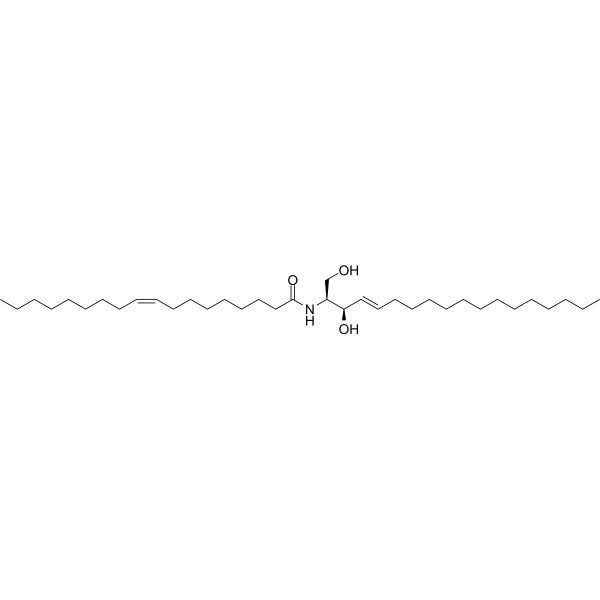
C18:1-Ceramide is a ceramide subspecies belonging to bioactive lipids. C18:1-Ceramide exhibits activities of inducing skeletal muscle insulin resistance and affecting metabolism. C18:1-Ceramide can be used in the research of obesity, type 2 diabetes (T2D), insulin resistance and other related metabolic diseases .
loading...
    loading...
Cat. No.: HY-141578R
CAS No.: 5966-28-9
C18:1-Ceramide (Standard) is the analytical standard of C18:1-Ceramide (HY-141578). This product is intended for research and analytical applications. C18:1-Ceramide is a ceramide subspecies belonging to bioactive lipids. C18:1-Ceramide exhibits activities of inducing skeletal muscle insulin resistance and affecting metabolism. C18:1-Ceramide can be used in the research of obesity, type 2 diabetes (T2D), insulin resistance and other related metabolic diseases .
loading...
    loading...
Cat. No.: HY-141578S
Purity:  97.0%
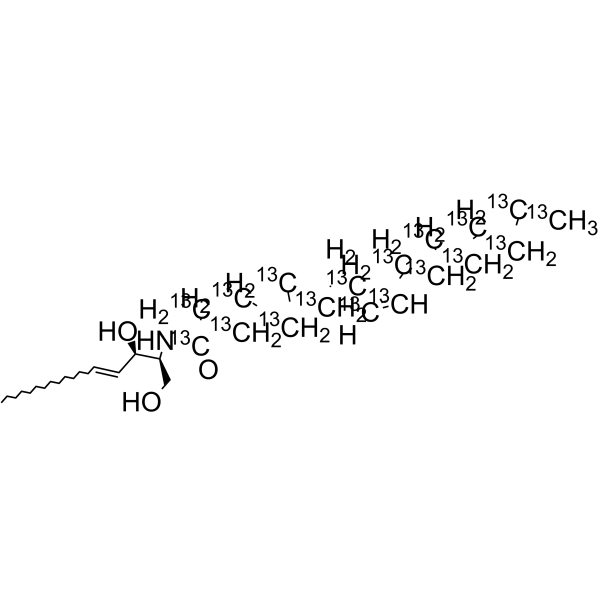
C18:1-Ceramide- 13C18 is the 13C-labeled C18:1-Ceramide (HY-141578). C18:1-Ceramide is a ceramide subspecies belonging to bioactive lipids. C18:1-Ceramide exhibits activities of inducing skeletal muscle insulin resistance and affecting metabolism. C18:1-Ceramide can be used in the research of obesity, type 2 diabetes (T2D), insulin resistance and other related metabolic diseases .
loading...
    loading...
Cat. No.: HY-141578S1
CAS No.: 1942907-50-7
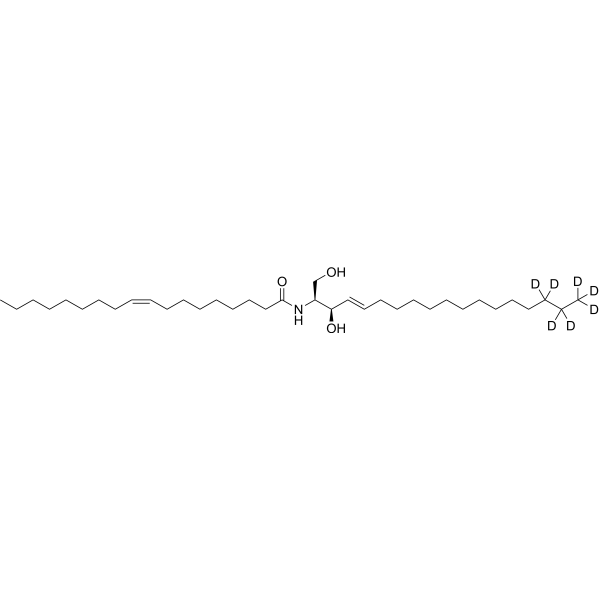
C18:1 Ceramide-d7 is the deuterated-labeled C18:1-Ceramide (HY-141578). C18:1-Ceramide is a ceramide subspecies belonging to bioactive lipids. C18:1-Ceramide exhibits activities of inducing skeletal muscle insulin resistance and affecting metabolism. C18:1-Ceramide can be used in the research of obesity, type 2 diabetes (T2D), insulin resistance and other related metabolic diseases .
loading...
    loading...
Cat. No.: HY-187103
CAS No.: 2241039-80-3
Target:  

JAK

Research Areas:  

Inflammation/Immunology

JAK1-IN-22 is a JAK1-selective inhibitor with an IC50 of 1.84 μM. JAK1-IN-22 exerts no significant inhibitory effect on JAK2 and JAK3. JAK1-IN-22 can be used in the research of JAK1-related diseases such as asthma, alopecia areata, and type 1 diabetes .
loading...
    loading...

