161 Results for "

Fluorescent compounds

" in MedChemExpress (MCE) Product Catalog:
Products (161)

161 Results for "Fluorescent compounds" in MCE Product Catalog:

Cat. No.: HY-W738417
CAS No.: 68234-47-9
Phthalaldehyde-d6 is the deuterium labeled Phthalaldehyde (HY-W012669). Phthalaldehyde is a biochemical assay reagent, which modifies the amino acid and measure the derivative through HPLC. Phthalaldehyde forms a fluorescent compound with α-amino group .
loading...
    loading...
Cat. No.: HY-W008168
CAS No.: 5470-96-2
Synonyms: 2-Quinolinecarboxaldehyde
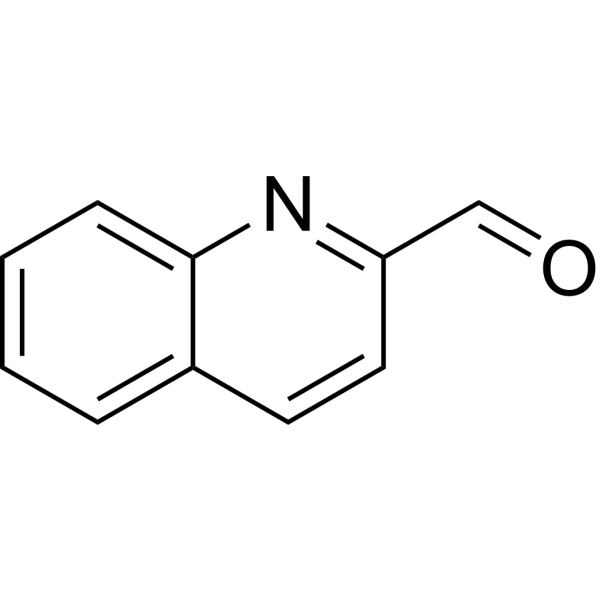
Quinoline-2-carboxaldehyde (2-Quinolinecarboxaldehyde) is a quinoline derivative that serves as a synthetic precursor for Schiff base copper complexes. Quinoline-2-carboxaldehyde is applicable to research related to the synthetic design of biomaterials or organic compounds, such as fluorescent sensors .
loading...
    loading...
Cat. No.: HY-D1883
CAS No.: 1144107-81-2
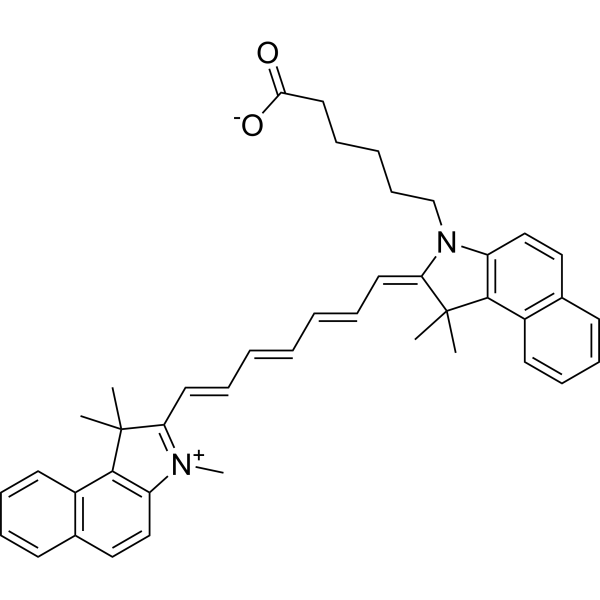
Cy7.5-COOH (compound 8f), a cyanine dye, is a highly fluorescent compound (Abs/Em = 781/808 nm). Cy7.5-COOH can be used as a fluorescent probe in a wide-range of applications such as DNA sequencing, flow cytometry and in vivo imaging .
loading...
    loading...
Cat. No.: HY-D1883B
CAS No.: 2978106-25-9
Cy7.5-COOH bromide, a cyanine dye, is a highly fluorescent compound (Abs/Em = 781/808 nm). Cy7.5-COOH bromide can be used as a fluorescent probe in a wide-range of applications such as DNA sequencing, flow cytometry and in vivo imaging .
loading...
    loading...
Cat. No.: HY-76203
CAS No.: 553-86-6
Target:  

Drug Intermediate

Research Areas:  

Others

2-Coumaranone is a bicyclic heteroaromatic compound in which a six-membered benzene ring is annulated with a five-membered γ-butyrolactone ring. 2-Coumaranone can be used to synthesize chemiluminescent and fluorescent dyes .
loading...
    loading...
Cat. No.: HY-W040116
CAS No.: 53643-12-2
Synonyms: 4-Methylumbelliferyl N,N-diacetyl-β-D-chitobioside
MUF-diNAG (4-Methylumbelliferyl N,N-diacetyl-β-D-chitobioside) can be used as a fluorescent substrate. MUF-diNAG is a kind of biological materials or organic compounds that are widely used in life science research .
loading...
    loading...
Cat. No.: HY-D0921
CAS No.: 162411-29-2
Synonyms: ADS 815EI
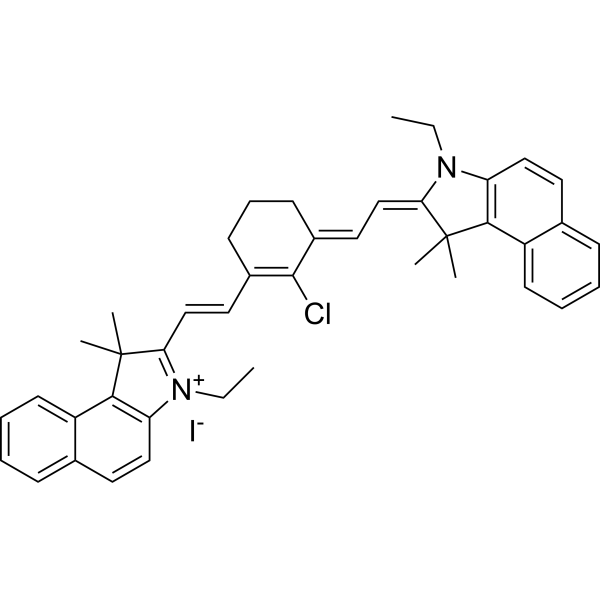
Heptamethine cyanine dye-1 (Compound CyCl) is a cyanine dye (Fmax: 858 nm, in CH2Cl2). Heptamethine cyanine dye-1 can be used to synthesize pH near-infrared fluorescent probes .
loading...
    loading...
Cat. No.: HY-15621A
CAS No.: 2095832-33-8
Purity:  98.01%
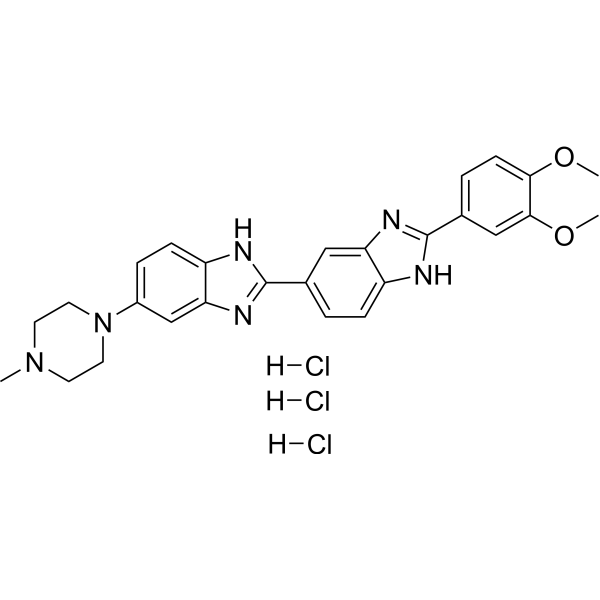
DMA trihydrochloride is a fluorescent compound (λex=340 nm, λem=478 nm).
loading...
    loading...
Cat. No.: HY-110393
CAS No.: 1250963-36-0
Purity:  98.62%
CLR1501, a fluorescently labeled CLR1404 analog, is a cancer cell-selective fluorescence compound .
loading...
    loading...
Cat. No.: HY-D1109
CAS No.: 114616-31-8
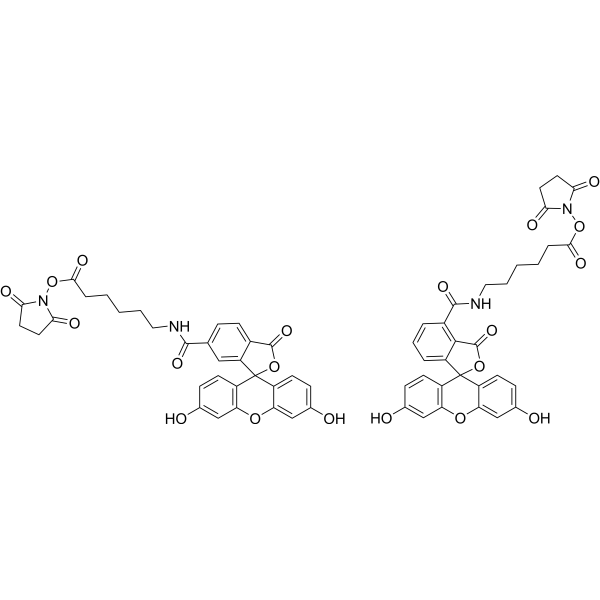
5(6)-SFX ,SE (Compound SFX-SE) is a fluorescent dye for labeling primary amines and nascent proteins .
loading...
    loading...
Cat. No.: HY-35556
CAS No.: 947-73-9
Target:  

Fluorescent Dye

9-Aminophenanthrene is a type of polycyclic aromatic amine compound, which can be used as a fluorescent labeling reagent for free fatty acids (FFA) .
loading...
    loading...
Cat. No.: HY-W025817
CAS No.: 99-11-6
Target:  

Fluorescent Dye

Research Areas:  

Others

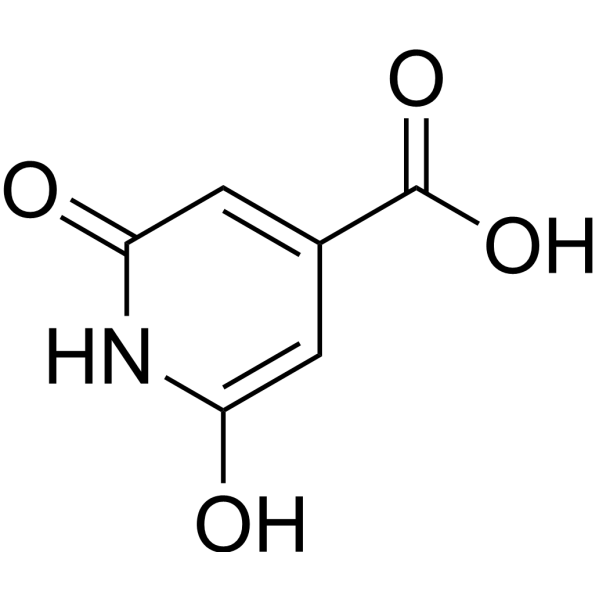
Citrazinic acid is a weakly fluorescent compound whose optical properties are dependent on aggregation states and chemical environment. Citrazinic acid strongly tends to form dimers at high concentrations .
loading...
    loading...
Cat. No.: HY-144603
CAS No.: 2773476-40-5
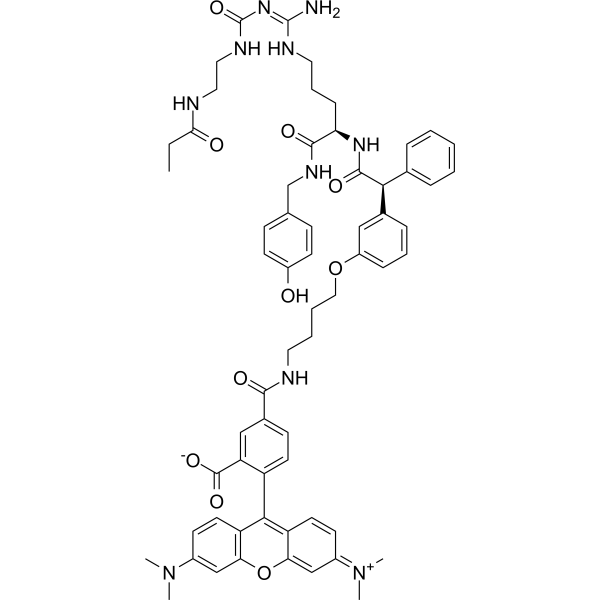
Neuropeptide Y Y1 receptor antagonist 1 (compound 39), a fluorescent probe, is a potent antagonist of neuropeptide Y Y 1 receptor (Y 1R), with a Ki of 0.19 nM .
loading...
    loading...
Cat. No.: HY-111945
CAS No.: 2374314-08-4
Purity:  98.95%
Target:  

Fluorescent Dye

Research Areas:  

Others

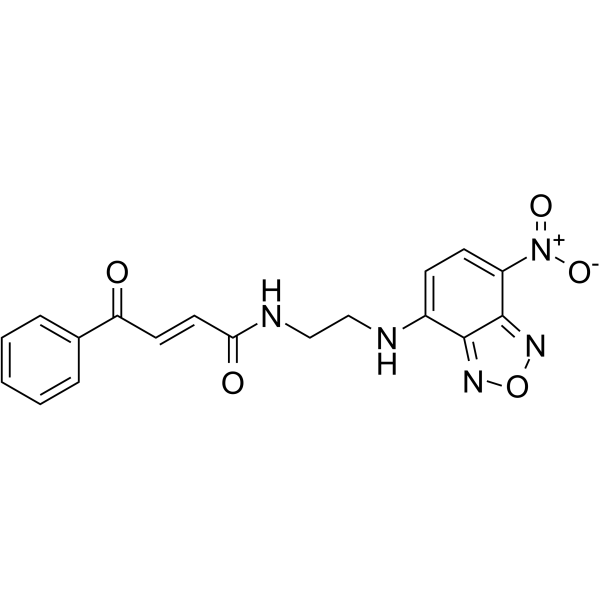
Cys modifier 1 (compound 7) is a cysteine-selective protein modifier for protein bioconjugation. A fluorescent carbonylacrylic derivative bearing nitrobenzofurazan (λex=465nm and λem539 nm)[1].
loading...
    loading...
Cat. No.: HY-D1067
CAS No.: 1392488-07-1
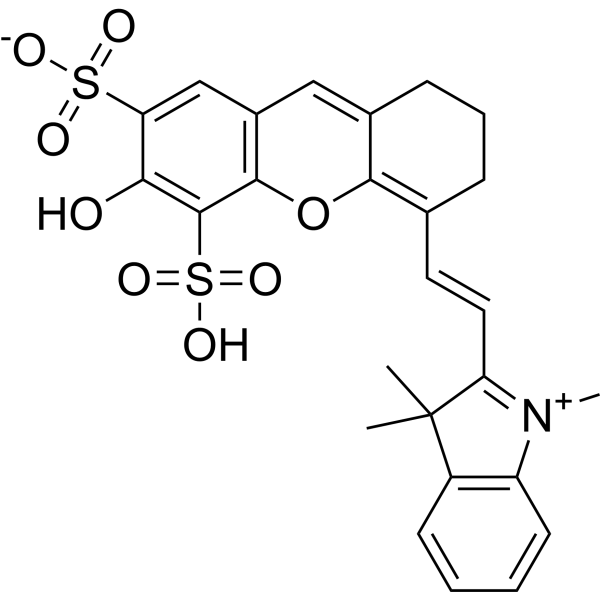
NIR dye-1 (Compound 1h) is a near-infrared (NIR) fluorescent dye. NIR dye-1 has absorption and emission in the NIR region, while retaining an optically tunable hydroxyl group .
loading...
    loading...
Cat. No.: HY-121271
CAS No.: 51670-40-7
Purity:  99.38%
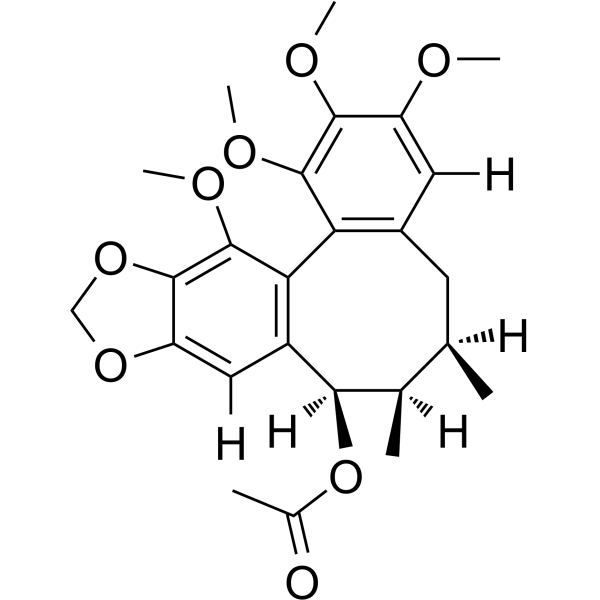
Kadsurin, a natural compound from the stems of Kadsura heteroclita (Schizandraceae), results in significant decreases of CCL4- induced lipid-peroxidation products, such as thiobarbituric acid reactive substances (TBA-RS), conjugated dienes and fluorescent products in the liver of mice .
loading...
    loading...
Cat. No.: HY-D2263
CAS No.: 1638745-27-3
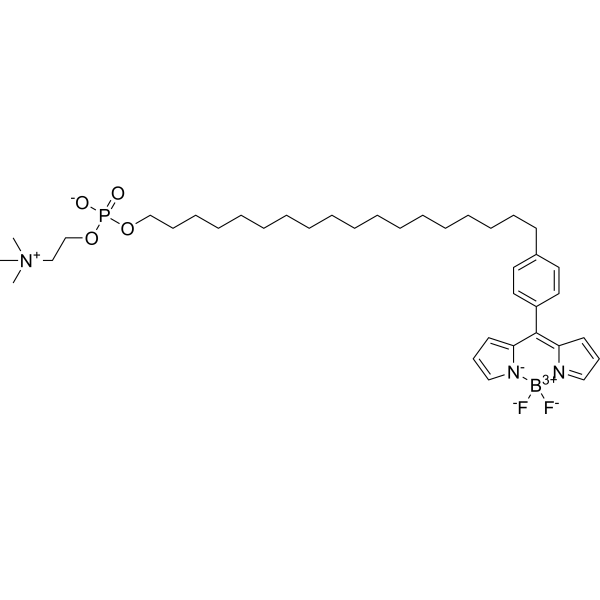
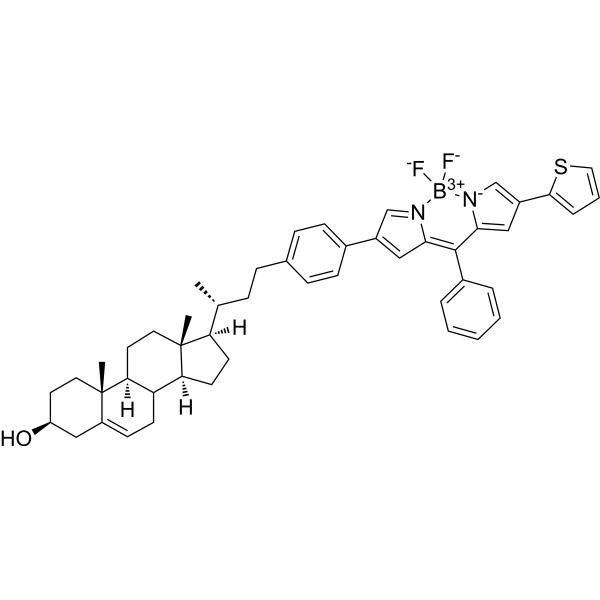
BODIPY-cholesterol conjugate-3 (compound 7) is a cholesterol analogue with a fluorescent BODIPY group. BODIPY-cholesterol conjugate-3 can be used to simultaneously visualize multiple cholesterol pools in cells, as it is primarily localized to the plasma membrane .
loading...
    loading...
Cat. No.: HY-D1637
CAS No.: 172646-43-4
Target:  

Fluorescent Dye

Research Areas:  

Others

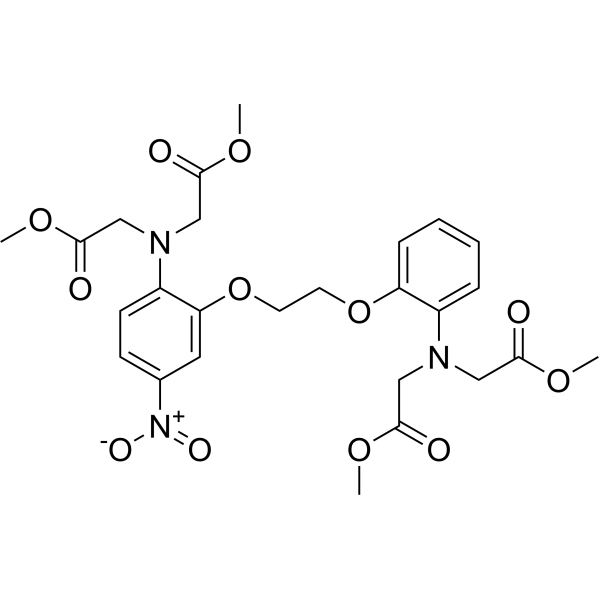
5-Nitro BAPTA tetramethyl ester is a calcium chelator. 5-Nitro BAPTA tetramethyl ester involves in the two-photon probe synthesis, and is used for real-time imaging of intracellular calcium ions, calcium waves monitoring at a depth of 100-300 μm in liver tissues for 1100-4000 s. 5-Nitro BAPTA tetramethyl ester, together with fluorescent compound 2-Me-substituted TM, can be used to form a red fluorescent probe (CaTM-2 AM) .
loading...
    loading...
Cat. No.: HY-W242709
CAS No.: 57334-36-8
Research Areas:  

Others

4-Chloroquinolin-8-ol (compound 1) is an Alq3-derived aluminum ligand. Alq3 is an organometallic molecule widely used as electron transport layer and light-emitting layer in organic LEDs, and also as a host for fluorescent and phosphorescent dyes .
loading...
    loading...
Cat. No.: HY-W923132
CAS No.: 193419-86-2
Synonyms: Acryloyloxy fluorescein
Fluorescein O-acrylate (Acryloyloxy fluorescein) is a highly efficient fluorescent monomer that exhibits strong quantum yield in aqueous solutions, with its excitation and emission wavelengths situated within the visible light spectrum. This versatile monomer can be copolymerized with various compounds, including styrene, and acrylamide, enhancing its ability to bond with macromolecules.
loading...
    loading...

