
89 Results for "

Immune microenvironment

" in MedChemExpress (MCE) Product Catalog:
Products (89)

89 Results for "Immune microenvironment" in MCE Product Catalog:

Cat. No.: HY-131347
CAS No.: 2377916-66-8
Purity:  98.25%
Target:  

PD-1/PD-L1

Research Areas:  

Inflammation/Immunology Cancer

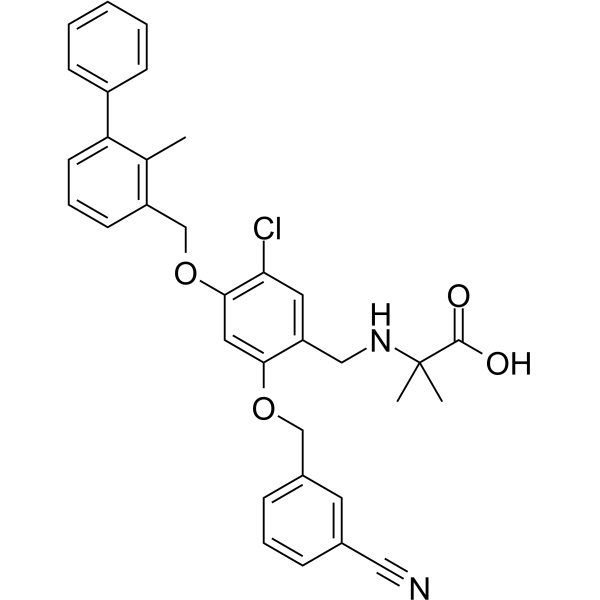
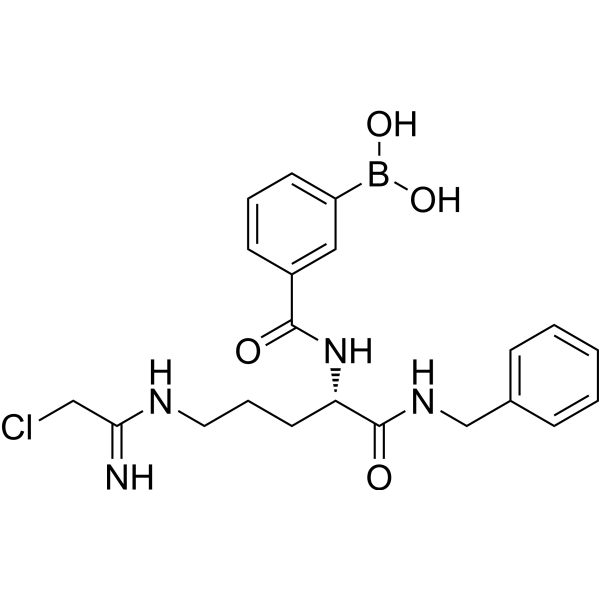
PD-1/PD-L1-IN-NP19 is a PD-1/PD-L1 inhibitor, with an IC50 of 12.5 nM for human PD-1/PD-L1 interaction. PD-1/PD-L1-IN-NP19 could activate the immune microenvironment in tumor, which may contribute to its antitumor effects .
loading...
    loading...
Cat. No.: HY-168887
CAS No.: 3084542-49-1
Target:  

STING

Research Areas:  

Cancer

ZSA-51 is a potent and orally active STING agonist. ZSA-51 shows anticancer activity. ZSA-51 remodeles immune microenvironment both in tumor and lymph node .
loading...
    loading...
Cat. No.: HY-P991309

Research Areas:  

Cancer

ZM-008 is an anti-LLT1 monoclonal antibody. ZM-008 blocks the interaction between LLT1 and CD161 on the surface of NK cells and T cells. ZM-008 restores anti-tumor immune activity, shifts the tumor microenvironment to an immune-responsive state, and recovers NK cell-mediated cytotoxicity against tumor cells, thereby reversing immunosuppression in immune-resistant "cold" tumors. ZM-008 is applicable to the research of immune-resistant solid tumors .
loading...
    loading...
Cat. No.: HY-150109A
CAS No.: 1929583-17-4
Synonyms: Purinostat
Puzerinostat (Purinostat) is a highly selective class I/IIb histone deacetylase (HDAC) inhibitor, with IC50 values of 0.81 nM, 1.4 nM, 1.7 nM, 3.8 nM, 11.5 nM, and 1.1 nM against HDAC1, HDAC2, HDAC3, HDAC8, HDAC6, and HDAC10, respectively. Puzerinostat enhances glutamine metabolism by upregulating GLS1. Puzerinostat induces cell Apoptosis and downregulates the expression of BCR-ABL and c-MYC. Puzerinostat delays the progression of Ph + B-cell acute lymphoblastic leukemia and prolongs the survival of relevant mouse models. Puzerinostat regulates the immune microenvironment. Puzerinostat can be used in research related to chronic myeloid leukemia, Philadelphia chromosome-positive B-cell acute lymphoblastic leukemia, relapsed/refractory multiple myeloma, relapsed/refractory lymphoma, diffuse large B-cell lymphoma, and double-expression lymphoma .
loading...
    loading...
Cat. No.: HY-16961A
CAS No.: 2244864-88-6
Synonyms: MGCD516 malate; MG-516 malate
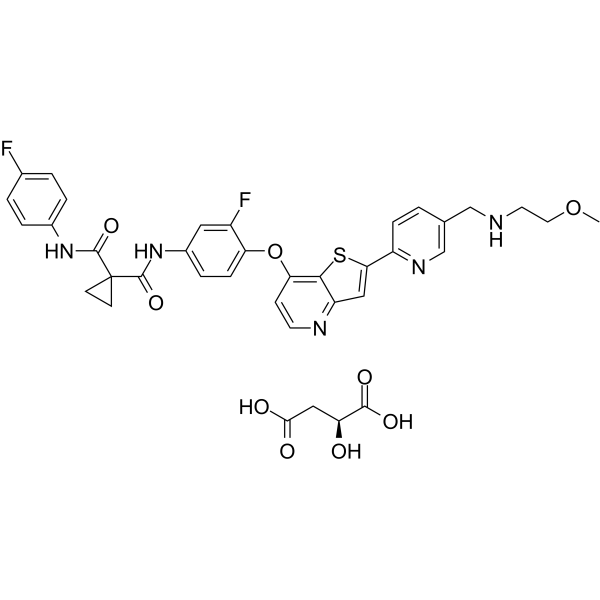
Sitravatinib malate (MGCD516 malate) is an orally bioavailable receptor tyrosine kinase (RTK) inhibitor with IC50s of 1.5 nM, 2 nM, 2 nM, 5 nM, 6 nM, 6 nM, 8 nM, 0.5 nM, 29 nM, 5 nM, and 9 nM for Axl, MER, VEGFR3, VEGFR2, VEGFR1, KIT, FLT3, DDR2, DDR1, TRKA, TRKB, respectively . Sitravatinib malate shows potent single-agent antitumor efficacy and enhances the activity of PD-1 blockade through promoting an antitumor immune microenvironment .
loading...
    loading...
Cat. No.: HY-179228
CAS No.: 1246964-08-8
Target:  

CTLA-4 TGF-beta/Smad

Research Areas:  

Cancer

AN02 is a derivative of Curcumin (HY-N0005). AN02 inhibits the proliferation and clonogenicity, migration and invasion of ovarian cancer cells. AN02 dose-dependently upregulates the expression of APC and mediates the degradation of CTLA-4 through SMAD4. In the small xenograft model, AN02 significantly inhibits tumor growth and reverses the tumor immune-suppressive microenvironment. AN02, when combined with Ipilimumab (HY-P9901), can enhance efficacy and inhibit epithelial-mesenchymal transition. AN02 can be used for the study of ovarian cancer .
loading...
    loading...
Cat. No.: HY-175660
Target:  

Heme Oxygenase (HO)

Research Areas:  

Cancer

KCL-HO-1i is an orally active heme oxygenase-1 (HO-1) inhibitor (rat HO-1: IC50 = 123 nM) and human HO-1: IC50 = 128 nM). KCL-HO-1i targets immunosuppressive LYVE-1 + perivascular tumor-associated macrophages (PvTAMs) in the tumor microenvironment (TME), reduces PvTAM-mediated immune exclusion. KCL-HO-1i demonstrates synergistic anti-tumor efficacy with chemotherapy in MMTV-PyMT spontaneous breast cancer mice or C57Bl/6 mice bearing subcutaneous MN-MCA1 sarcomas. KCL-HO-1i can be used for the study of cancer .
loading...
    loading...
Cat. No.: HY-172396
Target:  

PD-1/PD-L1 VISTA

Research Areas:  

Cancer

PD-L1/VISTA-IN-2 (Compound S8) is an orally active bifunctional PD-L1/VISTA inhibitor with an IC50 of 1.4 μM for PD-L1 and a KD of 2.1 μM for VISTA. PD-L1/VISTA-IN-2 can activate the tumor immune microenvironment and exert anti-cancer effects .
loading...
    loading...
Cat. No.: HY-134920
CAS No.: 2116519-76-5
LW106 is a selective IDO1 inhibitor with an IC50 of 1.57 μM. LW106 has no inhibitory effect on IDO2 and TDO. LW106 inhibits tumor outgrowth by limiting stroma-immune crosstalk and CSC enrichment in the tumor microenvironment. LW106 reduces subpopulation of cancer stem cells (CSCs) in xenografted tumors in which less proliferative/invasive tumor cells and more tumor cells apoptosis. LW106 can be used for the studies of lung cancer and melanoma .
loading...
    loading...
Cat. No.: HY-168088
CAS No.: 3104460-09-2
Research Areas:  

Cancer

DNMT1/HDAC-IN-1 (compound (R)-23a) is a DNMT1/HDAC dual inhibitor (HDAC1:IC50=0.05 μM), HDAC1 is a major HDAC isoform that interacts with DNMT1 in multiple protein complexes for transcriptional silencing of TSGs. DNMT1/HDAC-IN-1 can reshape the tumor immune microenvironment and induce tumor regression, and effectively reverse cancer-specific epigenetic abnormalities .
loading...
    loading...
Cat. No.: HY-174301
CAS No.: 3052223-40-9
Research Areas:  

Cancer

USP7-IN-18 is a naphthalene derivative. USP7-IN-18 is a selective USP7 inhibitor (IC50 : 130.9 nM), with no or very weak inhibition of the other 8 DUBs including USP47. USP7-IN-18 specifically binds to the catalytic domain of USP7, blocking its deubiquitinase activity. USP7-IN-18 causes degradation of the oncogenic proteins MDM2 and DNMT1, and also degrades the novel target PCLAF. USP7-IN-18 activates the p53-p21 pathway. USP7-IN-18 exerts anti-tumor effects in colon cancer animal models and reshapes the tumor immune microenvironment. USP7-IN-18 achieves both direct cytotoxic and immune-synergistic anti-tumor actions.
loading...
    loading...
Cat. No.: HY-175294
CAS No.: 3054043-85-2
Target:  

PD-1/PD-L1 NAMPT

Research Areas:  

Cancer

PD-L1/Nampt-IN-1 is an orally active inhibitor that simultaneously target PD-L1 and NAMPT (nicotinamide phosphoribosyltransferase) with IC50s value of 63 nM and 582 nM. PD-L1/Nampt-IN-1 demonstrates cross-species affinity with comparable KD values for hPD-L1 (52.6 nM) and mPD-L1 (49.1 nM), respectively. PD-L1/Nampt-IN-1 effectively inhibits tumor growth by activating the tumor immune microenvironment. PD-L1/Nampt-IN-1 can be used for the study of melanoma .
loading...
    loading...
Cat. No.: HY-152830A
Purity:  99.82%
Synonyms: Q702 TFA
Target:  

c-Fms TAM Receptor MHC

Research Areas:  

Cancer

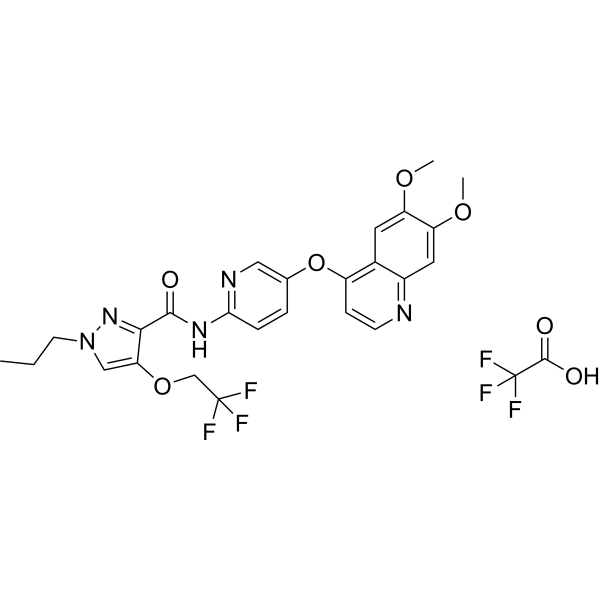
Adrixetinib (Q702) TFA is an orally active triple inhibitor against CSF1R, Mer, and Axl, with Kd values of 8.7 nM, 0.8 nM, and 0.3 nM, respectively. Adrixetinib TFA acts as a potent immune modulator that remodels the tumor microenvironment. Adrixetinib TFA increases the abundance of M1 macrophages and CD8⁺ T cells, while decreasing the levels of M2 macrophages and myeloid-derived suppressor cells (MDSCs). Adrixetinib TFA upregulates the expression of MHC class I and E-cadherin in tumor cells. Adrixetinib TFA shows remarkable antitumor efficacy in syngeneic mouse tumor models. Adrixetinib TFA is suitable for the research of breast cancer, renal adenocarcinoma, colon carcinoma, and melanoma .
loading...
    loading...
Cat. No.: HY-168954
Target:  

c-Fms Apoptosis Akt ERK STAT

Research Areas:  

Inflammation/Immunology Cancer

CSF1R-IN-26 (Compound III-1) is the inhibitor for CSF-1R with an IC50 of 20.07 nM. CSF1R-IN-26 promotes the polarization of M2 macrophages to M1 macrophages, thereby inducing apoptosis in MC-38 cancer cell. CSF1R-IN-26 inhibits the activation of AKT/ERK/STAT3 signaling pathway. CSF1R-IN-26 reconstructs the tumor immune microenvironment and exhibits antitumor activity in mouse models. CSF1R-IN-26 exhibits pharmacokinetics characteristics in SD rats with a half-life 1.86 hours, and an oral bioavailability of 79.22% .
loading...
    loading...
Cat. No.: HY-151559
CAS No.: 3034629-04-1
Research Areas:  

Cancer

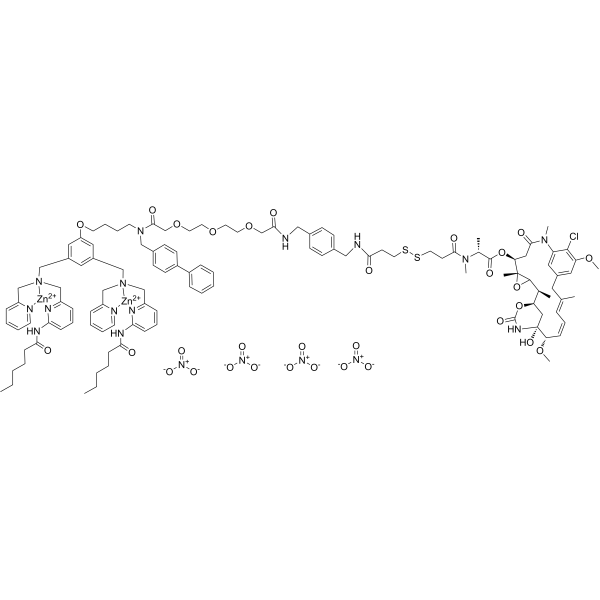
Zn-DPA-maytansinoid conjugate 1 is a small molecule-based maytansinoid conjugate targeting immune checkpoint. Zn-DPA-maytansinoid conjugate 1 induces lasting regression of tumor growth and rejuvenates tumor microenvironment (TME) to an "inflamed hot tumor" .
loading...
    loading...
Cat. No.: HY-157157
CAS No.: 2642327-44-2
Research Areas:  

Cancer

PAD4-IN-3 (compound 4B) is a PAD4 inhibitor with antitumor activity in vitro and in vivo. PAD4-IN-3 was covalently linked to RGD sequence peptide-modified chitosan (K-CRGDV), resulting in an enhanced oxidative stress-responsive nanoagent. K-CRGDV-PAD4-IN-3 can actively target tumors, inhibit PAD4 activity, block the formation of neutrophil extracellular traps (NETs), and improve the tumor immune microenvironment in response to the tumor microenvironment .
loading...
    loading...
Cat. No.: HY-P990038
CAS No.: 2682847-53-4
Synonyms: ES002023; ES002

Target:  

NTPDase

Research Areas:  

Neurological Disease

Eurestobart (ES002023) is a recombinant human IgG1 antibody against CD39. Eurestobart restores antitumor immunity by stabilizing the pro-inflammatory extracellular ATP (eATP) and interfering with synthesis of the immunosuppressive adenosine within the tumor microenvironment (TME). Eurestobart is used in the research of locally advanced and metastatic solid tumors .
loading...
    loading...
Cat. No.: HY-P991403

Target:  

TNF Receptor

Research Areas:  

Cancer

BC011 is a human monoclonal antibody (mAb) targeting TNFRSF1B. BC011 promotes CD8+T cell proliferation and depletes Treg cells, thereby increasing the proportion of effector T cells in the tumor microenvironment. BC011 can be used in tumor Immunity research.
loading...
    loading...
Cat. No.: HY-162494
CAS No.: 3044006-76-7
Research Areas:  

Cancer

PAD4-IN-4 (compound 28) is a potent PAD4 inhibitor (IC50=0.79±0.09 μM). PAD4-IN-4 improves the tumor immune microenvironment by reshaping neutrophil phenotype, upregulating the proportions of dendritic cells and M1 macrophages, and reducing the amount of myeloid-derived suppressor cells. PAD4-IN-4 can be used for Triple-negative breast cancer research .
loading...
    loading...
Cat. No.: HY-171331
CAS No.: 2416165-76-7
Target:  

PD-1/PD-L1 Integrin

Research Areas:  

Cancer

AB-3PRGD2 is a radiotherapeutic agent targeting integrin αvβ3. AB-3PRGD2 shows improved tumor uptake and prolonged tumor retention, leading to significantly enhanced tumor growth suppression. AB-3PRGD2 can remodel the tumor immune microenvironment by upregulating PD-L1 expression and increasing tumor-infiltrating CD8 + T cells .
loading...
    loading...

