146 Results for "

ROS formation

" in MedChemExpress (MCE) Product Catalog:
Products (146)

146 Results for "ROS formation" in MCE Product Catalog:

Cat. No.: HY-W115789
CAS No.: 1344-09-8
Sodium silicate is a water-soluble silicate. Sodium silicate is widely used as a binder, particularly in the production of detergents, soaps, and cleaners. Sodium silicate promotes the deposition of suberin polyphenols and lignin at wound sites of potato tubers, accelerates callus structure formation, enhances ROS production, and induces the synthesis of total phenols and flavonoids. Sodium silicate reduces the weight loss rate and disease index of wounded potato tubers during storage .
loading...
    loading...
Cat. No.: HY-129242
CAS No.: 2896-70-0
Purity:  97.01%
Synonyms: 4-Oxo-Tempo
Research Areas:  

Metabolic Disease Cancer

Tempone (4-Oxo-Tempo) is a nitroxide radical spin label and ROS scavenger. Tempone induces cytotoxicity in lymphoma cells. Tempone serves as a substrate for intracellular reduction to hydroxylamine, rapidly equilibrates between intracellular and extracellular compartments, reduces nitroxide radical spin labels at the ubiquinol site of the respiratory chain, and acts as an alternative terminal electron acceptor when electron flow to oxygen is blocked. Tempone serves as a superoxide sensor, a T2-weighted MRI contrast agent, and a dynamic nuclear polarization polarizing agent for 13C. Tempone inhibits superoxide and peroxynitrite, hydroxyl radical generation, nitrotyrosine formation, and poly (ADP-ribose) formation, and alleviates renal dysfunction and injury in ischemia/reperfusion and hydrogen peroxide-induced injury. Tempone can be used for research on ischemia-reperfusion injury, acute renal failure, and lymphoma .
loading...
    loading...
Cat. No.: HY-B0764B
CAS No.: 362-74-3
Synonyms: Dibutyryl cAMP; DBcAMP
Bucladesine (Dibutyryl cAMP; DBcAMP) is a membrane-permeable 3′, 5′-cyclic adenosine monophosphate (cAMP) analog. Bucladesine selectively activates cAMP dependent protein kinase (PKA) by increasing the intracellular level of cAMP. Bucladesine significantly attenuates MDMA-induced increases in hippocampal mitochondrial ROS formation, mitochondrial outer membrane damage, cytochrome c release, and hippocampal ADP/ATP ratio, thereby improving spatial learning and memory impairments. Bucladesine exhibit anti-nociceptive and anti-inflammation effect. Bucladesine can inhibit cancer cells proliferation, induce apoptosis. Bucladesine can be used for the researches of neurological disease, cancer, inflammation .
loading...
    loading...
Cat. No.: HY-B0914R
CAS No.: 112-38-9
Synonyms: Undecylenic acid (Standard)
10-Undecenoic acid (Standard) is the analytical standard of 10-Undecenoic acid. This product is intended for research and analytical applications. 10-Undecenoic acid (Undecylenic acid) is an antifungal agent. 10-Undecenoic acid inhibits Aβ oligomerization, scavenges ROS and inhibits μ-calpain activity. 10-Undecenoic acid has neuroprotective effects. 10-Undecenoic acid has anticancer effects on a variety of tumors. 10-Undecenoic acid inhibits C. albicans biofilm formation and MRSA infection. 10-Undecenoic acid inhibits quorum sensing signals of Bacillus subtilis and Pseudomonas aeruginosa .
loading...
    loading...
Cat. No.: HY-B0860S
CAS No.: 1007536-67-5
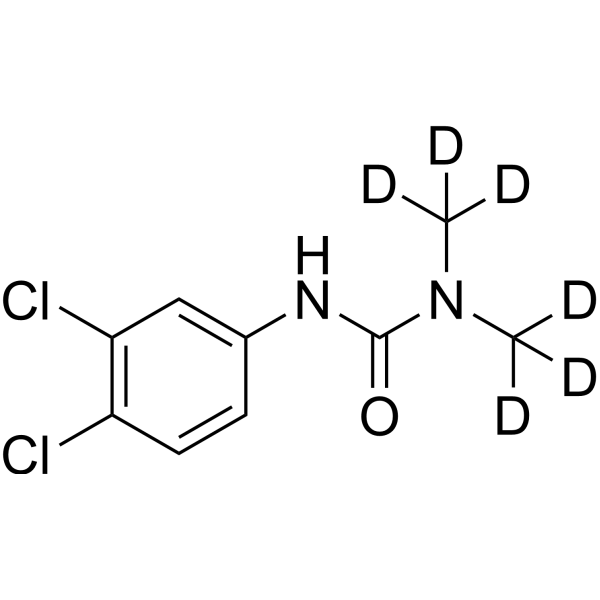
Diuron-d6 is the deuterium labeled Diuron (HY-B0860). Diuron is an orally active phenylurea herbicide. Diuron inhibits photosynthesis in plants by blocking the formation of ATP and NADH. Diuron increases the production of ROS. Diuron increases expression of p53 in certain cell lines. Diuron has herbicidal activity against annual and perennial broadleaf weeds and grass weeds. Diuron promotes DMBA/BBN-induced bladder cancer. Diuron can be used in breast cancer research .
loading...
    loading...
Cat. No.: HY-175673
CAS No.: 2211175-99-2
LCB-2151 (Compound 2), a nucleoside analogue, is an anticancer agent. LCB-2151 disrupts the two primary sources of ATP production (glycolysis and mitochondrial oxidative phosphorylation), reducing the bioenergetic capacity of KRAS-mutated pancreatic cancer cells and inducing ROS formation. LCB-2151 effectively inhibits key enzymes (such as CACT and CPT2) in glycolysis, the TCA cycle and fatty acid β-oxidation. LCB-2151 has significant cytotoxicity and induces cells apoptosis. LCB-2151 can be used for radiation therapy of cancers research .
loading...
    loading...
Cat. No.: HY-129242S
CAS No.: 80404-14-4
Synonyms: 4-Oxo-Tempo-15N,d16
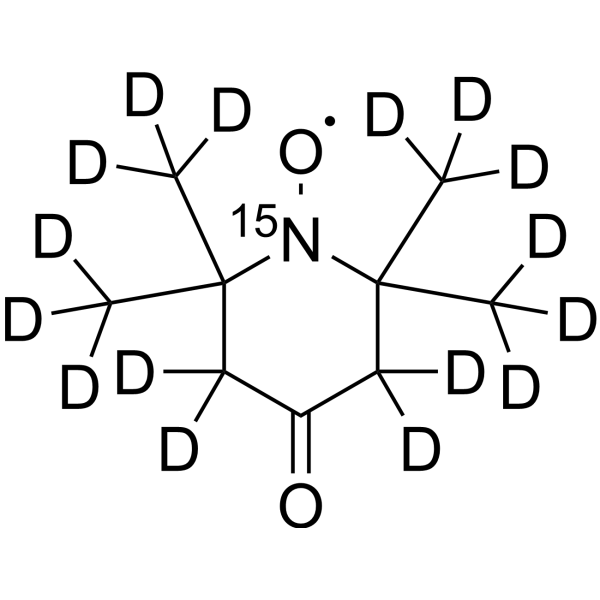
Tempone- 15N,d16 (4-Oxo-Tempo 15N,D16) is the deuterated, 15N-labeled Tempone (HY-129242). Tempone (4-Oxo-Tempo) is a nitroxide radical spin label and ROS scavenger. Tempone induces cytotoxicity in lymphoma cells. Tempone serves as a substrate for intracellular reduction to hydroxylamine, rapidly equilibrates between intracellular and extracellular compartments, reduces nitroxide radical spin labels at the ubiquinol site of the respiratory chain, and acts as an alternative terminal electron acceptor when electron flow to oxygen is blocked. Tempone serves as a superoxide sensor, a T2-weighted MRI contrast agent, and a dynamic nuclear polarization polarizing agent for 13C. Tempone inhibits superoxide and peroxynitrite, hydroxyl radical generation, nitrotyrosine formation, and poly (ADP-ribose) formation, and alleviates renal dysfunction and injury in ischemia/reperfusion and hydrogen peroxide-induced injury. Tempone can be used for research on ischemia-reperfusion injury, acute renal failure, and lymphoma .
loading...
    loading...
Cat. No.: HY-W010203
CAS No.: 693-54-9
2-Decanone is an antifungal agent. 2-Decanone inhibits pathogen mycelial growth, spore germination, and appressorium formation. 2-Decanone downregulates spore germination-related genes (MfBmp1) and penetration structure formation genes (MfPls1), inducing reactive oxygen species (ROS) accumulation to trigger mitochondrial damage and subsequent spore apoptosis. 2-Decanone is promising for research of postharvest disease control in fruits and vegetables .
loading...
    loading...
Cat. No.: HY-107859S
CAS No.: 1276500-47-0
Purity:  99.15%
Synonyms: TCEP-d12
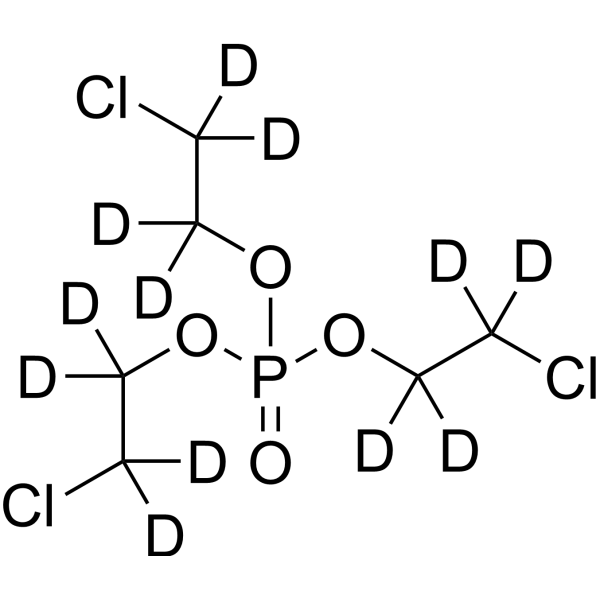
Tris(2-chloroethyl)phosphate-d12 is the deuterium labeled Tris(β-chloroethyl) phosphate. Tris(2-chloroethyl) phosphate is a widely used organic phosphorus flame retardant, mainly used as a plasticizer. Tris(2-chloroethyl) phosphate has orally active hepatotoxicity, inducing an increase in reactive oxygen species (ROS) and calcium ions (Ca²⁺) influx, a decrease in mitochondrial membrane potential (△Ψm), and causing DNA damage and cell apoptosis. Tris(2-chloroethyl) phosphate directly binds to FXR, inducing obesity and the formation of fatty liver in mice. Chloroethyl) phosphate activates the TLR4/NF-κB pathway, triggering liver inflammation.
loading...
    loading...
Cat. No.: HY-176498
CAS No.: 1246952-34-0
Synonyms: BMX
NBM-T-BMX-OS01 (BMX) is a derivative of Osthole (HY-N0054). NBM-T-BMX-OS01 attenuates the phosphorylation levels of ERK and Akt in an AMPK-dependent manner. NBM-T-BMX-OS01 induces oxidative stress through the production of ROS. NBM-T-BMX-OS01 enhances Cisplatin-induced cell proliferation inhibition, colony formation inhibition, apoptosis (apoptosis) and cell cycle arrest. NBM-T-BMX-OS01 inhibits VEGF-induced phosphorylation of VEGFR2 and FAK. NBM-T-BMX-OS01 inhibits VEGF-induced endothelial cell proliferation, migration and tube formation, as well as microvessel sprouting in rat aortic rings and angiogenesis induced by colorectal cancer cells. NBM-T-BMX-OS01 inhibits the growth of subcutaneous colorectal cancer xenografts in nude mice. NBM-T-BMX-OS01 can be used in studies related to lung cancer, colorectal cancer and angiogenesis .
loading...
    loading...
Cat. No.: HY-14914S1
CAS No.: 1794817-45-0
Synonyms: TAK-536-d4
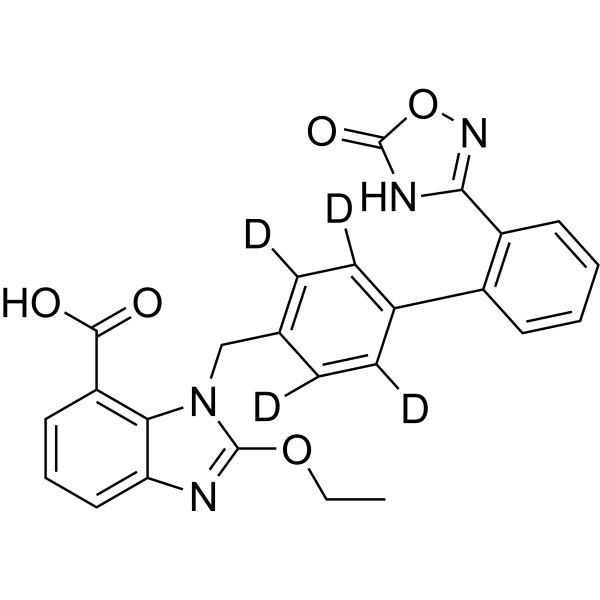
Azilsartan-d4 is the deuterium labeled Azilsartan . Azilsartan is an orally active, potent, selective and specific angiotensin II type 1 receptor (AT1) antagonist. Azilsartan induces ROS formation and apoptosis in HepG2 cells. Azilsartan shows neuroprotective and anticancer activity. Azilsartan can be used for hypertension and stroke research .
loading...
    loading...
Cat. No.: HY-162084
CAS No.: 1607831-82-2
Target:  

Autophagy Apoptosis

Research Areas:  

Cancer

BKN-1 is a bifunctional ligand that can not only track the formation of mtG4s (G-quadruplexes, four-stranded DNA structures containing Hoogsteen bonds) through far-red emission, but can also induce mitochondrial dysfunction. BKN-1 has anti-tumor activity and may cause mtDNA loss, damage mitochondrial integrity, reduce ATP levels, and trigger ROS imbalance, leading to apoptosis and autophagy .
loading...
    loading...
Cat. No.: HY-170867
Nrf2/HO-1 activator 3 (Compound C3a) is the activator for Nrf2 signaling pathway that promotes the Nrf2 translocation into nuclei and upregulates the expression of heme oxygenase-1 HO-1. Nrf2/HO-1 activator 3 inhibits the overespression of ROS and MDA in H2O2- or glucose-stimulated H9c2 cardiomyocytes, inhibits the cell viability and colony formation, thereby exhibiting antioxidant efficacy .
loading...
    loading...
Cat. No.: HY-175175
CAS No.: 2579683-39-7
MAPK-IN-5 is a potent MAPK inhibitor with an IC50 of 1.35 μM against HeLa cells. MAPK-IN-5 inhibits HeLa cell proliferation by inducing ROS-mediated DNA damage and mitochondrial apoptosis via the MAPK pathway. MAPK-IN-5 significantly inhibits colony formation, reduces the number of live cells, suppresses cell migration, and causes cell cycle arrest in the G2/M phase in HeLa cells. MAPK-IN-5 can be used for the study of cervical cancer .
loading...
    loading...
Cat. No.: HY-B0860R
CAS No.: 330-54-1
Diuron (Standard) is the analytical standard of Diuron (HY-B0860). This product is intended for research and analytical applications. Diuron is an orally active phenylurea herbicide. Diuron inhibits photosynthesis in plants by blocking the formation of ATP and NADH. Diuron increases the production of ROS. Diuron increases expression of p53 in certain cell lines. Diuron has herbicidal activity against annual and perennial broadleaf weeds and grass weeds. Diuron promotes DMBA/BBN-induced bladder cancer. Diuron can be used in breast cancer research .
loading...
    loading...
Cat. No.: HY-178178
CAS No.: 2505146-00-7
PARP1-IN-46 is a potent PARP-1 inhibitor with an IC50 of 2.4 nM. PARP1-IN-46 demonstrates remarkable anti-proliferative activity in both rat (C6) and human (U87MG) glioma cells. PARP1-IN-46 promotes PARP cleavage, triggers DNA damage, and increases ROS. PARP1-IN-46 effectively inhibits the migration, invasion and colony formation of glioma cells, and ultimately induces cell apoptosis. PARP1-IN-46 can be used to the study of glioma .
loading...
    loading...
Cat. No.: HY-W584165
CAS No.: 13983-17-0
Wollastonite is a white, chain-structured pyroxene silicate mineral with biocompatibility, biodegradability, osteogenicity and antibacterial properties. Wollastonite induces transient pulmonary inflammatory responses, reversible alveolar macrophage responses, early inflammatory/proliferative mesothelial cell responses, ROS production, and mild chronic pulmonary interstitial inflammation in rats. Wollastonite induces osteogenic differentiation, promotes bone growth, supports angiogenesis, and facilitates the formation of hydroxycarbonate apatite on its surface. Wollastonite enhances the strength, bioactivity and biodegradability of hydroxyapatite scaffolds, and is used to construct porous bone tissue engineering scaffolds. Wollastonite is applied in research related to diseases such as bronchitis, decreased lung function and bone defects .
loading...
    loading...
Cat. No.: HY-179003
mTOR/GLS1-IN-1 (Compoud 9d) is a potent dual targeted mTOR/GLS1 inhibitor. Has anti proliferative activity against various tumor cells. mTOR/GLS1-IN-1 dose dependently induces ROS accumulation, induces autophagosome formation, and induces apoptosis. mTOR/GLS1-IN-1 can increase Fe 2+, decrease GPX4, and induce ferroptosis. mTOR/GLS1-IN-1 can inhibit cell migration, invasion, and angiogenesis. mTOR/GLS1-IN-1 can be used in the research of cancer, such as breast cancer .
loading...
    loading...
Cat. No.: HY-158023
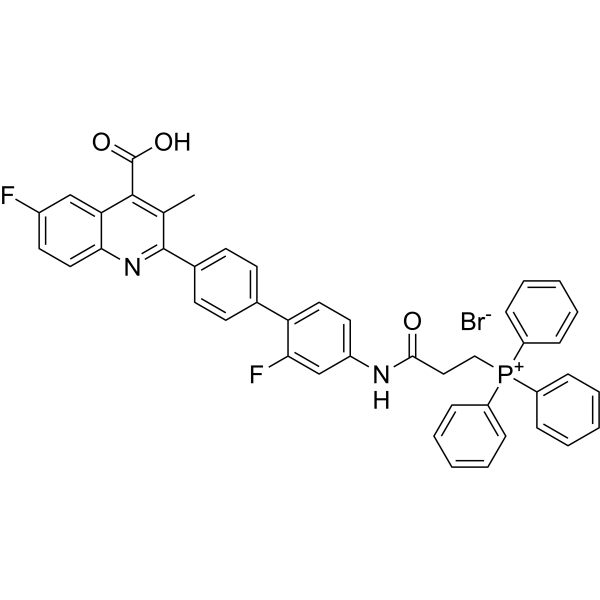
DHODH-IN-26 (compound B2) is a mitochondria-targeting DHODH inhibitor. DHODH-IN-26 shows anticancer activity, triggers the formation of reactive oxygen species (ROS), promots mitochondrial lipid peroxidation, and induces ferroptosis .
loading...
    loading...
Cat. No.: HY-146067
CAS No.: 52436-88-1
Research Areas:  

Infection

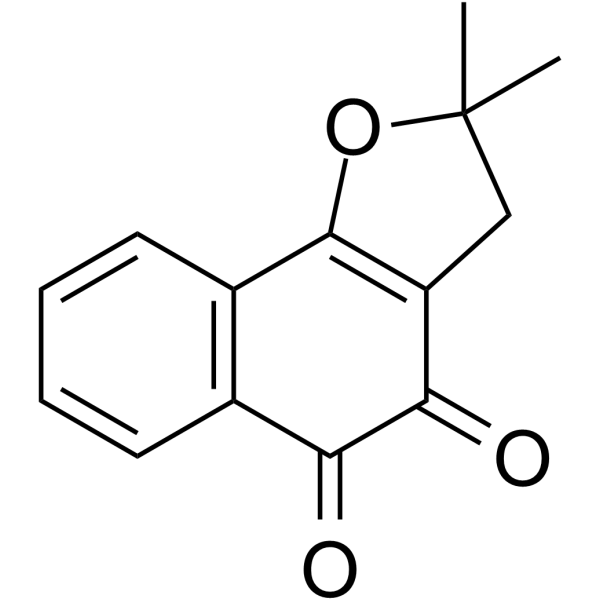
β-Nor-lapachone is a Candida glabrata antibiofilm agent. β-Nor-lapachone can stimulate ROS production, inhibits efflux activity, adhesion, biofilm formation and the metabolism of mature biofilms of Candida glabrata. β-Nor-lapachone has antifungal activity .
loading...
    loading...

