99 Results for "

electron transfer

" in MedChemExpress (MCE) Product Catalog:
Products (99)

99 Results for "electron transfer" in MCE Product Catalog:

Cat. No.: HY-B0456S5
Synonyms: Vitamin B2-d8 ; E101-d8
Riboflavin-d8 (Vitamin B2-d8 ) is deuterium labeled Riboflavin. Riboflavin, an orally active and easily absorbed micronutrient, is a precursor of flavin mononucleotide (FMN) and flavin adenine dinucleotide (FAD), which serve as coenzymes for numerous enzymatic reactions and perform key metabolic functions by mediating the transfer of electrons in biological oxidation-reduction reaction .
loading...
    loading...
Cat. No.: HY-Y1359
CAS No.: 693-98-1
Synonyms: 2-Methyl-1H-imidazole
Target:  

Drug Intermediate MOFs

Research Areas:  

Others

2-Methylimidazole (2-Methyl-1H-imidazole) is a nitrogen-containing MOF ligand that serves as a laccase-mimicking activity enhancer and a morphology regulator for copper-based metal-organic frameworks. 2-Methylimidazole promotes the formation of natural laccase-like nanoenzyme structures, accelerates electron transfer and enhances catalytic activity. During hydrothermal synthesis, 2-Methylimidazole inhibits the vertical growth of crystals, thus enabling the preparation of two-dimensional nanosheet morphology .
loading...
    loading...
Cat. No.: HY-Y1359S
CAS No.: 1173022-19-9
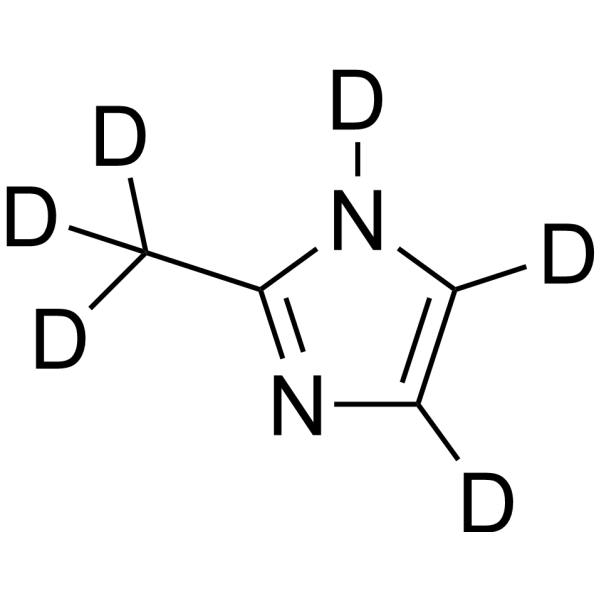
Synonyms: 2-Methyl-1H-imidazole-d6
2-Methylimidazole-d6 is the deuterium labeled 2-Methylimidazole. 2-Methylimidazole (2-Methyl-1H-imidazole) is a nitrogen-containing MOF ligand that serves as a laccase-mimicking activity enhancer and a morphology regulator for copper-based metal-organic frameworks. 2-Methylimidazole promotes the formation of natural laccase-like nanoenzyme structures, accelerates electron transfer and enhances catalytic activity. During hydrothermal synthesis, 2-Methylimidazole inhibits the vertical growth of crystals, thus enabling the preparation of two-dimensional nanosheet morphology .
loading...
    loading...
Cat. No.: HY-W715444
CAS No.: 52110-55-1
Research Areas:  

Infection

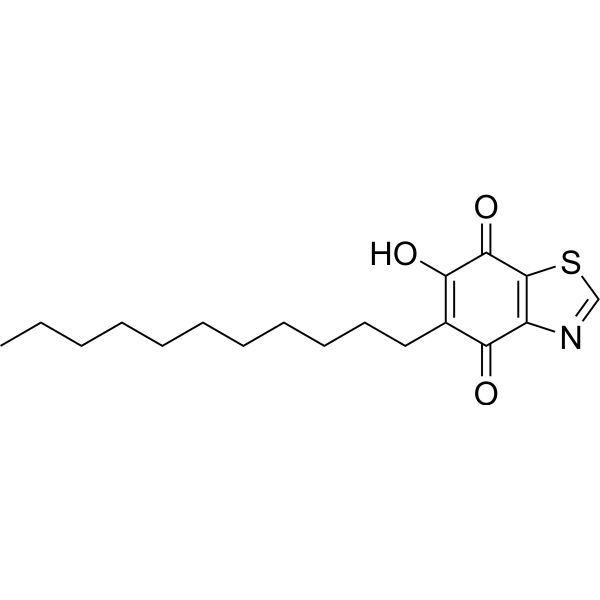
Mucidin is an antifungal antibiotic that inhibits electron-transfer reactions in the cytochrome bc1 complex of the mitochondrial respiratory chain .
loading...
    loading...
Cat. No.: HY-N10516
CAS No.: 17453-58-6
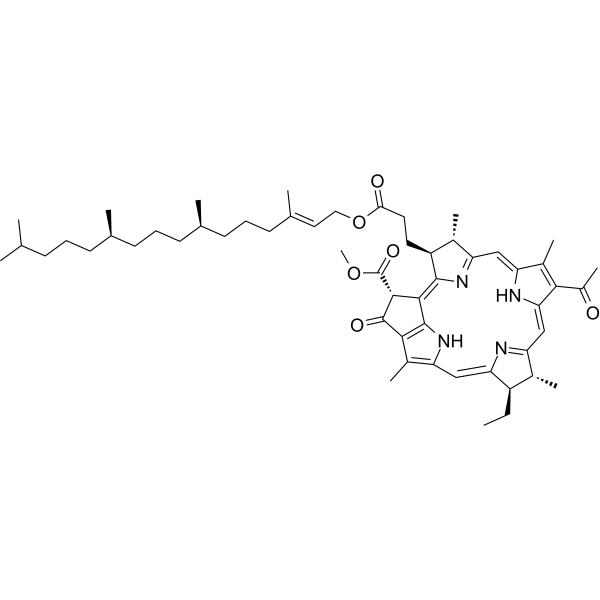
Bacteriopheophytin, a photosynthetic pigment, is a bacterial demagnetised chlorophyll composed of bacterial chlorophyll in which two hydrogen atoms replace the magnesium center. Bacteriopheophytin acts as an electron acceptor in the purple bacterial reaction center (RC) and is involved in electron transfer .
loading...
    loading...
Cat. No.: HY-N11882
CAS No.: 4299-57-4
Synonyms: PQ-9
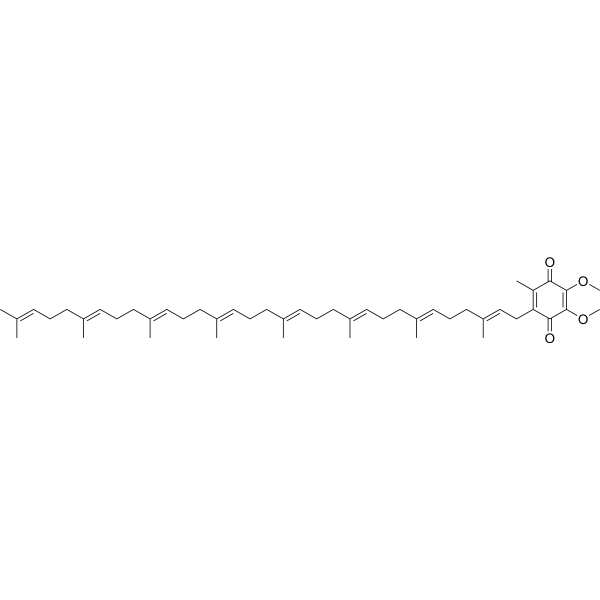
Plastoquinone (PQ-9) is a photosynthetic electron carrier as well as a redox sensor capable of regulating state transitions and gene expression. Plastoquinone transfers electrons to the cytochrome b6/f complex via the Q cycle, and participates in the establishment of the thylakoid transmembrane pH gradient. Plastoquinone can react with ROS. Plastoquinone is used in plant photosynthesis research .
loading...
    loading...
Cat. No.: HY-N9680
CAS No.: 2394-68-5
Synonyms: Ubiquinone 8
Coenzyme Q8 (Ubiquinone 8) is an isoprenoid quinone that mediates electron transfer within the aerobic respiratory chain and reduces oxidative stress. Coenzyme Q8 maintains bacterial respiratory function and enhances host resistance to bacterial infection. Coenzyme Q8 stimulates macrophage phagocytosis and increases antibody-producing cells. Coenzyme Q8 can be used in infectious disease research .
loading...
    loading...
Cat. No.: HY-W034041
CAS No.: 370878-69-6
Synonyms: Tris(2-(4-fluorophenyl)pyridine)iridium; Tris[5-fluoro-2-(2-pyridinyl-kN)phenyl-kC]iridium(III)
Target:  

Endogenous Metabolite

Ir(pF-ppy)3 (Tris(2-(4-fluorophenyl)pyridine)iridium) is a compound that catalyzes photoreactions and has excellent photocatalytic activity. Ir(pF-ppy)3 can be used as a catalyst in organic reactions, especially in photocatalytic synthesis. Ir(pF-ppy)3 shows its unique advantages in promoting electron transfer and improving reaction selectivity. Ir(pF-ppy)3 is also used to improve the efficiency of displays and solar cells.
loading...
    loading...
Cat. No.: HY-178495
CAS No.: 261929-60-6
SDH-IN-36 (Compound 17) is a derivative of alpha-D-tocopherol. SDH-IN-36 increases ROS and induces apoptosis by inhibiting SDHC and blocking electron transfer. SDH-IN-36 can inhibit the proliferation of various tumor cells, such as SSK4 (GI50 = 0.156 µM), SSNU638 (GI50 = 0.659 µM), and SKATOIII (GI50 = 0.490 µM) cells. SDH-IN-36 can significantly inhibit tumor growth. SDH-IN-36 can be used for research on cancers such as gastric cancer .
loading...
    loading...
Cat. No.: HY-Y1359R
CAS No.: 693-98-1
Synonyms: 2-Methyl-1H-imidazole (Standard)
Research Areas:  

Others

2-Methylimidazole (Standard) is the analytical standard of 2-Methylimidazole. This product is intended for research and analytical applications. 2-Methylimidazole (2-Methyl-1H-imidazole) is a nitrogen-containing MOF ligand that serves as a laccase-mimicking activity enhancer and a morphology regulator for copper-based metal-organic frameworks. 2-Methylimidazole promotes the formation of natural laccase-like nanoenzyme structures, accelerates electron transfer and enhances catalytic activity. During hydrothermal synthesis, 2-Methylimidazole inhibits the vertical growth of crystals, thus enabling the preparation of two-dimensional nanosheet morphology .
loading...
    loading...
Cat. No.: HY-156137
CAS No.: 43152-58-5
Research Areas:  

Others

UHDBT is a cytochrome bc1 complex Qo site inhibitor. UHDBT can be used for electron transfer research .
loading...
    loading...
Cat. No.: HY-Y0607S
CAS No.: 171777-66-5
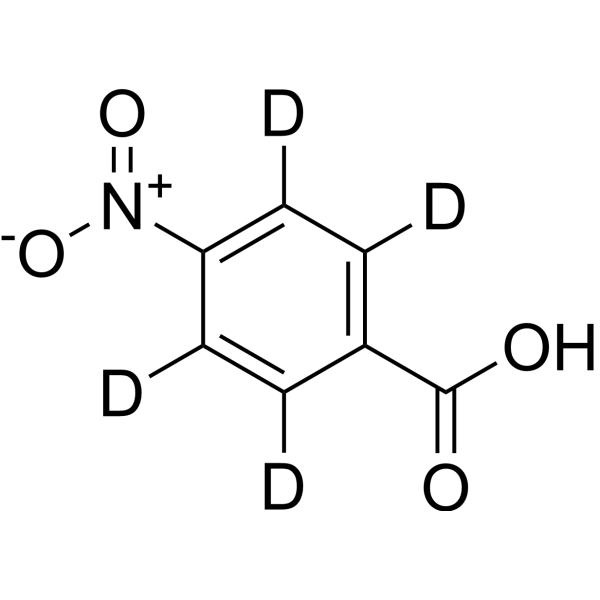
4-Nitrobenzoic acid-d4 is the deuterium labeled 4-Nitrobenzoic acid (HY-Y0607). 4-Nitrobenzoic acid is an oxidoreduction mediator and an electron transfer promoter. 4-Nitrobenzoic acid accepts electrons from the reduced glucose oxidase and transfers them to the electrode to promote the glucose oxidation reaction, while minimizing the formation of protonated amine groups .
loading...
    loading...
Cat. No.: HY-Y0607R
CAS No.: 62-23-7
Research Areas:  

Others

4-Nitrobenzoic acid (Standard) is the analytical standard of 4-Nitrobenzoic acid (HY-Y0607). This product is intended for research and analytical applications. 4-Nitrobenzoic acid is an oxidoreduction mediator and an electron transfer promoter. 4-Nitrobenzoic acid accepts electrons from the reduced glucose oxidase and transfers them to the electrode to promote the glucose oxidation reaction, while minimizing the formation of protonated amine groups .
loading...
    loading...
Cat. No.: HY-E70276
CAS No.: 103404-53-1
Target:  

Endogenous Metabolite

Research Areas:  

Metabolic Disease

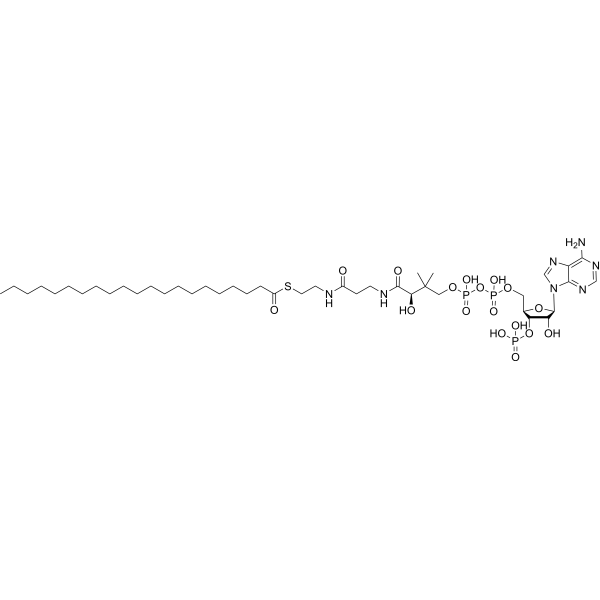
Heneicosanoyl-CoA is a substrate of Very long-chain acyl-CoA dehydrogenase (VLCAD) in the anaerobic electron transfer flavoprotein (ETF) assay .
loading...
    loading...
Cat. No.: HY-119984
CAS No.: 69311-70-2
Target:  

Cytochrome P450

Research Areas:  

Others

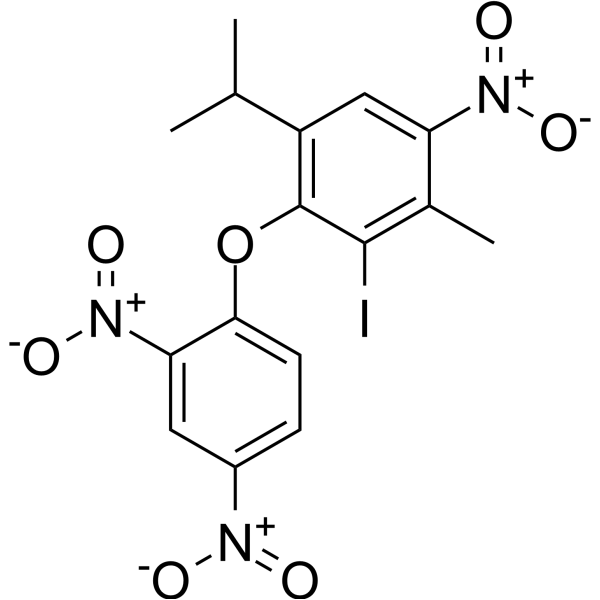
DNP-INT is a potent photosynthetic electron transport chain (PETC) inhibitor. DNP-INT competently inhibits the oxidation of plastid quinoline by binding to the Q0 site of Cyt-b6f (Kd=1.4 nM), thereby inhibiting electron transfer in plants .
loading...
    loading...
Cat. No.: HY-176246
Target:  

Bacterial

Research Areas:  

Infection

Antitubercular agent-52 (Compound 7k) is an antitubercular agent targeting Mycobacterium tuberculosis (Mtb). Antitubercular agent-52 selectively inhibits the cytochrome bcc (cyt-bcc) electron transport chain of Mtb and also acts on cytochrome bd (cyt-bd). Antitubercular agent-52 blocks electron transfer and ATP production by interfering with the key energy metabolism pathway of Mtb. Antitubercular agent-52 is promising for research of tuberculosis .
loading...
    loading...
Cat. No.: HY-124357
CAS No.: 127685-30-7
Synonyms: S-Norfluoxetine hydrochloride; LY 215229 hydrochloride
Target:  

Dopamine Receptor

Research Areas:  

Neurological Disease

Seproxetine (S-Norfluoxetine) hydrochloride is a selective serotonin reuptake inhibitor (SSRI) that enhances serotonin levels in the brain by specifically inhibiting the serotonin uptake carrier. Seproxetine hydrochloride exhibits strong charge transfer interactions with π-electron acceptors, forming stable complexes that enhance its binding affinity to multiple receptors, including serotonin and dopamine receptors. Seproxetine hydrochloride demonstrates improved biological activity when interacting with charge transfer complexes, leading to increased stability and efficacy in therapeutic applications.
loading...
    loading...
Cat. No.: HY-B0849S
CAS No.: 1346606-39-0
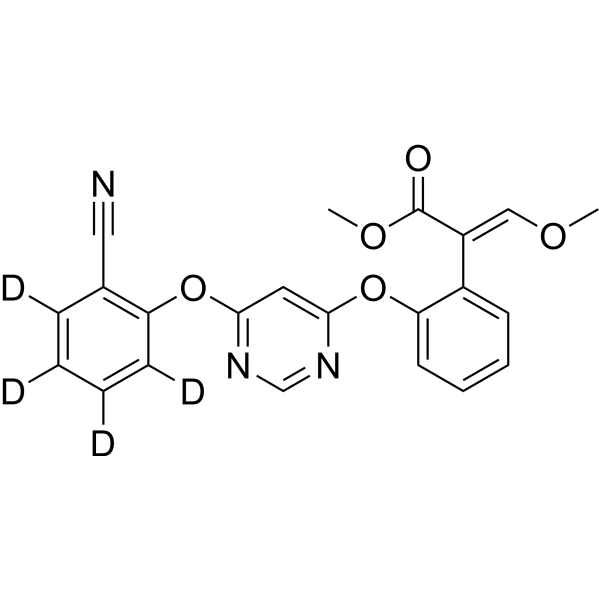
Azoxystrobin-d4 is deuterium labeled Azoxystrobin. Azoxystrobin is a broad-spectrum β-methoxyacrylate fungicide. Azoxystrobin inhibits mitochondrial respiration by binding to the Qo site of the cytochrome bc1 complex and inhibiting electron transfer. Azoxystrobin induces the production of reactive oxygen species (ROS) and induces cell apoptosis.
loading...
    loading...
Cat. No.: HY-B0849S1
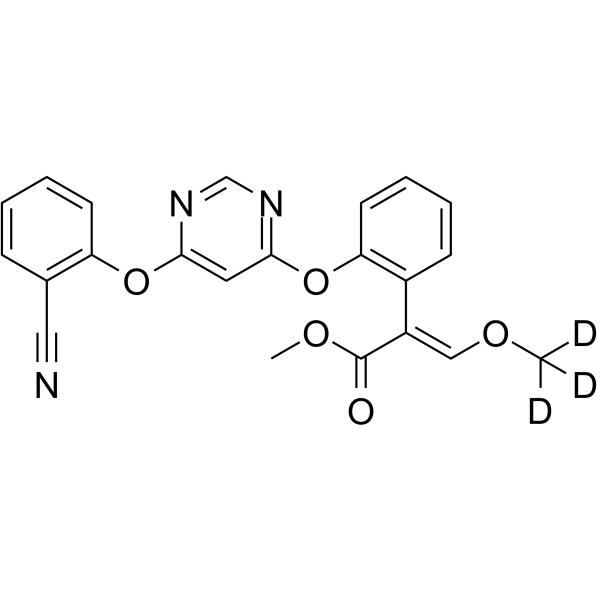
Azoxystrobin-d3 is deuterium labeled Azoxystrobin. Azoxystrobin is a broad-spectrum β-methoxyacrylate fungicide. Azoxystrobin inhibits mitochondrial respiration by binding to the Qo site of the cytochrome bc1 complex and inhibiting electron transfer. Azoxystrobin induces the production of reactive oxygen species (ROS) and induces cell apoptosis .
loading...
    loading...
Cat. No.: HY-B0849A
CAS No.: 143130-94-3
(Z)-Azoxystrobin is an enantiomer of Azoxystrobin. Azoxystrobin is an orally active, broad-spectrum β-methoxyacrylate fungicide. Azoxystrobin inhibits mitochondrial respiration by binding to the Qo site of the cytochrome bc1 complex and inhibiting electron transfer. Azoxystrobin induces the production of reactive oxygen species (ROS) and induces cell apoptosis .
loading...
    loading...

