65 Results for "

alpha-SMA

" in MedChemExpress (MCE) Product Catalog:
Products (65)

65 Results for "alpha-SMA" in MCE Product Catalog:

Cat. No.: HY-179378
CAS No.: 2968523-32-0
XRF-1021 is an orally active HIPK2 inhibitor (IC50 = 0.18 μM). XRF-1021 reduces the expression of fibrotic markers in TGF-β1 stimulated NRK-49F and HK-2 cells, including Fibronectin, Collagen I and α-SMA. XRF-1021 blocks TGF-β, NF-κB, p53, Wnt/β-catenin, and Notch signaling. XRF-1021 reduces renal injury and fibrosis in vivo. XRF-1021 can be used for the research of chronic kidney disease .
loading...
    loading...
Cat. No.: HY-P11264
Cyclic peptide P1-1 is a high-potent GPR55 antagonist. Cyclic peptide P1-1 antagonizes GPR55 and suppresses collagen secretion. Cyclic peptide P1-1 reduces ROS production, attenuates ER stress, and inhibits mitochondria-associated Apoptosis. Cyclic peptide P1-1 inhibits the expression of α-SMA and COL1α. Cyclic peptide P1-1 ameliorates CCl4 (HY-Y0298)-induce and MCD-diet-induce acute liver inflammation and fibrosis .
loading...
    loading...
Cat. No.: HY-169177
CAS No.: 3047795-60-5
Target:  

JNK

Research Areas:  

Inflammation/Immunology

JNK-1-IN-4 (Compound E1) is an inhibitor for JNK, that inhibits JNK-1, JNK-2 and JNK-3 with IC50s of 2.7, 19.0 and 9.0 nM, respectively. JNK-1-IN-4 inhibits the phosphorylation of c-Jun, and reduces the expression of TGF-β1-induced EMT marker proteins, such as fibronectin and α-SMA. JNK-1-IN-4 exhibits good pharmacokinetic characteristics with a bioavailability of 69%. JNK-1-IN-4 exhibits anti-fibrotic effect in Bleomycin (HY-17565)-induced mice idiopathic pulmonary fibrosis models .
loading...
    loading...
Cat. No.: HY-172258
Target:  

5-HT Receptor

Research Areas:  

Cancer

5-HT2B antagonist-2 (Compound 19c) is a 5HT2B receptor antagonist with an IC50 of 1.09 nM. 5-HT2B antagonist-2 can downregulate the expression of fibrosis-related genes α-SMA, Timp1, Col1a1, and Col3a1, and significantly reduce the deposition of fibrosis, thereby reducing the fibrotic area and inhibiting the fibrotic process in CCl4-induced liver fibrosis mouse models. 5-HT2B antagonist-2 can be used in the study of immune inflammatory-related diseases, particularly in the research of pulmonary fibrosis diseases .
loading...
    loading...
Cat. No.: HY-N2441R
CAS No.: 74805-90-6
Methylophiopogonone A (Standard) is the analytical standard of Methylophiopogonone A (HY-N2441). This product is intended for research and analytical applications. Methylophiopogonone A is a homoisoflavonoid compound found in the tuberous roots of Ophiopogon japonicus. Methylophiopogonone A inhibits lipopolysaccharide-induced NO production in mouse microglia with an IC50 of 19.2 μM. Methylophiopogonone A blocks the proliferation of LX-2 hepatic stellate cells and downregulates TGF-β1-induced expressions of type I collagen and α-SMA. Methylophiopogonone A blocks RELA/EGFR-mediated hepatic stellate cell activation, inhibits the MAPK12 pathway to reduce extracellular matrix accumulation, and simultaneously suppresses inflammatory signal transduction. Methylophiopogonone A can be used in studies related to chronic hepatitis B-associated hepatic fibrosis and neuroinflammation .
loading...
    loading...
Cat. No.: HY-107830R
CAS No.: 1448-36-8
Methyl cholate (Standard) is the analytical standard of Methyl cholate. This product is intended for research and analytical applications. Methyl cholate is a bile acid analog and a specific inhibitor of TcdB toxin from Clostridioides difficile. Methyl cholate exerts a stronger selective inhibitory effect on TcdB than on TcdA. Methyl cholate induces conformational stabilization by binding to a unique site of TcdB, thereby blocking the binding of the toxin to host receptors and its self-processing process. Methyl cholate effectively protects human fibroblasts from TcdB-induced cytopathic effects. Methyl cholate exhibits dose-dependent anti-hepatic fibrosis activity in both cellular and zebrafish models, and significantly reduces the expression levels of α-SMA and COL-I. Methyl cholate is suitable for in-depth research in the fields of Clostridioides difficile infection and hepatic fibrosis .
loading...
    loading...
Cat. No.: HY-W746556
CAS No.: 52886-39-2
Methyl cholate-d5 is the deuterium labeled Methyl cholate. Methyl cholate is a bile acid analog and a specific inhibitor of TcdB toxin from Clostridioides difficile. Methyl cholate exerts a stronger selective inhibitory effect on TcdB than on TcdA. Methyl cholate induces conformational stabilization by binding to a unique site of TcdB, thereby blocking the binding of the toxin to host receptors and its self-processing process. Methyl cholate effectively protects human fibroblasts from TcdB-induced cytopathic effects. Methyl cholate exhibits dose-dependent anti-hepatic fibrosis activity in both cellular and zebrafish models, and significantly reduces the expression levels of α-SMA and COL-I. Methyl cholate is suitable for in-depth research in the fields of Clostridioides difficile infection and hepatic fibrosis .
loading...
    loading...
Cat. No.: HY-170846
Research Areas:  

Inflammation/Immunology

FGFRs-IN-1 (Compound A16) is the orally active inhibitor for FGFR, that inhibits FGFR1/2/3/4 with IC50s of 2.3, 7, 11, and 163 nM, respectively. FGFRs-IN-1 also inhibits VEGFR1/2/3, Abl, and Flt3 with IC50s of 61, 176, 112, 26, and 353 nM, respectively. FGFRs-IN-1 exhibits weak inhibitory efficacy against CYP enzymes. FGFRs-IN-1 reduces the expression of α-SMA and collagen I, and inhibits epithelial-mesenchymal transition (EMT) in TGF-β1 stimulated A549 cell. FGFRs-IN-1 exhibits anti-inflammatory activity in Bleomycin (HY-17565)-induced mouse pulmonary fibrosis model and CCl4 (HY-Y0298)-induced mouse liver fibrosis model .
loading...
    loading...
Cat. No.: HY-12008S
CAS No.: 1189953-78-3
Purity:  98.13%
Synonyms: CP-358774-d6 hydrochloride; NSC 718781-d6 hydrochloride; OSI-774-d6 hydrochloride
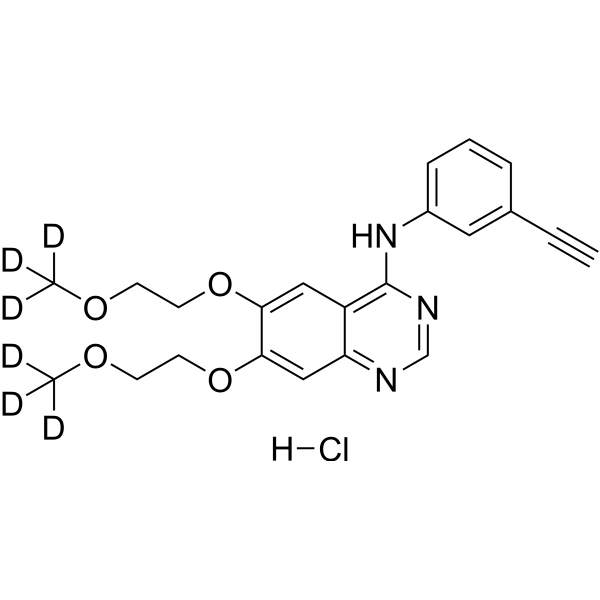
Erlotinib-d6 hydrochloride (CP-358774-d6 hydrochloride) is the deuterated-labeled Erlotinib Hydrochloride (HY-12008). Erlotinib (CP-358774) Hydrochloride is a selective, orally active EGFR tyrosine kinase inhibitor. Erlotinib Hydrochloride also acts as a substrate and inhibitor of OATP2B1, with an IC50 of approximately 0.079 μM for inhibiting OATP2B1-mediated uptake of estrone 3-sulfate. Erlotinib Hydrochloride blocks EGFR phosphorylation, downstream signal transduction, as well as the growth and proliferation of cancer cells. Erlotinib Hydrochloride inhibits MMP-10-mediated renal injury, fibrotic lesions, the ERK1/2, GSK-3β and β-catenin signaling pathways, as well as the deposition of fibronectin, α-SMA, collagen and renal injury markers. Erlotinib Hydrochloride is metabolized via CYP3A to produce the active metabolite OSI-420. Erlotinib Hydrochloride can be used in research related to non-small cell lung cancer, gastric cancer, papillary renal cell carcinoma, EGFR inhibitor resistance and renal fibrosis .
loading...
    loading...
Cat. No.: HY-50896S1
CAS No.: 1211107-68-4
Synonyms: CP-358774-13C6; NSC 718781-13C6; OSI-774-13C6
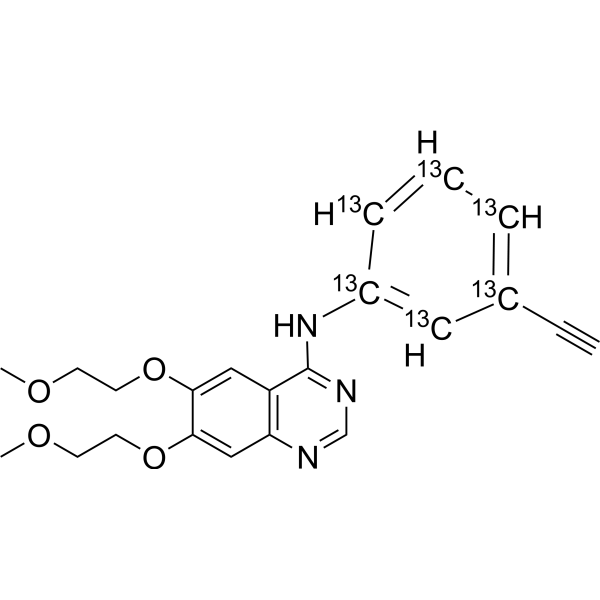
Erlotinib- 13C6 (CP-358774- 13C6) is the 13C-labeled Erlotinib (HY-50896). Erlotinib (CP-358774) is a selective, orally active EGFR tyrosine kinase inhibitor. Erlotinib also acts as a substrate and inhibitor of OATP2B1, with an IC50 of approximately 0.079 μM for inhibiting OATP2B1-mediated uptake of estrone 3-sulfate. Erlotinib blocks EGFR phosphorylation, downstream signal transduction, as well as the growth and proliferation of cancer cells. Erlotinib inhibits MMP-10-mediated renal injury, fibrotic lesions, the ERK1/2, GSK-3β and β-catenin signaling pathways, fibronectin, α-SMA, collagen deposition, and renal injury markers. Erlotinib is metabolized via CYP3A to produce the active metabolite OSI-420. Erlotinib can be used in research related to non-small cell lung cancer, gastric cancer, papillary renal cell carcinoma, pancreatic cancer, renal fibrosis, and other conditions .
loading...
    loading...
Cat. No.: HY-50896S2
CAS No.: 1130852-41-3
Synonyms: CP-358774-d4; NSC 718781-d4; OSI-774-d4
Erlotinib-d4 (CP-358774-d4) is the deuterated-labeled Erlotinib (HY-50896). Erlotinib (CP-358774) is a selective, orally active EGFR tyrosine kinase inhibitor. Erlotinib also acts as a substrate and inhibitor of OATP2B1, with an IC50 of approximately 0.079 μM for inhibiting OATP2B1-mediated uptake of estrone 3-sulfate. Erlotinib blocks EGFR phosphorylation, downstream signal transduction, as well as the growth and proliferation of cancer cells. Erlotinib inhibits MMP-10-mediated renal injury, fibrotic lesions, the ERK1/2, GSK-3β and β-catenin signaling pathways, fibronectin, α-SMA, collagen deposition, and renal injury markers. Erlotinib is metabolized via CYP3A to produce the active metabolite OSI-420. Erlotinib can be used in research related to non-small cell lung cancer, gastric cancer, papillary renal cell carcinoma, pancreatic cancer, renal fibrosis, and other conditions .
loading...
    loading...
Cat. No.: HY-50896S3
CAS No.: 1266656-97-6
Synonyms: CP-358774-d8; NSC 718781-d8; OSI-774-d8
Erlotinib-d8 (CP-358774-d8) is the deuterated-labeled Erlotinib (HY-50896). Erlotinib (CP-358774) is a selective, orally active EGFR tyrosine kinase inhibitor. Erlotinib also acts as a substrate and inhibitor of OATP2B1, with an IC50 of approximately 0.079 μM for inhibiting OATP2B1-mediated uptake of estrone 3-sulfate. Erlotinib blocks EGFR phosphorylation, downstream signal transduction, as well as the growth and proliferation of cancer cells. Erlotinib inhibits MMP-10-mediated renal injury, fibrotic lesions, the ERK1/2, GSK-3β and β-catenin signaling pathways, as well as the deposition of fibronectin, α-SMA, collagen and renal injury markers. Erlotinib is metabolized via CYP3A to produce the active metabolite OSI-420. Erlotinib can be used in research related to non-small cell lung cancer, gastric cancer, papillary renal cell carcinoma, EGFR inhibitor resistance and renal fibrosis .
loading...
    loading...
Cat. No.: HY-P86727A
Synonyms: alpha sarcomeric Actin; alpha smooth muscle Actin; Actin alpha; ASMA; ASM-A; alpha-SMA; alpha SMA; AAT6; ACTA2; Actin alpha 2 smooth muscle aorta; Actin aortic smooth muscle; ACTSA; ACTVS; alpha 2 actin; alpha-actin 2; Cell growth inhibiting gene 46 protein; Growth inhibiting gene 46; ACTA_HUMAN; Actin alpha 2 smooth muscle aorta; Actin aortic smooth muscle; Actin, aortic smooth muscle; alpha 2 actin; alpha actin 2; alpha cardiac actin; alpha-actin 2; alpha-actin-2; Cell growth inhibiting gene 46 protein; Cell growth-inhibiting gene 46 protein; Growth inhibiting gene 46; MYMY5

Host:  

Mouse

Application:  

WB, IHC-P, IHC-F, IF-Tissue, FC

Reactivity:  

Human, Mouse, Rat

loading...
    loading...
Cat. No.: HY-P86727
Synonyms: alpha sarcomeric Actin; alpha smooth muscle Actin; Actin alpha; ASMA; ASM-A; alpha-SMA; alpha SMA; AAT6; ACTA2; Actin alpha 2 smooth muscle aorta; Actin aortic smooth muscle; ACTSA; ACTVS; alpha 2 actin; alpha-actin 2; Cell growth inhibiting gene 46 protein; Growth inhibiting gene 46; ACTA_HUMAN; Actin alpha 2 smooth muscle aorta; Actin aortic smooth muscle; Actin, aortic smooth muscle; alpha 2 actin; alpha actin 2; alpha cardiac actin; alpha-actin 2; alpha-actin-2; Cell growth inhibiting gene 46 protein; Cell growth-inhibiting gene 46 protein; Growth inhibiting gene 46; MYMY5

Host:  

Mouse

Application:  

WB, IHC-P, IHC-F, ICC/IF, FC, IF-Tissue

Reactivity:  

Human, Mouse, Rat

loading...
    loading...
Cat. No.: HY-P83739
Synonyms: alpha sarcomeric Actin; alpha smooth muscle Actin; Actin alpha; ASMA; ASM-A; alpha-SMA; alpha SMA; AAT6; ACTA2; Actin alpha 2 smooth muscle aorta; Actin aortic smooth muscle; ACTSA; ACTVS; alpha 2 actin; alpha-actin 2; Cell growth inhibiting gene 46 protein; Growth inhibiting gene 46; ACTA_HUMAN; Actin alpha 2 smooth muscle aorta; Actin aortic smooth muscle; Actin, aortic smooth muscle; alpha 2 actin; alpha actin 2; alpha cardiac actin; alpha-actin 2; alpha-actin-2; Cell growth inhibiting gene 46 protein; Cell growth-inhibiting gene 46 protein; Growth inhibiting gene 46; MYMY5 α-Smooth Muscle Actin; α Smooth Muscle Actin;

Host:  

Rabbit

Application:  

WB, IHC-P, ICC/IF, FC, IF-Tissue, mIHC

Reactivity:  

Human, Mouse, Rat

loading...
    loading...
Cat. No.: HY-N17650
CAS No.: 3038746-92-5
Salviamarinic acid A is a water-soluble phenolic acid that can be extracted from Salvia miltiorrhiza with potent anti-pulmonary fibrosis activity. Salviamarinic acid A significantly increases cell viability, cell index, cell motility and E-cadherin expression, and reduces TGF-β1, α-SMA and Collagen I levels. Salviamarinic acid A can be used for pulmonary fibrosis research .
loading...
    loading...
Cat. No.: HY-184738
CAS No.: 2103516-38-5
Target:  

Collagen

Research Areas:  

Metabolic Disease

Antifibrotic agent 3 is an orally active antifibrotic agent. Antifibrotic agent 3 reduces hepatic stellate cell activation by downregulating the expression of Collagen I and α-SMA. Antifibrotic agent 3 inhibits liver fibrosis in bile duct ligation and carbon tetrachloride-induced liver fibrosis models. Antifibrotic agent 3 can be used for the research of liver fibrosis .
loading...
    loading...
Cat. No.: HY-187994
Research Areas:  

Metabolic Disease

Antifibrotic agent 4 is an antifibrotic agent. Antifibrotic agent 4 inhibits the expression of the fibrotic markers α-SMA and COL1A1 in hepatic stellate cells by binding to FGFR4 and reducing its autophosphorylation, ameliorates liver injury and collagen deposition in mouse models of liver fibrosis, and does not inhibit the hERG potassium channel. Antifibrotic agent 4 can be used in the research of liver fibrosis .
loading...
    loading...
Cat. No.: HY-184278
Research Areas:  

Inflammation/Immunology

ATX-IN-28 is an orally active autotaxin (ATX) inhibitor with an IC50 of 13.7 nM. ATX-IN-28 downregulates the expression of pro-fibrotic α-SMA, ameliorates pathological damage of lung tissues in a bleomycin (HY-108345)-induced mouse model of pulmonary fibrosis, and reduces collagen deposition. ATX-IN-28 can be used for research related to idiopathic pulmonary fibrosis .
loading...
    loading...
Cat. No.: HY-181439
CAS No.: 2344793-72-0
Target:  

Wnt β-catenin

Research Areas:  

Inflammation/Immunology

SNX3-IN-1 is a sorting nexin 3 (SNX3) inhibitor. SNX3-IN-1 reduces SNX3 protein expression and inhibits SNX3-mediated activation of the Wnt/β-catenin signaling pathway. SNX3-IN-1 inhibits the proliferation and migration of pulmonary fibrosis-related cells, and decreases the expression of fibrosis markers α-SMA and COL-1. SNX3-IN-1 can be used in research related to pulmonary fibrosis .
loading...
    loading...

