87 Results for "

droplets

" in MedChemExpress (MCE) Product Catalog:
Products (87)

87 Results for "droplets" in MCE Product Catalog:

Cat. No.: HY-P3402A
Research Areas:  

Others

HBpep-K acetate is a peptide that can form co aggregated droplets. HBpep-K acetate can efficiently load and deliver small peptides, proteins, and mRNA. HBpep-K acetate can protect mRNA from RNase degradation. HBpep-K acetate is commonly used for drug delivery .
loading...
    loading...
Cat. No.: HY-159651
CAS No.: 3046195-01-8
Target:  

PROTACs 17β-HSD

Research Areas:  

Cancer

PTOTAC HSD17B13 degrader 1 is a HSD17B13 PROTAC degrader with a DC50 of 0.11 nM. HSD17B13 is a liver lipid droplet-associated medium-chain dehydrogenase/retinol dehydrogenase. PTOTAC HSD17B13 degrader 1 can be used in liver cancer research .
loading...
    loading...
Cat. No.: HY-178717
CAS No.: 3057478-36-8
Target:  

Fungal

Research Areas:  

Infection

WML-01 is a fungicide with EC50s of 0.079, 0.72 and 2.02 μg/mL against F. graminearum, F. fujikuroi and S. sclerotiorum. WML-01 disrupts the cell membrane of F. graminearum and induces deposition of lipid droplets. WML-01 inhibits Deoxynivalenol (DON) (HY-N6684) biosynthesis with no cross-resistance and strongly suppresses ribosomal subunit assembly, impairing protein synthesis. WML-01 effectively controls the fusarium head blight (FHB) epidemic .
loading...
    loading...
Cat. No.: HY-113402AR
CAS No.: 283159-88-6
Synonyms: γ-Glu-Cys TFA (Standard)
Gamma-glutamylcysteine (TFA) (Standard) is the analytical standard of Gamma-glutamylcysteine (TFA). This product is intended for research and analytical applications. Gamma-glutamylcysteine TFA (γ-Glu-Cys TFA) is an orally active, blood-brain barrier permeable dipeptide . Gamma-glutamylcysteine TFA activates AMPK, SIRT1, IL-4/STAT6, AC/cAMP/PI3K, IGF-1R/IRS1/PI3K, and Nrf2 signaling pathways; it inhibits NF-κB, JAK1/STAT1/3, MAPKs, cadmium-induced p38 MAPK, JNK, and PI3K/Akt signaling pathways. Gamma-glutamylcysteine TFA regulates macrophage polarization, modulates the trafficking of CD36 and GLUT4, induces glutathione synthesis, improves metabolic dysfunction, reduces lipid deposition, ameliorates glucose homeostasis, inhibits apoptosis (Apoptosis), stabilizes mitochondria, suppresses lipid peroxidation, iron accumulation and ferroptosis (Ferroptosis), reduces ds-HMGB1 levels, reverses mechanical hyperalgesia, and alleviates hepatic lipid droplet formation. Gamma-glutamylcysteine TFA is applicable to research related to inflammatory bowel disease, type 2 diabetes, cadmium-induced neurotoxicity, Alzheimer's disease, cerebral ischemia/reperfusion injury, neuropathy, and alcoholic liver disease.
loading...
    loading...
Cat. No.: HY-P2792
CAS No.: 221111-70-2
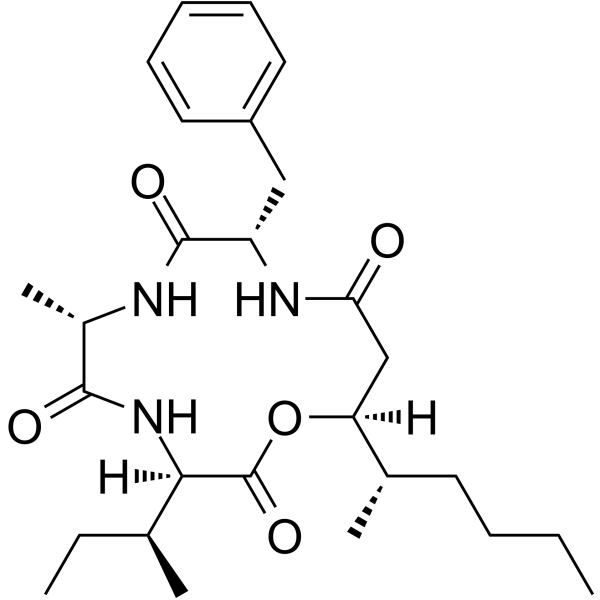
Beauveriolide III is an inhibitor of lipid droplet formation in mouse macrophages .
loading...
    loading...
Cat. No.: HY-121058
CAS No.: 87858-57-9
Synonyms: ADD 4743
Research Areas:  

Metabolic Disease

AD 4743 (ADD 4743) is a metabolite of Ciglitazone (HY-W011220). AD 4743 is an adipogenic agent. AD 4743 induces FPRP accumulation and accumulation of lipid droplets. AD 4743 inhibits cell proliferation of preadipose cells .
loading...
    loading...
Cat. No.: HY-169130
Lyso BD-1, preferentially colocalized in lysosomes and lipid droplets, displays excellent photocytotoxicity (5.57 μM) on triple negative breast cancer cells under white light. Lyso BD-1 displays emission band at 560nm .
loading...
    loading...
Cat. No.: HY-D1745
CAS No.: 1369583-75-4
Synonyms: fac-[Re(CO)3(phen)L]
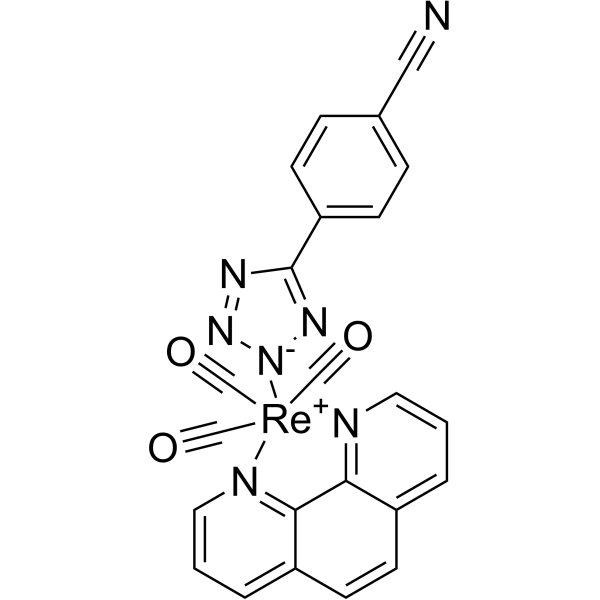
Liptracker-green (fac-[Re(CO)3(phen)L]) is a cell-permeable fluorogenic probe that localizes to polar lipids, and can be used to label lipid droplets and other high lipid-content compartments in live and fixed cells using fluorescent microscopy.
loading...
    loading...
Cat. No.: HY-149596
CAS No.: 2231747-49-0
Target:  

Fluorescent Dye

Research Areas:  

Metabolic Disease

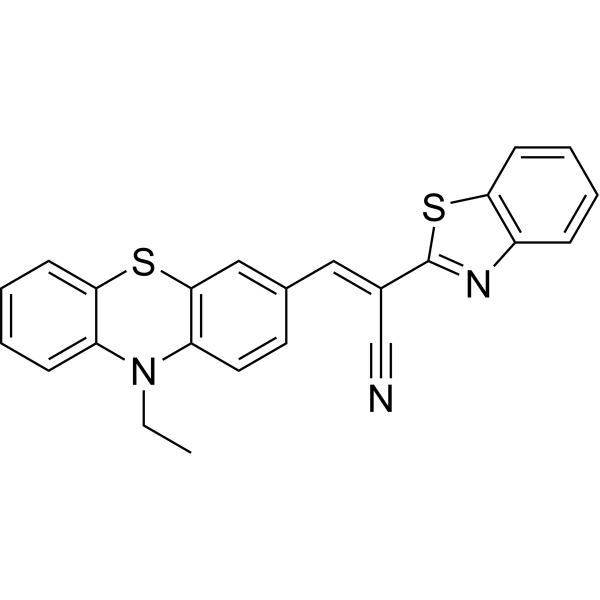
PTZ-LD is a phenothiazine (HY-Y0055)-based fluorescent probe for lipid droplets (LDs) detection. PTZ-LD is apparently emissive in LDs with high specificity. (Ex/Em=488/570-620 nm). PTZ-LD can be used for diabetic cataract (DC) research .
loading...
    loading...
Cat. No.: HY-111180
CAS No.: 902502-82-3
Target:  

Endogenous Metabolite

Research Areas:  

Metabolic Disease

ML-262 is an inhibitor of hepatic lipid droplet formation (IC50=6.4 nM in murine AML-12 cells), which is associated with non-alcoholic fatty liver disease.1 ML-262 does not induce cytotoxicity (up to 33 μM) or inhibit fatty acid uptake (up to 50 μM).
loading...
    loading...
Cat. No.: HY-D2620
CAS No.: 3030055-40-1
CAR-2 is a BODIPY-based photosensitizer that induces ferroptosis in photodynamic therapy (PDT) by targeting the endoplasmic reticulum (ER) and lipid droplets (LDs). CAR-2 exhibits phototoxicity in breast cancer cells with IC50 of 0.01-0.02 μM. CAR-2 exhibits antitumor efficacy in 4T1 xenograft mouse models .
loading...
    loading...
Cat. No.: HY-179539
CAS No.: 332950-12-6
ISR activator 3 (Compound cc81) is the active metabolite of A8. ISR activator 3 activates the integrated stress response (ISR) by binding to RIG-I (KD ≈ 0.55 μM), without inducing lipid droplet clearance. ISR activator 3 enhances the interferon response under viral mimicry signals. ISR activator 3 can be used for research on neurodegenerative diseases and immune stress .
loading...
    loading...
Cat. No.: HY-N8355
CAS No.: 154491-55-1
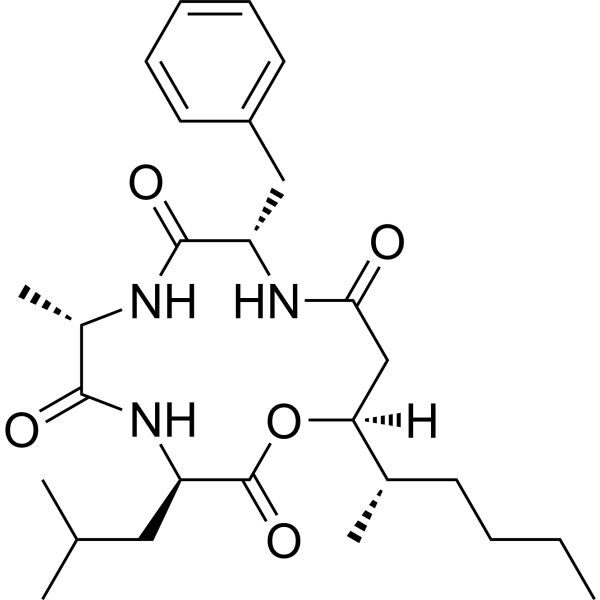
Beauveriolide I is an ACAT/SOAT inhibitor. Beauveriolide I selectively inhibits macrophage cholesteryl ester synthesis, blocks cholesteryl ester recycling, reduces cholesterol concentration, lipid droplet accumulation, and post-lysosomal cholesterol metabolism, and promotes the degradation of cholesteryl esters preferentially over triglycerides. Beauveriolide I reduces amyloid β peptide secretion. Beauveriolide I exhibits insecticidal and weak antibacterial activities. Beauveriolide I can be used in research on atherosclerosis, Alzheimer's disease, and cancer .
loading...
    loading...
Cat. No.: HY-N6606R
CAS No.: 28500-00-7
Delphinidin-3-O-galactoside chloride (Standard) is the analytical standard of Delphinidin-3-O-galactoside chloride (HY-N6606). This product is intended for research and analytical applications. Delphinidin-3-O-galactoside chloride is an anthocyanin found in abbiteye blueberry. Delphinidin-3-O-galactoside chloride show inhibitory activitiesagainst α-glucosidase with an IC50 of 68.33 μM, and tyrosinase with an IC50 of 34.14 μM. Delphinidin-3-O-galactoside chloride attenuates HO-1 and HSP70 messenger RNA down-regulation, suppresses cytotoxicity, reduces endoplasmic reticulum stress responses, scavenges free radicals, reduces intracellular triglyceride levels and lipid droplet accumulation. Delphinidin-3-O-galactoside chloride can be used for the researches of diabesity, melanoma and inflammation .
loading...
    loading...
Cat. No.: HY-113402B
Synonyms: γ-Glu-Cys ammonium
Gamma-glutamylcysteine ammonium (γ-Glu-Cys ammonium) is an orally active, blood-brain barrier permeable dipeptide . Gamma-glutamylcysteine ammonium activates AMPK, SIRT1, IL-4/STAT6, AC/cAMP/PI3K, IGF-1R/IRS1/PI3K, and Nrf2 signaling pathways; it inhibits NF-κB, JAK1/STAT1/3, MAPKs, cadmium-induced p38 MAPK, JNK, and PI3K/Akt signaling pathways. Gamma-glutamylcysteine ammonium regulates macrophage polarization, modulates the trafficking of CD36 and GLUT4, induces glutathione synthesis, improves metabolic dysfunction, reduces lipid deposition, ameliorates glucose homeostasis, inhibits apoptosis (Apoptosis), stabilizes mitochondria, suppresses lipid peroxidation, iron accumulation and ferroptosis (Ferroptosis), reduces ds-HMGB1 levels, reverses mechanical hyperalgesia, and alleviates hepatic lipid droplet formation. Gamma-glutamylcysteine ammonium is applicable to research related to inflammatory bowel disease, type 2 diabetes, cadmium-induced neurotoxicity, Alzheimer's disease, cerebral ischemia/reperfusion injury, neuropathy, and alcoholic liver disease .
loading...
    loading...
Cat. No.: HY-D3090
CAS No.: 2757682-04-3
Target:  

Fluorescent Dye

Research Areas:  

Others

NRLD is a lipid droplet-targeting solvatochromic fluorescent probe developed based on Nile Red (HY-D0718), which can target lipid droplets and sense the non-polar lipid microenvironment inside lipid droplets. NRLD exhibits superior lipid droplet-targeting selectivity compared to the parent Nile Red dye in HeLa cell imaging. NRLD achieves detection relying on the solvatochromic effect generated by excited-state charge transfer, and its emission wavelength shifts according to the local polarity changes of the microenvironment it locates in: the more compact and ordered the lipid packing and the lower the environmental polarity, the more blue-shifted the emission; the looser the lipid packing or the stronger the hydration and the higher the environmental polarity, the more red-shifted the emission. NRLD shows blue shift in the non-polar oil core of lipid droplets and red shift in high-polarity environments such as phosphate buffer .
loading...
    loading...
Cat. No.: HY-D3499
CAS No.: 148185-53-9
(E,E)-3,5-Bis(phenylethenyl)-BODIPY lipid stain is a fluorescent dye for intracellular lipid droplets. It is primarily used for specific fluorescent labeling and dynamic tracking of lipid droplets in living or fixed cells (Ex/Em = 627 nm/640 nm).
loading...
    loading...
Cat. No.: HY-P705431
Purity:  ≥ 85%, as determined by reducing SDS-PAGE.
Synonyms: TMT1B; Thiol S-Methyltransferase METTL7B; Prev. METTL7B; Thiol S-Methyltransferase TMT1B; ALDI; Methyltransferase Like 7B; Methyltransferase-Like Protein 7B; MGC17301; Thiol Methyltransferase 1B; Associated With Lipid droplets 1
Species:  
Human
Source:  
E. coli
loading...
    loading...
Cat. No.: HY-D3071
CAS No.: 1510814-96-6
Target:  

Fluorescent Dye

Research Areas:  

Inflammation/Immunology

LW-1 is a fluorescent probe targeting polarity detection of lipid droplets (LD). LW-1 produces a strong solvatochromic effect via the intramolecular charge transfer (ICT) mechanism: as environmental polarity increases, the emission wavelength red-shifts and the fluorescence intensity decreases significantly (emission at 557 nm in toluene and 642 nm in acetonitrile, with an 85 nm red-shift); fluorescence enhances in low-polarity lipid droplets. LW-1 can be used for lipid droplet polarity detection, differentiation between cancer cells and normal cells, monitoring of lipid droplet polarity changes under different physiological conditions such as starvation, oleic acid treatment and oxidative stress, as well as ex vivo imaging of polarity changes in lung tissues of asthmatic mice. The detection wavelength for cell imaging with LW-1 is Ex/Em = 405/500-550 nm (green channel) .
loading...
    loading...
Cat. No.: HY-134096
CAS No.: 78323-98-5
Synonyms: DNS-M
Target:  

Fluorescent Dye

Research Areas:  

Others

Dansyl-morpholine (DNS-M) is a Fluorescent probe for lipid droplet imaging, cancer cell discrimination, and real-time tracking of lipid droplet dynamics. As a solvatochromic probe with a donor-π-acceptor structure, it relies on hydrophobic interaction for its mechanism of action: its good lipophilicity, confirmed by an oil-water partition coefficient LogP = 2.35, allows it to rapidly penetrate cell membranes, and it specifically localizes to the hydrophobic core of lipid droplets; its fluorescence is strongly enhanced in the nonpolar environment of lipid droplets, while it emits very weak fluorescence in polar environments like PBS buffer, and it exhibits a bathochromic shift in emission wavelength with increasing solvent polarity. It has negligible cytotoxicity, with cell viability remaining over 95% after 24-hour incubation with 100 μM of the probe, and it possesses excellent photostability, retaining over 97% of initial fluorescence intensity after 60 continuous laser scans. For cell imaging applications, its excitation/emission wavelengths for lipid droplet labeling are Ex/Em = 405/480−540 nm, and in a simulative lipid environment O/W emulsion, it has an excitation wavelength of ~346 nm and emission wavelength of ~500 nm, giving a Stokes shift of 154 nm[1].
loading...
    loading...

