667 Results for "

lyp mutation

" in MedChemExpress (MCE) Product Catalog:
Products (667)

667 Results for "lyp mutation" in MCE Product Catalog:

Cat. No.: HY-147412D
Target:  

Fluorescent Dye

Research Areas:  

Neurological Disease

FAM labled Ultevursen sodiumis a FAM labled Ultevursen sodium (HY-147412A). Ultevursen sodium (QR-421a) is a splice-modulating antisense oligonucleotide targeting exon 13 of the USH2A gene, which restores the functional expression of Usherin protein by inducing exon skipping. Ultevursen sodium binds to USH2A pre-mRNA and modulates the splicing process to specifically skip exon 13 carrying the pathogenic mutation c.2299delG, generating an in-frame transcript and a truncated yet functionally normal protein. Ultevursen sodium exhibits concentration-dependent exon skipping activity in human cells and retinal organoid models, and restores Usherin expression and retinal function in zebrafish and gene-edited mouse models. Ultevursen sodium can be used for related research on type 2 Usher syndrome and non-syndromic retinitis pigmentosa .
loading...
    loading...
Cat. No.: HY-147412E
Target:  

Fluorescent Dye

Research Areas:  

Neurological Disease

Cy3 labled Ultevursen sodium is a Cy3 labled Ultevursen sodium (HY-147412A). Ultevursen sodium (QR-421a) is a splice-modulating antisense oligonucleotide targeting exon 13 of the USH2A gene, which restores the functional expression of Usherin protein by inducing exon skipping. Ultevursen sodium binds to USH2A pre-mRNA and modulates the splicing process to specifically skip exon 13 carrying the pathogenic mutation c.2299delG, generating an in-frame transcript and a truncated yet functionally normal protein. Ultevursen sodium exhibits concentration-dependent exon skipping activity in human cells and retinal organoid models, and restores Usherin expression and retinal function in zebrafish and gene-edited mouse models. Ultevursen sodium can be used for related research on type 2 Usher syndrome and non-syndromic retinitis pigmentosa .
loading...
    loading...
Cat. No.: HY-153803
CAS No.: 2864408-92-2
Purity:  98.99%
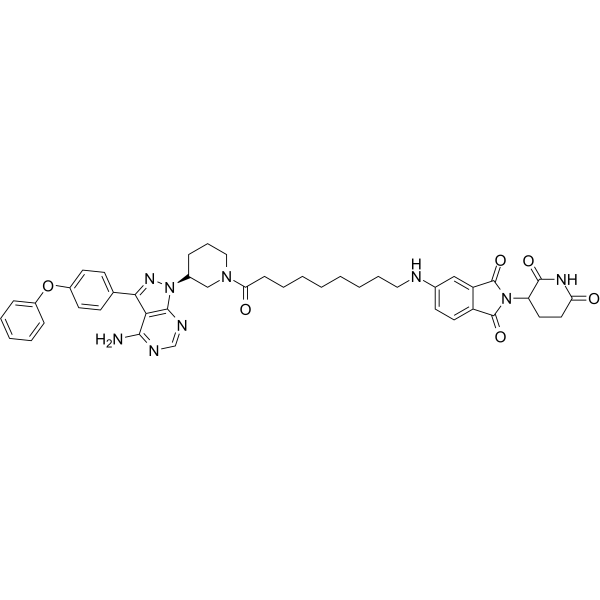
GBD-9 is a degrader based on the E3 ubiquitin ligase CRBN that targets BTK and the G1 to S phase transition protein GSPT1. GBD-9 has both PROTAC and molecular glue properties by inducing ubiquitination and proteasomal degradation of target proteins. GBD-9 can efficiently degrade wild-type and mutant BTK (such as C481S mutation) and GSPT1. GBD-9 significantly inhibits tumor cell proliferation by inducing G1 phase arrest in cancer cells, downregulating anti-apoptotic proteins (BCL-2, MCL-1) and activating Caspase-3 to induce apoptosis. GBD-9 is mainly used in the research of hematological tumors such as diffuse large B-cell lymphoma (DLBCL) and acute myeloid leukemia (AML) .
loading...
    loading...
Cat. No.: HY-155358
CAS No.: 2998928-68-8
Purity:  98.34%
Target:  

EGFR Apoptosis

Research Areas:  

Cancer

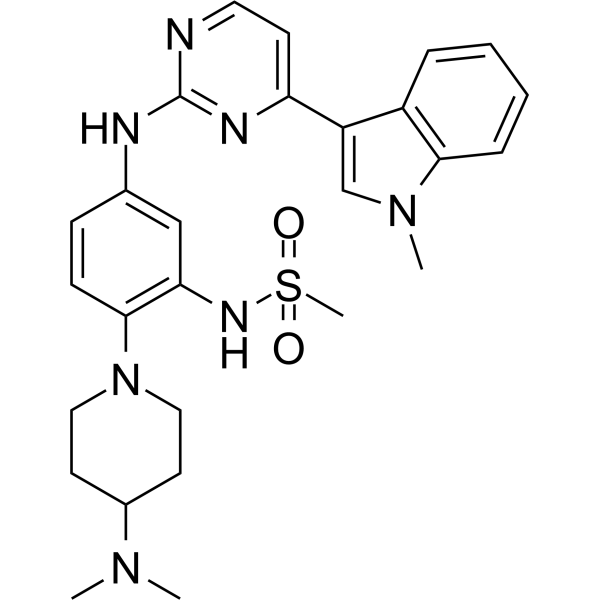
Os30, a potent fourth-generation EGFR inhibitor, is a potent EGFRC797S-TK inhibitor with IC50 values of 18 nM and 113 nM for EGFRDel19/T790M/C797S TK and EGFRL858R/T790M/C797S TK, respectively. Os30 can suppress EGFR phosphorylation, arrest at G1 phase and induce the apoptosis of KC-0116 (BaF3-EGFRDel19/T790M/C797S) cells. Os30 shows potent antitumor efficacy on non-small cell lung cancer (NSCLC) with EGFmRC797S mutation .
loading...
    loading...
Cat. No.: HY-156794A
Synonyms: DSP-5336 enantiomer
Enzomenib enantiomer (DSP-5336 enantiomer) is an enantiomer of Enzomenib (HY-156794). Enzomenib (DSP-5336) is an orally active Menin inhibitor (IC50=1.4 nM, Kd=6.0 nM). Enzomenib disrupts the interaction between Menin and KMT2A/MLL fusion proteins, specifically inhibits the expression of leukemia driver genes such as HOX/MEIS1, and upregulates ITGAM. Enzomenib effectively induces cell differentiation, inhibits tumor cell proliferation, and suppresses primitive cell colony formation. Enzomenib reduces disease burden and prolongs survival, but causes adverse reactions including differentiation syndrome and QTc interval prolongation. Enzomenib is used for research on relapsed/refractory acute myeloid leukemia, acute lymphoblastic leukemia, and other hematologic malignancies with mixed lineage leukemia (MLL) rearrangements or NPM1 mutations .
loading...
    loading...
Cat. No.: HY-169481
CAS No.: 3027918-96-0
Research Areas:  

Neurological Disease Cancer

AP-1 is a targeted ALK PROTAC degrader. AP-1 effectively degrades various ALK fusion/mutation forms, including degradation of NPM-ALK (DC50 = 4.6 nM) and EML4-ALK (DC50 = 357.6 nM), and exhibits a typical hook effect at high concentrations. AP-1 inhibits phosphorylation of downstream STAT3, downregulates gene expression in the JAK-STAT pathway, and kills ALK-positive tumor cells via activating the caspase-3-dependent apoptosis pathway. AP-1 shows cytotoxicity against a variety of cancer cells and possesses anti-tumor activity. AP-1 can be used in research related to non-small cell lung cancer, neuroblastoma, and anaplastic large cell lymphoma .
loading...
    loading...
Cat. No.: HY-175320
Research Areas:  

Cancer

PROTAC c-Met degrader-5 is an orally active c-Met PROTAC degrader. PROTAC c-Met degrader-5 induces c-Met degradation via Cullin-CRBN, with a DC50 value of 0.32 nM, and inhibits the phosphorylation of c-Met and its downstream signaling molecule STAT3. PROTAC c-Met degrader-5 inhibits cancer cell proliferation, migration and invasion, induces apoptosis, alters cell cycle distribution, and suppresses the growth of EBC-1 xenograft tumors. PROTAC c-Met degrader-5 can be used to study MET-driven cancers as well as Tepotinib (HY-14721)-resistant cancers harboring c-Met D1228N and c-Met Y1230H mutations .
loading...
    loading...
Cat. No.: HY-184264
CAS No.: 1309199-94-7
Target:  

CHIKV

Research Areas:  

Infection

CHVB-066 is an alphavirus non-structural protein nsP1 inhibitor that exhibits varying degrees of inhibitory activity against nsP1 of CHIKV and VEEV. CHVB-066 inhibits MTase and GTase activities and disrupts the capping process of viral RNA, including inhibiting CHIKV replication, reducing progeny viruses, and preventing cytopathic effects. It shows varying degrees of inhibitory activity against nsP1 of CHIKV and VEEV but lacks anti-SFV replication activity, displays cross-resistance with MADTP series compounds, and requires nsP2/nsP3 mutations to develop complete drug resistance. This inhibitor with varying inhibitory activity against nsP1 of CHIKV and VEEV can be widely applied to relevant studies on chikungunya virus infection and chikungunya fever .
loading...
    loading...
Cat. No.: HY-185899
CAS No.: 72052-96-1
Synonyms: 5-Aza-2'-deoxycytidine-5′-triphosphate
Research Areas:  

Infection Cancer

5-Aza-dCTP (5-Aza-2'-deoxycytidine-5′-triphosphate) is a nucleotide analog that acts as a substrate for mammalian DNA polymerase α (Km = 3.0 μM) and a weak competitive inhibitor of this enzyme (Ki = 4.3 μM). 5-Aza-dCTP inhibits DNA polymerase α via incorporation into DNA through Watson-Crick base pairing, inhibits DNA methyltransferases via incorporation into hemimethylated DNA, and induces mutations in HIV-1 via incorporation into viral DNA during synthesis. 5-Aza-dCTP reverses the inhibitory effect of dTTP on dCMP deaminase, and allosterically activates dCMP deamination to the same extent as dCTP. 5-Aza-dCTP is applicable to research related to leukemia and type 1 human immunodeficiency virus infection .
loading...
    loading...
Cat. No.: HY-P992482
VIR-2482 is a monoclonal antibody targeting influenza A hemagglutinin (HA). VIR-2482 is generated by introducing LS mutations (M428L/N434S) into the Fc region of MEDI8852 (HY-P991446). VIR-2482 binds to the conserved HA stem epitope across all 18 influenza A HA subtypes, neutralizes a broad spectrum of H1N1 and H3N2 strains, binds to FcγRIIIa, FcγRIIa and C1q, and induces antibody-dependent cellular cytotoxicity and complement-dependent cytotoxicity. VIR-2482 reduces morbidity and mortality caused by seasonal influenza A strains and provides prophylactic protection in mice. VIR-2482 can be used in research related to influenza A disease .
loading...
    loading...
Cat. No.: HY-Y1010R
CAS No.: 556-52-5
Synonyms: Glycidol (Standard)
Research Areas:  

Cancer

Oxiran-2-ylmethanol (Standard) is the analytical standard of Oxiran-2-ylmethanol (Glycidol) (HY-Y1010). This product is intended for research and analytical applications. Oxiran-2-ylmethanol is an ester product. Oxiran-2-ylmethanol induces base pair point mutations in bacterial strains and structural chromosome aberrations in cultured cells. Oxiran-2-ylmethanol forms N-(2,3-dihydroxypropyl)valine hemoglobin adducts. Oxiran-2-ylmethanol acts as an animal carcinogen but does not significantly induce micronucleated immature erythrocytes in animal bone marrow. Oxiran-2-ylmethanol enables anionic polymerization to produce linear poly(glycidol). Oxiran-2-ylmethanol can be used for cancer-related research .
loading...
    loading...
Cat. No.: HY-Y1010S
CAS No.: 1246819-20-4
Synonyms: Glycidol-d5
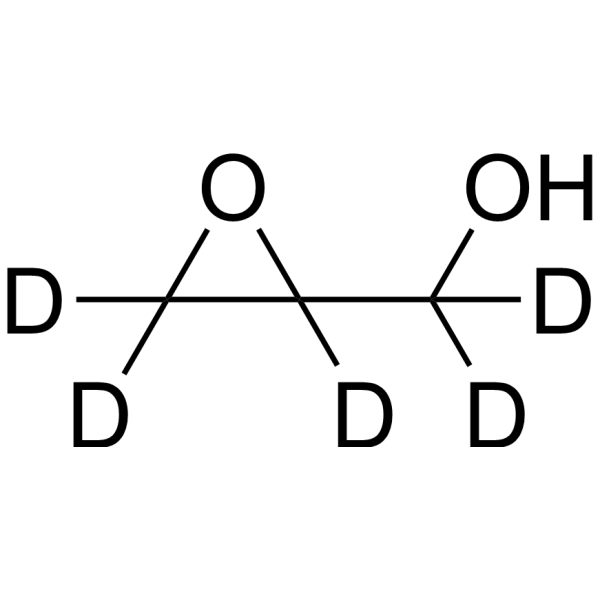
Oxiran-2-ylmethanol-d5 is the deuterium labeled Oxiran-2-ylmethanol (Glycidol) (HY-Y1010). Oxiran-2-ylmethanol is an ester product. Oxiran-2-ylmethanol induces base pair point mutations in bacterial strains and structural chromosome aberrations in cultured cells. Oxiran-2-ylmethanol forms N-(2,3-dihydroxypropyl)valine hemoglobin adducts. Oxiran-2-ylmethanol acts as an animal carcinogen but does not significantly induce micronucleated immature erythrocytes in animal bone marrow. Oxiran-2-ylmethanol enables anionic polymerization to produce linear poly(glycidol). Oxiran-2-ylmethanol can be used for cancer-related research .
loading...
    loading...
Cat. No.: HY-104042R
CAS No.: 1644545-52-7
Synonyms: AG-881 (Standard)
Vorasidenib (Standard) is the analytical standard of Vorasidenib (HY-104042). This product is intended for research and analytical applications. Vorasidenib (AG-881) is an orally available, brain penetrant second-generation dual mutant isocitrate dehydrogenases 1 and 2 (mIDH1/2) inhibitor. Vorasidenib (AG-881) exhibits nanomolar inhibition of (D)-2-hydroxyglutarate (D-2-HG), and the IC50 ranges of 0.04~22 nM against IDH1 R132C, IDH1 R132G, IDH1 R132H and IDH1 R132S and 7~14 nM against IDH2 R140Q and 130 nM against IDH2 R172K. Vorasidenib can be used for the study of grade 2 astrocytoma or oligodendroglioma with a susceptible IDH1/2 mutation .
loading...
    loading...
Cat. No.: HY-122058
CAS No.: 1097732-62-1
Target:  

HIV

Research Areas:  

Infection

KRH-3955 is a CXCR4 antagonist with good bioavailability and potent anti-HIV-1 activity. KRH-3955 can effectively inhibit the replication of X4 HIV-1, including clinical isolates from different donors. KRH-3955 also shows activity against recombinant X4 HIV-1 containing reverse transcriptase, protease and tyrosinase resistance mutations. KRH-3955 can inhibit the binding of SDF-1alpha to CXCR4 and calcium ion signaling through this receptor. KRH-3955 inhibits the binding of an antibody against CXCR4 to CXCR4, showing a potent antagonistic effect on CXCR4. KRH-3955 shows an oral bioavailability of 25.6% in rats and can inhibit the replication of X4 HIV-1 in vivo .
loading...
    loading...
Cat. No.: HY-153321A
CAS No.: 2649400-33-7
Synonyms: (R,R)-NX-5948; (R,R)-BTK-IN-24
Target:  

Drug Isomer PROTACs Btk

Research Areas:  

Inflammation/Immunology Cancer

(R,R)-Bexobrutideg is the (R,R)-enantiomer of Bexobrutideg (HY-153321). Bexobrutideg (NX-5948) is an orally active PROTAC that induces specific BTK protein degradation via a cereblon E3 ligase (CRBN) complex without degrading other cereblon neo substrates. Bexobrutideg mediates potent anti-inflammatory activity through BTK degradation, thereby inhibiting B cell activation. Bexobrutideg exhibits potent tumor growth inhibition in TMD8 xenograft models containing wild-type BTK or BTKi resistance mutations. Bexobrutideg is effective in a mouse model of collagen-induced arthritis (CIA). Bexobrutideg can cross the blood-brain barrier. NX-5948 consists of a target protein ligand, a linker, and a VHL E3 ubiquitin ligase (Red: BTK ligand (HY-170324); Blue: CRBN ligand (HY-171893); Black: linker) .
loading...
    loading...
Cat. No.: HY-163679
PROTAC ERα Degrader-9 is a dual-target degrader of estrogen receptor α (ERα) and aromatase (ARO/CYP19A), with a Ki value of 0.25 μM against human ERα and an IC50 value of 4.6 μM against human ARO. PROTAC ERα Degrader-9 degrades ERα and ARO via the ubiquitin-proteasome system, and inhibits the transcriptional activity of ERα and the enzymatic activity of ARO. PROTAC ERα Degrader-9 selectively inhibits cancer cell proliferation, induces cell cycle arrest, and triggers apoptosis. PROTAC ERα Degrader-9 exhibits antiproliferative activity and ERα-degrading activity against cancer cells carrying ERα mutations. PROTAC ERα Degrader-9 can be used in cancer-related research such as breast cancer .
loading...
    loading...
Cat. No.: HY-170928
CAS No.: 2756978-82-0
DA-0157 is the orally active inhibitor for EGFR and ALK that overcomes drug-resistant mutations of EGFR C797S and ALK in NSCLC) cells. DA-0157 inhibits the proliferation of Ba/F3-EGFR Del19/T790M/C797S (IC50 = 6.9 nM), Ba/F3-EGFR WT (IC50 = 0.83 μM), Ba/F3-EML4-ALK-L1196M (IC50 = 5.5 nM), and Ba/F3-EML4-ALK (IC50 = 7.4 nM). DA-0157 inhibits CYP2D6 with IC50 of 5.26 μM. DA-0157 exhibits antitumor efficacy in mouse models .
loading...
    loading...
Cat. No.: HY-172877
Research Areas:  

Cancer

EGFR/BRAFV600E-IN-5 (Compound 7I) is a dual BRAFV600E/EGFR inhibitor with IC50 of 0.048 μM and 0.037 μM, respectively. EGFR/BRAFV600E-IN-5 has significant anti-melanoma activity with IC50 of 3.16 μM and 2.50 μM against MALME-3M and LOX-IMVI cell lines, respectively. EGFR/BRAFV600E-IN-5 exerts anti-tumor effects by inducing G1 arrest, inhibiting DNA synthesis, and activating the mitochondrial apoptosis pathway. EGFR/BRAFV600E-IN-5 can be used for melanoma research, especially for combined inhibition of BRAFV600E mutation and EGFR signaling pathway .
loading...
    loading...
Cat. No.: HY-178786
CAS No.: 2491726-04-4
Research Areas:  

Cancer

RET-IN-31 (Compound 13) is an orally active, selective RET inhibitor (IC50s: 1.4 nM, 1.9 nM, 3.8 nM for RET WT, RET V804L, RET V804M, respectively). RET-IN-31 inhibits hERG and Cytochrome P450 (IC50s: 13.6 μM, 7.9 μM, 12.8 μM, 16.9 μM, 8.9 μM, 13.0 μM for CYP1A2, CYP2C9, CYP2C19, CYP2D6, CYP3A4-M, CYP3A4-T, respectively). RET-IN-31 has anti-cancer effects against activated RET mutations and gene fusion-driven cancers .
loading...
    loading...
Cat. No.: HY-178938
CAS No.: 1182011-65-9
AR Degrader-3 is an orally active molecular glue that targets AR/ARV7 and induces the degradation of AR and ARV7 through the ubiquitin-proteasome pathway (UPP). AR Degrader-3 directly interacts with the ligand-binding domain (LBD) and the N-terminal domain (NTD) of AR. AR Degrader-3 effectively suppresses the transcriptional activity of wild-type AR (AR-WT), AR mutants, and ARV7. AR Degrader-3 downregulates the mRNA and protein levels of downstream AR target genes, thereby overcoming antiandrogen resistance mediated by ARV7 and AR point mutations. AR Degrader-3 induces apoptosis in Enzalutamide (HY-70002) (ENZa)-resistant cells and increases cleaved caspase-3 protein levels. AR Degrader-3 can be used for the study of castration-resistant prostate cancer (CRPC) .
loading...
    loading...

