6485 Results for "

RNA

" in MedChemExpress (MCE) Product Catalog:
Products (6485)

6485 Results for "RNA" in MCE Product Catalog:

Cat. No.: HY-N4031
CAS No.: 82375-29-9
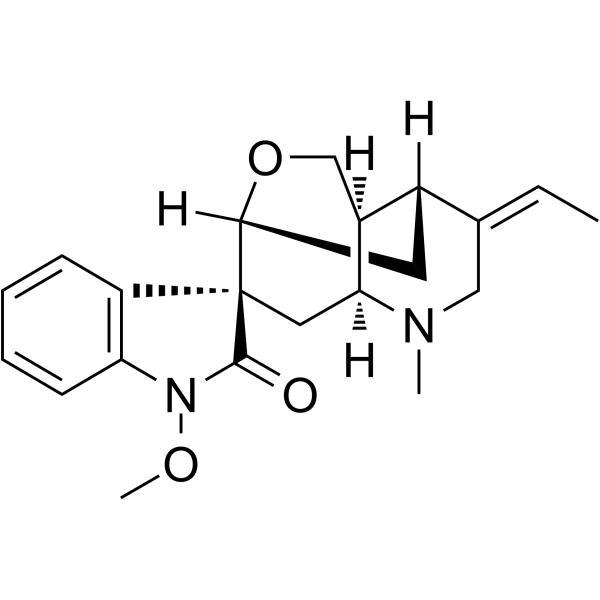
Humantenine is a highly toxic indole alkaloid from Gelsemium elegans (Gardn. & Champ.) Benth. that binds to RNA m6A modification regulatory proteins (ALKBH5, METTL). Humantenine stably binds via hydrogen bonding and hydrophobic interactions and disrupts the m6A methylation level of target genes, thereby impairing the expression of intestinal epithelial cell tight junction and cytoskeleton-related genes, causing intestinal barrier dysfunction and significant intestinal cytotoxicity. The intraperitoneal injection LD50 values of Humantenine are <1 mg/kg in mice, 1.2 mg/kg in male rats and 1.5 mg/kg in female rats, respectively. Species differences exist in the metabolism of Humantenine in human, porcine, goat and rat liver microsomes, and demethylation, dehydrogenation and oxidation occur in liver microsomes .
loading...
    loading...
Cat. No.: HY-N6606R
CAS No.: 28500-00-7
Delphinidin-3-O-galactoside chloride (Standard) is the analytical standard of Delphinidin-3-O-galactoside chloride (HY-N6606). This product is intended for research and analytical applications. Delphinidin-3-O-galactoside chloride is an anthocyanin found in abbiteye blueberry. Delphinidin-3-O-galactoside chloride show inhibitory activitiesagainst α-glucosidase with an IC50 of 68.33 μM, and tyrosinase with an IC50 of 34.14 μM. Delphinidin-3-O-galactoside chloride attenuates HO-1 and HSP70 messenger RNA down-regulation, suppresses cytotoxicity, reduces endoplasmic reticulum stress responses, scavenges free radicals, reduces intracellular triglyceride levels and lipid droplet accumulation. Delphinidin-3-O-galactoside chloride can be used for the researches of diabesity, melanoma and inflammation .
loading...
    loading...
Cat. No.: HY-N6712R
CAS No.: 87-11-6
Synonyms: Acetopyrrothin (Standard)
Thromycin (Standard) is the analytical standard of thromycin (Acetopyrrothin) (HY-N6712). Thiolutin is a sulfur-containing antibiotic, which is a potent inhibitor of bacterial and yeast RNA polymerases. Thiolutin can be produced by Streptomyces. Thiolutin inhibits AMSH (IC50 = 4 μM) and Rpn11 (IC50 = 0.53 μM). Thiolutin is a dual inhibitor of BRCC36 and the NLRP3 inflammasome, exhibiting anti-inflammatory effects. Thiolutin effectively suppresses the interaction between BRCC36 and HMGCR, leading to the inhibition of HCC growth. Thiolutin attenuates pyroptosis and NLRP3 inflammasome activation. Thiolutin markedly alleviates renal injury and inflammatory process in IgAN. Thiolutin is an anti-angiogenic compound which can ease Doxorubicin (HY-15142A)-induced cardiotoxicity (DOXIC) [1][2][3][4][5].
loading...
    loading...
Cat. No.: HY-W017443S
CAS No.: 202406-87-9
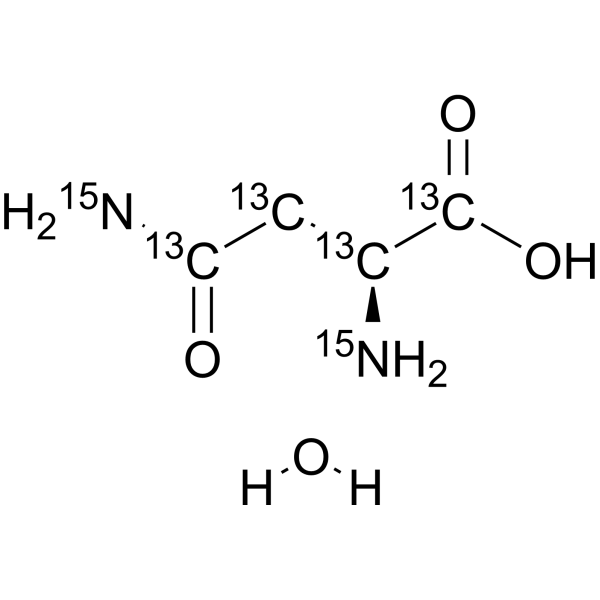
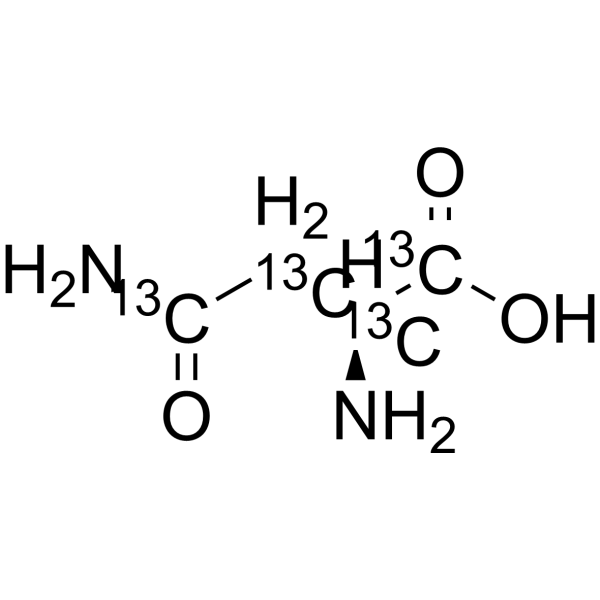
L-Asparagine- 13C4, 15N2 monohydrateis the 13C-labeled and 15N-labeled L-Asparagine monohydrate (HY-W017443). L-Asparagine monohydrate is an essential amino acid for leukemic cells and a substrate for L-Asparaginase. L-Asparaginase is a potent anti-leukemic enzyme that promotes asparagine (Asn) and glutamine (Gln) depletion and inhibits protein biosynthesis in lymphoblasts. Removal of L-asparagine from plasma by L-Asparaginase results in inhibition of RNA and DNA synthesis and subsequent apoptosis. L-Asparaginase has cell-killing ability in vitro and in vivo, and selectively inhibits the growth of cancer cells with low asparagine synthetase (AASNS) expression. L-Asparagine monohydrate can be used as a biomarker and sensor for the study of childhood acute lymphoblastic leukemia .
loading...
    loading...
Cat. No.: HY-W017443S2
CAS No.: 2483829-30-5
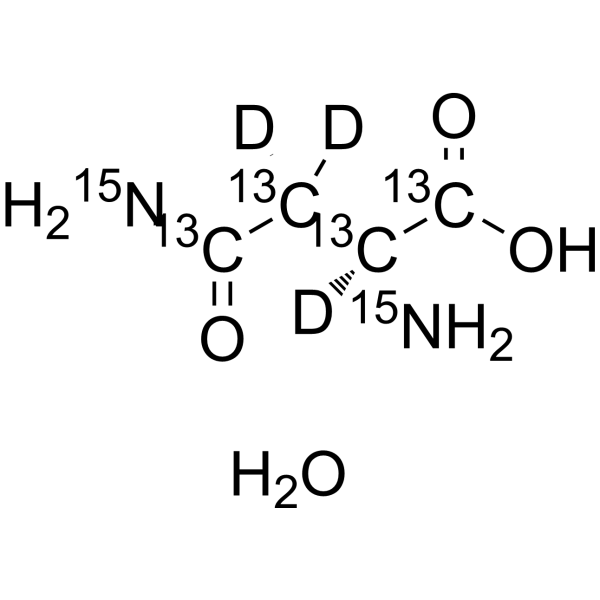
L-Asparagine- 13C4, 15N2,d3 monohydrate is the deuterium, 13C-, and 15N-labeled L-Asparagine monohydrate (HY-W017443). L-Asparagine monohydrate is an essential amino acid for leukemic cells and a substrate for L-Asparaginase. L-Asparaginase is a potent anti-leukemic enzyme that promotes asparagine (Asn) and glutamine (Gln) depletion and inhibits protein biosynthesis in lymphoblasts. Removal of L-asparagine from plasma by L-Asparaginase results in inhibition of RNA and DNA synthesis and subsequent apoptosis. L-Asparaginase has cell-killing ability in vitro and in vivo, and selectively inhibits the growth of cancer cells with low asparagine synthetase (AASNS) expression. L-Asparagine monohydrate can be used as a biomarker and sensor for the study of childhood acute lymphoblastic leukemia .
loading...
    loading...
Cat. No.: HY-W017443S3
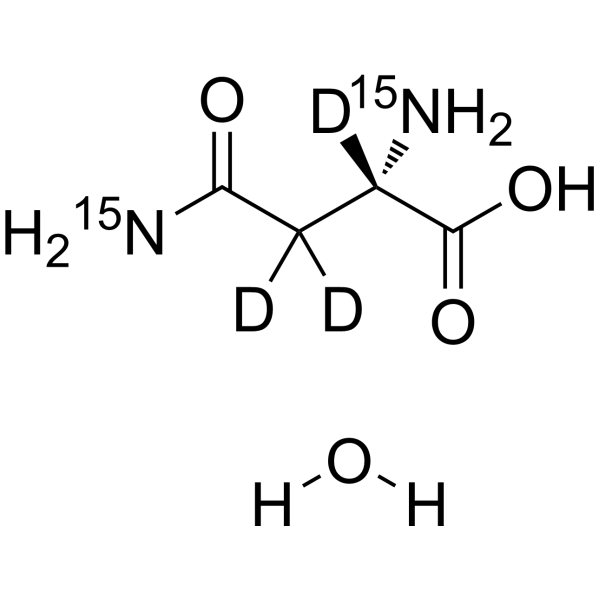
L-Asparagine- 15N2,d3 monohydrate is the deuterium and 15N-labeled L-Asparagine monohydrate (HY-W017443). L-Asparagine monohydrate is an essential amino acid for leukemic cells and a substrate for L-Asparaginase. L-Asparaginase is a potent anti-leukemic enzyme that promotes asparagine (Asn) and glutamine (Gln) depletion and inhibits protein biosynthesis in lymphoblasts. Removal of L-asparagine from plasma by L-Asparaginase results in inhibition of RNA and DNA synthesis and subsequent apoptosis. L-Asparaginase has cell-killing ability in vitro and in vivo, and selectively inhibits the growth of cancer cells with low asparagine synthetase (AASNS) expression. L-Asparagine monohydrate can be used as a biomarker and sensor for the study of childhood acute lymphoblastic leukemia .
loading...
    loading...
Cat. No.: HY-W017443S4
CAS No.: 768348-44-3
Synonyms: (-)-Asparagine-13C4; Asn-13C4; Asparamide-13C4
L-Asparagine- 13C4 ((-)-Asparagine- 13C4; Asn- 13C4) monohydrate is the 13C labeled labeled L-Asparagine monohydrate (HY-W017443). L-Asparagine monohydrate is an essential amino acid for leukemic cells and a substrate for L-Asparaginase. L-Asparaginase is a potent anti-leukemic enzyme that promotes asparagine (Asn) and glutamine (Gln) depletion and inhibits protein biosynthesis in lymphoblasts. Removal of L-asparagine from plasma by L-Asparaginase results in inhibition of RNA and DNA synthesis and subsequent apoptosis. L-Asparaginase has cell-killing ability in vitro and in vivo, and selectively inhibits the growth of cancer cells with low asparagine synthetase (AASNS) expression. L-Asparagine monohydrate can be used as a biomarker and sensor for the study of childhood acute lymphoblastic leukemia .
loading...
    loading...
Cat. No.: HY-W713297
CAS No.: 2469734-82-3
Synonyms: ABOB hydrochloride-d8
Moroxydine hydrochloride-d8 (ABOB hydrochloride-d8) is the deuterium labeled Moroxydine (ABOB) hydrochloride (HY-B0420A). Moroxydine hydrochloride is a broad-spectrum agent with multi-antiviral activities against DNA and RNA viruses, including influenza virus, herpes simplex, varicella zoster, measles, mumps disease, hepatitis C virus, etc. Moroxydine hydrochloride exhibits excellent antiviral activity and shows low cytotoxicity to cells infected by dsRNA viruses (grass carp reovirus, GCRV) and large DNA viruses (giant salamander iridovirus, GSIV). Moroxydine hydrochloride blocks the GCRV-induced cytopathic effects and eliminates nucleocapsids in ctenopharyngodon idella kidney (CIK) cells to keep the normal morphological structure. Moroxydine hydrochloride significantly inhibits the apoptosis, the caspase 3 activity, Bax expression and down-regulates Bcl-2 levels [1][2][3].
loading...
    loading...
Cat. No.: HY-W753593
N4-Acetylcytidine- 13C5 is the 13C-labeled N4-Acetylcytidine (HY-W019670). N4-acetylcytidine (N4A) is an endogenous nucleoside metabolite from the degradation of tRNA. N4-Acetylcytidine is formed by N-acetyltransferase 10 and other enzymes. N4-acetylcytidine might sustain NLRP3 inflammasome activation via induction of HMGB1 expression and releasee. N4-Acetylcytidine modifies mRNA, tRNA and rRNA, affecting their stability, translation efficiency (such as enterovirus 71 RNA). N4-Acetylcytidine is used in the study of cancer, neuroinflammatory diseases, viral infections and obesity .
loading...
    loading...
Cat. No.: HY-L090
2,569 compounds

Transcription is the essential first step in the conversion of the genetic information in the DNA into protein and the major point at which gene expression is controlled. Transcription of protein-coding genes is accomplished by the multi-subunit enzyme RNA polymerase II and an ensemble of ancillary proteins, called transcription factors (TFs). Transcription factors play an important role in the long-term regulation of cell growth, differentiation and responses to environmental cues. Deregulated transcription factors contribute to the pathogenesis of a plethora of human diseases, ranging from diabetes, inflammatory disorders and cardiovascular disease to many cancers, and thus these proteins hold great therapeutic potential.

MCE offers a unique collection of 2,569 compounds with validated transcription factor targets modulating properties. MCE transcription factor-targeted compound library is an effective tool for researching transcription factors as drug targets as well as modulation of TFs for different therapeutic applications.

Cat. No.: HY-124421
CAS No.: 260443-89-8
Purity:  99.04%
Synonyms: NSC-703786
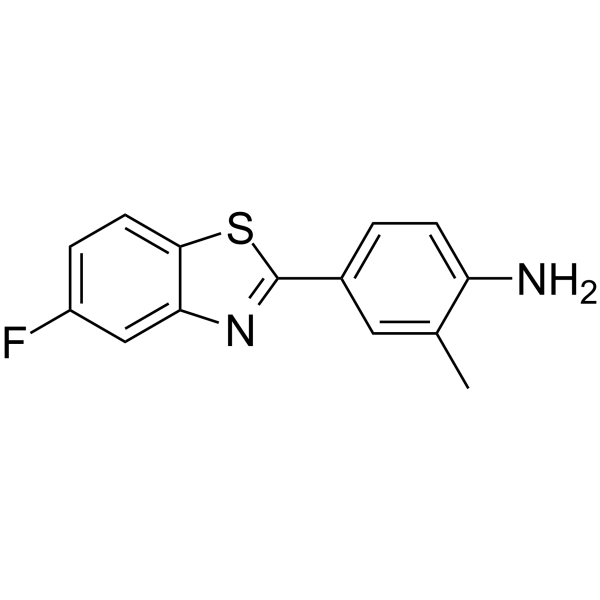
5F-203 (NSC-703786) is an aryl hydrocarbon receptor (AhR) agonist and the active moiety of the water-soluble benzothiazole prodrug Phortress (HY-103223). 5F-203 binds to cytosolic AhR and induces CYP1A1 and CYP1B1 expression. 5F-203 activates AhR signaling to induce DNA damage, cell cycle arrest, apoptosis, caspase-3/-7 activation, lysosomal membrane permeabilization, and Cathepsin B release. 5F-203 induces CYGB and pro-apoptotic protein expression and NAG-1 mRNA/protein induction through RNA stabilization. 5F-203 is used in research related to cancers such as triple-negative breast cancer and colorectal cancer .
loading...
    loading...
Cat. No.: HY-13551C
CAS No.: 80277-14-1
Synonyms: m-AMSA isethionate; Acridinyl anisidide isethionate
Amsacrine isethionate (m-AMSA isethionate) is a Topoisomerase II inhibitor. Amsacrine isethionate intercalates into DNA. Amsacrine isethionate induces Ca 2+-mediated inactivation of ERK, and also downregulates AKT, promoting MCL1 downregulation mediated by GSK3β via reducing the phosphorylation level of GSK3β. Amsacrine isethionate induces Apoptosis by activating Caspase-9 and Caspase-3. Amsacrine isethionate blocks HERG potassium channels in the open/inactivated state. Amsacrine isethionate induces chromosomal aberrations and sister chromatid exchanges, and inhibits the synthesis of RNA and DNA. Amsacrine isethionate exhibits anti-leukemic activity. Amsacrine isethionate causes cardiac repolarization disorders, QT interval prolongation, ventricular arrhythmias, and increases the risk of sudden cardiac death. Amsacrine isethionate can be used in research related to acute myeloid leukemia, lymphoma and progressive malignancies .
loading...
    loading...
Cat. No.: HY-13551D
CAS No.: 80277-11-8
Synonyms: m-AMSA lactate; Acridinyl anisidide lactate
Amsacrine lactate (m-AMSA lactate) is a Topoisomerase II inhibitor. Amsacrine lactate intercalates into DNA. Amsacrine lactate induces Ca 2+-mediated inactivation of ERK, and also downregulates AKT, promoting MCL1 downregulation mediated by GSK3β via reducing the phosphorylation level of GSK3β. Amsacrine lactate induces Apoptosis by activating Caspase-9 and Caspase-3. Amsacrine lactate blocks HERG potassium channels in the open/inactivated state. Amsacrine lactate induces chromosomal aberrations and sister chromatid exchanges, and inhibits the synthesis of RNA and DNA. Amsacrine lactate exhibits anti-leukemic activity. Amsacrine lactate causes cardiac repolarization disorders, QT interval prolongation, ventricular arrhythmias, and increases the risk of sudden cardiac death. Amsacrine lactate can be used in research related to acute myeloid leukemia, lymphoma and progressive malignancies .
loading...
    loading...
Cat. No.: HY-145973
CAS No.: 2089461-55-0
Synonyms: m7(3'OMeG)(5')ppp(5')(2'OMeA)pG
Research Areas:  

Others

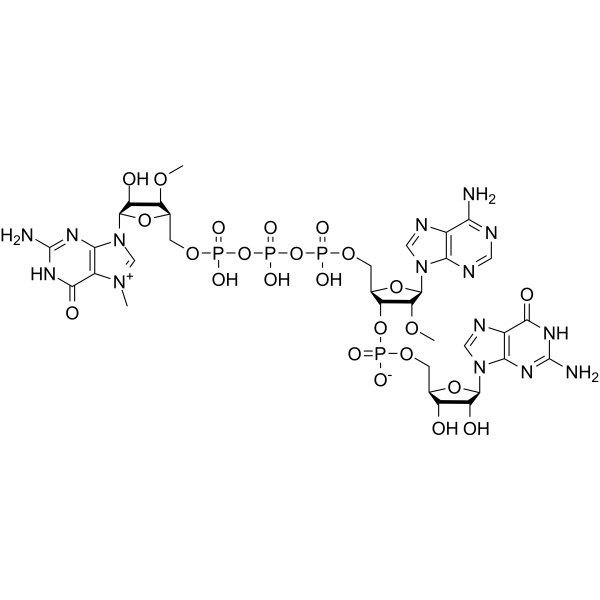
3’OMe-m7GpppAmpG (m7(3'OMeG)(5')ppp(5')(2'OMeA)pG) is a trinucleotide Cap1 analog with the structure m7 (3'OMeG)(5') ppp (5')(2'OMeA) pG, and also functions as a cis-acting ligase ribozyme inhibitor. 3’OMe-m7GpppAmpG effectively reduces free 5'-triphosphate groups on RNA transcripts, thereby enabling efficient co-transcriptional capping of in vitro transcribed mRNA. 3’OMe-m7GpppAmpG is not only widely used in the preparation of modified mRNA including trivalent influenza vaccine candidates, but also applicable to studies related to SARS-CoV-2 infection and other relevant research .
loading...
    loading...
Cat. No.: HY-15594
CAS No.: 942936-75-6
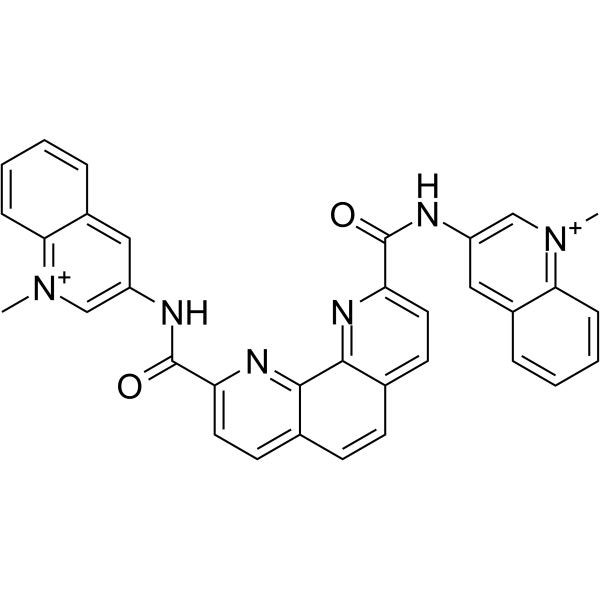
Phen-DC3 is a bisquinolinium G-quadruplex (G4) ligand. Phen-DC3 selectively binds to and stabilizes the hybrid quadruplex-duplex hybrid (QDH) derived from the PIM1 promoter. Phen-DC3 also binds to the c-myc promoter Pu24T G4 via extensive π-stacking, and induces polymerase stalling at α-synuclein DNA and RNA G4 sequences. Phen-DC3 Trifluoromethanesulfonate (HY-15594A) downregulates LPS (HY-D1056)-induced TNFRSF21, RIPK3 and p-MLKL in VECs, and ameliorates CLP-induced pulmonary vascular leakage in septic rats. Phen-DC3 can be used in studies related to neurodegenerative diseases and sepsis-associated vascular injury .
loading...
    loading...
Cat. No.: HY-160267
CAS No.: 950403-60-8
Target:  

HIV DNA/RNA Synthesis

Research Areas:  

Infection Neurological Disease Cancer

iPAF1C is a inhibitor of the polymerase-associated factor 1 complex (PAF1C) with specific targeting to the PAF1 binding groove of CTR9 (a key subunit of PAF1C). iPAF1C disrupts PAF1C assembly by interfering with the PAF1-CTR9 interaction. iPAF1C selectively impairs BRD4-mediated recruitment of PAF1 to chromatin at hypoxia-responsive genes and inhibits RNA polymerase II (RNAPII) pause release. iPAF1C increases the population of HIV-1 NL4.3 Nef-IRES-GFP infected primary human CD4 +T cells in a dose-dependent manner. PAF1C can be used for the study of infection and diseases associated with abnormal hypoxic adaptation (e.g., cancers, neurological disorders) .
loading...
    loading...
Cat. No.: HY-163944
CAS No.: 3081311-94-3
LL-K12-18 is a CDK12 kinase inhibitor and a dual-site molecular glue. LL-K12-18 inhibits human CDK12 with an IC50 value of 283.9 nM, and selectively degrades cyclin K via the ubiquitin-proteasome system by stabilizing the CDK12-DDB1 complex. LL-K12-18 downregulates DNA damage response genes, reduces the phosphorylation level of CTD Ser2 in RNA polymerase II, and modulates biomarkers such as ATM, RAD51, γ-H2AX and cleaved PARP, thereby effectively inducing apoptosis and inhibiting proliferation of breast cancer cells. LL-K12-18 exhibits high target selectivity and serves as a research tool for studies on triple-negative breast cancer .
loading...
    loading...
Cat. No.: HY-183831
CAS No.: 3034312-19-8
Research Areas:  

Cancer

GPS167 is a CLK kinase inhibitor that potently and selectively inhibits recombinant human CLK1, CLK2 and CLK4. By inhibiting CLK-mediated phosphorylation of SRSF10, GPS167 upregulates the protein-binding ability of CLK1 and CLK4 with SRSF10, downregulates oncogenic BCLAF1-L and upregulates tumor-suppressive BCLAF1-S, regulates alternative splicing of genes such as MDM2 and MDM4, stabilizes p53 protein and induces DNA damage, ultimately triggering tumor cell apoptosis. GPS167 can block the epithelial-mesenchymal transition process of tumors, activate intracellular double-stranded RNA-mediated antiviral immune responses, and produce synergistic cytotoxicity when combined with microtubule-targeting drugs. GPS167 can be used in research related to various cancers including colorectal cancer .
loading...
    loading...
Cat. No.: HY-187097
SARS-CoV-2 3CLpro-IN-40 is a SARS-CoV-2 3CL pro inhibitor with an IC50 of 2.041 μM. SARS-CoV-2 3CLpro-IN-40 reduces the expression level of viral nucleocapsid protein and the expression levels of proinflammatory cytokines (IL-6, TNF-α and IFN-β). SARS-CoV-2 3CLpro-IN-40 decreases the RNA level of infectious bronchitis virus. SARS-CoV-2 3CLpro-IN-40 inhibits SARS-CoV-2 infection. SARS-CoV-2 3CLpro-IN-40 reduces the replication level of HCoV-OC43. SARS-CoV-2 3CLpro-IN-40 is applicable to research related to coronavirus infection .
loading...
    loading...
Cat. No.: HY-187997
Research Areas:  

Cancer

ADAR1-IN-2 is an adenosine analog and an orally active ADAR1 inhibitor with antiproliferative activity against multiple ADAR1-dependent cancer cell lines. ADAR1-IN-2 inhibits ADAR1-mediated A‑to‑I editing of partial RNA substrates (APOBEC3D), thereby activating the RIG‑I/MDA5‑MAVS signaling pathway, inducing G0/G1 cell cycle arrest and apoptosis in tumor cells, and suppressing tumor cell migration and invasion. ADAR1-IN-2 inhibits tumor growth in DU-145 and HUCCT1 xenograft models. ADAR1-IN-2 can be used in research related to cancers such as prostate cancer and breast cancer .
loading...
    loading...

