668 Results for "

less

" in MedChemExpress (MCE) Product Catalog:
Products (668)

668 Results for "less" in MCE Product Catalog:

Cat. No.: HY-100014R
CAS No.: 1905481-36-8
Research Areas:  

Cancer

KDM5A-IN-1 (Standard) is the analytical standard of KDM5A-IN-1 (HY-100014). This product is intended for research and analytical applications. KDM5A-IN-1 is a potent, orally bioavailable pan-histone lysine demethylases 5 (KDM5) inhibitor with IC50s of 45 nM, 56 nM and 55 nM for KDM5A, KDM5B and KDM5C, respectively, and with an EC50 value of 960 nM for PC9 H3K4Me3. KDM5A-IN-1 is significantly less potent against other KDM5B enzymes (1A, 2B, 3B, 4C, 6A, 7B) .
loading...
    loading...
Cat. No.: HY-108511R
CAS No.: 172907-03-8
PB28 dihydrochloride (Standard) is the analytical standard of PB28 (dihydrochloride) (HY-108511). This product is intended for research and analytical applications. PB28 dihydrochloride, a cyclohexylpiperazine derivative, is a high affinity and selective sigma 2 (σ2) receptor agonist with a Ki of 0.68 nM. PB28 dihydrochloride is also a σ1 antagonist with a Ki of 0.38 nM. PB28 dihydrochloride is less affinity for other receptors. PB28 dihydrochloride inhibits electrically evoked twitch in guinea pig bladder and ileum with EC50 values of 2.62 μM and 3.96 μM, respectively. PB28 dihydrochloride can modulate SARS-CoV-2-human protein-protein interaction. PB28 dihydrochloride induces caspase-independent apoptosis and has antitumor activity .
loading...
    loading...
Cat. No.: HY-108548
CAS No.: 185246-32-6
Synonyms: Rp-8-Bromo-PET-cGMPS
Target:  

PKG

Research Areas:  

Inflammation/Immunology

Rp-8-Br-PET-cGMPS sodium (Rp-8-Bromo-PET-cGMPS) is an analog of cyclic GMP (cGMP). It is a cell permeable, competitive, and reversible inhibitor of cGMP-dependent protein kinases (cGKs) that blocks activation of cGKI and cGKII by cGMP (Kis=35 and 30 nM). It less potently inhibits protein kinase A (Ki=11 μM) and cGMP-induced activation of cyclic nucleotide-gated channels (IC50=25 μM). In the absence of cGMP stimulation, Rp-8-bromo-PET-cGMPS can act as a partial agonist of cGKI (Ki=1 μM). Rp-8-bromo-PET-cGMPS is resistant to hydrolysis by phosphodiesterase 11.
loading...
    loading...
Cat. No.: HY-108693
CAS No.: 490-23-3
Purity:  98.89%
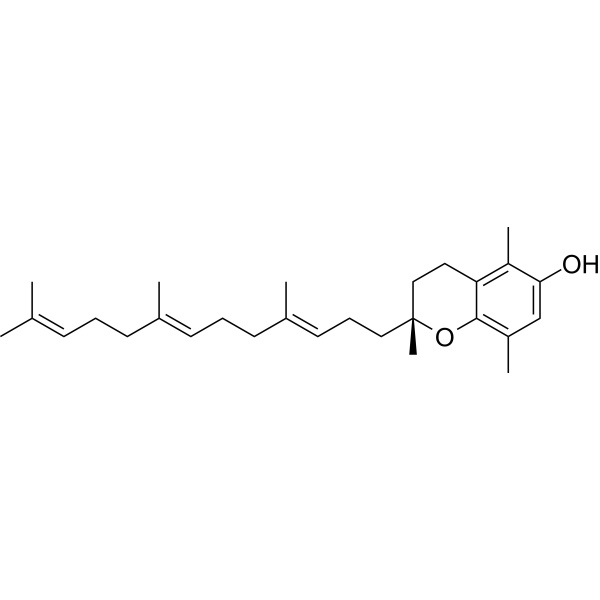
β-Tocotrienol is an isomer of vitamin E. β-Tocotrienol is a less potent antioxidant than α-tocotrienol. β-Tocotrienol can be found in the tocotrienol-rich fraction (TRF) of palm oil, which possesses anti-carcinogenic effects in vitro on human colon carcinoma and prostate cancer cells. β-Tocotrienol inhibits the growth of A549 (GI50 = 1.38 μM) and U87MG (GI50 = 2.53 μM) cells. β-Tocotrienol also induces apoptosis in cancer cells. β-Tocotrienol can inhibit PD-L1 expression and mitigates PD-L1-mediated immune suppression in vitro and in vivo .
loading...
    loading...
Cat. No.: HY-112823S
Synonyms: HS-10296-d6
Almonertinib-d6 (HS-10296-d6) is the deuterium labeled Almonertinib (HY-112823). Almonertinib (HS-10296) is an orally available, irreversible, third-generation EGFR tyrosine kinase inhibitor with high selectivity for EGFR-sensitizing and T790M resistance mutations. Almonertinib shows great inhibitory activity against T790M, T790M/L858R and T790M/Del19 (IC50: 0.37, 0.29 and 0.21 nM, respectively), and is less effective against wild type (3.39 nM). Almonertinib is used for the research of the non-small cell lung cancer .
loading...
    loading...
Cat. No.: HY-121856
CAS No.: 36740-73-5
Target:  

Others

Research Areas:  

Inflammation/Immunology

Flumizole, a derivative of substituted 5,6-diaryl-2,3-dihydroimidazo[2,1-b]thiazoles, was synthesized and evaluated for its immunoregulatory and anti-inflammatory properties in animal models such as rat adjuvant-induced arthritis and mouse oxazolone-induced contact sensitivity assays. This compound class combines structural elements from flumizole and levamisole, aiming to enhance therapeutic efficacy. Symmetrically substituted 5,6-diaryl compounds with specific alkyl heteroatom or halogen substitutions showed optimal potency in the arthritis model. However, variations in activity were less consistent in the contact sensitivity assay. Flumizole and related compounds demonstrate potential as dual-action agents, targeting inflammation and immune modulation, offering promise for therapeutic development in immune-related disorders .
loading...
    loading...
Cat. No.: HY-145149
CAS No.: 2124210-34-8
Purity:  99.76%
Target:  

ADC Payloads

Research Areas:  

Cancer

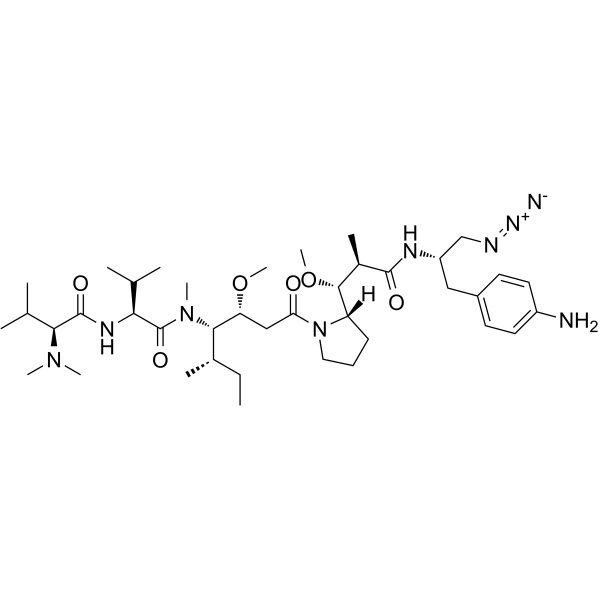
Duostatin 5 is a ADC Cytotoxin designed based on MMAF (HY-15579) and can be used to synthesize ADCs. The preparation of Duostatin 5 has the advantages of fewer synthetic steps, simple operation, less difficulty in quality control, and more stable chemical synthesis process. Duostatin 5 can be linked to the antibody targeting 5T4 (ZV05) by cross-linking with interchain cysteines through a disubstituted C-Lock linker. Duostatin 5 is a click chemistry reagent. It contains an azide group and can undergo copper-catalyzed azide-alkyne cycloaddition (CuAAc) with molecules containing alkyne groups. It can also undergo ring strain-driven alkyne-azide cycloaddition (SPAAC) with molecules containing DBCO or BCN groups[1][2].
loading...
    loading...
Cat. No.: HY-168251
CAS No.: 2933125-05-2
Research Areas:  

Cancer

PROTAC BRM/BRG1 degrader-3 is a BRM/BRG1 PROTAC degrader, exhibiting a DC50 of less than 1 nM for BRM degradation and a DC50 of greater than 1 nM for BRG1 degradation in SW1573 cells. PROTAC BRM/BRG1 degrader-3 shows moderate inhibitory activity against CYP2D6 and hERG. PROTAC BRM/BRG1 degrader-3 inhibits cancer cell proliferation and tumor tissue growth, and exhibits favorable metabolic stability in liver microsomes. PROTAC BRM/BRG1 degrader-3 can be used in non-small cell lung cancer-related research .
loading...
    loading...
Cat. No.: HY-182472
CAS No.: 478132-11-5
Target:  

5-HT Receptor

Research Areas:  

Neurological Disease

AL-38022A is a potent and selective 5-HT2 receptor agonist (Ki ≤2.2 nM), but a significantly lower (>100-fold less) affinity for other 5-HT receptors. AL-38022A potently stimulates functional responses via 5-HT2 receptor subtypes including [Ca 2+]i mobilization and tissue contractions with apparently similar potencies and intrinsic activities. AL-38022A fully generalizes to the (±)-1-(2,5-dimethoxy 4-methylphenyl)-2-aminopropane hydrochloride (DOM) stimulus in drug discrimination paradigms. AL-38022A can be used for the glaucoma research .
loading...
    loading...
Cat. No.: HY-403733B
CAS No.: 1998094-24-8
Research Areas:  

Cancer

(+)-JJ-450 is a non-competitive antagonist targeting the androgen receptor (AR) that inhibits AR nuclear localization and transcriptional activity in the absence of androgen. (+)-JJ-450 is less active than (-)-JJ-450 (HY-403733A) in inhibiting prostate-specific antigen (PSA) expression in LN95 cells, possibly because (+)-JJ-450 targets the ligand binding domain (LBD) of AR. (+)-JJ-450 inhibits the transcriptional activity of AR and its splice variants (e.g., ARv7) by promoting the degradation of unliganded AR in the nucleus and reducing the binding of AR to androgen response elements (AREs). (+)-JJ-450 can be used in castration-resistant prostate cancer (CRPC) studies that are resistant to enzalutamide (MDV3100) (HY-70003) .
loading...
    loading...
Cat. No.: HY-L035
5,148 compounds

New drug development is a time-consuming and high-cost process. Drug repurposing (also called drug repositioning, reprofiling or re‑tasking) offers various advantages over developing an entirely new drug for a given indication. First, the risk of failure is lower. Second, the time frame for drug development can be reduced. Third, less investment is needed. Approved and clinical drugs, especially after phase I drugs, have identified bioactivities, good pharmacokinetic characteristics and safety which are suitable for drug repurposing.

MCE Drug Repurposing Compound Library contains 5,148 approved drugs and passed phase Ⅰclinical drugs, which have been completed extensive preclinical and clinical studies and have well-characterized bioactivities, safety and bioavailability properties.

Cat. No.: HY-L022
3,236 compounds

New drug development is a time-consuming and high-cost process. Drug repurposing (also called drug repositioning, reprofiling or re‑tasking) offers various advantages over developing an entirely new drug for a given indication. First, the risk of failure is lower. Second, the time frame for drug development can be reduced. Third, less investment is needed. Approved drugs have identified bioactivities, good pharmacokinetic characteristics and safety which are suitable for drug repurposing.

MCE owns a unique collection of 3,236 approved compounds which have been completed extensive preclinical and clinical studies and have well-characterized bioactivities, safety and bioavailability properties. MCE FDA-Approved Drug Library is a good tool for drug repurposing which could dramatically accelerate drug development.

Cat. No.: HY-121195
CAS No.: 63469-19-2
Synonyms: PC-904
Target:  

Bacterial

Research Areas:  

Infection

Apalcillin (PC-904) in combination with Ro 48-1220, a penam sulfone β-lactamase inhibitor, demonstrated broad-spectrum activity against gram-negative aerobic and anaerobic bacteria, excluding Klebsiella oxytoca. It exhibited potent activity against β-lactamase-producing Moraxella catarrhalis, Haemophilus influenzae, and Neisseria gonorrhoeae, with effective MICs (11 μg/mL). The combination also inhibited Pseudomonas aeruginosa, Stenotrophomonas maltophilia, and Acinetobacter species at low MICs (0.25 to 4 μg/mL). However, its efficacy against oxacillin-resistant staphylococci and certain gram-positive organisms was limited. Apalcillin/Ro 48-1220 showed comparable efficacy to piperacillin/tazobactam against some extended-spectrum β-lactamase-producing Escherichia coli but was less effective against SHV-type β-lactamases .
loading...
    loading...
Cat. No.: HY-123905A
CAS No.: 956189-58-5
Purity:  99.68%
Research Areas:  

Infection Cancer

LIN28 inhibitor LI71 enantiomer is the less active enantiomer of LIN28 inhibitor LI71 (HY-123905). LIN28 inhibitor LI71 is a LIN28 inhibitor that effectively inhibits LIN28:let-7 binding (IC50: 7 μM). LIN28 inhibitor LI71 can abolish LIN28-mediated oligouridylation of let-7 precursor (IC50: 27 μM). LIN28 inhibitor LI71 has potential application value in LIN28-driven cancer research. LIN28 inhibitor LI71 inhibits the interaction of cold shock protein of Plasmodium falciparum (PfCoSP) with DNA and α/β tubulin and has an inhibitory effect on Plasmodium falciparum .
loading...
    loading...
Cat. No.: HY-181838
CAS No.: 3064485-73-7
Target:  

CDK Apoptosis

Research Areas:  

Cancer

CIRc-014 is an orally active Cyclin A/B inhibitor with a Cyclin A IC50 of 0.05 μM, Cyclin A Kd of 2.7 nM, Cyclin B IC50 of less than 0.02 μM and Cyclin B Kd of 1.0 nM. CIRc-014 activates the spindle assembly checkpoint and promotes the formation of a complex between Cyclin B and CDK2 by blocking the RxL interaction of Cyclin A/B. CIRc-014 can induce replication stress, DNA damage, mitotic arrest and apoptosis in tumor cells. CIRc-014 showed tumor growth inhibition and regression in NCI-H69 and NCI-H446 small cell lung cancer xenograft models. CIRc-014 can be used for the research of small-cell lung cancer .
loading...
    loading...
Cat. No.: HY-N14094
CAS No.: 2632-29-3
Tubulosine is an alkaloid. Tubulosine can be isolated from Pogonopus tubulosus (DC.) Schumann. Tubulosine is an ATP-competitive, selective JAK3 inhibitor with an IC50 value of 9.9 nM. Tubulosine also inhibits the kinase activities of other JAK family members, the extent of inhibition is less than that of JAK3, with IC50 values of 69.5, 84.9 and 76.3 nM for JAK1, JAK2 and TYK2, respectively. Tubulosine selectively inhibits JAK3 signalling by binding to the ATP-binding site of the kinase of JAK3. Tubulosine induces apoptotic and necrotic/autophagic cell death. Tubulosine inhibits the process of peptide chain elongation by eukaryotic polysomes by, specifically preventing the elongation-factor-2-dependent step of translocation. Tubulosine exhibits anticancer activity in breast cancer cells .
loading...
    loading...
Cat. No.: HY-W014566
CAS No.: 88-30-2
Synonyms: 3-(Trifluoromethyl)-4-Nitrophenol; TFM
4-Nitro-3-(trifluoromethyl)phenol (TFM) is a piscicide that is toxic to lampreys (P. marinus) (LC50 values are 1.97-2.11 for cysts, 2.05-2.21 for fry, 1.6-2.45 for juveniles, and 1.6-1.63 for adults, respectively). 4-Nitro-3-(trifluoromethyl)phenol is also toxic to juvenile lake sturgeons (A. fulvescens) less than 100 mm, but is nontoxic to a variety of other fish species. 4-Nitro-3-(trifluoromethyl)phenol (50 μM) dissociates oxidative phosphorylation by 22% and 28% in isolated livers of lampreys and rainbow trout (O. mykiss), respectively. 4-Nitro-3-(trifluoromethyl)phenol can be used to control lamprey larval populations.
loading...
    loading...
Cat. No.: HY-L066
3,750 compounds

New drug development is a time-consuming and high-cost process. Drug repurposing (also called drug repositioning, reprofiling or retasking) offers various advantages over developing an entirely new drug for a given indication. First, the risk of failure is lower. Second, the time frame for drug development can be reduced. Third, less investment is needed. Approved drugs and pharmacopoeia collected compounds have identified bioactivities, good pharmacokinetic characteristics and safety which are suitable for drug repurposing.

MCE owns a unique collection of 3,750 compounds from approved institutions such as FDA, EMA, NMPA, PMDA, etc. or pharmacopoeia such as USP, BP, JP, etc. These compounds have well-characterized bioactivities, safety and bioavailability properties. MCE FDA Approved & Pharmacopeial Drug Library is a good tool for drug repurposing which could dramatically accelerate drug development.

Cat. No.: HY-108693R
CAS No.: 490-23-3
β-Tocotrienol (Standard) is the analytical standard of β-Tocotrienol. This product is intended for research and analytical applications. β-Tocotrienol is an isomer of vitamin E. β-Tocotrienol is a less potent antioxidant than α-tocotrienol. β-Tocotrienol can be found in the tocotrienol-rich fraction (TRF) of palm oil, which possesses anti-carcinogenic effects in vitro on human colon carcinoma and prostate cancer cells. β-Tocotrienol inhibits the growth of A549 (GI50 = 1.38 μM) and U87MG (GI50 = 2.53 μM) cells. β-Tocotrienol also induces apoptosis in cancer cells. β-Tocotrienol can inhibit PD-L1 expression and mitigates PD-L1-mediated immune suppression in vitro and in vivo .
loading...
    loading...
Cat. No.: HY-145149S
Duostatin 5- 13C,d3 is the 13C-labeled Duostatin 5 (HY-145149). Duostatin 5 is a ADC Cytotoxin designed based on MMAF (HY-15579) and can be used to synthesize ADCs. The preparation of Duostatin 5 has the advantages of fewer synthetic steps, simple operation, less difficulty in quality control, and more stable chemical synthesis process. Duostatin 5 can be linked to the antibody targeting 5T4 (ZV05) by cross-linking with interchain cysteines through a disubstituted C-Lock linker. Duostatin 5 is a click chemistry reagent. It contains an azide group and can undergo copper-catalyzed azide-alkyne cycloaddition (CuAAc) with molecules containing alkyne groups. It can also undergo ring strain-driven alkyne-azide cycloaddition (SPAAC) with molecules containing DBCO or BCN groups[1][2].
loading...
    loading...

