758 Results for "

MMPs

" in MedChemExpress (MCE) Product Catalog:
Products (758)

758 Results for "MMPs" in MCE Product Catalog:

Cat. No.: HY-116054
CAS No.: 1314096-68-8
Ibulocydine is an isobutyrate prodrug of the Cdk inhibitor BMK-Y101 (HY-188159), with oral activity, and exhibits IC50 values of approximately 50 nM against CDK1/CDK2, 530 nM against CDK7/cyclin H/Mat1, and 85 nM against CDK9/cyclin T. Ibulocydine reduces the phosphorylation levels of Rb, nucleolin, and RNA polymerase II CTD Ser-5 and Ser-2, downregulates the expression of Mcl-1, survivin, and XIAP, decreases MMP-9 expression, and lowers the Bcl-2/Bax ratio, activates calpain-mediated Bax cleavage, cytochrome c release, and caspase activation. Ibulocydine induces apoptosis, inhibits the growth of cancer cells and xenografts, enhances the sensitivity of cancer cells to TRAIL and radiotherapy, and blocks cancer cell metastasis. Ibulocydine can be used in research related to various cancers, including hepatocellular carcinoma, triple-negative breast cancer, lung cancer, and colon cancer .
loading...
    loading...
Cat. No.: HY-183764
COX-2/5-LOX-IN-8 is an orally active dual COX-2/5-LOX inhibitor, with an IC50 of 6.30 μM against sheep-derived COX-2 and an IC50 of 8.09 μM against 5-LOX. COX-2/5-LOX-IN-8 acts as a membrane stabilizer that stabilizes erythrocyte membranes against hypotonicity-induced hemolysis. COX-2/5-LOX-IN-8 functions as a protein stabilizer that inhibits heat-induced denaturation of bovine serum albumin. COX-2/5-LOX-IN-8 reduces paw swelling, improves hind limb weight-bearing function, decreases serum levels of pro-inflammatory cytokines (TNF-α, IL-1β, IL-6, CRP), and lowers serum levels of cartilage degradation biomarkers (COMP, MMP-3, CTX-II). COX-2/5-LOX-IN-8 can be used in the research of osteoarthritis .
loading...
    loading...
Cat. No.: HY-N1401R
CAS No.: 112246-15-8
20(R)-Ginsenoside Rh2 (Standard) is the analytical standard of 20(R)-Ginsenoside Rh2. This product is intended for research and analytical applications. 20(R)-Ginsenoside Rh2 is an orally active protopanaxadiol-type saponin with multiple biological activities. 20(R)-Ginsenoside Rh2 exerts a significant inhibitory effect on non-small cell lung cancer and liver cancer by inducing cell cycle arrest and promoting apoptosis. 20(R)-Ginsenoside Rh2 exerts anti-γ-herpesvirus effects by inhibiting viral DNA replication. 20(R)-Ginsenoside Rh2 inhibits inflammatory mediators by reducing the levels of NO, PGE2, and ROS; it can delay skin photoaging by reducing ROS and inhibiting MMP-9/2 activity. 20(R)-Ginsenoside Rh2 accelerates the recovery after muscle injury by activating the Akt1/PKB signaling pathway. 20(R)-Ginsenoside Rh2 can inhibit osteoclast formation and exert an anti-osteoporosis effect.
loading...
    loading...
Cat. No.: HY-114164G
CAS No.: 9002-04-4
Murine Thrombin is a murine serine protease that plays a central role in blood coagulation. Murine Thrombin stimulates macrophages to polarize into a unique phenotype characterized by anti-inflammatory and pro-repair properties. Murine Thrombin activates PAR1, induces the production of MCP-1, MMP3 and VEGF in mouse intervertebral discs, and causes degradation of the cartilage matrix and destruction of intervertebral disc structure. Murine Thrombin activity increases significantly in paraoxon-induced status epilepticus .
loading...
    loading...
Cat. No.: HY-119307R
CAS No.: 287405-51-0
Synonyms: TMI-005 (Standard)
Research Areas:  

Cancer

Apratastat (Standard) is the analytical standard of Apratastat. This product is intended for research and analytical applications. Apratastat (TMI-005) is an orally active, non-selective and reversible TACE/MMPs inhibitor, can inhibit inhibit the release of TNF-α. Apratastat has the potential to overcome radiotherapy-resistance in non-small cell lung cancer (NSCLC) . Apratastat is a click chemistry reagent, it contains an Alkyne group and can undergo copper-catalyzed azide-alkyne cycloaddition (CuAAc) with molecules containing Azide groups.
loading...
    loading...
Cat. No.: HY-146194
CAS No.: 2974448-39-8
Research Areas:  

Cancer

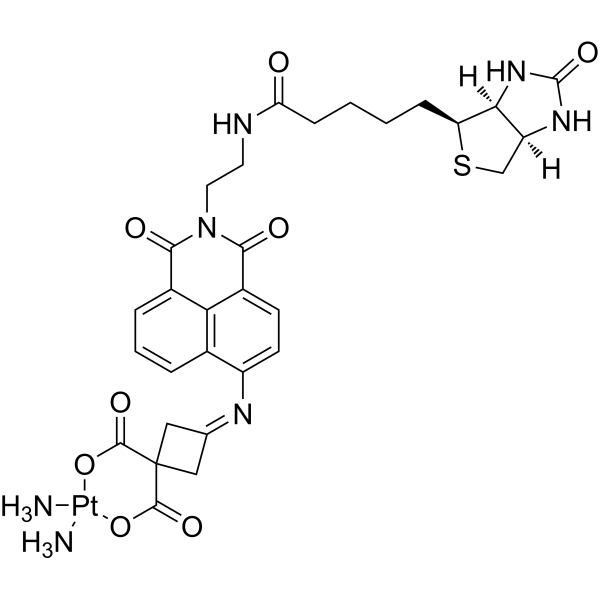
NHEJ inhibitor-1 (Compound C2) is a trifunctional Pt(II) complex, alleviates the non-homologous end connection (NHEJ)/homologous recombination (HR)-related double strand breaks (DSBs) repairs to evade Cisplatin-resistance in non-small cell lung cancer (NSCLC). NHEJ inhibitor-1 inhibits the damage repair proteins Ku70 and Rad51 to make tumors re-sensitive to Cisplatin. NHEJ inhibitor-1 also induces ROS generation and MMP deduction .
loading...
    loading...
Cat. No.: HY-153505
CAS No.: 1607004-34-1
Target:  

ADAMTS

Research Areas:  

Inflammation/Immunology

ADAMTS-4/5-IN-1 is an orally active, and selective dual ADAMTS-4/5 inhibitor with IC50 values of 2 nM for human ADAMTS-4 and human ADAMTS-5, respectively. ADAMTS-4/5-IN-1 exhibits high selectivity against MMP enzymes. ADAMTS-4/5-IN-1 reduces aggrecan degradation products in synovial fluid. ADAMTS-4/5-IN-1 can be used for the research of osteoarthritis .
loading...
    loading...
Cat. No.: HY-179054
Apoptosis inducer 51 (Compound 5d) is an apoptosis inducer. Apoptosis inducer 51 exhibits strong inhibitory activity against MDA-MB-231 cells. Apoptosis inducer 51 inhibits cell invasion and migration, induces G2/M phase cell cycle arrest and cell apoptosis. Apoptosis inducer 51 causes DNA damage, ROS burst and mitochondrial membrane potential (MMP) collapse. Apoptosis inducer 51 can be used for the study of triple-negative breast cancer.
loading...
    loading...
Cat. No.: HY-187488A
Synonyms: DOPE-PEG2000-Mal-Cys-GNYTCEVTELTREGETIIELK
Research Areas:  

Cancer

DOPE-PEG2000-GNYTCEVTELTREGETIIELK (DOPE-PEG2000-Mal-Cys-GNYTCEVTELTREGETIIELK) is an amphiphilic lipid-PEG-peptide conjugate composed of DOPE (1,2-dioleoyl-sn-glycerol-3-phosphatidylethanolamine), PEG2000, and a 21-amino acid peptide derived from tissue inhibitor of metalloproteinases-2 (TIMP-2). DOPE-PEG2000-GNYTCEVTELTREGETIIELK is intended for MMP-targeted drug delivery and anti-angiogenic studies.
loading...
    loading...
Cat. No.: HY-187513
MAHS-3 is a thymidylate synthase (TS) and dihydrofolate reductase (DHFR) inhibitor, with IC50 values of 5.279 μM and 52.60 μM against human targets, respectively. MAHS-3 exhibits broad-spectrum antiproliferative activity against cancer cells, induces cell cycle arrest, activates endogenous caspase-dependent apoptosis, reduces MMP levels, inhibits cell migration, increases intracellular NO levels, and promotes autophagy activity. MAHS-3 can be used in cancer-related research .
loading...
    loading...
Cat. No.: HY-P11656
CAS No.: 77739-20-9
α-Neoendorphin porcine is a peptide. α-Neoendorphin porcine effectively alleviates UVB-induced skin photoaging via activating mTOR-Beclin-1-mediated autophagy, reducing UVB-triggered ROS production, inhibiting the MAPK pathway and MMP activity, and promoting type I procollagen synthesis. α-Neoendorphin porcine exerts anti-aging and anti-wrinkle effects on skin cells. α-Neoendorphin porcine can be used in studies related to skin photoaging .
loading...
    loading...
Cat. No.: HY-W010243S
CAS No.: 1329509-49-0
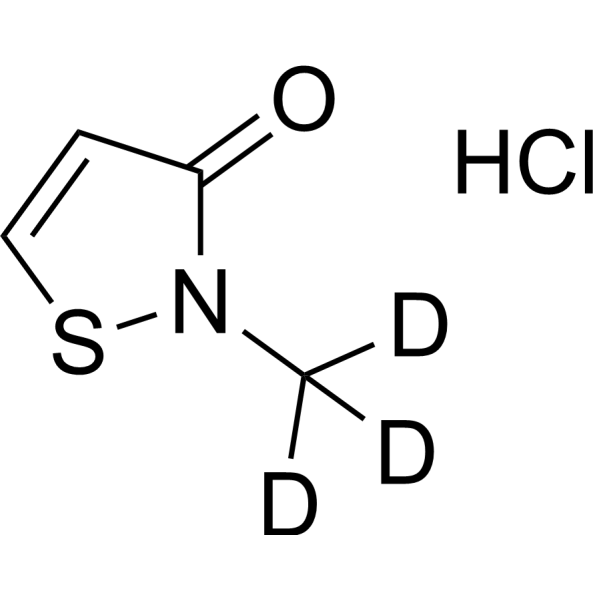
Methylisothiazolinone-d3 hydrochloride is the deuterium labeled Methylisothiazolinone hydrochloride (HY-W010243). Methylisothiazolinone hydrochloride is a bacterial and fungal inhibitor and preservative, as well as a sensitizer. Methylisothiazolinone hydrochloride can activate matrix metalloproteinases (MMPs) in human bronchial epithelial cells to induce apoptosis and inflammatory response. Methylisothiazolinone hydrochloride can promote the development of atopic dermatitis in mice by disrupting Th2/Th17 related immune responses. Methylisothiazolinone hydrochloride can cause mitochondrial damage in the endothelium of rat cerebral blood vessels .
loading...
    loading...
Cat. No.: HY-W747703
CAS No.: 1163160-18-6
Synonyms: Benzoylglycine-13C6
Hippuric acid- 13C6 (Benzoylglycine- 13C6) is 13C labeled Hippuric acid. Hippuric Acid is an orally active metabolite. Hippuric Acid can be produced by intestinal microorganisms from the metabolism of polyphenols, benzoic acid. Hippuric Acid decreases NRF2, MMP9 and leads to ROS accumulation. Hippuric Acid activates TGFβ/SMAD signaling. Hippuric Acid improves hyperuricemia and colitis. Hippuric Acid can also be used in cardiovascular disease research . .
loading...
    loading...
Cat. No.: HY-12008R
CAS No.: 183319-69-9
Synonyms: CP-358774 hydrochloride (Standard); NSC 718781 hydrochloride (Standard); OSI-774 hydrochloride (Standard)
Erlotinib Hydrochloride Standard (CP-358774 hydrochloride Standard) is the analytical standard of Erlotinib Hydrochloride (HY-12008). This product is intended for research and analytical applications. Erlotinib (CP-358774) Hydrochloride is a selective, orally active EGFR tyrosine kinase inhibitor. Erlotinib Hydrochloride also acts as a substrate and inhibitor of OATP2B1, with an IC50 of approximately 0.079 μM for inhibiting OATP2B1-mediated uptake of estrone 3-sulfate. Erlotinib Hydrochloride blocks EGFR phosphorylation, downstream signal transduction, as well as the growth and proliferation of cancer cells. Erlotinib Hydrochloride inhibits MMP-10-mediated renal injury, fibrotic lesions, the ERK1/2, GSK-3β and β-catenin signaling pathways, as well as the deposition of fibronectin, α-SMA, collagen and renal injury markers. Erlotinib Hydrochloride is metabolized via CYP3A to produce the active metabolite OSI-420. Erlotinib Hydrochloride can be used in research related to non-small cell lung cancer, gastric cancer, papillary renal cell carcinoma, EGFR inhibitor resistance and renal fibrosis .
loading...
    loading...
Cat. No.: HY-12008S
CAS No.: 1189953-78-3
Purity:  98.13%
Synonyms: CP-358774-d6 hydrochloride; NSC 718781-d6 hydrochloride; OSI-774-d6 hydrochloride
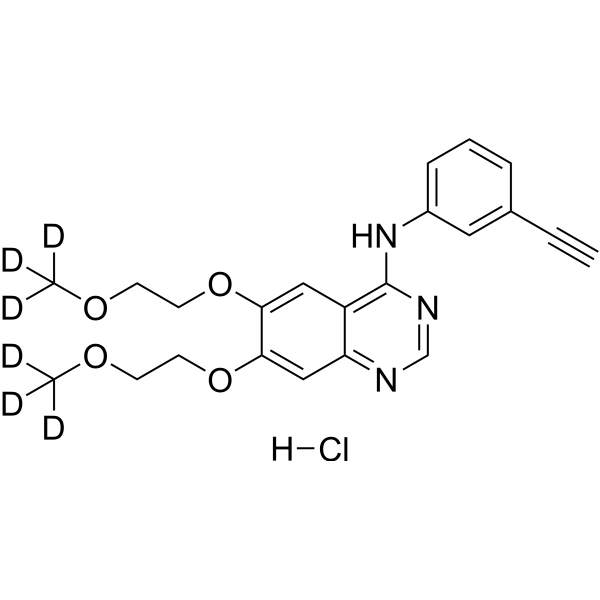
Erlotinib-d6 hydrochloride (CP-358774-d6 hydrochloride) is the deuterated-labeled Erlotinib Hydrochloride (HY-12008). Erlotinib (CP-358774) Hydrochloride is a selective, orally active EGFR tyrosine kinase inhibitor. Erlotinib Hydrochloride also acts as a substrate and inhibitor of OATP2B1, with an IC50 of approximately 0.079 μM for inhibiting OATP2B1-mediated uptake of estrone 3-sulfate. Erlotinib Hydrochloride blocks EGFR phosphorylation, downstream signal transduction, as well as the growth and proliferation of cancer cells. Erlotinib Hydrochloride inhibits MMP-10-mediated renal injury, fibrotic lesions, the ERK1/2, GSK-3β and β-catenin signaling pathways, as well as the deposition of fibronectin, α-SMA, collagen and renal injury markers. Erlotinib Hydrochloride is metabolized via CYP3A to produce the active metabolite OSI-420. Erlotinib Hydrochloride can be used in research related to non-small cell lung cancer, gastric cancer, papillary renal cell carcinoma, EGFR inhibitor resistance and renal fibrosis .
loading...
    loading...
Cat. No.: HY-12008S1
CAS No.: 1210610-07-3
Synonyms: CP-358774-13C6 hydrochloride; NSC 718781-13C6 hydrochloride; OSI-774-13C6 hydrochloride
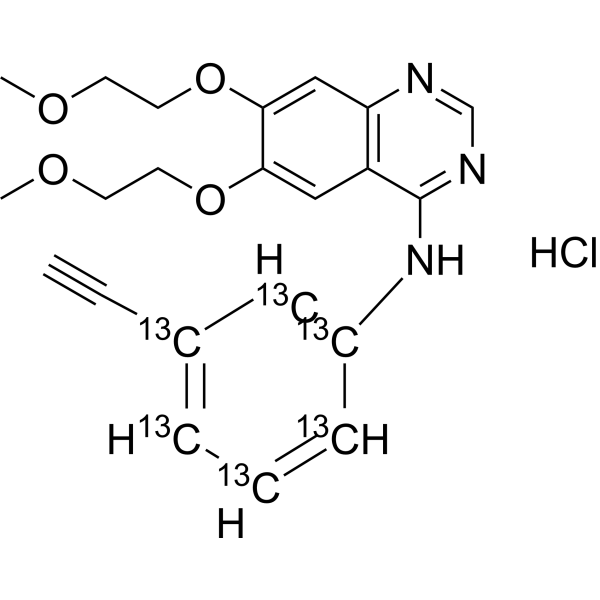
Erlotinib- 13C6 hydrochloride (CP-358774- 13C6 hydrochloride) is the 13C-labeled Erlotinib Hydrochloride (HY-12008). Erlotinib (CP-358774) Hydrochloride is a selective, orally active EGFR tyrosine kinase inhibitor. Erlotinib Hydrochloride also acts as a substrate and inhibitor of OATP2B1, with an IC50 of approximately 0.079 μM for inhibiting OATP2B1-mediated uptake of estrone 3-sulfate. Erlotinib Hydrochloride blocks EGFR phosphorylation, downstream signal transduction, as well as the growth and proliferation of cancer cells. Erlotinib Hydrochloride inhibits MMP-10-mediated renal injury, fibrotic lesions, the ERK1/2, GSK-3β and β-catenin signaling pathways, as well as the deposition of fibronectin, α-SMA, collagen and renal injury markers. Erlotinib Hydrochloride is metabolized via CYP3A to produce the active metabolite OSI-420. Erlotinib Hydrochloride can be used in research related to non-small cell lung cancer, gastric cancer, papillary renal cell carcinoma, EGFR inhibitor resistance and renal fibrosis .
loading...
    loading...
Cat. No.: HY-50896R
CAS No.: 183321-74-6
Synonyms: CP-358774 (Standard); NSC 718781 (Standard); OSI-774 (Standard)
Erlotinib Standard (CP-358774 Standard) is the analytical standard of Erlotinib (HY-50896). This product is intended for research and analytical applications. Erlotinib (CP-358774) is a selective, orally active EGFR tyrosine kinase inhibitor. Erlotinib also acts as a substrate and inhibitor of OATP2B1, with an IC50 of approximately 0.079 μM for inhibiting OATP2B1-mediated uptake of estrone 3-sulfate. Erlotinib blocks EGFR phosphorylation, downstream signal transduction, as well as the growth and proliferation of cancer cells. Erlotinib inhibits MMP-10-mediated renal injury, fibrotic lesions, the ERK1/2, GSK-3β and β-catenin signaling pathways, as well as the deposition of fibronectin, α-SMA, collagen and renal injury markers. Erlotinib is metabolized via CYP3A to produce the active metabolite OSI-420. Erlotinib can be used in research related to non-small cell lung cancer, gastric cancer, papillary renal cell carcinoma, EGFR inhibitor resistance and renal fibrosis .
loading...
    loading...
Cat. No.: HY-50896S
CAS No.: 1034651-23-4
Synonyms: CP-358774-d6; NSC 718781-d6; OSI-774-d6
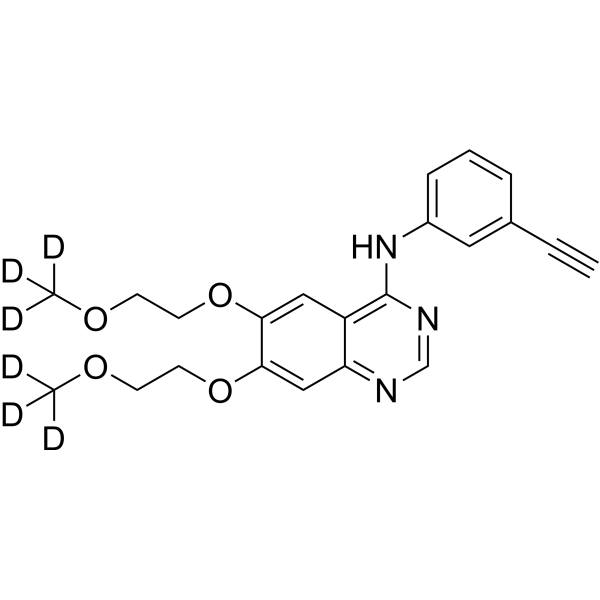
Erlotinib-d6 (CP-358774-d6) is the deuterated-labeled Erlotinib (HY-50896). Erlotinib (CP-358774) is a selective, orally active EGFR tyrosine kinase inhibitor. Erlotinib also acts as a substrate and inhibitor of OATP2B1, with an IC50 of approximately 0.079 μM for inhibiting OATP2B1-mediated uptake of estrone 3-sulfate. Erlotinib blocks EGFR phosphorylation, downstream signal transduction, as well as the growth and proliferation of cancer cells. Erlotinib inhibits MMP-10-mediated renal injury, fibrotic lesions, the ERK1/2, GSK-3β and β-catenin signaling pathways, fibronectin, α-SMA, collagen deposition, and renal injury markers. Erlotinib is metabolized via CYP3A to produce the active metabolite OSI-420. Erlotinib can be used in research related to non-small cell lung cancer, gastric cancer, papillary renal cell carcinoma, pancreatic cancer, renal fibrosis, and other conditions .
loading...
    loading...
Cat. No.: HY-50896S1
CAS No.: 1211107-68-4
Synonyms: CP-358774-13C6; NSC 718781-13C6; OSI-774-13C6
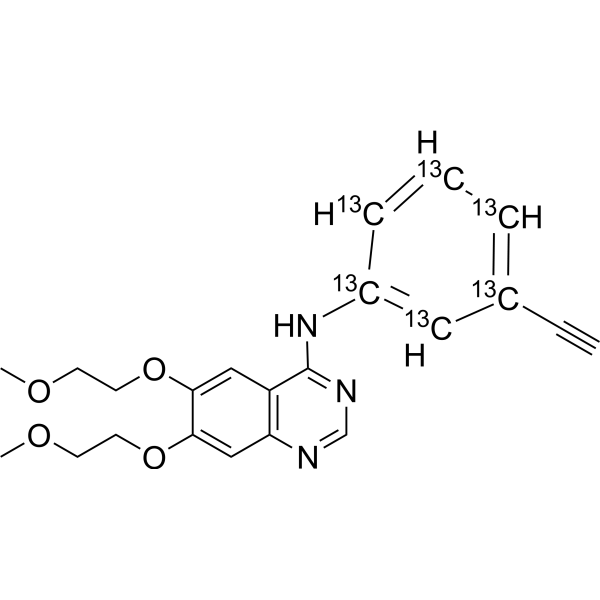
Erlotinib- 13C6 (CP-358774- 13C6) is the 13C-labeled Erlotinib (HY-50896). Erlotinib (CP-358774) is a selective, orally active EGFR tyrosine kinase inhibitor. Erlotinib also acts as a substrate and inhibitor of OATP2B1, with an IC50 of approximately 0.079 μM for inhibiting OATP2B1-mediated uptake of estrone 3-sulfate. Erlotinib blocks EGFR phosphorylation, downstream signal transduction, as well as the growth and proliferation of cancer cells. Erlotinib inhibits MMP-10-mediated renal injury, fibrotic lesions, the ERK1/2, GSK-3β and β-catenin signaling pathways, fibronectin, α-SMA, collagen deposition, and renal injury markers. Erlotinib is metabolized via CYP3A to produce the active metabolite OSI-420. Erlotinib can be used in research related to non-small cell lung cancer, gastric cancer, papillary renal cell carcinoma, pancreatic cancer, renal fibrosis, and other conditions .
loading...
    loading...
Cat. No.: HY-50896S2
CAS No.: 1130852-41-3
Synonyms: CP-358774-d4; NSC 718781-d4; OSI-774-d4
Erlotinib-d4 (CP-358774-d4) is the deuterated-labeled Erlotinib (HY-50896). Erlotinib (CP-358774) is a selective, orally active EGFR tyrosine kinase inhibitor. Erlotinib also acts as a substrate and inhibitor of OATP2B1, with an IC50 of approximately 0.079 μM for inhibiting OATP2B1-mediated uptake of estrone 3-sulfate. Erlotinib blocks EGFR phosphorylation, downstream signal transduction, as well as the growth and proliferation of cancer cells. Erlotinib inhibits MMP-10-mediated renal injury, fibrotic lesions, the ERK1/2, GSK-3β and β-catenin signaling pathways, fibronectin, α-SMA, collagen deposition, and renal injury markers. Erlotinib is metabolized via CYP3A to produce the active metabolite OSI-420. Erlotinib can be used in research related to non-small cell lung cancer, gastric cancer, papillary renal cell carcinoma, pancreatic cancer, renal fibrosis, and other conditions .
loading...
    loading...

