250 Results for "

ROS generation

" in MedChemExpress (MCE) Product Catalog:
Products (250)

250 Results for "ROS generation" in MCE Product Catalog:

Cat. No.: HY-N2693
CAS No.: 66777-70-6
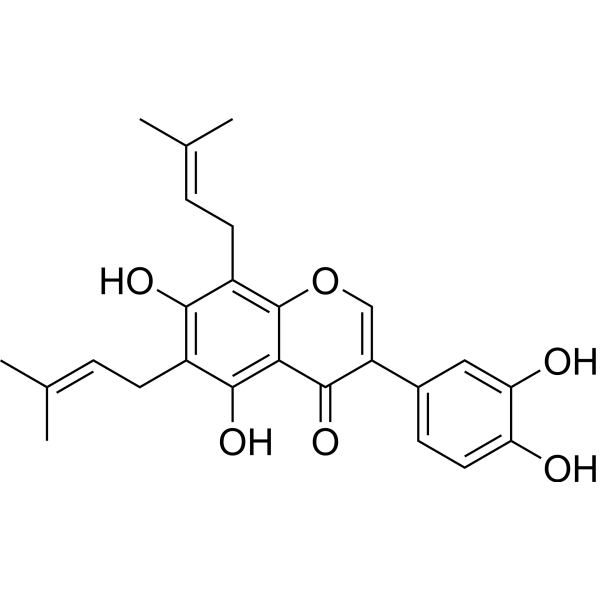
6,8-Diprenylorobol, a prenylated isoflavone, is a nature product that could be isolated from the leaves of Cudrania tricuspidata. 6,8-Diprenylorobol antiproliferative effect and induces apoptosis through activation of p53 and generation of ROS .
loading...
    loading...
Cat. No.: HY-W016794
CAS No.: 3565-26-2
Research Areas:  

Cancer

NSC3852 exhibits anti-proliferative activity against cancer cell MCF-7. NSC3852 promotes the ROS generation, DNA damage, and apoptosis in MCF-7. NSC3852 exhibits anti-tumor against leukemia in mouse model
loading...
    loading...
Cat. No.: HY-W762011
CAS No.: 5436-43-1
BDE 47 targets mitochondria, inhibits mitochondrial oxidative phosphorylation (OXPHOS), decreases mitochondrial membrane potential (MMP) and induces apoptosis in embryonic cell. BDE 47 induces the generation of ROS, and activates the JNK signaling pathway. BDE 47 exhibits embryonic developmental toxicity in zebrafish .
loading...
    loading...
Cat. No.: HY-100807R
CAS No.: 89-00-9
Purity:  99.96%
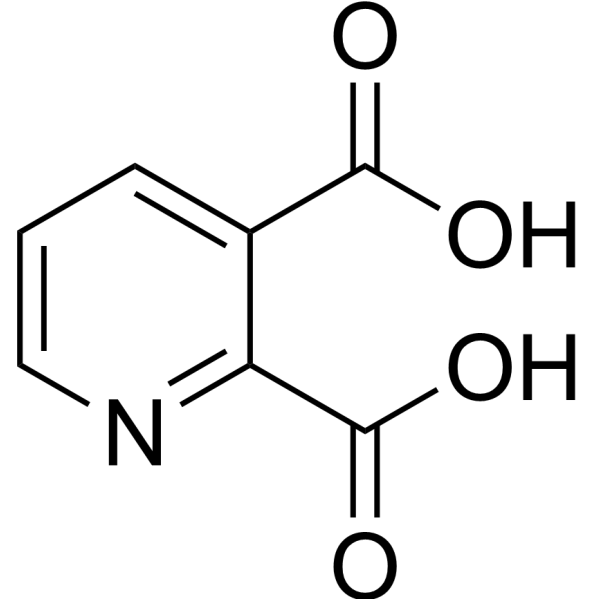
Quinolinic acid (Standard) is the analytical standard of Quinolinic acid. This product is intended for research and analytical applications. Quinolinic acid, an endogenous metabolite of tryptophan, is a N-methyl-D-aspartate receptor (NMDA receptor) agonist. Quinolinic acid increases glutamate efflux, induces the generation of ROS, activates nitric oxide synthase, produces excessive NO, leading to calcium ion influx and neuronal apoptosis.
loading...
    loading...
Cat. No.: HY-109654
CAS No.: 27503-81-7
Purity:  ≥98.0%
Research Areas:  

Metabolic Disease

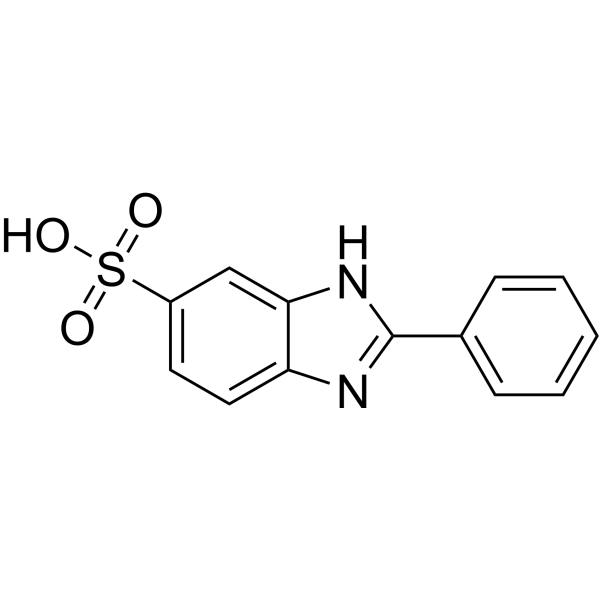
Ensulizole is a sulfonated UV absorber and can intense UVB and partial UVA absorption. Ensulizole can damage the DNA through the generation of reactive oxygen species (ROS) upon UV or sunlight irradiation .
loading...
    loading...
Cat. No.: HY-113978
CAS No.: 712-30-1
Purity:  ≥98.0%
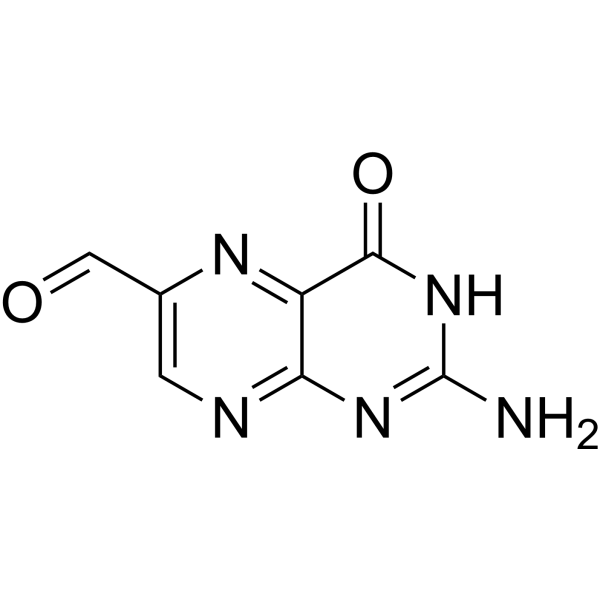
6-Formylpterin is an inhibitor of Xanthine Oxidase. 6-Formylpterin induces intracellular ROS generation and apoptosis in HL-60 cells. 6-Formylpterin suppresses cell proliferation in PanC-1 cells .
loading...
    loading...
Cat. No.: HY-116506
CAS No.: 3668-14-2
Purity:  99.92%
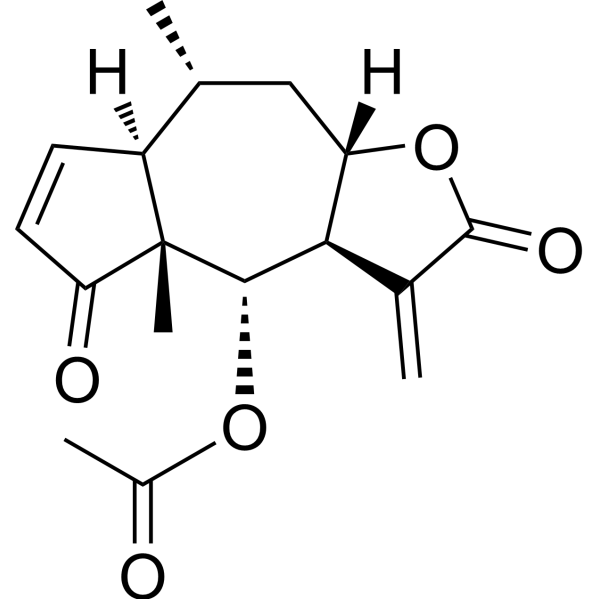
Bigelovin, a sesquiterpene lactone isolated from Inula hupehensis, is a selective retinoid X receptor α agonist. Bigelovin suppresses tumor growth through inducing apoptosis and autophagy via the inhibition of mTOR pathway regulated by ROS generation .
loading...
    loading...
Cat. No.: HY-N2008
CAS No.: 20344-46-1
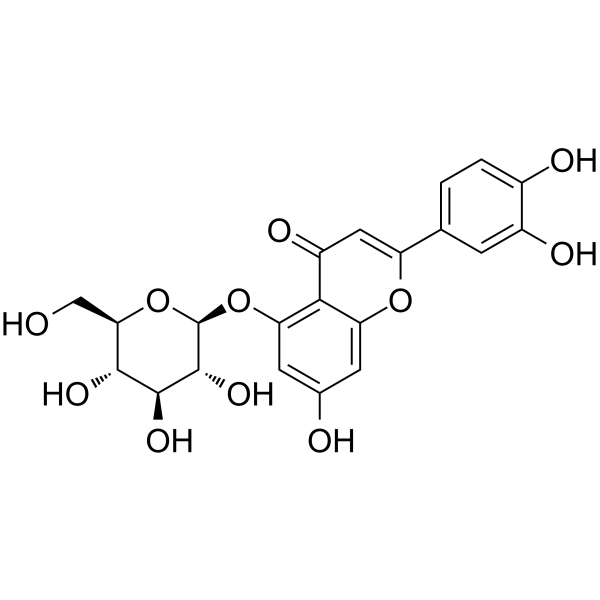
Luteolin 5-O-glucoside, a major flavonoidfrom Cirsium maackii, possesses anti-inflammatory activity. Luteolin 5-O-glucoside inhibits LPS-induced NO production and t-BHP-induced ROS generation. Luteolin 5-O-glucoside suppresses the expression of iNOS and COX-2 in macrophages .
loading...
    loading...
Cat. No.: HY-100807S2
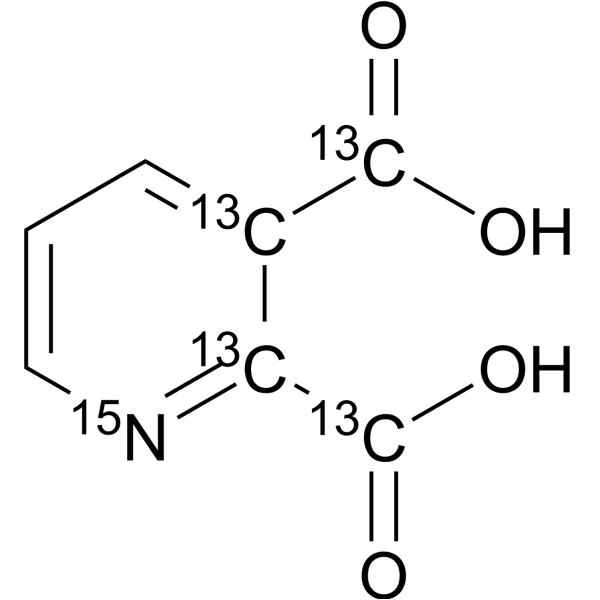
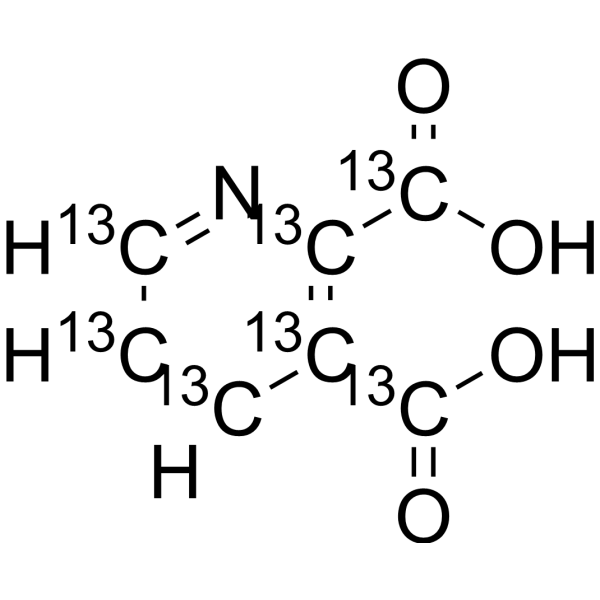
Quinolinic acid-13C4, 15N is an isotopic labeled Quinolinic acid (HY-100807). Quinolinic acid, an endogenous metabolite of tryptophan, is a N-methyl-D-aspartate receptor (NMDA receptor) agonist. Quinolinic acid increases glutamate efflux, induces the generation of ROS, activates nitric oxide synthase, produces excessive NO, leading to calcium ion influx and neuronal apoptosis.
loading...
    loading...
Cat. No.: HY-118075
CAS No.: 606-06-4
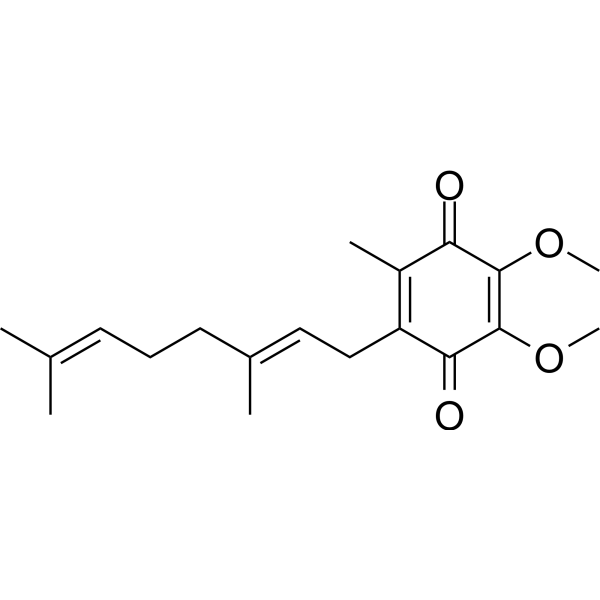
Coenzyme Q2 is a benzoquinone electron carrier in the mitochondrial electron transport chain and a p53-dependent apoptosis inducer. Coenzyme Q2 induces p53 phosphorylation at Ser15, promoting p53 accumulation and functional activation. Coenzyme Q2 induces ROS generation, caspase-3 activation, DNA fragmentation, phosphatidylserine externalization, mitochondrial permeability transition pore opening, and oxidative phosphorylation uncoupling. Coenzyme Q2 inhibits Complex I, Complex III, and Complex IV activities, disrupting electron transport and membrane potential generation. Coenzyme Q2 induces excessive mitochondrial proton leak in forebrain mitochondria. Coenzyme Q2 causes loss of righting reflex in mice, accompanied by slow-wave delta EEG activity and reversible loss of wakefulness. Coenzyme Q2 inhibits lipid peroxidation and scavenges superoxide radicals. Coenzyme Q2 is used in research on leukemia, myocardial ischemia-reperfusion injury, and mitochondrial encephalomyopathy .
loading...
    loading...
Cat. No.: HY-111226A
CAS No.: 2699724-40-6
Purity:  99.17%
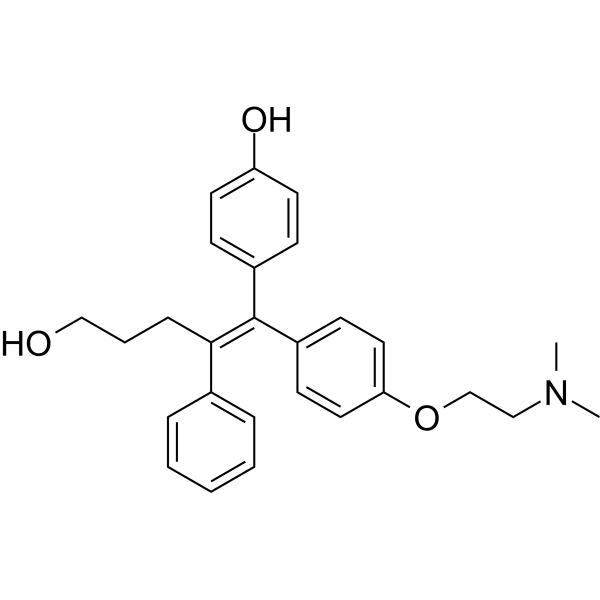
(E/Z)-GSK5182 is a racemic compound of (E)-GSK5182 and (Z)-GSK5182 isomers. GSK5182 is a highly selective and orally active inverse agonist of estrogen-related receptor γ (ERRγ) with an IC50 of 79 nM . GSK5182 also induces reactive oxyen species (ROS) generation in hepatocellular carcinoma .
loading...
    loading...
Cat. No.: HY-N6020A
CAS No.: 74628-42-5
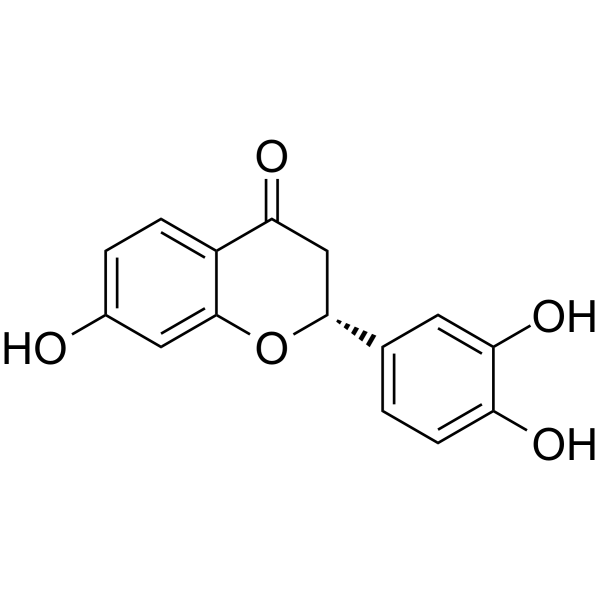
(+)-Butin is the R-enantiomer of Butin (HY-N6020B). Butin is a bioactive flavonoid. Butin can be isolated from the heartwood of Dalbergia cocos. Butin exhibits potent antioxidant, antiplatelet, and anti-inflammatory activities.
loading...
    loading...
Cat. No.: HY-142956
Purity:  99.65%
Research Areas:  

Cancer

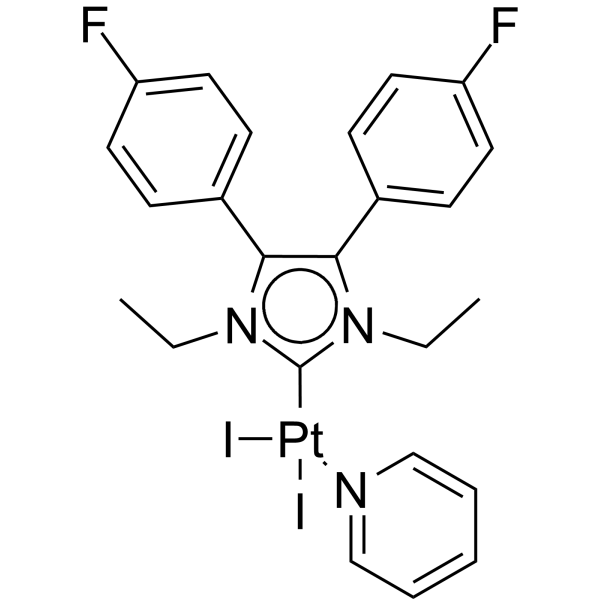
ROS-ERS inducer 1 is a type II ICD (immunogenic cell death) inducer. ROS-ERS inducer 1 is a Pt(II)-N-heterocyclic carbene (Pt(II)-NHC) complex derived from 4,5-diarylimidazole. ROS-ERS inducer 1 successfully induces endoplasmic reticulum stress (ERS) accompanied by reactive oxygen species (ROS) generation and finally lead to the release of damage-associated molecular patterns (DAMPs) in HCC cells. ROS-ERS inducer 1 displays much higher anticancer activities than Cisplatin .
loading...
    loading...
Cat. No.: HY-18258R
CAS No.: 633-65-8
Synonyms: Natural Yellow 18 chloride (Standard)
Berberine (chloride) (Standard) is the analytical standard of Berberine (chloride). This product is intended for research and analytical applications. Berberine chloride is an alkaloid that acts as an antibiotic. Berberine chloride induces reactive oxygen species (ROS) generation and inhibits DNA topoisomerase. Antineoplastic properties .
loading...
    loading...
Cat. No.: HY-172086
Research Areas:  

Cancer

TrxR-IN-7 is a thioredoxin reductase (TrxR) inhibitor with an IC50 of 3.5 μM. TrxR-IN-7 induces reactive oxygen species (ROS) generation and apoptosis in tumor cells. TrxR-IN-7 can be used for the research of liver cancer and breast cancer .
loading...
    loading...
Cat. No.: HY-161685
Antibiofilm agent-8 (compound Ru2) enhances antimicrobial activity on visible-light exposure (400-700 nm, 10 J cm-2). Antibiofilm agent-8 generates of oxidative stress via NADH oxidation and ROS generation and compromises bacterial wall .
loading...
    loading...
Cat. No.: HY-100807S1
CAS No.: 1346642-91-8
Quinolinic acid- 13C7 is the 13C labeled Quinolinic acid (HY-100807). Quinolinic acid, an endogenous metabolite of tryptophan, is a N-methyl-D-aspartate receptor (NMDA receptor) agonist. Quinolinic acid increases glutamate efflux, induces the generation of ROS, activates nitric oxide synthase, produces excessive NO, leading to calcium ion influx and neuronal apoptosis.
loading...
    loading...
Cat. No.: HY-N8724
CAS No.: 52212-87-0
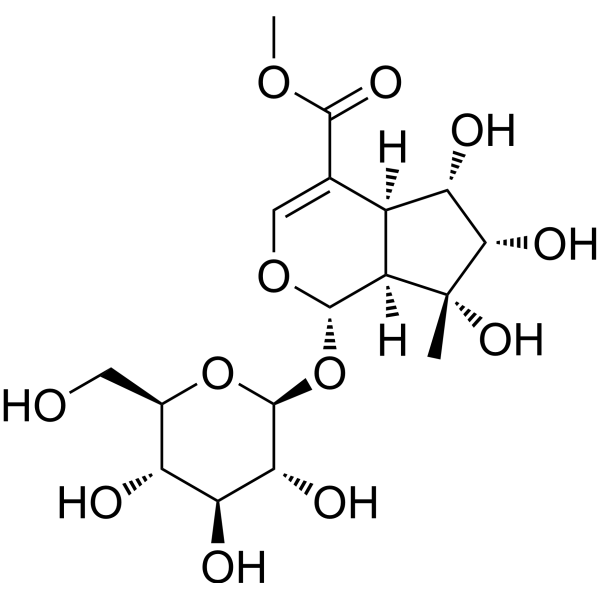
Lamalbid is a natural product that can be found in Lantana montevidensis. Lamalbid inhibits ROS generation .
loading...
    loading...
Cat. No.: HY-N3096
CAS No.: 569-80-2
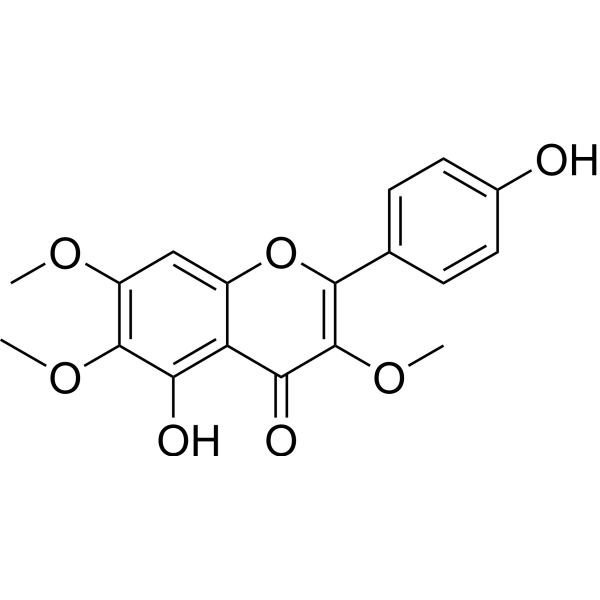
Penduletin is a flavone, that can be isolated from Brickelia pendula and Vitex negundo. Penduletin shows anticancer activity. Penduletin induces apoptosis in the cancer cells through ROS generation .
loading...
    loading...
Cat. No.: HY-131003A
CAS No.: 1505514-27-1
Synonyms: DS-6051b free base; AB-106 free base; IBI-344 free base
Target:  

ROS Kinase

Research Areas:  

Cancer

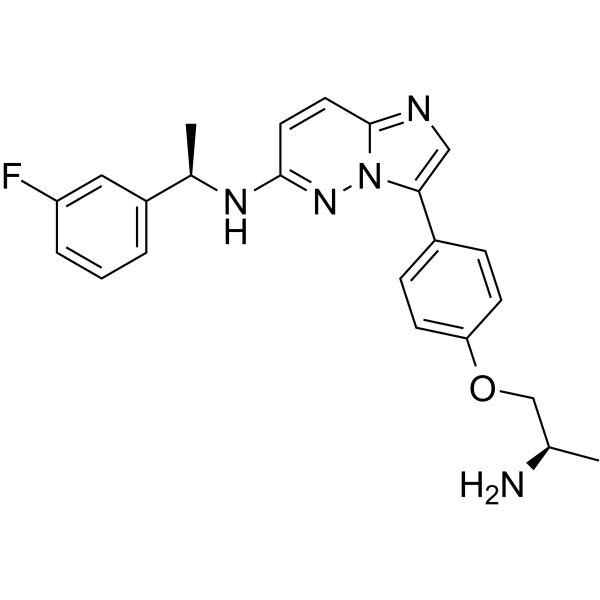
Taletrectinib (DS-6051b) free base is a potent, orally active, and next-generation selective ROS1/NTRK inhibitor. Taletrectinib free base potently inhibits recombinant ROS1, NTRK1, NTRK2, and NTRK3 with IC50s of 0.207, 0.622, 2.28, and 0.98 nM, respectively. Taletrectinib free base also inhibits ROS1 G2032R and other Crizotinib-resistant ROS1 mutants .
loading...
    loading...

