86 Results for "

beta plaques

" in MedChemExpress (MCE) Product Catalog:
Products (86)

86 Results for "beta plaques" in MCE Product Catalog:

Cat. No.: HY-152110
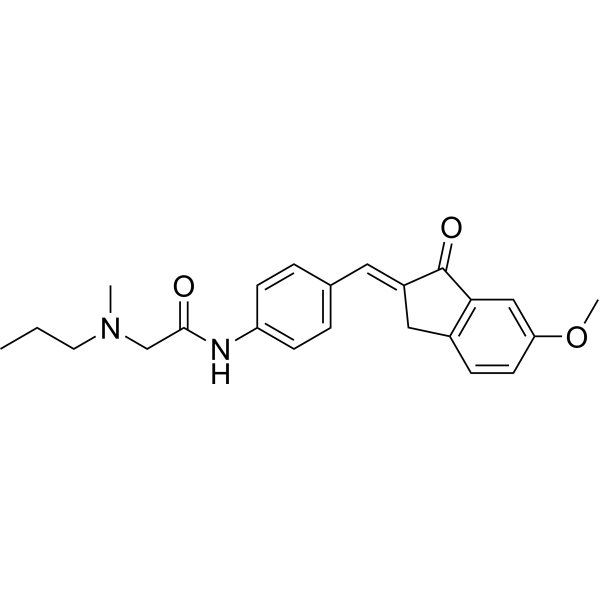
Dual AChE-MAO B-IN-5, indanone derivative, is a potent dual AChE/MAO-B inhibitior with IC50 values of 0.0224, 0.0412, and 0.1116 μM for AChE, MAO-B and MAO-A, respectively. Dual AChE-MAO B-IN-5 has antioxidant activity and prevents β-amyloid plaque aggregation. Dual AChE-MAO B-IN-5 can be used for Alzheimer’s disease (AD) research .
loading...
    loading...
Cat. No.: HY-152114
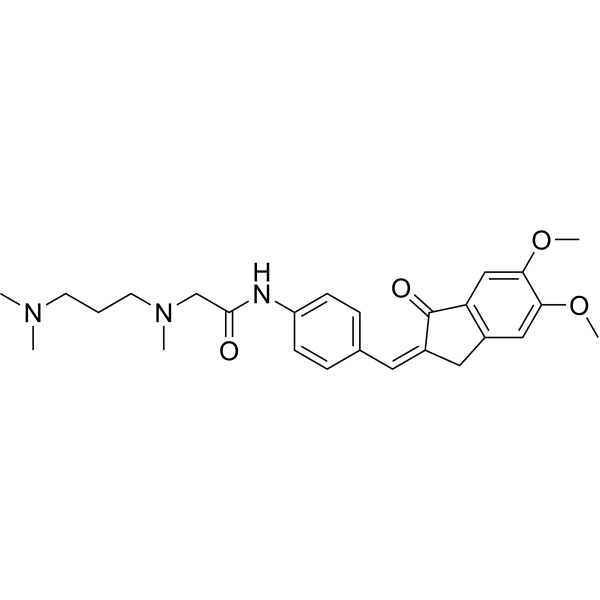
AChE/BChE/MAO-B-IN-4, an indan-1-one derivative, is a potent MAO-B inhibitor with an IC50 of 0.0393 μM for human MAO-B. AChE/BChE/MAO-B-IN-4 is a potent AChE and BChE enzyme inhibitor, with IC50s of 0.0458 μM and 0.075 μM for human AChE and BChE enzyme, respectively. AChE/BChE/MAO-B-IN-4 shows significant antioxidant activity and prevent β-amyloid plaque aggregation. AChE/BChE/MAO-B-IN-4 has the potential for Alzheimer's disease (AD) research .
loading...
    loading...
Cat. No.: HY-161972
Research Areas:  

Cancer

ZX782 is a HyT GPX4 degrader and a ferroptosis inducer, which induces GPX4 degradation and significantly increases lipid ROS accumulation in HT1080 cells. ZX782 can be used to treat AD by reducing the size and/or number of brain amyloid plaques and by inhibiting the spread of IL-1beta-positive microglial-like cells around amyloid plaques. ZX782 is labeled with hydrophobic benzyl alcohol (HBA) and appears bright blue under acidic conditions, which can be used for quantitative determination . ZX782 is composed of target protein ligand (red part) ML-210 (HY-100003), PROTAC linker (black part) Bromo-PEG2-CH2-Boc (HY-141371) and Hty molecule (blue part) Adamantan-1-ylmethanamine (HY-W037848). The conjugate consisting of Hyt and linker parts is Adamantan-C-amide-PEG2-C-Br (HY-161974), and the activity control of the target protein ligand is Hydroxyl-ML-210 (HY-161973).
loading...
    loading...
Cat. No.: HY-159945
Target:  

α-synuclein

Research Areas:  

Neurological Disease

Tau Protein/α-synuclein-IN-2 (Compound 14T) is a blood-brain barrier penetrating tau and α-syn inhibitor. Through its thiourea linker structure, Tau Protein/α-synuclein-IN-2 dose-dependently reduces α-syn oligomerization. In biosensor cells, Tau Protein/α-synuclein-IN-2 prevents the seeding effect of tau aggregation. In the M17D neuroblastoma model, Tau Protein/α-synuclein-IN-2 exhibits anti-inclusion effects. Additionally, Tau Protein/α-synuclein-IN-2 reduces Aβ plaque formation. Tau Protein/α-synuclein-IN-2 holds promise for Alzheimer's disease and Parkinson's disease research.
loading...
    loading...
Cat. No.: HY-W017540S
Cyclocreatine- 13C3 is the 13C-labeled Cyclocreatine (HY-W017540). Cyclocreatine, a creatine analogue, acts as a brain-penetrant and potent bioenergetic protective agent by providing high levels of ATP. Cyclocreatine can be phosphorylated and dephosphorylated by creatine kinases. Cyclocreatine suppresses creatine metabolism ameliorating the cognitive, autistic and epileptic phenotype in a mouse model of creatine transporter defciency. Cyclocreatine protects against ischemic injury and enhances cardiac recovery during early reperfusion in dogs and rats. Cyclocreatine decreases plaque-adjacent neuronal dystrophy in TREM2-deficient mice with amyloid-β pathology. Cyclocreatine is proming for research of ischemic heart disease, cardiovascular diseases, Alzheimer’s disease and other neurodegenerative diseases associated with microglial dysfunction, prostate cancer .
loading...
    loading...
Cat. No.: HY-159941
CAS No.: 2200453-71-8
Target:  

α-synuclein

Research Areas:  

Neurological Disease

tau-0N4R-IN-1 (Compound 6T) is an BBB-penetrable inhibitor of tau 0N4R oligomerization. tau-0N4R-IN-1 effectively inhibits the fibrosis of tau 0N4R, 2N3R, and 2N4R, exhibits an anti-seeding effect on tau in vitro, reduces the oligomerization of α-syn dose-dependently, and prevents formation of α-syn inclusions. tau-0N4R-IN-1 is stable in mouse microsomes and reduces Aβ plaques in brain tissues from AD patients. tau-0N4R-IN-1 has good pharmacokinetic properties in mice .
loading...
    loading...
Cat. No.: HY-149219
CAS No.: 2716871-93-9
Target:  

Amyloid-β

Research Areas:  

Neurological Disease

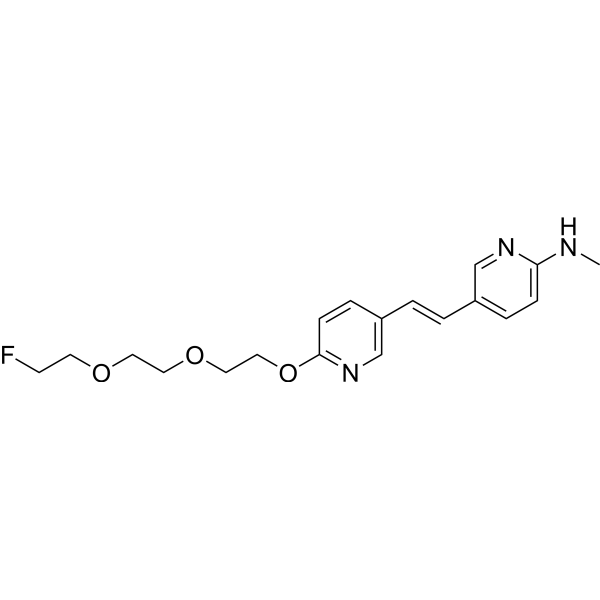
BIBD-124 binds amyloid beta (Aβ) plaque with an IC50 value of 9.51 nM. [18F]BIBD-124 can be used as radiotracer of Aβ plaques .
loading...
    loading...
Cat. No.: HY-167898
CAS No.: 955376-42-8
Target:  

Amyloid-β

Research Areas:  

Neurological Disease

MeS-IMPY is a ligand of β-amyloid plaques. MeS-IMPY shows a high binding affinity to β-amyloid plaques extracted from Alzheimer's disease (AD) human brains or AD brain homogenates compared to IMPY (Ki=7.93 and 8.95 nM, respectively). [ 11C]MeS-IMPY is a potential radioligand for imaging β-amyloid plaques with positron emission tomography (PET) .
loading...
    loading...
Cat. No.: HY-P991866

Target:  

Amyloid-β

Research Areas:  

Neurological Disease

BI 1034020 is a humanized nanobody, targeting two different epitopes of Aβ ( Aβ40 and Aβ42) with high affinity. BI 1034020 reduces the level of free Ab peptide in plasma and thus prevent the formation of new Aβ plaques and clear existing plaques. BI 1034020 can be used for Alzheimer’s disease research .
loading...
    loading...
Cat. No.: HY-119689A
CAS No.: 2365306-62-1
Synonyms: CNP520 hydrochloride
Umibecestat hydrochloride (CNP520 hydrochloride) is a selective, orally active BACE inhibitor, with an IC50 of 11 nM for hBACE-1, 10 nM for mouse BACE-1, and 30 nM for hBACE-2. Umibecestat hydrochloride reduces β-Amyloid levels in the brain and cerebrospinal fluid, decreases β-amyloid plaque deposition, and inhibits plaque-associated neuroinflammation. Umibecestat hydrochloride is used in research related to Alzheimer's disease .
loading...
    loading...
Cat. No.: HY-DY1110
CAS No.: 1192750-33-6
PE154 (solution) is a fluorescent probe that binds to Aβ plaques, as well as a potent fluorescent inhibitor of AChE and BChE, with an IC50 of 280 pM against hAChE and 16 nM against hBChE. PE154 (solution) is applicable for histochemical detection of Aβ plaques in mouse and human brain tissues. PE154 (solution) can be used in research related to Alzheimer's disease .
Solvent and concentration: DMSO: 5 mM
loading...
    loading...
Cat. No.: HY-103240R
CAS No.: 863918-78-9
Methoxy-X04 (Standard) is the analytical standard of Methoxy-X04 (HY-103240). This product is intended for research and analytical applications. Methoxy-X04 is a fluorescent dye that crosses the blood-brain barrier and selectively binds to beta-pleated sheets found in dense core amyloid Aβ plaques. Methoxy-X04 retains in vitro binding affinity for amyloid b (Ab) fibrils (Ki= 26.8 nM). Methoxy-X04 is fluorescent and stains plaques, tangles, and cerebrovascular amyloid in postmortem sections of AD brain with good specificity .
loading...
    loading...
Cat. No.: HY-D3221
CAS No.: 1386860-79-2
MAO Probe 1 is a reactive two-photon fluorescent probe capable of crossing the blood-brain barrier, which is used to detect the activity of monoamine oxidases (MAO-A/MAO-B), with Km values of 70 μM (MAO-A) and 75 μM (MAO-B), respectively. IBC 2 (benzo[g]imino-coumarin 2), the enzymatic product of MAO Probe 1, can further specifically bind to and image Aβ plaques, enabling in vivo two-photon co-monitoring of MAO activity and Aβ plaques. MAO Probe 1 can be used in Alzheimer's disease research (IBC 2: Ex/Em = 850 nm/570-620 nm) .
loading...
    loading...
Cat. No.: HY-P991867

Target:  

Amyloid-β

Research Areas:  

Neurological Disease

SHR-1707 is a humanized anti-Aβ IgG1 monoclonal antibody. SHR-1707 binds Aβ fibrils and monomers, blocking plaque formation and promoting the microglial phagocytosis of Aβ. SHR-1707 reduces brain Aβ deposition in 5xFAD transgenic mice. SHR-1707 can be used for Alzheimer’s disease research. Recommend Isotype Controls: Human IgG1 kappa, Isotype Control (HY-P99001) .
loading...
    loading...
Cat. No.: HY-118972
CAS No.: 1250849-11-6
Target:  

Amyloid-β

Research Areas:  

Neurological Disease

TPI-1917-49 is an agent that can cross the blood-brain barrier and reduce amyloid β (Aβ). TPI-1917-49 reduces the production of Aβ peptide segments by promoting the non-amyloidogenic pathway of amyloid precursor protein (APP) (increasing the generation of sAPPα mediated by α-secretase). TPI-1917-49 reduces amyloid plaques in mouse models. TPI-1917-49 can be used in Alzheimer's disease research .
loading...
    loading...
Cat. No.: HY-184474
Target:  

LXR PPAR

Research Areas:  

Neurological Disease

AU403 is a potent, brain-penetrant, isoform-selective LXRβ/PPARδ dual agonist (EC50 ≈ 45 nM for LXRβ and EC50 ≈ 40 nM for PPARδ). AU403 is designed to bypass LXRα-driven hepatotoxicity. AU403 significantly improves cognitive functions and reduces amyloid-β plaque burden in 3xTg-AD mice. AU403 is a promising dual-acting agonist for the research of Alzheimer’s disease .
loading...
    loading...
Cat. No.: HY-117521
CAS No.: 1447811-26-8
Target:  

γ-secretase Amyloid-β

Research Areas:  

Neurological Disease

EVP-0015962 is an orally active, blood-brain barrier-permeable γ-secretase inhibitor with an IC50 of 3.9 μM. EVP-0015962 alters γ-secretase-mediated cleavage of amyloid precursor protein, reduces Aβ42 production and increases Aβ38 production. EVP-0015962 reduces Aβ aggregates, amyloid plaques and inflammatory markers in the brains of mice, and improves their cognitive impairment. EVP-0015962 can be used for the research of Alzheimer's disease .
loading...
    loading...
Cat. No.: HY-165470
CAS No.: 945400-24-8
AZD-2184 is a β-amyloid (Aβ(1-40)) fibril binder with blood-brain barrier permeability, exhibiting a Kd of 8.4 nM for hAβ(1-40). AZD-2184 binds to the same site as CPIB, shows low levels of non-specific binding to brain tissue, rapidly enters and clears from the brain tissue of normal rats, and binds reversibly to plaques in vivo. The radiolabeled form of AZD-2184 can serve as a PET ligand for the visualization of Aβ deposits. AZD-2184 is applicable to research related to Alzheimer's disease .
loading...
    loading...
Cat. No.: HY-183280
17β-HSD10/CDK5-IN-1 is a poent dual 17β-HSD10 and CDK5 inhibitor with IC50s of 2.44 and 0.26 μM for 17β-HSD10 and CDK5, respectively. 17β-HSD10/CDK5-IN-1 reduces ROS accumulation, attenuates pathological Tau phosphorylation, reduces Aβ plaque deposition, and ameliorates cognitive deficits in Alzheimer's mice. 17β-HSD10/CDK5-IN-1 can be used for the research of Alzheimer's disease .
loading...
    loading...
Cat. No.: HY-D3439
Research Areas:  

Neurological Disease

Phazr-N3 is a near-infrared (NIR) environment-sensitive fluorescent probe used to monitor the entire aggregation process of Aβ42 (amyloid-β42) from monomers/early aggregates to mature fibrils and plaques. Phazr-N3 binds Aβ42 in a structure-independent manner, exhibits low micromolar affinity (Kd = 6.6 μM) for free, disordered Aβ42 under non-aggregating conditions, and produces a solvatochromic fluorescence shift driven by local polarity changes during aggregation. Phazr-N3 uses a 580/680 nm excitation/emission setting in Aβ aggregation [1].
loading...
    loading...

