940 Results for "

Rabbit

" in MedChemExpress (MCE) Product Catalog:
Products (940)

940 Results for "Rabbit" in MCE Product Catalog:

Cat. No.: HY-P992456
Target:  

Complement System

SAR-443809 is a monoclonal antibody targeting complement factor Bb that inhibits the alternative complement pathway. SAR-443809 blocks the cleavage of C3 and factor B via selective binding to the activated form factor Bb, with a KD of 7.3 nM for human factor Bb. SAR-443809 inhibits the amplification loop of the alternative complement pathway and C3 activation, reduces C3b deposition, and blocks the activation of pathways associated with intravascular and extravascular hemolysis. SAR-443809 can be used for research on hematological and renal disorders mediated by abnormal alternative complement pathway activity .
loading...
    loading...
Cat. No.: HY-W015810
CAS No.: 617-94-7
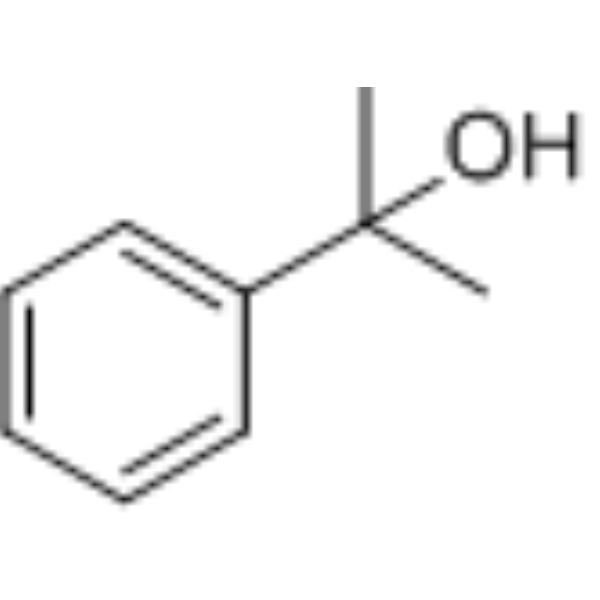
2-Phenyl-2-propanol is a volatile signaling compound released by rhizosphere microorganisms, and also a key product of the selective oxidation of cumene. 2-Phenyl-2-propanol alters primary root structure, regulates the expression of auxin and (±)-Jasmonic acid (HY-122464) responsive genes, and affects cell division. 2-Phenyl-2-propanol reduces the primary root length, lateral root number, lateral root density, and aboveground fresh weight of *Arabidopsis thaliana*. 2-Phenyl-2-propanol is commonly used in research related to cosmetics, pesticides, pharmaceuticals and other fields .
loading...
    loading...
Cat. No.: HY-W015810R
CAS No.: 617-94-7
2-Phenyl-2-propanol (Standard) is the analytical standard of 2-Phenyl-2-propanol (HY-W015810). This product is intended for research and analytical applications. 2-Phenyl-2-propanol is a volatile signaling compound released by rhizosphere microorganisms, and also a key product of the selective oxidation of cumene. 2-Phenyl-2-propanol alters primary root structure, regulates the expression of auxin and (±)-Jasmonic acid (HY-122464) responsive genes, and affects cell division. 2-Phenyl-2-propanol reduces the primary root length, lateral root number, lateral root density, and aboveground fresh weight of *Arabidopsis thaliana*. 2-Phenyl-2-propanol is commonly used in research related to cosmetics, pesticides, pharmaceuticals and other fields .
loading...
    loading...
Cat. No.: HY-W019938
CAS No.: 7785-84-4
Synonyms: Trisodium cyclo-triphosphate
Target:  

Others

Research Areas:  

Others

Sodium trimetaphosphate (Trisodium cyclo-triphosphate) is an orally active, multifunctional compound. Sodium trimetaphosphate serves as a buffer and chelating agent in cosmetics, a starch modifier in food, and can also act as a bone imaging agent. Sodium trimetaphosphate undergoes alkaline hydrolysis, with the rate-limiting first step producing sodium tripolyphosphate; the conversion rate is low when sodium carbonate or silicate is used. Sodium trimetaphosphate can be used in caries-related research .
loading...
    loading...
Cat. No.: HY-W127730
CAS No.: 992-42-7
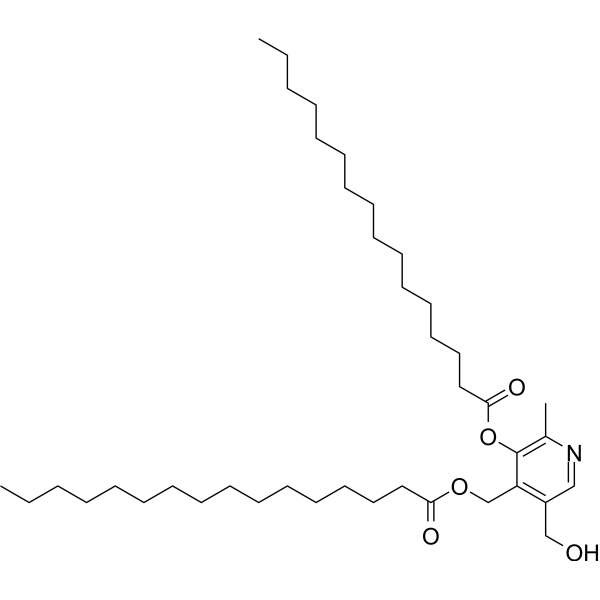
Pyridoxine 3,4-dipalmitate is a Pyridoxine (HY-B1328) derivative. Pyridoxine exerts its antioxidant effects .
loading...
    loading...
Cat. No.: HY-W142457
CAS No.: 18479-58-8
Dihydromyrcenol is an orally active flavor ingredient and Antifungal agent. Dihydromyrcenol acts as a toxicant. Dihydromyrcenol induces phototoxicity-related growth inhibition in Bakers' Yeast. In pregnant rats, Dihydromyrcenol causes threshold maternal toxicity by reducing feed consumption and body weight gain, and also induces threshold developmental toxicity by decreasing fetal body weight, inhibiting ossification of metatarsal bones in the hind paws, increasing the number of extra thoracic vertebrae ribs, and altering vertebral counts .
loading...
    loading...
Cat. No.: HY-W353842
CAS No.: 32426-11-2
Research Areas:  

Infection

Octyl decyldimethyl ammonium chloride, a quaternary ammonium salt, is an antibacterial agent. Octyl decyldimethyl ammonium chloride disrupts cell membranes, leading to cytotoxicity. Octyl decyldimethyl ammonium chloride has risk of skin irritation and increases pro-inflammatory IL-1α secretion .
loading...
    loading...
Cat. No.: HY-105015
CAS No.: 137927-14-1
Target:  

Na+/K+ ATPase

Research Areas:  

Inflammation/Immunology

TY-11345 is an orally active gastric mucosal H +/K +-ATPase inhibitor, with IC50 values of 5.8 μM (Reference 1) and 3.3 μM (Reference 2) at pH 6.0, respectively. TY-11345 inhibits basal gastric acid secretion stimulated by Tetragastrin (HY-125556) and Pentagastrin (HY-A0261), and prevents gastric and duodenal injuries in rats. TY-11345 can be used in the research of peptic ulcer disease and acid-related gastrointestinal diseases .
loading...
    loading...
Cat. No.: HY-106830
CAS No.: 94386-65-9
Research Areas:  

Cardiovascular Disease

Pelrinone is an orally active cardiotonic agent and PDE III inhibitor with an IC50 of 36 μM. Pelrinone elevates intracellular cAMP levels. The action of Pelrinone is independent of β-adrenergic receptors, and it does not inhibit Na +/K +-ATPase. Pelrinone exerts positive inotropic and vasodilatory effects. Pelrinone inhibits platelet aggregation, reduces thrombus formation, and exerts weak anticoagulant activity without altering hematocrit or circulating platelet counts. Pelrinone can be used in research related to congestive heart failure and coronary thrombosis .
loading...
    loading...
Cat. No.: HY-188067
CAS No.: 497180-72-0
Target:  

Imidazoline Receptor

Research Areas:  

Cardiovascular Disease

LNP-911 is a ligand for the I1 imidazoline receptor. LNP-911 allosterically modulates I1Rs and enhances the effect of agonists on Forskolin (HY-15371)-stimulated cAMP accumulation. LNP-911 exists mainly as a stable imine tautomer. After radioiodination, LNP-911 serves as a selective high-affinity radioligand for characterization studies of I1Rs in membrane preparations. LNP-911 can be used in hypertension-related research .
loading...
    loading...
Cat. No.: HY-D0121
CAS No.: 96314-96-4
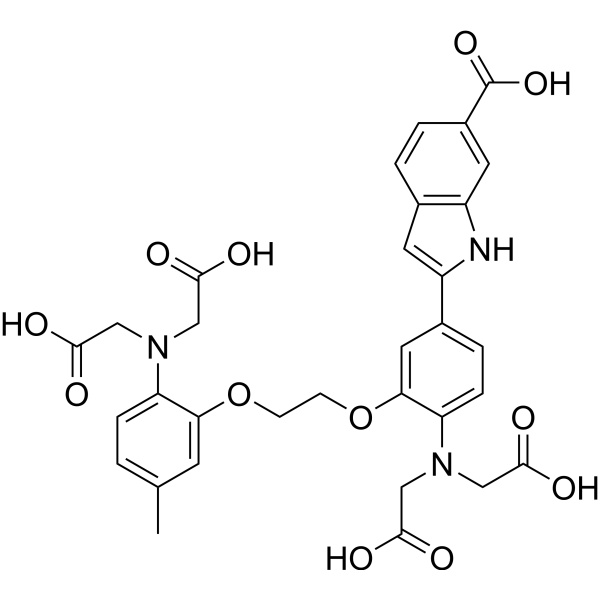
INDO 1 is a cell-impermeable, dual-emission ratiometric fluorescent calcium indicator with a KD·β value of 0.44 μM. INDO 1 binds to intracellular free calcium ions and undergoes wavelength-dependent fluorescence changes. In the unbound state (free form) without Ca 2+, its fluorescence emission peak is at 485 nm upon excitation with ultraviolet light (350 nm). When INDO 1 pentasodium binds to Ca 2+ (bound state), the emission peak shifts to 405 nm (Ex = 350 nm; dual emission at Em= 405/485 nm) .
loading...
    loading...
Cat. No.: HY-D0121A
CAS No.: 132319-56-3
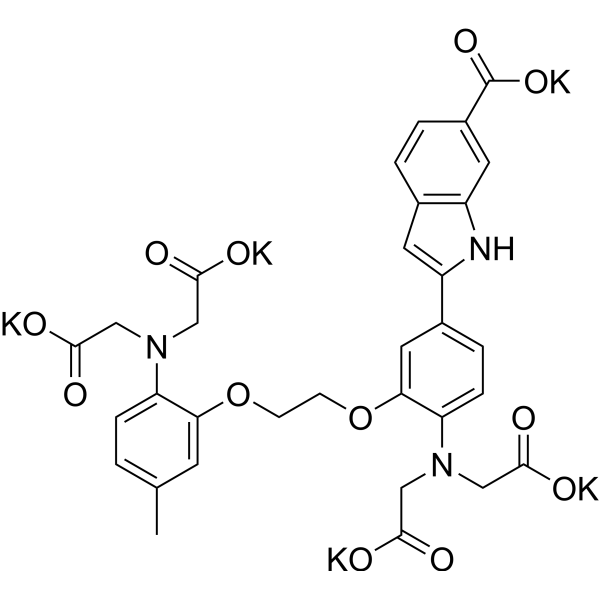
INDO 1 pentapotassium is a cell-impermeable, dual-emission ratiometric fluorescent calcium indicator with a KD·β value of 0.44 μM. INDO 1 pentapotassium binds to intracellular free calcium ions and undergoes wavelength-dependent fluorescence changes. In the unbound state (free form) without Ca 2+, its fluorescence emission peak is at 485 nm upon excitation with ultraviolet light (350 nm). When INDO 1 pentasodium binds to Ca 2+ (bound state), the emission peak shifts to 405 nm (Ex = 350 nm; dual emission at Em= 405/485 nm) .
loading...
    loading...
Cat. No.: HY-D0121B
INDO 1 pentasodium is a cell-impermeable, dual-emission ratiometric fluorescent calcium indicator with a KD·β value of 0.44 μM. INDO 1 pentasodium binds to intracellular free calcium ions and undergoes wavelength-dependent fluorescence changes. In the unbound state (free form) without Ca 2+, its fluorescence emission peak is at 485 nm upon excitation with ultraviolet light (350 nm). When INDO 1 pentasodium binds to Ca 2+ (bound state), the emission peak shifts to 405 nm (Ex = 350 nm; dual emission at Em= 405/485 nm) .
loading...
    loading...
Cat. No.: HY-DY1118
CAS No.: 132319-56-3
Target:  

Fluorescent Dye

Research Areas:  

Others

INDO 1 pentapotassium solution is a cell-impermeable, dual-emission ratiometric fluorescent calcium indicator with a KD·β value of 0.44 μM. INDO 1 pentapotassium solution binds to intracellular free calcium ions and undergoes wavelength-dependent fluorescence changes. In the unbound state (free form) without Ca 2+, its fluorescence emission peak is at 485 nm upon excitation with ultraviolet light (350 nm). When INDO 1 pentasodium binds to Ca 2+ (bound state), the emission peak shifts to 405 nm (Ex = 350 nm; dual emission at Em= 405/485 nm) .
Solvent and concentration: ddH2O: 1 mM
loading...
    loading...
Cat. No.: HY-P72768
Purity:  ≥ 95%, as determined by reducing SDS-PAGE.
Synonyms: CD80; B-Lymphocyte Activation Antigen B7; Prev. CD28LG1; LAB7; Prev. CD28LG; BB1; T-Lymphocyte Activation Antigen CD80; B7; Activation B7-1 Antigen; Costimulatory Molecule Variant IgV-CD80; B7.1; Costimulatory Factor CD80; B7-1; CD80 Molecule; CD80 Antige
Species:  
Rabbit
Source:  
HEK293
loading...
    loading...
Cat. No.: HY-P78603
Purity:  ≥ 95%, as determined by reducing SDS-PAGE.
Synonyms: PTK7; PTK7 Protein Tyrosine Kinase 7; Protein Tyrosine Kinase 7 (Inactive); Tyrosine-Protein Kinase-Like 7; CCK4; CCK-4; Colon Carcinoma Kinase 4; Protein Tyrosine Kinase 7; Inactive Tyrosine-Protein Kinase 7; Protein-Tyrosine Kinase 7; Pseudo Tyrosine Ki
Species:  
Rabbit
Source:  
HEK293
loading...
    loading...
Cat. No.: HY-P700554
Purity:  ≥ 90%, as determined by reducing SDS-PAGE.
Synonyms: CD40LG; T-BAM; Prev. TNFSF5; Tumor Necrosis Factor (Ligand) Superfamily Member 5; Prev. HIGM1; Tumor Necrosis Factor Ligand Superfamily Member 5; Prev. IMD3; T-B Cell-Activating Molecule; CD40-L; CD40 Antigen Ligand; CD40L; T-Cell Antigen Gp39; TRAP; Tumo
Species:  
Rabbit
Source:  
P. pastoris
loading...
    loading...
Cat. No.: HY-P704475
Purity:  ≥ 90%, as determined by reducing SDS-PAGE.
Synonyms: CD40LG; T-BAM; Prev. TNFSF5; Tumor Necrosis Factor (Ligand) Superfamily Member 5; Prev. HIGM1; Tumor Necrosis Factor Ligand Superfamily Member 5; Prev. IMD3; T-B Cell-Activating Molecule; CD40-L; CD40 Antigen Ligand; CD40L; T-Cell Antigen Gp39; TRAP; Tumo
Species:  
Rabbit
Source:  
HEK293
loading...
    loading...
Cat. No.: HY-105642
CAS No.: 77-51-0
Research Areas:  

Neurological Disease

Isoaminile is an antitussive agent and an anticholinergic compound with antimuscarinic and antinicotinic properties. Isoaminile blocks the effects of acetylcholine and McN-A-343 at ganglionic sites, inhibits responses to preganglionic sympathetic and splanchnic nerve stimulation, and does not affect postganglionic nerve- or adrenergic-mediated responses. Isoaminile inhibits nictitating membrane contraction and induced hypertension, suppresses isolated guinea pig atrial activity, and stimulates central vagal nerve activity to trigger bradycardia. Isoaminile exerts effects of antitussive action, respiratory inhibition, central nervous system excitation, and cardiovascular function regulation .
loading...
    loading...
Cat. No.: HY-117123
CAS No.: 37206-04-5
Convulxin is a toxin found in a tropical rattlesnake. Convulxin stimulates platelet aggregation, and clusters GPVI to trigger Src family kinase activation, Fc receptor γ chain phosphorylation, and p72SYK signaling. Convulxin interacts with Dectin-2 to induce IL-10 production, activates monocytes to generate ROS and NLRP3 inflammasome-mediated IL-1β secretion, and induces mitochondrial ROS. Convulxin causes transient arterial blood pressure changes in dogs. Convulxin can be used for research related to coagulation .
loading...
    loading...

