
936 Results for "

during

" in MedChemExpress (MCE) Product Catalog:
Products (936)

936 Results for "during" in MCE Product Catalog:

Cat. No.: HY-P706091
Purity:  ≥ 85%, as determined by reducing SDS-PAGE.
Synonyms: RET; Cadherin Family Member 12; Prev. HSCR1; RET51; Prev. MEN2A; Ret Proto-Oncogene (Multiple Endocrine Neoplasia And Medullary Thyroid Carcinoma 1, Hirschsprung Disease); Prev. MEN2B; Multiple Endocrine Neoplasia And Medullary Thyroid Carcinoma 1; Prev. MTC1; Receptor Protein-Tyrosine Kinase; CDHF12; Receptor Tyrosine Kinase; CDHR16; Alternative Protein RET; PTC; Hirschsprung Disease 1; Proto-Oncogene Tyrosine-Protein Kinase Receptor Ret; Ret Proto-Oncoprotein; Cadherin-Related Family Member 16; RET Proto-Oncogene; Rearranged during Transfection; RET Protein; RET Receptor Tyrosine Kinase; RET-ELE1; Ret Proto-Oncogene; Proto-Oncogene C-Ret
Species:  
Human
Source:  
Sf9 insect cells
loading...
    loading...
Cat. No.: HY-P706092
Purity:  ≥ 85%, as determined by reducing SDS-PAGE.
Synonyms: RET; Cadherin Family Member 12; Prev. HSCR1; RET51; Prev. MEN2A; Ret Proto-Oncogene (Multiple Endocrine Neoplasia And Medullary Thyroid Carcinoma 1, Hirschsprung Disease); Prev. MEN2B; Multiple Endocrine Neoplasia And Medullary Thyroid Carcinoma 1; Prev. MTC1; Receptor Protein-Tyrosine Kinase; CDHF12; Receptor Tyrosine Kinase; CDHR16; Alternative Protein RET; PTC; Hirschsprung Disease 1; Proto-Oncogene Tyrosine-Protein Kinase Receptor Ret; Ret Proto-Oncoprotein; Cadherin-Related Family Member 16; RET Proto-Oncogene; Rearranged during Transfection; RET Protein; RET Receptor Tyrosine Kinase; RET-ELE1; Ret Proto-Oncogene; Proto-Oncogene C-Ret
Species:  
Human
Source:  
Sf9 insect cells
loading...
    loading...
Cat. No.: HY-P706093
Purity:  ≥ 85%, as determined by reducing SDS-PAGE.
Synonyms: RET; Cadherin Family Member 12; Prev. HSCR1; RET51; Prev. MEN2A; Ret Proto-Oncogene (Multiple Endocrine Neoplasia And Medullary Thyroid Carcinoma 1, Hirschsprung Disease); Prev. MEN2B; Multiple Endocrine Neoplasia And Medullary Thyroid Carcinoma 1; Prev. MTC1; Receptor Protein-Tyrosine Kinase; CDHF12; Receptor Tyrosine Kinase; CDHR16; Alternative Protein RET; PTC; Hirschsprung Disease 1; Proto-Oncogene Tyrosine-Protein Kinase Receptor Ret; Ret Proto-Oncoprotein; Cadherin-Related Family Member 16; RET Proto-Oncogene; Rearranged during Transfection; RET Protein; RET Receptor Tyrosine Kinase; RET-ELE1; Ret Proto-Oncogene; Proto-Oncogene C-Ret
Species:  
Human
Source:  
Sf9 insect cells
loading...
    loading...
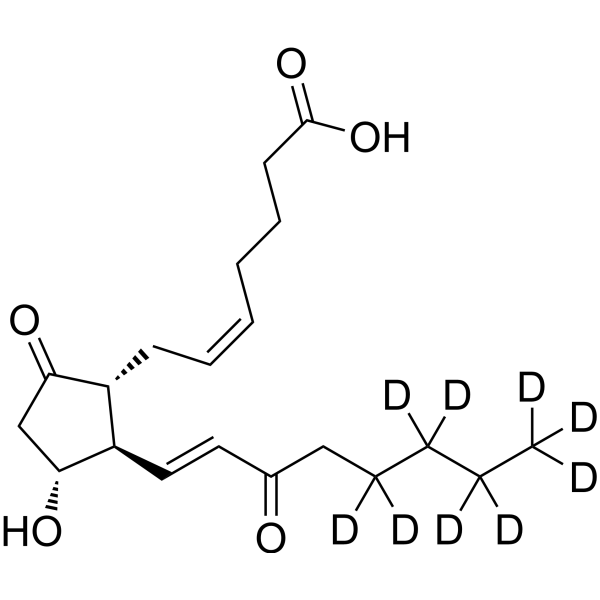
Cat. No.: HY-113205S
CAS No.: 2738376-66-2
15-Keto-prostaglandin E2-d9 is the d9 labeled 15-keto-Prostaglandin E2 (HY-113205). 15-keto-Prostaglandin E2 (15-keto-PGE2) is an endogenous PGE2 metabolite. 15-keto-Prostaglandin E2 inhibits STAT3 activation by binding to the Cys259 residue of STAT3. 15-keto-Prostaglandin E2 binds to and stabilizes EP2 and EP4 receptors. 15-keto-Prostaglandin E2 inhibits the growth and progression of breast cancer cells. 15-keto-Prostaglandin E2 activates PPAR-γ and promotes fungal growth. 15-keto-Prostaglandin E2 disrupts glomerular vascularization during zebrafish development and reduces the surface area of the glomerular filtration barrier .
loading...
    loading...
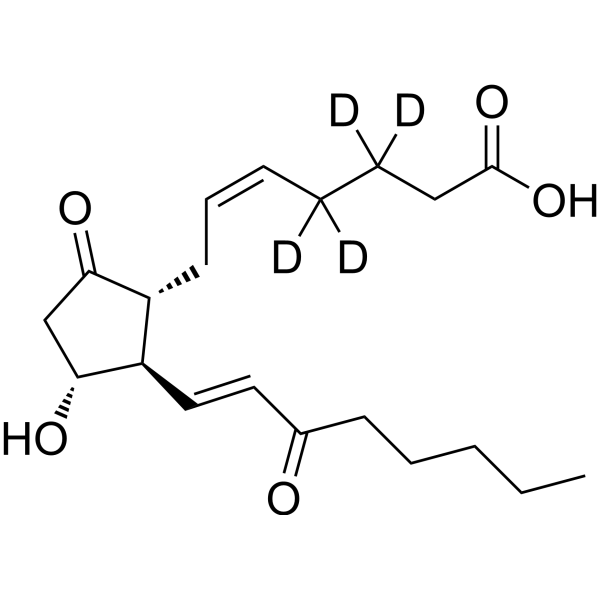
Cat. No.: HY-113205S1
CAS No.: 2738376-85-5
15-Keto-prostaglandin E2-d4 is the d4 labeled 15-keto-Prostaglandin E2 (HY-113205). 15-keto-Prostaglandin E2 (15-keto-PGE2) is an endogenous PGE2 metabolite. 15-keto-Prostaglandin E2 inhibits STAT3 activation by binding to the Cys259 residue of STAT3. 15-keto-Prostaglandin E2 binds to and stabilizes EP2 and EP4 receptors. 15-keto-Prostaglandin E2 inhibits the growth and progression of breast cancer cells. 15-keto-Prostaglandin E2 activates PPAR-γ and promotes fungal growth. 15-keto-Prostaglandin E2 disrupts glomerular vascularization during zebrafish development and reduces the surface area of the glomerular filtration barrier .
loading...
    loading...
Cat. No.: HY-164582
CAS No.: 2923115-93-7
Research Areas:  

Others

DMTr-2'-O-C22-rC (Ac)-3'-CE-Phosphoramidite is an RNA phosphoramidite monomer. DMTr-2'-O-C22-rC (Ac)-3'-CE-Phosphoramidite enables site-specific introduction of 2'-O-C22 lipophilic modification at cytidine positions during oligonucleotide synthesis, which is used to construct double-stranded RNA (dsRNA) molecules with extrahepatic delivery capability. DMTr-2'-O-C22-rC (Ac)-3'-CE-Phosphoramidite supports target gene silencing in skeletal muscle, cardiac muscle and adipose tissue by enhancing the lipophilicity and tissue uptake efficiency of dsRNA. Construction and mechanism study of DMTr-2'-O-C22-rC (Ac)-3'-CE-Phosphoramidite nucleic acid silencing molecules .
loading...
    loading...
Cat. No.: HY-184408
CAS No.: 3033990-94-9
Research Areas:  

Infection

AAP-SO2 is a Bactericide and Mycobacterium tuberculosis RNA polymerase (Mtb RNAP) inhibitor, with an IC50 of 0.025 μM against Mtb RNAP. AAP-SO2 allosterically slows the nucleotide addition rate during transcriptional elongation and enhances transcription termination efficiency. AAP-SO2 exhibits increased activity against β S450L-type Mtb, possesses activity against non-replicating Mtb, and shows whole-cell activity against Mtb and related mycobacterial species. AAP-SO2 reduces the overall emergence rate of Rifampicin (HY-B0272) tolerance in Mtb, alters the mutation spectrum, and decreases the proportion of β S450L-type Rifampicin-resistant mutants. AAP-SO2 acts synergistically with Rifampicin to kill non-replicating Mtb in a rabbit caseous necrosis model. AAP-SO2 can be used for the research of tuberculosis .
loading...
    loading...
Cat. No.: HY-D2747
CAS No.: 1638784-10-7
BP Fluor 405 acid is a water-soluble, blue-fluorescent dye that is often used in multi-color applications, including flow cytometry and super-resolution microscopy using STORM. Its excitation is ideally suited for the 407 nm spectral line of the krypton laser or the 408 nm violet laser diode. BP Fluor 405 conjugates are pH-insensitive from pH 4 to pH 10. The carboxylic acid of BP Fluor 405 is a reagent of choice for the preparation of custom activated esters that often are not commercially available. Examples of such activated esters include sulfo-NHS, TFP (2,3,5,6-Tetrafluorophenol), and STP (4-Sulfo-2,3,5,6-Tetrafluorophenol, Sodium Salt). Another common application for the non-activated carboxylic acid is peptide modification during solid phase synthesis, which usually requires in-situ activation with peptide coupling regents, e.g. HATU. BP Fluor 405 acid is also often used for control experiments, and for calibration.
loading...
    loading...
Cat. No.: HY-D3088
Research Areas:  

Others

CQPP is a Fluorescent probe designed for monitoring polarity changes in the cellular microenvironment, including polarity tracking of lipid droplets/nuclei during ferroptosis. CQPP exhibits ratiometric fluorescence emission and fluorescence lifetime variations in response to polarity changes; a nonpolar environment stimulates fluorescence from the locally excited (LE) state, while a polar environment drives solvation relaxation to the intramolecular charge transfer (ICT) state, which attenuates the LE emission at ~470 nm and simultaneously enhances the ICT emission at ~670 nm. CQPP binds to intranuclear DNA through electrostatic interactions and hydrogen bonds in the DNA minor groove, which enhances its emission at ~670 nm and prolongs its fluorescence lifetime. CQPP can simultaneously target lipid droplets (green LE fluorescence) and the nucleus (red ICT fluorescence). The detection wavelengths of CQPP are Ex/Em = 405/470 nm and Ex/Em = 405/670 nm, and it also supports fluorescence lifetime imaging via 810 nm two-photon excitation .
loading...
    loading...
Cat. No.: HY-D3119
CAS No.: 2246946-49-4
Research Areas:  

Others

MitoAIE1 is a Fluorescent probe for mitochondrial viscosity detection. MitoAIE1 contains a pyridinium structural unit, which endows it with mitochondria-targeting specificity. The detection mechanism of this probe is based on aggregation-induced emission (AIE): in low-viscosity media such as PBS buffer, intramolecular rotation leads to non-radiative energy dissipation, resulting in only weak fluorescence; however, in high-viscosity environments such as the mitochondrial matrix or the vicinity of the inner mitochondrial membrane, such intramolecular motion is restricted, thereby significantly enhancing its fluorescent signal; in addition, this probe is not interfered by changes in microenvironment polarity and pH. Its emission wavelength is 625 nm, with absorption peaks at 325 nm and 450 nm; when transferred from low-viscosity PBS to high-viscosity 99% glycerol, its fluorescence intensity at 625 nm can be increased by 38-fold. It can be used to monitor changes in mitochondrial viscosity during processes such as Stauroporine (HY-15141)-induced apoptosis and starvation-induced mitophagy in live cells, and has good biocompatibility .
loading...
    loading...
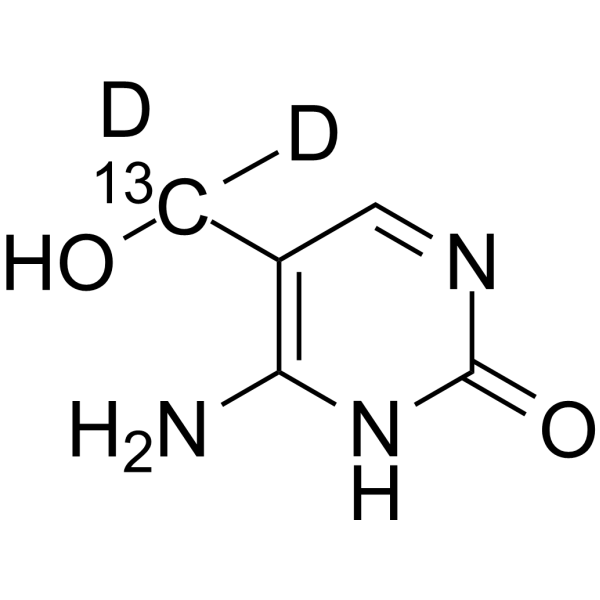
Cat. No.: HY-W018324S
Synonyms: 5hmC-13C,d2
5-Hydroxymethylcytosine- 13C,d2 is the 13C and deuterium labeled 5-Hydroxymethylcytosine (HY-W018324). 5-Hydroxymethylcytosine (5hmC) is an oxidized forms of 5-methylcytosine (5mC) in mammalian DNA. 5-Hydroxymethylcytosine is produced from 5mC in an enzymatic pathway involving three 5mC oxidases, Ten-eleven translocation (TET)1, TET2, and TET3. The conversion of 5mC into 5hmC can be the first step in a pathway leading towards DNA demethylation. 5-Hydroxymethylcytosine is associated with gene transcription and frequently used as a mark to investigate dynamic DNA methylation conversion during mammalian development. 5-Hydroxymethylcytosine can be used for the study of non-small cell lung cancer (NSCLC), neurodegenerative diseases (Alzheimer’s, Parkinson’s) and hematological malignancies (acute myeloid leukemia, myelodysplastic syndromes) .
loading...
    loading...
Cat. No.: HY-L179
39 compounds

Radiotherapy is a common treatment for various cancers, and more than 50% of cancer patients require radiotherapy during the disease treatment. With advances in radiation technology and a better understanding of tumor biology, the efficacy of radiation therapy has gradually improved, and more and more patients have benefited from it. However, even with the use of advanced radiotherapy techniques, there are still many malignant tumor cells with low sensitivity to radiation, leading to the radiation effect is not ideal. To solve this problem, radiosensitizers have received more and more attention. Radiosensitizer is a kind of drug that can enhance the radiosensitivity of tumor cells and improve the effect of radiotherapy. Radiation sensitizers act in a variety of ways, such as killing hypoxic cells, enhancing DNA damage, inhibiting DNA damage repair, and blocking cell cycle progression, making tumor cells more susceptible to radiation damage and death than surrounding normal cells.

MCE designs a unique collection of 39 compounds with definite reported radiosensitization. It can be used for drug combination research in anti-cancer treatment.

Cat. No.: HY-L168
707 compounds

Extracellular vesicles (EVs) are small membrane binding structures that are released from cells into the surrounding environment and play a crucial role in mediating and regulating intercellular communication related to physiological and pathological processes. EVs are lipid membrane vesicles composed of proteins, lipids, and nucleic acids. EVs can be divided into several types based on their source, such as extracellular vesicles, microcapsules, and apoptotic vesicles. The size range of exosomes is 30-150nm, which are endocrine in multi vesicular endosomes (MVEs); microvesicles (50-1000nm) are secreted directly through extracellular interactions, thereby releasing plasma membrane vesicles. In contrast, apoptotic bodies are usually larger, ranging in size from 1 to 5 μ m. This is generated during programmed cell death. EV plays a crucial role in transmitting information between cells and influencing the behavior and function of receptor cells.

MCE designs a unique collection of 707 small molecules related to extracellular vesicles (EVs). It is a good tool to be used for research on metabolize, cancer and other diseases.

Cat. No.: HY-L176
7,362 compounds

The occurrence of diseases is often associated with multiple targets and pathways, and the factors of disease formation are complex and diverse, so the development of more powerful drugs is needed. According to statistics, 21% of the FDA-approved drugs in 2015-2017 were multi-target compounds. Multi-target compounds refer to a drug targeting multiple disease-related targets or multiple subtypes of a target. Multi-target compounds can be applied to drug screening or targeted ligand design. Because the targets of such compounds are diverse and clear, they have the characteristics of saving time and drug cost during the mechanism research of new drug research and development. In addition, due to the diversity of drug targets, multiple strategies can be applied to pharmacological studies.

MCE supplies a unique collection of 7,362 multi-target compounds that targets two or more different targets or different subtypes of the same target. MCE Multi-Target Compound Library can be used for target protein ligand screening or drug development.

Cat. No.: HY-L178
3,066 compounds

Radiation sickness is a general term for various types and degrees of damage (or disease) occurring in the human body after exposure to ionizing radiation. Although small amounts of ionizing radiation can also cause the body to produce free radicals and ROS, causing oxidative stress, resulting in DNA damage and chromosomal aberration. Radioprotector are compounds with radiation protection that can be used to prevent/protect non-tumor cells from the harmful effects of radiation. Radioprotective compounds can prevent the damage of radioactive substances to the human body and reduce the clinical symptoms of various radioactive diseases. In addition, radioprotectors can protect normal cells from damage during radiation therapy. The ideal anti-radiation drug should not affect the sensitivity of tumor cells to radiation therapy while protecting normal cells.

MCE designs a unique collection of 3,066 radioprotectors. Radioprotector Library is an effective tool for acute Radiation Syndrome, drug combination research with radiation drugs.

Cat. No.: HY-102088
CAS No.: 77408-67-4
Target:  

CDK

Research Areas:  

Others Cancer

P18IN011 is an inhibitor that specifically targets the interaction between p18(INK4C) and CDK6, with an IC50 of 3.61 μM against mouse p18INK4C. P18IN011 relieves p18-mediated CDK6 inhibition, thereby effectively regulating the G1 phase cell cycle checkpoint. P18IN011 significantly enhances the proliferation, self-renewal and bone marrow reconstitution abilities of hematopoietic stem cells, and increases the frequency of primitive hematopoietic cells to promote cobblestone area formation. Acting specifically on p18-expressing hematopoietic cells via CDK4/6, P18IN011 not only supports the ex vivo expansion of human umbilical cord blood hematopoietic stem cells, but also maintains their long-term reconstitution capacity during in vitro culture to enable multi-lineage transplantation .
loading...
    loading...
Cat. No.: HY-102093A
CAS No.: 151801-76-2
Target:  

Others

Research Areas:  

Others

ZD 7155 is an AT1R selective antagonist with renal function modulating activity. The effects of ZD 7155 on glomeruli and tubules were measured in 1- (N = 9) and 6-week-old (N = 13) lambs. Pretreatment with ZD 7155 after L-NAME infusion did not alter glomerular function in 1- or 6-week-old lambs. During postnatal development, Ang II modulates the effects of NO on electrolyte handling via AT1R and AT2R. In 6-week-old lambs, selective inhibition of AT1R and AT2R increased the excretion of Na+, K+, and Cl-. In 6-week-old lambs, pretreatment with ZD 7155 and PD 123319 followed by the addition of L-NAME increased urine flow rate by 200%, free water clearance by 50%, and decreased urine osmolality by 40%. The same trends of changes in these variables were also observed when L-NAME was added to ZD 7155 or PD 123319, although to a lesser extent.
loading...
    loading...
Cat. No.: HY-142104
CAS No.: 934816-82-7
Synonyms: 2-Chlorotrityl Chloride Resin (100-200 mesh,1% DVB,0.4-3.0mmol/g)
Target:  

Drug Intermediate

Research Areas:  

Cancer

2-CTC Resin (100-200 mesh,1% DVB,0.4-3.0mmol/g) is a solid-phase synthesis carrier that has been used to study metabolic disorders in prostate cancer cells. 2-CTC Resin (100-200 mesh,1% DVB,0.4-3.0mmol/g) can be used as a reaction solution of terminal residues and adenine nucleotides to form cyclic peptides. 2-CTC Resin (100-200 mesh,1% DVB,0.4-3.0mmol/g) can prevent racemization during the incorporation of the first protected amino acid and minimized diketopiperazine formation. 2-CTC Resin (100-200 mesh,1% DVB,0.4-3.0mmol/g) is one of the most commonly used and versatile resins available for large-scale production of peptides .
loading...
    loading...
Cat. No.: HY-158772
Purity:  99.6%
Target:  

DNA/RNA Synthesis

Research Areas:  

Others

m7G(5')ppp(5')(2'OMeA)pU (ammonium) solution (100 mM) is a trinucleotide cap analog with a Cap1 structure. m7G(5')ppp(5')(2'OMeA)pU (ammonium) solution (100 mM) can be co-transcriptionally incorporated into the 5' end of mRNA during T7 RNA polymerase-mediated in vitro transcription to form a natural Cap1 cap structure. m7G(5')ppp(5')(2'OMeA)pU (ammonium) solution (100 mM) enhances mRNA translation efficiency and reduces innate immune recognition, and it has been used in the preparation of self-amplifying mRNA rabies vaccines. m7G(5')ppp(5')(2'OMeA)pU (ammonium) solution (100 mM) can be applied to research related to in vitro mRNA transcription and mRNA vaccines .
loading...
    loading...
Cat. No.: HY-188056
CAS No.: 121714-70-3
Biotin-11-UTP is a biotinylated uridine triphosphate that can be incorporated into short RNA strands via co-transcription with T7 RNA polymerase, and is used for synthesizing labeling reagents and detection markers. After binding to streptavidin, Biotin-11-UTP generates characteristic downward ionic current peaks during nanopore translocation, which allows the differentiation between modified and unmodified RNA. Biotin-11-UTP enables site-specific labeling of short RNA, and is suitable for single-molecule solid-state nanopore sensing detection. Biotin-11-UTP can serve as a raw material for synthesizing biotinylated single-stranded RNA probes, which is applied to rotavirus nucleic acid detection; it can also label single-stranded RNA probes targeting and immobilizing 28S ribosomal RNA in leukemia cells. Biotin-11-UTP can alter the electrophoretic mobility of transcribed RNA in agarose gels, and can be used to monitor the biotinylation degree of RNA probes .
loading...
    loading...

