
926 Results for "

Lymphomas

" in MedChemExpress (MCE) Product Catalog:
Products (926)

926 Results for "Lymphomas" in MCE Product Catalog:

Cat. No.: HY-13614
CAS No.: 610787-07-0
E7974 is a selective inhibitor of α-tubulin (α-tubulin) with an IC50 of 3.9 μM. E7974 disrupts mitotic spindle formation, induces G2-M phase cell cycle arrest, initiates apoptosis, activates caspase-3, and induces poly (ADP-ribose) polymerase cleavage. E7974 reduces the area of choroidal neovascularization in mouse models, and exerts anti-angiogenic effects when loaded in modified micelles. E7974 can be used in research related to cancer and choroidal neovascularization .
loading...
    loading...
Cat. No.: HY-76652
CAS No.: 1264191-73-2
Target:  

Renin

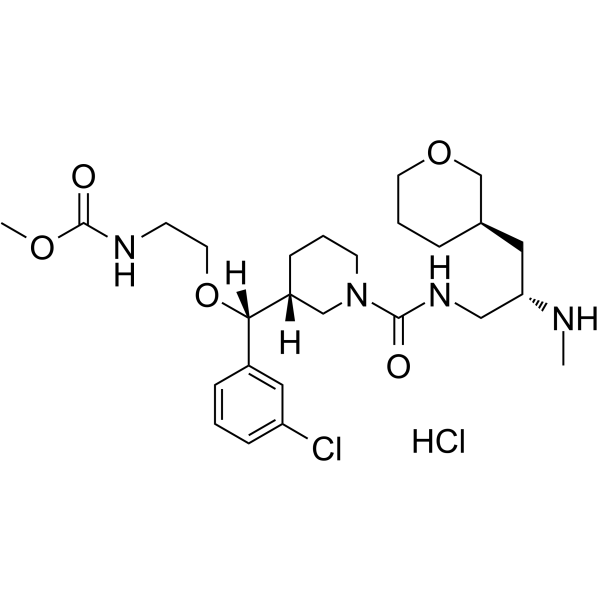
VTP-27999 Hydrochloride is an orally active renin inhibitor. VTP-27999 Hydrochloride functionally inhibits renin and acid-activated prorenin, suppresses plasma renin activity and modulates plasma and urinary aldosterone levels. VTP-27999 Hydrochloride reduces mean arterial blood pressure, induces plasma renin concentration increases, decreases plasma angiotensin II levels and enhances renin immunoreactivity. VTP-27999 (Hydrochloride) can be used for the research of hypertension and chronic renal disease .
loading...
    loading...
Cat. No.: HY-N9865
CAS No.: 155899-92-6
cis-Martynoside is a phenylpropanoid glycoside. Cis-Martynoside, in a mixture with trans-Martynoside, effectively inhibits the early activation of the lytic cycle of Epstein-Barr virus (EBV) and reduces the expression of Rta protein. cis-Martynoside can be used in research on EBV infection .
loading...
    loading...
Cat. No.: HY-P99014A

Research Areas:  

Cancer

Cusatuzumab (FUT8-KO) is an anti-CD70 monoclonal antibody that prepared by knocking out the fucosyltransferase 8 gene (FUT8) to remove fucose and thereby enhance the ADCC activity of the antibody .
loading...
    loading...
Cat. No.: HY-P99983

Target:  

Inhibitory Antibodies

Research Areas:  

Inflammation/Immunology

Mouse IgG1 (D265A) kappa, Isotype Control is a mouse IgG1(D265A)κ isotype control with a D265A mutation and inactivity against mouse Fc gamma receptors (FcγR1, FcγR2, FcγR3, FcγR4) .
loading...
    loading...
Cat. No.: HY-W011303R
CAS No.: 554-62-1
Synonyms: 4-Hydroxysphinganine (Standard)
Phytosphingosine (Standard) is the analytical standard of Phytosphingosine. This product is intended for research and analytical applications. Phytosphingosine is a phospholipid with anti-inflammatory, antibacterial, and anti-cancer activities, which can induce apoptosis. Phytosphingosine is an immune regulator and can be used in the study of inflammatory skin diseases. Phytosphingosine is also an activator of GPR120 with an IC50 value of 33.4 μM and can be used in the study of type II diabetes[1][2][3][4].
loading...
    loading...
Cat. No.: HY-187706
CAS No.: 951529-42-3
Target:  

Bcl-2 Family

Research Areas:  

Cancer

CDL36 is a BAX inhibitor with an EC50 of 23.6 µM. CDL36 inhibits pro-apoptotic peptide-induced mitochondrial outer membrane permeabilization (MOMP). CDL36 exerts cytoprotective effects against Doxorubicin (HY-15142A)-induced cell death .
loading...
    loading...
Cat. No.: HY-P11306
CAS No.: 247068-92-4
Target:  

Proteasome NF-κB

Research Areas:  

Inflammation/Immunology

Biotin-(Oaa)3-epoxomicin is a biotin-labeled form of Epoxomicin (HY-13821), prepared by conjugating Epoxomicin with biotin via three hydrophilic oxaacetyl amino acid (Oaa) linkers. Biotin-(Oaa)3-epoxomicin is primarily used in proteomic studies for the capture, identification and target validation of proteasome complexes, to determine the intracellular targets of epoxomicin. Epoxomicin acts as a proteasome inhibitor and NF-κB inhibitor, which effectively blocks inflammatory responses in mouse ear edema assays. It inhibits proteasome activity via covalent binding to catalytic subunits including LMP7, X, MECL1 and Z, with the strongest inhibitory effect on chymotrypsin-like activity, and does not interfere with non-proteasomal proteases such as trypsin and papain .
loading...
    loading...
Cat. No.: HY-N11231
CAS No.: 7176-02-5
Fucoxanthinol, a carotenoid, is a deacetylated Fucoxanthin (HY-N2302) metabolite with oral activity, and inhibits rat pancreatic lipase with an IC50 of 764 nM. Fucoxanthinol reduces expression of Bcl-2, Bcl-xL, survivin, XIAP, cIAP2, cyclin D1, cyclin D2, cyclin E, CDK4, CDK6, β-catenin, JunD, PPARγ, and induces GADD45α expression. Fucoxanthinol activates caspase-3, caspase-8, caspase-9, Nrf2/Keap1/ARE pathway, and inhibits activation of Akt, NF-κB, AP-1, PDPK1, GSK3β phosphorylation. Fucoxanthinol induces apoptosis, G0/G1 cell cycle arrest, inhibits cancer cell viability, proliferation, migration, invasiveness, tumour growth, adipocyte differentiation, oxidative stress, neurotoxicity, triglyceride absorption, angiogenesis, and obesity-induced inflammation. Fucoxanthinol can be used for the research of osteosarcoma, leukemia, lymphoma, adult T-cell leukemia, prostate cancer, colon cancer, breast cancer, hypertriglyceridaemia, Alzheimer’s disease, Parkinson’s disease, obesity, insulin resistance, malignant melanoma, and type II diabetes .
loading...
    loading...
Cat. No.: HY-L075
3,061 compounds

Lung cancer is a major global health problem, as it is the leading cause of cancer-related deaths worldwide. Lung cancer is divided into two categories: small cell lung cancer and non-small cell lung cancer (NSCLC). Non-small cell lung cancer accounts for about 85 percent of lung cancers.

As with all cancers, lung cancer may be treated with surgery, chemotherapy, radiation therapy, targeted therapy, immunotherapy or a combination thereof. Targeted therapy is one of the most exciting developments in lung cancer medicine, especially for NSCLC. Extensive genomic characterization of NSCLC has led to the identification of molecular subtypes of NSCLC that are oncogene addicted and exquisitely sensitive to targeted therapies. These include activating mutations in epidermal growth factor receptor (EGFR) and BRAF or echinoderm microtubule-associated protein-like 4 (EML4)-anaplastic lymphoma kinase (ALK) fusions and ROS1 receptor tyrosine kinase fusions. These are important targets for target therapy.

MCE offers a unique collection of 3,061 compounds with identified and potential anti-lung cancer activity. These compounds target lung cancer’s major targets and signaling pathways. MCE anti-lung cancer compound library is a useful tool for anti-lung cancer drugs screening and other related research.

Cat. No.: HY-119435
CAS No.: 2303-17-5
Purity:  99.02%
Research Areas:  

Others

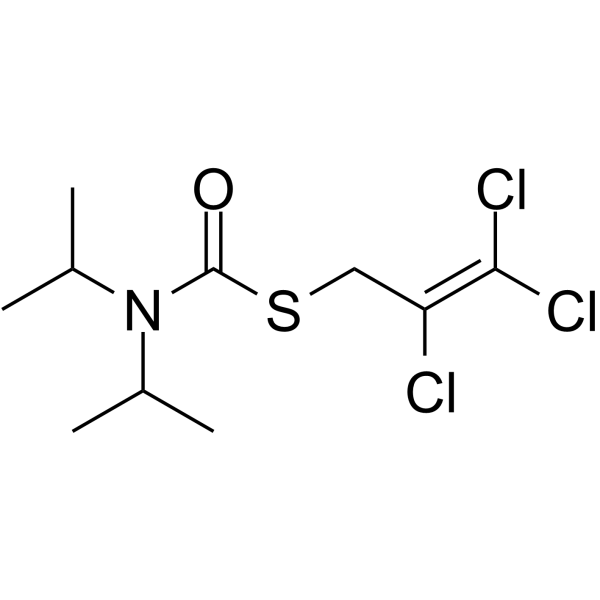
Triallate is a selective thiocarbamate herbicide. Triallate regulates the biosynthesis of very-long-chain fatty acids and inhibits the elongation and division of plant cells. Triallate is used to control wild oats in barley, spring wheat, durum wheat, winter wheat and sugar beets .
loading...
    loading...
Cat. No.: HY-181234
CAS No.: 828292-11-1
Target:  

c-Myc Apoptosis

Research Areas:  

Cancer

Y502-3888 is a c-Myc inhibitor. Y502-3888 binds to the c-Myc G4 structure, inhibits c-Myc transcription, and downregulates c-Myc expression at both mRNA and protein levels. Y502-3888 inhibits the viability of myeloma cells and induces cell apoptosis. Y502-3888 can be used for the research of multiple myeloma .
loading...
    loading...
Cat. No.: HY-P992433
Target:  

LILRB

Research Areas:  

Cancer

OR502 is a humanized IgG1 monoclonal antibody targeting LILRB2 (ILT4/CD85d), with a Kd value of 1.18 nM. OR502 binds to LILRB2 with high affinity and blocks its interaction with HLA class I ligands, relieving myeloid cell-mediated immunosuppression, restoring CD8 + T cell function, and reprogramming the immunosuppressive macrophage phenotype, thereby simultaneously enhancing both innate and adaptive antitumor immune responses. OR502 can be used in the research of cancers and advanced cancers (including melanoma, non-small cell lung cancer, sarcoma/soft tissue cancer, and urothelial carcinoma) .
loading...
    loading...
Cat. No.: HY-108486
CAS No.: 70563-58-5
Purity:  99%
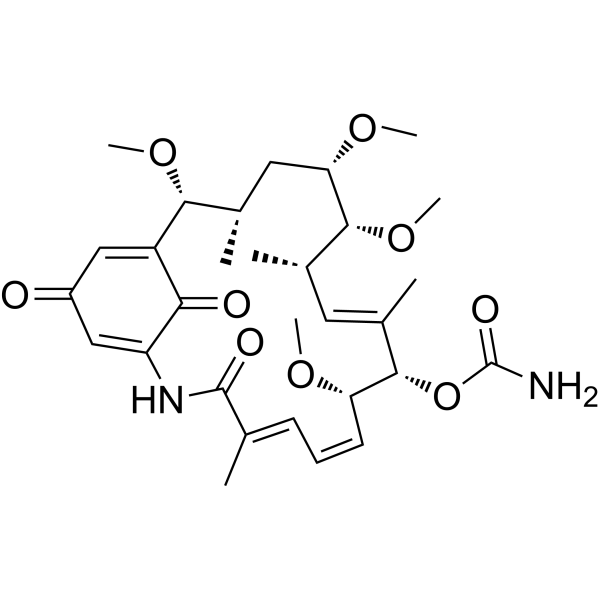
Herbimycin A is an antibiotic and protein tyrosine kinase inhibitor. Herbimycin A directly inhibits the autophosphorylation of p210 BCR-ABL with an IC50 of approximately 5 μM, and reduces Src kinase activity. Herbimycin A also induces the degradation of receptor tyrosine kinases such as insulin-like growth factor 1 receptor (IGF-1R), insulin receptor (IR) and epidermal growth factor receptor (EGFR) via the ubiquitin-20S proteasome pathway. Herbimycin A directly modifies NF-κB p50, with the main target site involving Cys62, thereby blocking the DNA binding of p50 and NF-κB-driven gene expression. Herbimycin A can be used in studies related to tyrosine kinase signaling, chronic myeloid leukemia, NF-κB signaling, osteoclast function, apoptosis and cellular stress .
loading...
    loading...
Cat. No.: HY-P2760
CAS No.: 9001-47-2
Synonyms: GLS
Research Areas:  

Cancer

Glutaminase (GLS) is a metabolic enzyme. Glutaminase catalyzes the conversion of glutamine to glutamate, which is a key step in glutaminolysis. The glutaminase isoenzymes GLS and GLS2 differ in their expression patterns and functional roles: GLS exhibits oncogenic properties, whereas GLS2 is regarded as a tumor suppressor. Glutaminase expression levels correlate with the degree of tumor malignancy .
loading...
    loading...
Cat. No.: HY-172889
CAS No.: 3085191-45-0
Target:  

PI3K HDAC Apoptosis mTOR Akt

Research Areas:  

Cancer

PI3K/HDAC-IN-4 (Compound 31f) is a PI3K/HDAC dual inhibitor (IC50: 0.2μM). PI3K/HDAC-IN-4 shows high selectivity for HDAC1-3 (IC50 values of 75.5 nM, 70.9 nM, and 1.9 nM, respectively). PI3K/HDAC-IN-4 is a potent PIK3 inhibitor with IC50 values of 2.5 nM, 80.5 nM, 10.0 nM, and 57.2 nM for PI3Kα, β, δ, and γ, respectively. PI3K/HDAC-IN-4 significantly induces tumor cell apoptosis by simultaneously inhibiting the PI3K/AKT/mTOR signaling pathway and HDAC1-3. PI3K/HDAC-IN-4 exhibits potent antiproliferative activity in a variety of tumor cell lines (e.g., MV4-11, Jeko-1, HL60, and MCF-7, with IC50 values of 0.2, 0.9, 0.8, and 1.5 μM, respectively). PI3K/HDAC-IN-4 can be used in the study of lymphoma and leukemia .
loading...
    loading...
Cat. No.: HY-181565
CAS No.: 2640208-32-6
Target:  

CDK

CDK7-IN-33 is an orally active pyrimidine derivative and also a CDK7 kinase inhibitor. CDK7-IN-33 is applicable to the research of cancer, inflammation, cardiovascular diseases, infectious diseases, immune diseases and metabolic diseases .
loading...
    loading...
Cat. No.: HY-181174
CAS No.: 2996086-75-8
Antioxidant agent-22 is a paraben derivative tetracyclic spermine cyclotriphosphazene compound. Antioxidant agent-22 exhibits antioxidant, anti-Inflammatory, and apoptotic activities. Antioxidant agent-22 significantly upregulates CAT, SOD, caspase-3 and IL-6 expression, suppresses GSH, IL-1β, and reduces BCL-2 and BAX levels. Antioxidant agent-22 can be used for the research of cancer, such as lung cancer .
loading...
    loading...
Cat. No.: HY-B1250
CAS No.: 556-08-1
Research Areas:  

Cancer

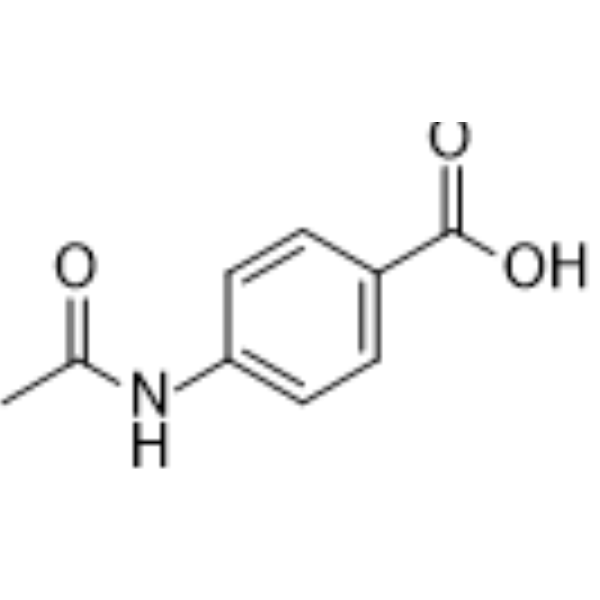
Acedoben is a biochemical reagent. Acedoben can form a rapidly self-assembled coordination complex with iron ions. The Fe-Ace coordination complex not only serves as a carrier for tumor antigens, but also enhances antigen-specific anti-tumor immunity due to its inherent adjuvant properties .
loading...
    loading...
Cat. No.: HY-B1250A
CAS No.: 29305-16-6
Research Areas:  

Cancer

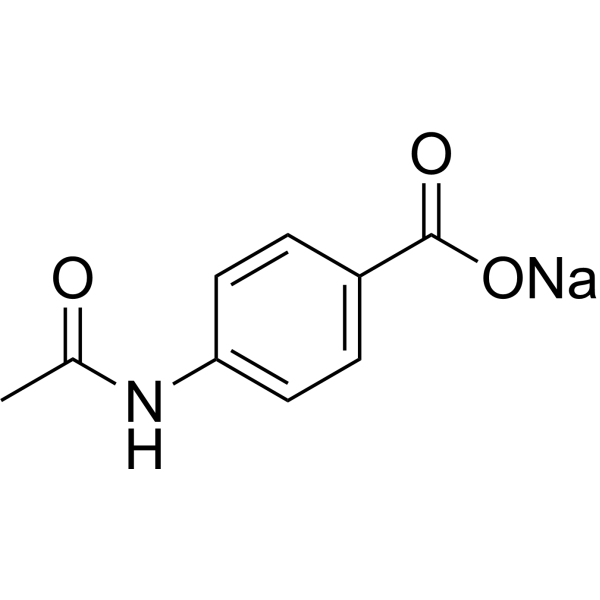
Acedoben sodium is a biochemical reagent. Acedoben sodium can form a rapidly self-assembled coordination complex with iron ions. The Fe-Ace coordination complex not only serves as a carrier for tumor antigens, but also enhances antigen-specific anti-tumor immunity due to its inherent adjuvant properties .
loading...
    loading...

