1014 Results for "

Bioavailability

" in MedChemExpress (MCE) Product Catalog:
Products (1014)

1014 Results for "Bioavailability" in MCE Product Catalog:

Cat. No.: HY-164049
CAS No.: 2490544-50-6
Research Areas:  

Inflammation/Immunology

TG8-260 is a second-generation EP2 antagonist developed to alleviate the pathology of central nervous system and peripheral diseases driven by inflammation. TG8-260 can reduce neuroinflammation and gliosis in the hippocampus of rats after pilocarpine-induced persistent epileptic status. Pharmacokinetic data of TG8-260 showed that its plasma half-life was 2.14 hours and its oral bioavailability was 77.3%. TG8-260 is also a potent inhibitor of CYP450 and shows antagonistic activity in inhibiting EP2 receptor-mediated inflammatory gene expression in BV2-hEP2 microglia, which is suitable for studying anti-inflammatory pathways in animal models of peripheral inflammatory diseases .
loading...
    loading...
Cat. No.: HY-16622A
CAS No.: 1005407-76-0
Target:  

LPL Receptor

Research Areas:  

Others

GSK1842799, an alkyl-substituted biaryl amino alcohol, is a selective S1P1 modulator developed for multiple sclerosis (MS). Upon phosphorylation, GSK1842799-P exhibited subnanomolar S1P1 agonist activity with over 1000-fold selectivity over S1P3. The compound showed good oral bioavailability, rapid in vivo conversion to GSK1842799-P, and significant lymphocyte count reduction at 0.1 mg/kg. It matched FTY720 efficacy at 3 mg/kg in the mouse EAE model and achieved comparable plasma levels to FTY-720 phosphate in cynomolgus monkeys. With favorable ADME, PK/PD properties, and toxicology, GSK1842799 advanced to further clinical development .
loading...
    loading...
Cat. No.: HY-168376
CAS No.: 1092676-99-7
Synonyms: 9(10)-Nitrated oleic acid
9 (10)-Nitrooleate (9(10)-Nitrated oleic acid) is an endogenous lipid signaling mediator with vasoprotective effects. 9 (10)-Nitrooleate enhances enzymatic activity and improves nitric oxide bioavailability by inducing phosphorylation of Akt and ERK1/2, regulating the multi-site phosphorylation status of eNOS and optimizing its interaction with Hsp90. 9 (10)-Nitrooleate also activates PPARα, PPARδ and PPARγ receptors, thereby regulating adipogenesis, glucose uptake and inflammation-related gene expression, and exhibits immunosuppressive effects by inhibiting neutrophil migration and cytokine secretion. 9 (10)-Nitrooleate is widely used in studies of sepsis and related inflammatory diseases .
loading...
    loading...
Cat. No.: HY-168715
CAS No.: 2894017-46-8
Research Areas:  

Cancer

SHP2-IN-33 (Compound D13) is an allosteric inhibitor of SHP2 with an IC50 of 1.2 μM. In cellular studies, SHP2-IN-33 demonstrates antiproliferative activity with an IC50 of 38 μM against Huh7 cells by arresting the G0/G1 cell cycle, promoting apoptosis (Apoptosis), and suppressing the MAPK signaling pathway. In an in vivo Huh7 xenograft mouse model, SHP2-IN-33 exhibits significant antitumor activity and favorable pharmacokinetics, including 54% oral bioavailability and a half-life of 10.57 hours. SHP2-IN-33 is a promising compound for studying tumor diseases associated with SHP2 .
loading...
    loading...
Cat. No.: HY-177840
Target:  

Liposome

Research Areas:  

Inflammation/Immunology

Liposomal Curcumin is a specialized delivery system that encapsulates Curcumin (HY-N0005) within tiny liposomes. These liposomes act as protective shells, enhancing the absorption and bioavailability of Curcumin. Curcumin (Diferuloylmethane), a natural phenolic compound, is a p300/CREB-binding protein-specific inhibitor of acetyltransferase, represses the acetylation of histone/nonhistone proteins and histone acetyltransferase-dependent chromatin transcription. Curcumin is a photosensitizer against microorganisms. Curcumin shows inhibitory effects on NF-κB and MAPKs, and has diverse pharmacologic effects including anti-inflammatory, antioxidant, antiproliferative and antiangiogenic activities. Curcumin induces stabilization of Nrf2 protein through Keap1 cysteine modification.
The product size below only indicate the effective content of Curcumin.
loading...
    loading...
Cat. No.: HY-184414
Research Areas:  

Cancer

BMS-135-L-Lys is a dual-cation prodrug derived from CK2 inhibitor BMS-135 (HY-181022) through esterification with L-lysine using a secondary alcohol. BMS-135-L-Lys achieves enhanced solubility by maintaining protonation of the ε-amino group of the Lys side chain at intestinal pH. BMS-135-L-Lys is released in situ by intestinal wall esterase from the parent drug, significantly increasing the oral bioavailability of the parent drug and overcoming the non-linear pharmacokinetic problem when the dose of the parent drug is increased. BMS-135-L-Lys can be used in related research on colon cancer and lung cancer .
loading...
    loading...
Cat. No.: HY-184414A
Research Areas:  

Cancer

BMS-135-L-Lys TFA is a dual-cation prodrug derived from CK2 inhibitor BMS-135 (HY-181022) through esterification with L-lysine using a secondary alcohol. BMS-135-L-Lys TFA achieves enhanced solubility by maintaining protonation of the ε-amino group of the Lys side chain at intestinal pH. BMS-135-L-Lys TFA is released in situ by intestinal wall esterase from the parent drug, significantly increasing the oral bioavailability of the parent drug and overcoming the non-linear pharmacokinetic problem when the dose of the parent drug is increased. BMS-135-L-Lys TFA can be used in related research on colon cancer and lung cancer .
loading...
    loading...
Cat. No.: HY-184414B
Research Areas:  

Cancer

BMS-135-L-Lys dihydrochloride is a dual-cation prodrug derived from CK2 inhibitor BMS-135 (HY-181022) through esterification with L-lysine using a secondary alcohol. BMS-135-L-Lys dihydrochloride achieves enhanced solubility by maintaining protonation of the ε-amino group of the Lys side chain at intestinal pH. BMS-135-L-Lys dihydrochloride is released in situ by intestinal wall esterase from the parent drug, significantly increasing the oral bioavailability of the parent drug and overcoming the non-linear pharmacokinetic problem when the dose of the parent drug is increased. BMS-135-L-Lys dihydrochloride can be used in related research on colon cancer and lung cancer .
loading...
    loading...
Cat. No.: HY-188081
CAS No.: 3112733-78-2
Research Areas:  

Cancer

YH-36400 is an orally bioavailable inhibitor of HIF-1α and HIF-2α. YH-36400 disrupts the dimerization of HIF-1α and HIF-1β and triggers proteasomal degradation, thereby inhibiting the transcriptional activities of HIF-1 and HIF-2. YH-36400 reduces the expression of PD-L1 and CD73, reprograms the tumor immune microenvironment, inhibits angiogenesis, and can be used in combination with immune checkpoint blockade therapy. YH-36400 is applicable to research related to breast cancer, lung cancer, melanoma, pancreatic cancer, colorectal cancer, prostate cancer, and head and neck squamous cell carcinoma .
loading...
    loading...
Cat. No.: HY-B0197AR
CAS No.: 143388-64-1
Synonyms: GR-85548A hydrochloride (Standard)
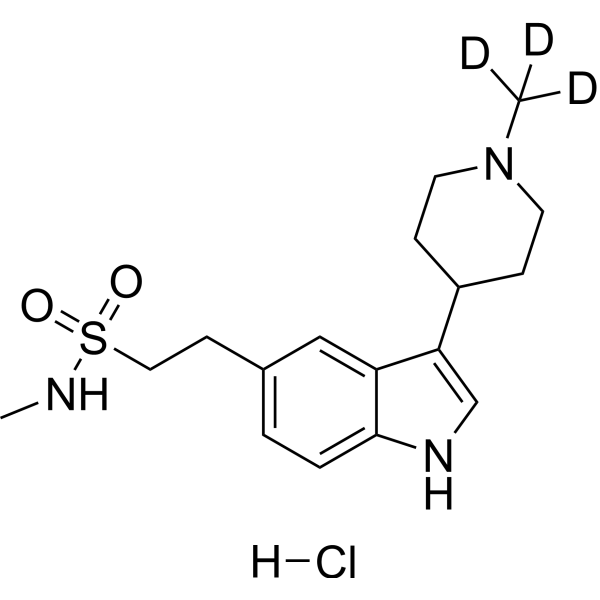
Naratriptan (GR-85548A) hydrochloride (Standard) is the analytical standard of Naratriptan hydrochloride (HY-B0197A). This product is intended for research and analytical applications. Naratriptan is a selective 5-HT1B/1D receptor agonist. Naratriptan is peripherally active and has good oral bioavailability, inducing cranial artery vasoconstriction by activating 5-HT1B/1D receptors (EC50=0.11 μM for dog basilar artery). Naratriptan also inhibits trigeminal nerve-mediated dural neurogenic plasma extravasation and reduces sterile inflammation. Naratriptan is mainly used in the research of acute migraine, targeting cranial vascular and neuroinflammatory mechanisms .
loading...
    loading...
Cat. No.: HY-B0197AS
CAS No.: 1190021-64-7
Synonyms: GR-85548A d3
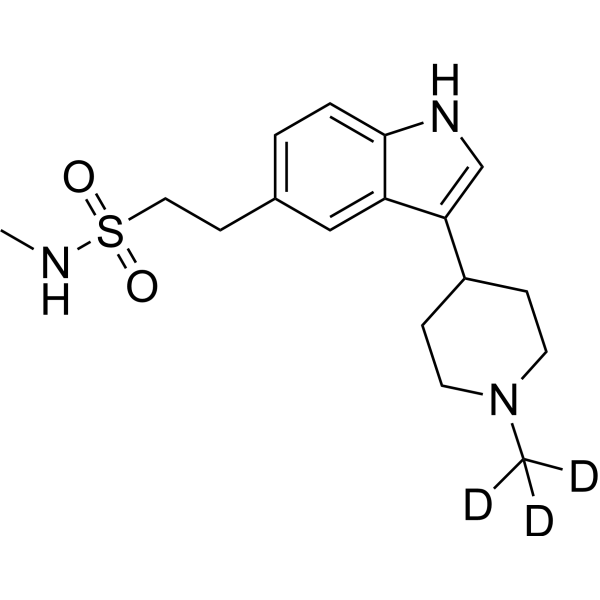
Naratriptan-d3 (GR-85548A-d3) is the deuterium labeled Naratriptan hydrochloride (HY-B0197A). Naratriptan hydrochloride is a selective 5-HT1B/1D receptor agonist. Naratriptan hydrochloride is peripherally active and has good oral bioavailability, inducing cranial artery vasoconstriction by activating 5-HT1B/1D receptors (EC50=0.11 μM for dog basilar artery). Naratriptan hydrochloride also inhibits trigeminal nerve-mediated dural neurogenic plasma extravasation and reduces sterile inflammation. Naratriptan hydrochloride is mainly used in the research of acute migraine, targeting cranial vascular and neuroinflammatory mechanisms .
loading...
    loading...
Cat. No.: HY-B0197S
CAS No.: 1190043-69-6
Synonyms: GR-85548A-d3-1
Naratriptan-d3 (GR-85548A-d3) is the deuterium labeled Naratriptan (HY-B0197). Naratriptan is a selective 5-HT1B/1D receptor agonist. Naratriptan is peripherally active and has good oral bioavailability, inducing cranial artery vasoconstriction by activating 5-HT1B/1D receptors (EC50=0.11 μM for dog basilar artery). Naratriptan also inhibits trigeminal nerve-mediated dural neurogenic plasma extravasation and reduces sterile inflammation. Naratriptan is mainly used in the research of acute migraine, targeting cranial vascular and neuroinflammatory mechanisms .
loading...
    loading...
Cat. No.: HY-W698249R
CAS No.: 299-29-6
Ferrous gluconate (Standard) is the analytical standard of Ferrous gluconate. This product is intended for research and analytical applications. Ferrous gluconate is a highly water-soluble iron-containing agent with high bioavailability and bactericidal activity. As a non-heme iron, Ferrous gluconate is used for meat product fortification and improvement of iron deficiency anemia. Ferrous gluconate induces ferroptosis in E. coli through Fe 2+ infiltration, reactive oxygen species burst, lipid peroxidation and direct interaction with DNA. Ferrous gluconate also downregulates the SOS responsive transcriptional repressor LexA. In addition, Ferrous gluconate regulates multiple key pathways in E. coli such as fatty acid metabolism, iron-sulfur cluster assembly and pyruvate metabolism, and is applied in studies related to *E. coli* infection and iron deficiency anemia .
loading...
    loading...
Cat. No.: HY-L035
5,148 compounds

New drug development is a time-consuming and high-cost process. Drug repurposing (also called drug repositioning, reprofiling or re‑tasking) offers various advantages over developing an entirely new drug for a given indication. First, the risk of failure is lower. Second, the time frame for drug development can be reduced. Third, less investment is needed. Approved and clinical drugs, especially after phase I drugs, have identified bioactivities, good pharmacokinetic characteristics and safety which are suitable for drug repurposing.

MCE Drug Repurposing Compound Library contains 5,148 approved drugs and passed phase Ⅰclinical drugs, which have been completed extensive preclinical and clinical studies and have well-characterized bioactivities, safety and bioavailability properties.

Cat. No.: HY-L022M
3,236 compounds

New drug development is a time-consuming and high-cost process. Drug repurposing (also called drug repositioning, reprofiling or re‑tasking) offers various advantages over developing an entirely new drug for a given indication. First, the risk of failure is lower. Second, the time frame for drug development can be reduced. Third, less investment is needed. Approved drugs have identified bioactivities, good pharmacokinetic characteristics and safety which are suitable for drug repurposing.

MCE owns a unique collection of 3,236 approved compounds which have been completed extensive preclinical and clinical studies and have well-characterized bioactivities, safety and bioavailability properties. The package of this library is 96-well microplate with peelable foil seal, which makes the screening process easier and faster.

Cat. No.: HY-L230
331 compounds

Kinases are enzymes that catalyze the addition of phosphate groups to substrate molecules, a process known as phosphorylation. Protein phosphorylation serves as a critical regulatory mechanism for numerous cellular processes, including cell division, metabolism, and signal transduction. The human genome encodes over 500 kinases, which collectively regulate approximately 50% of cellular functions. Due to their pivotal roles, kinases represent one of the most important target classes in drug development.

Kinase inhibitors can selectively block the activity of disease-associated kinases, making them valuable therapeutics for conditions such as cancer and inflammatory diseases. FDA-approved kinase inhibitors have undergone extensive preclinical and clinical studies, demonstrating high bioactivity, favorable safety profiles, and good bioavailability, rendering them suitable for investigating new therapeutic indications.

Cat. No.: HY-L022
3,236 compounds

New drug development is a time-consuming and high-cost process. Drug repurposing (also called drug repositioning, reprofiling or re‑tasking) offers various advantages over developing an entirely new drug for a given indication. First, the risk of failure is lower. Second, the time frame for drug development can be reduced. Third, less investment is needed. Approved drugs have identified bioactivities, good pharmacokinetic characteristics and safety which are suitable for drug repurposing.

MCE owns a unique collection of 3,236 approved compounds which have been completed extensive preclinical and clinical studies and have well-characterized bioactivities, safety and bioavailability properties. MCE FDA-Approved Drug Library is a good tool for drug repurposing which could dramatically accelerate drug development.

Cat. No.: HY-121858
CAS No.: 34441-14-0
Nicotianamine is an orally active ACE inhibitor with an IC50 of 76 nM for rhACE2 and an IC50 of 59 nM for rhACE. Nicotianamine is also a metal chelator with high affinity for ferrous ions and other divalent metal cations. Nicotianamine is isolated from soybean. Nicotianamine reduces systolic blood pressure in spontaneously hypertensive rats. Nicotianamine chelates iron and zinc, promotes iron transport, enhances iron bioavailability through stable Fe 2+-NA complexes and intestinal Fe 2+ uptake, and promotes phloem-to-sink Fe mobilization, long-distance transport of Zn to leaves and flowers, and pollen development. Nicotianamine is a biosynthetic precursor of plant phytosiderophores, reverses chlorosis, and rescues sterility in NA-free mutants. Nicotianamine is used in research on hypertension, chlorosis, and iron deficiency anemia .
loading...
    loading...
Cat. No.: HY-151260
CAS No.: 2866066-81-9
AChE/BACE1/GSK3β-IN-1 is an orally active triple inhibitor of AChE/BACE1/GSK3β. AChE/BACE1/GSK3β-IN-1 has effective inhibitory activity against AChE, BACE1 and GSK3β with IC50 values of 1.0 μM, 20 μM and 15 μM, respectively. AChE/BACE1/GSK3β-IN-1 has good blood-brain barrier penetrability, suitable bioavailability. AChE/BACE1/GSK3β-IN-1 can be used for the research of Alzheimer's disease (AD) .
loading...
    loading...
Cat. No.: HY-168954
Target:  

c-Fms Apoptosis Akt ERK STAT

Research Areas:  

Inflammation/Immunology Cancer

CSF1R-IN-26 (Compound III-1) is the inhibitor for CSF-1R with an IC50 of 20.07 nM. CSF1R-IN-26 promotes the polarization of M2 macrophages to M1 macrophages, thereby inducing apoptosis in MC-38 cancer cell. CSF1R-IN-26 inhibits the activation of AKT/ERK/STAT3 signaling pathway. CSF1R-IN-26 reconstructs the tumor immune microenvironment and exhibits antitumor activity in mouse models. CSF1R-IN-26 exhibits pharmacokinetics characteristics in SD rats with a half-life 1.86 hours, and an oral bioavailability of 79.22% .
loading...
    loading...

