1044 Results for "

anticancer compound

" in MedChemExpress (MCE) Product Catalog:
Products (1044)

1044 Results for "anticancer compound" in MCE Product Catalog:

Cat. No.: HY-155718
Target:  

Apoptosis

Research Areas:  

Cancer

fac-[Re(CO)3(L6)(H2O)][NO3] (compound 6), the rhenium(I) tricarbonyl aqua complex, is an anticancer agent associated with mitochondrial dysfunction. fac-[Re(CO)3(L6)(H2O)][NO3] is cytotoxic to prostate cancer cells, IC50=50 nM (PC-3 cells). fac-[Re(CO)3(L6)(H2O)][NO3] mainly accumulates in the nucleus, down-regulates ATP production in PC3 cells, and promotes apoptosis. However, fac-[Re(CO)3(L6)(H2O)][NO3] did not induce necrosis, pyrodeath and autophagy .
loading...
    loading...
Cat. No.: HY-168895A
CAS No.: 3125025-29-5
Target:  

Drug Isomer

Research Areas:  

Cancer

(E,E)-c-Fos-IN-1 is the active stereoisomer of c-Fos-IN-1 (HY-168895) in which both double bonds are in the trans configuration. c-Fos-IN-1 (Compound P16) is a c-Jun inhibitor, and decreases mRNA levels and protein levels of c-Fos. c-Fos-IN-1 also inhibits the phosphorylation activity of ERK and the transcriptional activity of AP-1. c-Fos-IN-1 shows anticancer activity by inhibiting ERK/c-Fos/Jun pathway. c-Fos-IN-1 inhibits the proliferation and migration of gastric cancer cells (IC50: 2.31 μM for MGC-803 cell). c-Fos-IN-1 arrests cell cycle at G2/M phase and induces cancer cell apoptosis. c-Fos-IN-1 inhibits gastric cancer tumor growth .
loading...
    loading...
Cat. No.: HY-172733S
CAS No.: 3052146-54-7
PRMT5-MTA-IN-3-d3 (compound P22) is the deuterium labeled PRMT5-MTA-IN-3 (HY-172733). PRMT5-MTA-IN-3-d3 is an orally active PRMT5-MTA inhibitor. PRMT5-MTA-IN-3-d3 has antiproliferative effects on HTC116-MTAP del and wild type colorectal cancer HCT-116 cell lines, with IC50 values of 6 nM and 961 nM, respectively. PRMT5-MTA-IN-3-d3 has anticancer effects, especially for MTAP-deficient tumors, such as non-small cell lung cancer (NSCLC), pancreatic cancer .
loading...
    loading...
Cat. No.: HY-178786
CAS No.: 2491726-04-4
Research Areas:  

Cancer

RET-IN-31 (Compound 13) is an orally active, selective RET inhibitor (IC50s: 1.4 nM, 1.9 nM, 3.8 nM for RET WT, RET V804L, RET V804M, respectively). RET-IN-31 inhibits hERG and Cytochrome P450 (IC50s: 13.6 μM, 7.9 μM, 12.8 μM, 16.9 μM, 8.9 μM, 13.0 μM for CYP1A2, CYP2C9, CYP2C19, CYP2D6, CYP3A4-M, CYP3A4-T, respectively). RET-IN-31 has anti-cancer effects against activated RET mutations and gene fusion-driven cancers .
loading...
    loading...
Cat. No.: HY-179052
Apoptosis inducer 50 (Compound 5e) is an apoptosis inducer as well as an autophagy inducer agent. Apoptosis inducer 50 exhibits potent and selective anti-cancer activity against triple-negative breast cancer cells and metastatic colon cancer cells. Apoptosis inducer 50 upregulates the expression of pro-apoptotic proteins (Bax, Bim, cleaved Caspase-9) and downregulates the expression of the anti-apoptotic protein (BCL-XL). Apoptosis inducer 50 upregulates key autophagy markers such as Beclin-1 and ATG5, and enhances the conversion of LC3-I to LC3-II., Apoptosis inducer 50 arrests cancer cells in the G1/S phase by upregulating the expression of p21 and p27 while downregulating Cyclin D1. Apoptosis inducer 50 increases the level of ROS .
loading...
    loading...
Cat. No.: HY-N10159
CAS No.: 60941-76-6
1-Benzyl-I3C is a NEDD4-1 inhibitor with significant anticancer activity. 1-Benzyl-I3C can directly inhibit the ubiquitination activity of NEDD4-1 with an IC50 of 12.3μM, which is significantly better than its precursor compound I3C of 284μM. 1-Benzyl-I3C and its analogs showed good effects in inhibiting the proliferation of human melanoma cells, which is roughly related to their potency as NEDD4-1 enzyme inhibitors. By combining in vitro ubiquitination experiments and thermal stability analysis, 1-Benzyl-I3C was shown to be able to bind to the catalytic HECT domain of NEDD4-1 .
loading...
    loading...
Cat. No.: HY-N13837
CAS No.: 2266586-31-4
2-Methoxy-1,6-dimethyl-5-vinyl-9,10-dihydrophenanthren-7-ol (Compound 1) is a 9,10-dihydrophenanthrene derivative. 2-Methoxy-1,6-dimethyl-5-vinyl-9,10-dihydrophenanthren-7-ol can be isolated from Juncus compressus. 2-Methoxy-1,6-dimethyl-5-vinyl-9,10-dihydrophenanthren-7-ol exhibits anticancer activity against cervical and ovarian cancers. 2-Methoxy-1,6-dimethyl-5-vinyl-9,10-dihydrophenanthren-7-ol can be used for HSV-2 virus research .
loading...
    loading...
Cat. No.: HY-N2423B
CAS No.: 534-69-0
Synonyms: (E/Z)-Allyl-glucosinolate free base; (E/Z)-2-Propenyl-glucosinolate free base
(E/Z)-Sinigrin ((E/Z)-Allyl-glucosinolate; (E/Z)-2-Propenyl-glucosinolate) free base is an orally active aliphatic thioglucoside anti-leukemia compound. Allyl isothiocyanate, produced by the hydrolysis of (E/Z)-sinigrin free base by myrosinase, has an IC50 of 2.71 μM against HL60 leukemia cells. The hydrolysis products of (E/Z)-sinigrin free base can further activate apoptosis pathways, inhibit NF-κB and MAPK signaling pathways, and induce phase II metabolic enzyme activity, thus exhibiting anti-cancer, anti-inflammatory, antibacterial, antioxidant, and wound healing activities. (E/Z)-Sinigrin free base can be used in research on cancer, inflammation-related diseases (such as atherosclerosis), and infectious diseases. (E/Z)-Sinigrin free base can be naturally extracted from the seeds of Brassica nigra, Brassica juncea, and other Brassicaceae plants such as broccoli and Brussels sprouts. Methyl pechueloate is a guaiane-type sesquiterpene ester compound and a potential precursor of xerantholide. It is useful in the structural elucidation and biosynthetic pathway studies of sesquiterpenoids. Methyl pechueloate can be naturally extracted from the aerial parts of Pechuel-Loeschea leibnitziae (Kuntze) O. Hoffm .
loading...
    loading...
Cat. No.: HY-L015
1,149 compounds

The PI3K/Akt/mTOR pathway controls many cellular processes that are important for the formation and progression of cancer, including apoptosis, transcription, translation, metabolism, angiogenesis, and cell cycle progression. Every major node of this signaling network is activated in a wide range of human tumors. Mechanisms for the pathway activation include activation of receptor tyrosine kinases (RTKs) upstream of PI3K, mutation or amplification of PIK3CA encoding p110α catalytic subunit of PI3K, mutation or loss of PTEN tumor suppressor gene, and mutation or amplification of Akt1. Once the pathway is activated, signaling through Akt can stimulate a series of substrates including mTOR which is involved in protein synthesis. Thus, inhibition of this pathway is an attractive concept for cancer prevention and/or therapy. Currently some mTOR inhibitors are approved for several indications, and there are several novel PI3K/Akt/mTOR inhibitors in clinical trials.

MCE owns a unique collection of 1,149 compounds that can be used for PI3K/Akt/mTOR pathway research. PI3K/Akt/mTOR Compound Library also acts as a useful tool for anti-cancer drug discovery.

Cat. No.: HY-155719
Target:  

Paraptosis

Research Areas:  

Cancer

fac-[Re(CO)3(L3)(H2O)][NO3] (compound 3), the rhenium(I) tricarbonyl aqua complex, is an anticancer agent associated with mitochondrial dysfunction. fac-[Re(CO)3(L3)(H2O)][NO3] is cytotoxic to prostate cancer cells with IC50=0.32 μM (PC-3 cells). fac-[Re(CO)3(L3)(H2O)][NO3] mainly accumulates in mitochondria, down-regulates ATP production in PC3 cells, and promotes paraptosis. However, fac-[Re(CO)3(L3)(H2O)][NO3] did not induce necrosis, apoptosis and autophagy .
loading...
    loading...
Cat. No.: HY-180767
Research Areas:  

Infection Cancer

Azithromycin-amide-C3-amide-quinoxaline (Compound 5f) is an Azithromycin (HY-17506) derivative and antibacterial agent. Azithromycin-amide-C3-amide-quinoxaline inhibits topoisoisomerase I with an IC50 of 120.7 μM. Azithromycin-amide-C3-amide-quinoxaline interacts with 70S E. coli ribosome with a Kd of 0.8 nM. Azithromycin-amide-C3-amide-quinoxaline inhibits bacterial translation with an IC50 of 0.7 μM. Azithromycin-amide-C3-amide-quinoxaline shows antibacterial potency against S. pneumonia ATCC 49619, S. aureus ATCC 29213, E. faecalis ATCC 29212 with MICs of 0.06 μg/mL, 2 μg/mL, 0.5 μg/mL, respectively. Azithromycin-amide-C3-amide-quinoxaline exhibits anticancer activity against prostate cancer, colon cancer .
loading...
    loading...
Cat. No.: HY-N2492R
CAS No.: 19367-38-5
Synonyms: Methyl trans-p-coumarate (Standard)
(E)-Methyl 4-coumarate (Standard) is the analytical standard of (E)-Methyl 4-coumarate (HY-N2492). This product is intended for research and analytical applications. (E)-Methyl 4-coumarate (Methyl 4-hydroxycinnamate) is a phenolic compound and derivative of Cinnamic acid (HY-N0610A). (E)-Methyl 4-coumarate can be found in several plants, such as the leaves of Allium cepa and Morinda citrifolia L. (E)-Methyl 4-coumarate, when combined with Carnosic acid (HY-N0644), induces Apoptosis. (E)-Methyl 4-coumarate inhibits GSK3β activity and modulates inflammatory cytokine levels (increasing IL-10 and decreasing IL-4). (E)-Methyl 4-coumarate combined with Carnosic acid exhibits anticancer effects against acute myeloid leukemia. (E)-Methyl 4-coumarate ameliorates Plasmodium berghei NK65 infection .
loading...
    loading...
Cat. No.: HY-L020
654 compounds

The developmental proteins Hedgehog, Notch and Wnt are key regulators of cell fate, proliferation, migration and differentiation in several tissues. Their related signaling pathways are frequently activated in tumors, and particularly in the rare subpopulation of cancer stem cells. The Wnt signaling pathway is a conserved pathway in animals. Deregulated Wnt signaling has catastrophic consequences for the developing embryo and it is now well appreciated that defective Wnt signaling is a causative factor for a number of pleiotropic human pathologies, including cancer. Hedgehog signaling pathway is linked to tumorigenesis and is aberrantly activated in a variety of cancers. The Notch signaling pathway is a highly conserved cell signaling system present in most animals. It plays an important role in cell-cell communication, and further regulates embryonic development.

MCE designs a unique collection of 654 Wnt/Hedgehog/Notch signaling pathway-related small molecules. Wnt/Hedgehog/Notch Compound Library serves as a useful tool for stem cell research and anti-cancer drug screening.

Cat. No.: HY-161995
Research Areas:  

Cancer

FGFR1/VEGFR2-IN-2 (compound 6l) is a VEGFR2/FGFR1 dual inhibitor. The IC50 values for VEGFR2 and FGFR1 are 0.025 µM and 0.026 µM respectively, and for EGFR and PDGFR-β, the IC50 values are 0.106 µM and 0.077 µM. FGFR1/VEGFR2-IN-2 showes significant anti-cancer activity (GI=60.38%) on NCI-60 cell line, with an IC50 of 8.51 µM in T-47D cell line and anti-migration. FGFR1/VEGFR2-IN-2 acts to arrest cells in the G1 phase and promote apoptosis and necrosis; the IC50 for MCF-7 cell line exceeds 100 µM, and the IC50 for MDA-MB-231 is 69.17 µM, non-toxic to normal cells .
loading...
    loading...
Cat. No.: HY-N1775
CAS No.: 1197-09-7
Synonyms: 3,4-DHAP
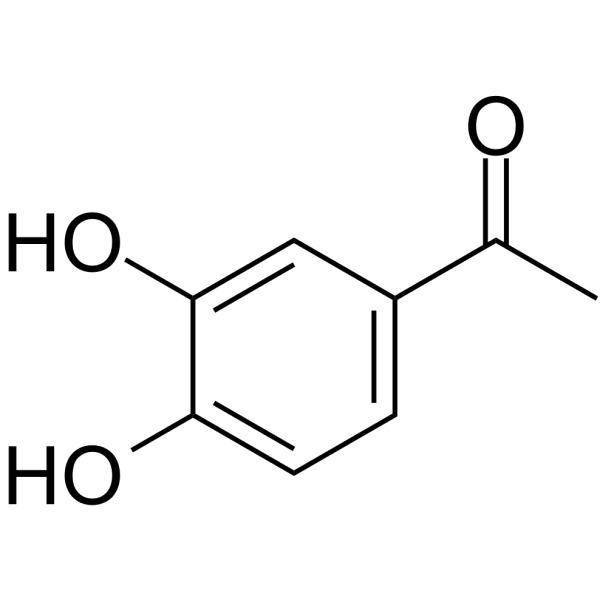
3',4'-Dihydroxyacetophenone (3,4-DHAP) is a phenolic compound with oral bioavailability, possessing potent antioxidant, anti-inflammatory, anticancer and cardiovascular protective activities. 3',4'-Dihydroxyacetophenone inhibits mushroom Tyrosinase activity with an IC50 of 10 μM, thereby suppressing melanogenesis . 3',4'-Dihydroxyacetophenone inhibits platelet aggregation in platelet-rich plasma. 3',4'-Dihydroxyacetophenone reduces ROS levels in human umbilical vein endothelial cells treated with high glucose, upregulates the expression of Nrf2, HO-1 and PARP-1 in cells, and promotes the nuclear translocation of Nrf2 . 3',4'-Dihydroxyacetophenone induces autophagy and apoptosis. 3',4'-Dihydroxyacetophenone inhibits seed germination/growth in most plants. 3',4'-Dihydroxyacetophenone can be used in the research of cancer, neurodegenerative diseases, non-alcoholic steatohepatitis, diabetes, obesity, skin pigmentation disorders, and cardiovascular and cerebrovascular diseases .
loading...
    loading...
Cat. No.: HY-N3097
CAS No.: 18836-52-7
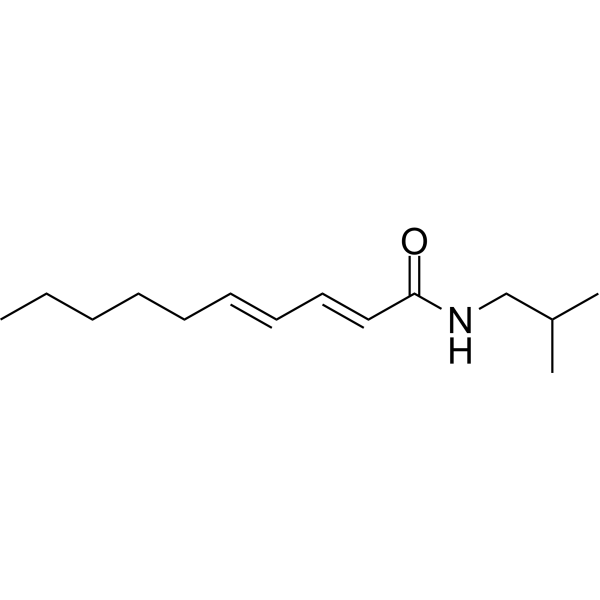
Pellitorine is a bioactive natural amide compound. Pellitorine can competitively antagonize the activation of TRPV1 by Capsaicin (HY-10448), thereby reducing pain signal transmission. Pellitorine improves cognitive dysfunction by upregulating the BDNF-ERK1/2-CREB and Nrf2-HO-1 pathways. Pellitorine exerts anti-inflammatory and anti-sepsis effects by inhibiting the release of high mobility group protein B1 (HMGB1) and the expression of RAGE/TLR4. Pellitorine exerts its antithrombotic effect by prolonging the clotting time, inhibiting the activity of clotting factors and thrombin. Pellitorine inhibits lipid peroxidation and resists ferroptosis by upregulating GPX4 and DHODH. Pellitorine kills Aedes aegypti mosquito larvae by inhibiting V-type H⁺-ATPase and aquaporin 4 (AaAQP4). Pellitorine exhibits anti-cancer activity (e.g., leukemia and breast cancer) and has inhibitory effects on certain bacteria .
loading...
    loading...
Cat. No.: HY-N3097R
CAS No.: 18836-52-7
Pellitorine (Standard) is the analytical standard of Pellitorine (HY-N3097). Pellitorine is a bioactive natural amide compound. Pellitorine can competitively antagonize the activation of TRPV1 by Capsaicin (HY-10448), thereby reducing pain signal transmission. Pellitorine improves cognitive dysfunction by upregulating the BDNF-ERK1/2-CREB and Nrf2-HO-1 pathways. Pellitorine exerts anti-inflammatory and anti-sepsis effects by inhibiting the release of high mobility group protein B1 (HMGB1) and the expression of RAGE/TLR4. Pellitorine exerts its antithrombotic effect by prolonging the clotting time, inhibiting the activity of clotting factors and thrombin. Pellitorine inhibits lipid peroxidation and resists ferroptosis by upregulating GPX4 and DHODH. Pellitorine kills Aedes aegypti mosquito larvae by inhibiting V-type H⁺-ATPase and aquaporin 4 (AaAQP4). Pellitorine exhibits anti-cancer activity (e.g., leukemia and breast cancer) and has inhibitory effects on certain bacteria.
loading...
    loading...
Cat. No.: HY-159892
CAS No.: 1393644-68-2
Research Areas:  

Cancer

PD-1/PD-L1-IN-54 (Compound 6) is a moderately affinic PD-1/PD-L1 inhibitor (KD: PD-1, 55.8 μM; PD-L1, 46.4 μM; IC50: 88.6 μM). PD-1/PD-L1-IN-54 inhibits PD-1/PD-L1 interactions and shows anticancer activity by activating CD8 + T cells, upregulating PD-1 expression, and increasing secretion of IFN-γ and IL-2. PD-1/PD-L1-IN-54 inhibits cancer cell proliferation and promotes apoptosis. PD-1/PD-L1-IN-54 also regulates T cell immunity through the PI3K/Akt pathway correlated with PD-1/PD-L1 .
loading...
    loading...
Cat. No.: HY-135319
CAS No.: 517-46-4
Purity:  97.15%
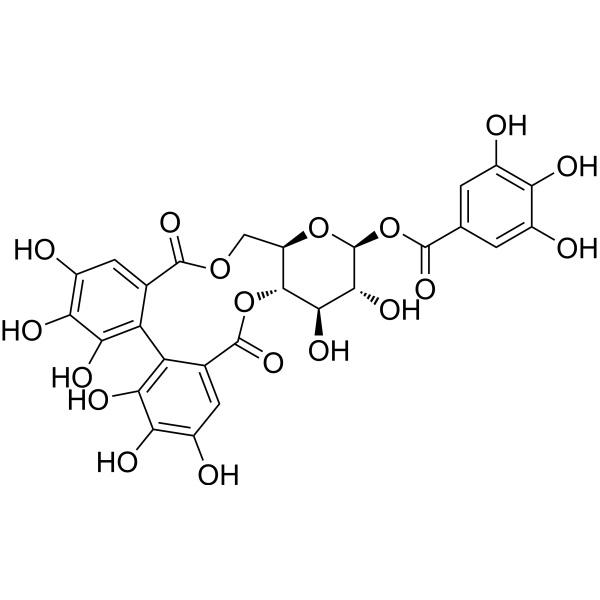
Strictinin is an orally active phenolic compound. Strictinin reduces xanthine oxidase activity, uric acid production, and the activation of ERK1/2, JNK, NF-κB, and NLRP3 inflammasome components in hepatocytes treated with Xanthine (HY-W017389). Strictinin decreases elevated serum uric acid levels and enhanced xanthine oxidase activity in mice treated with potassium oxonate. Strictinin acts as a ROR1 inhibitor and exhibits anticancer activity against highly aggressive non-androgen-dependent prostate cancer. Strictinin induces cancer cell apoptosis (apoptosis), arrests cell cycle, and inhibits cancer cell migration, invasion, and epithelial-mesenchymal transition. Strictinin modulates gut microbiota, inhibits bacterial growth and biofilm formation, accelerates small intestinal transit, and blocks viral entry and replication. Strictinin can be used in research related to hyperuricemia, androgen receptor-negative non-androgen-dependent prostate cancer, triple-negative breast cancer, bacterial infections, constipation, coronavirus infections, dental caries, and infections caused by influenza A, influenza B, and human parainfluenza virus type 1 .
loading...
    loading...
Cat. No.: HY-L155
545 compounds

Mitochondria, as the main place of energy supply in life, is essential to maintain normal life activities. Mitochondrial dysfunction is associated with common diseases, such as cardiovascular diseases, neurodegenerative diseases, diabetes and cancer. The heart, brain and liver rely heavily on mitochondrial function as the main organs for drug metabolism. In addition, mitochondria is also a target of many drugs, some of which induce organotoxicity by inducing mitochondrial toxicity.

MCE contains 545 mitochondrial toxic compounds, which can be used as tool compounds for drug development and disease mechanism research.