131 Results for "

epigenetics

" in MedChemExpress (MCE) Product Catalog:
Products (131)

131 Results for "epigenetics" in MCE Product Catalog:

Cat. No.: HY-124961
CAS No.: 927019-63-4
Target:  

Monoamine Oxidase

Research Areas:  

Cancer

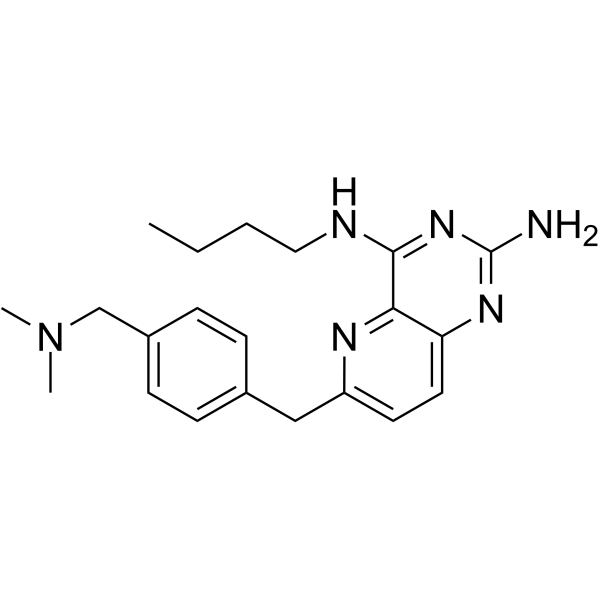
LSD1-IN-2 is a LSD1 inhibitor with an IC50 of 0.5 μM. LSD1-IN-2 increases the levels of monomethylated and dimethylated histone H3 lysine 4 (H3K4me1/2) in cells. LSD1-IN-2 reactivates epigenetically silenced tumor suppressor genes. LSD1-IN-2 can be used in the research of colon cancer .
loading...
    loading...
Cat. No.: HY-133567
CAS No.: 2567886-53-5
SET7-IN-DC21 is a selective, potent SET7 inhibitor (IC50 = 15.93 μM; KD = 18.00 μM). SET7-IN-DC21 has good selectivity for several other epigenetic targets, such as SUV39H1, G9a, NSD1, DOT1L and MOF. SET7-IN-DC21 can be used for the researches of cancer, infection, inflammation, metabolic and cardiovascular disease, such as breast cancer .
loading...
    loading...
Cat. No.: HY-189265
CAS No.: 3056235-77-6
Antitumor agent-226 is a DNMT3A inhibitor and epigenetic modulator. Antitumor agent-226 inhibits cell proliferation and migration by downregulating DNA Methyltransferase, reducing global DNA methylation, and modulating JNK, ERK1/2, and p38 phosphorylation through the MAPK pathway to induce mitochondria-dependent apoptosis, G2/M phase arrest, autophagy, and ROS production. Antitumor agent-226 can be used for research on prostate cancer .
loading...
    loading...
Cat. No.: HY-L250
61 compounds

In the progression of various diseases, metabolic reprogramming has emerged as a key hallmark. Lactate, as an important metabolic signaling molecule, is widely involved in tumorigenesis, immune regulation, and inflammatory responses. Particularly within the tumor microenvironment, the abnormal accumulation of lactate not only affects cellular energy metabolism but also promotes disease progression by modulating immune cell functions and mediating protein lactylation, thereby participating in epigenetic regulation and signaling networks. Therefore, systematic investigation of lactate metabolic pathways and their associated metabolites is of great significance for understanding disease mechanisms and developing novel therapeutic strategies.

The MCE lactic acid metabolite compound library contains 61 compounds and is constructed around key metabolic pathways involving lactate production, transport, and utilization. This library systematically includes core intermediates from glycolysis, the tricarboxylic acid (TCA) cycle, and the lactate cycle. Focusing on disease-associated metabolic reprogramming, it is suitable for research in oncology, inflammation, and metabolic disorders. The library can be used to elucidate the roles of lactate in tumor microenvironment regulation, immune evasion, and epigenetic modifications (such as protein lactylation). In addition, it provides high-quality small-molecule resources for drug screening, facilitating the discovery of potential modulators targeting key enzymes (such as LDH) or transporters (such as MCTs) involved in lactate metabolism.

Cat. No.: HY-184500
CAS No.: 2923223-81-6
Research Areas:  

Cancer

TNG917 is a potent, selective EHMT1/2 inhibitor with oral activity. TNG917 reduces H3K9me2-mediated transcriptional repression, restores interferon-stimulated gene expression, promotes the secretion of T-cell chemokines such as CXCL10, and converts immunologically cold tumors into T-cell inflamed tumors. TNG917 is applicable to studies on immunologically cold tumors, colorectal cancer, anti-tumor immunity, interferon signaling pathways and epigenetic immune escape .
loading...
    loading...
Cat. No.: HY-144501
CAS No.: 2230218-36-5
Purity:  98.14%
D18 is an immune modulator. D18 acts as a TLR7/8 dual agonist (EC50 = 24 nM for hTLR7 and 10 nM for hTLR8, respectively). D18 increases PD-L1 expression through epigenetic regulation, thus sensitizing tumors to PD-1/PD-L1 blockade. D18 is a ADC cytotoxin uesd for the systhesis of ADC HE-S2 (HY-144497). D18 has strong immune activation and anti-tumor activity. D18 commonly used in cancer research, such as colon cancer .
loading...
    loading...
Cat. No.: HY-181065
CAS No.: 3099617-79-2
Research Areas:  

Cancer

LS-170 is a YEATS2 YEATS domain inhibitor with an IC50 of 0.14 μM. LS-170 displays selectivity for the YEATS2 YEATS domain over other YEATS domain family members and other epigenetic 'reader' and 'eraser' proteins. LS-170 reduces chromatin occupancy of the Ada-two-A-containing (ATAC) complex, decreases ATAC-dependent histone acetylation levels, and downregulates expression of ATAC-governed genes. LS-170 suppresses tumor growth in a lung cancer mouse model. LS-170 can be used for the research of non-small cell lung cancer .
loading...
    loading...
Cat. No.: HY-161796
CAS No.: 2929304-05-0
Research Areas:  

Cancer

UNC8732 is an NSD2 degrader with a Kd value of 76 nM for NSD2, and achieves highly selective degradation of NSD2 across the detectable proteome. UNC8732 acts as a prodrug; its primary amine is metabolized to an aldehyde, which forms a reversible covalent interaction with Cys326 in the FIST_C domain of FBXO22, recruiting the SCFFBXO22 ubiquitin ligase complex to mediate polyubiquitination and proteasomal degradation of NSD2. UNC8732 serves as a chemical probe to investigate NSD2-associated disease phenotypes and study the functions of NSD2 in nuclear signaling and epigenetics. UNC8732 can be used in studies of acute lymphoblastic leukemia .
loading...
    loading...
Cat. No.: HY-W744986
Synonyms: (2S)-2-Hydroxyglutaric acid-d5 disodium
L-2-Hydroxyglutaric acid-d5 disodium ((2S)-2-Hydroxyglutaric acid-d5 disodium) is the deuterium labeled L-2-Hydroxyglutaric acid disodium (HY-W015114). L-2-Hydroxyglutaric acid disodium is an epigenetic modifier and putative oncometabolite in renal cancer. L-2-Hydroxyglutaric acid disodium can inhibit histone demethylases and hence promote histone methylation . L-2-Hydroxyglutaric acid inhibits mitochondrial creatine kinase (Mi-CK) activity with Km and Ki of 2.52 mM and 11.13 mM, respectively .
loading...
    loading...
Cat. No.: HY-173364
CAS No.: 3114073-95-6
Synonyms: BAK-04-212
Target:  

BCL6

Research Areas:  

Cancer

EB-TCIP (BAK-04-212) is a proof-of-concept tool specifically designed for Ewing sarcoma research, serving as an EWSR1::FLI1 binder tagged with BCL6 and FKBP12 F36V. EB-TCIP forms a ternary complex with the tagged fusion protein, specifically recruits EWSR1::FLI1 to BCL6-bound DNA loci, and induces rapid chromatin remodeling and relocalization. By mediating relocalization, EB-TCIP remodels the transcriptional machinery and activates the expression of BCL6 target genes that are originally repressed. EB-TCIP is used in studies related to novel epigenetic therapies for Ewing sarcoma .
loading...
    loading...
Cat. No.: HY-187370
Target:  

HDAC PAK PD-1/PD-L1

Research Areas:  

Cancer

YDH-704 is a PAK1/HDAC10 inhibitor, with IC50 values of 0.05 μM and 0.02 μM against human targets, respectively. YDH-704 blocks PAK1-mediated oncogenic signaling pathways, inhibits the proliferation and migration of tumor cells, suppresses the epigenetic regulatory function of HDAC10, downregulates PD-L1 expression, and regulates polyamine metabolism. YDH-704 reduces MDSC/Treg infiltration, enhances the infiltration and activation of CD8 + T cells, and inhibits tumor growth and lung metastasis. YDH-704 can be used for research on triple-negative breast cancer .
loading...
    loading...
Cat. No.: HY-179557
CAS No.: 2463893-46-9
iMQT_020 is a selective allosteric SLC1A5_var inhibitor. iMQT_020 disrupts the trimeric assembly of SLC1A5_var, causing metabolic crisis in cancer cells and selectively suppressing their growth. iMQT_020 reduces glutamine anaplerosis and oxidative phosphorylation, resulting in a broad disruption of cancer metabolism. iMQT_020 reduces GSH levels and increases cellular ROS and mitochondrial ROS. iMQT_020 induces apoptosis and ferroptosis. iMQT_020 can epigenetically upregulate PD-L1 expression. iMQT_020 can be used for the study of pancreatic cancer, lung cancer, and colon cancer .
loading...
    loading...
Cat. No.: HY-B2227BS
CAS No.: 344299-52-1
Synonyms: DL-Lactic acid-d4 sodium; E-270-d4 sodium
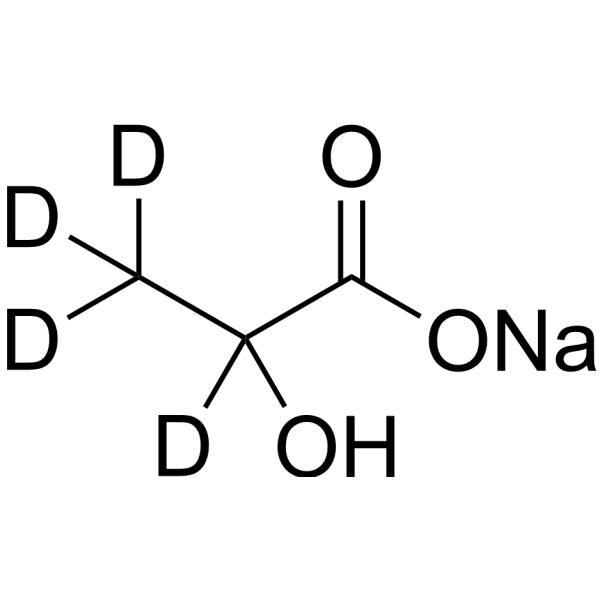
Lactic acid-d4 (DL-Lactic acid-d4) sodium (60% in water) is the deuterium labeled Lactic acid sodium (60% in water) (HY-B2227B) . Lactic acid (DL-Lactic acid) sodium (60% w/w in water) is a hydroxycarboxylic acid receptor 1 (HCAR1) activator and an epigenetic modulator inducing lysine residues lactylation. Lactic acid sodium (60% w/w in water) is a glycolysis end-product, bridging the gap between glycolysis and oxidative phosphorylation. Lactic acid sodium (60% w/w in water) is an oncometabolite and has immune protective role of lactate in anti-tumor immunity . Lactic acid sodium (60% w/w in water) also has antimicrobial activity, which can be used as a food preservative .
loading...
    loading...
Cat. No.: HY-B2227BS1
CAS No.: 1219802-24-0
Synonyms: DL-Lactic acid-d3 sodium; E-270-d3 sodium
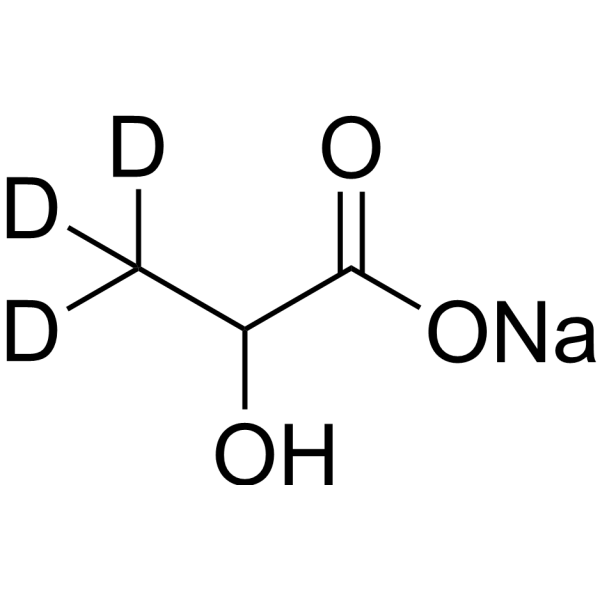
Lactic acid-d3 (DL-Lactic acid-d3) sodium (60% in water) is the deuterium labeled Lactic acid sodium (60% in water) (HY-B2227B) . Lactic acid (DL-Lactic acid) sodium (60% w/w in water) is a hydroxycarboxylic acid receptor 1 (HCAR1) activator and an epigenetic modulator inducing lysine residues lactylation. Lactic acid sodium (60% w/w in water) is a glycolysis end-product, bridging the gap between glycolysis and oxidative phosphorylation. Lactic acid sodium (60% w/w in water) is an oncometabolite and has immune protective role of lactate in anti-tumor immunity . Lactic acid sodium (60% w/w in water) also has antimicrobial activity, which can be used as a food preservative .
loading...
    loading...
Cat. No.: HY-P1958
CAS No.: 667899-73-2
Research Areas:  

Others

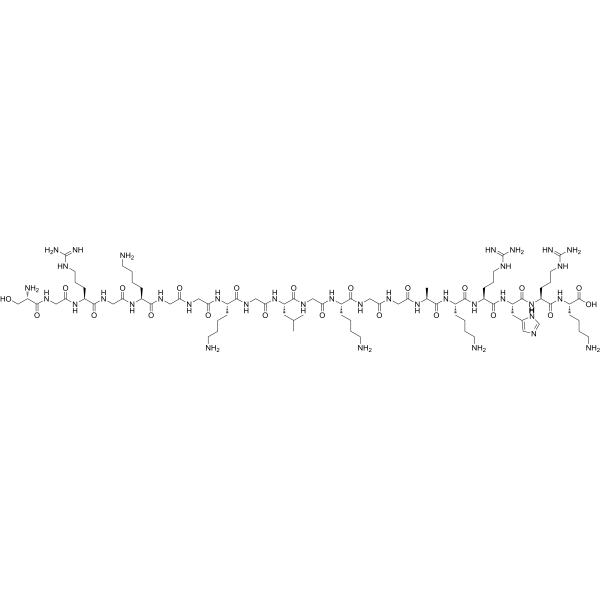
Histone H4 (2-21) is a substrate peptide derived from the N-terminal region of histone H4, which serves as an acyl acceptor for lysine acetyltransferases of the MYST family (KAT). Histone H4 (2-21) participates in enzymatic reactions together with acyl-coenzyme A (acyl-CoA, and undergoes lysine acetylation and propionylation modifications catalyzed by KATs such as MOF. The apparent Km of Histone H4 (2-21) for MOF is 788.8 μM, while in the picNuA4 catalytic system, the Km and Kd values of the H4 peptide are 192 μM and 251 μM, respectively. Histone H4 (2-21) can be used in studies related to histone post-translational modifications, epigenetic regulation, and lysine acylation .
loading...
    loading...
Cat. No.: HY-114510
CAS No.: 1020399-52-3
PRMT/HKMT-IN-1 is an epigenetic multi-target protein arginine methyltransferases (PRMTs) and histone lysine methyltransferases (HKMTs) inhibitor. PRMT/HKMT-IN-1 inhibits Aspergillus nidulans RmtA with an IC50 of 29 μM. PRMT/HKMT-IN-1 inhibits human PRMT1, p300/CBP HAT, CARM1, SET7, SIRT1 and SIRT2. PRMT/HKMT-IN-1 inhibits methylation of histone H3K4, H4R3, and H3R17 residues. CBP/p300-IN-23 induces apoptosis, arrests cell cycle in S phase, and triggers granulocytic differentiation in leukemia cells. PRMT/HKMT-IN-1 can be used for the research of leukemia .
loading...
    loading...
Cat. No.: HY-176535
CAS No.: 2648377-08-4
Synonyms: BBC0115
KB-0118 (BBC0115) is an orally active BET bromodomain inhibitor. KB-0118 selective binds to BRD2 and BRD4 over BRD3, with Kd values of 36.7 μM for BRD2 BD1 and 47.4 μM for BRD4 BD1. KB-0118 inhibits pro-inflammatory cytokines, including TNF, IL-1β, and IL-23a and selectively suppresses Th17 cell differentiation. KB-0118 modulates Th17-driven inflammation occurs through epigenetic suppression of BRD4, confirmed by downregulation of STAT3 and BRD4 target genes. KB-0118 has immunomodulatory effects in inflammatory bowel disease (IBD) model.
loading...
    loading...
Cat. No.: HY-L253
91 compounds

For thousands of years, natural products have always been an important source for drug discovery. Fungi, due to their unique and diverse secondary metabolic capabilities, have become a valuable resource for natural active molecules. Since the discovery of penicillin, natural products derived from fungi have demonstrated significant application value in areas such as anti-infection, anti-tumor, immune regulation, and metabolic disease research. A large number of clinical drugs, such as antibiotics, immunosuppressants, and lipid-lowering drugs, are derived from fungal metabolites or their structurally optimized derivatives.

MCE fungal-derived compound library contains 91 structurally diverse and bioactive fungal natural products and their derivatives. It can be widely applied in various research fields such as antibacterial, anti-tumor, anti-inflammatory, immune regulation, epigenetics, and cell signaling pathways, providing high-quality tools for natural product drug development and high-throughput screening.

Cat. No.: HY-176283
Tubulin/LSD1-IN-1 is an effective dual inhibitor of Tubulin polymerization and LSD1 (IC50 = 1.72 μM). Tubulin/LSD1-IN-1 has broad-spectrum antiproliferative activity against cancer cell lines. Tubulin/LSD1-IN-1 inhibits tubulin polymerization by targeting colchicine binding sites, thereby disrupting the microtubule network in gastric cancer cells. Tubulin/LSD1-IN-1 increases the methylation levels of H3K4me1/2 and H3K9me2/3, thereby achieving epigenetic regulation. Tubulin/LSD1-IN-1 induces G2/M arrest, promotes apoptosis, and effectively inhibits colony formation of gastric cancer cells .
loading...
    loading...
Cat. No.: HY-184776
CAS No.: 586-60-7
Synonyms: Dyclocaine
Dyclonine (Dyclocaine) is an orally active, blood-brain barrier-permeable piperidine phenylacetone small molecule commonly used as a local anesthetic. Dyclonine acts as a highly selective allosteric antagonist of TRPV3; it also reversibly inhibits G9a, ALDH2 and ALDH3A1, non-competitively blocks AChE. Dyclonine activates the Nrf2/ARE pathway, relieves the epigenetic silencing of FXN, blocks Aβ42 aggregation, and promotes remyelination and reparative polarization of microglia. Dyclonine alleviates pruritus via TRPV3 inhibition; it is used in studies of neurodegenerative disease models based on its AChE inhibitory, antioxidant and remyelinating effects; it sensitizes drug-resistant tumors through ALDH inhibition, and combined use with protease inhibitors induces more tumor cell apoptosis; it inhibits Candida albicans in vitro. Dyclonine can be used for research on multiple diseases including neurodegenerative diseases, cancer and pruritic dermatitis .
loading...
    loading...

