129 Results for "

soil

" in MedChemExpress (MCE) Product Catalog:
Products (129)

129 Results for "soil" in MCE Product Catalog:

Cat. No.: HY-N12229
CAS No.: 1821668-16-9
Penipurdin A (Compound 1), an anthraquinone, is a microbial secondary metabolite. Penipurdin A can be isolated from the soil fungus Penicillium purpurogenum SC0070. Penipurdin A has no significant cytotoxicity against cancer cells, such as A549, HepG2 and Hela cells. Penipurdin A has antibacterial activity against Enterococcus faecalis and Staphylococcus aureus .
loading...
    loading...
Cat. No.: HY-B0871R
CAS No.: 84087-01-4
Quinclorac (Standard) is the analytical standard of Quinclorac (HY-B0871). This product is intended for research and analytical applications. Quinclorac is a highly selective quinoline carboxylic acid synthetic auxin herbicide. Quinclorac weakly inhibits HPPD, accompanied by a transient decrease in carotenoids. Quinclorac upregulates ACC synthase (ACS), leading to the co-accumulation of ethylene and cyanide, while increasing the ABA/IAA ratio, which induces ROS burst, membrane lipid peroxidation (MDA) and lethal growth inhibition. Residual Quinclorac in soil can cause abnormal growth of subsequent tobacco crops. In calli of Phaseolus vulgaris, Quinclorac induces oxidative stress (increased MDA and decreased RGR), but cells after stepwise pressurized acclimation acquire a constitutive antioxidant state, which remains stable after de-acclimation and tolerates oxidative damage caused by Quinclorac. Quinclorac can be used in studies related to herbicide action mechanisms, bioremediation of soil residues, and adaptive responses of plant cells to oxidative stress .
loading...
    loading...
Cat. No.: HY-B0871S
Quinclorac- 13C is the 13C-labeled Quinclorac (HY-B0871). Quinclorac is a highly selective quinoline carboxylic acid synthetic auxin herbicide. Quinclorac weakly inhibits HPPD, accompanied by a transient decrease in carotenoids. Quinclorac upregulates ACC synthase (ACS), leading to the co-accumulation of ethylene and cyanide, while increasing the ABA/IAA ratio, which induces ROS burst, membrane lipid peroxidation (MDA) and lethal growth inhibition. Residual Quinclorac in soil can cause abnormal growth of subsequent tobacco crops. In calli of Phaseolus vulgaris, Quinclorac induces oxidative stress (increased MDA and decreased RGR), but cells after stepwise pressurized acclimation acquire a constitutive antioxidant state, which remains stable after de-acclimation and tolerates oxidative damage caused by Quinclorac. Quinclorac can be used in studies related to herbicide action mechanisms, bioremediation of soil residues, and adaptive responses of plant cells to oxidative stress .
loading...
    loading...
Cat. No.: HY-B2050
CAS No.: 1582-09-8
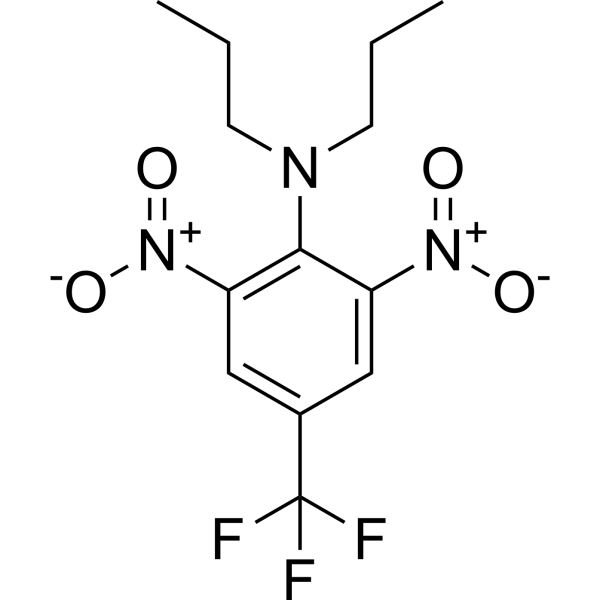
Trifluralin is a selective, preemergence, soil-applied herbicide providing control of many important annual grass and broadleaf weed species. Trifluralin prevents weed growth by inhibiting root development through the interruption of mitosis. Trifluralin binds to tubulin and results in the failure of spindle apparatus and cell plate formation. Trifluralin inhibits radicle development on roots. Trifluralin inhibits cell mitosis. Trifluralin is considered to be neurotoxic and haematotoxic .
loading...
    loading...
Cat. No.: HY-N19229
CAS No.: 65718-85-6
Dihydrocitrinone is a polyketide secondary metabolite and the major urinary metabolite of citrinin, which can be isolated from Aspergillus strains derived from the rhizosphere soil of date palms. Dihydrocitrinone exerts independent toxic effects in renal cell cultures and zebrafish embryo models, enhances the toxic effects of Ochratoxin A through additive or synergistic actions, and increases the level of miR-731 in zebrafish embryos when acting in combination with Ochratoxin A .
loading...
    loading...
Cat. No.: HY-W004292R
CAS No.: 112-42-5
Synonyms: Undecyl alcohol (Standard)
1-Undecanol (Standard) (Undecyl alcohol (Standard)) is an analytical reference standard for 1-Undecanol (HY-W004292). This product is used for research and analytical applications. 1-Undecanol (Undecyl alcohol) is the main product generated from the degradation of 2-tridecanone by Pseudomonas bacteria isolated from the soil. 1-Undecanol can enhance the attraction of Grapholita molesta to sex pheromone traps .
loading...
    loading...
Cat. No.: HY-100196AR
CAS No.: 122628-50-6
Synonyms: PQQ disodium salt (Standard); Methoxatin disodium salt (Standard)
Triazophos (Standard) is the analytical standard of Triazophos. This product is intended for research and analytical applications. Triazophos, a non-systemic insecticide and acaricide that acts as an acetylcholinesterase (AChE) inhibitor, covalently and irreversibly binds to the acetylcholine binding site, thus blocking the hydrolysis of acetylcholine and leading to hyperexcitability; it is effective against a variety of soil insects and mites, including aphids, thrips, midges, beetles, Lepidoptera larvae, cutworms, and spider mites in crops such as ornamentals, cotton, rice, maize, soybeans, oil palms, olives, and coffee.
loading...
    loading...
Cat. No.: HY-130423R
CAS No.: 51596-10-2
Research Areas:  

Infection

Milbemycin A3 (Standard) is the analytical standard of Milbemycin A3 (HY-130423). This product is intended for research and analytical applications. Milbemycin A3 is a 16-membered macrocyclic lactone compound found in the soil bacterium Saccharopolyspora hygroscopicus subsp. aureolacrimosus. Milbemycin A3 enhances the opening of glutamate- and GABA-gated chloride channels and exhibits insecticidal activity. Milbemycin A3 can be used in insect resistance-related research .
loading...
    loading...
Cat. No.: HY-B0828R
CAS No.: 24017-47-8
Research Areas:  

Others

Triazophos (Standard) is the analytical standard of Triazophos. This product is intended for research and analytical applications. Triazophos, a non-systemic insecticide and acaricide that acts as an acetylcholinesterase (AChE) inhibitor, covalently and irreversibly binds to the acetylcholine binding site, thus blocking the hydrolysis of acetylcholine and leading to hyperexcitability; it is effective against a variety of soil insects and mites, including aphids, thrips, midges, beetles, Lepidoptera larvae, cutworms, and spider mites in crops such as ornamentals, cotton, rice, maize, soybeans, oil palms, olives, and coffee.
loading...
    loading...
Cat. No.: HY-B2050S
CAS No.: 347841-79-6
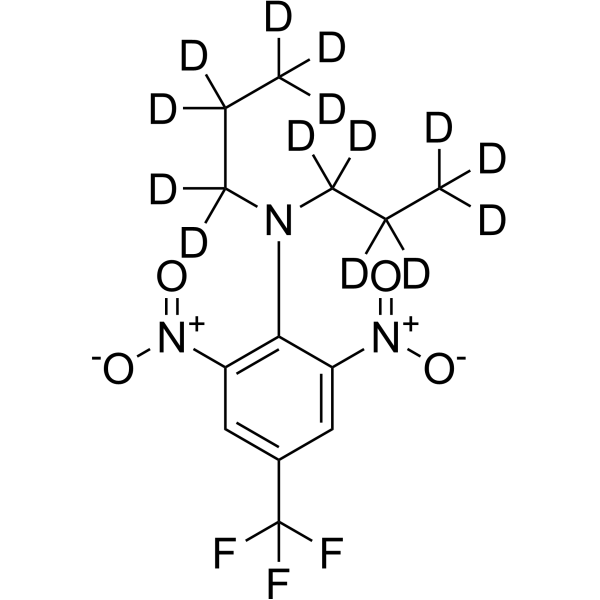
Trifluralin-d14 is the deuterium labeled Trifluralin. Trifluralin is a selective, preemergence, soil-applied herbicide providing control of many important annual grass and broadleaf weed species. Trifluralin prevents weed growth by inhibiting root development through the interruption of mitosis. Trifluralin binds to tubulin and results in the failure of spindle apparatus and cell plate formation. Trifluralin inhibits radicle development on roots. Trifluralin inhibits cell mitosis. Trifluralin is considered to be neurotoxic and haematotoxic .
loading...
    loading...
Cat. No.: HY-Y0057R
CAS No.: 486-74-8
Synonyms: Cinchoninic acid (Standard); 4-Carboxyquinoline (Standard); NSC 13138 (Standard)
4-Quinolinecarboxylic acid (Standard) (Cinchoninic acid (Standard); 4-Carboxyquinoline (Standard); NSC 13138 (Standard)) is the analytical standard of 4-Quinolinecarboxylic acid (HY-Y0057). This product is intended for research and analytical applications. 4-Quinolinecarboxylic acid (Cinchoninic acid; 4-Carboxyquinoline; NSC 13138) is a quinoline derivative and also an Endogenous Metabolite. 4-Quinolinecarboxylic acid can serve as the sole carbon source for the growth of the soil bacterium Microbacterium sp. H2 .
loading...
    loading...
Cat. No.: HY-115371
CAS No.: 1063-55-4
Target:  

Endogenous Metabolite

Research Areas:  

Neurological Disease

Butaperazine dimaleate is an antipsychotic compound with activity for the detection of vanadium (V). Butaperazine dimaleate can react with vanadium (V) in a phosphoric acid medium to form a red radical cation. The absorption spectrum of butaperazine dimaleate reaches a maximum at 513 nm, which conforms to Beer's law and corresponds to a concentration range of 0.25-5.0 μg/ml. Butaperazine dimaleate has a sensitivity value of 6.1 ng/cm2 and is suitable for the analysis of vanadium steel, minerals, biological samples, and soil samples .
loading...
    loading...
Cat. No.: HY-160735
CAS No.: 35597-44-5
Target:  

Herbicide Glutaminase

Research Areas:  

Others

L-Phosphinothricin is a glutamine synthetase inhibitor and a non-selective herbicide. L-Phosphinothricin acts as a competitive inhibitor, induces toxic ammonium ion accumulation in plants and bacteria, and indirectly blocks the photosynthesis process. L-Phosphinothricin exerts herbicidal activity against both monocotyledonous and dicotyledonous plant species, is primarily absorbed through plant leaves, exhibits limited translocation in plants, and undergoes rapid degradation by soil microorganisms with no root uptake. L-Phosphinothricin can be used for research on weed control in agricultural and non-crop scenarios .
loading...
    loading...
Cat. No.: HY-B0273S
CAS No.: 1020719-78-1
Target:  

Bacterial

Research Areas:  

Infection

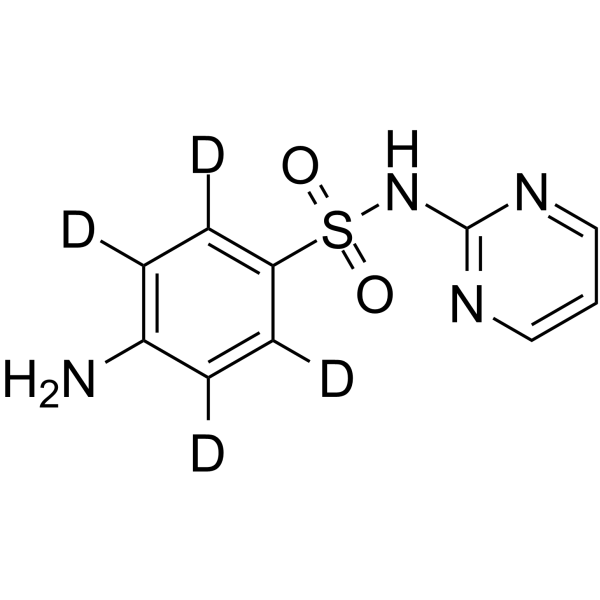
Sulfadiazine-d4 is a deuterium labeled Sulfadiazine (HY-B0273). Sulfadiazine is an orally active sulfonamide antibiotic. Sulfadiazine competitively inhibits p-aminobenzoic acid in the folic-acid-metabolism cycle, inhibiting multiplication of most Gram-positive and many Gram-negative bacteria. Sulfadiazine persists in soil long-term, and exerts selective pressure for sulfonamide-resistant microbial populations. Sulfadiazine targets Toxoplasma gondii DHPS enzyme. Sulfadiazine can be used for the research of congenital toxoplasmosis and bacterial infection .
loading...
    loading...
Cat. No.: HY-B0273S1
CAS No.: 1189426-16-1
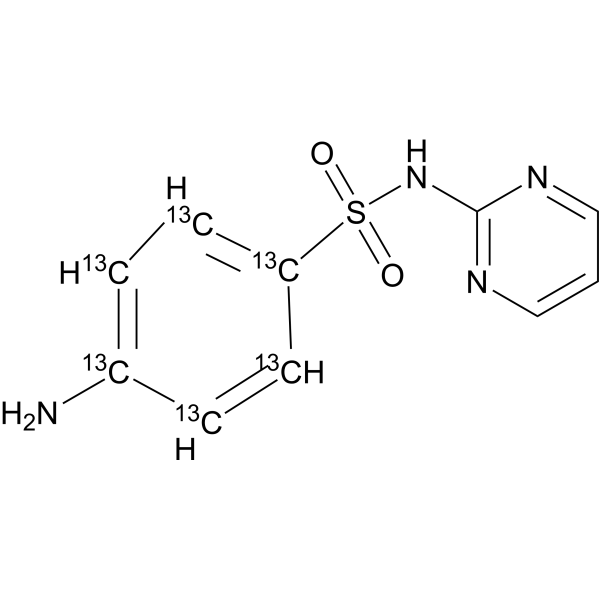
Sulfadiazine- 13C6 is a labeled Sulfadiazine (HY-B0273). Sulfadiazine is an orally active sulfonamide antibiotic. Sulfadiazine competitively inhibits p-aminobenzoic acid in the folic-acid-metabolism cycle, inhibiting multiplication of most Gram-positive and many Gram-negative bacteria. Sulfadiazine persists in soil long-term, and exerts selective pressure for sulfonamide-resistant microbial populations. Sulfadiazine targets Toxoplasma gondii DHPS enzyme. Sulfadiazine can be used for the research of congenital toxoplasmosis and bacterial infection .
loading...
    loading...
Cat. No.: HY-B2050R
CAS No.: 1582-09-8
Research Areas:  

Others

Trifluralin (Standard) is the analytical standard of Trifluralin. This product is intended for research and analytical applications. Trifluralin is a selective, preemergence, soil-applied herbicide providing control of many important annual grass and broadleaf weed species. Trifluralin prevents weed growth by inhibiting root development through the interruption of mitosis. Trifluralin binds to tubulin and results in the failure of spindle apparatus and cell plate formation. Trifluralin inhibits radicle development on roots. Trifluralin inhibits cell mitosis. Trifluralin is considered to be neurotoxic and haematotoxic .
loading...
    loading...
Cat. No.: HY-N15347
Talaromyketide B is a polyketide compound with anti-inflammatory activity, discovered in the soil bacterium Talaromyces sp. KYS-41. Talaromyketide B inhibits the activation of the NF-κB and MAPK signaling pathways and dose-dependently suppresses pro-inflammatory cytokines, such as IL-1β, IL-6, IL-10, and TNF-α, as well as the transcriptional activity of inflammatory mediators, including iNOS and COX-2. Talaromyketide B holds potential for research in the fields of immunity and inflammatory diseases .
loading...
    loading...
Cat. No.: HY-B0273AR
CAS No.: 547-32-0
Research Areas:  

Infection

Sulfadiazine sodium (Standard) is the analytical standard of Sulfadiazine sodium (HY-B20273A). This product is intended for research and analytical applications. Sulfadiazine sodium is an orally active sulfonamide antibiotic. Sulfadiazine sodium competitively inhibits p-aminobenzoic acid in the folic-acid-metabolism cycle, inhibiting multiplication of most Gram-positive and many Gram-negative bacteria. Sulfadiazine sodium persists in soil long-term, and exerts selective pressure for sulfonamide-resistant microbial populations. Sulfadiazine sodium targets Toxoplasma gondii DHPS enzyme. Sulfadiazine sodium can be used for the research of congenital toxoplasmosis and bacterial infection .
loading...
    loading...
Cat. No.: HY-B0273R
CAS No.: 68-35-9
Research Areas:  

Infection

Sulfadiazine (Standard) is the analytical standard of Sulfadiazine (HY-B0273). This product is intended for research and analytical applications. Sulfadiazine is an orally active sulfonamide antibiotic. Sulfadiazine competitively inhibits p-aminobenzoic acid in the folic-acid-metabolism cycle, inhibiting multiplication of most Gram-positive and many Gram-negative bacteria. Sulfadiazine persists in soil long-term, and exerts selective pressure for sulfonamide-resistant microbial populations. Sulfadiazine targets Toxoplasma gondii DHPS enzyme. Sulfadiazine can be used for the research of congenital toxoplasmosis and bacterial infection .
loading...
    loading...
Cat. No.: HY-B0828S
CAS No.: 1773496-62-0
Synonyms: Hostathion 40EC-d5; Hostathion-d5; Hostation-d5
Triazophos-d5 (Hostathion 40EC-d5) is the deuterium labeled Triazophos(HY-B0828) . Triazophos, a non-systemic insecticide and acaricide that acts as an acetylcholinesterase (AChE) inhibitor, covalently and irreversibly binds to the acetylcholine binding site, thus blocking the hydrolysis of acetylcholine and leading to hyperexcitability; it is effective against a variety of soil insects and mites, including aphids, thrips, midges, beetles, Lepidoptera larvae, cutworms, and spider mites in crops such as ornamentals, cotton, rice, maize, soybeans, oil palms, olives, and coffee.
loading...
    loading...

