1388 Results for "

Allosteric

" in MedChemExpress (MCE) Product Catalog:
Products (1388)

1388 Results for "Allosteric" in MCE Product Catalog:

Cat. No.: HY-P1073
CAS No.: 484598-35-8
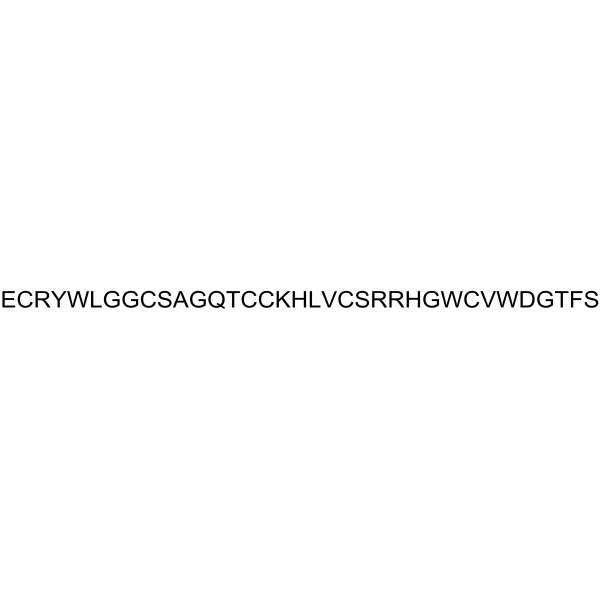
ProTx-I is a toxin derived from Thrixopelma pruriens and a peptide inhibitor targeting TTX-resistant sodium channels. ProTx-I interacts with voltage sensors of multiple domains such as NaV1.7, reduces neuronal excitability through allosteric modulation of channel gating and alteration of voltage dependence. The IC50 values of ProTx-I against human NaV1.7, NaV1.2, NaV1.6, and NaV1.5 are 95 nM, 104 nM, 21 nM, and 358 nM, respectively; ProTx-I also potently inhibits Ba 2+ currents of hCav3.1, while its inhibitory potency against hCav3.2 is approximately 160-fold lower. ProTx-I is applicable to the research of chronic pain .
loading...
    loading...
Cat. No.: HY-P5542
CAS No.: 1251838-01-3
Synonyms: SB-01; Peniel 2000
Target:  

Factor Xa TGF-beta/Smad

Research Areas:  

Inflammation/Immunology

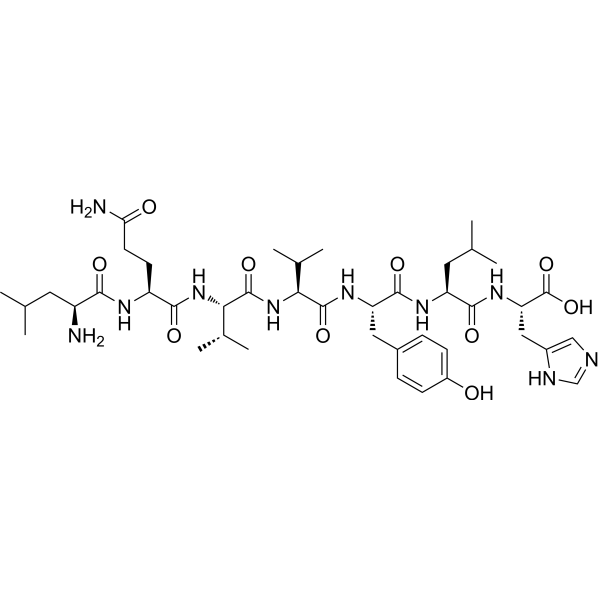
Vicatertide (SB-01, Peniel 2000) is a polypeptide with both competitive inhibitory activity against TGF-β1 and selective inhibitory activity against human factor XIa (hFXIa, with a Ka of 80 nM for hFXIa). Vicatertide binds allosterically to the two binding sites of dimeric hFXI/hFXIa, while directly binding to activated TGF-β1, selectively blocking the Smad1/5/8 pathway and maintaining low-level activation of the Smad2 pathway to enhance the synthesis of type Ⅱ collagen and aggrecan. Vicatertide inhibits thrombus formation in arteriovenous thrombosis models, and also reduces thrombus weight and thrombus incidence in mouse lung cancer models. Vicatertide can be used for research on degenerative disc disease and thrombosis-related diseases .
loading...
    loading...
Cat. No.: HY-L944
11028 compounds

MCE 18 stands for Medicinal Chemistry Evolution 2018. This metric was established based on structural data of 28,161 patented lead molecules, 1,370 marketed innovative drugs, and nearly 30,000 investigational candidates from preclinical to Phase III stages across 23 major global pharmaceutical companies from 1950 to 2018. After scaffold clustering analysis, a scoring model was constructed by integrating five three dimensional scaffold characteristics, including aromatic rings (AR), non aromatic heterocycles (NAR), chiral centers (CHIRAL), spirocycles (SPIRO), and the sp³ carbon ratio in cyclic and acyclic moieties, enabling quantitative assessment of molecular scaffold novelty and three dimensional complexity.

According to the score distribution of patented molecules, the top 25% of the original patent dataset was defined as the high novelty region. MCE 18 high scoring compounds selected based on this criterion can effectively avoid scaffold patent conflicts and intellectual property risks from the source. Molecules in this range typically feature a high sp³ carbon ratio, abundant chiral centers, spirocycles, and fused heterocycles with prominent three dimensional conformations. Their spatial properties allow precise matching to complex non traditional undruggable target pockets such as PPI interfaces and allosteric sites, making them ideal structural types for early stage screening of First in class drugs.

MCE‑18 Novelty Focused drug‑Like library strictly selects molecules from the aforementioned high scoring range, containing more than 10,000 premium drug like molecules with highly diverse scaffolds and rich 3D diversity. It can be used for high throughput screening of well established targets such as kinases, GPCRs, and proteases, and is especially suitable for hit identification in allosteric modulation, protein–protein interactions, and various undruggable orphan targets, fully supporting early stage drug discovery for cutting edge innovat

Cat. No.: HY-110168R
CAS No.: 913830-15-6
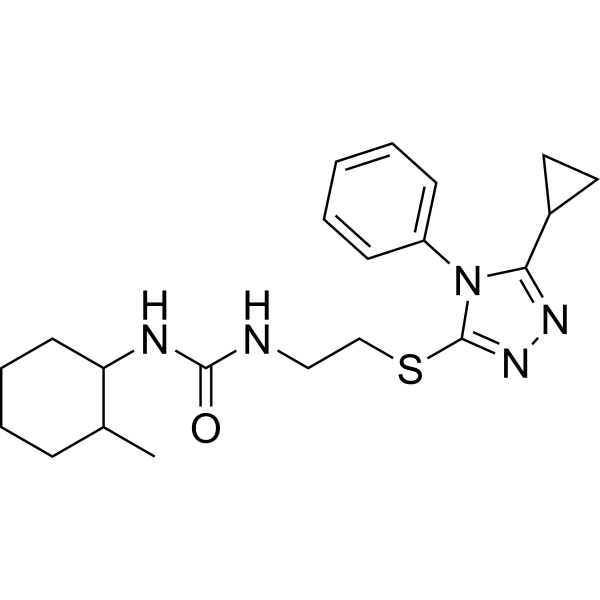
NS 9283 (Standard) is the analytical standard of NS 9283 (HY-110168). This product is intended for research and analytical applications. NS 9283 (A-969933) is a α4β2 nicotinic acetylcholine receptor (α4β2 nAChR) positive allosteric modulator that preferentially targets the (α4)3 (β2)2 stoichiometric conformation. NS 9283 increases the potency of ACh-induced currents without enhancing the maximal effect of ACh. NS 9283 also enhances prefrontal glutamate release, modulates attention-related electrophysiological responses, and potentiates the antinociceptive effects associated with α4β2 nAChR agonists. NS 9283 can be used in research related to inflammatory pain, postoperative pain, osteoarthritis pain, and Parkinson's disease .
loading...
    loading...
Cat. No.: HY-110168S
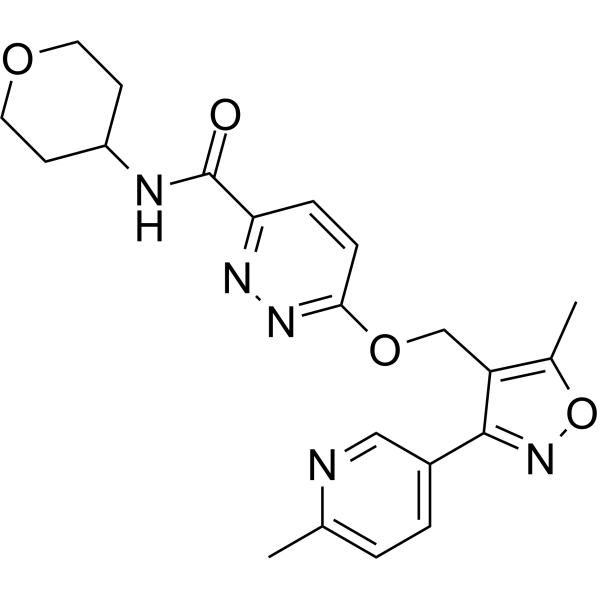
NS 9283-d4 is the deuterated-labeled NS 9283 (HY-110168). NS 9283 (A-969933) is a α4β2 nicotinic acetylcholine receptor (α4β2 nAChR) positive allosteric modulator that preferentially targets the (α4)3 (β2)2 stoichiometric conformation. NS 9283 increases the potency of ACh-induced currents without enhancing the maximal effect of ACh. NS 9283 also enhances prefrontal glutamate release, modulates attention-related electrophysiological responses, and potentiates the antinociceptive effects associated with α4β2 nAChR agonists. NS 9283 can be used in research related to inflammatory pain, postoperative pain, osteoarthritis pain, and Parkinson's disease .
loading...
    loading...
Cat. No.: HY-123985
CAS No.: 2230047-87-5
Purity:  99.28%
Research Areas:  

Neurological Disease

MFN2 agonist-1 is an allosteric agonist of mitofusin 2 (MFN2) with an EC50 of 3 nM. MFN2 agonist-1 mimics the MFN2 HR1 peptide to compete for HR2, disrupt the HR1-HR2 autoinhibitory interaction, stabilize the open conformation of MFN2, and promote GTP hydrolysis and mitochondrial fusion. MFN2 agonist-1 acts in a manner dependent on endogenous MFN1 or MFN2, and does not impair cell viability. MFN2 agonist-1 reverses mitochondrial fragmentation, depolarization, aggregation and axonal transport defects, restores bidirectional movement and improves enhanced autophagy. MFN2 agonist-1 is used in studies related to Charcot-Marie-Tooth disease type 2A, Alzheimer's disease, Parkinson's disease and Huntington's disease .
loading...
    loading...
Cat. No.: HY-174984
CAS No.: 3098437-66-9
Target:  

p97 Caspase p62

Research Areas:  

Cancer

VCP/p97 IN-3 is a VCP/p97 allosteric inhibitor. VCP/p97 IN-3 shows the inhibitory activity against the VCP proteins with an IC50 of 9 nM and the mutant VCP proteins with IC50 of 12 nM (N660K) and 19 nM (V474A/D649A). VCP/p97 IN-3 increases K48-linked ubiquitination and the level of cleaved caspase-3. VCP/p97 IN-3 activates ER-stress and the UPR. VCP/p97 IN-3 inhibits tumor growth in RPMI-8226 cell subcutaneous xenograft mouse models. VCP/p97 IN-3 can be used for the study of multiple myeloma .
loading...
    loading...
Cat. No.: HY-182707
CAS No.: 2055045-42-4
JWX-A0108 is a selective human α7 nAChR positive allosteric modulator with an EC50 of 4.35 μM. JWX-A0108 potentiates α7 nAChR currents only in the presence of acetylcholine, with no direct activating effect or alteration of desensitization. JWX-A0108 enhances hippocampal GABAergic synaptic transmission by increasing spontaneous inhibitory postsynaptic currents. JWX-A0108 reduces the brain expression levels of IL-1β, TNF-α, and IL-6 by blocking the NF-κB signaling pathway, and reduces microglial activation by downregulating Iba1. JWX-A0108 effectively improves cognitive deficits, neuroinflammation, and hippocampal neuronal damage in mouse models of schizophrenia and Alzheimer's disease. JWX-A0108 can be used for research related to schizophrenia and Alzheimer's disease .
loading...
    loading...
Cat. No.: HY-N18343
CAS No.: 3649-76-1
Ebelin lactone is an acetylcholinesterase (AChE) inhibitor, with a Ki of 0.45 μM against human M1 muscarinic acetylcholine receptor (mAChR) and a Ki of 4.21 μM against human 5-HT2A serotonin receptor. Ebelin lactone binds to the allosteric cavity above the orthosteric site of M1 via nonpolar interactions with subtype-selective residues. Ebelin lactone binds to the cavity between transmembrane helices 4 and 5 of 5-HT2A through nonpolar interactions with orthosteric site residues. Ebelin lactone exhibits free radical scavenging activity, inhibits cancer cell proliferation, and regulates memory and cognitive processes by interacting with M1 and 5-HT2A receptors. Ebelin lactone can be used in studies related to Alzheimer's disease, breast cancer and colorectal cancer .
loading...
    loading...
Cat. No.: HY-109056A
CAS No.: 867365-40-0
Synonyms: R-1206 sodium
Elsulfavirine sodium (R-1206) is an orally active human carbonic anhydrase (carbonic anhydrase, CA) inhibitor and an allosteric inhibitor of HIV-1 non-nucleoside reverse transcriptase (NNRT). Elsulfavirine sodium also targets and blocks the interaction between adenylosuccinate lyase (ADSL) and insulin-induced gene proteins INSIG1/2, blocks SREBP-1-mediated de novo lipid synthesis, and inhibits the proliferation of liver cancer cells. The combination of Elsulfavirine sodium and Lenvatinib (HY-10981) produces a synergistic anti-tumor effect. Elsulfavirine sodium is converted into the active metabolite VM1500A in vivo, blocks the DNA polymerase activity of reverse transcriptase, and inhibits HIV-1 replication. Elsulfavirine sodium exhibits a Ki of 1960 nM-52400 nM against human carbonic anhydrase isoforms including I, VII, VI, VA, VB, IX, XIII, XIV. Elsulfavirine sodium is used in studies related to HIV-1 infection and liver cancer .
loading...
    loading...
Cat. No.: HY-132806
CAS No.: 2230009-48-8
Purity:  99.93%
Synonyms: RG-7816; RO-7017773
Target:  

GABA Receptor

Research Areas:  

Neurological Disease

Alogabat is a positive allosteric modulator (PAM) and agonist (Ki <100 nM) of the GABAA α5 receptor, targeting the α5β3γ2 subunit with a Ki of 8.7 nM. Alogabat increases the expression level of α5β3γ2 in oocytes (1.97-fold). GABAA has been implicated in cognitive impairment associated with central nervous system (CNS) disorders, brain cancer (including brain tumors such as medulloblastoma), and can be used in the study of mild cognitive impairment (MCI), amnestic MCI (aMCI), age-associated memory impairment (AAMI), age-related cognitive decline (ARCD), dementia, Alzheimer's disease (AD), prodromal AD, post-traumatic stress disorder (PTSD), schizophrenia, bipolar disorder, amyotrophic lateral sclerosis (ALS), cognitive impairment associated with cancer treatment, mental retardation, Parkinson's disease (PD), autism spectrum disorder, fragile X, Rett syndrome, obsessive-compulsive behavior, and substance addiction .
loading...
    loading...
Cat. No.: HY-139997
CAS No.: 2140806-84-2
Target:  

PROTACs EGFR

Research Areas:  

Cancer

DDC-01-163 is an allosteric PROTAC degrader targeting EGFR. DDC-01-163 is dependent on the ubiquitin–proteasome system. DDC-01-163 can selectively inhibit the proliferation of L858R/T790M (L/T) mutant Ba/F3 cells. DDC-01-163 is effective against Osimertinib (HY-15772)-resistant cells with L/T/C797S and L/T/L718Q EGFR mutations. DDC-01-163 exhibits enhanced anti-proliferative activity against L858R/T790M EGFR-Ba/F3 cells when combined with the ATP-site EGFR inhibitor Osimertinib. DDC-01-163 can be used for the study of non-small cell lung cancer .
loading...
    loading...
Cat. No.: HY-149359
CAS No.: 3049485-80-2
Research Areas:  

Cancer

IHMT-IDH1-053 (compound 16) is a highly selectivity and irreversible IDH1-mutant inhibitor with an IC50 of 4.7 nM for IDH1 R132H. IHMT-IDH1-053 displays high selectivity against IDH1 mutants over IDH1 wt and IDH2 wt/mutants. IHMT-IDH1-053 inhibits 2-hydroxyglutarate (2-HG) production in IDH1 R132H mutant transfected 293T cells (IC50=28 nM). IHMT-IDH1-053 binds to the IDH1 R132H protein in the allosteric pocket adjacent to the NAPDH binding pocket through a covalent bond with residue Cys269. IHMT-IDH1-053 inhibits the proliferation of HT1080 cell line and primary AML cells which both bear IDH1 R132 mutants .
loading...
    loading...
Cat. No.: HY-175532
CAS No.: 3062458-27-6
Target:  

mAChR

Research Areas:  

Neurological Disease

M4 mAChR Modulator-2 is an orally active, selective, brain-penetrant positive allosteric modulator (PAM) of the M4 muscarinic acetylcholine receptor (M4 mAChR) (EC50 = 513 nM). M4 mAChR Modulator-2 exhibits high target selectivity, showing negligible affinity and low inhibition rates for non-target receptors (D1R/D2R/D3R, 5-HT subtypes, κ/δ/μ opioid receptors, H1, M1/M2) while specifically binding to M4 mAChR with a Ki of 377 nM and an inhibition rate of 62.8%. M4 mAChR Modulator-2 reverses Dizocilpine (MK-801) (HY-15084B)-induced hyperlocomotion in mice. M4 mAChR Modulator-2 can be used for the study of schizophrenia
loading...
    loading...
Cat. No.: HY-184408
CAS No.: 3033990-94-9
Research Areas:  

Infection

AAP-SO2 is a Bactericide and Mycobacterium tuberculosis RNA polymerase (Mtb RNAP) inhibitor, with an IC50 of 0.025 μM against Mtb RNAP. AAP-SO2 allosterically slows the nucleotide addition rate during transcriptional elongation and enhances transcription termination efficiency. AAP-SO2 exhibits increased activity against β S450L-type Mtb, possesses activity against non-replicating Mtb, and shows whole-cell activity against Mtb and related mycobacterial species. AAP-SO2 reduces the overall emergence rate of Rifampicin (HY-B0272) tolerance in Mtb, alters the mutation spectrum, and decreases the proportion of β S450L-type Rifampicin-resistant mutants. AAP-SO2 acts synergistically with Rifampicin to kill non-replicating Mtb in a rabbit caseous necrosis model. AAP-SO2 can be used for the research of tuberculosis .
loading...
    loading...
Cat. No.: HY-184776
CAS No.: 586-60-7
Synonyms: Dyclocaine
Dyclonine (Dyclocaine) is an orally active, blood-brain barrier-permeable piperidine phenylacetone small molecule commonly used as a local anesthetic. Dyclonine acts as a highly selective allosteric antagonist of TRPV3; it also reversibly inhibits G9a, ALDH2 and ALDH3A1, non-competitively blocks AChE. Dyclonine activates the Nrf2/ARE pathway, relieves the epigenetic silencing of FXN, blocks Aβ42 aggregation, and promotes remyelination and reparative polarization of microglia. Dyclonine alleviates pruritus via TRPV3 inhibition; it is used in studies of neurodegenerative disease models based on its AChE inhibitory, antioxidant and remyelinating effects; it sensitizes drug-resistant tumors through ALDH inhibition, and combined use with protease inhibitors induces more tumor cell apoptosis; it inhibits Candida albicans in vitro. Dyclonine can be used for research on multiple diseases including neurodegenerative diseases, cancer and pruritic dermatitis .
loading...
    loading...
Cat. No.: HY-187088
CAS No.: 1198309-73-7
Target:  

mGluR

Research Areas:  

Neurological Disease

AZD-8418 is an orally active positive allosteric modulator of metabotropic glutamate receptor 2 (mGluR2), with an EC50 of 0.86 μM for rat mGlu2 receptors. AZD-8418 reduces the in vitro binding level of [ 3H]AZ12559322 in prefrontal cortex brain tissues of non-human primates. AZD8418 enhances the inhibitory effect of the mGlu2/3 agonist DCG-IV (HY-101335) on field excitatory postsynaptic potentials (fEPSP) in rat hippocampal brain slices. AZD-8418 reduces nicotine self-administration behavior in rats, and blocks cue-induced reinstatement of nicotine-seeking and food-seeking behaviors. The attenuating effect on nicotine self-administration behavior develops rapid tolerance, while inhibition of food self-administration behavior requires chronic administration. AZD-8418 can be used in research related to nicotine dependence and neuropsychiatric disorders .
loading...
    loading...
Cat. No.: HY-187200
Research Areas:  

Infection

SP-393D is an amidoxime-based prodrug inhibitor targeting dengue virus NS2B/NS3. The EC50 values of SP-393D in Huh7 cells infected with DENV-1, DENV-2, DENV-3 and DENV-4 are 1.41, 0.066, 0.66 and 0.071 μM, respectively, while its CC50 against Huh7 cells is >100 μM. SP-393D exhibits pan-serotypic activity against dengue virus serotypes 1, 2, 3 and 4. SP-393D binds to the allosteric pocket of dengue virus NS2B/NS3 protease and generates additional hydrogen bonding interactions. SP-393D can be used in studies related to dengue virus infection .
loading...
    loading...
Cat. No.: HY-13024A
CAS No.: 1033893-29-6
Synonyms: DCC-2036 tosylate
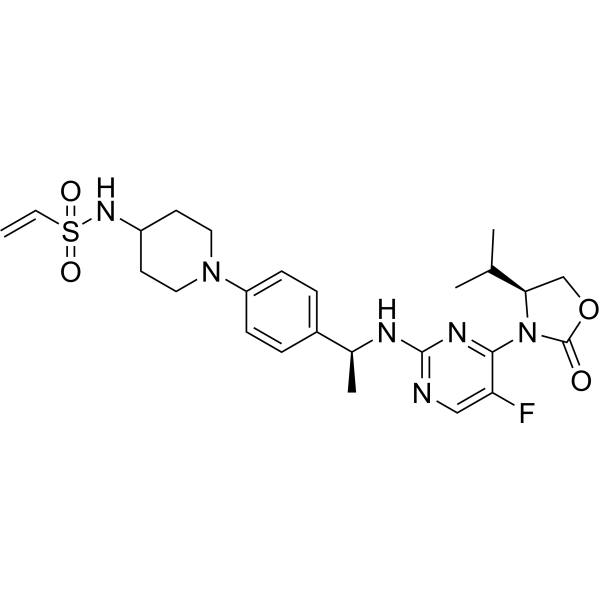
Rebastinib tosylate (DCC-2036 tosylate) is an orally active, non-ATP-competitive Bcr-Abl inhibitor, with IC50 values of 0.8 nM and 4 nM against Abl1 WT and Abl1 T315I, respectively. Rebastinib tosylate potently inhibits CYP2C8 (IC50 = 0.0533 μM) and CYP2C9 (IC50 = 2.54 μM). Rebastinib tosylate allosterically inhibits Tie2 with an IC50 of 0.63 nM. Rebastinib tosylate inhibits the transcriptional activity of FoxO1. Rebastinib tosylate inhibits SRC family kinases, KDR and FLT3 kinases. Rebastinib tosylate induces Apoptosis. Rebastinib tosylate exerts anti-tumor activity in breast cancer. Rebastinib tosylate exerts anti-angiogenic effects. Rebastinib tosylate increases myotube diameter and improves reduced contractility. Rebastinib tosylate can be used in research related to triple-negative breast cancer, luminal breast cancer, pancreatic neuroendocrine tumors, muscle atrophy, cancer cachexia, chronic myeloid leukemia, and B-lymphocytic leukemia .
loading...
    loading...
Cat. No.: HY-B0110
CAS No.: 60282-87-3
Synonyms: SHB 331; WL 70
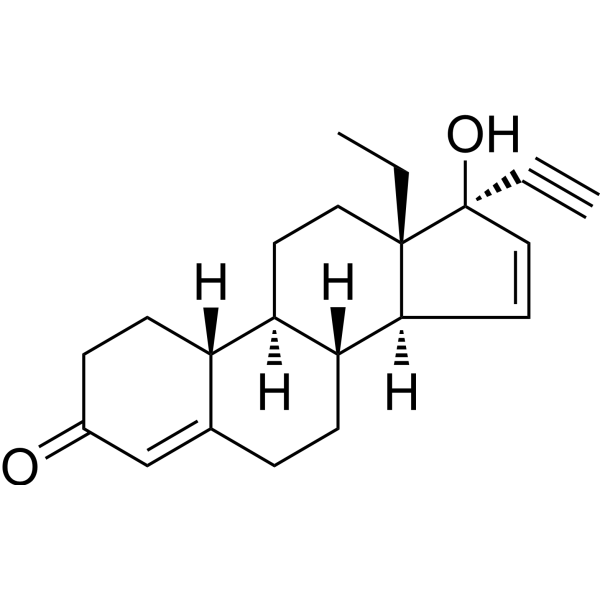
Gestodene (SHB 331; WL 70) is an orally active synthetic progestogen compound of the 19-nortestosterone class. Gestodene binds with high affinity to the progesterone receptor, inhibits 5α-reductase, binds to androgen and aldosterone receptors, and inactivates CYP3A. Gestodene acts as a positive allosteric modulator of PAR1, enhances PAR1-mediated signaling pathways, and is capable of increasing the activation potency of PAR1-AP toward PAR1, thereby promoting ERK1/2 phosphorylation, receptor internalization, cell morphological changes, and human platelet aggregation. Gestodene and its A-ring reduced metabolites promote the proliferation, differentiation, and mineralization of neonatal rat osteoblasts. Gestodene itself has no binding capacity for estrogen receptors, and this osteogenic activity depends on intracellular metabolism to generate A-ring reduced products with estrogen-like agonistic activity. Gestodene is useful for research on diseases related to progesterone secretion and diseases related to thrombosis .
loading...
    loading...

