
139 Results for "

Ca2 release

" in MedChemExpress (MCE) Product Catalog:
Products (139)

139 Results for "Ca2 release" in MCE Product Catalog:

Cat. No.: HY-122967
CAS No.: 142115-17-1
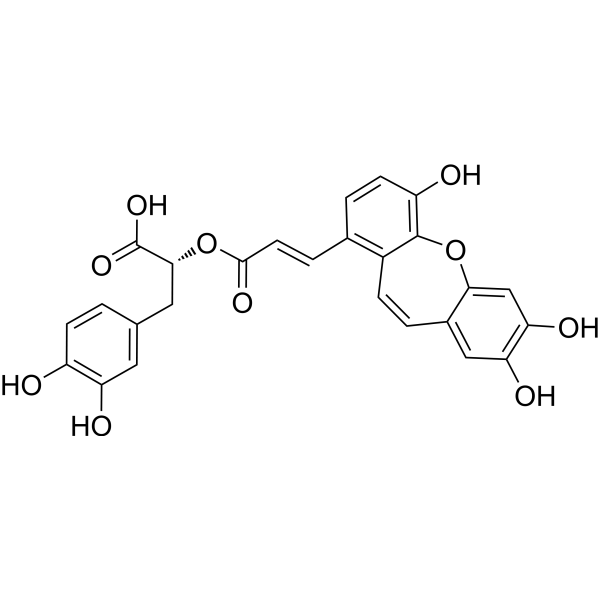
Isosalvianolic acid C is a naturally derived phenolic compound that acts as a signal modulator, antioxidant, and enzyme inhibitor. Isosalvianolic acid C induces the phosphorylation of PLC-γ, IP3R, PKC, and P38, triggering Ca 2+ mobilization, degranulation, and chemokine release. Isosalvianolic acid C activates MRGPRX2 and its murine homolog MrgprB2, leading to pseudo-allergic reactions in vivo. Isosalvianolic acid C inhibits Cu 2+-induced LDL peroxidation. Isosalvianolic acid C can be used in studies related to pseudo-allergy, diabetes, and atherosclerosis .
loading...
    loading...
Cat. No.: HY-128547
CAS No.: 16286-69-4
Cetiedil citrate is a vasodilator and antihemolytic agent . Cetiedil citrate exerts anti-sickle cell anemia effects by blocking Ca 2+-activated K + channels (Gardos/KCa3.1). Cetiedil citrate is a muscarinic receptor antagonist that inhibits calcium-dependent release of acetylcholine (ACh) from mediated reconstituted proteoliposomes, with a Ki value of 5 μM. Cetiedil citrate possesses analgesic, spasmolytic and local anesthetic activities. Cetiedil citrate can be used in research related to ischemic leg pain caused by vascular diseases and sickle cell disease .
loading...
    loading...
Cat. No.: HY-135556AS
CAS No.: 1185132-92-6
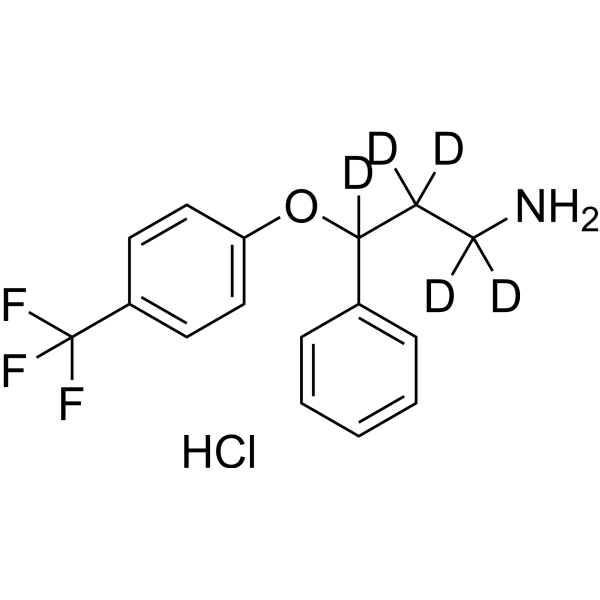
Norfluoxetine-d5 is the d5-labeled Norfluoxetine (HY-135556). Norfluoxetine is the active metabolite of the antidepressant Fluoxetine (HY-B0102); it is also a TREK-2 K2P potassium channel inhibitor. Norfluoxetine exhibits neuroimmunological activity, induces apoptosis in primary microglial cells, and inhibits the release of pro-inflammatory factors. Norfluoxetine inhibits high-threshold voltage-gated Ca 2+ currents in neurons with an EC50 of 20.4 μM. Norfluoxetine can be used in research related to depression, ischemic stroke, and epilepsy .
loading...
    loading...
Cat. No.: HY-N4104R
CAS No.: 666-99-9
Synonyms: Agaricinic Acid (Standard)
Agaric acid (Standard) (Agaricinic Acid (Standard)) is the analytical standard of Agaric acid (HY-N4104). This product is intended for research and analytical applications. Agaric acid (Agaricinic Acid) is an orally active inhibitor of adenine nucleotide translocase found in specific fungi. Agaric acid can inhibit the biofilm formation of various bacteria such as Salmonella. Agaric acid can also induce mitochondrial permeability transition, prompting mitochondria to release Ca 2+, disrupting the transmembrane potential, and causing mitochondrial swelling. In addition, Agaric acid can also inhibit citrate transport in liver mitochondria and participate in the inhibition of fatty acid synthesis, affecting multiple metabolic processes.
loading...
    loading...
Cat. No.: HY-116291
CAS No.: 27536-56-7
Purity:  ≥98.0%
Synonyms: 4αPDD
Target:  

TRP Channel CHIKV

Research Areas:  

Infection Inflammation/Immunology

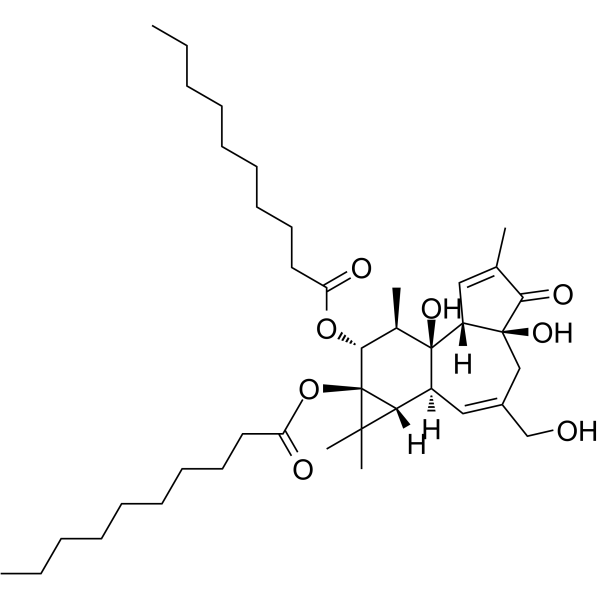
4α-Phorbol 12,13-didecanoate (4αPDD) is a transient receptor potential vanilloid 4 (TRPV4) agonist. 4α-Phorbol 12,13-didecanoate can promote Ca 2+ influx, induce ATP release and function as an osmoreceptor. 4α-Phorbol 12,13-didecanoate can inhibit water intake and increase maximal micturition pressure in rats. 4α-Phorbol 12,13-didecanoate can be used for the researches of inflammation and infection, such as chikungunya virus (CHIKV) .
loading...
    loading...
Cat. No.: HY-181087
Anticancer agent 296 is a potent anticancer agent that activates the PERK-eIF2α-CHOP signaling pathway to induce endoplasmic reticulum stress, thereby regulating caspase and Bcl-2 family proteins, ultimately leading to apoptosis. Anticancer agent 296 increases intracellular levels of reactive oxygen species (ROS), reduces mitochondrial membrane potential, and promotes Ca 2+ release. Anticancer agent 296 suppresses cell colony formation and S-phase cell proliferation, and induces autophagy. Anticancer agent 296 is applicable for research on non-small cell lung cancer (NSCLC) .
loading...
    loading...
Cat. No.: HY-W011235R
CAS No.: 57226-68-3
Norfluoxetine hydrochloride (Standard) is the analytical standard of Norfluoxetine hydrochloride (HY-W011235). This product is intended for research and analytical applications. Norfluoxetine hydrochloride is the active metabolite of the antidepressant Fluoxetine (HY-B0102); it is also a TREK-2 K2P potassium channel inhibitor. Norfluoxetine hydrochloride exhibits neuroimmunological activity, induces apoptosis in primary microglial cells, and inhibits the release of pro-inflammatory factors. Norfluoxetine hydrochloride inhibits high-threshold voltage-gated Ca 2+ currents in neurons with an EC50 of 20.4 μM. Norfluoxetine hydrochloride can be used in research related to depression, ischemic stroke, and epilepsy .
loading...
    loading...
Cat. No.: HY-W011235S
CAS No.: 1188265-34-0
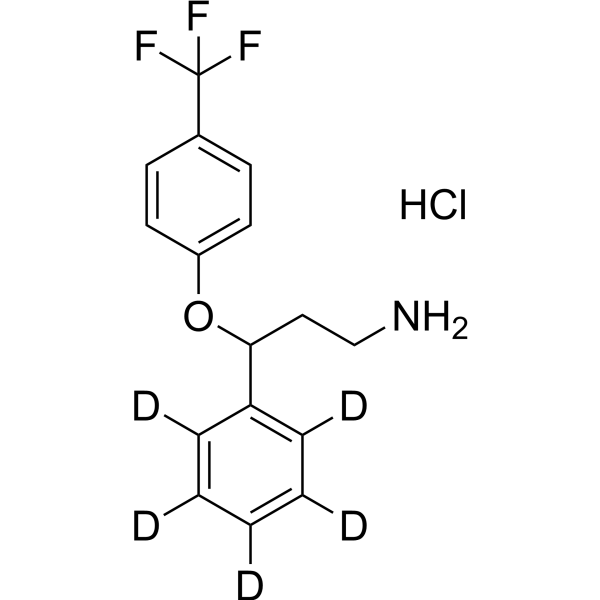
Norfluoxetine-d5 hydrochloride is the d5-labeled Norfluoxetine hydrochloride (HY-W011235). Norfluoxetine hydrochloride is the active metabolite of the antidepressant Fluoxetine (HY-B0102); it is also a TREK-2 K2P potassium channel inhibitor. Norfluoxetine hydrochloride exhibits neuroimmunological activity, induces apoptosis in primary microglial cells, and inhibits the release of pro-inflammatory factors. Norfluoxetine hydrochloride inhibits high-threshold voltage-gated Ca 2+ currents in neurons with an EC50 of 20.4 μM. Norfluoxetine hydrochloride can be used in research related to depression, ischemic stroke, and epilepsy .
loading...
    loading...
Cat. No.: HY-100656
CAS No.: 839712-15-1
Purity:  97.02%
Research Areas:  

Neurological Disease

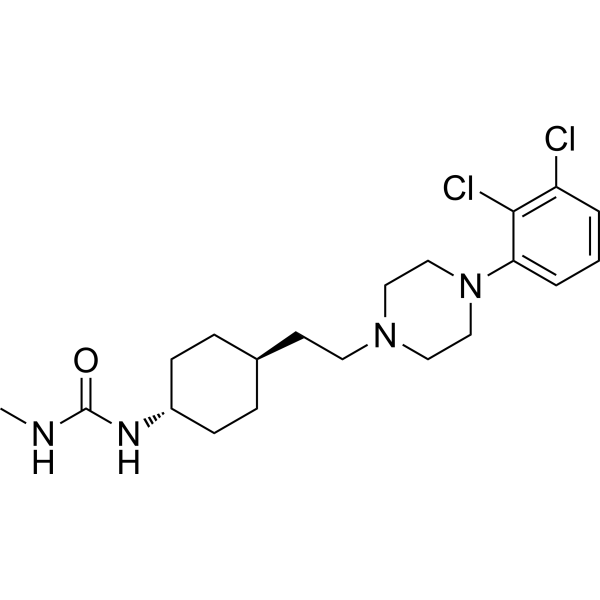
Desmethyl cariprazine is a major active metabolite of cariprazine, with activities at human dopamine receptors and serotonin receptors, showing a pEC50 of 8.90 at human D2 receptors, a pEC50 of 8.09 at D3 receptors, and a pEC50 of 6.28 at 5-HT1A receptors. Desmethyl cariprazine inhibits forskolin-induced cAMP production at D2, D3 and 5-HT1A receptors, and suppresses serotonin-induced Ca 2+ release at 5-HT2B receptors. Desmethyl cariprazine is applicable to research related to schizophrenia, bipolar disorder type I and bipolar disorder.
loading...
    loading...
Cat. No.: HY-100656AS
CAS No.: 1308278-85-4
Desmethyl cariprazine-d8 is the deuterium labeled Desmethyl cariprazine (HY-100656). Desmethyl cariprazine is a major active metabolite of cariprazine, with activities at human dopamine receptors and serotonin receptors, showing a pEC50 of 8.90 at human D2 receptors, a pEC50 of 8.09 at D3 receptors, and a pEC50 of 6.28 at 5-HT1A receptors. Desmethyl cariprazine inhibits forskolin-induced cAMP production at D2, D3 and 5-HT1A receptors, and suppresses serotonin-induced Ca 2+ release at 5-HT2B receptors. Desmethyl cariprazine is applicable to research related to schizophrenia, bipolar disorder type I and bipolar disorder.
loading...
    loading...
Cat. No.: HY-178144
FPR2 agonist 5 is a selective Formyl Peptide Receptor 2 (FPR2) agonist. FPR2 agonist 5 induces Ca 2+ mobilization in FPR2-HL60 transfected cells with an EC50 of 1.2 μM and causes FPR2 desensitization with an IC50 of 0.32 μM. FPR2 agonist 5 exerts neuroprotective effects by mitigating LDH release, NO production, IL-1β, IL-6, IL-33, and IL-10 levels in LPS (HY-D1056)-induced mouse primary microglial cells. FPR2 agonist 5 can be used for the study of neuroinflammatory-related diseases .
loading...
    loading...
Cat. No.: HY-E70110
CAS No.: 37288-54-3
Research Areas:  

Others

Endo-1,4-β-mannanase is an important catalyst that randomly cleaves the β-1,4-linkages in the main chain of mannan, releasing short-chain β-1,4-mannan and mannose. The catalytic activity of Endo-1,4-β-mannanase toward locust bean gum is enhanced by Mn 2+, Co 2+, Ca 2+, Ba 2+, Triton X-100, sodium azide and N-ethylmaleimide, completely inhibited by Hg 2+ and N-bromosuccinimide, and partially inhibited by EDTA and Cu 2+. Endo-1,4-β-mannanase can be used in studies related to plant hemicellulose degradation, biomass saccharification, elimination of anti-nutritional factors in feed, and manno-oligosaccharide prebiotics .
loading...
    loading...
Cat. No.: HY-N2081R
CAS No.: 83-95-4
Skimmianine (Standard) is the analytical standard of Skimmianine. This product is intended for research and analytical applications. Skimmianine is an orally active furoquiniline alkaloid present mainly in the Rutaceae family. Skimmianine has analgesic, antispastic, sedative, and anti-inflammatory properties. Skimmianine inhibits acetylcholinesterase (AChE) (IC50 = 8.6 μg/mL). Skimmianine exhibits cytotoxicity against a variety of cancer cell lines and genotoxicity. Skimmianine has antioxidant and anti-inflammatory effects on ischemia-reperfusion (IR) injury. Skimmianine exerts anti-inflammatory effects through activation of the phosphatidylinositol-3-kinase (PI3K)-protein kinase B (AKT) pathway. Skimmianine is neuroprotective by targeting the NF-κB activation pathway to prevent neuroinflammation. Skimmianine inhibits the release of histamine, intracellular Ca 2+ signaling and protein kinase C signaling .
loading...
    loading...
Cat. No.: HY-116312
CAS No.: 510774-50-2
Synonyms: 8-CPT-2'-O-Me-CaMP
Target:  

Ras

Research Areas:  

Cardiovascular Disease

8-pCPT-2′-O-Me-cAMP (8-CPT-2'-O-Me-cAMP), an analog of cAMP, is an activator of exchange proteins activated by cAMP (Epac). 8-pCPT-2′-O-Me-cAMP activates Epac1 (EC50 = 2.2 μM), but not PKA (EC50 >10 μM). 8-pCPT-2′-O-Me-cAMP stimulates Epac-mediated Ca 2+ release in pancreatic β-cells in vitro. 8-pCPT-2′-O-Me-cAMP is a Rap1 activator. 8-pCPT-2′-O-Me-cAMP enhances the retinal pigment epithelium barrier against the pathological choroidal endothelial cell invasion that occurs in macular degeneration .
loading...
    loading...
Cat. No.: HY-188122
CAS No.: 113960-50-2
Meglumine cyclic adenylate is a cAMP analog. Meglumine cyclic adenylate promotes STAT3 phosphorylation at Ser727 and mitochondrial translocation. Meglumine cyclic adenylate inhibits cell apoptosis by reducing cytochrome c release and caspase-3 activation. Meglumine cyclic adenylate suppresses the expression of NF-κBp65, activates adenylate cyclase 3, and inhibits phosphodiesterase 4D. Meglumine cyclic adenylate enhances myocardial contractility, increases myocardial Ca 2+ influx, dilates peripheral blood vessels, improves hypotension and bradycardia, promotes spinal cord function recovery, and regulates fear extinction and anxiety-like behaviors. Meglumine cyclic adenylate can be used in research related to cerebral ischemia/reperfusion injury, systemic inflammatory response syndrome, acute T4 thoracic spinal cord injury, and post-traumatic stress disorder (PTSD) .
loading...
    loading...
Cat. No.: HY-N1989
CAS No.: 11028-00-5
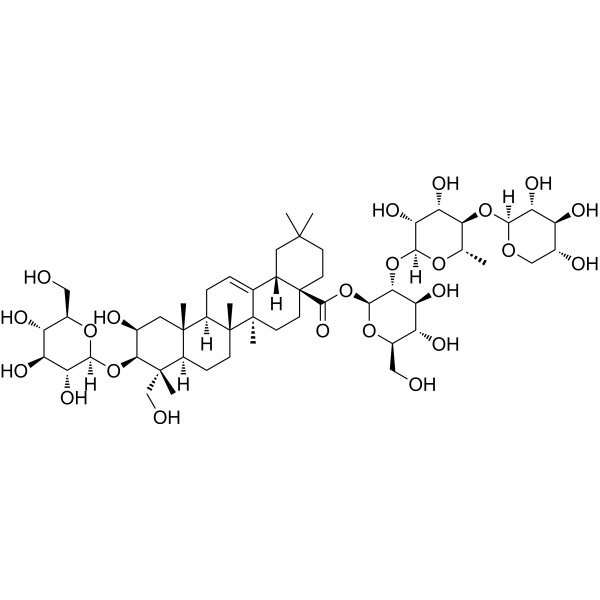
Bacoside A is an orally active, blood-brain barrier-permeable triterpenoid saponin that modulates the activities of ATPases, AChE, CaMK2A and iNOS. Derived from Bacopa monniera. Bacoside A exerts significant antioxidant, anti-inflammatory and anti-apoptotic effects by maintaining ion balance, scavenging reactive oxygen species, stabilizing cell membranes, and regulating the expression of NF-κB and apoptosis-related proteins. Bacoside A counteracts morphine-induced reductions in Na +/K +-ATPase, Ca 2+-ATPase and Mg 2+-ATPase activities, increases mitochondrial membrane potential, and decreases intracellular reactive oxygen species levels. Bacoside A specifically binds to calcium/calmodulin-dependent protein kinase IIA to trigger endoplasmic reticulum calcium release. Bacoside A exhibits non-apoptotic cytotoxicity against glioblastoma cells while protecting normal nerve cells from stress-induced damage. Bacoside A is applicable to the research of Parkinson's disease and glioblastoma multiforme .
loading...
    loading...
Cat. No.: HY-N0392
CAS No.: 882664-74-6
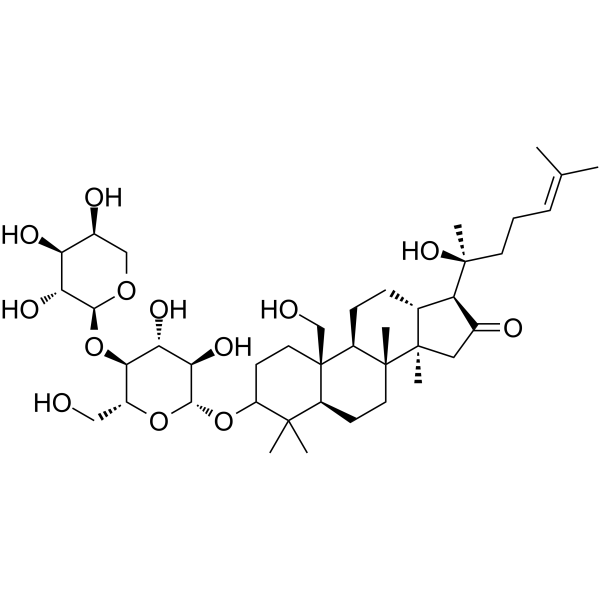
Polygalasaponin F is an orally active triterpenoid saponin monomer. Polygalasaponin F downregulates the expression of Bax, p53, caspase-3, NF-κB p65 and MEK1; restores and upregulates the expression of Bcl-2; activates the PI3K/Akt signaling pathway; inhibits the phosphorylation of p38 MAPK, nuclear translocation of NF-κB, TLR4-mediated signaling pathway, mitophagy (Mitophagy) and ROS production; enhances cell viability and suppresses apoptosis (Apoptosis). Polygalasaponin F maintains mitochondrial function, alleviates Ca 2+ overload, upregulates pCREB and BDNF, preserves cell viability and inhibits the release of inflammatory cytokines. Polygalasaponin F alleviates lung injury induced by influenza A H1N1 and cerebral ischemia-reperfusion injury. Polygalasaponin F is applicable to researches related to Parkinson's disease, cerebral ischemia, pneumonia induced by influenza A H1N1, stroke and Alzheimer's disease .
loading...
    loading...
Cat. No.: HY-N0392R
CAS No.: 882664-74-6
Polygalasaponin F (Standard) is the analytical standard of Polygalasaponin F. This product is intended for research and analytical applications. Polygalasaponin F is an orally active triterpenoid saponin monomer. Polygalasaponin F downregulates the expression of Bax, p53, caspase-3, NF-κB p65 and MEK1; restores and upregulates the expression of Bcl-2; activates the PI3K/Akt signaling pathway; inhibits the phosphorylation of p38 MAPK, nuclear translocation of NF-κB, TLR4-mediated signaling pathway, mitophagy (Mitophagy) and ROS production; enhances cell viability and suppresses apoptosis (Apoptosis). Polygalasaponin F maintains mitochondrial function, alleviates Ca 2+ overload, upregulates pCREB and BDNF, preserves cell viability and inhibits the release of inflammatory cytokines. Polygalasaponin F alleviates lung injury induced by influenza A H1N1 and cerebral ischemia-reperfusion injury. Polygalasaponin F is applicable to researches related to Parkinson's disease, cerebral ischemia, pneumonia induced by influenza A H1N1, stroke and Alzheimer's disease.
loading...
    loading...
Cat. No.: HY-12292G
CAS No.: 1129669-05-1
IM-12 GMP is IM-12 (HY-12292) produced by using GMP guidelines. GMP small molecules works appropriately as an auxiliary reagent for cell therapy manufacture. IM-12 is an orally active anti-inflammatory agent that targets and inhibits the NF-κB and STAT3 signaling pathways. IM-12 activates the Wnt signaling pathway and promotes the nuclear translocation of β-catenin by inhibiting GSK3β, while also blocking the tyrosine kinase activity of p210BCR/ABL. IM-12 reduces the levels of IL-6, IL-17, NO, prostaglandin E2, iNOS and COX-2, and induces ER stress, Ca 2+ release, autophagy and apoptosis. IM-12 is heat-sensitive and does not induce autophagy in IM-resistant p210BCR/ABL T315I mutant cells. IM-12 is also a component of the 5iLA medium used for naive pluripotent stem cell research. IM-12 has been applied in studies related to carrageenan (HY-125474)-induced hind paw edema, TNBS-induced colitis, and acute and chronic myeloid leukemia .
loading...
    loading...

