151 Results for "

Sheep

" in MedChemExpress (MCE) Product Catalog:
Products (151)

151 Results for "Sheep" in MCE Product Catalog:

Cat. No.: HY-103447S1
CAS No.: 911392-43-3
Purity:  98.7%
Synonyms: Mycotoxin F2-13C18; Toxin F2-13C18
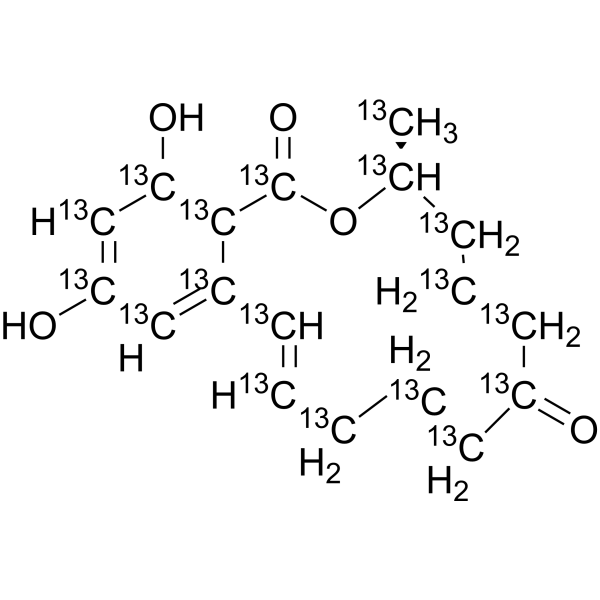
Zearalenone- 13C18 (Mycotoxin F2- 13C18; Toxin F2- 13C18) is the 13C labeled Zearalenone (HY-103447) . Zearalenone is a mycotoxin produced mainly by fungi belonging to the genus Fusarium in foods and feeds. Possess oestrogenic activity in pigs, cattle and sheep, with low acute toxicity. Causes precocious development of mammae and other estrogenic effects in young gilts .
loading...
    loading...
Cat. No.: HY-124852
CAS No.: 916136-25-9
Synonyms: PF 5212372
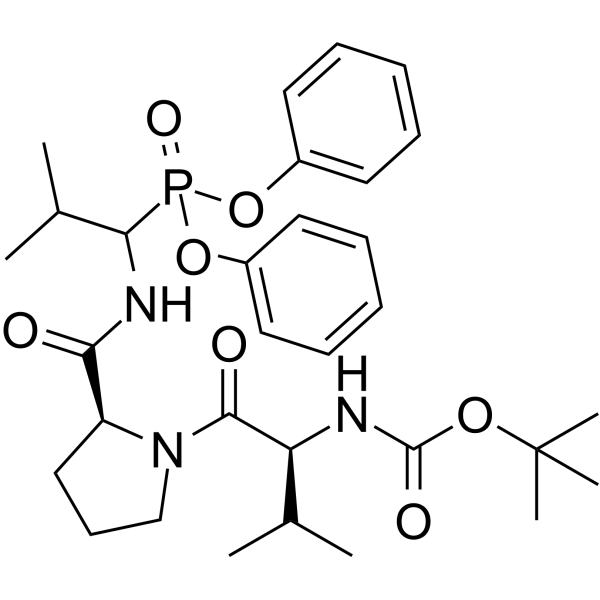
ZPL-5212372 (PF 5212372) is a cPLA2α inhibitor (IC50 = 7 nM). ZPL-5212372 inhibits the release of prostaglandin D2 (PGD2), cysteyl leukotrienes, leukotriene B4, thromboxane A2, and PGD2 from human lung cells. ZPL-5212372 inhibits delayed bronchoconstriction and airway hyperresponsiveness in a sheep allergic inflammation model. ZPL-5212372 may be used in asthma research .
loading...
    loading...
Cat. No.: HY-P70745
Purity:  ≥ 95%, as determined by reducing SDS-PAGE.
Synonyms: PRL; PPRL; Prolactin; GHA1; Luteotropic Hormone; Decidual Prolactin; Prolactin Peptide; Growth Hormone A1; Luteotropin
Species:  
Sheep
Source:  
HEK293
loading...
    loading...
Cat. No.: HY-131626
CAS No.: 26198-80-1
Synonyms: 1a,1b-Dihomo PGE2
Target:  

COX

Research Areas:  

Metabolic Disease

1a,1b-Dihomo Prostaglandin E2 (PGE2) is a rare polyunsaturated fatty acid first identified in extracts of sheep vesicular gland microsomes, known to contain COX, incubated with adrenic acid. 1a,1b-Dihomo PGE2 has also been identified in conditioned media of RAW 264.7 macrophages stimulated with endotoxin and arachidonic acid. This product is thought to be produced by elongation of AA to adrenic acid, which is then metabolized sequentially by COX and PGE synthase.
loading...
    loading...
Cat. No.: HY-136692
CAS No.: 479203-71-9
Target:  

Integrin

Research Areas:  

Inflammation/Immunology

HMR 1031 is a very late antigen-4 (VLA4, i.e., integrin α4β1) inhibitor, with IC50 values of 0.7 nM and 0.3 nM against VLA-4/VCAM-1 and VLA-4/fibronectin, respectively. HMR 1031 blocks allergen-induced airway responses and airway inflammation in mouse and sheep models. HMR 1031 can be used in asthma-related research .
loading...
    loading...
Cat. No.: HY-B0905AR
CAS No.: 137330-13-3
Synonyms: LY-177370 phosphate (Standard); EL-870 phosphate (Standard)
Tilmicosin (phosphate) (Standard) is the analytical standard of Tilmicosin (phosphate). This product is intended for research and analytical applications. Tilmicosin (LY-177370) phosphate is an orally active calcium channel antagonist and macrolide antibiotic with antimicrobial activity. Tilmicosin phosphate mainly acts on the 50S subunit of bacterial ribosomes, inhibiting protein synthesis. Tilmicosin phosphate is effective in the treatment of respiratory diseases in livestock such as cattle, sheep and pigs. In addition, Tilmicosin phosphate has immunomodulatory and anti-inflammatory effects .
loading...
    loading...
Cat. No.: HY-N19214
CAS No.: 3040055-91-9
Glenthmycin L is a potent antibiotic that can be found in Australian sheep pasture-derived Streptomyces sp. CMB-PB041. Glenthmycin L exhibits antibacterial activity against Gram-positive bacterial pathogens including Staphylococcus aureus, Enterococcus faecalis, Methicillin (HY-B0974)-resistant Staphylococcus aureus, and Vancomycin (HY-B0671)-resistant Enterococci. Glenthmycin L can be used for the research of bacterial infections caused by Gram-positive pathogens .
loading...
    loading...
Cat. No.: HY-114969
CAS No.: 14437-41-3
Synonyms: NSC 233846; SYD 230; Tremerad
Target:  

Parasite

Clioxanide is a potential anti-liver fluke (Fasciola hepatica) agent. The results showed that Clioxanide showed no efficacy against 4-week-old or 19-week-old flukes at doses of 135 mg/kg or 200 mg/kg. In contrast, hexachloroethane was very effective against older flukes, reaching 100% efficacy at lower doses. The study pointed out that laboratory mice may not be suitable for screening potential compounds against liver fluke infections in ruminants such as cattle and sheep. In addition, no obvious toxic reactions were observed in mice with Clioxanide .
loading...
    loading...
Cat. No.: HY-B0488R
CAS No.: 60200-06-8
Synonyms: L631529 (Standard); MK401 (Standard)
Research Areas:  

Infection

Clorsulon (Standard) is the analytical standard of Clorsulon (HY-B0488). This product is intended for research and analytical applications. Clorsulon (L631529; MK401) is an orally active flukicidal agent. Clorsulon inhibits glycolysis, the primary energy production pathway in flukes. Clorsulon is also a competitive inhibitor of 3-phosphoglycolate and ATP, inhibiting glucose utilization and acetate and propionate formation by mature Fasciola hepatica in vitro. Clorsulon can be used in studies of liver fluke (Fasciola hepatica and Fasciola gigantica) infection in calves and sheep .
loading...
    loading...
Cat. No.: HY-P5484
CAS No.: 1629248-30-1
Target:  

Bacterial

Research Areas:  

Others

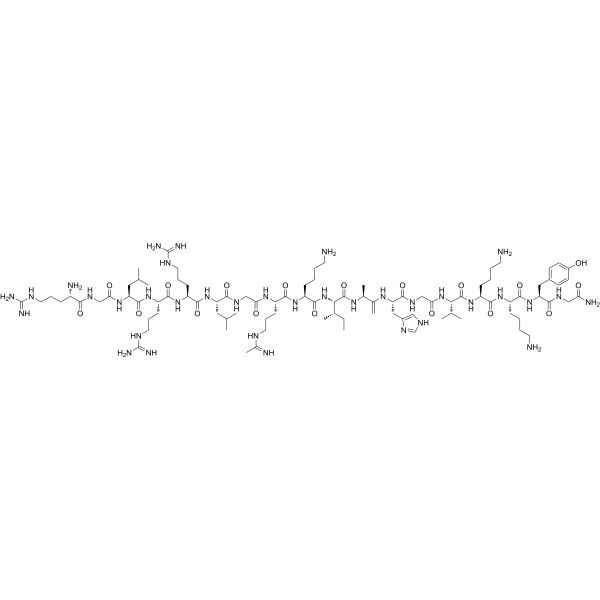
SMAP-18 is a biological active peptide. (SMAP-18 is a 18-amino acid residue peptide amide which is a truncated form of SMAP-29. Sheep myeloid antimicrobial peptide-29 (SMAP-29) displays extremely high antimicrobial activity against Pseudomonas strains, other Gram-negative bacteria, and multidrug-resistant pathogens. SMAP-18 displays much higher cell selectivity as compared to parental SMAP-29 because of its decreased hemolytic activity and retained antimicrobial activity.)
loading...
    loading...
Cat. No.: HY-P705558
Purity:  ≥ 95%, as determined by reducing SDS-PAGE.
Synonyms: Interferon tau-1; IFN-tau-1; Antiluteolysin; Trophoblast antiluteolytic protein; Trophoblast protein 1; TP-1; Trophoblastin; IFNT1; OTP
Species:  
Sheep
Source:  
P. pastoris
loading...
    loading...
Cat. No.: HY-144820
CAS No.: 130727-21-8
Purity:  98.49%
Research Areas:  

Infection

JO146 is an anti-chlamydial agent, Antibacterial agent, and CtHtrA serine protease inhibitor, with an IC50 of 21.86 μM against CtHtrA serine protease. JO146 alters the morphology of chlamydial cells, reduces inclusion vacuoles, decreases the number of infectious progeny, and eliminates viable Chlamydia trachomatis under stress or conditions that reverse persistent infection. JO146 shows no activity against Escherichia coli, Pseudomonas aeruginosa, and Staphylococcus aureus, but exhibits bactericidal activity against Helicobacter pylori. JO146 can be used in research related to Chlamydia trachomatis infection, chlamydial infection in cattle and sheep, and Helicobacter pylori infection .
loading...
    loading...
Cat. No.: HY-P11124
CAS No.: 1611488-66-4
MGF24 is a modified protease-resistant MGF derivative. MGF24 protects dopaminergic neurons from 6-Hydroxydopamine (6-OHDA) (HY-113028)-induced apoptosis by inducing Heme oxygenase-1 (HO-1). MGF24 activates PKC-ε, which in turn activates Nrf2, up-regulating HO-1. MGF24 has neuroprotective activity and reduces myocardial infarct size in sheep models of myocardial ischemia. MGF24 can be used for neurological diseases like stroke, nerve injury and amyotrophic lateral sclerosis research .
loading...
    loading...
Cat. No.: HY-121365
CAS No.: 71522-58-2
Target:  

Bacterial

Research Areas:  

Infection

Forphenicinol is an immunomodulator and a derivative of the bacterial metabolite forphenicine. It increases the phagocytosis of yeast by peritoneal macrophages isolated from thioglycolate-stimulated mice. Forphenicinol (100 μg/animal) prevents cyclophosphamide-induced suppression of delayed-type hypersensitivity (DTH), as well as enhances DTH in response to the hapten oxazolone or sheep red blood cells in mice. It enhances the bactericidal activity of macrophages against P. aeruginosa in mice when administered at a dose of 0.5 mg/kg.2 Forphenicinol (15.6-1,000 μg/animal) increases survival in a mouse model of P. aeruginosa infection. It also inhibits tumor growth in S180 sarcoma and IMC carcinoma mouse xenograft models when administered at doses ranging from 0.05 to 5 mg/kg per day.
loading...
    loading...
Cat. No.: HY-13219
CAS No.: 103475-41-8
Purity:  99.05%
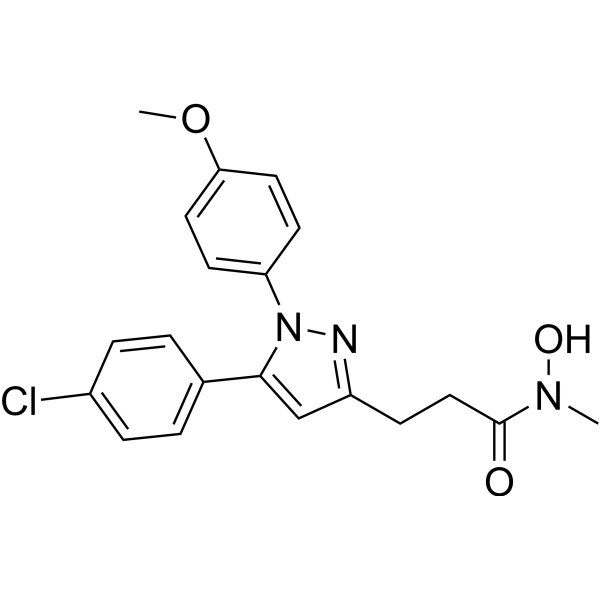
Tepoxalin is an orally active dual inhibitor of Cyclooxygenase/Lipoxygenase, with IC50 values of 4.6 μM (sheep cyclooxygenase), 2.85 μM (rat cyclooxygenase), 0.15 μM (rat 5-lipoxygenase), and 3.0 μM (h12-lipoxygenase), respectively. Tepoxalin inhibits ROS production and NF-κB activation. Tepoxalin suppresses the production of thromboxane B2, leukotriene B4, prostaglandins and cytokines, and blocks platelet aggregation. Tepoxalin exhibits potent anti-inflammatory activity in rats with adjuvant-induced arthritis. Tepoxalin possesses analgesic activity. Tepoxalin shows no ulcerogenic activity within the anti-inflammatory dose range. Tepoxalin can be used in studies related to adjuvant-induced arthritis, skin inflammation and Alzheimer's disease .
loading...
    loading...
Cat. No.: HY-P85848
Synonyms: CD 2; CD2; CD2 antigen; p50; , Sheep red blood cell receptor; CD2 antigen; CD2 molecule; CD2_HUMAN; Erythrocyte receptor; FLJ46032; LFA-2; LFA-3 receptor; LFA2; LFA3 receptor; Ly-37; Lymphocyte function antigen 2; lymphocyte-function antigen-2; OTTHUMP00000024366; Rosette receptor; Sheep erythrocyte receptor; SRBC; T cell surface antigen CD2; T-cell surface antigen CD2; T-cell surface antigen T11/Leu-5; T-lymphocyte surface CD2 antigen; T11

Host:  

Mouse

Application:  

IHC-P, WB, ICC/IF, ELISA

Reactivity:  

Human

loading...
    loading...
Cat. No.: HY-183764
COX-2/5-LOX-IN-8 is an orally active dual COX-2/5-LOX inhibitor, with an IC50 of 6.30 μM against sheep-derived COX-2 and an IC50 of 8.09 μM against 5-LOX. COX-2/5-LOX-IN-8 acts as a membrane stabilizer that stabilizes erythrocyte membranes against hypotonicity-induced hemolysis. COX-2/5-LOX-IN-8 functions as a protein stabilizer that inhibits heat-induced denaturation of bovine serum albumin. COX-2/5-LOX-IN-8 reduces paw swelling, improves hind limb weight-bearing function, decreases serum levels of pro-inflammatory cytokines (TNF-α, IL-1β, IL-6, CRP), and lowers serum levels of cartilage degradation biomarkers (COMP, MMP-3, CTX-II). COX-2/5-LOX-IN-8 can be used in the research of osteoarthritis .
loading...
    loading...
Cat. No.: HY-W517092
CAS No.: 55673-89-7
Synonyms: 1,2,3,4,7,8,9-HpCDF
1,2,3,4,7,8,9-Heptachlorodibenzofuran (1,2,3,4,7,8,9-HpCDF) is a compound that induces the expression of CYP1A1 and CYP1B1 genes in human peripheral blood lymphocytes, while also promoting the expression of the aryl hydrocarbon receptor repressor (AhRR). 1,2,3,4,7,8,9-Heptachlorodibenzofuran can increase ethoxyresorufin-O-deethylase (EROD) activity in isolated human peripheral blood lymphocytes in a concentration-dependent manner, which serves as a marker of CYP1A1 activity. Furthermore, 1,2,3,4,7,8,9-Heptachlorodibenzofuran exhibits immunosuppressive effects by reducing the number of splenic plaque-forming cells in mice and increasing aryl hydrocarbon hydroxylase (AHH) activity in liver microsomes of mice injected with sheep red blood cells. 1,2,3,4,7,8,9-Heptachlorodibenzofuran can be used in research in the fields of immunology, metabolic diseases, and environmental toxicology .
loading...
    loading...
Cat. No.: HY-P705983
Purity:  ≥ 95%, as determined by reducing SDS-PAGE.
Synonyms: FGF2; BFGF; Prev. FGFB; Basic Fibroblast Growth Factor; Fibroblast Growth Factor 2 (Basic); Fibroblast Growth Factor; Heparin-Binding Growth Factor 2; Prostatropin; HBGF-2; FGF2A; FGF-2; FGF; Fibroblast Growth Factor 2; Basic Fibroblast Growth Factor BFGF
Species:  
Sheep
Source:  
P. pastoris
loading...
    loading...
Cat. No.: HY-118156
CAS No.: 155238-60-1
Target:  

Others

Research Areas:  

Others

L-699333 is a 5-lipoxygenase (5-LO) inhibitor belonging to the thieno[2,3,4-cd]indole class. This compound has a 2-ethoxybutyric acid side chain and is a potent inhibitor of the biosynthesis of 5-HPETE and LTB4 produced from human 5-LO, with ICm values of 22 nM, 7 nM, and 3.8 pM for human neutrophils and whole blood, respectively. L-699333 has shown anti-inflammatory and antiasthmatic effects in a variety of animal models, including rat pleurisy models, antigen-induced wheezing models, and awake macaque and sheep asthma models. Its inhibition of 5-LO is highly selective, with higher ICm values or stronger competitive inhibition in FLAP binding assays compared to inhibition of human 15-LO, porcine 12-LO, and ram epididymal cyclooxygenase. The racemic enantiomer 14g of L-699333 is the most potent enantiomer to date, with inhibitory effects similar to those of the known MK-0591, which has been shown in clinical trials to inhibit the biochemical effects of LTB4 biosynthesis in vitro and LTE4 excretion in urine.
loading...
    loading...

