168 Results for "

Dogs

" in MedChemExpress (MCE) Product Catalog:
Products (168)

168 Results for "Dogs" in MCE Product Catalog:

Cat. No.: HY-107835S
Synonyms: FCR 2769-d5
Flumethrin-d5 (FCR 2769-d5) is the deuterium labeled Flumethrin (HY-107835). Flumethrin (FCR 2769) is a pyrethroid insecticide and acaricide . Flumethrin targets voltage-gated sodium channels and estrogen receptor α (ERα). Flumethrin induces cytotoxicity, apoptosis, genotoxicity and DNA damage in breast cancer cells by regulating the expression of BCL2, BAX, TP53 and P21 genes. Flumethrin is applicable to relevant studies on ectoparasite infections (tick and flea burdens) in dogs and cats, as well as breast cancer .
loading...
    loading...
Cat. No.: HY-167848
CAS No.: 153345-74-5
Synonyms: XL-118
Target:  

Others

Research Areas:  

Cardiovascular Disease

DMP-728 free base (XL-118) is a highly potent and selective GPIIb/IIIa antagonist with antiplatelet and antithrombotic activities. DMP-728 free base can inhibit ADP-induced human platelet aggregation in vitro, with an IC50 of 46 nmol/L, and can significantly reduce the interaction between fibrinogen and human platelets or Binding of purified human GPIIb/IIIa receptors. DMP-728 free base exhibits dose-dependent antiplatelet effects in anesthetized mongrel dogs, effectively inhibiting ADP-induced platelet aggregation and prolonging template bleeding time .
loading...
    loading...
Cat. No.: HY-18612
CAS No.: 1034152-93-6
Target:  

Bombesin Receptor

Research Areas:  

Metabolic Disease

MK-7725 is a selective, orally active, and blood-brain barrier-permeable agonist of the subtype 3 of the frog skin peptide receptor (BRS-3). MK-7725 has a high affinity for the human BRS-3 (hBRS-3), with an IC50 of 3 nM, and its functional activity in the mouse-derived BRS-3 (mBRS-3) model with an EC50 of 22 nM (105% agonistic). MK-7725 significantly reduces the body weight of obese rats and obese dogs. MK-7725 can be used for the treatment of obesity .
loading...
    loading...
Cat. No.: HY-B0204B
CAS No.: 118428-37-8
Synonyms: (-)-UD-CG115
Research Areas:  

Cardiovascular Disease

(-)-Pimobedan is an isomer of pimobedan. It has the property of stereoselective partitioning or distribution into erythrocytes. The clearance of (-)-pimobedan from erythrocytes is significantly lower than that of (+)-pimobedan, which is entirely due to its stereoselective distribution into erythrocytes. This stereoselective property of (-)-pimobedan may explain the phenomenon previously reported that it produces a 1.5-fold greater contractile force than the (+)-isomer in detergent-treated myocardial specimens of guinea pigs and dogs. These properties suggest that (-)-pimobedan may have unique advantages in terms of in vivo distribution and pharmacological action, which may have important implications for its clinical use.
loading...
    loading...
Cat. No.: HY-106394
CAS No.: 138297-15-1
Target:  

P-glycoprotein

Research Areas:  

Cardiovascular Disease

TP-9201 is a platelet glycoprotein (GP) IIb/IIIa receptor antagonist. TP-9201 inhibits the interaction between GPIIb/IIIa and fibrinogen, thereby suppressing platelet aggregation. TP-9201 exhibits similar inhibitory activity on adenosine diphosphate (ADP) (HY-W010918)-induced platelet aggregation in humans, baboons, and dogs (IC50 = 1-3 μM), while showing lower activity in rabbits (IC50 = 45 μM) and rats (IC50 = 20 μM). TP-9201can be used in studies related to the prevention of rethrombosis after arterial thrombolysis .
loading...
    loading...
Cat. No.: HY-184651
CAS No.: 3055155-53-5
NLRP3-IN-93 is an orally active, blood-brain barrier-permeable NLRP3 inhibitor. NLRP3-IN-93 binds to the NACHT domain, blocks inflammasome assembly, and inhibits downstream IL-1β release, without significantly inhibiting various CYP isoforms. NLRP3-IN-93 demonstrates dose-dependent efficacy in mouse models of acute inflammation and Parkinson's disease, and exhibits good tolerability and an acceptable safety window in rats and dogs. NLRP3-IN-93 can be used in research on Parkinson's disease .
loading...
    loading...
Cat. No.: HY-70050
CAS No.: 132414-02-9
Synonyms: GR 68755 (Hydrochloride(1:X)); GR 68755X (Hydrochloride(1:X))
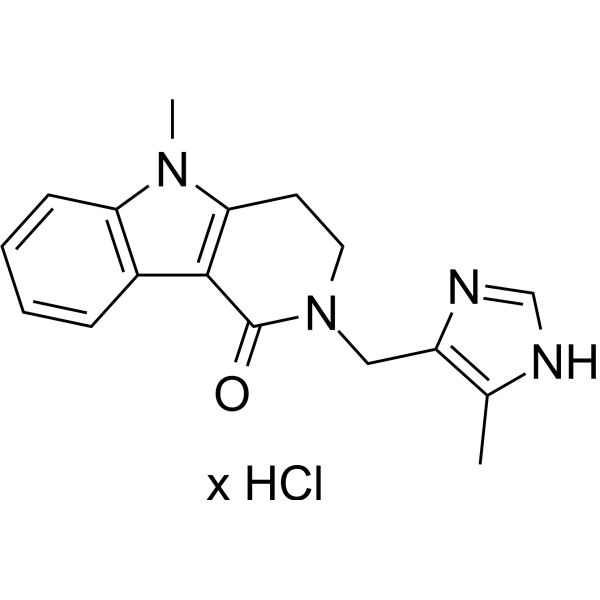
Alosetron (GR 68755) Hydrochloride(1:X) is a potent and highly selective serotonin 5-HT3 receptor antagonist. Alosetron Hydrochloride(1:X) is used for the research of irritable bowel syndrome (IBS). Alosetron Hydrochloride(1:X) blocks the fast 5HT3-mediated depolarisation of guinea-pig myenteric and submucosal neurons, with IC50 at ~55 nM. Alosetron Hydrochloride(1:X) attenuates the visceral nociceptive effect of rectal distension in conscious or anaesthetised dogs. Anti-inflammatory effects .
loading...
    loading...
Cat. No.: HY-70050B
CAS No.: 122852-43-1
Synonyms: GR 68755 ((Z)-2-butenedioate); GR 68755X ((Z)-2-butenedioate)
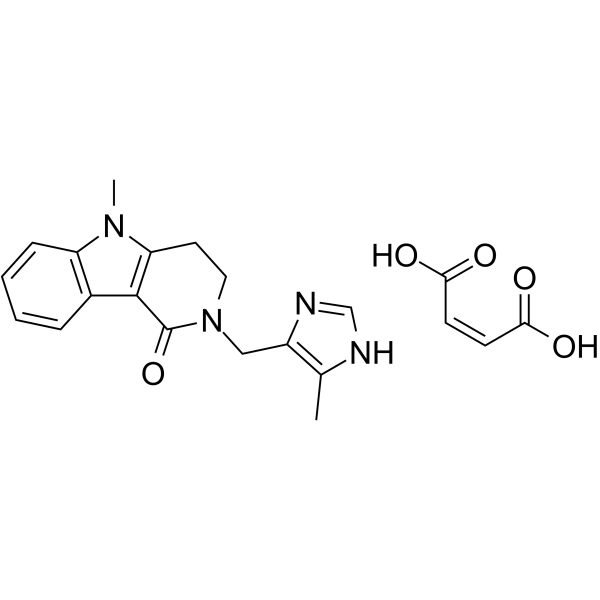
Alosetron (GR 68755) (Z)-2-butenedioate is a potent and highly selective serotonin 5-HT3 receptor antagonist. Alosetron (Z)-2-butenedioate is used for the research of irritable bowel syndrome (IBS). Alosetron (Z)-2-butenedioate blocks the fast 5HT3-mediated depolarisation of guinea-pig myenteric and submucosal neurons, with IC50 at ~55 nM. Alosetron (Z)-2-butenedioate attenuates the visceral nociceptive effect of rectal distension in conscious or anaesthetised dogs. Anti-inflammatory effects .
loading...
    loading...
Cat. No.: HY-121067
CAS No.: 121-59-5
Target:  

Parasite

Research Areas:  

Cancer

Carbarsone, also known as p-ureidobenzenearsonic acid, is historically used as an amebicide in human and veterinary medicine and extensively employed in poultry and swine feed, often in combination with antibiotics to prevent conditions like blackhead in turkeys. It exhibits relatively low acute toxicity, prompting investigations into its safety for food additives under the Federal Food, Drug, and Cosmetic Act. Studies aimed at assessing its potential carcinogenicity in laboratory animals have shown negative evidence similar to other arsanilic acid derivatives, suggesting minimal risk under chronic ingestion conditions. Metabolically, carbarsone is converted to arsanilic acid, which has been observed in preliminary studies involving dogs at high doses .
loading...
    loading...
Cat. No.: HY-17509R
CAS No.: 169590-41-4
Synonyms: SC 046 (Standard); SC 46 (Standard); SC 59046 (Standard)
Deracoxib (SC 046; SC 59046) (Standard) is the analytical standard of Deracoxib (HY-17509). This product is intended for research and analytical applications. Deracoxib, an orally active COX-2 inhibitor, is a veterinary nonsteroidal anti-inflammatory agent used exclusively in dogs. Deracoxib inhibits the COX-2 enzyme to reduce the production of prostaglandins, effectively controlling pain and inflammation after canine soft tissue surgery. Deracoxib reduces the inhibition of COX-1 and lowers the risk of gastrointestinal side effects. Deracoxib induces tumor cell cycle arrest and apoptosis, and shows anti-tumor activity in canine osteosarcoma, breast tumors and bladder transitional cell carcinomas
loading...
    loading...
Cat. No.: HY-119854
CAS No.: 89303-63-9
Synonyms: AY-28228
Atiprosine (AY-28228) is an orally effective selective α1-adrenergic receptor antagonist with a pA2 value of 8.11. Atiprosine exhibits antagonistic activity against α2-adrenergic receptors (α1-adrenergic receptor), 5-HT₂ receptors (5-HT₂ receptor), and H₁ receptors (H₁ receptor). The pA2 values for these receptors are 6.04, 6.87, and 7.32 respectively. Atiprosine has antihypertensive and hypotensive effects in rats, dogs, and monkeys. It can be used for research on cardiovascular and mental disorders.
loading...
    loading...
Cat. No.: HY-148527
CAS No.: 1347232-69-2
Synonyms: AZD8999
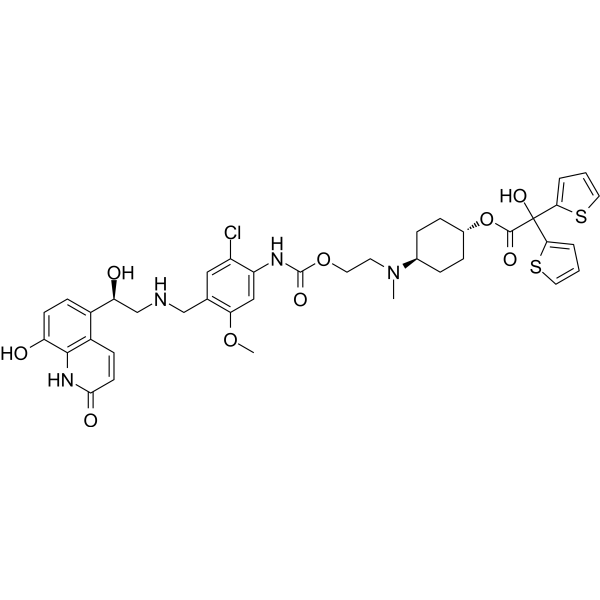
LAS190792 is a bifunctional muscarinic acetylcholine receptor (mAChR) antagonist and β2-adrenergic receptor agonist. LAS190792 has a pIC50 of 8.8 against human M3 muscarinic receptor and a pIC50 of 9.1 against human β2-adrenergic receptor. LAS190792 exhibits vasodilatory and anti-inflammatory activities, and induces sustained bronchodilation in dogs. LAS190792 inhibits the release of IL-8, MMP9, IL-1β and GM-CSF from lipopolysaccharide-stimulated neutrophils. LAS190792 can be used in research related to respiratory system diseases .
loading...
    loading...
Cat. No.: HY-17509S
CAS No.: 2012598-48-8
Synonyms: SC 046-d3; SC 46-d3; SC 59046-d3
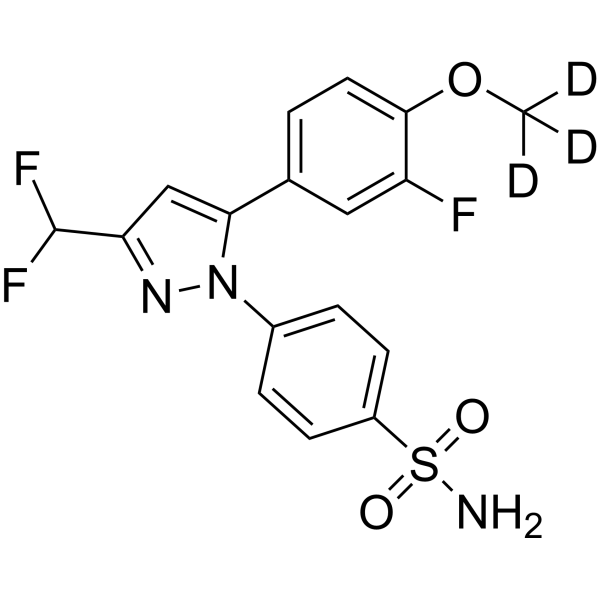
Deracoxib-d3 (SC 046-d3; SC 59046-d3) is the deuterium labeled Deracoxib (HY-17509). Deracoxib, an orally active COX-2 inhibitor, is a veterinary nonsteroidal anti-inflammatory agent used exclusively in dogs. Deracoxib inhibits the COX-2 enzyme to reduce the production of prostaglandins, effectively controlling pain and inflammation after canine soft tissue surgery. Deracoxib reduces the inhibition of COX-1 and lowers the risk of gastrointestinal side effects. Deracoxib induces tumor cell cycle arrest and apoptosis, and shows anti-tumor activity in canine osteosarcoma, breast tumors and bladder transitional cell carcinomas.
loading...
    loading...
Cat. No.: HY-17604A
CAS No.: 1118567-48-8
Synonyms: EGT1442 diproline; EGT0001442 diproline; THR-1442 diproline
Target:  

SGLT

Bexagliflozin diproline (EGT1442 diproline; EGT0001442 diproline; THR-1442 diproline) is an orally active and selective SGLT2 inhibitor with IC50 values of 0.002 μM and 5.6 μM for SGLT2 and SGLT1, respectively. Bexagliflozin diproline selectively inhibits SGLT2-mediated sodium-dependent glucose uptake. Bexagliflozin diproline induces saturable urinary glucose excretion in normal rats and dogs. Bexagliflozin diproline reduces blood glucose and HbA1c levels in db/db mice without affecting body mass or insulin level. Bexagliflozin diproline can be used for the research of type 2 diabetes mellitus, hypertensive stroke .
loading...
    loading...
Cat. No.: HY-N11424
CAS No.: 17459-92-6
Bilirubin diglucuronide is a bilirubin glycoside conjugate with a 1-O-acyl β-D-glucuronide structure. Bilirubin diglucuronide is the major conjugated bilirubin (HY-N0323) and predominant pigment excreted in the bile of adult humans, rats, dogs and cats. Bilirubin diglucuronide is mainly synthesized via UDP-glucuronosyltransferase-mediated transfer of glucuronic acid from UDP-glucuronic acid to bilirubin monoglucuronide, or via enzymatic disproportionation of two moles of bilirubin monoglucuronide (predominantly producing the IXα configuration). In addition, Bilirubin diglucuronide can also be synthesized from bilirubin or its monoglucuronide in a UDP-glucuronic acid-dependent manner. Pretreatment with phenobarbital significantly enhances the formation process of Bilirubin diglucuronide .
loading...
    loading...
Cat. No.: HY-W017540R
CAS No.: 35404-50-3
Cyclocreatine, a creatine analogue, acts as a brain-penetrant and potent bioenergetic protective agent by providing high levels of ATP. Cyclocreatine can be phosphorylated and dephosphorylated by creatine kinases. Cyclocreatine suppresses creatine metabolism ameliorating the cognitive, autistic and epileptic phenotype in a mouse model of creatine transporter defciency. Cyclocreatine protects against ischemic injury and enhances cardiac recovery during early reperfusion in dogs and rats. Cyclocreatine decreases plaque-adjacent neuronal dystrophy in TREM2-deficient mice with amyloid-β pathology. Cyclocreatine is proming for research of ischemic heart disease, cardiovascular diseases, Alzheimer’s disease and other neurodegenerative diseases associated with microglial dysfunction, prostate cancer .
loading...
    loading...
Cat. No.: HY-W703540
CAS No.: 1794780-24-7
Synonyms: SC 046-d4; SC 46-d4; SC 59046-d4
Deracoxib-d4 (SC 046-d4; SC 59046--d4) is deuterium labeled Deracoxib (HY-17509). Deracoxib, an orally active COX-2 inhibitor, is a veterinary nonsteroidal anti-inflammatory agent used exclusively in dogs. Deracoxib inhibits the COX-2 enzyme to reduce the production of prostaglandins, effectively controlling pain and inflammation after canine soft tissue surgery. Deracoxib reduces the inhibition of COX-1 and lowers the risk of gastrointestinal side effects. Deracoxib induces tumor cell cycle arrest and apoptosis, and shows anti-tumor activity in canine osteosarcoma, breast tumors and bladder transitional cell carcinomas.
loading...
    loading...
Cat. No.: HY-175420
CAS No.: 2696409-13-7
Research Areas:  

Metabolic Disease

K-757 is an orally active, gut-targeted GPR40 agonist with EC50 values of 2.1 nM, 5.6 nM, 4.2 nM and 166 nM in humans, mice, rats and dogs, respectively. K-757 activates nutrient receptors co-expressed on pancreatic β cells and intestinal enteroendocrine cells. K-757 mediates and induces the secretion of satiety hormones GLP-1 and PYY in multiple in vitro and in vivo models. When used in combination with GPR119 agonist K-833, K-757 acts as a potentiator to elevate circulating levels of satiety hormones. K-757 can be used in the research of type 2 diabetes, weight loss and other related metabolic disorders .
loading...
    loading...
Cat. No.: HY-187520
CAS No.: 3137385-11-3
Target:  

Ras SOS1

Research Areas:  

Cancer

KRAS-IN-62 is an orally effective pan-KRAS inhibitor that potently inhibits SOS1-mediated KRAS nucleotide exchange (IC50 < 10 nM for KRAS G12D/G12V/G12C/WT). KRAS-IN-62 inhibits pERK signaling and cell proliferation in KRAS-mutant tumor cells (pERK IC90 = 0.51 nM in GP2D cells). KRAS-IN-62 inhibits tumor growth in vivo, with plasma concentrations exceeding IC50 for ~20 h after oral administration in beagle dogs. KRAS-IN-62 can be used in studies of KRAS mutation-related cancers, such as colorectal cancer .
loading...
    loading...
Cat. No.: HY-U00134
CAS No.: 2179-37-5
Synonyms: Bencyclane; Benzcyclan
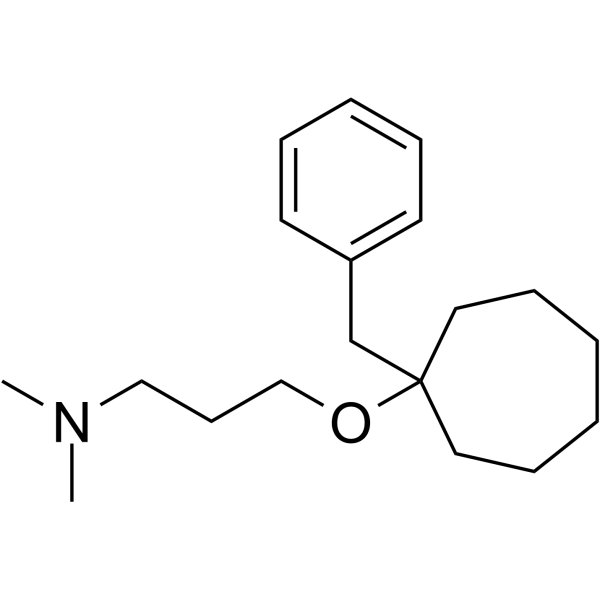
Benzcyclane (Bencyclane; Benzcyclan) is a vasodilator with serotonin receptor antagonism. Benzcyclane exerts atypical serotonin antagonistic effects in rabbit superior mesenteric arteries. Benzcyclane relaxes high K +-induced contractions in rabbit basilar arteries and superior mesenteric arteries, and selectively inhibits sympathetic nerve stimulation-induced contractions in rabbit pulmonary arteries. Benzcyclane exerts non-competitive norepinephrine antagonistic effects in rabbit superior mesenteric arteries, and slightly reduces the maximum contractile response induced by histamine. Benzcyclane relaxes smooth muscles, induces transient hypotension, inhibits thrombosis, and accelerates blood fibrinolytic activity. Benzcyclane increases cerebral glucose content/uptake, enhances hypoxia tolerance in mice, and increases cerebral blood supply in dogs. Benzcyclane is applicable to studies related to cerebral vascular circulation .
loading...
    loading...

