
1676 Results for "

chronic pyoderma

" in MedChemExpress (MCE) Product Catalog:
Products (1676)

1676 Results for "chronic pyoderma" in MCE Product Catalog:

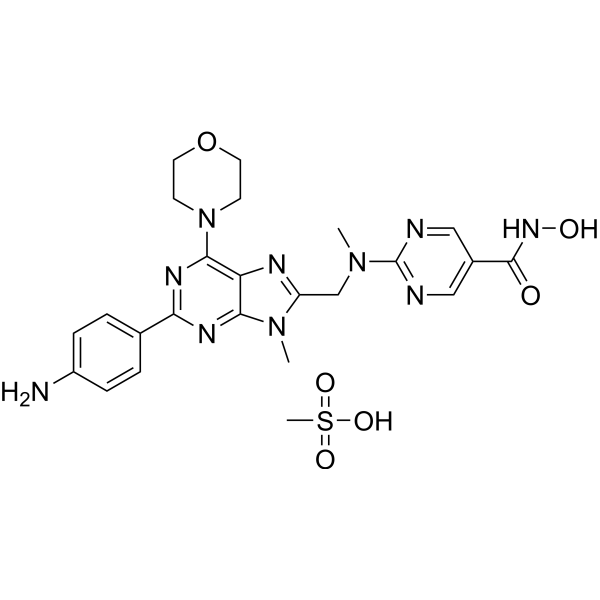
Cat. No.: HY-150109
CAS No.: 2650188-32-0
Purity:  99.45%
Synonyms: Purinostat mesylate
Puzerinostat mesylate (Purinostat mesylate) is a highly selective class I/IIb histone deacetylase (HDAC) inhibitor, with IC50 values of 0.81 nM, 1.4 nM, 1.7 nM, 3.8 nM, 11.5 nM, and 1.1 nM against HDAC1, HDAC2, HDAC3, HDAC8, HDAC6, and HDAC10, respectively. Puzerinostat mesylate enhances glutamine metabolism by upregulating GLS1. Puzerinostat mesylate induces cell Apoptosis and downregulates the expression of BCR-ABL and c-MYC. Puzerinostat mesylate delays the progression of Ph + B-cell acute lymphoblastic leukemia and prolongs the survival of relevant mouse models. Puzerinostat mesylate regulates the immune microenvironment. Puzerinostat mesylate can be used in research related to chronic myeloid leukemia, Philadelphia chromosome-positive B-cell acute lymphoblastic leukemia, relapsed/refractory multiple myeloma, relapsed/refractory lymphoma, diffuse large B-cell lymphoma, and double-expression lymphoma .
loading...
    loading...
Cat. No.: HY-150109A
CAS No.: 1929583-17-4
Synonyms: Purinostat
Puzerinostat (Purinostat) is a highly selective class I/IIb histone deacetylase (HDAC) inhibitor, with IC50 values of 0.81 nM, 1.4 nM, 1.7 nM, 3.8 nM, 11.5 nM, and 1.1 nM against HDAC1, HDAC2, HDAC3, HDAC8, HDAC6, and HDAC10, respectively. Puzerinostat enhances glutamine metabolism by upregulating GLS1. Puzerinostat induces cell Apoptosis and downregulates the expression of BCR-ABL and c-MYC. Puzerinostat delays the progression of Ph + B-cell acute lymphoblastic leukemia and prolongs the survival of relevant mouse models. Puzerinostat regulates the immune microenvironment. Puzerinostat can be used in research related to chronic myeloid leukemia, Philadelphia chromosome-positive B-cell acute lymphoblastic leukemia, relapsed/refractory multiple myeloma, relapsed/refractory lymphoma, diffuse large B-cell lymphoma, and double-expression lymphoma .
loading...
    loading...
Cat. No.: HY-153201
CAS No.: 910113-34-7
PKR1 antagonist-2 is a non-peptide prokineticin receptor antagonist that preferentially binds to and blocks PK-R1 signaling while also blocking PK-R2. PKR1 antagonist-2 shifts the autoimmune response against myelin from a Th1/Th17 profile toward a Th2 profile, reducing myelin antigen-specific T cell proliferation and the production of proinflammatory cytokines (IFN-γ, TNF, IL-6, IL-17), and increasing the levels of anti-inflammatory cytokines IL-4/IL-10. PKR1 antagonist-2 significantly alleviates disease severity in relapsing-remitting and chronic experimental autoimmune encephalomyelitis (EAE). PKR1 antagonist-2 can be used in research related to multiple sclerosis .
loading...
    loading...
Cat. No.: HY-15538R
CAS No.: 100981-43-9
Synonyms: FI3542 (Standard)
Ebrotidine (Standard) (FI3542 (Standard)) is the analytical standard of Ebrotidine (HY-15538). This product is intended for research and analytical applications. Ebrotidine (FI3542) is a competitive histamine H2 receptor (histamine H2 receptor) antagonist with gastric acid secretion inhibitory and gastric mucosal protective effects. Ebrotidine alleviates gastric mucosal injury and epithelial cell apoptosis induced by Indomethacin (HY-14397) and Helicobacter pylori LPS (HY-D1056), and accelerates chronic gastric ulcer healing by promoting rapid recovery of IL-4 and inhibiting TNF-α, endothelin-1 (ET-1) and NOS-2. Ebrotidine can be used in studies on gastric ulcer healing, NSAID-induced gastric mucosal injury, Helicobacter pylori-associated gastritis, and H2 receptor-mediated gastric mucosal protection mechanisms .
loading...
    loading...
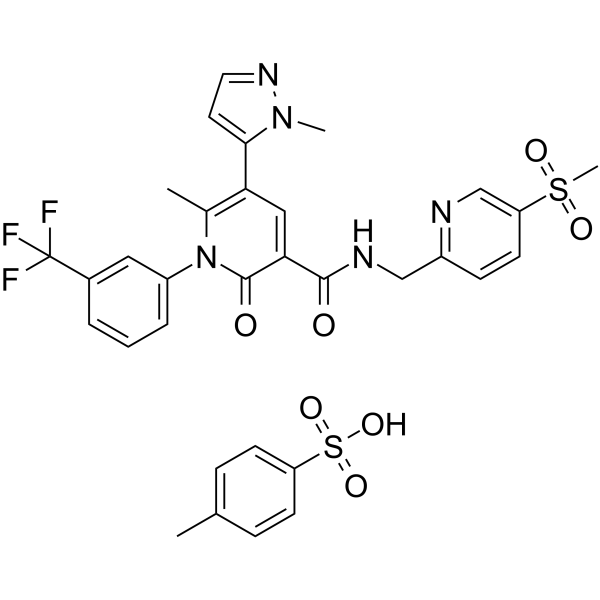
Cat. No.: HY-15651A
CAS No.: 1240425-05-1
Synonyms: AZD9668 tosylate
Alvelestat tosylate (AZD9668 tosylate) is an orally active, selective inhibitor of neutrophil elastase. Alvelestat tosylate reduces elastase activity, myeloperoxidase release, neutrophil recruitment and activation, and calcium phosphate precipitation; promotes smooth muscle cell colonization and collagen deposition; and inhibits the formation of neutrophil extracellular traps (NETs) as well as NET-derived neutrophil elastase activity. Alvelestat tosylate restores endothelial dysfunction, regulates antioxidant factors, improves the expression of endothelial tight junctions, reduces vascular leakage, and accelerates wound healing. Alvelestat tosylate prevents pulmonary hemorrhage, matrix protein degradation, airspace enlargement, and small airway wall remodeling; and alleviates cigarette-induced inflammatory responses. Alvelestat tosylate inhibits the growth of abdominal aortic aneurysms exacerbated by Porphyromonas gingivalis. Alvelestat tosylate can be used in research related to chronic obstructive pulmonary disease, abdominal aortic aneurysm, radiation-induced skin injury, and bronchiectasis .
loading...
    loading...
Cat. No.: HY-15651B
CAS No.: 1240425-11-9
Synonyms: AZD9668 hydrochloride
Alvelestat hydrochloride (AZD9668 hydrochloride) is an orally active, selective inhibitor of neutrophil elastase. Alvelestat hydrochloride reduces elastase activity, myeloperoxidase release, neutrophil recruitment and activation, and calcium phosphate precipitation; promotes smooth muscle cell colonization and collagen deposition; and inhibits the formation of neutrophil extracellular traps (NETs) as well as NET-derived neutrophil elastase activity. Alvelestat hydrochloride restores endothelial dysfunction, regulates antioxidant factors, improves the expression of endothelial tight junctions, reduces vascular leakage, and accelerates wound healing. Alvelestat hydrochloride prevents pulmonary hemorrhage, matrix protein degradation, airspace enlargement, and small airway wall remodeling; and alleviates cigarette-induced inflammatory responses. Alvelestat hydrochloride inhibits the growth of abdominal aortic aneurysms exacerbated by Porphyromonas gingivalis. Alvelestat hydrochloride can be used in research related to chronic obstructive pulmonary disease, abdominal aortic aneurysm, radiation-induced skin injury, and bronchiectasis .
loading...
    loading...
Cat. No.: HY-159520
CAS No.: 2731294-23-6
Synonyms: Ofirnoflast; HT-6184
Ofirnoflastum (Ofirnoflast) is an orally active first-in-class allosteric NEK7 inhibitor with an IC50 of 46 nM. Ofirnoflastum binds an allosteric site adjacent to NEK7’s ATP-binding pocket, induces conformational shifts, disrupts NEK7-NLRP3 binding, blocks NLRP3 inflammasome assembly, spares NEK7’s physiological functions, and suppresses caspase-1, caspase-8, NF-κB, and TNF activity. Ofirnoflastum reduces pro-inflammatory cytokine production, suppresses ASC specks, IL-1β release, pyroptotic cell death, and leukemic burden, induces apoptosis and erythroid differentiation, restores hematopoiesis, and improves outcomes in colitis models. Ofirnoflastum can be used for the research of myelodysplastic syndromes, chronic myelomonocytic leukemia, and acute myeloid leukemia .
loading...
    loading...
Cat. No.: HY-171591
CAS No.: 2810810-00-3
SIK2-IN-4 (Compound 4) is a highly selective SIK1/2 inhibitor (IC50s 0.143 and 0.076 μM, respectively). SIK2-IN-4 reduces the phosphorylation of transcription coactivator 3 (CRTC3) by targeting SIK1/2, thereby regulating cAMP response element binding protein (CREB)-dependent transcriptional activity. SIK2-IN-4 inhibits the production of pro-inflammatory cytokines such as TNF (IC50: 0.11 µM), IL-12/23 p40 (IC50: 0.25 µM), and IL-23 (IC50: 0.47 µM), while inducing the expression of the anti-inflammatory cytokine IL-10. SIK2-IN-4 can be used to study intestinal inflammation and other chronic inflammatory diseases .
loading...
    loading...
Cat. No.: HY-173191
CAS No.: 2760404-50-8
SK-124 is an orally active salt-inducible kinase (SIK) inhibitor with an IC50 of 230 nM against SIK1, 4.1 nM against SIK2, and 21 nM against SIK3, exhibiting excellent kinome selectivity . SK-124 blocks SIK-mediated CRTC2 phosphorylation, promotes CRTC2 nuclear translocation, and regulates vitamin D metabolism by upregulating renal Cyp27b1 and downregulating Cyp24a1 . SK-124 upregulates the expression of bone-related genes, increases serum Ca 2+, 1,25-vitamin D and intact FGF23 levels, and suppresses endogenous PTH levels . SK-124 can be used in studies related to osteoporosis, male osteoporosis, and chronic kidney disease-mineral and bone disorder .
loading...
    loading...
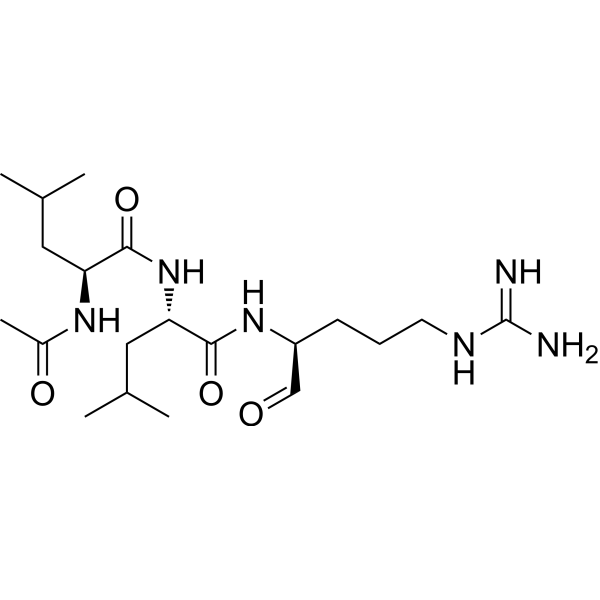
Cat. No.: HY-18234
CAS No.: 55123-66-5
Leupeptin is a broad-spectrum protease inhibitor . By inhibiting the activation of the PTEN/PI3K/Akt/NF-κB/ERK1/2/p38 signaling pathway, Leupeptin significantly reduces LPS-induced NO and ROS production, mitochondrial membrane potential hyperpolarization, phagocytic activity, pro-inflammatory cytokine release, and M1 polarization in mouse peritoneal macrophages, and reverses autophagic flux impairment. It also decreases Concanavalin A (HY-P2149)-induced proliferation index of mouse splenic lymphocytes and the Th1/IL-10 and Th2/IL-10 cytokine ratios, thereby modulating innate and adaptive immune responses. Leupeptin inhibits blood coagulation and tumorigenesis in mouse skin. Leupeptin can be used in research on chronic inflammatory diseases and skin tumorigenesis .
loading...
    loading...
Cat. No.: HY-183478
CAS No.: 39740-82-4
Leupeptin hydrochloride is a broad-spectrum protease inhibitor . By inhibiting the activation of the PTEN/PI3K/Akt/NF-κB/ERK1/2/p38 signaling pathway, Leupeptin hydrochloride significantly reduces LPS-induced NO and ROS production, mitochondrial membrane potential hyperpolarization, phagocytic activity, pro-inflammatory cytokine release, and M1 polarization in mouse peritoneal macrophages, and reverses autophagic flux impairment. It also decreases Concanavalin A (HY-P2149)-induced proliferation index of mouse splenic lymphocytes and the Th1/IL-10 and Th2/IL-10 cytokine ratios, thereby modulating innate and adaptive immune responses. Leupeptin hydrochloride inhibits blood coagulation and tumorigenesis in mouse skin. Leupeptin hydrochloride can be used in research on chronic inflammatory diseases and skin tumorigenesis .
loading...
    loading...
Cat. No.: HY-183626
CAS No.: 1247823-40-0
PAI-1-IN-1 is an orally active and specific PAI-1 inhibitor with an IC50 of <6.95 μM. PAI-1-IN-1 blocks the interaction between PAI-1 and serine proteases or LRP-1, and enhances plasmin generation. PAI-1-IN-1 restores macrophage efferocytosis and promotes macrophage polarization. PAI-1-IN-1 alleviates PAI-1-mediated inhibition of Furin, promotes MT1-MMP maturation, activates the NOTCH1 signaling pathway, inhibits proliferation and induces apoptosis. PAI-1-IN-1 promotes skeletal muscle regeneration and alleviates inflammation in a mouse model of skeletal muscle injury. PAI-1-IN-1 can be used in research on skeletal muscle injury-induced inflammation and chronic myeloid leukemia .
loading...
    loading...
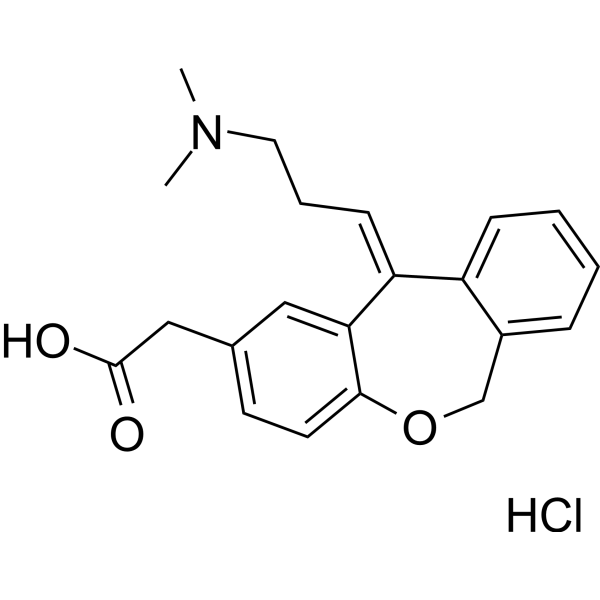
Cat. No.: HY-B0426A
CAS No.: 140462-76-6
Synonyms: ALO4943A; KW4679
Olopatadine hydrochloride (ALO4943A; KW4679) is an orally active histamine H1 receptor antagonist and mast cell stabilizer. Olopatadine hydrochloride exerts antiallergic effects by blocking histamine H1 receptor-mediated activities. Olopatadine hydrochloride inhibits exocytosis, chemokine release, F-actin polymerization, CXCL10-induced calcium influx, and T cell chemotactic activity. Olopatadine hydrochloride also reduces the expression levels of CXCR3 on the surface of CD4 + and CD8 + T cells. Olopatadine hydrochloride inhibits scratching behavior, improves dermatitis scores, and suppresses intraepidermal neurite outgrowth. Olopatadine hydrochloride simultaneously decreases the levels of inflammatory markers, growth factors, histamine, and specific IgE, while increasing the expression of ErbB3A/HER3A. Olopatadine hydrochloride can be used in research related to seasonal pollinosis, chronic rhinitis, urticaria, allergic conjunctivitis, alopecia areata, and atopic dermatitis .
loading...
    loading...
Cat. No.: HY-B0504R
CAS No.: 60-27-5
Synonyms: NSC13123 (Standard)
Creatinine (Standard) is the analytical standard of Creatinine. This product is intended for research and analytical applications. Creatinine (NSC13123) is an orally active, blood-brain barrier-permeable modulator of GABAA and NMDA receptors, with activities of antioxidation and metabolic regulation. Creatinine is generated via non-enzymatic conversion of creatine and phosphocreatine in muscle. Creatinine serum levels correlate with muscle mass, glomerular filtration rate, and extrarenal clearance, serving as an evaluation biomarker for renal function, muscle mass, and clinical outcomes, and used for perioperative renal risk assessment. In addition, Creatinine can induce specific Cryptococcus species to produce creatinine deiminase and act as their nitrogen source, while it can be secreted via renal tubules. Creatinine is widely used in research related to various diseases such as neurodegenerative diseases, psychiatric disorders, acute kidney injury, chronic kidney disease, and renal failure .
loading...
    loading...
Cat. No.: HY-B0504S5
Synonyms: NSC13123-15N
Creatinine- 15N (NSC13123- 15N) is the 15N-labeled Creatinine (HY-B0504). Creatinine (NSC13123) is an orally active, blood-brain barrier-permeable modulator of GABAA and NMDA receptors, with activities of antioxidation and metabolic regulation. Creatinine is generated via non-enzymatic conversion of creatine and phosphocreatine in muscle. Creatinine serum levels correlate with muscle mass, glomerular filtration rate, and extrarenal clearance, serving as an evaluation biomarker for renal function, muscle mass, and clinical outcomes, and used for perioperative renal risk assessment. In addition, Creatinine can induce specific Cryptococcus species to produce creatinine deiminase and act as their nitrogen source, while it can be secreted via renal tubules. Creatinine is widely used in research related to various diseases such as neurodegenerative diseases, psychiatric disorders, acute kidney injury, chronic kidney disease, and renal failure .
loading...
    loading...
Cat. No.: HY-D3210
CAS No.: 2098632-04-1
Target:  

Fluorescent Dye

Research Areas:  

Inflammation/Immunology

DCM-KPV is a fluorescent probe targeting the human intestinal oligopeptide transporter PEPT1/SLC15A1 receptor (λex=480 nm, λem=620-670 nm). DCM-KPV specifically binds to PepT1 via its KPV domain and mediates receptor-targeted internalization, thus effectively accumulating in the cytoplasm and nucleus of cells overexpressing this receptor. DCM-KPV has the advantages of long emission wavelength, high emission efficiency, low photobleaching, and negligible cytotoxicity. DCM-KPV maintains stable fluorescence intensity under continuous illumination, exhibiting extremely high live cell compatibility. DCM-KPV can specifically accumulate at colonic inflammatory sites through the intestinal mucosa, enabling direct non-invasive visual differentiation between chronic and acute ulcerative colitis groups and the normal group .
loading...
    loading...
Cat. No.: HY-DY1081
CAS No.: 28718-90-3
Synonyms: 4',6-Diamidino-2-phenylindole dihydrochloride (solution)
DAPI (4',6-Diamidino-2-phenylindole) dihydrochloride (solution) is a DAPI dye. DAPI is a fluorescent dye that binds strongly to DNA. It binds to the AT base pair of the double-stranded DNA minor groove, and one DAPI molecule can occupy three base pair positions. The fluorescence intensity of DAPI molecules bound to double-stranded DNA is increased by about 20 times, and it is commonly observed with fluorescence microscopy, and the amount of DNA can be determined based on the intensity of fluorescence. DAPI cannot penetrate intact cell membranes and is commonly used for staining damaged and fixed cells . DAPI (Compound 3) is an acid-sensing ion channel 3 (ASIC3) inhibitor. DAPI binds to ASIC3 and blocks the channel function. DAPI can be used in the study of chronic pain treatment (Ex/Em = 356/451 nm).
Solvent and concentration: ddH2O: 5 mg/mL
loading...
    loading...
Cat. No.: HY-E70226
CAS No.: 71965-46-3
Synonyms: CTSS
Human Cathepsin S (CTSS) is a cysteine protease with elastinolytic activity. Human Cathepsin S is inhibited by cysteine protease inhibitors such as E-64 (HY-15282) and cystatin C. Human Cathepsin S cleaves substrates including elastin, TGF-β1, Myelin basic protein (HY-P1821), PAR2, SIRT1, collagen 18A1, FKN, and MHC-II invariant chain fragments, thereby driving processes such as elastic matrix degradation, TGF-β1 signaling, demyelination, PAR2-mediated calcium mobilization, NF-κB activation, hepatic fibrosis, immune homeostasis regulation, and antigen presentation. Human Cathepsin S can be used in the research of cardiovascular diseases, chronic kidney diseases, autoimmune diseases, tumors, Alzheimer's disease, and obesity .
loading...
    loading...
Cat. No.: HY-G0017R
CAS No.: 404844-02-6
Synonyms: Norimatinib (Standard); Imatinib metabolite N-Desmethyl imatinib (Standard); CGP 74588 (Standard)
N‑Desmethyl imatinib (Standard) is the analytical standard of N‑Desmethyl imatinib (Norimatinib) (HY-G0017R). This product is intended for research and analytical applications. N‑Desmethyl imatinib (Norimatinib) is an active metabolite of Imatinib (HY-15463), a selective c‑Abl inhibitor, and a substrate of P‑glycoprotein. N-Desmethyl imatinib binds to the c-Abl catalytic domain to prevent substrate phosphorylation, inhibits c-Abl-mediated α-synuclein activation and downstream inflammatory signaling pathways. N-Desmethyl imatinib induces apoptosis in K562 human leukemia cells. N-Desmethyl imatinib exhibits significantly elevated plasma levels in gastrointestinal stromal tumor (GIST) settings following mild SARS CoV 2 infection. N-Desmethyl imatinib can be used for the research of Parkinson’s disease, gastrointestinal stromal tumor, and chronic myeloid leukemia .
loading...
    loading...
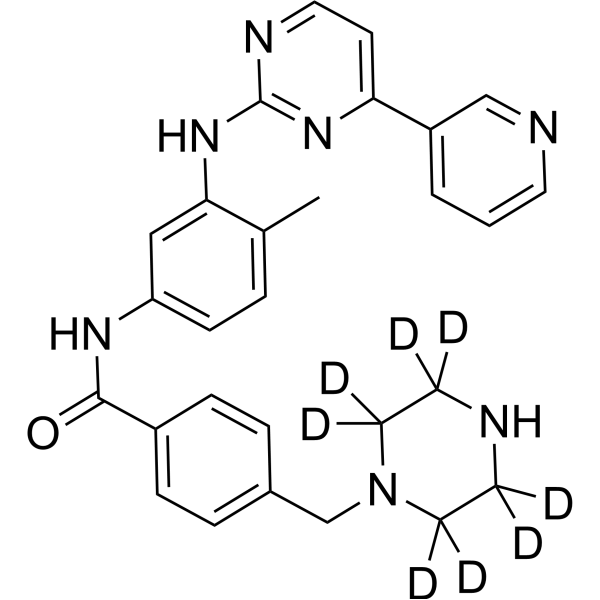
Cat. No.: HY-G0017S
CAS No.: 1185103-28-9
Synonyms: Norimatinib-d8; Imatinib metabolite N-Desmethyl imatinib-d8; CGP 74588-d8
N-Desmethyl imatinib-d8 is a deuterium labeled Imatinib metabolite N-Desmethyl Imatinib (HY-G0017). N‑Desmethyl imatinib (Norimatinib) is an active metabolite of Imatinib (HY-15463), a selective c‑Abl inhibitor, and a substrate of P‑glycoprotein. N-Desmethyl imatinib binds to the c-Abl catalytic domain to prevent substrate phosphorylation, inhibits c-Abl-mediated α-synuclein activation and downstream inflammatory signaling pathways. N-Desmethyl imatinib induces apoptosis in K562 human leukemia cells. N-Desmethyl imatinib exhibits significantly elevated plasma levels in gastrointestinal stromal tumor (GIST) settings following mild SARS CoV 2 infection. N-Desmethyl imatinib can be used for the research of Parkinson’s disease, gastrointestinal stromal tumor, and chronic myeloid leukemia .
loading...
    loading...

