
1618 Results for "

Covalent

" in MedChemExpress (MCE) Product Catalog:
Products (1618)

1618 Results for "Covalent" in MCE Product Catalog:

Cat. No.: HY-D3416
Synonyms: TAMRA-2,4-dinitroaniline
Target:  

Fluorescent Dye

Research Areas:  

Others

TMR-DN (TAMRA-2,4-dinitroaniline) is a fluorescent probe for RNA imaging that consists of a covalently coupled fluorophore (5-carboxy tetramethylrhodamine (TMR)) and quencher (dinitroaniline (DN)). The Kd value of TMR-DN with SRB-2 is 35 nM, and its Kd value with RhoBAST is approximately 30 nM. TMR-DN has a contact quenching function and forms a non-fluorescent intramolecular ground-state dimer in the free state; the excitation/emission wavelengths of the free probe are Ex/Em = 557/579 nm, those of the complex formed by binding to SRB-2 are Ex/Em = 561/587 nm, and those of the probe bound to the DNB aptamer are Ex/Em = 555/582 nm. TMR-DN reduces non-specific binding to genomic nucleic acids via negatively charged carboxyl-functionalized aromatic rings. Fluorescence dequenching occurs when TMR-DN specifically binds to SRB-2, RhoBAST or the DNB aptamer, among which the binding of RhoBAST requires Mg 2+ for proper folding .
loading...
    loading...
Cat. No.: HY-L257
0 compounds

Linkers, as key structural units in PROTAC molecules that connect the two functional ends, not only determine the overall molecular conformation and spatial compatibility but also directly influence the stability of the ternary complex, as well as cellular permeability and degradation efficiency. In recent years, with the widespread application of click chemistry in medicinal chemistry, the incorporation of bioorthogonal reactive groups such as azides (-N3) into PROTAC linker design has become an emerging research focus, providing an important tool for modular assembly and rapid structural optimization.

The MCE Azide PROTAC Linker Library contains 0 linkers specifically designed for targeted protein degradation molecule design and optimization. These linkers serve as efficient “click handles,” enabling rapid and highly selective covalent coupling with alkyne reaction partners, thereby facilitating modular assembly and structural diversification of PROTAC molecules. In drug development, this design not only improves the efficiency of molecular construction but also significantly accelerates the screening and optimization of lead compounds. Meanwhile, by tuning linker properties such as length, flexibility, and polarity, the ability to form ternary complexes and degradation activity can be optimized.

Cat. No.: HY-112624B
CAS No.: 9004-54-0
Synonyms: Dextran 70; Dextran D70; Dextran T70(MW 64000-76000)
Dextran 70,000 is a high molecular weight polysaccharide formed by glucose linked by α-(1→6) glycosidic bonds. Dextran 70,000 can expand blood volume through colloidal osmotic pressure effect and inhibit cell adhesion and platelet aggregation through steric hindrance. At the same time, Dextran 70,000 can be used as a drug carrier to achieve targeted delivery through endocytosis. Dextran 70,000 is biologically inert and has low immunogenicity. It can be used for clinical blood volume expansion, anti-thrombotic research, and evaluation of vascular permeability in in vitro experiments. It can also be combined with fluorescent dyes for cell tracking and drug delivery research. The Dextran series of compounds are also natural polysaccharide drug carriers that can be connected to drugs through covalent bonding methods such as ester bonds, amide bonds or click chemistry, or self-assembled to form carriers such as nanoparticles and hydrogels. Dextran is biodegradable and biocompatible, and can achieve targeted delivery and controlled release of drugs. Dextran derivatives can prolong the half-life of drugs, increase local concentrations, and reduce the activity of immune clearance.
loading...
    loading...
Cat. No.: HY-112624H
CAS No.: 9004-54-0
Synonyms: Dextran 2; Dextran D2; Dextran T2(MW 1600-2400)
Dextran T2 (Dextran 2; Dextran T2(MW 1600-2400)) is a natural high molecular weight polysaccharide, the glycosidic bonds in its structure can be recognized by endo-dextranase and exo-dextranase. Dextran T2 (MW 2,000) breaks the glycosidic bonds in the enzymatic hydrolysis mechanism, releasing products such as D-glucose, Isomaltose (IM2), and Isomaltotriose (IM3). Dextran T2 (MW 2,000) can be used as a model substrate to characterize the catalytic properties of dextranase (such as optimal pH, temperature and product specificity), and to study enzymatic mechanism research and polysaccharide degradation pathways in glycobiology. The Dextran series of compounds are also a natural polysaccharide drug carrier, which can be connected to drugs through covalent bonding methods such as ester bonds, amide bonds or click chemistry, or self-assembled to form carriers such as nanoparticles and hydrogels. Dextran is biodegradable and biocompatible, and can achieve targeted delivery and controlled release of drugs. Dextran derivatives can prolong drug half-life, increase local concentration and reduce immune clearance activity .
loading...
    loading...
Cat. No.: HY-12733
CAS No.: 1254318-44-9
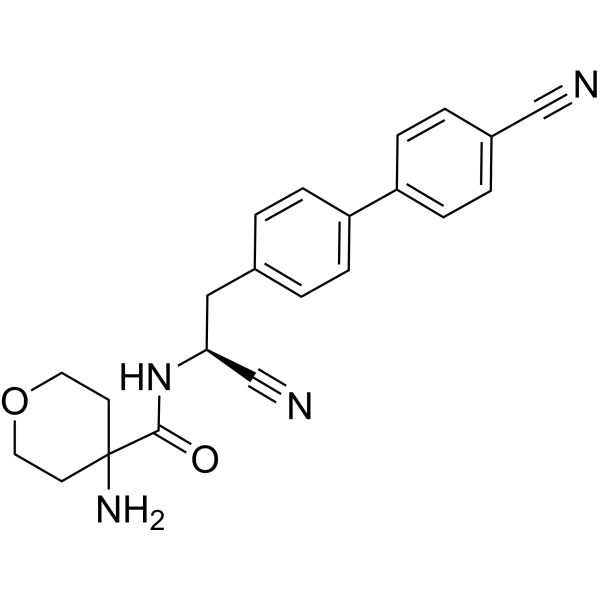
AZD5248 is an orally active, selective dipeptidyl peptidase 1 (cathepsin C) inhibitor, with IC50 values of 1 nM and 17 nM against human CatC, 44 nM against human DPP1, and 67 nM against rat DPP1. It exhibits low clearance and high bioavailability in animal models. AZD5248 forms an irreversible covalent bond with the catalytic Cys234 residue of CatC, exerts reversible inhibition via its nitrile moiety, blocks CatC-dependent amyloid formation, and reduces the activation levels of neutrophil serine proteases in bone marrow and blood. AZD5248 reacts with aortic elastin aldehydes to form stable 4-imidazolinones, induces ultrastructural changes in aortic tissue, and has an α-amino acid-based backbone. AZD5248 reduces the severity of acute pancreatitis in mouse models. AZD5248 can be used in research on chronic obstructive pulmonary disease, acute pancreatitis, neurodegenerative diseases, lysosomal storage disorders, acute lung injury, cystic fibrosis, and neutrophil-mediated inflammatory diseases .
loading...
    loading...
Cat. No.: HY-130086
CAS No.: 1314378-11-4
Purity:  99.29%
Target:  

ADC Linkers

Research Areas:  

Cancer

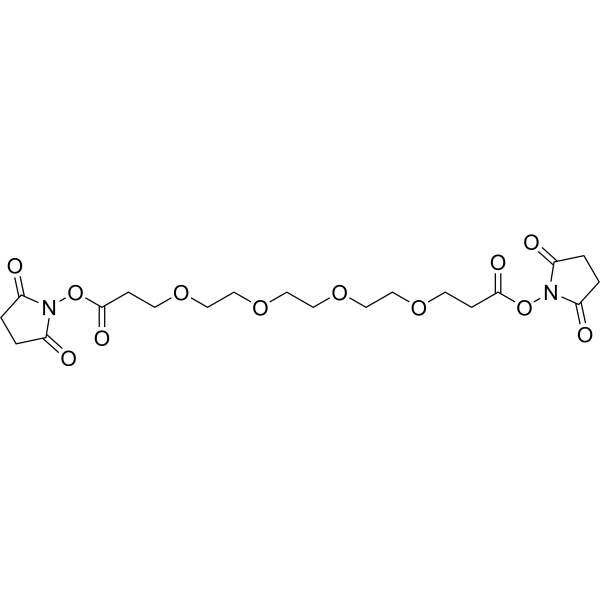
Bis-PEG4-NHS ester is a crosslinking reagent and amine-reactive modulator .Bis-PEG4-NHS ester reacts with primary amine groups on liposome surfaces via amide bond formation to covalently attach dibenzylcyclooctyne groups, with a hydrophilic PEG4 spacer reducing steric hindrance for subsequent click chemistry .Bis-PEG4-NHS ester enables site-specific antibody coupling to liposome surfaces via copper-free strain-promoted alkyne-azide cycloaddition click chemistry without disrupting liposome structure in minimal organic solvent volumes .Bis-PEG4-NHS ester undergoes hydrolysis during annealing to form -COOH groups that interact with PbI and FAI to enhance perovskite structural integrity, passivate defects, and modulate nucleation kinetics to regulate crystal growth .Bis-PEG4-NHS ester enhances device efficiency and long-term stability when used as an antisolvent additive for p-i-n perovskite solar cells .
loading...
    loading...
Cat. No.: HY-138794G
CAS No.: 2417089-74-6
XL177A GMP is XL177A (HY-138794) produced by using GMP guidelines. GMP small molecules works appropriately as an auxiliary reagent for cell therapy manufacture. XL177A is a covalent USP7 inhibitor that blocks the deubiquitinase activity of USP7. XL177A destabilizes non-canonical PRC1 complexes or KDM6A and reduces chromatin deposition of H2AK119Ub, thereby relieving the repression of neuronal differentiation programs. Meanwhile, XL177A also regulates the ELOF1-UVSSA-USP7-nuclear β-catenin axis, decreasing the transcription levels of related proteins and the accumulation of nuclear β-catenin. XL177A exerts antiviral effects by reducing the expression levels of coronavirus receptors, and exhibits inhibitory activity against APC-mutated colorectal cancer cells, neuroblastoma, and coronaviruses including SARS-CoV-2 variants. XL177A is mainly used in studies related to colorectal cancer, neuroblastoma, and coronavirus infections .
loading...
    loading...
Cat. No.: HY-155882
CAS No.: 80506-64-5
Synonyms: mPEG750-NH2
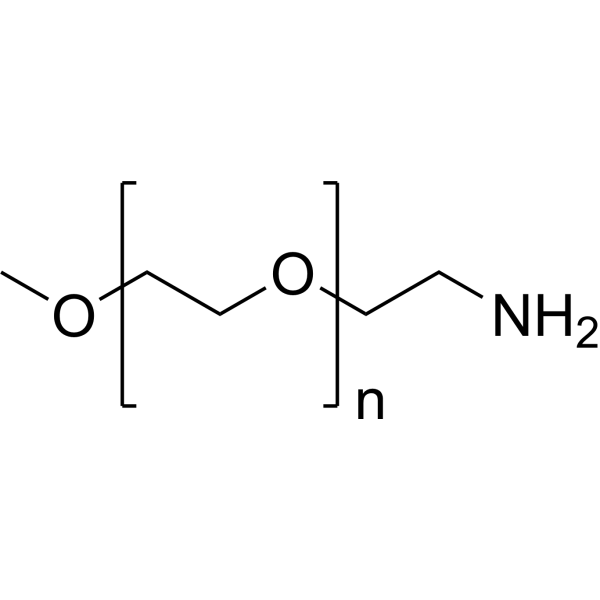
mPEG750-amine (mPEG750-NH2) is a chemical modification reagent for nanoparticles, capable of covalently binding to Ad-PVA to form Ad-PVA-PEG polymers. mPEG750-amine stabilizes gene delivery complexes by providing steric hindrance, reducing particle aggregation, while enhancing the water solubility and serum stability of the complex, reducing carrier cytotoxicity, and assisting in the efficient condensation of pDNA by cationic components to form nanoparticles that can be endocytosed by cells. mPEG750-amine can also be used to synthesize folate-conjugated polymer micelles for encapsulating the anticancer agent Camptothecin (HY-16560). Folate-conjugated polymer micelles are effective carriers for poorly soluble anticancer drugs, capable of avoiding macrophages and acting through folate receptor (FR)-mediated endocytosis to target tumor cells. mPEG750-amine can be applied to research in the field of non-viral gene delivery, as a component of gene delivery vectors, facilitating the safe and efficient delivery of nucleic acid drugs to target cells .
loading...
    loading...
Cat. No.: HY-170316
Target:  

Ras

Research Areas:  

Cancer

Ibetazol is a Importin β1 (KPNB1) inhibitor and nucleocytoplasmic transport disruptor. Ibetazol binds covalently to Cys585 of Importin β1, blocks both Importin β1-mediated direct transport and Importin α-dependent nuclear import processes, without affecting transport mediated by other nucleocytoplasmic transport proteins. Ibetazol induces cytoplasmic accumulation of Importin α1, and inhibits nuclear import of substrates carrying nuclear localization signals (NLS), including the NLS-cMyc reporter gene, RelA/p65 and SREBP1. Ibetazol triggers spindle malformation and chromosome misalignment by disrupting the mitotic function of Importin β1. Ibetazol inhibits the proliferation of cells expressing wild-type Importin β1. Ibetazol has a high activity-cytotoxicity window, lacks intrinsic fluorescence, and acts rapidly on nucleocytoplasmic transport processes. Ibetazol serves as a tool compound for investigating nuclear import processes specifically mediated by Importin β1 .
loading...
    loading...
Cat. No.: HY-179484
CAS No.: 2915282-32-3
Research Areas:  

Cancer

KRASG12C IN-19 is a selective and orally active KRAS G12C inhibitor. KRASG12C IN-19 exerts potent antiproliferative activity against the KRAS G12C-mutant non small cell lung cancer (NSCLC) cell line H358 with an IC50 of 7.6 nM, and effectively suppresses downstream ERK phosphorylation (IC50 = 24.06 nM). KRASG12C IN 19 has no significant inhibitory activity against KRAS G12V and KRAS G12D-mutant cancer cells (PANC 1, Panc, AsPC 1, and GP2d cells) with IC50 > 10,000 nM. KRASG12C IN-19 rapidly forms a covalent bond with KRAS G12V-GDP, leading to dose-dependent inhibition of the downstream KRAS pathway. KRASG12C IN 19 can be employed for research in KRAS G12C driven cancers, including non small cell lung cancer, pancreatic cancer, and colorectal cancer .
loading...
    loading...
Cat. No.: HY-164392
CAS No.: 1451370-01-6
Target:  

EGFR Apoptosis

Research Areas:  

Cancer

TAS-121 is an orally active, selective, covalent, third-generation mutant EGFR-tyrosine kinase inhibitor (EGFR-TKI). TAS-121 inhibits the L858R mutation (IC50=1.7 nM), Ex19del mutation (IC50=2.7 nM), L858R/T790M mutation (IC50=0.56 nM) and Ex19del/T790M mutation (IC50=1.1 nM) and wild-type EGFR (IC50=8.2 nM). TAS-121 inhibits HER2 and HER4 with IC50s of 110 and 2.6 nM, respectively. TAS-121 inhibits phosphorylation of EGFR and its downstream signaling targets to block cell proliferation. TAS-121 induces apoptosis and displays antitumor activity in SW48 (EGFR G719S) and NCI-H1975 (EGFR L858R/T790M) xenograft models .
loading...
    loading...
Cat. No.: HY-D2465
Target:  

Fluorescent Dye

Research Areas:  

Infection

CY5-Dextran (MW60-80k) is a fluorescent probe formed by covalent conjugation of the cyanine dye Cy5 to dextran. It is a pH-insensitive fluid-phase endocytosis tracer (the pH of endosomal lumen is precisely quantified by the fluorescence ratio of FITC/Cy5). CY5-Dextran (MW60-80k) is internalized by cells via a clathrin-independent fluid-phase pinocytosis pathway, and is sequentially evidenced by early endosomes, late endosomes are transported to lysosomes. CY5-D I cannot pass through the limited pore size formed by uncoating of human rhinovirus type 2 (HRV2), but can be released into the neutral cytoplasm upon adenovirus-mediated endosomal rupture, thus distinguishing between the two viral modes of "pore-forming escape" and "lysis escape". CY5-Dextran (MW60) -80k) has an excitation wavelength of 635 nm, and it can also be used for time-lapse imaging of endocytosis dynamics of stromal cells in tissues such as rat salivary glands under in vivo two-photon microscopy .
loading...
    loading...
Cat. No.: HY-W1143867
CAS No.: 2226-71-3
4’-Phosphopantetheine is an orally active coenzyme A (CoA) precursor. 4’-Phosphopantetheine is membrane-permeable and acts as a CoA precursor, a prosthetic group, and a reactive oxygen species (ROS) inhibitor. 4’-Phosphopantetheine binds covalently to rat liver fatty acid synthase, modifies the conserved serine residue in the PKS/NRPS carrier protein domain, and serves as a substrate for CoA synthase and PPAT. 4’-Phosphopantetheine undergoes non-catalytic exchange on rat liver fatty acid synthase, with a faster turnover rate than that of the enzyme complex, and restores intracellular CoA levels in cells with impaired de novo biosynthesis. 4’-Phosphopantetheine rescues phenotypes induced by CoA deficiency, normalizes PKAN-related biomarkers, restores mitochondrial enzyme activity, and alleviates vascular endothelial damage. 4’-Phosphopantetheine shows biological stability in serum, acts as a prosthetic group and degradation product of ACP, and inhibits the formation of atherosclerotic plaques. 4’-Phosphopantetheine can be used in the research of brain iron accumulation neurodegenerative diseases, pantothenate kinase-associated neurodegeneration, CoASY protein-associated neurodegenerative diseases, coronary heart disease, and atherosclerosis .
loading...
    loading...
Cat. No.: HY-148775
Purity:  ≥95.0%
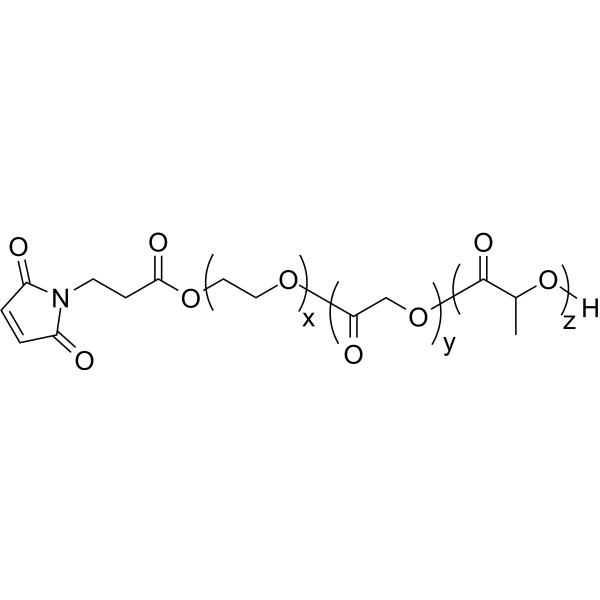
PLGA-PEG-MAL (60kDa-3.4kDa, LA:GA ratio 75:25) is a biodegradable amphipathic polymeric nanocarrier of poly (lactic-co-glycolic acid)-block-poly (ethylene glycol) (PLGA-PEG-Mal) that allows covalent modification of functional molecules. PLGA-PEG-MAL (60kDa-3.4kDa, LA:GA ratio 75:25) modified with Angiopep-2 can cross the blood-brain barrier and exhibits targeting selectivity for glioblastoma cells. PLGA-PEG-MAL (60kDa-3.4kDa, LA:GA ratio 75:25) can capture tumor-derived protein antigens, and exerts immunomodulatory effects when conjugated with anti-OX40 antibody; when used in combination with A2-CL/Dbait nanoparticles and radiotherapy, it prolongs survival time and reduces tumor volume in glioblastoma mouse models. PLGA-PEG-MAL (60kDa-3.4kDa, LA:GA ratio 75:25) can be used for studies related to bacterial wound infections and glioblastoma .
loading...
    loading...
Cat. No.: HY-W015954R
CAS No.: 24347-58-8
(2R,3R)-Butane-2,3-diol (Standard) is the analytical standard of (2R,3R)-Butane-2,3-diol (HY-W015954). This product is intended for research and analytical applications. (2R,3R)-Butane-2,3-diol is a non-covalent, reversible agonist targeting lanthanum (La 3+)-sensitive calcium channels in bacteria (e.g., Escherichia coli) with an EC50 of approximately 25 mM. (2R,3R)-Butane-2,3-diol binds to calcium channel proteins or related complexes, induces channel opening, promotes extracellular calcium influx, and triggers intracellular calcium transients, which may regulate bacterial physiological activities such as growth, metabolism, and signal transduction. (2R,3R)-Butane-2,3-diol mediates bacterial-host cell signaling interactions and affects the metabolic balance of intestinal microorganisms, and can be used to study lactose intolerance and other related diseases .
loading...
    loading...
Cat. No.: HY-153552
CAS No.: 2758337-19-6
Target:  

FAP

Research Areas:  

Cancer

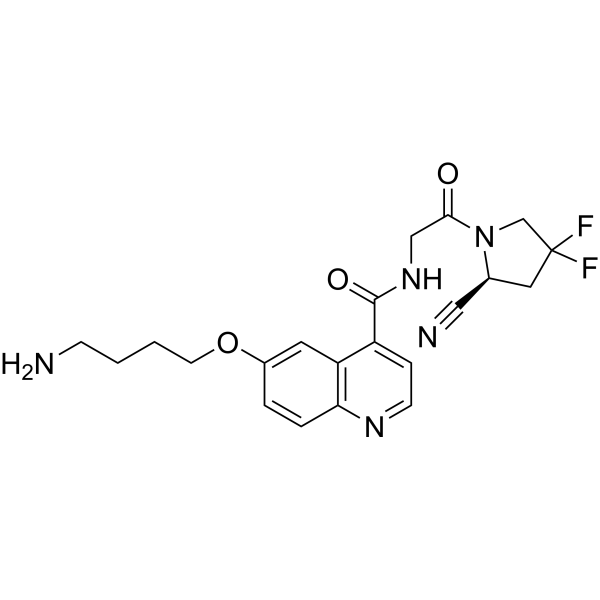
NH2-UAMC1110 is an aminobutoxy derivative of the fibroblast activation protein (FAP) inhibitor UAMC1110 (HY-100684), and is a precursor compound for the synthesis of FAP inhibitor probes, not directly used in bioactivity experiments. For example, NH2-UAMC1110 is involved in the synthesis of the radiotracer FAPI-QS, which exhibits high tumor selectivity and high dose-response, and has been used for tumor diagnosis. NH2-UAMC1110 introduces an active amino group into its structure, enabling it to form covalent bonds with various molecules (such as DOTA, DATA5m, radionuclide chelators, etc.), thereby synthesizing molecular imaging probes or targeted compounds with the ability to target FAP. NH2-UAMC1110 specifically binds to the FAP active site, inhibiting its proline-selective serine protease activity (including dipeptidyl peptidase and endopeptidase activity), blocking FAP-mediated tissue remodeling processes. Its key activity is high targeting and high affinity, and its core function is to be coupled with bifunctional chelators (such as DOTA, DATA5m) as a targeting module. NH2-UAMC1110 can be applied to diagnostic imaging studies of tumors expressing FAP (such as colorectal cancer, pancreatic cancer, etc.), and also provides molecular tools for targeted research of FAP-related diseases with high FAP expression, such as fibrosis and arthritis .
loading...
    loading...
Cat. No.: HY-153552A
CAS No.: 2990021-73-1
Purity:  99.89%
Target:  

FAP

Research Areas:  

Cancer

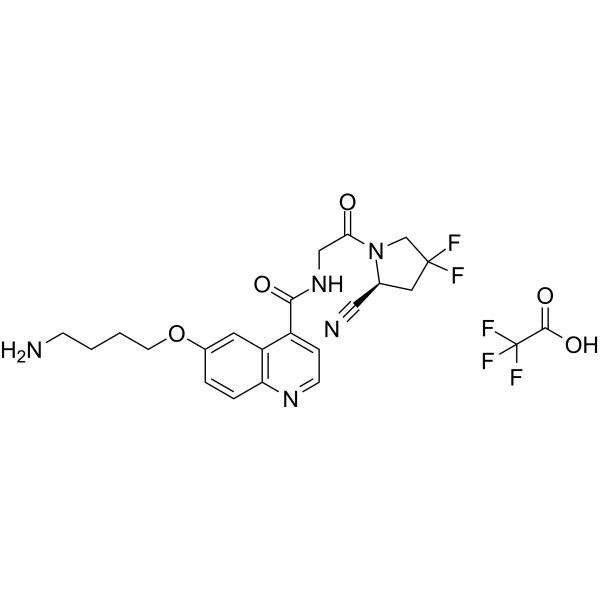
NH2-UAMC1110 TFA is an aminobutoxy derivative of the fibroblast activation protein (FAP) inhibitor UAMC1110 (HY-100684), and is a precursor compound for the synthesis of FAP inhibitor probes, not directly used in bioactivity experiments. For example, NH2-UAMC1110 TFA is involved in the synthesis of the radiotracer FAPI-QS, which exhibits high tumor selectivity and high dose effect, and has been used in tumor diagnosis. NH2-UAMC1110 TFA structurally incorporates an active amino group, allowing it to form covalent bonds with various molecules (such as DOTA, DATA5m, radionuclide chelators, etc.) to synthesize molecular imaging probes or targeted compounds with the ability to target FAP. NH2-UAMC1110 TFA specifically binds to the FAP active site, inhibiting its proline-selective serine protease activity (including dipeptidyl peptidase and endopeptidase activity), blocking FAP-mediated tissue remodeling-related processes. Its key activity is high targeting and high affinity, and its core function is to act as a targeting module coupled with bifunctional chelators (such as DOTA, DATA5m). NH2-UAMC1110 TFA can be applied to diagnostic imaging studies of tumors expressing FAP (such as colorectal cancer, pancreatic cancer, etc.), and also provides molecular tools for targeted research of FAP-related diseases with high FAP expression, such as fibrosis and arthritis .
loading...
    loading...
Cat. No.: HY-D3103
CAS No.: 1027058-07-6
Target:  

Fluorescent Dye

Research Areas:  

Others

CMTDP is a Fluorescent probe for detecting local polarity changes around the Cys34 domain of bovine serum albumin during pH-induced N→B conformational transition. It is a thiol-specific and polarity-sensitive probe; it covalently labels the free cysteine residue at position 34 (Cys34) of bovine serum albumin, and its fluorescence maximum emission wavelength shifts in response to solvent polarity, but not to pH and temperature. When labeled to BSA, as the local polarity around the Cys34 domain increases with rising pH, the probe shows a bathchromic shift in fluorescence emission wavelength and a decrease in fluorescence intensity, which allows quantification of the local polarity change via the relationship between emission wavelength shift and dielectric constant. CMTDP itself has absorption peaks at ~392 and 508 nm, and CMTDP-labeled BSA has excitation maxima at 376 and 470 nm at pH 6.0, with the shorter-wavelength excitation peak red-shifting as pH increases while the longer one remains stable; when excited at 470 nm, the fluorescence emission maximum shifts from 570 nm at pH 6.0 to 577 nm at pH 9.1, while free CMTDP at pH 7.4 has an emission maximum at 621 nm. The excitation/emission wavelengths for CMTDP-labeled BSA are Ex/Em = 376/570 nm at pH 6.0, Ex/Em = ~376+/573 nm at pH 7.4, Ex/Em = ~376+/575 nm at pH 8.0, Ex/Em = ~376+/577 nm at pH 9.1, and for free CMTDP at pH 7.4, Ex/Em (when excited at 470 nm) = 470/621 nm[1].
loading...
    loading...

