1675 Results for "

prostate

" in MedChemExpress (MCE) Product Catalog:
Products (1675)

1675 Results for "prostate" in MCE Product Catalog:

Cat. No.: HY-184823
CAS No.: 1417634-25-3
Target:  

Casein Kinase

Research Areas:  

Cancer

CK2-IN-17 is a protein kinase CK2 inhibitor with an IC50 of 9.5 μM against human targets. CK2-IN-17 regulates the activity of protein kinase CK2 by interacting with its ATP-binding site. CK2-IN-17 can be used in studies related to protein kinase CK2-mediated pathways, such as tumors .
loading...
    loading...
Cat. No.: HY-186218
CAS No.: 3083422-10-7
Target:  

PROTACs PIN1

Research Areas:  

Cancer

PROTAC PIN1 degrader-2 is a PROTAC PIN1 degrader. PROTAC PIN1 degrader-2 reduces PIN1-mediated oncogene expression, upregulates PIN1-inhibited tumor suppressor genes, and exerts killing effects on cancer cells. PROTAC PIN1 degrader-2 inhibits tumor growth in breast cancer mouse xenograft models. PROTAC PIN1 degrader-2 can be used for the research of breast cancer .
loading...
    loading...
Cat. No.: HY-40351
CAS No.: 3680-69-1
4-Chloro-7H-pyrrolo[2,3-d]pyrimidine is a nitrogen-containing heterocyclic organic synthesis intermediate that can be used for the synthesis of JAK and PKB/Akt inhibitors .
loading...
    loading...
Cat. No.: HY-P1654
CAS No.: 932699-03-1
Target:  

Integrin

Research Areas:  

Cancer

A20FMDV2 is a highly selective αvβ6 integrin inhibitor with human IC50 values of 3 nM and binds with at least 1000-fold selectivity over other RGD-binding integrins. A20FMDV2 binds to the integrin’s RGD-binding site, induces rapid integrin internalization, and delays post-internalization integrin recycling to the cell surface. A20FMDV2 can be used for the research of pancreatic cancer, breast cancer, colorectal cancer, ovarian cancer, oral squamous cell carcinoma .
loading...
    loading...
Cat. No.: HY-W224634
CAS No.: 304453-52-9
Target:  

HSP

Research Areas:  

Cancer

HSF1-IN-2 (Compound 0048) is a HSF1 inhibitor. HSF1-IN-2 is applicable to cancer research .
loading...
    loading...
Cat. No.: HY-N20674
CAS No.: 76472-89-4
Chalcomoracin is an orally active anticancer agent. Chalcomoracin exhibits anticancer, antibacterial, and α-glucosidase inhibitory activities, with an IC50 of 14.23 µM against yeast α-glucosidase and an IC50 of 5.5 μM against FabI of Staphylococcus aureus. Chalcomoracin reduces the phosphorylation levels of ERK, JNK, and P38; enhances the phosphorylation level of ERK1/2; regulates the MAPK, mTOR, AKT, and p53 signaling pathways; upregulates the expression of Chop, Bip, PINK1, GRP78, and GADD153; and downregulates the expression of Alix. Chalcomoracin induces apoptosis (apoptosis), endoplasmic reticulum stress (endoplasmic reticulum stress), paraptosis (paraptosis), ROS production, mitophagy (mitophagy), and autophagy (autophagy); it inhibits cancer cell viability, colony-forming ability, migration, invasion, proliferation, tumorigenesis, fatty acid synthesis, S. aureus growth, vitreous-stimulated retinal cell activity, and cell cycle progression at the G0/G1 phase. Chalcomoracin can be used in research related to hepatocellular carcinoma, non-small cell lung cancer, triple-negative breast cancer, prostate cancer, proliferative vitreoretinopathy, pancreatic cancer, diabetes, and bacterial infections .
loading...
    loading...
Cat. No.: HY-101008
CAS No.: 133399-65-2
3-MPPI is a GPCR ligand with high selectivity for α1-adrenergic receptor, with a Ki value of 0.21 nM for α1-adrenergic receptor and 50 nM for 5-HT1A receptor. 3-MPPI modulates the α1-adrenergic receptor signaling cascade. 3-MPPI is applicable to research related to hypertension, stress-induced anxiety-like behavioral responses, and levodopa-induced dyskinesia .
loading...
    loading...
Cat. No.: HY-156242
CAS No.: 1906915-49-8
Research Areas:  

Cancer

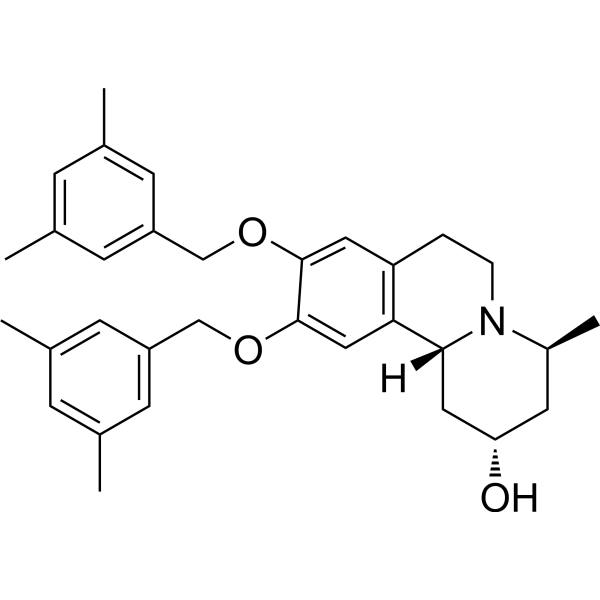
BQZ-485 is a GDI2 inhibitor and a paraptosis inducer with antitumor activity. BQZ-485 binds to the Rab-binding platform domain of GDI2, disrupts the interaction between GDI2 and Rab1A, and impairs the membrane recycling of Rab1A. BQZ-485 blocks vesicle trafficking from the endoplasmic reticulum to the Golgi apparatus, and induces endoplasmic reticulum expansion, endoplasmic reticulum fusion, endoplasmic reticulum stress, unfolded protein response and cytoplasmic vacuolization. BQZ-485 is applicable to pancreatic cancer-related research .
loading...
    loading...
Cat. No.: HY-N17074
CAS No.: 2552582-20-2
Ethyl (10E,12E)-9-oxooctadeca-10,12-dienoate is a conjugated ketonic fatty acid that can be found in the leaves of Vernicia fordii. Ethyl (10E,12E)-9-oxooctadeca-10,12-dienoate shows no significant cytotoxic activity against cancer cells .
loading...
    loading...
Cat. No.: HY-P991577
Synonyms: DS-8895A

Target:  

Ephrin Receptor

Research Areas:  

Cancer

DS-8895(DS-8895A) is an anti-EphA2 monoclonal antibody with specific binding to EphA2 receptors and EphA2-expressing cells. DS-8895, when conjugated with 89Zr, 111In, or 125I, supports molecular imaging of EphA2 expression in xenograft models. DS-8895 allows noninvasive measurement of EphA2 expresssion in tumors in vivo. .
loading...
    loading...
Cat. No.: HY-W016589
CAS No.: 1879-09-0
Synonyms: 6-tert-Butyl-2,4-xylenol
2-(tert-Butyl)-4,6-dimethylphenol (6-tert-Butyl-2,4-xylenol) is an electrophilic alkylating agent, gasoline antioxidant and hydration substrate. 2-(tert-Butyl)-4,6-dimethylphenol inhibits SERCA activity in rabbit hindleg microsomes with an IC50 of 53 μM. Oxidation of 2-(tert-Butyl)-4,6-dimethylphenol generates the intermediate BDMP-QM, which covalently modifies nitrogen sites of proteins, polypeptides and free amino acids via Michael addition, triggering covalent modification of macromolecules and mediating cytotoxicity. 2-(tert-Butyl)-4,6-dimethylphenol is widely used in toxicological and biochemical studies of alkylphenols .
loading...
    loading...
Cat. No.: HY-117987
CAS No.: 145945-21-7
Purity:  99.39%
Synonyms: N-(Hydroxymethyl)thalidomide
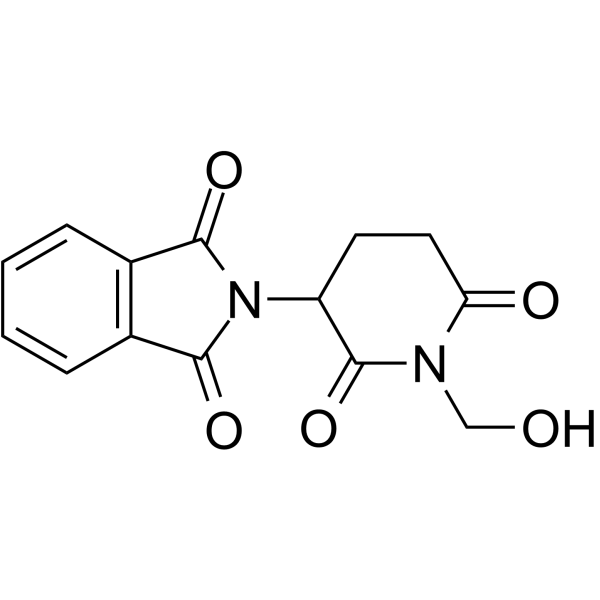
CPS-11 (N-(Hydroxymethyl)thalidomide) a Thalidomide (HY-14658) analogue, is a potent anti-cancer agent. CPS-11 inhibits NF-κB, activates NFAT, and repress cytokine expression through elevated ROS. CPS-11 exhibits a wider activity spectrum and higher potency against MM (multiple myeloma) cell lines .
loading...
    loading...
Cat. No.: HY-147408
Purity:  99.60%
Synonyms: SHR9265
Research Areas:  

Cancer

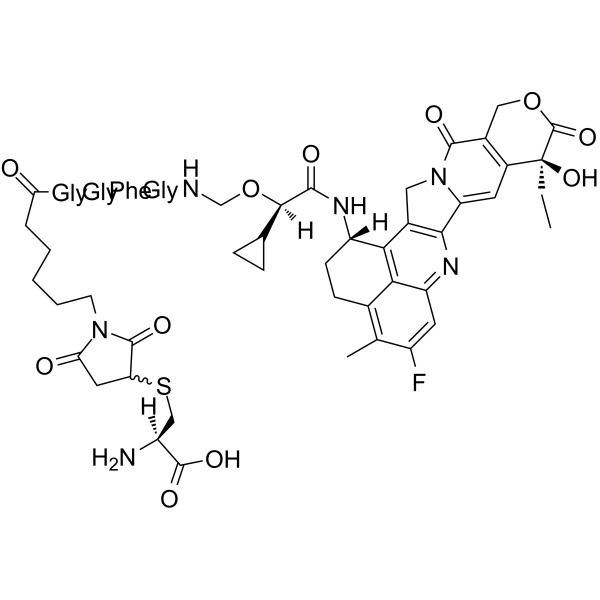
Rezetecan is a topoisomerase I inhibitor with cytotoxicity. Rezetecan can serve as an antibody-drug conjugate payload (ADC Payloads), for example, it participates in the synthesis of Tizetatug rezetecan (HY-177711). Rezetecan is applicable to research related to various cancers such as breast cancer and gastric cancer .
loading...
    loading...
Cat. No.: HY-159072
CAS No.: 2575682-08-3
Purity:  96.22%
Research Areas:  

Cancer

Mal-Val-Ala-PAB-N(SO2Me)-Exatecan (Compound LE14) is a conjugate of an ADC toxin Exatecan (HY-13631) and a linker Mal-Val-Ala-PAB-N(SO2Me). Mal-Val-Ala-PAB-N(SO2Me)-Exatecan can be used for synthesis of ADC FZ-AD005. FZ-AD005 is a delta-like ligand 3 (DLL3, KD=58.3 pM) targeting ADC, that exhibits antitumor efficacy against SCLC cancer .
loading...
    loading...
Cat. No.: HY-159072A
Mal-Val-Ala-PAB-N(SO2Me)-Exatecan TFA is a conjugate of an ADC toxin Exatecan (HY-13631) and a linker Mal-Val-Ala-PAB-N(SO2Me). Mal-Val-Ala-PAB-N(SO2Me)-Exatecan TFA can be used for synthesis of ADC FZ-AD005. FZ-AD005 is a delta-like ligand 3 (DLL3, KD=58.3 pM) targeting ADC, that exhibits antitumor efficacy against SCLC cancer .
loading...
    loading...
Cat. No.: HY-N17753
CAS No.: 60478-69-5
Synonyms: NSC-698789
Protoneodioscin is a furostanol saponin found in the rhizomes of Dioscorea collettii var. hypoglauca. It exhibits selective activity against various cancer cell lines, including leukemia, but shows no activity against colon and renal cancer cells. Protoneodioscin can be used in research on cancers such as leukemia .
loading...
    loading...
Cat. No.: HY-P3371
CAS No.: 2484870-92-8
Synonyms: DS-7300a; MABX-9001a; I-DXd
Ifinatamab deruxtecan (DS-7300a) is a B7-H3-targeting Antibody-drug conjugate (ADC), which is composed of a humanized anti-B7-H3 monoclonal antibody, an enzymatically cleavable peptide-based linker, and Exatecan derivative (DXd) (HY-13631D). Ifinatamab deruxtecan is a DNA Topoisomerase I inhibitor. Ifinatamab deruxtecan induces Apoptosis. DS-7300a exerts potent antitumor activities against B7-H3-expressing tumors. against rhabdomyosarcoma, endometrial adenocarcinoma and lung adenocarcinoma. Ifinatamab deruxtecan does not exert direct immunomodulatory effects
loading...
    loading...
Cat. No.: HY-P992374
Synonyms: DMB5F3; chDMB5F3

Target:  

Mucin

Research Areas:  

Cancer

huDMB5F3 (DMB5F3; chDMB5F3) is a human monoclonal antibody against human CD227/MUC1, with a Ka value of 5.89 pM for its human target. huDMB5F3 enters MUC1-positive cancer cells via a temperature-dependent internalization process. huDMB5F3 induces cytotoxicity in MUC1-positive cancer cells. huDMB5F3 can be used in the research of various cancers including breast cancer, pancreatic cancer and gastric cancer .
loading...
    loading...
Cat. No.: HY-131384
CAS No.: 34262-64-1
Synonyms: 8,11,14-Icosatriynoic acid
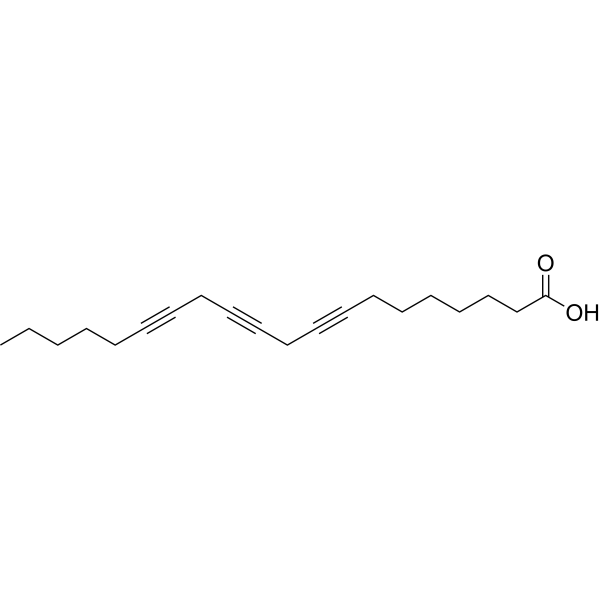
8,11,14-Eicosatriynoic Acid, as an inhibitor of prostaglandin, leukotriene biosynthesis, and arachidonic acid-induced platelet aggregation, blocks human 12-lipoxygenase (12-LO), cyclooxygenase (COX)and 5-lipoxygenase (5-LO) with IC50 values of 0.46 μM, 14 μMand 25 μM, respectively. In addition, 8,11,14-Eicosatriynoic Acid inhibits the action of slow-reacting substances of allergic reactions, with IC50 value of 10 μM. Lipoxygenase is widely found in fungi, plants and animals. 12-LO involves in many important disease states and may play a role in oxidative glutamate toxicity. COX enzymes play complex roles in human physiology and pathology involving the neuronal, immune, renal, cardiovascular, gastrointestinal and reproductive systems. COX enzymes are blocked by aspirin and a variety of other NSAIDs, which makes them clinically important. 5-LO involves in cancer pathology. It is expressed by a variety of cancer cells, including colon, lung, breast, and prostate cancers, and promotes cancer cell growth and neovascularization . 8,11,14-Eicosatriynoic acid is a click chemistry reagent, it contains an Alkyne group and can undergo copper-catalyzed azide-alkyne cycloaddition (CuAAc) with molecules containing Azide groups.
loading...
    loading...
Cat. No.: HY-N11231
CAS No.: 7176-02-5
Fucoxanthinol, a carotenoid, is a deacetylated Fucoxanthin (HY-N2302) metabolite with oral activity, and inhibits rat pancreatic lipase with an IC50 of 764 nM. Fucoxanthinol reduces expression of Bcl-2, Bcl-xL, survivin, XIAP, cIAP2, cyclin D1, cyclin D2, cyclin E, CDK4, CDK6, β-catenin, JunD, PPARγ, and induces GADD45α expression. Fucoxanthinol activates caspase-3, caspase-8, caspase-9, Nrf2/Keap1/ARE pathway, and inhibits activation of Akt, NF-κB, AP-1, PDPK1, GSK3β phosphorylation. Fucoxanthinol induces apoptosis, G0/G1 cell cycle arrest, inhibits cancer cell viability, proliferation, migration, invasiveness, tumour growth, adipocyte differentiation, oxidative stress, neurotoxicity, triglyceride absorption, angiogenesis, and obesity-induced inflammation. Fucoxanthinol can be used for the research of osteosarcoma, leukemia, lymphoma, adult T-cell leukemia, prostate cancer, colon cancer, breast cancer, hypertriglyceridaemia, Alzheimer’s disease, Parkinson’s disease, obesity, insulin resistance, malignant melanoma, and type II diabetes .
loading...
    loading...