178 Results for "

parasitic

" in MedChemExpress (MCE) Product Catalog:
Products (178)

178 Results for "parasitic" in MCE Product Catalog:

Cat. No.: HY-W012657R
CAS No.: 4748-78-1
4-Ethylbenzaldehyde (Standard) is the analytical standard of 4-Ethylbenzaldehyde (HY-W012657). This product is intended for research and analytical applications. 4-Ethylbenzaldehyde is an aldehyde type organic compound with an almond-like odor. 4-Ethylbenzaldehyde is naturally present in various foods such as grilled meat, black tea, peanuts, etc. 4-Ethylbenzaldehyde has significant effects in controlling plant parasitic nematodes. 4-Ethylbenzaldehyde has genotoxicity and potential for liver damage in zebrafish models.
loading...
    loading...
Cat. No.: HY-N7448
CAS No.: 151716-18-6
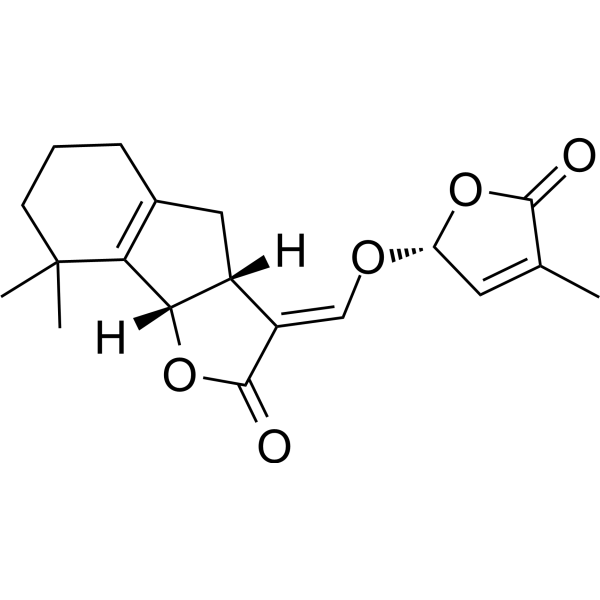
5-Deoxystrigol is a strigolactone found in Fabaceae plants. 5-Deoxystrigol can stimulate seed germination .
loading...
    loading...
Cat. No.: HY-N0078R
CAS No.: 20261-38-5
Synonyms: Ginkgolic acid (13:0) (Standard); Ginkgoneolic Acid (Standard); 6-Tridecylsalicylic acid (Standard)
Ginkgolic Acid (C13:0) (Standard) is the analytical standard of Ginkgolic Acid (C13:0) (HY-N0078). This product is intended for research and analytical applications. Ginkgolic Acid (C13:0) (Ginkgoneolic Acid) is an anti-cariogenic agent and a PI3Kδ inhibitor (IC50: 2.49 μM). Ginkgolic Acid (C13:0) exhibits antibacterial and anti-parasitic activities. Ginkgolic Acid (C13:0) can also inhibit mast cell degranulation (IC50: 2.40 μM) .
loading...
    loading...
Cat. No.: HY-187808
CAS No.: 257880-89-0
Insecticidal agent 38 is a AChE inhibitor and Insecticide, with an IC50 of 49.08 μg/mL against AChE. Insecticidal agent 38 inhibits the activities of SOD, Catalase and Glutathione-S-transferase. Insecticidal agent 38 induces intracellular ROS, lipofuscin and lipid accumulation, increases malondialdehyde levels, disrupts redox homeostasis and triggers oxidative damage. Insecticidal agent 38 inhibits the feeding and reproductive capabilities of the pine wood nematode (Bursaphelenchus xylophilus). Insecticidal agent 38 exhibits insecticidal activity against nematodes. Insecticidal agent 38 can be used in studies of plant-parasitic nematode infections .
loading...
    loading...
Cat. No.: HY-189501
CAS No.: 2569295-47-0
Research Areas:  

Others

MiZax5 is a zaxinone mimic and plant growth regulator (PGR) that negatively regulates strigolactone (SL) biosynthesis and release and promotes plant growth. MiZax5 downregulates the expression of SL biosynthesis-related genes D27, CCD7, CCD8, and carlactone oxidase, thereby reducing SL levels in rice roots and root exudates and further decreasing seed germination and emergence of the root parasitic plant Striga hermonthica. MiZax5 simultaneously promotes rice root growth and improves growth- and yield-related traits in various crops, making it useful for research related to plant growth regulation .
loading...
    loading...
Cat. No.: HY-W342283
CAS No.: 536-71-0
Diminazene is an antiparasitic agent widely used to treat parasitic diseases caused by hemoparasites (such as trypanosomes and babesia). Diminazene acts as an ACE2 activator and exerts cardiovascular protective effects by activating the ACE2/Ang-(1-7)/Mas receptor axis. By regulating gut microbiota-tryptophan metabolism, Diminazene inhibits the activation of core inflammatory signaling pathways including MAPK, STAT and NF-κB, increases central 5-HT levels, and suppresses splenic TNF-α production, thereby alleviating systemic inflammation .
loading...
    loading...
Cat. No.: HY-137007
CAS No.: 1496553-39-9
Target:  

Interleukin Related

Research Areas:  

Others Inflammation/Immunology

SMA-12b is a small molecule analogue of the parasitic worm compound ES-62. SMA-12b has immunomodulatory activity, acting by regulating the expression of multiple inflammatory response genes, especially those associated with inflammatory bodies. SMA-12b significantly reduces the expression of cytokine IL-1β associated with inflammatory bodies and inhibites the production of IL-1β through a mechanism mediated by NRF2. SMA-12b can be used in the study of rheumatoid arthritis (RA) and other autoimmune diseases .
loading...
    loading...
Cat. No.: HY-Y0532R
CAS No.: 128-09-6
Synonyms: Succinchlorimide (Standard)
N-Chlorosuccinimide (Standard) (Succinchlorimide (Standard)) is the analytical standard of N-Chlorosuccinimide (HY-Y0532). This product is intended for research and analytical applications. N-Chlorosuccinimide (Succinchlorimide) is an oxidizing, hydrolyzable biochemical reagent with bactericidal and amoebicidal activities. N-Chlorosuccinimide can either form N-chloramines via concerted transfer of Cl + or hydrolyze in aqueous solution to produce hypochlorous acid/hypochlorite. N-Chlorosuccinimide is effective in killing Shigella dysenteriae, Escherichia typhi and cysts of Entamoeba histolytica. N-Chlorosuccinimide can be formulated into fast-dispersing, fully soluble water purification tablets. N-Chlorosuccinimide is used in studies related to bacterial infections and parasitic infections .
loading...
    loading...
Cat. No.: HY-148969
CAS No.: 1250273-31-4
Target:  

Others

Research Areas:  

Cancer

FPPS-IN-1 is a potent non-bisphosphonate Farnesyl pyrophosphate synthase (FPPS) inhibitor with an IC50 0.2 μM. FPPS-IN-1 can be used for the research of cancers .
loading...
    loading...
Cat. No.: HY-153021
CAS No.: 326879-46-3
Purity:  ≥98.0%
Target:  

Parasite

Research Areas:  

Infection

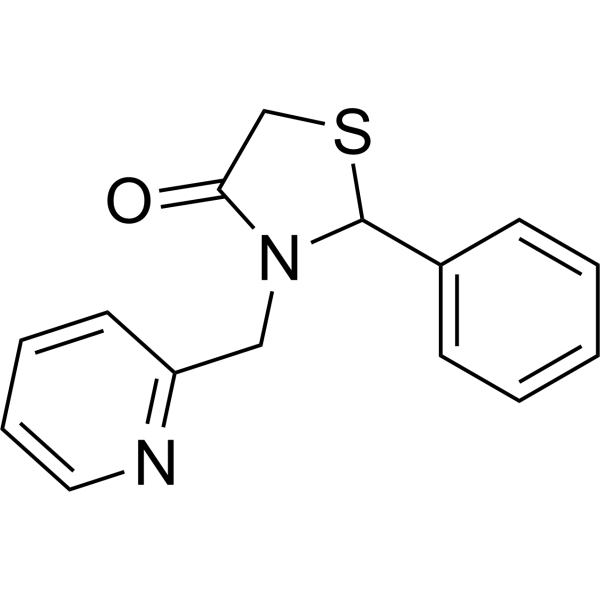
NMT-IN-1 is a Trypanosoma brucei N-myristoyltransferase (TbNMT) inhibitor, with an IC50 of 31 μM against TbNMT and an IC50 of 66 μM against hNMT. As a thiazolidinone hit compound identified via virtual screening, NMT-IN-1 exerts enzymatic inhibitory effects by binding to the active site of TbNMT. NMT-IN-1 adopts a binding mode distinct from that of pyrazole sulfonamide inhibitors and can inhibit the myristoyl transfer reaction catalyzed by TbNMT. NMT-IN-1 is mainly used in the research of anti-parasitic lead compounds for human African trypanosomiasis (African sleeping sickness). It provides a structural basis for the subsequent optimization of TbNMT inhibitors with high activity, high selectivity and blood-brain barrier permeability .
loading...
    loading...
Cat. No.: HY-115364A
CAS No.: 83601-81-4
Synonyms: SKF 29044 hydrochloride
Research Areas:  

Infection Cancer

Parbendazole hydrochloride (SKF‑29044 hydrochloride) is an orally active benzimidazole carbamate compound with multiple biological activities. Parbendazole hydrochloride binds to free tubulin and inhibits microtubule polymerization; it also activates the JNK/c‑Jun signaling axis and upregulates the expression of the downstream axonal repulsion factor Sema3A. Parbendazole hydrochloride upregulates KAL-1 mRNA expression, reduces nerve growth factor levels, and promotes the terminal differentiation of normal human epidermal keratinocytes. Parbendazole hydrochloride induces apoptosis in differentiated acute myeloid leukemia monocytes and exerts antileukemic activity in a mouse xenograft model of acute myeloid leukemia. Parbendazole hydrochloride exhibits broad-spectrum anthelmintic activity against various animal nematodes. Parbendazole hydrochloride is used in research related to acute myeloid leukemia and parasitic infections .
loading...
    loading...
Cat. No.: HY-126638
CAS No.: 75731-43-0
Synonyms: NSC 324645
Marcfortine A is an indole alkaloid originally isolated from P. roqueforti. It has nematocidal activity against the parasitic nematode H. contortus (LD99=0.06 μg/mL) and inhibits motility of adult worms (EC50=2 μM). Marcfortine A eliminates H. contortus, T. colubriformis, and O. ostertagi from experimentally infected jirds (ED95s=0.33, 0.11, and 2.5 mg/animal, respectively). It dose-dependently inhibits nicotine-induced calcium mobilization in SH-SY5Y and TE-671 cells expressing α3 subunit-containing human nicotinic acetylcholine receptors (nAChRs) and muscle-type nAChRs, respectively.
loading...
    loading...
Cat. No.: HY-N10534
CAS No.: 71208-06-5
Synonyms: Lewis X
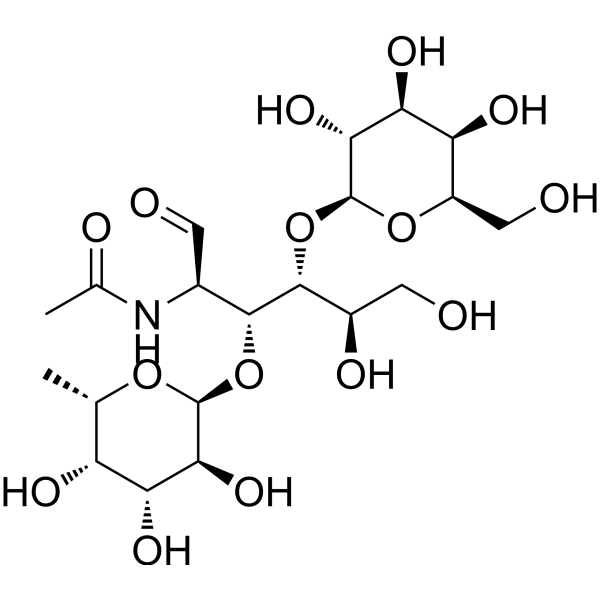
Lewis X trisaccharide (Lewis X, Le x) is a potent TH2 regulator, antagonizes LPS-induced IL-12 immune expression. Lewis X trisaccharide is a human histo-blood group antigen, plays an key role in cell-cell adhesion, and servers as a tumor marker. Lewis X trisaccharide is highly expressed in the outer membrane of the parasite, can be used for the immunology research of schistosomiasis .
loading...
    loading...
Cat. No.: HY-115364R
CAS No.: 14255-87-9
Synonyms: SKF 29044 (Standard)
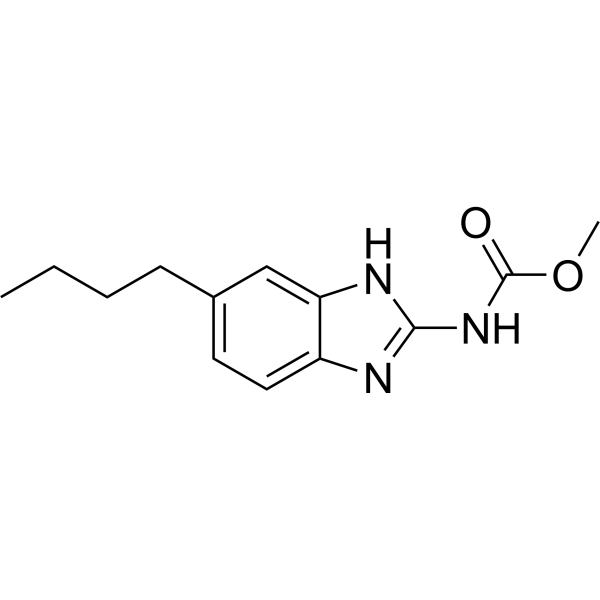
Parbendazole (Standard) (SKF 29044 (Standard)) is the analytical standard of Parbendazole (HY-115364). This product is intended for research and analytical applications. Parbendazole (SKF‑29044) is an orally active benzimidazole carbamate compound with multiple biological activities. Parbendazole binds to free tubulin and inhibits microtubule polymerization; it also activates the JNK/c‑Jun signaling axis and upregulates the expression of the downstream axonal repulsion factor Sema3A. Parbendazole upregulates KAL-1 mRNA expression, reduces nerve growth factor levels, and promotes the terminal differentiation of normal human epidermal keratinocytes. Parbendazole induces apoptosis in differentiated acute myeloid leukemia monocytes and exerts antileukemic activity in a mouse xenograft model of acute myeloid leukemia. Parbendazole exhibits broad-spectrum anthelmintic activity against various animal nematodes. Parbendazole is used in research related to acute myeloid leukemia and parasitic infections .
loading...
    loading...
Cat. No.: HY-115364S
CAS No.: 1613439-58-9
Synonyms: SKF 2904-d3
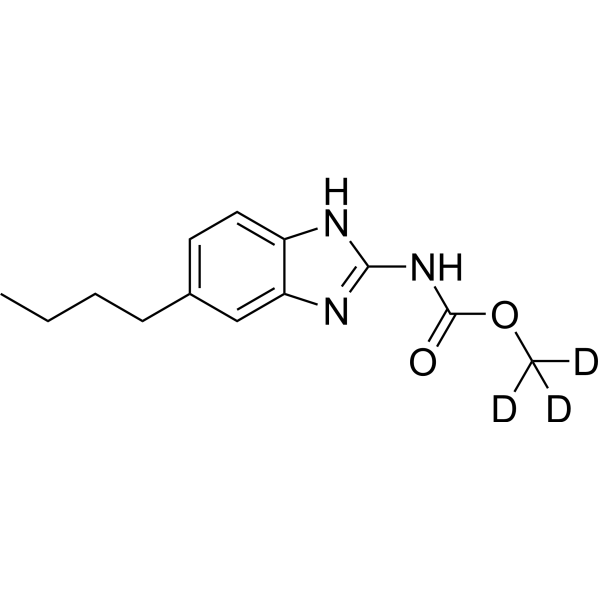
Parbendazole-d3 (SKF 2904-d3) is the deuterated-labeled Parbendazole (HY-115364). Parbendazole (SKF‑29044) is an orally active benzimidazole carbamate compound with multiple biological activities. Parbendazole binds to free tubulin and inhibits microtubule polymerization; it also activates the JNK/c‑Jun signaling axis and upregulates the expression of the downstream axonal repulsion factor Sema3A. Parbendazole upregulates KAL-1 mRNA expression, reduces nerve growth factor levels, and promotes the terminal differentiation of normal human epidermal keratinocytes. Parbendazole induces apoptosis in differentiated acute myeloid leukemia monocytes and exerts antileukemic activity in a mouse xenograft model of acute myeloid leukemia. Parbendazole exhibits broad-spectrum anthelmintic activity against various animal nematodes. Parbendazole is used in research related to acute myeloid leukemia and parasitic infections .
loading...
    loading...
Cat. No.: HY-L007
8,643 compounds

The immune system is a host defense system comprising many biological structures and processes within an organism that protects against disease. To function properly, an immune system must detect a wide variety of agents, known as pathogens, from viruses to parasitic worms, and distinguish them from the organism's own healthy tissue. Inflammation is also the body's attempt at self-protection to remove harmful stimuli and begin the healing process. It’s part of the body's immune response. The immune system recognizes damaged cells, irritants, and pathogens, and inflammation begins the healing process. Inflammatory abnormalities are a large group of disorders that underlie a vast variety of human diseases. The immune system is often involved with inflammatory disorders, demonstrated in both allergic reactions and some myopathies, with many immune system disorders resulting in abnormal inflammation.

MCE designs a unique collection of 8,643 compounds that are useful tool for Immunology/Inflammation research or autoimmune inflammatory diseases drug discovery.

Cat. No.: HY-N8392
CAS No.: 1186217-42-4
Target:  

Parasite

Research Areas:  

Infection

Ascr#9 is a small-molecule pheromone belonging to the ascaroside family, and it is widely present in nematodes. Ascr#9 promotes dispersal or elicits avoidance behavior in various nematode species (such as Caenorhabditis elegans and entomopathogenic nematodes), suggesting that individuals evacuate from adverse environments. Ascr#9 exhibits repellent potential in Meloidogyne incognita .
loading...
    loading...
Cat. No.: HY-153932
CAS No.: 2550399-06-7
Research Areas:  

Infection Cancer

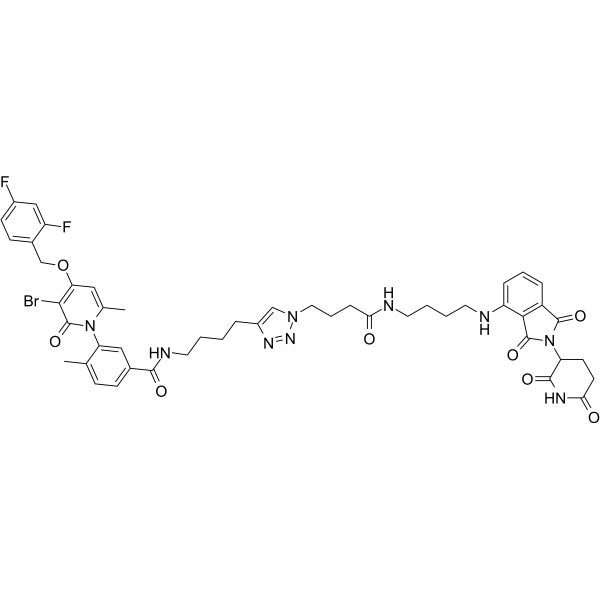
NR-7h is a selective p38α/p38β MAPK PROTAC degrader with multiple activities including anti-leishmanial, anti-malarial, and anti-Mayaro virus properties. NR-7h induces specific degradation of p38α/p38β isoforms and p38-MAPK via the ubiquitin-proteasome system. NR-7h reduces the load of Leishmania donovani, modulates the cytokine profile toward a pro-inflammatory phenotype, and enhances the oxidative burst of macrophages. NR-7h inhibits the growth of Plasmodium falciparum in human red blood cells and merozoite invasion. NR-7h reduces the replication of Mayaro virus and the expression of E1 protein in primary human dermal fibroblasts. NR-7h can be used in studies related to parasitic infections, viral infections, and breast cancer .
loading...
    loading...

