195 Results for "

outer

" in MedChemExpress (MCE) Product Catalog:
Products (195)

195 Results for "outer" in MCE Product Catalog:

Cat. No.: HY-W654100
Cefepime-d3 (BMY-28142-d3) sulfate is deuterium labeled Cefepime sulfate. Cefepime sulfate is a broad-spectrum, blood-brain barrier-permeable cephalosporin antibiotic with hPON1 inhibitory activity, with an IC50 of 21.115 mM and a Ki of 35.092 mM. Cefepime sulfate inhibits hPON1 via a non-competitive mechanism and blocks GABAA receptors. Cefepime sulfate penetrates the outer membrane of Gram-negative bacteria, inhibits the growth of Gram-positive and Gram-negative bacteria, and does not induce the production of β-lactamase.
loading...
    loading...
Cat. No.: HY-L029
2,080 compounds

Autophagy is a lysosomal degradation pathway that is essential for cell survival, differentiation, development, and homeostasis. The process of autophagy in mammalian cells is as follows: a portion of cytoplasm, including organelles, is enclosed by a phagophore or isolation membrane to form an autophagosome. The outer membrane of the autophagosome subsequently fuses with the endosome and then the lysosome, and the internal material is degraded. Autophagy plays a wide variety of physiological and pathophysiological roles. Defective autophagy contributes to various pathologies, including infections, cancer, neurodegeneration, aging, and heart disease.

MCE provides a unique collection of 2,080 autophagy pathway-related compounds that is a useful tool for the research of autophagy-related regulation and diseases.

Cat. No.: HY-108595R
CAS No.: 313505-85-0
Research Areas:  

Others

VU590 (Standard) is the analytical standard of VU590 (HY-108595). This product is intended for research and analytical applications. VU590 is a potent and moderately selective ROMK (Kir1.1) inhibitor, with an IC50 of 290 nM. VU590 also inhibits Kir7.1, with an IC50 of 8 μM. VU590 is not a good probe of ROMK function in the Kidney .
loading...
    loading...
Cat. No.: HY-110076
CAS No.: 1783987-83-6
Target:  

Potassium Channel

Research Areas:  

Others

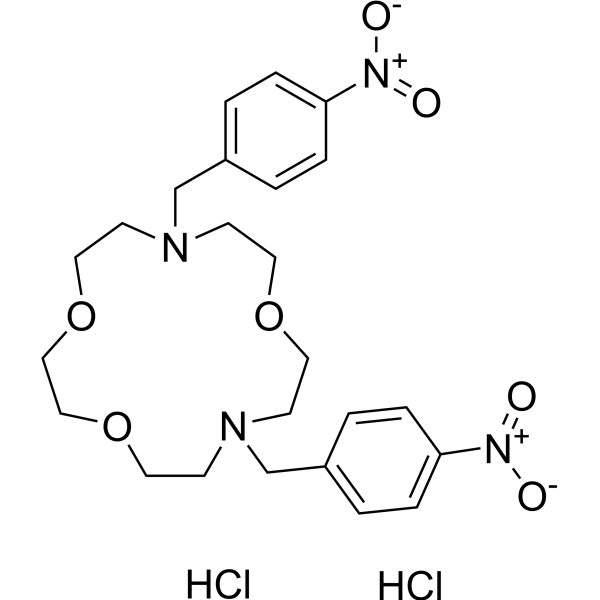
VU590 dihydrochloride is a potent and moderately selective ROMK (Kir1.1) inhibitor, with an IC50 of 290 nM. VU590 also inhibits Kir7.1, with an IC50 of 8 μM. VU590 dihydrochloride is not a good probe of ROMK function in the kidney .
loading...
    loading...
Cat. No.: HY-185180
CAS No.: 14836-73-8
Research Areas:  

Others

Ferrioxamine B is a bacterial desferrioxamine siderophore produced by actinomycetes. Ferrioxamine B acts as a ligand for FpvB and FoxA, and is transported into Pseudomonas aeruginosa via the FpvB and FoxA transporters. Ferrioxamine B competitively binds to FpvB, thereby antagonizing the uptake of thiostrepton into Pseudomonas aeruginosa. Ferrioxamine B can provide an iron source to support the growth of Pseudomonas aeruginosa under iron-limiting conditions .
loading...
    loading...
Cat. No.: HY-122658
CAS No.: 373370-73-1
Synonyms: MB-1
Research Areas:  

Metabolic Disease

MitoBloCK-1 (MB-1) is an inhibitor that blocks the import of substrates that use the TIM22 import pathway. MitoBloCK-1 inhibits import by preventing binding of substrate to tim9/10 complex to the substrate, thus the substrate failed to be reach the TIM22 translocon. MitoBloCK-1 inhibits protein import of TIM22 substrates into mitochondria. MitoBloCK-1 attenuates the import of the carrier proteins including the ADP/ATP and phosphate carriers. MitoBloCK-1 also inhibits the import of an additional carrier protein, PiC, and the outer membrane protein Tom40 .
loading...
    loading...
Cat. No.: HY-144255
Research Areas:  

Infection

Antibacterial agent 70 is an antibacterial agent that interacts with DNA, with a MIC value of 0.5 μg/mL against K. pneumonia and A. baumanii. Antibacterial agent 70 exhibits rapid bactericidal activity, low cytotoxicity to mammalian cells, and low tendency to induce drug resistance. Antibacterial agent 70 intercalates into DNA, disrupts bacterial membrane integrity, increases intracellular ROS production, reduces GSH activity, regulates membrane depolarization, enhances outer membrane permeability, and induces inner membrane damage. Antibacterial agent 70 can be used in studies related to multidrug-resistant bacterial infections and infections caused by drug-resistant Gram-negative pathogens .
loading...
    loading...
Cat. No.: HY-P11733
Target:  

Bacterial

Research Areas:  

Infection

(KFF)3K-acpP is an antibacterial agent conjugating of cell penetrating peptide (KFF)3K (HY-P10556) and acpP
peptide nucleic acid. (KFF)3K-acpP binds to the translation start site region of acpP mRNA, sterically blocking ribosome binding and inhibiting translation of the acyl carrier protein. (KFF)3K-acpP induces bacterial envelope stress response pathways, and triggers depletion of outer membrane protein F (ompF) transcript. (KFF)3K-acpP can be used for the research of infections .
loading...
    loading...
Cat. No.: HY-182020
Target:  

Bacterial

Research Areas:  

Infection

LpxH-IN-3 is a Klebsiella pneumoniae LpxH inhibitor with an IC50 of 0.17 μM. LpxH-IN-3 binds to the L-shaped hydrophobic binding pocket of Klebsiella pneumoniae LpxH, forms hydrogen bonds and other interactions with key residues, disrupts lipid A biosynthesis, and induces bacterial death. LpxH-IN-3 exhibits moderate antibacterial activity against Klebsiella pneumoniae and Escherichia coli. LpxH-IN-3 can be used for the research of klebsiella pneumoniae infection .
loading...
    loading...
Cat. No.: HY-202273
CAS No.: 37280-35-6
Target:  

Bacterial

Research Areas:  

Infection

Capreomycin IA is a bactericidal agent targeting bacterial ribosomes, with activity limited primarily to mycobacteria. Capreomycin IA blocks translocation of peptidyl-transfer RNA from the A to the P site to inhibit protein synthesis. Capreomycin IA exerts activity against Mycobacterium tuberculosis. Capreomycin IA can be used for the research of tuberculosis .
loading...
    loading...
Cat. No.: HY-D3446
CAS No.: 2358677-26-4
PA-SiR-Halo is a photoactivatable fluorophore targeting HaloTag. When bound to HaloTag, PA-SiR-Halo stabilizes its fluorescent form under physiological pH. After conjugation and photoactivation, it exhibits enhanced resistance to nucleophiles, and enables live-cell confocal imaging, fixed-cell single-molecule localization microscopy imaging, live-cell single-particle tracking, as well as live-cell single-molecule localization microscopy imaging of dynamic mitochondrial structures without the need for washing .
loading...
    loading...
Cat. No.: HY-184639
Carboxylated magnetic microspheres (low nonspecificity) are functionalized nano- or micron-sized magnetic particles with abundant carboxyl functional groups on their surface. Special chemical treatments reduce the likelihood of nonspecific adsorption. This 1μm carboxylated magnetic microsphere features a core-shell structure: a PS core, an outer layer of iron oxide (Fe3O4), and an outermost encapsulation layer. The carboxyl groups are obtained through polymer modification. Exhibiting low nonspecific adsorption, these microspheres can covalently couple with bioligands such as peptides, proteins, antibodies, and oligonucleotides using specific chemical reagents (e.g., EDC), making them particularly suitable for cell sorting, affinity chromatography, and immunoassay.
loading...
    loading...
Cat. No.: HY-B0764B
CAS No.: 362-74-3
Synonyms: Dibutyryl cAMP; DBcAMP
Bucladesine (Dibutyryl cAMP; DBcAMP) is a membrane-permeable 3′, 5′-cyclic adenosine monophosphate (cAMP) analog. Bucladesine selectively activates cAMP dependent protein kinase (PKA) by increasing the intracellular level of cAMP. Bucladesine significantly attenuates MDMA-induced increases in hippocampal mitochondrial ROS formation, mitochondrial outer membrane damage, cytochrome c release, and hippocampal ADP/ATP ratio, thereby improving spatial learning and memory impairments. Bucladesine exhibit anti-nociceptive and anti-inflammation effect. Bucladesine can inhibit cancer cells proliferation, induce apoptosis. Bucladesine can be used for the researches of neurological disease, cancer, inflammation .
loading...
    loading...
Cat. No.: HY-P11468
Target:  

Bacterial Antibiotic

Research Areas:  

Cardiovascular Disease Infection

wkwkwNGwkwkw-NH2 is a self-assembling β-hairpin antimicrobial peptide. wkwkwNGwkwkw-NH2 self-assembles into nanofibers. wkwkwNGwkwkw-NH2 interacts with LPS on the surface of the bacterial membrane and then disrupts the bacterial outer membrane, inner membrane, and cytoplasmic membrane to exert its antibacterial effects. wkwkwNGwkwkw-NH2 has high antibacterial activity and low hemolytic activity. wkwkwNGwkwkw-NH2 significantly reduces the S. aureus ATCC 25923 load at the skin wound. wkwkwNGwkwkw-NH2 displays synergistic effects when combined with antibiotics. wkwkwNGwkwkw-NH2 facilitates wound healing .
loading...
    loading...
Cat. No.: HY-W009123
CAS No.: 112-84-5
Synonyms: cis-13-Docosenamide
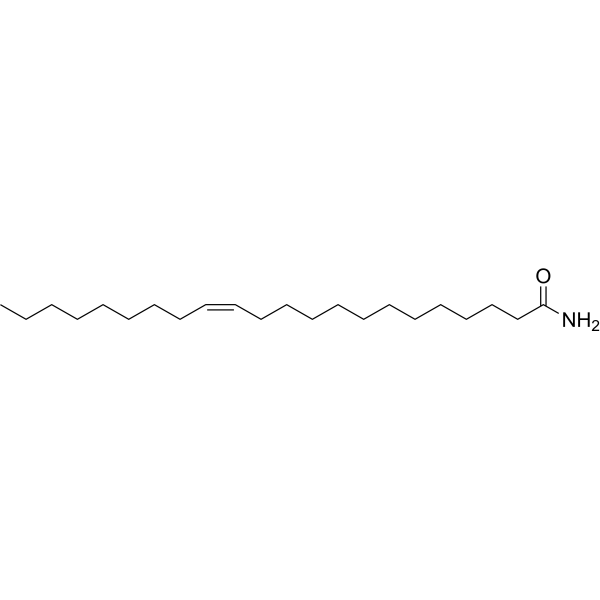
Erucamide is an orally active, blood-brain barrier-permeable TMEM19 ligand and T3SS inhibitor. Erucamide exerts retinal neuroprotective effects in mouse models of retinal degeneration. Erucamide attenuates depression- and anxiety-like behaviors in mice.\n\nErucamide binds to the conserved hydrophobic pocket in HrcC, disrupts its outer membrane localization, and blocks T3SS-mediated effector protein secretion in Gram-negative pathogenic bacteria. Erucamide enhances the antimicrobial immunity of plants against pathogenic bacteria. Erucamide can be used in research related to retinitis pigmentosa, anxiety and depression, bacterial wilt, and bacterial blight .
loading...
    loading...
Cat. No.: HY-175664
Target:  

RPE65

Research Areas:  

Metabolic Disease

EYE-003 is an orally active RPE65 inhibitor with an IC50 of 102 nM. EYE-003 regulates the visual cycle in mice by reducing 11-cis-retinal (11cRAL) (HY-116711) synthesis and increasing all-trans-retinyl esters (atREs). EYE-003 suppresses scotopic ERG b-wave amplitude and exerts protective effects against retinal degeneration in Abca4 ⁻/⁻ Rdh8 ⁻/⁻ mice (a STGD1 model) by reducing retinal autofluorescent puncta and preserving outer nuclear layer (ONL) thickness in a dose-dependent manner. EYE-003 can be used for the study of visual cycle-associated retinopathies, such as Stargardt disease type 1 (STGD1) .
loading...
    loading...
Cat. No.: HY-112356
CAS No.: 152075-98-4
Purity:  99.53%
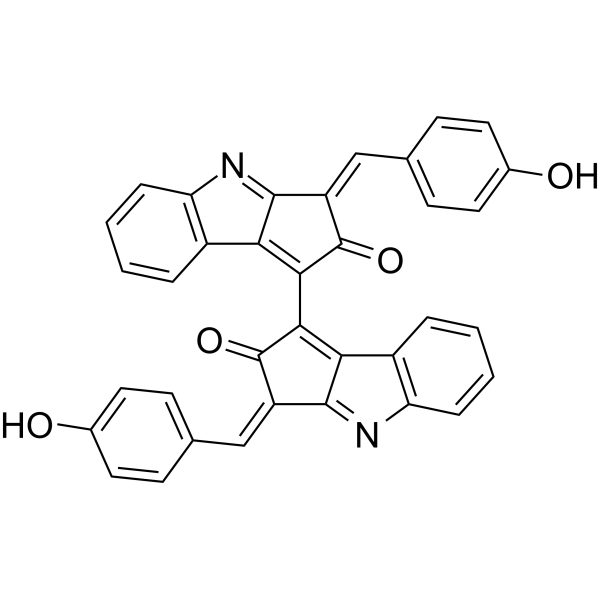
Scytonemin is a hydrophobic alkaloid pigment that can be isolated from the outer sheath of cyanobacteria. Scytonemin has protective function against short-wave solar ultraviolet (UV) radiation, which can reduce the generation of reactive oxygen species (ROS) and the formation of DNA damage. Scytonemin also has anti-inflammatory and anti-proliferative activities, produces concentration-dependent inhibition (IC50=2.0 μM) of polo-like kinase 1 (PLK1)-mediated cdc25C phosphorylation, and plays an important role in regulating the G2/M transition in the cell cycle. It can be used in the research of cancer, acute inflammation and sunscreen cosmetics .
loading...
    loading...
Cat. No.: HY-B0764R
CAS No.: 16980-89-5
Synonyms: Dibutyryl cAMP sodium (Standard); DBcAMP sodium (Standard)
Bucladesine (Dibutyryl cAMP; DBcAMP) sodium (Standard) is the analytical standard of Bucladesine sodiumn (HY-B0764). This product is intended for research and analytical applications. Bucladesine is a membrane-permeable 3′, 5′-cyclic adenosine monophosphate (cAMP) analog. Bucladesine selectively activates cAMP dependent protein kinase (PKA) by increasing the intracellular level of cAMP. Bucladesine significantly attenuates MDMA-induced increases in hippocampal mitochondrial ROS formation, mitochondrial outer membrane damage, cytochrome c release, and hippocampal ADP/ATP ratio, thereby improving spatial learning and memory impairments. Bucladesine exhibit anti-nociceptive and anti-inflammation effect. Bucladesine can inhibit cancer cells proliferation, induce apoptosis. Bucladesine can be used for the researches of neurological disease, cancer, inflammation .
loading...
    loading...
Cat. No.: HY-D3573
Research Areas:  

Others

AF488 C5 Maleimide is a thiol-reactive Fluorescent dye used to label target proteins and bacterial structures. AF488 C5 Maleimide irreversibly forms covalent thioether conjugates with cysteine ​​thiol groups. AF488 C5 Maleimide stabilizes pre-formed globular low-molecular-weight Tau protein oligomers by blocking cysteine-dependent tau protein aggregation, allowing observation of the internalization process of tau protein oligomers into neuronal cells via confocal microscopy. AF488 C5 Maleimide can label cysteine-modified pili; the outer membrane permeability varies among different bacterial species, allowing imaging via epifluorescence microscopy using a FITC filter set .
loading...
    loading...

