1. Search Result
Search Result
Results for "

α-synuclein fibril

" in MedChemExpress (MCE) Product Catalog:

17

Inhibitors & Agonists

1

Peptides

5

Natural
Products

Targets Recommended:
Art. -Nr. Produktname Target Forschungsgebiete Chemical Structure
  • HY-160116

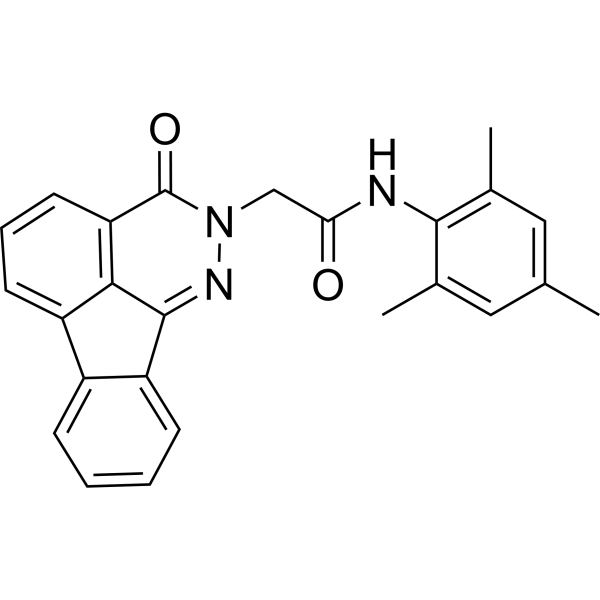
    Radionuclide-Drug Conjugates (RDCs) Fluorescent Dye α-synuclein Neurological Disease
    α-Synuclein aggregate binder 1 (Compound C05-05) is a specific binder for α-synuclein aggregates and can inhibit α-synuclein aggregation. α-Synuclein aggregate binder 1 can be used as a fluorescent probe (excitation wavelength 900 nm, detection wavelength 500-550 nm) for optical imaging, and can also inhibit α-synuclein fibril formation by blocking the aggregation process. α-Synuclein aggregate binder 1 can be used for positron emission tomography (PET) imaging after being labeled with 18F. α-Synuclein aggregate binder 1 can be used for visual diagnosis of brain lesions and mechanism research of neurodegenerative diseases such as Parkinson's disease and Lewy body dementia .
    α-Synuclein aggregate binder 1
  • HY-N0698

    Endogenous Metabolite α-synuclein Neurological Disease Cancer
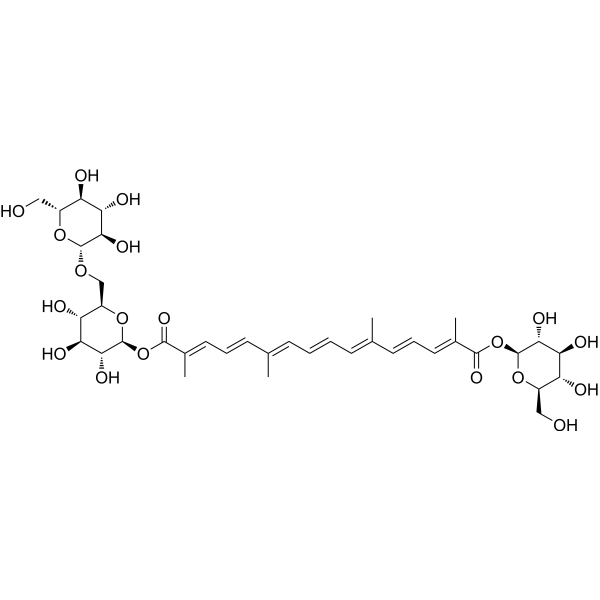
    Crocin II is an inhibitor targeting α-synuclein aggregation, with a IC50 of 0.541 μM and a EC50 of 3.63 μM. Crocin II inhibits α-synuclein aggregation and dissociates pre-formed α-synuclein fibrils. Crocin II possesses antioxidant, anticancer and antidepressant activities. Crocin II is applicable to research related to neurological disorders such as Parkinson's disease, dementia with Lewy bodies and multiple system atrophy, as well as cancers .
    Crocin II
  • HY-124876
    SynuClean-D
    1 Publications Verification

    SC-D

    α-synuclein Neurological Disease
    SynuClean-D (SC-D) is an inhibitor of α-synuclein aggregation, disrupts mature amyloid fibrils, prevents fibril propagation, and abolishes the degeneration of dopaminergic neurons in an animal model of Parkinson’s disease .
    SynuClean-D
  • HY-145580

    UCB0599; (R)-NPT200-11

    α-synuclein Neurological Disease
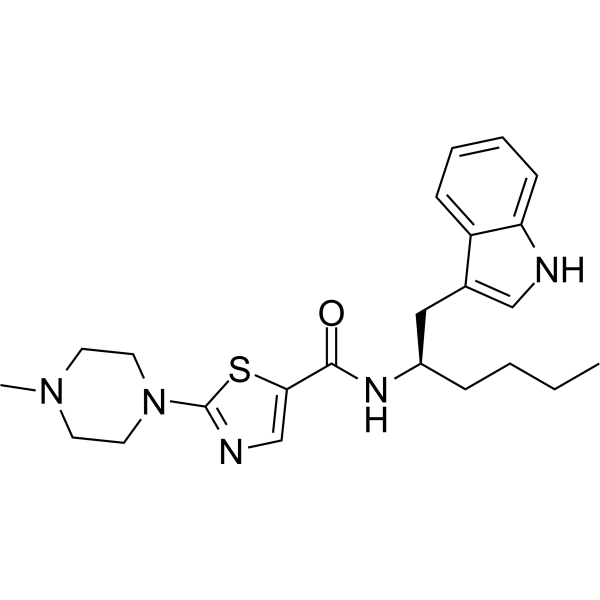
    Minzasolmin (UCB0599; (R)-NPT200-11) is an orally active, blood-brain-permeable α-synuclein (α-Syn) inhibitor that selectively binds to α-Syn misfolded intermediates (such as oligomers) and inhibits aggregation and fibril formation by regulating their conformational stability. Minzasolmin can reduce the generation of pathological oligomers and block neurotoxic signaling, thereby reducing the abnormal accumulation of α-Syn in the brain. Minzasolmin significantly improved motor deficits, reduced neuroinflammatory markers, and α-Syn-related pathological deposition in transgenic mouse models .
    Minzasolmin
  • HY-122958

    α-synuclein Neurological Disease
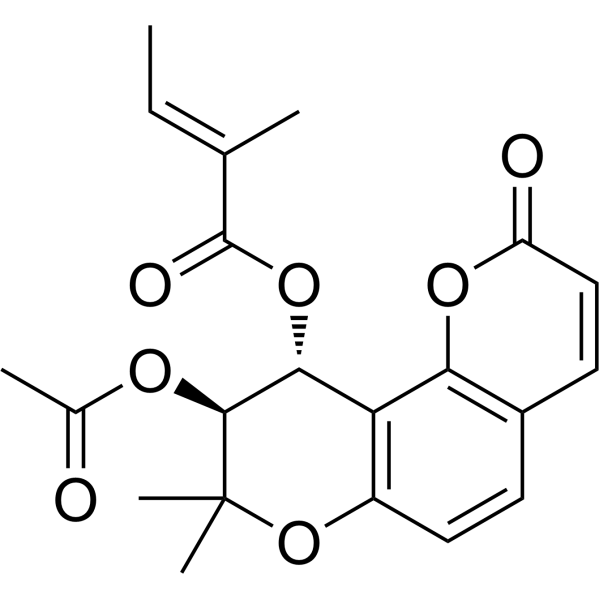
    Peucedanocoumarin III is an α-synuclein fiber depolymerizer with blood-brain barrier permeability. Peucedanocoumarin III depolymerizes β-sheet aggregate structures, promotes aggregate clearance, inhibits β23-induced cytotoxicity, blocks the formation of Lewy body-like inclusions, and prevents dopaminergic neuron loss. Peucedanocoumarin III can be used in studies related to Parkinson's disease .
    Peucedanocoumarin III
  • HY-156585

    Tau Protein α-synuclein Neurological Disease
    CNS-11 is a brain-penetrant tau fibril-degrading compound. CNS-11 reduces α-synuclein. CNS-11 can be used in Alzheimer's and Parkinson's disease research .
    CNS-11
  • HY-N0413

    α-synuclein Reactive Oxygen Species (ROS) Apoptosis Autophagy Parasite Infection Neurological Disease Inflammation/Immunology Cancer
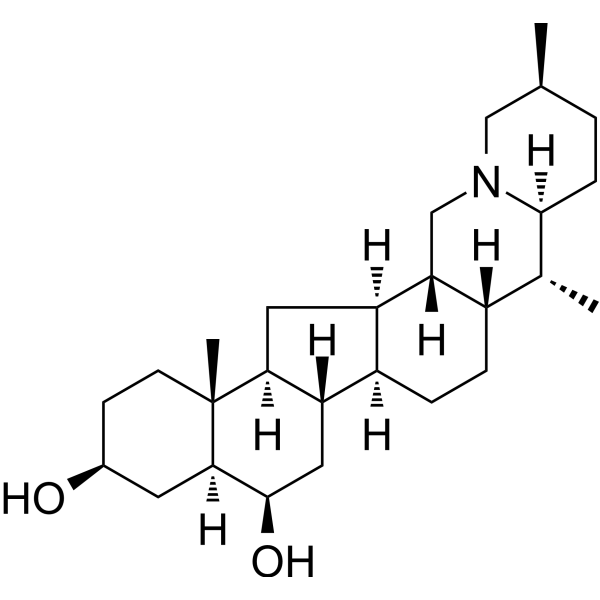
    Hupehenine is an orally active isosteroidal alkaloid that can be extracted from F. hupehensis. Hupehenine exhibits activities such as antitussive, expectorant, anticancer, and antiparasitic. In vitro, Hupehenine can also inhibit α-synuclein seeded fibril formation, making it applicable for the research of Parkinson's disease and other related disorders .
    Hupehenine
  • HY-P5082

    α-synuclein Neurological Disease
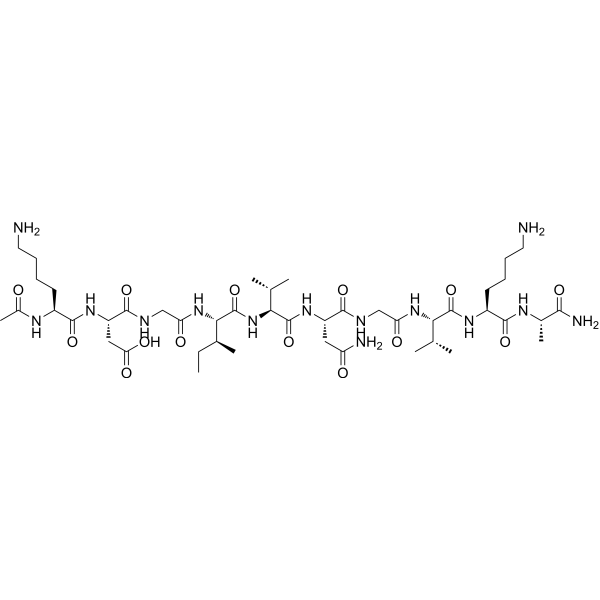
    α-Synuclein 4554W is an inhibitor of α-Synuclein (aSyn) aggregation with associated toxicity. α-Synuclein 4554W consists of GIVNGVKA sequences, previously identified through intracellular library screening. α-Synuclein 4554W reduces fibril formation of aSyn mutants assocaited with Parkinson’s disease .
    α-Synuclein 4554W
  • HY-401209

    α-synuclein DNA/RNA Synthesis Neurological Disease
    Synucleozid-2.0 is a blood-brain barrier-permeable inhibitor that binds to the IRE of SNCA mRNA, with a EC50 of 2.9 µM and a Kd value of 1.8 µM. Synucleozid-2.0 selectively binds to and stabilizes the A bulge and adjacent closed base pairs in the 5' UTR IRE of SNCA mRNA, blocks the translation process and reduces intracellular levels of α-synuclein. Synucleozid-2.0 exerts cytoprotective effects against cytotoxicity induced by α-synuclein preformed fibrils. Synucleozid-2.0 is applicable to the research of Parkinson's disease .
    Synucleozid-2.0
  • HY-178920

    α-synuclein Neurological Disease
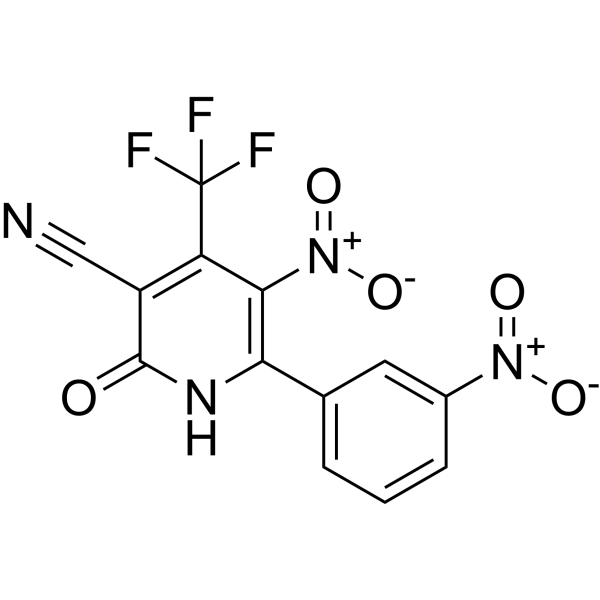
    α-Synuclein-IN-17 (Compound 10) is an α-Synuclein inhibitor, with an IC50 value of 9 μM. α-Synuclein-IN-17 exhibits potent inhibitory activity against both in-vitro assembled asyn fibrils and LBD brain tissue-amplified asyn fibrils. α-Synuclein-IN-17 can be used for the study of Parkinson's disease (PD) and Lewy Body Disease (LBD) .
    α-Synuclein-IN-17
  • HY-149509

    α-synuclein Neurological Disease
    α-Synuclein inhibitor 9 (Compound 20C) is an α-Synuclein inhibitor. α-Synuclein inhibitor 9 binds to cavities in mature α-synuclein fibrils and reduces the β-sheet structure. α-Synuclein inhibitor 9 inhibits A53T α-Syn aggregation. α-Synuclein inhibitor 9 has neuroprotective effect, improves brain functional connection and relieves motor dysfunction.α-Synuclein inhibitor 9 can be used for Parkinson’s disease (PD) research. .
    α-Synuclein inhibitor 9
  • HY-157225

    α-synuclein Metabolic Disease
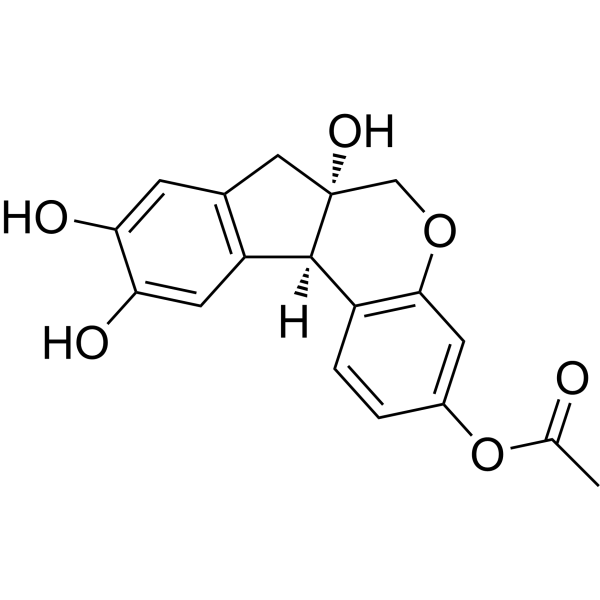
    Brazilin-7-acetate (B-7-A) is an inhibitor of α-synuclein (α-Syn) aggregates. Brazilin-7-acetate inhibits the formation of α-synuclein fibril, mitigates cytotoxicity, and decreases oxidative stress. Brazilin-7-acetate can be used in the research of Parkinson's disease .
    Brazilin-7-acetate
  • HY-168647

    α-synuclein Neurological Disease
    KAC-50.1 is an α-Synuclein (α-syn) PET ligand, with a KD of 35 nM toward site 2 in recombinant α-syn fibrils .
    KAC-50.1
  • HY-N0698R

    Reference Standards Endogenous Metabolite α-synuclein Neurological Disease Cancer
    Crocin II (Standard) is the analytical standard of Crocin II. This product is intended for research and analytical applications. Crocin II is an inhibitor targeting α-synuclein aggregation, with a IC50 of 0.541 μM and a EC50 of 3.63 μM. Crocin II inhibits α-synuclein aggregation and dissociates pre-formed α-synuclein fibrils. Crocin II possesses antioxidant, anticancer and antidepressant activities. Crocin II is applicable to research related to neurological disorders such as Parkinson's disease, dementia with Lewy bodies and multiple system atrophy, as well as cancers.
    Crocin II (Standard)
  • HY-N0413R

    Reference Standards α-synuclein Reactive Oxygen Species (ROS) Apoptosis Autophagy Parasite Infection Neurological Disease Inflammation/Immunology Cancer
    Hupehenine (Standard) is the analytical standard of Hupehenine (HY-N0413). This product is intended for research and analytical applications. Hupehenine is an orally active isosteroidal alkaloid that can be extracted from F. hupehensis. Hupehenine exhibits activities such as antitussive, expectorant, anticancer, and antiparasitic. In vitro, Hupehenine can also inhibit α-synuclein seeded fibril formation, making it applicable for the research of Parkinson's disease and other related disorders .
    Hupehenine (Standard)
  • HY-178276

    α-synuclein Neurological Disease
    α-Synuclein-IN-18 (Compound Mol D) is an inhibitor of the autocatalytic proliferation of α-Synuclein aggregate. α-Synuclein-IN-18 can specifically bind to the conserved binding pocket on the surface of α-synuclein fibrils. α-Synuclein-IN-18 can delay the aggregation process of α-synuclein, extend the aggregation T1/2 by three times. α-Synuclein-IN-18 can reduce the generation flux of α-synuclein toxic oligomers, thereby alleviating the neurotoxicity. α-Synuclein-IN-18 can be used for research of Parkinson’sdisease .
    α-Synuclein-IN-18
  • HY-114613

    Amyloid-β α-synuclein CGRP Receptor Amylin Receptor Neurological Disease Inflammation/Immunology
    D-Trp-Aib is a dipeptide and amyloid-β inhibitor with a Kd of 29.6 nM. D-Trp-Aib triggers formation of non-toxic, non-β-sheet, amorphous amyloid β clusters from misfolded amyloid β monomers and toxic amyloid β oligomers, and reduces toxic amyloid β1-42 deposits. D-Trp-Aib inhibits amyloid fibril formation of α‑synuclein, IAPP and calcitonin. D-Trp-Aib can be used for the research of Alzheimer's disease .
    D-Trp-Aib

Online-Anfrage

Your information is safe with us. * Required Fields.

Anrede


Country or Region *

Name des Antragstellers *


Name der Organisation *

Department *


E-Mail-Addresse *


Produktname *

Art. -Nr.


Requested quantity *

Telefonnummer *


Bemerkungen

Online-Anfrage

Inquiry Information

Produktname:
Art. -Nr.:
Menge:
MCE Japan Authorized Agent:

