55 Results for "

AR/AR-v7

" in MedChemExpress (MCE) Product Catalog:
Products (55)

55 Results for "AR/AR-v7" in MCE Product Catalog:

30
30 Publications Verification
Cat. No.: HY-100972
CAS No.: 1949837-12-0
Purity:  98.87%
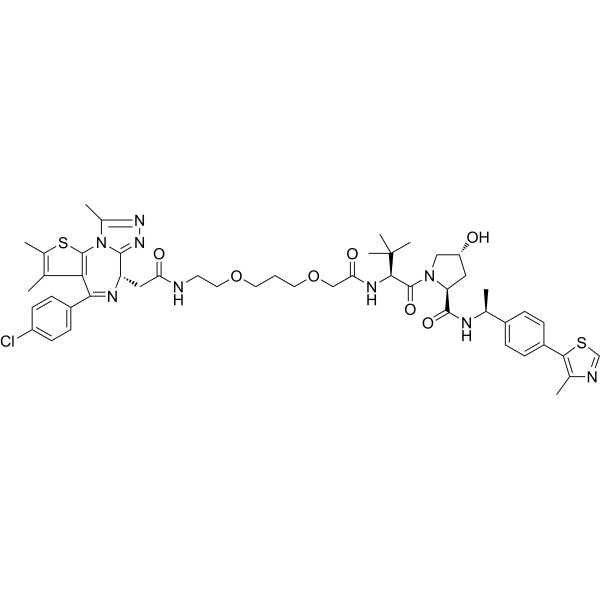
ARV-771 is a BET PROTAC degrader, with Kd values of 34, 4.7, 8.3, 7.6, 9.6 and 7.6 nM against BRD2 (1), BRD2 (2), BRD3 (1), BRD3 (2), BRD4 (1) and BRD4 (2) , respectively. ARV-771 inhibits the transcription of AR/AR-v7 and its downstream target genes. By degrading BRD4 protein, ARV-771 enhances the sensitivity of prostate cancer cells to ferroptosis, suppresses cancer cell viability, and induces apoptosis. ARV-771 downregulates the levels of BRD4, c-MYC and AR-V7 in tumor tissues and inhibits tumor tissue growth. ARV-771 can be used in prostate cancer-related research .
loading...
    loading...
2
2 Cited Publications
Cat. No.: HY-145479
CAS No.: 2767440-24-2
Purity:  98.19%
Research Areas:  

Cancer

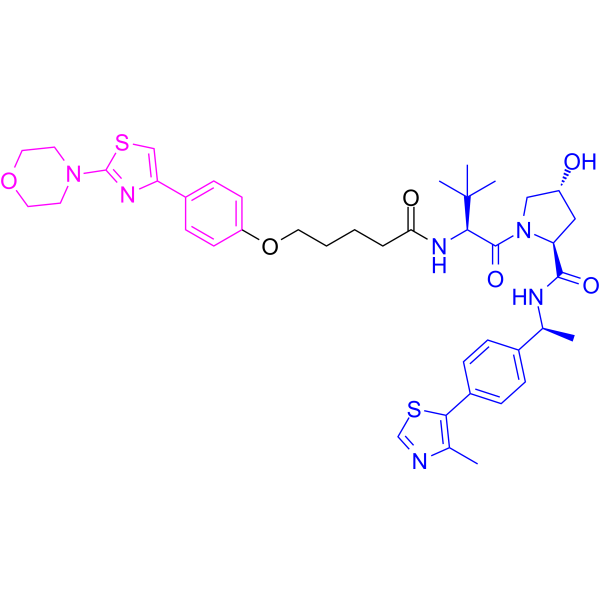
PROTAC AR-V7 degrader-1 is a selective AR-V7 degrader with a DC50 of 0.32 μM. PROTAC AR-V7 degrader-1 inhibits cancer cell proliferation. PROTAC AR-V7 degrader-1 is applicable to the research of castration-resistant prostate cancer .
loading...
    loading...
2
2 Cited Publications
Cat. No.: HY-153918
CAS No.: 2955634-67-8
Purity:  99.50%
Target:  

Androgen Receptor

Research Areas:  

Cancer

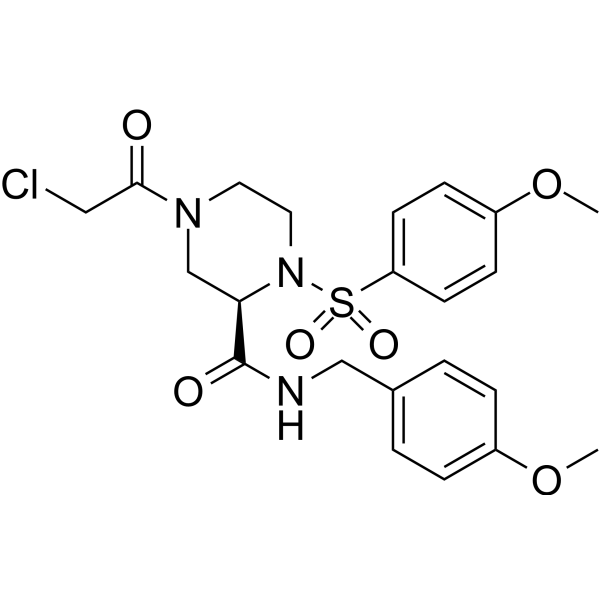
(R)-SKBG-1 is a covalent inhibitor targeting the RNA binding protein NONO. (R)-SKBG-1 can reduce the expression of androgen receptor (AR) and its splice variants, inhibiting cancer cell proliferation. (R)-SKBG-1 inhibits androgen receptor expression with IC50 of 3.1 μM and 5.5 μM for AR-FL mRNA and AR-V7 mRNA, respectively. (R)-SKBG-1 interferes with the gene regulatory network of cancer cells and inhibits cancer cell growth by stabilizing the interaction between NONO and mRNA. (R)-SKBG-1 can be used in the study of cancers related to NONO dysfunction, such as prostate cancer .
loading...
    loading...
1
1 Cited Publications
Cat. No.: HY-148771
CAS No.: 2488296-74-6
Purity:  99.79%
Synonyms: PROTAC AR-v7 degrader-2
Research Areas:  

Cancer

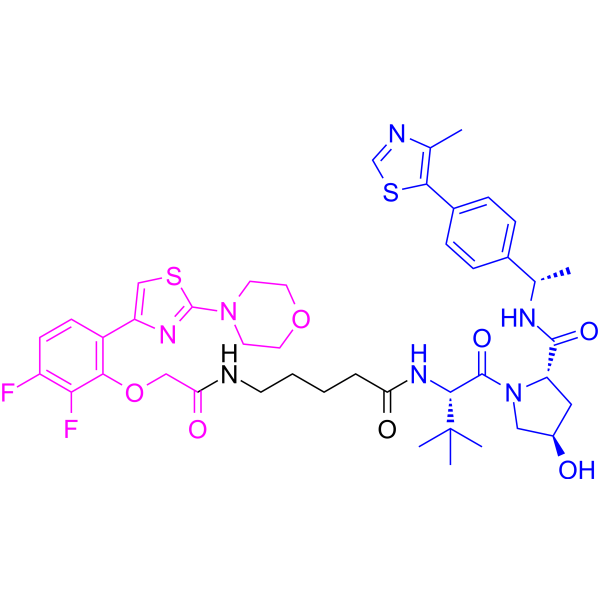
MTX-23 is a PROTAC degrader targeting androgen receptor splice variant 7 (AR-V7) and full-length androgen receptor (AR-FL), with DC50 values of 0.37 μM and 2 μM, respectively. MTX-23 binds to the DNA-binding domains of AR-V7 and AR-FL, recruits the VHL E3 ubiquitin ligase (E3 ubiquitin ligase) and induces their degradation. MTX-23 reduces the proliferation of prostate cancer cells, promotes their apoptosis (apoptosis), and also inhibits tumor growth in mouse models. MTX-23 can be used for the research of prostate cancer .
loading...
    loading...
Cat. No.: HY-162412
CAS No.: 2841308-96-9
Research Areas:  

Cancer

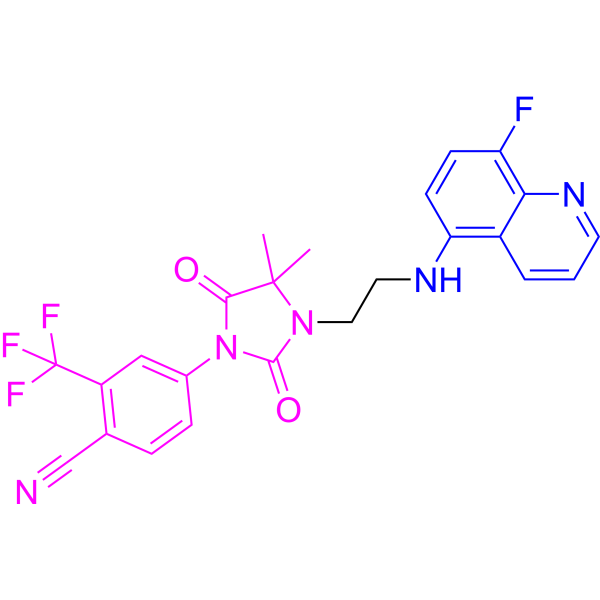
PROTAC AR/AR-V7 degrader-1 (27c) is a PROTAC-based and dual AR, AR-V7 degrader, with DC50 values of 2.67 and 2.64 μM for AR and AR-V7, respectively. PROTAC AR/AR-V7 degrader-1 (27c) induces apoptosis (Red: AR antagonist; Blue: E3 ligase ligand; Black: linker) .
loading...
    loading...
Cat. No.: HY-173626
CAS No.: 2196448-47-0
Target:  

Androgen Receptor

Research Areas:  

Cancer

EN1441 is a covalent degrader targeting the androgen receptor (AR) with an EC50 value of 4.2 μM and its truncated variant AR-V7. EN1441 selectively and potently degrades both AR and AR-V7 in androgen-independent prostate cancer cells. EN1441 is promising for research of androgen-independent prostate cancers .
loading...
    loading...
Cat. No.: HY-145709
CAS No.: 2230880-25-6
Purity:  98.02%
Target:  

Androgen Receptor

Research Areas:  

Cancer

Ar-V7-IN-1 is a potent inhibitor of Ar-V7. Ar-V7-IN-1 inhibits the transcriptional activity of androgen receptor (AR) and the secretion of prostate-specific antigen (PSA) with an eGFP IC50 of 1232 nM and the PSA IC50 of 1391 μM. Ar-V7-IN-1 has the potential for the research of various indications, in particular cancers such as prostate cancer .
loading...
    loading...
Cat. No.: HY-123875A
CAS No.: 1637573-04-6
Purity:  98.79%
Synonyms: EPI-506
Target:  

Androgen Receptor

Research Areas:  

Cancer

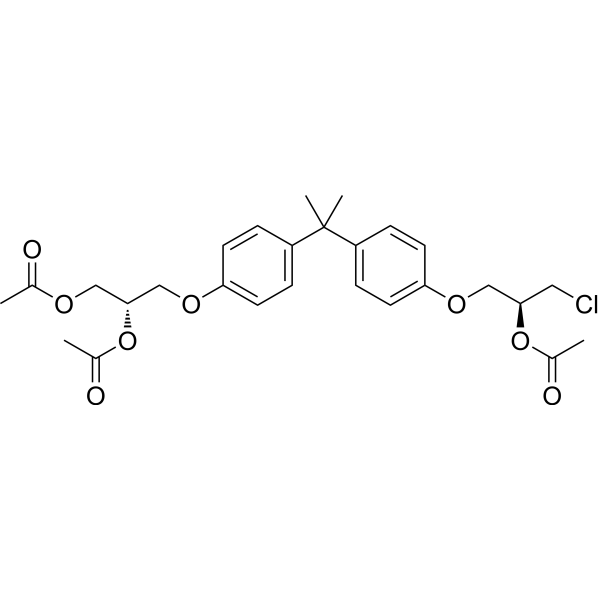
Ralaniten triacetate (EPI-506), the pro-agent of Ralaniten, is a first-in-class, orally active androgen receptor (AR) N-terminal domain (NTD) inhibitor. Ralaniten triacetate shows activity against both full length and resistance-related AR species, including AR-v7 .
loading...
    loading...
Cat. No.: HY-161409
Research Areas:  

Cancer

SC912 is an AR-V7 inhibitor (IC50 = 0.36 μM). SC912 possesses safety, potency and selectivity. SC912 binds directly to AR-FL and AR-V7 proteins, inhibites nuclear localization and chromatin binding capabilities. SC912 exerts anticancer activity through inhibition of proliferation, induction of cell cycle arrest and apoptosis .
loading...
    loading...
Cat. No.: HY-126076A
CAS No.: 2410979-04-1
Target:  

DNA/RNA Synthesis

Research Areas:  

Cancer

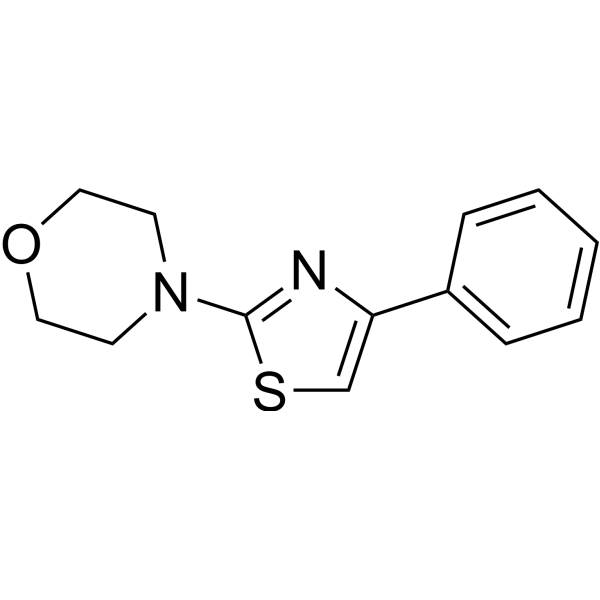
VPC-80051 is an inhibitor of hnRNP A1 splicing activity. VPC-80051 directly interacts with hnRNP A1 RBD and reduces AR-V7 messenger levels in 22Rv1 CRPC cell line. VPC-80051 can be used in prostate cancer research .
loading...
    loading...
Cat. No.: HY-149433
CAS No.: 3042820-12-9
Purity:  99.93%
Research Areas:  

Cancer

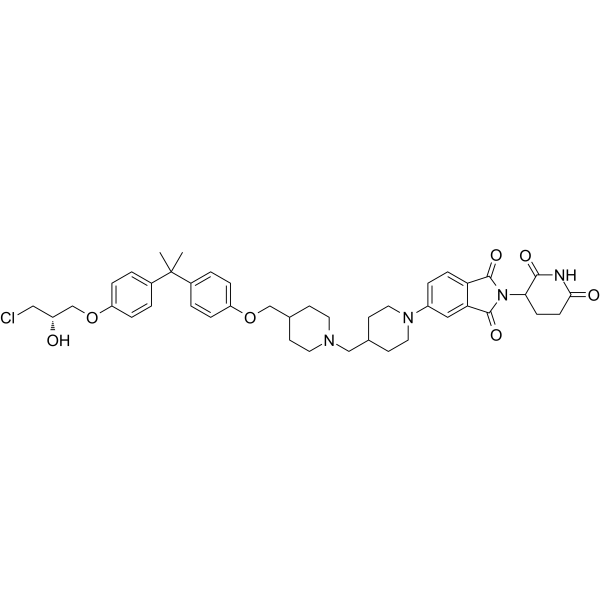
BWA-522 is an orally active PROTAC degrader targeting full-length androgen receptor (AR-FL) and androgen receptor splice variant 7 (AR-V7). BWA-522 antagonizes the N-terminal domain (AR-NTD) of the androgen receptor, suppresses AR downstream signaling proteins and induces cancer cells apoptosis. BWA-522 inhibits tumor growth in LNCaP xenograft mouse model. BWA-522 can be used for the research of prostate cancer .
loading...
    loading...
Cat. No.: HY-117669
CAS No.: 19983-28-9
Purity:  99.36%
Target:  

Androgen Receptor

Research Areas:  

Cancer

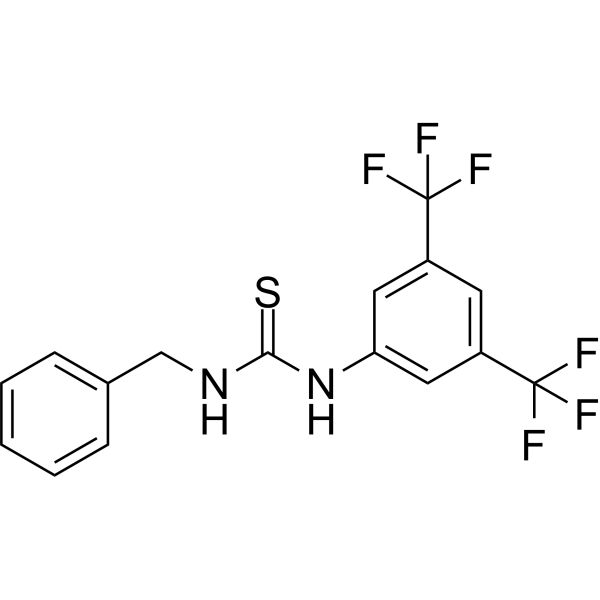
VPC-14228 is an inhibitor that selectively targets androgen receptor DNA binding domain (AR-DBD). VPC-14228 inhibits the interaction between AR and DNA, thereby blocking AR-mediated transcriptional activation. VPC-14228 does not rely on nuclear localization inhibition, but rather inhibits the activity of full-length AR and splice variant AR-V7 by interfering with AR binding to chromatin. And VPC-14228 has high selectivity for other nuclear receptors such as ER and PR. VPC-14228 can be used in the study of prostate cancer [2].
loading...
    loading...
Cat. No.: HY-147291
CAS No.: 13571-44-3
Purity:  99.92%
Target:  

c-Myc PARP Apoptosis

Research Areas:  

Cancer

VPC-70063 is a potent Myc-Max inhibitor with an IC50 value of 8.9 μM for Myc-Max transcriptional activity inhibition. VPC-70063 reduces UBE2C promotor activity and AR-V7 levels, and induces PARP cleavage. VPC-70063 induces apoptosis and blocks Myc-Max interactions with DNA. VPC-70063 can be used for researching anticancer .
loading...
    loading...
Cat. No.: HY-110028
CAS No.: 16496-99-4
Purity:  99.06%
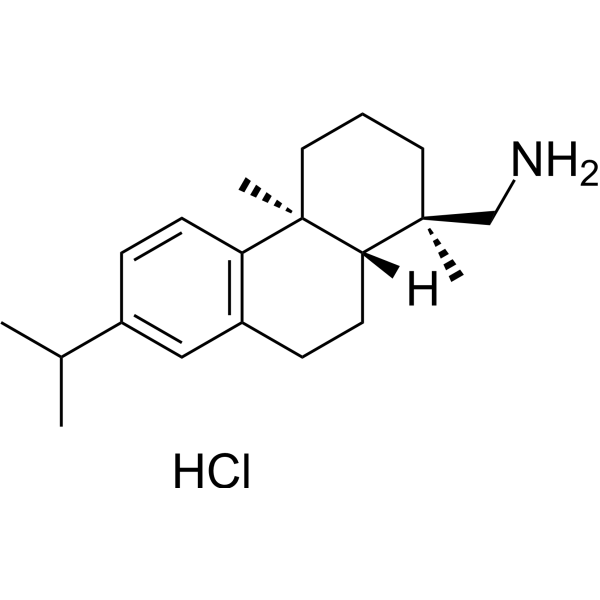
Leelamine hydrochloride is an orally active weakly basic amine that inhibits NPC1 and the androgen receptor AR-V7, and acts as a cannabinoid receptor agonist. Leelamine hydrochloride also functions as a lysosome affinity agent that blocks endocytosis, disrupts autophagic flux and cholesterol transport, thereby altering the RTK-AKT/STAT/MAPK signaling cascade. Leelamine hydrochloride induces cancer cell death and autophagosome accumulation, and can be used in research related to melanoma, castration-resistant prostate cancer and breast cancer .
loading...
    loading...
Cat. No.: HY-170329
CAS No.: 3044108-04-2
Research Areas:  

Cancer

PROTAC AR Degrader-8 is the PROTAC degrader for androgen receptor (AR) that degrades AR-FL with DC50s of 0.018 μM and 0.14 μM in 22Rv1 cell and LNCaP cell, degrades AR-V7 with DC50 of 0.026 μM in 22Rv1 cell. PROTAC AR Degrader-8 inhibits the proliferation of cancer cell 22Rv1 and LNCaP with IC50 values of 0.038 μM and 1.11 μM. PROTAC AR Degrader-8 arrests cell cycle at G2/M phase, induces apoptosis in 22Rv1 cell. PROTAC AR Degrader-8 exhibits anticancer efficacy in mouse and zebrafish model. PROTAC AR Degrader-8 can be used for the research of prostate cancer, castration-resistant prostate cancer .
loading...
    loading...
Cat. No.: HY-164373
CAS No.: 1898232-70-6
Research Areas:  

Cancer

SC428 is an androgen receptor (AR) inhibitor that targets the N-terminal domain. SC428 potently decrease the transactivation of (AR)-V7, (AR)v567es, as well as full-length ( AR ) (AR-FL) and its LBD mutants, substantially. SC428 inhibits androgen-stimulated (AR)-FL nuclear translocation, chromatin binding, and (AR) -regulated gene transcription. SC428 inhibits the proliferation of tumor cells in vitro. SC428 inhibits tumor cell growth by inducing apoptosis in mice transplanted with 22RV1 .
loading...
    loading...
Cat. No.: HY-164552
CAS No.: 920915-26-0
Target:  

Androgen Receptor

Research Areas:  

Cancer

ZNU-IMB-Z15 is a bifunctional, selective androgen receptor (AR) antagonist and degrader. ZNU-IMB-Z15 directly binds to the ligand-binding domain (LBD) and transactivation function 1 (AF1) of AR, with an IC50 of 63.3 nM for competitive binding to AR LBD and a KD of 0.93 μM for AR AF1. ZNU-IMB-Z15 inhibits AR transcriptional activity and promotes the degradation of AR and ARV7 via the ubiquitin-proteasome pathway. ZNU-IMB-Z15 can be used for the research of castration-resistant prostate cancer .
loading...
    loading...
Cat. No.: HY-175455
Research Areas:  

Cancer

LYA914 is an orally effective AR/AR-V7 PROTAC degrader. LYA914 recruits CRBN to target and bind the conserved DBD domain of AR and AR-V7, inducing their ubiquitination and subsequent degradation, thereby completely blocking AR signaling and transcriptional activity. LYA914 can be used for the research of castration-resistant prostate cancer .
loading...
    loading...
Cat. No.: HY-W877989
CAS No.: 2241315-66-0
Target:  

Ligands for E3 Ligase

Research Areas:  

Cancer

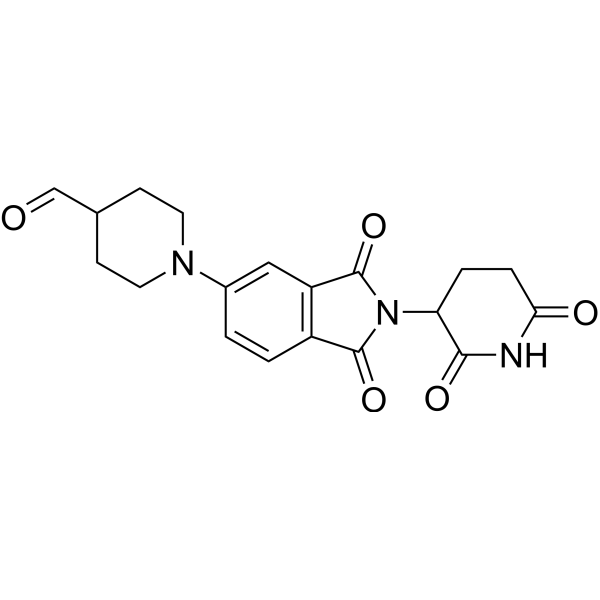
BWA-522 intermediate-1 is an intermediate in the synthesis of PROTAC BWA-522 (HY-149433) and serves as a ligand molecule for cereblon E3 ubiquitin ligase. BWA-522 is an orally active small molecule protein-targeting chimera (PROTAC) that has significant degradation effects on AR-FL and AR-V7 .
loading...
    loading...
Cat. No.: HY-179056
Research Areas:  

Cancer

Psa-AR is a PROTAC degrader targeting PSMA, with a Kd of 7.2 nM. Psa-AR exhibits strong degradation capabilities for AR, AR-V7, and HSP90, and induces cell apoptosis. Psa-AR demonstrates potent tumor suppressive activity in the 22Rv1 xenograft tumor model. Psa-AR can be used in the research of castration-resistant prostate cancer .
loading...
    loading...

