
1. Search Result
Search Result
Results for "

ASIC3

" in MedChemExpress (MCE) Product Catalog:

18

Inhibitors & Agonists

4

Fluorescent Dye

5

Peptides

1

Natural
Products

3

Oligonucleotides

Cat. No. Product Name Target Research Areas Chemical Structure
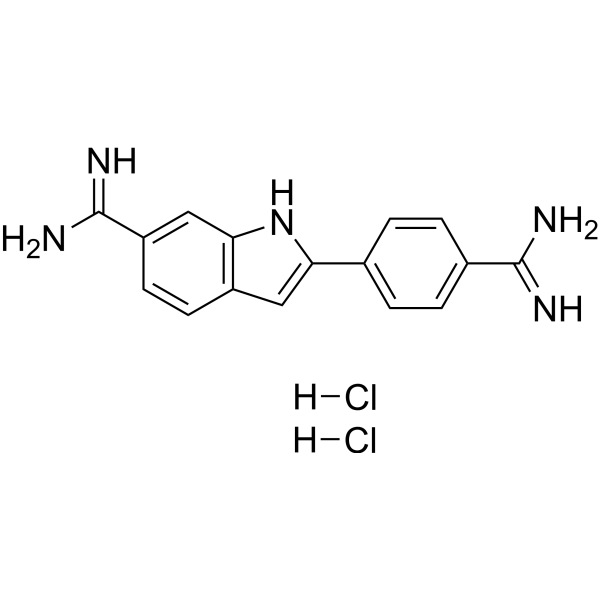
  • HY-D0814
    DAPI dihydrochloride
    Maximum Cited Publications
    146 Publications Verification

    4',6-Diamidino-2-phenylindole dihydrochloride

    DNA Stain Sodium Channel Neurological Disease
    DAPI (4',6-Diamidino-2-phenylindole) dihydrochloride is a DAPI dye. DAPI is a fluorescent dye that binds strongly to DNA. It binds to the AT base pair of the double-stranded DNA minor groove, and one DAPI molecule can occupy three base pair positions. The fluorescence intensity of DAPI molecules bound to double-stranded DNA is increased by about 20 times, and it is commonly observed with fluorescence microscopy, and the amount of DNA can be determined based on the intensity of fluorescence. In addition, because DAPI can pass through intact cell membranes, it can be used to stain both live and fixed cells . DAPI (Compound 3) is an acid-sensing ion channel 3 (ASIC3) inhibitor. DAPI binds to ASIC3 and blocks the channel function. DAPI can be used in the study of chronic pain treatment (Ex/Em = 356/451 nm).
    DAPI dihydrochloride
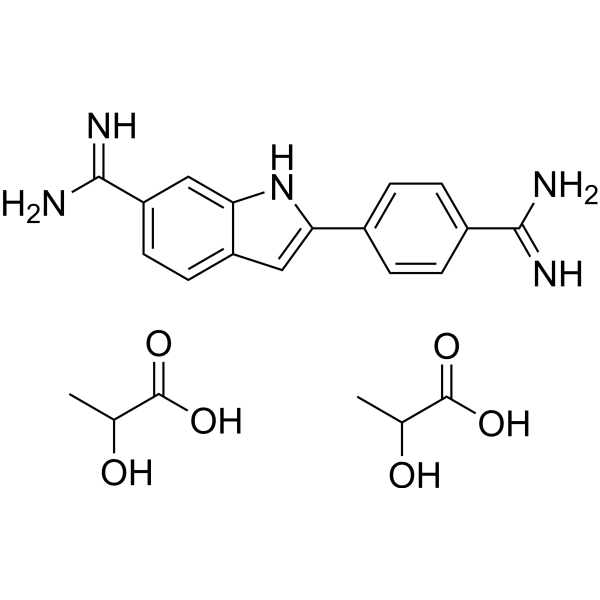
  • HY-D1738
    DAPI dilactate
    110+ Cited Publications

    4',6-Diamidino-2-phenylindole dilactate

    Fluorescent Dye Others
    DAPI (4',6-Diamidino-2-phenylindole) dilactate is a DAPI dye. DAPI is a fluorescent dye that binds strongly to DNA. It binds to the AT base pair of the double-stranded DNA minor groove, and one DAPI molecule can occupy three base pair positions. The fluorescence intensity of DAPI molecules bound to double-stranded DNA is increased by about 20 times, and it is commonly observed with fluorescence microscopy, and the amount of DNA can be determined based on the intensity of fluorescence. DAPI cannot penetrate intact cell membranes and is commonly used for staining both live and fixed cells . DAPI (Compound 3) is an acid-sensing ion channel 3 (ASIC3) inhibitor. DAPI binds to ASIC3 and blocks the channel function. DAPI can be used in the study of chronic pain treatment (Ex/Em = 356/451 nm) .
    DAPI dilactate
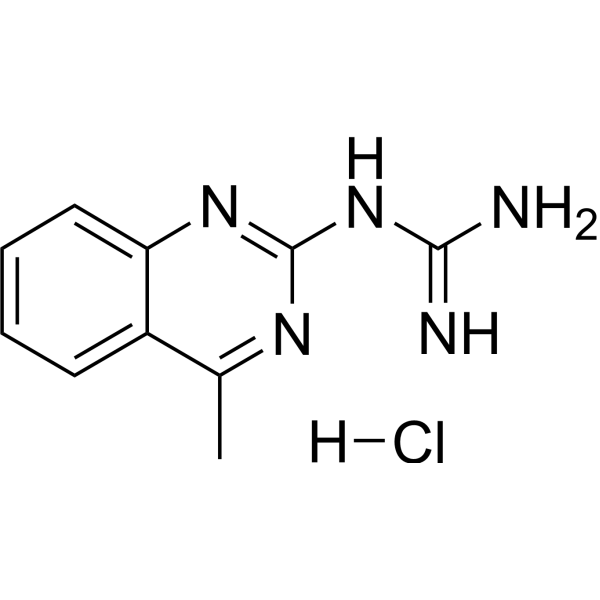
  • HY-107757

    2-Guanidine-4-methylquinazoline hydrochloride

    Sodium Channel Neurological Disease
    GMQ (hydrochloride) is a ASIC (acid-sensing ion) channel activator with an EC50 value of 1.83 mM for ASIC3 at pH 7.4. GMQ (hydrochloride) opens only ASIC3 but no other ASICs at pH 7.4. GMQ (hydrochloride) can be used for neurological disease research .
    GMQ hydrochloride
  • HY-D2868
    DAPI
    130+ Cited Publications

    4',6-Diamidino-2-phenylindole

    DNA Stain Sodium Channel Neurological Disease
    DAPI (4',6-Diamidino-2-phenylindole) is a DAPI dye. DAPI is a fluorescent dye that binds strongly to DNA. It binds to the AT base pair of the double-stranded DNA minor groove, and one DAPI molecule can occupy three base pair positions. The fluorescence intensity of DAPI molecules bound to double-stranded DNA is increased by about 20 times, and it is commonly observed with fluorescence microscopy, and the amount of DNA can be determined based on the intensity of fluorescence. In addition, because DAPI can pass through intact cell membranes, it can be used to stain both live and fixed cells . DAPI (Compound 3) is an acid-sensing ion channel 3 (ASIC3) inhibitor. DAPI binds to ASIC3 and blocks the channel function. DAPI can be used in the study of chronic pain treatment (Ex/Em = 356/451 nm).
    DAPI
  • HY-122135

    Sodium Channel Neurological Disease
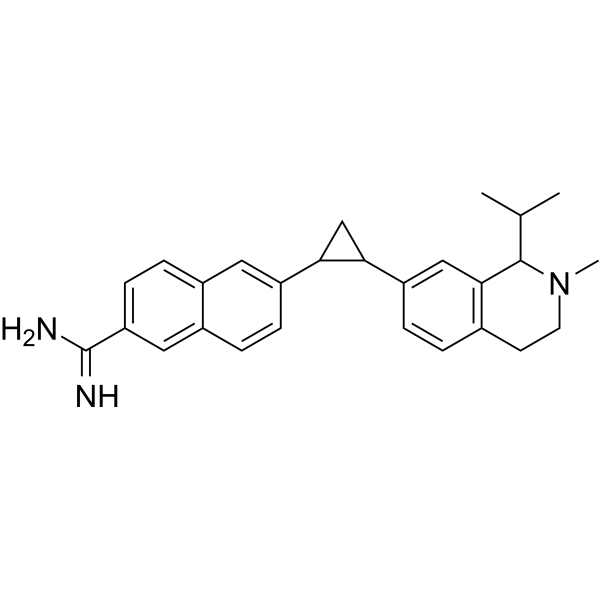
    A-317567 is a potent acid-sensing ion channel 3 (ASIC-3) inhibitor with an IC50 of 1.025 μM. A-317567 has antidepressant and antinociception effects .
    A-317567
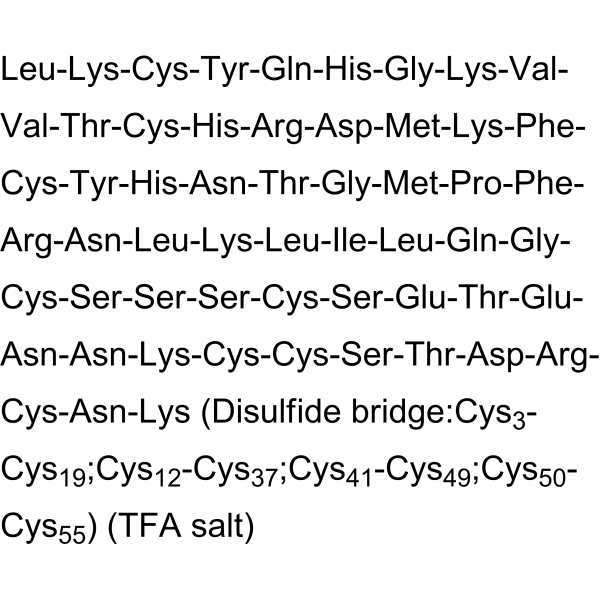
  • HY-P1346

    Sodium Channel Neurological Disease Inflammation/Immunology
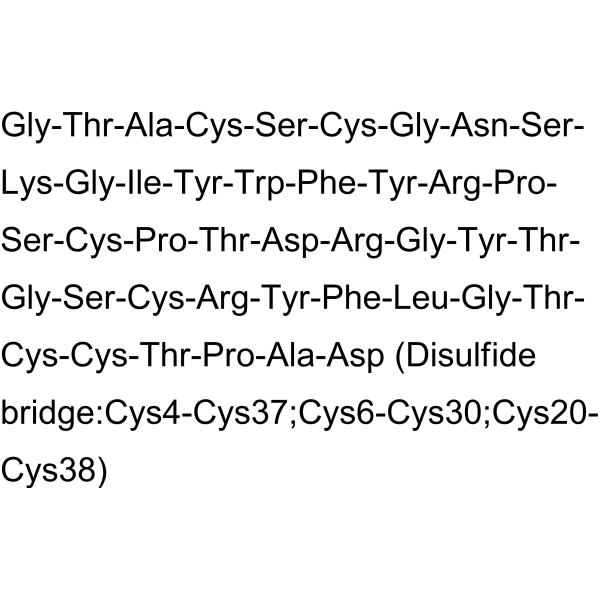
    APETx2, a sea anemone peptide from Anthopleura elegantissima, is a selective and reversible ASIC3 inhibitor, with an IC50 of 63 nM. APETx2 directly inhibits the ASIC3 channel by acting at its external side. APETx2 could reverses acid‐induced and inflammatory pain .
    APETx2
  • HY-P1346A

    Sodium Channel Neurological Disease Inflammation/Immunology
    APETx2 TFA, a sea anemone peptide from Anthopleura elegantissima, is a selective and reversible ASIC3 inhibitor, with an IC50 of 63 nM. APETx2 directly inhibits the ASIC3 channel by acting at its external side. APETx2 could reverses acid‐induced and inflammatory pain .
    APETx2 TFA
  • HY-131879

    Sodium Channel Neurological Disease
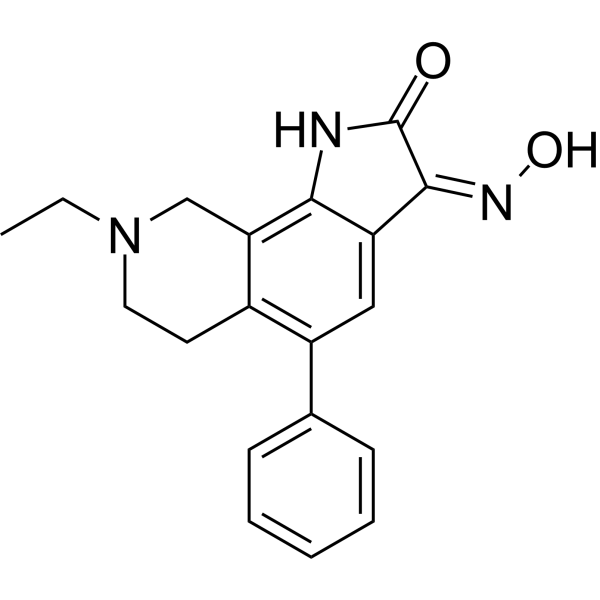
    NS383 is a potent and uniquely selective inhibitor of rat ASICs containing 1a and/or 3 subunits. NS383 inhibits H(+)-activated currents recorded from rat homomeric ASIC1a, ASIC3, and heteromeric ASIC1a+3 with IC50 values ranging from 0.61 to 2.2 μM. NS383 is well tolerated and capable of reversing pathological painlike behaviors, presumably via peripheral actions, but possibly also via actions within central pain circuits .
    NS383
  • HY-100939

    Sodium Channel Neurological Disease
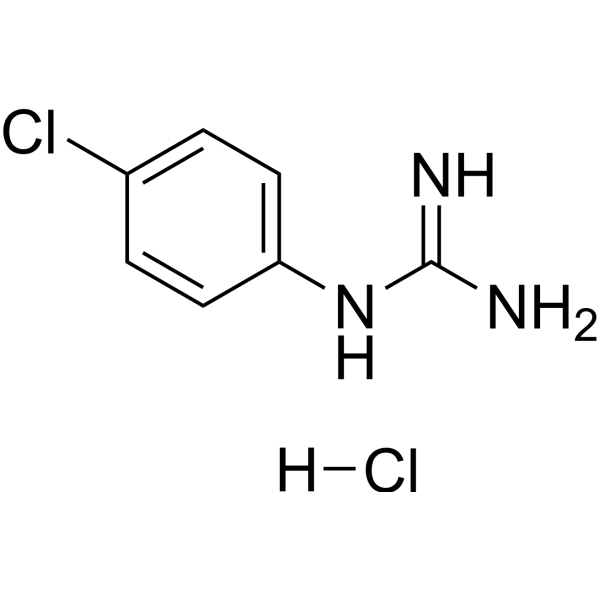
    4-Chlorophenylguanidine hydrochloride is an urokinase-type plasminogen activator inhibitor. 4-Chlorophenylguanidine hydrochloride is a potent ASIC3 positive allosteric modulator and reverses the effects of ASIC3 desensitization. 4-Chlorophenylguanidine hydrochloride influences ASIC3 activity through directly activating the channel and increasing proton sensitivity. 4-Chlorophenylguanidine hydrochloride offers a chemical backbone for the design of new ASIC3 ligands to study ASIC3 in vivo .
    4-Chlorophenylguanidine hydrochloride
  • HY-RS01091

    Small Interfering RNA (siRNA) Others

    ASIC3 Human Pre-designed siRNA Set A contains three designed siRNAs for ASIC3 gene (Human), as well as a negative control, a positive control, and a FAM-labeled negative control.

    ASIC3 Human Pre-designed siRNA Set A
    ASIC3 Human Pre-designed siRNA Set A
  • HY-RS23678

    Small Interfering RNA (siRNA) Others

    Asic3 Rat Pre-designed siRNA Set A contains three designed siRNAs for Asic3 gene (Rat), as well as a negative control, a positive control, and a FAM-labeled negative control.

    Asic3 Rat Pre-designed siRNA Set A
    Asic3 Rat Pre-designed siRNA Set A
  • HY-RS17225

    Small Interfering RNA (siRNA) Others

    Asic3 Mouse Pre-designed siRNA Set A contains three designed siRNAs for Asic3 gene (Mouse), as well as a negative control, a positive control, and a FAM-labeled negative control.

    Asic3 Mouse Pre-designed siRNA Set A
    Asic3 Mouse Pre-designed siRNA Set A
  • HY-P1441A

    Sodium Channel Neurological Disease
    Mambalgin 1 TFA is a selective ASIC1a inhibitor (IC50 values are 192 and 72 nM for human ASIC1a and ASIC1a/1b dimer, respectively). Mambalgin 1 TFA binds to closed/inactive channel. Mambalgin 1 TFA is selective for ASIC1a over ASIC2a, ASIC3, TRPV1, P2X2, 5-HT3, Nav1.8, Cav3.2 and Kv1.2 channels. Mambalgin 1 TFA increases latency of withdrawal response in mouse tail-flick and paw-flick tests.
    Mambalgin 1 TFA
  • HY-155017

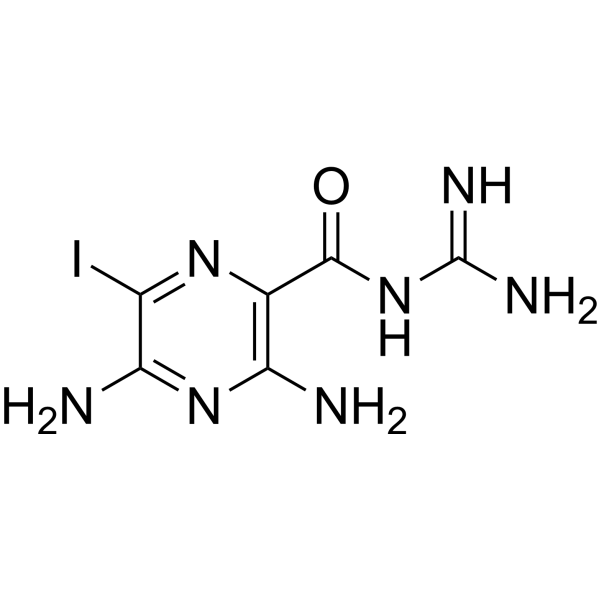
    Sodium Channel Neurological Disease Cancer
    6-Iodoamiloride is a potent acid-sensing ion channel 1 (ASIC1) inhibitor with an IC50 of 88 nM. 6-Iodoamiloride inhibits ASIC3-mediated currents from rat dorsal root ganglion neurons with an IC50 of 230 nM .
    6-Iodoamiloride
  • HY-P1249

    Neuropeptide Y Receptor Neurological Disease
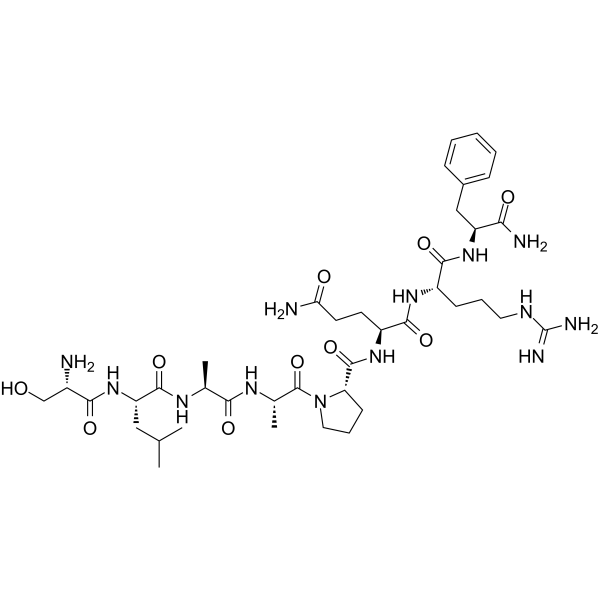
    Neuropeptide SF (mouse,rat) is a potent neuropeptide FF receptor agonist with Ki values are 48.4 nM and 12.1 nM for NPFF1 and NPFF2, respectively. Neuropeptide SF increases the amplitude of the sustained current of heterologously expressed acid sensing ion channel 3 (ASIC3) .
    Neuropeptide SF(mouse,rat)
  • HY-P1249A

    Neuropeptide Y Receptor Neurological Disease
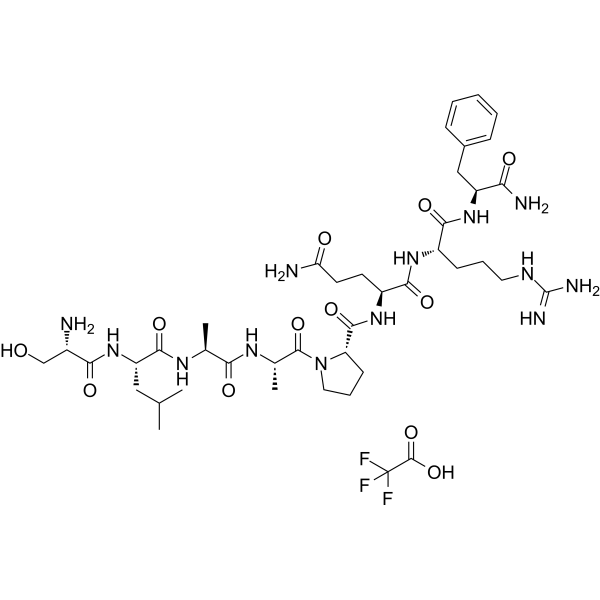
    Neuropeptide SF (mouse,rat) TFA is a potent neuropeptide FF receptor agonist with Ki values are 48.4 nM and 12.1 nM for NPFF1 and NPFF2, respectively. Neuropeptide SF TFA increases the amplitude of the sustained current of heterologously expressed acid sensing ion channel 3 (ASIC3) .
    Neuropeptide SF(mouse,rat) TFA
  • HY-107757R

    2-Guanidine-4-methylquinazoline hydrochloride (Standard)

    Reference Standards Sodium Channel Neurological Disease
    GMQ hydrochloride (Standard) is the analytical standard of GMQ (hydrochloride) (HY-107757). This product is intended for research and analytical applications. GMQ (hydrochloride) is a ASIC (acid-sensing ion) channel activator with an EC50 value of 1.83 mM for ASIC3 at pH 7.4. GMQ (hydrochloride) opens only ASIC3 but no other ASICs at pH 7.4. GMQ (hydrochloride) can be used for neurological disease research .
    GMQ hydrochloride (Standard)
  • HY-DY1081

    4',6-Diamidino-2-phenylindole dihydrochloride (solution)

    Sodium Channel DNA Stain Neurological Disease
    DAPI (4',6-Diamidino-2-phenylindole) dihydrochloride (solution) is a DAPI dye. DAPI is a fluorescent dye that binds strongly to DNA. It binds to the AT base pair of the double-stranded DNA minor groove, and one DAPI molecule can occupy three base pair positions. The fluorescence intensity of DAPI molecules bound to double-stranded DNA is increased by about 20 times, and it is commonly observed with fluorescence microscopy, and the amount of DNA can be determined based on the intensity of fluorescence. In addition, because DAPI can pass through intact cell membranes, it can be used to stain both live and fixed cells . DAPI (Compound 3) is an acid-sensing ion channel 3 (ASIC3) inhibitor. DAPI binds to ASIC3 and blocks the channel function. DAPI can be used in the study of chronic pain treatment (Ex/Em = 356/451 nm).
    Solvent and concentration: ddH2O: 5 mg/mL
    DAPI dihydrochloride (solution)

Inquiry Online

Your information is safe with us. * Required Fields.

Salutation


Country or Region *

Applicant Name *


Organization Name *

Department *


Email Address *


Product Name *

Cat. No.


Requested quantity *

Phone Number *


Remarks

Inquiry Online

Inquiry Information

Product Name:
Cat. No.:
Quantity:
MCE Japan Authorized Agent:

